

P0446 on 2006-2010 Ford Explorer: EVAP Vent Circuit Causes and Fixes
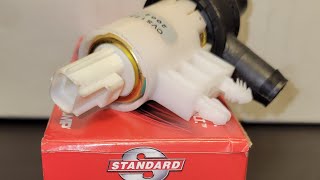
On a 2006-2010 Ford Explorer, code P0446 is most often caused by a failed EVAP canister vent solenoid. This part is located on the passenger side frame rail near the fuel tank and is a straightforward DIY replacement, typically costing between $30 and $70 for an aftermarket part. The OEM Motorcraft part number is 9U5Z-9C915-H (superceded by AU5Z-9C915-A), and a common aftermarket alternative is the Dorman 911-222.
- P0446 on a 2006-2010 Explorer almost always points to a problem with the EVAP canister vent solenoid or its connector.
- The most common symptom, besides the Check Engine Light, is the fuel pump nozzle shutting off repeatedly when you try to get gas.
- The faulty part is located under the truck on the passenger side frame rail and is relatively easy to access and replace with basic hand tools.
- Before replacing the part, always check its electrical connector for corrosion, as cleaning it may solve the problem for less money.
- This is a great DIY-friendly repair that can save you a significant amount compared to a shop visit.
What's Unique About the 2006-2010 Ford Explorer

For the fourth-generation Ford Explorer (2006-2010), the P0446 code is a very common issue. The primary culprit is the EVAP canister vent solenoid, which is mounted under the vehicle on the frame rail. Due to its exposed location, it is highly susceptible to moisture, road salt, and dirt, which leads to corrosion of its electrical connector or internal failure of the solenoid itself. Unlike some other vehicles where this code is strictly electrical, on these older Fords, it's frequently triggered by a mechanical blockage or a valve that is simply stuck. This can be due to dirt/dust intrusion or internal corrosion.
Symptoms You May Notice
- Check Engine Light is on.
- Difficulty filling the fuel tank (the gas pump nozzle clicks off repeatedly).
- A faint fuel odor may be present, though this is less common.
- Replacing the gas cap. While a bad gas cap can cause other EVAP codes (like P0455 or P0457 for leaks), it is not a typical cause for the P0446 circuit malfunction code, which points to the vent side of the system.
- Replacing the EVAP purge valve/solenoid (located in the engine bay). The P0446 code specifically refers to the vent valve circuit, which is located near the fuel tank, not the purge valve.
Most Likely Causes

- Failed EVAP Canister Vent Solenoid/Valve 🔴 High Probability The solenoid is mounted on the frame in a location exposed to road spray, salt, and debris, leading to corrosion and premature failure. Forum users and mechanics widely report this as the number one cause for P0446 on this platform.
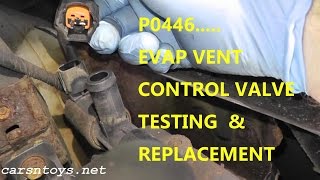
How to confirm: Locate the valve on the passenger side frame rail, in front of the rear axle. Use a scan tool to command the valve to close; you should hear a click. If not, check for 12V power and ground at the connector with the key on. If power and ground are present but the valve doesn't operate, it has failed. You can also apply 12V directly to the solenoid pins to test for actuation. A good solenoid should have a resistance between 48 and 65 ohms. 🎬 See how to test and replace the vent control valve.
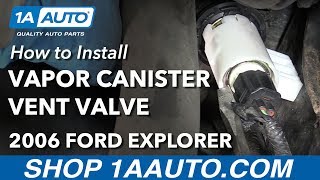
Typical fix: Replace the canister vent solenoid. This part simply unplugs and unclips from its bracket and hoses. It is a 5-15 minute job for most DIYers. 🎬 Watch: Step-by-step guide to replacing the canister vent valve.
Est. part cost: $30-$90 - Corroded or Damaged Wiring/Connector 🟡 Medium Probability
How to confirm: Visually inspect the electrical connector and wiring going to the vent solenoid for any green or white corrosion, frayed wires, or loose pins. The exposed location makes this common. A multimeter can be used to check for continuity between the PCM and the solenoid connector if a visual inspection is inconclusive. One user on a F-150 forum noted they only measured 2.6V at the connector, indicating a wiring issue. You should have full battery voltage (~12V) on the power supply wire with the key on.
Typical fix: Clean the connector terminals with an electrical contact cleaner and a small brush. If the wiring or connector is badly damaged, it will need to be repaired or replaced with a new pigtail connector, such as Standard Motor Products S-1752 or NAPA ECH EC1250.
Est. part cost: $15-$65 - Blocked Vent Hose or Filter ⚪ Low Probability The vent hose can become clogged with dirt, debris, or even insect nests (like mud daubers), restricting airflow and tricking the system into thinking the valve is faulty. This is more common in vehicles operated in dusty or off-road environments. A GM TSB for a similar issue specifically calls out dust intrusion as the cause.
How to confirm: Disconnect the hoses from the vent solenoid and inspect them for blockages. Attempt to blow air through them to ensure they are clear. One user on a Ford forum reported fixing their P0446 by blowing out the canister and a clogged sensor screen with compressed air.
Typical fix: Clear the blockage from the hose or replace the hose if it is cracked or damaged.
Est. part cost: $10-$30
Rare But Worth Checking
- Faulty Charcoal Canister: While not common for P0446 specifically, if the charcoal canister becomes saturated with fuel or the internal pellets break down, it can clog the vent path and cause this code. This is usually a result of persistently overfilling the gas tank.
- Faulty Powertrain Control Module (PCM): This is extremely rare. The PCM should only be considered a potential cause after all other possibilities, including the valve, wiring, and hoses, have been exhaustively tested and ruled out. One YouTube video documented a 2013 Explorer where the PCM was found to be constantly grounding the vent valve circuit, requiring a PCM replacement to fix the P0446 code.
Diagnosis Steps

- Read the Code: Use an OBD-II scanner to confirm P0446 is the active code. Note any other codes present, especially P1450 or P0455.
- Visual Inspection: Raise and safely support the vehicle. Locate the EVAP canister vent solenoid on the passenger side frame rail, just in front of the rear axle. Inspect the solenoid, its electrical connector, and the attached hoses for any obvious signs of damage, corrosion, or blockages.
- Check for Blockages: Disconnect the vent hoses from the solenoid and check for any dirt, debris, or insect nests inside. Ensure you can blow air through the hoses.
- Test the Solenoid Circuit: Disconnect the electrical connector. With the ignition key in the 'On' position, use a multimeter to verify there is ~12V at one of the pins in the connector. If voltage is low or absent, check the fuse and wiring for faults.
- Test the Solenoid Operation: If power is present, you can use a scan tool with bidirectional controls to command the solenoid on and off while listening for a click. Alternatively, you can apply 12V and a ground directly to the solenoid's pins using jumper wires to see if it actuates. If it doesn't click, the solenoid is faulty. You can also measure the resistance across the solenoid's pins; a good reading for a Ford vent solenoid is between 48 and 65 ohms.
- Inspect the Charcoal Canister: If the solenoid and wiring are good, inspect the charcoal canister for cracks or signs of fuel saturation (wetness or strong fuel smell).
- Smoke Test: If the cause is still not apparent, a smoke test is the next step. This involves injecting smoke into the EVAP system to find any hard-to-see cracks or blockages in the vent path that were missed during the visual inspection.
Parts You'll Likely Need

- Vapor Canister Vent Solenoid
(OEM #9U5Z-9C915-H, AU5Z-9C915-A, 9U5Z9C915H)— This is the most common failure point for the P0446 code on this vehicle due to its exposed mounting location leading to corrosion and mechanical failure.
Trusted brands: Motorcraft, Dorman (p/n 911-222), Standard Motor Products (p/n CVS17)
OEM price range: $60-$90
Aftermarket price range: $30-$70 - Vapor Canister Vent Solenoid Connector Pigtail — If the connector is heavily corroded with green or white powder, or the locking tab is broken, it may need to be replaced to ensure a good connection.
Trusted brands: Standard Motor Products (p/n S-1752), Dorman, NAPA/Echlin (p/n ECH EC1250)
OEM price range: N/A
Aftermarket price range: $15-$65
Related Codes That Often Appear With This One
- P1450 — This Ford-specific code means 'Unable to Bleed Up Fuel Tank Vacuum.' It often appears with P0446 when the vent valve is stuck closed, preventing the system from equalizing pressure. This is a very common pairing. 🎬 Watch this troubleshooting guide for P1450 and fuel vacuum issues.
- P0455 — This code indicates a 'Large EVAP System Leak.' It can be triggered alongside P0446 if the vent valve is stuck open, which the computer interprets as a major leak.
Technical Service Bulletins (TSBs) & Recalls
- While no specific TSBs for the 2006-2010 Explorer and P0446 were found, a related GM TSB (02-06-04-037H) for P0446 on Silverado/Sierra trucks highlights that operation in dusty environments can cause dirt intrusion into the vent hose, leading to the code. This corroborates the 'blocked hose' cause on the Explorer.
Platform-Specific Known Issues
- Real-World Repair Story from a Forum: A user on Ford-Trucks.com with a 1997 Explorer and code P0446 ultimately traced the issue to the vent valve on the vapor canister, which is mounted above the spare tire. They noted its location makes it susceptible to road grime and that replacing the valve fixed the code.
- DIY Experience on a Mountaineer: A 2004-2007 Mercury Mountaineer owner documented their P0446 repair on YouTube. They confirmed the part location on the passenger side by the filler neck and stated the job took only five minutes with no tools other than what was needed to disconnect the battery. They paid around $90 for the part from NAPA.
Mechanic-Grade Diagnostic Values
- EVAP Canister Vent Solenoid Coil Resistance — expected: 48 to 65 ohms. Failure: A reading of infinite ohms indicates an open circuit; a reading near zero ohms indicates a short. Either requires replacement of the solenoid.
- Voltage at Vent Solenoid Connector (Power Wire) — expected: ~12 Volts (Battery Voltage) with Key On, Engine Off. Failure: Low or no voltage indicates an open or short in the power supply wire or a blown fuse.
- Fuel Tank Pressure (FTP) Sensor Voltage (Key On, Engine Off) — expected: Static value around 2.6 - 2.65 Volts. Failure: A value significantly different from the static baseline, or one that drops without the purge valve being commanded open, can indicate a sensor or system issue.
Scan Tool Commands That Help
- Ford IDS (Integrated Diagnostic System): Output State Control (OSC) for 'Canister Vent Valve' — This bidirectional command allows a technician to manually command the vent solenoid open and closed to verify its mechanical function (listening for a click) and to check the integrity of the control circuit with a multimeter.
Wiring & Ground Locations
- PCM Connector C175B, Pin 20 — This is the Powertrain Control Module connector. The PCM is typically located in the engine bay near the firewall.. This is the specific pin on the PCM that provides the switched ground to control the EVAP vent solenoid. A technician can back-probe this pin to verify if the PCM is commanding the solenoid to operate. On some models, the wire is Green/Blue at the PCM.
- Connector C213 — Located behind the driver's side kick panel, near where the driver's left foot would be.. This is an intermediate connector for the vent solenoid wiring harness. A wire color change can occur here (e.g., Green/Violet to Green/Blue). It's a potential point of failure due to corrosion or loose pins, but less likely than connectors under the vehicle.
- Connector C3053 — Located underneath the vehicle, near the second-row seats.. This is another intermediate connector in the vent solenoid circuit. Due to its location under the vehicle, it is more susceptible to corrosion and water intrusion than interior connectors, making it a key place to check for wiring faults.
Real Owner Repair Stories
- YouTube video on a 2007 Ford F-150 (similar EVAP system) (2007 Ford F-150 5.4L) — Check Engine Light with code P0446. The vent solenoid had already been replaced.
❌ Tried (didn't work) Replacing the EVAP canister vent solenoid.
✅ What actually fixed it The power feed wire in the harness leading to the vent solenoid was corroded internally and broke with a slight pull. The technician located the break by wiggling the harness while watching voltage on a multimeter. Repairing the broken wire restored the correct 12V supply and fixed the code. - CarKiller forum post (2006 Ford Explorer 4.6L with 222k miles) — P0446 and P1633 (Keep Alive Memory power supply fault)
❌ Tried (didn't work) Replacing the vent valve solenoid., Replacing the KAM fuse (#24).
✅ What actually fixed it The final fix was not posted, but the expert advice given was to check for low voltage at the battery during cranking (below 10.5V) and then to trace the Keep Alive Power (KAPWR) wire from fuse #24 to the PCM for an open circuit, as both the vent solenoid power and PCM memory are tied to this circuit. This highlights a potential electrical root cause when P0446 appears with power-related codes. - NHTSA ODI #11670709 — An owner of a Ford Edge (which shares similar EVAP architecture) reported that the engine warning light was illuminated and a vehicle scanner retrieved DTC P0446, specifically identifying an Evaporative Emission Control System (EVAP) vent control circuit malfunction.
OEM Part Supersession History
9U5Z-9C915-H→9U5Z-9C915-J, AU5Z-9C915-A, AU5Z-9C915-B— Standard part evolution and design updates by Ford.
Heads up: While multiple part numbers supersede the original, they are listed for different applications (e.g., Purge Valve vs. Vent Valve). It is critical to verify the correct part for the specific application (vent solenoid near the tank). The part number 9U5Z-9C915-H is often cross-referenced for both purge and vent valves by vendors, causing confusion. The correct aftermarket part is often Dorman 911-222 or Standard Motor Products CVS17 for the vent solenoid.
Diagnostic Flowchart
Real Owner Stories
Aggregated from forums and TSBs cited above. Mileages and costs reflect what owners reported in those sources.
2006 Ford Explorer 4.6L — 222000 miles
Symptoms: Check Engine Light illuminated with codes P0446 and P1633.
What fixed it: No fix reported by the owner; the issue persisted even after replacing the vent valve solenoid and the KAM fuse (#24).
Source hint: CarKiller forum
2007 Ford Explorer Eddie Bauer 4.6L V8
Symptoms: Check Engine Light with code P0446 that returns immediately after resetting the computer with a code reader.
What fixed it: No fix reported. The owner tried replacing the gas cap, which did not change anything, and was seeking information on how to access the charcoal canister to replace the vent control valve.
Source hint: Ford Truck Enthusiasts Forums
2004-2007 Mercury Mountaineer
Symptoms: Check Engine Light with a P0446 code.
What fixed it: Replaced the vent solenoid located on the passenger side by the filler neck. The owner noted it was a five-minute job requiring no tools other than what was needed to disconnect the battery.
Cost: $90
Source hint: YouTube DIY Experience
1997 Ford Explorer
Symptoms: Check Engine Light with a P0446 code.
What fixed it: Traced the issue to the vent valve on the vapor canister mounted above the spare tire. Replacing the valve fixed the code, with the owner noting its location makes it susceptible to road grime.
Source hint: Ford-Trucks.com forum thread
Related OBD-II Codes
Frequently Asked Questions
Where is the EVAP canister vent solenoid located on my 2006-2010 Ford Explorer?
Why does the gas pump nozzle keep clicking off when I try to fill my Explorer?
Are there specific replacement connector part numbers if the wiring to my Explorer's vent solenoid is corroded?
What should the resistance reading be when testing the vent solenoid on this Ford platform?
Will replacing the gas cap fix the P0446 code on my Explorer?
Does the GM TSB mentioned in the diagnostic steps apply to my Ford Explorer?
Helpful Videos


Used OEM Parts in Stock

New Aftermarket Parts Available


The information in this article is provided for general reference and educational purposes only. Vehicle specifications, procedures, and part compatibility can vary by production date, trim level, and region. Always consult your vehicle's factory service manual and verify part numbers before purchasing or performing repairs. Safety-critical components such as airbags, seat belts, and braking systems should be installed by a qualified professional.
- Ford Explorer:
- 🎬 Helpful Videos
- 🛍️ Shop This Part
- What's Unique About the 2006-2010 Ford Explorer
- Symptoms You May Notice
- Most Likely Causes
- Rare But Worth Checking
- Diagnosis Steps
- Parts You'll Likely Need
- Related Codes That Often Appear With This One
- Technical Service Bulletins (TSBs) & Recalls
- Platform-Specific Known Issues
- Mechanic-Grade Diagnostic Values
- Scan Tool Commands That Help
- Wiring & Ground Locations
- Real Owner Repair Stories
- OEM Part Supersession History
- Diagnostic Flowchart
- Real Owner Stories
- 2006 Ford Explorer 4.6L — 222000 miles
- 2007 Ford Explorer Eddie Bauer 4.6L V8
- 2004-2007 Mercury Mountaineer
- 1997 Ford Explorer
- Related OBD-II Codes
- Frequently Asked Questions
- 🎟️ Get 5% Off