

P0446 on 2008-2017 Buick Enclave 3.6L: EVAP Vent Circuit Causes and Fixes
P0446 on a Buick Enclave most often points to a faulty EVAP vent solenoid, which is difficult to access on top of the gas tank. However, the much easier-to-replace purge solenoid on the engine is also a very common failure on this platform and should be considered. Expect to pay $30-$60 for either part. A third possibility is a clogged vent filter/hose, especially on vehicles driven on dirt roads.
- P0446 means your Enclave's EVAP vent system is blocked or has an electrical fault.
- The most common symptom you'll notice besides the Check Engine Light is the fuel pump nozzle shutting off frequently when you try to fill the tank.
- There are two likely culprits: the vent solenoid (on the gas tank, harder to replace) and the purge solenoid (on the engine, much easier to replace).
- Because it's cheap and easy, consider inspecting or replacing the engine-mounted purge solenoid (ACDelco 12690512) first.
- If the problem persists, the vent solenoid (ACDelco 214-2149) is the next logical part to replace, but be prepared for a more involved repair that may require lowering the fuel tank.
What's Unique About the 2008-2017 Buick Enclave
The 2008-2017 Enclave, along with its GM Lambda platform mates (Traverse, Acadia, Outlook) using the 3.6L V6, has two common failure points for EVAP issues. While P0446 technically points to the vent valve circuit (located on the fuel tank), the purge valve solenoid (located on the engine) is a notoriously high-failure item that can cause a range of EVAP codes. Many owners and technicians recommend replacing the more accessible purge valve first before attempting the more labor-intensive vent valve replacement, which requires lowering the fuel tank.
Symptoms You May Notice
- Check Engine Light is on
- Difficulty refueling (gas pump nozzle clicks off repeatedly and frequently)
- A slight fuel odor near the rear of the vehicle
- Hard starting after filling the gas tank
- Replacing the gas cap. A loose or faulty gas cap typically causes a small or large leak code (like P0455 or P0457), not a vent circuit/blockage code like P0446.
Most Likely Causes
- Faulty EVAP Vent Valve/Solenoid 🔴 High Probability The valve is located under the vehicle, exposed to road debris, salt, and moisture, which can cause it to stick or fail electrically over time. The wiring harness leading to it is also susceptible to damage.
How to confirm: Use a bidirectional scan tool to command the vent solenoid on and off; a functional valve should make an audible click. You can also test for 12V power and ground at the connector with the key on. If it clicks but the problem persists, the valve may be mechanically stuck or clogged.
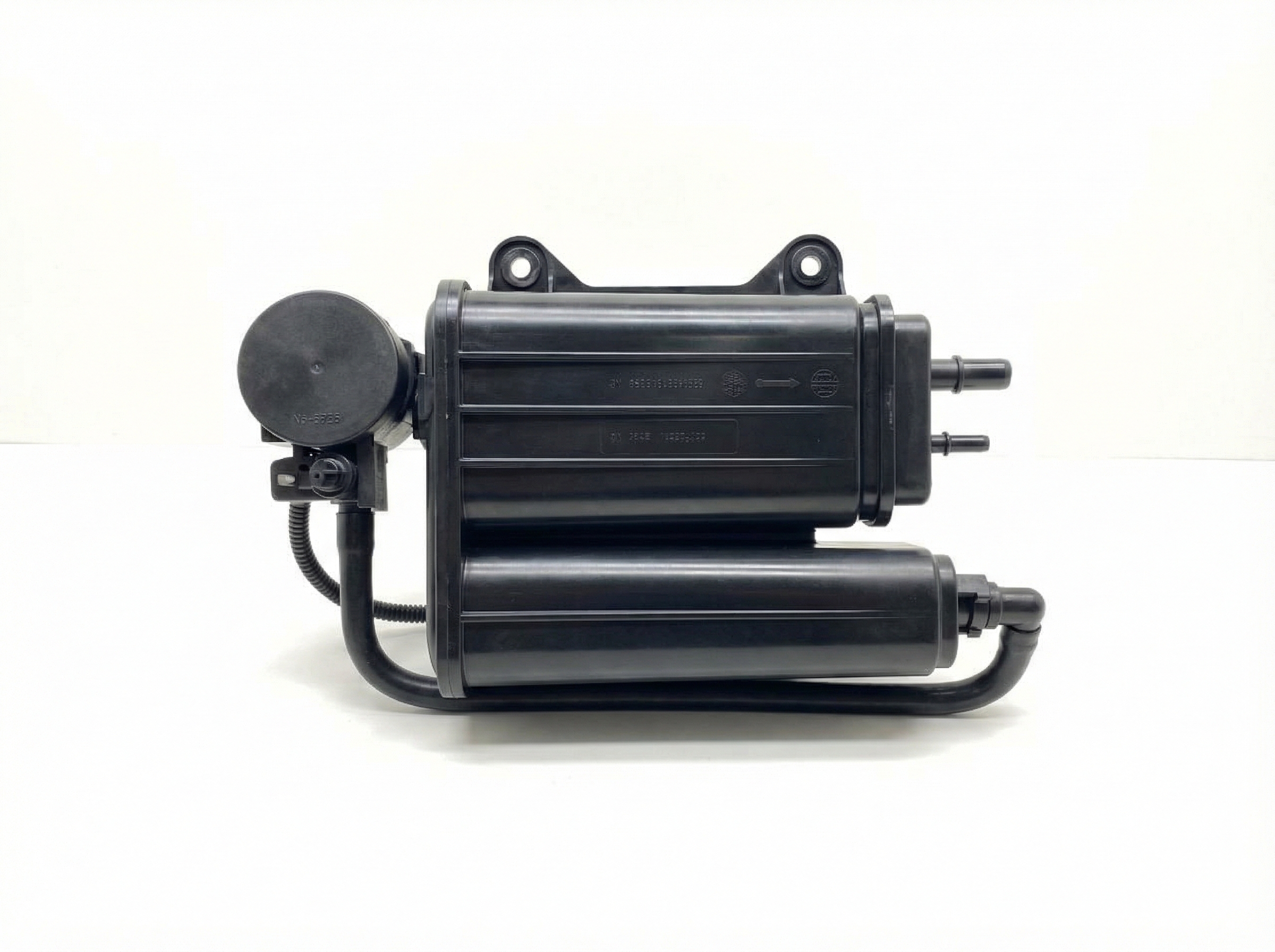
Typical fix: Replace the vent solenoid. This part is attached to the charcoal canister, which sits on top of the fuel tank, so the tank must be lowered for access. Some DIYers cut an access panel in the floor under the rear cargo area to avoid dropping the tank, but this is an advanced, non-standard repair.
Est. part cost: $30-$70 - Faulty EVAP Purge Valve/Solenoid 🔴 High Probability This specific part is a well-documented, high-failure item on the GM 3.6L V6 engine across many models. It can get stuck open or closed, causing a range of EVAP codes, including P0496, and is often replaced preventatively.
How to confirm: Remove the valve from the engine (located on the intake manifold). With the valve disconnected, try to blow through it. If air passes through, it is stuck open and faulty. A scan tool can also command it open and closed to check for function.
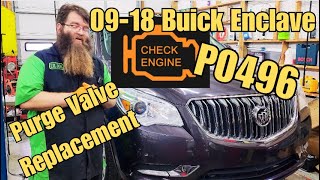
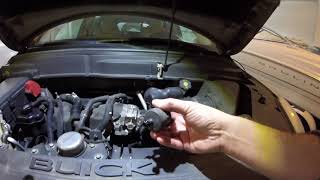
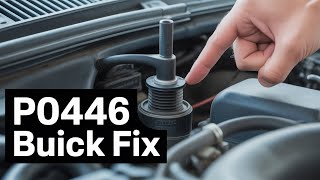
Typical fix: Replace the purge solenoid. It is located on the top/side of the engine and is relatively easy to access and replace with basic tools, often in under 20 minutes. 🎬 See this quick walkthrough for replacing the purge valve.
Est. part cost: $25-$50 - Clogged EVAP Vent Hose or Filter 🟡 Medium Probability The vent hose outlet and its associated filter box, often located near the fuel filler neck, can become clogged with dirt, mud, dust, or insect nests, preventing the system from venting. This is especially common on vehicles driven on unpaved roads. Manufacturer bulletin #PIC6250B notes that technicians may find P0446 if spiders are nesting in the fresh air inlet port.
How to confirm: Locate the vent hose running from the charcoal canister to its fresh air source. Disconnect it and inspect for any blockages. The filter box itself can be opened and may be packed solid with debris.
Typical fix: Clear the obstruction from the hose or replace the hose if it is damaged or brittle. Clean or replace the small sponge filters inside the breather box.
Est. part cost: $10-$30 - Damaged Wiring or Connector for Vent Solenoid 🟡 Medium Probability
How to confirm: Visually inspect the wiring harness leading to the vent solenoid for any breaks, corrosion, or damage from road debris. Use a multimeter to check for continuity and proper voltage at the connector.
Typical fix: Repair the damaged section of wire or replace the connector pigtail.
Est. part cost: $15-$40 - Failed Charcoal Canister ⚪ Low Probability Over-filling the gas tank can saturate the canister with liquid fuel, damaging it. The internal charcoal media can also break down over time and clog the vent valve. Bulletin #PIC6306 indicates that technicians should inspect the EVAP air inlet pipe to the canister for dust intrusion, which can lead to a P0446 code.
How to confirm: Inspect the canister for physical damage or cracks. If you remove the vent valve and find black charcoal pellets inside, the canister has failed and needs to be replaced along with the vent valve and any contaminated lines.
Typical fix: Replace the entire charcoal canister assembly. This is often done at the same time as the vent solenoid since they are connected. Bulletin #17NA383 provides a procedure to replace the canister if P0446 is set due to spiders laying a nest within it.
Est. part cost: $150-$250
Rare But Worth Checking
- Faulty Fuel Tank Pressure (FTP) Sensor:
Diagnosis Steps
- Read the code with an OBD-II scanner to confirm P0446 is the primary code present. 🎬 Watch: Common causes and fixes for the P0446 code.
- Inspect the gas cap to ensure it is tight and the seal is intact, though this is an unlikely cause.
- Locate and inspect the easily accessible purge solenoid on the engine. With the engine off, remove it and try to blow through it; it should be closed and not allow air to pass. If it does, it's faulty and needs replacement.
- Visually inspect the EVAP vent hoses and the breather filter box (often near the filler neck) for clogs from dirt, dust, or insect nests. Bulletin #PIC6306A recommends checking the EVAP air inlet pipe specifically for dust intrusion.
- Locate the EVAP vent solenoid on the charcoal canister 🎬 Watch: A deep dive into the Buick EVAP system design. near the fuel tank. Inspect its wiring connector for corrosion or damage.
- Use a multimeter to verify that the vent solenoid connector is receiving ~12V power with the ignition on.
- If power is present, use a bidirectional scanner to command the vent solenoid to open and close. Listen for an audible click. If it doesn't click, the solenoid has likely failed.
- If the solenoid clicks but the code persists, the valve may be mechanically stuck, or the charcoal canister itself may be clogged or have failed internally.
- If all other components check out, use a scan tool to monitor the Fuel Tank Pressure (FTP) sensor to ensure it's reading correctly.
Parts You'll Likely Need
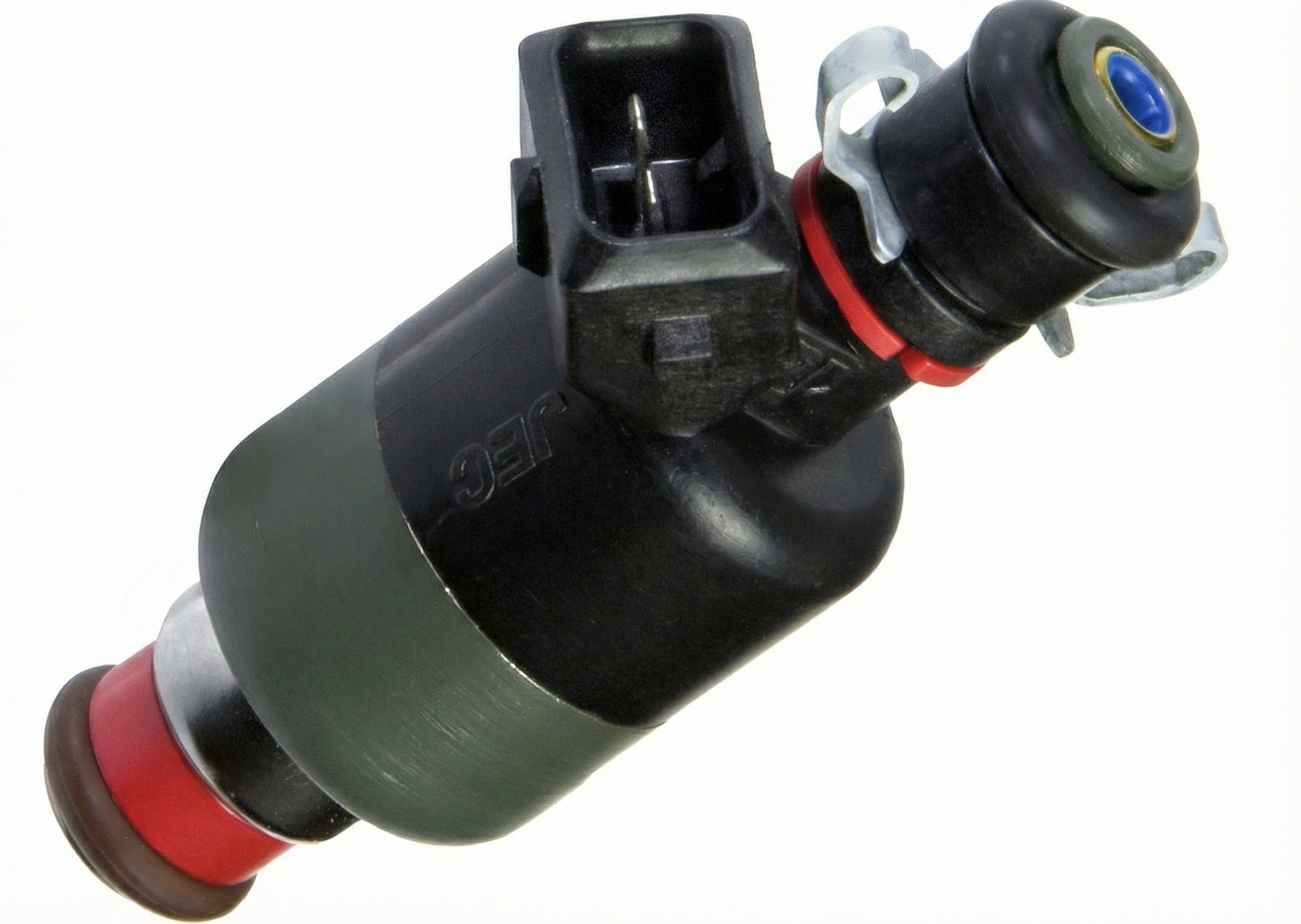
- EVAP Canister Purge Valve Solenoid
(OEM #12690512 (may be superseded by 12737252))— A very common failure item on the 3.6L V6 that can cause various EVAP codes. Due to its low cost and easy access on the engine, it's often replaced as a primary diagnostic step.
Trusted brands: ACDelco, Bosch
OEM price range: $40-$60
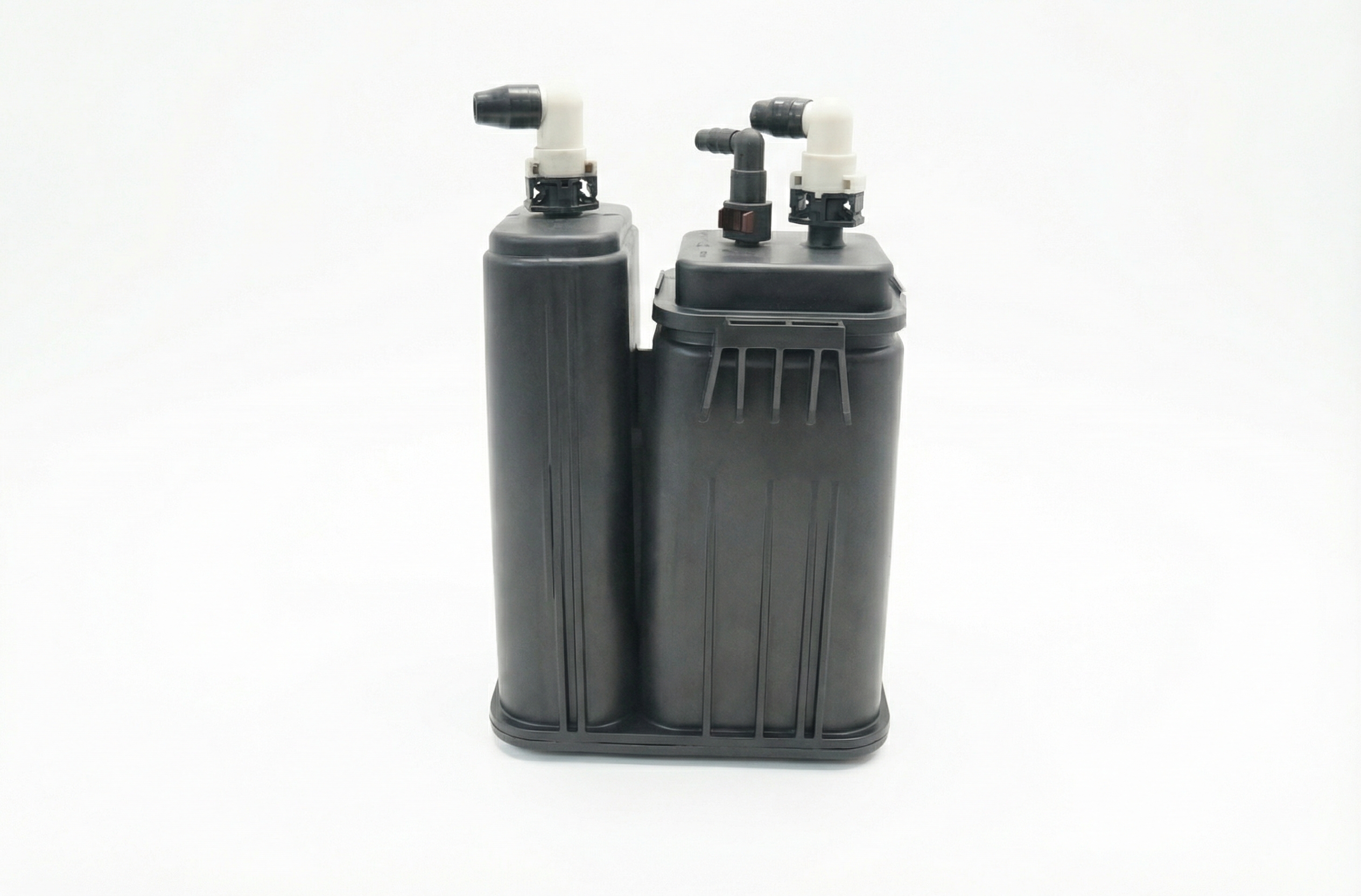
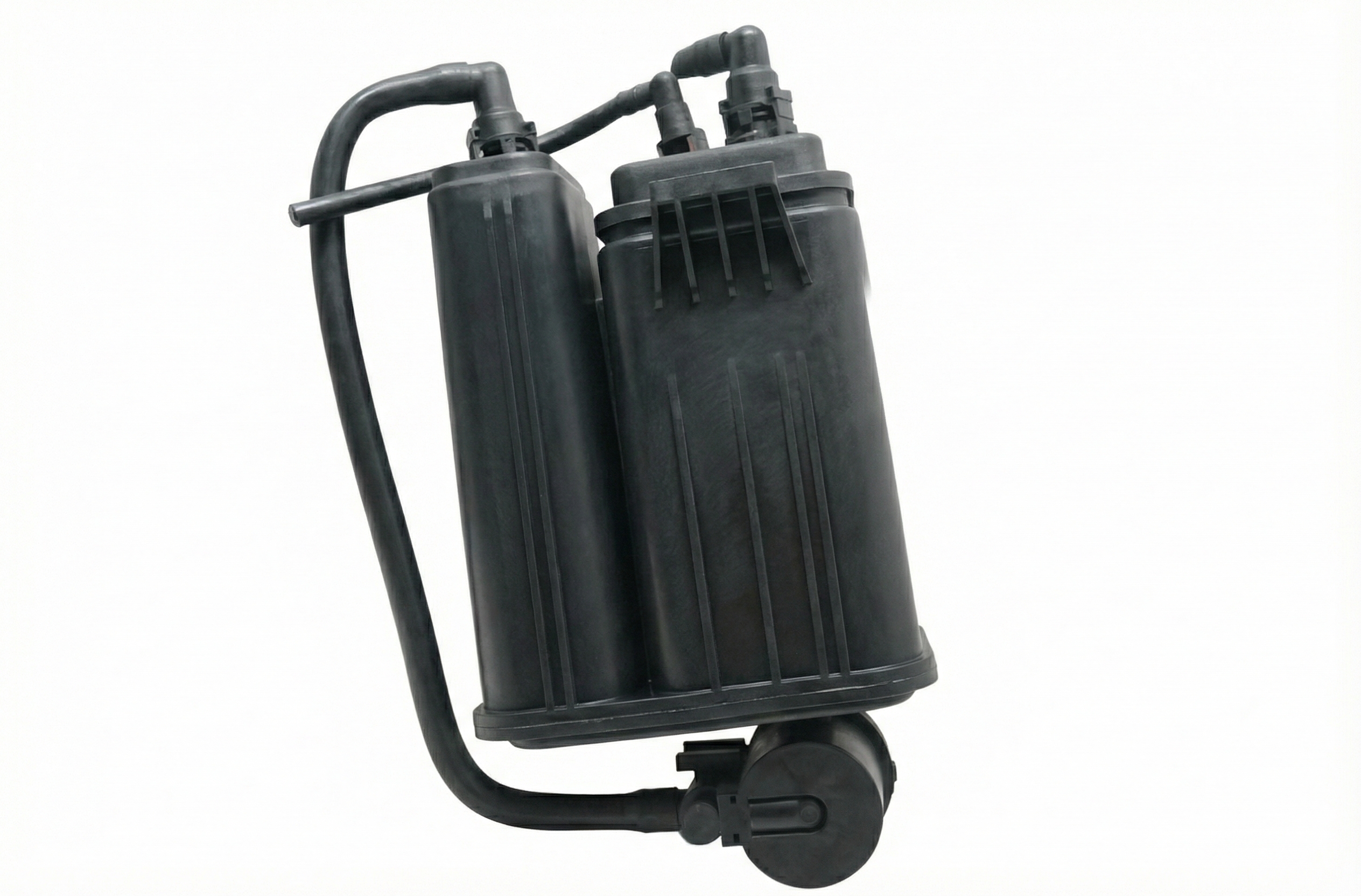
Aftermarket price range: $25-$45 - EVAP Canister Vent Valve Solenoid
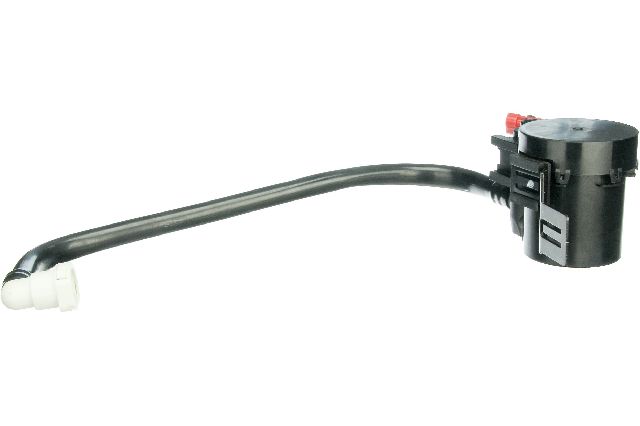
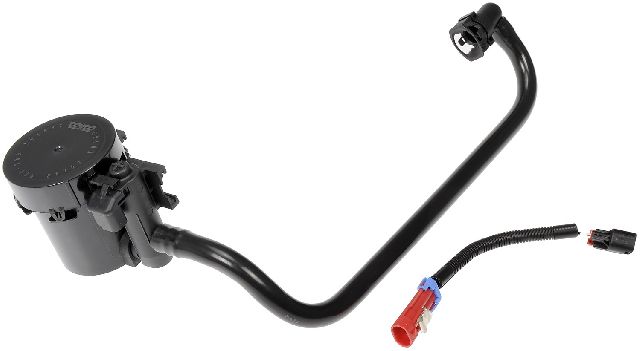
(OEM #25932571 (or full canister assembly 23481275))— This is the part most directly indicated by the P0446 code. It gets stuck or fails electrically, preventing the EVAP system from venting properly.
Trusted brands: ACDelco, Dorman
OEM price range: $50-$80
Aftermarket price range: $30-$60
Related Codes That Often Appear With This One
- P0449 — P0449 is an alternative code for the same EVAP Vent Solenoid Control Circuit issue. Some GM vehicles may use P0449 instead of or in addition to P0446.
- P0496 — This code indicates 'EVAP Flow During a Non-Purge Condition' and almost always points directly to a faulty purge valve on the engine that is stuck open. It can appear with P0446 if both parts of the system are malfunctioning or if the purge valve failure is the root cause.
- P0455 — Indicates a large EVAP system leak. While P0446 is a circuit/blockage code, sometimes a severe failure can trigger multiple codes. A user reported P0455 appearing alongside P0446.
- P0442 — This code for a small EVAP leak may be found alongside P0446, as noted in manufacturer bulletin #PIE0528, which requests information on warranty parts for complete canister assemblies.
Technical Service Bulletins (TSBs) & Recalls
- GM TSB 09-06-04-028E: Discusses various EVAP codes, including P0446, and provides updated diagnostic charts. It notes that road debris can damage the vent solen
Platform-Specific Known Issues
- The EVAP vent solenoid is located on top of the fuel tank, making replacement more difficult than on other vehicles where it might be mounted on a frame rail. Access requires lowering the fuel tank.
- The engine-mounted purge solenoid is a frequent point of failure and a cost-effective first part to replace when troubleshooting EVAP issues on this platform.
- A DIY shortcut reported by some owners involves cutting an access panel in the vehicle's floor, under the second or third-row seats, to access the top of the fuel tank without lowering it. This is a permanent modification and should be attempted with extreme caution.
Mechanic-Grade Diagnostic Values
- EVAP Vent Valve/Solenoid Coil Resistance — expected: 14 to 16 Ohms. Failure: An open circuit (infinite resistance) or a reading significantly outside the expected range indicates a failed solenoid.
- EVAP Purge Valve/Solenoid Coil Resistance — expected: 15 to 30 Ohms. Failure: A reading far outside this range, or an open/short circuit, points to a failed coil. Note that a mechanically stuck valve may still show a good resistance reading.
- Fuel Tank Pressure (FTP) Sensor Voltage (Key On, Gas Cap Off) — expected: Approximately 1.3V to 1.7V. Failure: A voltage that is significantly different or does not change when the system is sealed and tested indicates a faulty sensor.
- EVAP Vent Solenoid Connector Voltage (Key On) — expected: ~12V (Battery Voltage). Failure: No voltage suggests a problem with the power supply circuit, such as a blown fuse or broken wire.
Scan Tool Commands That Help
- GDS2 / Tech2: EVAP Service Bay Test — This is a comprehensive, automated test that allows a technician to force the EVAP monitor to run in a service environment without a lengthy drive cycle. It commands the vent and purge solenoids and monitors the FTP sensor to verify the integrity and function of the entire system, and will report a pass or fail for specific DTCs.
- GDS2 / Tech2: EVAP Purge/Seal — This bidirectional control allows for manual sealing of the EVAP system by closing the vent valve. The technician can then monitor the FTP sensor to check for leaks or command the purge valve to create a vacuum, verifying the function of individual components.
Wiring & Ground Locations
- G101 — Located at the center of the frame cross rail, under the crank pulley.. This is a primary engine ground location that provides the ground path for the Engine Control Module (ECM). A poor connection here can cause erratic behavior and fault codes for any sensor or actuator controlled by the ECM, including the EVAP system components.
- EVAP Vent Solenoid Connector — On the EVAP canister, which is located on top of the fuel tank.. This 2-wire connector provides power and the ground control signal to the vent solenoid. The wiring harness (typically 18 gauge wire) is exposed under the vehicle and is prone to damage from road debris, moisture, and corrosion, which can cause an open or short in the circuit, directly triggering P0446.
Real Owner Repair Stories
- GM Forum user 'e36graduate' (Unknown GM vehicle, but diagnosis path is relevant.) — P0446 Check Engine Light.
❌ Tried (didn't work) Replaced gas cap, Replaced EVAP vent valve, Inspected charcoal canister (was okay), Replaced EVAP purge valve
✅ What actually fixed it Replacing the Fuel Tank Pressure (FTP) sensor finally resolved the P0446 code. - GMTNation forum user 'AtlWrk' (General Motors Truck) — P0446 with no other symptoms.
❌ Tried (didn't work) Replacing the vent valve solenoid.
✅ What actually fixed it The user suggests that if the vent valve is replaced and the code returns, the next logical steps are to inspect the charcoal canister for a blockage or test the Fuel Tank Pressure (FTP) sensor for providing bad data. A key diagnostic step proposed is opening the gas cap before a cold start; if this prevents the code from returning as quickly, it points towards a genuine blockage rather than a sensor issue.
"I Checked Everything" — The Actual Cause
- In a case where a smoke test from both the purge valve and the filler neck revealed no leaks, the issue persisted. The user later received a P0452 (EVAP Pressure Sensor/Switch Low) code, indicating the problem was not a leak but an electrical or sensor-related fault with the Fuel Tank Pressure (FTP) sensor, which had been recently replaced. This highlights that P0446 can be triggered by a faulty sensor providing incorrect data, making the system appear blocked when it isn't.
OEM Part Supersession History
12610560, 12661763→12690512— Part has been updated by GM for improved reliability or manufacturing changes.
Heads up: The latest part number, 12690512, is the recommended replacement for the EVAP Purge Solenoid on the engine for this vehicle range. Some sources indicate 12737252 is a newer revision.10382105, 15750484, 22728634→25932571— Part has been updated by GM over the years.
Heads up: 25932571 is the current OEM part number for the EVAP Vent Valve Solenoid.
Diagnostic Flowchart
Other Known Issues on This Vehicle
Issues unrelated to this code that are worth knowing about as an owner of this generation:
- Premature Timing Chain Stretch 🔴 High — Very common, especially on 2007-2012 models, often appearing between 60,000 and 120,000 miles. Triggers codes like P0008, P0017. (Ref: GM Special Coverage Adjustment #11340C extended warranty to 10 years/120,000 miles.)
- 6T75 Transmission 3-5-R Wave Plate Failure 🔴 High — Common on 2007-2009 models, leading to sudden loss of 3rd, 5th, and Reverse gears. Can cause catastrophic transmission failure. (Ref: GM Special Coverage #14404B extended warranty for this specific failure.)
- Power Steering Leaks & Whining 🟠 Medium — Frequent complaints of leaks from the power steering pump, lines, or steering rack, especially in cold weather. Can cause a whining noise and stiff steering. (Ref: Multiple TSBs exist, including 07-02-32-002M and 13-02-32-001G, which provide diagnostic procedures and recommend specific fluid for cold weather.)
- Sunroof Drain Leaks 🟠 Medium — Very common issue where the sunroof drain tubes clog or detach, causing water to leak into the cabin, often onto the A-pillar, floor, or headliner. Can damage electronics. (Ref: No official recall, but it is a widely known issue addressed frequently by dealers.)
- Stretched Throttle Body 🟡 Low — Less common, but can occur, causing the vehicle to enter a reduced power 'limp mode'. The throttle body assembly may need to be replaced.
Used vs. New Parts: Buying Guide for This Vehicle
When a used part is the smart pick: Buying a used charcoal canister assembly from a low-mileage, rust-free donor vehicle can be a cost-effective option, as it often includes the vent solenoid and pressure sensor. This is most viable if you suspect the canister itself is saturated or damaged, and you can acquire the entire assembly for less than the cost of a new vent solenoid alone.
Donor-vehicle mileage cap: roughly under 75000 miles for the part to have meaningful remaining life.
What to inspect on the donor part:
- Check for a vehicle from a dry, non-salt-belt region to minimize corrosion on electrical connectors.
- Visually inspect the canister for any physical cracks or signs of being saturated with fuel.
- Ensure all hose ports and electrical connectors are intact and not brittle or broken.
- If possible, ask for the VIN of the donor vehicle to verify it wasn't involved in a rear-end collision.
OEM-only on this vehicle (don't cheap out):
- EVAP Purge Valve Solenoid
- EVAP Vent Valve Solenoid
Aftermarket brands forum-validated for this vehicle:
- ACDelco (OEM)
- Bosch (for Purge Valve)
Brands owners have reported issues with on this vehicle:
- Unbranded, 'white-box' solenoids from online marketplaces have a high reported failure rate according to forum discussions. While cheaper, they often fail within months, leading to repeat repairs.
Real Owner Stories
Aggregated from forums and TSBs cited above. Mileages and costs reflect what owners reported in those sources.
2008-2017 Buick Enclave 3.6L V6
Symptoms: The vent filter box, located near the fuel filler neck, became completely packed with dirt.
What fixed it: Cleaning the filter and lines resolved the issue.
Source hint: gm-trucks.com/forums/topic/244341-cel-p0446-fixed-so-much-dirt/
2008-2017 Buick Enclave 3.6L V6
Symptoms: P0446 code present with no other obvious driving symptoms.
What fixed it: Diagnosis of a faulty Fuel Tank Pressure (FTP) sensor.
Source hint: gmtnation.com/forums/threads/p0446-with-no-symptoms.19530/
2007-2016 GMC Acadia 3.6L V6
Symptoms: Check engine light for EVAP codes; difficult access to the tank-mounted valve.
What fixed it: Replacing the easy-to-access engine-mounted purge valve first, which resolved the codes.
Source hint: enclaveforum.net / acadiaforum.net
Related OBD-II Codes
Frequently Asked Questions
Is there a TSB for the P0446 code on my Buick Enclave?
Why is it so hard to pump gas into my Enclave without the nozzle clicking off?
Where is the EVAP vent solenoid located on the 2008-2017 Enclave, and is it easy to replace?
I heard I can cut a hole in my floor to fix this; is that true?
Which EVAP part should I check first on my 3.6L V6 engine?
Can overfilling my gas tank cause the P0446 code?
Helpful Videos

Used OEM Parts in Stock


New Aftermarket Parts Available


The information in this article is provided for general reference and educational purposes only. Vehicle specifications, procedures, and part compatibility can vary by production date, trim level, and region. Always consult your vehicle's factory service manual and verify part numbers before purchasing or performing repairs. Safety-critical components such as airbags, seat belts, and braking systems should be installed by a qualified professional.
- Buick Enclave:
- 🎬 Helpful Videos
- 🛍️ Shop This Part
- What's Unique About the 2008-2017 Buick Enclave
- Symptoms You May Notice
- Most Likely Causes
- Rare But Worth Checking
- Diagnosis Steps
- Parts You'll Likely Need
- Related Codes That Often Appear With This One
- Technical Service Bulletins (TSBs) & Recalls
- Platform-Specific Known Issues
- Mechanic-Grade Diagnostic Values
- Scan Tool Commands That Help
- Wiring & Ground Locations
- Real Owner Repair Stories
- "I Checked Everything" — The Actual Cause
- OEM Part Supersession History
- Diagnostic Flowchart
- Other Known Issues on This Vehicle
- Used vs. New Parts: Buying Guide for This Vehicle
- Real Owner Stories
- 2008-2017 Buick Enclave 3.6L V6
- 2008-2017 Buick Enclave 3.6L V6
- 2007-2016 GMC Acadia 3.6L V6
- Related OBD-II Codes
- Frequently Asked Questions
- 🎟️ Get 5% Off