

P0443 on 2014-2023 Ford Transit Connect: EVAP Purge Valve Circuit Causes and Fixes
For a 2014-2023 Ford Transit Connect, code P0443 almost always points to a failed vapor canister purge valve located in the engine bay. It's a common failure item. On 2014-2016 2.5L models, a faulty engine wiring harness is also a known cause under a Ford TSB, where the harness can chafe on the transmission. Expect to pay $50-$100 for a new valve.
- P0443 on a Transit Connect is an electrical circuit code for the EVAP purge valve, not a system leak code.
- The most likely fix is replacing the vapor canister purge valve located in the engine bay.
- For 2014-2016 models with the 2.5L engine, be sure to inspect the engine wiring harness for damage as per TSB 16-0163 before replacing parts.
- Symptoms are usually minor, mainly a Check Engine Light, but can include a rough idle after getting gas.
- This is a DIY-friendly repair that typically takes less than an hour with basic tools.
What's Unique About the 2014-2023 Ford Transit Connect

While the P0443 code is common on many Fords, the Transit Connect has a specific documented issue. For 2014-2016 models with the 2.5L engine, Ford issued Technical Service Bulletin (TSB) 16-0163, which notes that P0443 (along with many other codes) can be caused by a faulty engine wiring harness. The TSB directs technicians to inspect the harness for chafing against the transmission housing, specifically 25-30 cm (10-12 inches) below the PCM connector. For all years, the purge valve itself remains the most frequent point of failure, often causing a rough idle after refueling when it sticks open. A major recall on the related Ford Focus platform (NHTSA 18V735000) for a sticking purge valve causing fuel tank deformation highlights the severity of this component's failure, though this specific recall did not include the Transit Connect.
Symptoms You May Notice
- Check Engine Light is on
- Slightly rough or unstable idle
- Difficulty starting the engine immediately after refueling
- Minor decrease in fuel economy
- Audible clicking from the valve when it's attempting to operate
- Strong fuel odor near the vehicle if the valve is stuck open
- Replacing the gas cap. A bad gas cap typically causes a P0455 (large leak) or P0457 (leak detected - cap loose/off) code, not a P0443 circuit code.
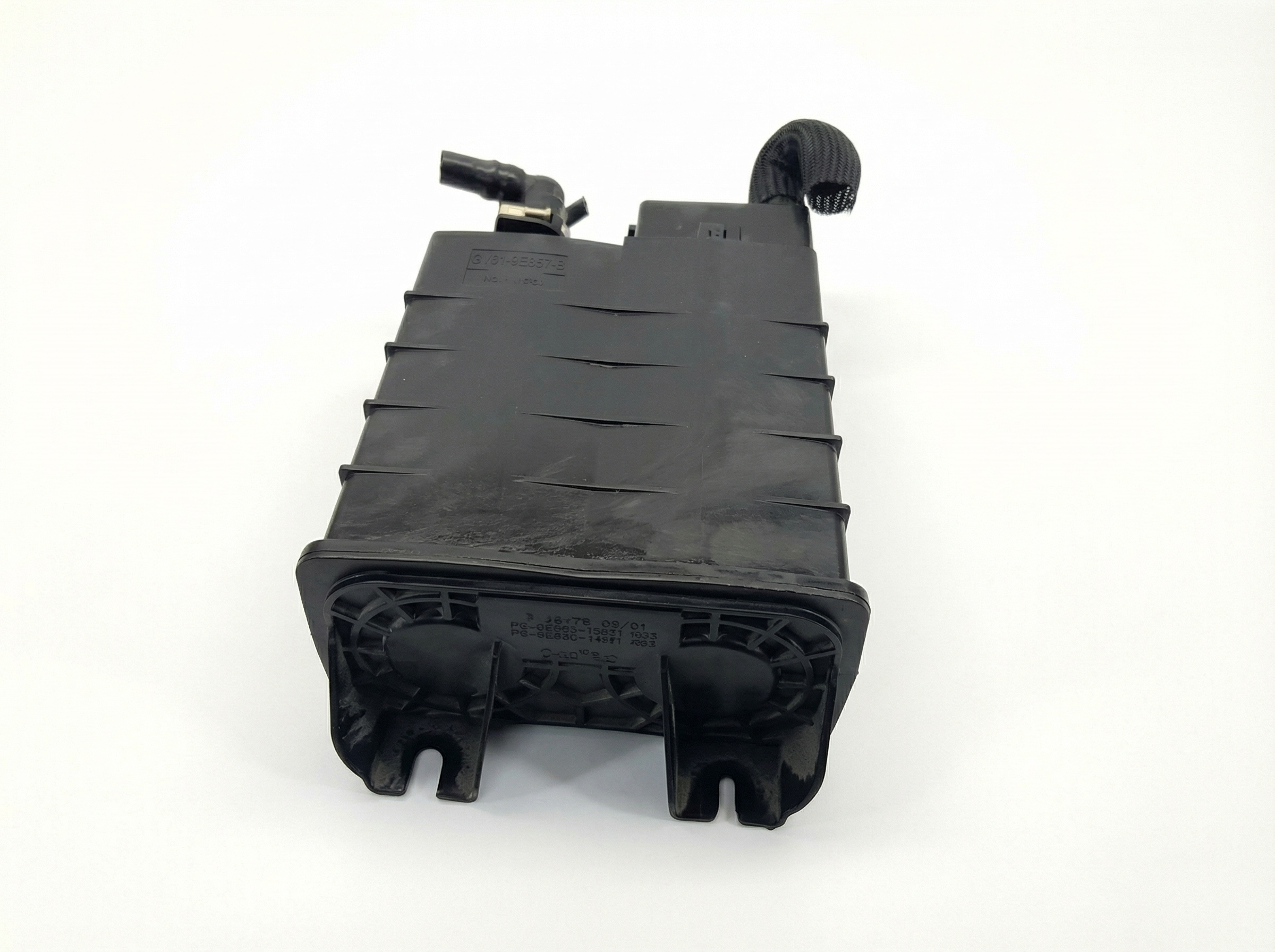
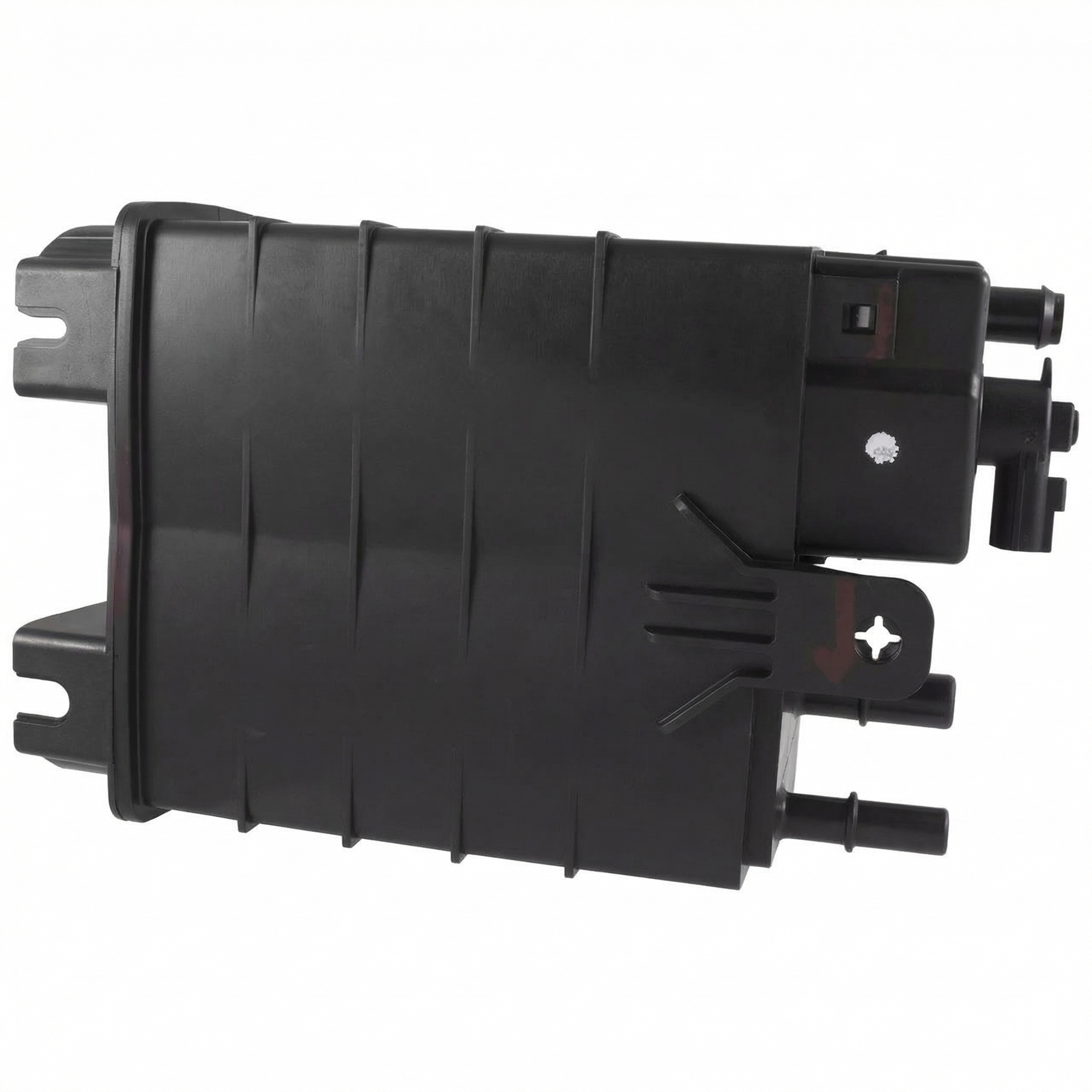
- Replacing the charcoal canister. The canister is a passive component and is unlikely to cause an electrical circuit code for the purge valve.
Most Likely Causes

- Faulty Vapor Canister Purge Valve 🔴 High Probability The purge valve (or solenoid) is a very common failure part on many Ford products, including the Transit Connect and its platform mates like the Focus and Escape. The internal solenoid coil can fail electrically, or the mechanical valve can get stuck open or closed.
How to confirm: With the engine running at idle (when the valve should be closed), disconnect the EVAP line from the purge valve that leads to the intake manifold. If you can feel vacuum suction from the valve's port, it is stuck open and faulty. You can also test the resistance of the valve's two pins with a multimeter; a typical reading for a good Ford valve is between 20-30 ohms. An open circuit (infinite resistance) or a direct short (zero resistance) indicates failure.
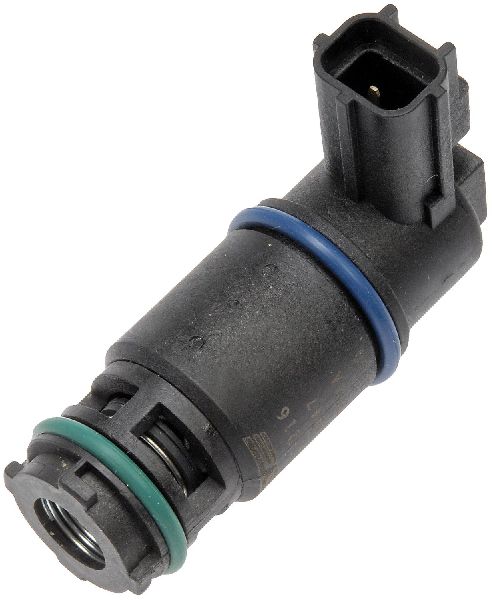
Typical fix: Replace the vapor canister purge valve assembly. It is typically located in the engine bay near the intake manifold and is often sold with its integrated hoses.
Est. part cost: $50-$100 - Damaged Engine Wiring Harness (2014-2016 2.5L) 🟡 Medium Probability Ford TSB 16-0163 specifically calls out the engine wiring harness as a potential cause for P0443 and a host of other codes on 2014-2016 models with the 2.5L engine. The bulletin identifies a specific chafe point where the harness may rub against the transmission housing, causing wires to break.
How to confirm: Visually inspect the engine wiring harness, focusing on the area 10-12 inches below the main PCM connector, looking for signs of rubbing, chafing, or exposed wires where it may contact the transmission. Check for voltage at the connector with the key on and check for continuity on the ground/signal wire back to the PCM.
Typical fix: Repair the damaged section of the wiring harness. This involves soldering the broken wire(s) and protecting the repair with heat shrink tubing and re-routing or securing the harness to prevent future contact.
Est. part cost: $5-$20 - Damaged Wiring or Loose Connector ⚪ Low Probability Vibration and heat in the engine bay can cause connectors to become loose or wires to break over time. This is a general automotive issue, not specific to this platform outside of the TSB.
How to confirm: Inspect the electrical connector at the purge valve for corrosion, pushed-out pins, or a loose fit. Wiggle the connector and wiring while the engine is running to see if it affects the idle or triggers the code. A user on the Ford Truck Enthusiasts forum reported their P0443 code remained after replacing the valve, indicating a likely wiring issue.
Typical fix: Clean the connector terminals with electrical contact cleaner or replace the connector pigtail if it's damaged.
Est. part cost: $10-$30
Rare But Worth Checking
- Blown Fuse: Always a quick and easy check. The purge valve circuit is protected by a fuse. If it blows, the valve will have no power, triggering the P0443 code. A user on a Ford Transit Connect forum noted that a blown fuse #33 caused their P0443 code, along with several others, which was ultimately traced to a damaged Turbine Speed Sensor wire creating a short.
- Faulty Powertrain Control Module (PCM): This is very rare. The internal driver circuit in the PCM that controls the purge valve can fail. All other possibilities, especially the valve and wiring, should be exhaustively ruled out before considering PCM replacement.
Diagnosis Steps

- Read the code with an OBD-II scanner to confirm P0443 is present. Note any other codes.
- Check the fuse for the EVAP system in the vehicle's fuse box. A forum member identified fuse #33 under the hood as being related. Replace if blown, but investigate the cause of the blown fuse.
- Locate the vapor canister purge valve in the engine bay. On the 2.0L and 2.5L engines, it's typically mounted near the intake manifold, often with attached hoses.
- Visually inspect the electrical connector and wiring going to the purge valve. Look for any obvious damage, corrosion, or loose connections.
- If you have a 2014-2016 2.5L model, carefully inspect the engine wiring harness for chafing on the transmission, as noted in TSB 16-0163. The specific area to check is 10-12 inches down from the PCM connector.
- Test the circuit. With the key on, one pin on the connector should have battery voltage (usually from a red or orange wire). The other pin is the control wire that the PCM grounds to activate the valve.
- Test the valve. Measure the resistance across the two pins on the valve itself. A typical reading is between 20-30 ohms. If it reads as an open circuit (infinite resistance) or a short (zero resistance), the valve is bad.
- If wiring and the valve test good, use a scan tool with bidirectional controls to command the purge valve ON and OFF. You should hear it click and see a change in engine vacuum or fuel trims. If the PCM commands it but nothing happens, the problem is confirmed to be the valve or its circuit.
- If all else fails, the fault may be intermittent or, in very rare cases, be with the PCM itself.
Parts You'll Likely Need
- Vapor Canister Purge Valve
(OEM #AU5Z-9C915-B (cross-references to CX-2409, 9U5Z9C915H). Note: Always verify with VIN.)— This is the most common component to fail, causing the P0443 code. The internal solenoid coil burns out or the valve gets stuck.
Trusted brands: Motorcraft, Bosch, Standard Motor Products (SMP), Dorman
OEM price range: $70-$125
Aftermarket price range: $45-$80
Related Codes That Often Appear With This One
- P0444 — Stands for 'Purge Control Valve Circuit Open'. It's a more specific version of P0443 and often appears for the same reasons (broken wire, bad valve coil).
- P0445 — Stands for 'Purge Control Valve Circuit Shorted'. Another specific version of P0443 indicating a short circuit to ground or power.
- P0496 — Stands for 'EVAP Flow During a Non-Purge Condition'. This code often accompanies P0443 if the purge valve is physically stuck open, causing a vacuum leak when it should be closed.
Technical Service Bulletins (TSBs) & Recalls

- 16-0163: For 2014-2016 2.5L models, notes that an illuminated MIL with DTC P0443 (and many others) may be caused by a faulty engine wire harness chafing on the transmission.
Platform-Specific Known Issues
- TSB 16-0163: Some 2014-2016 Transit Connect vehicles with a 2.5L engine may set a P0443 code due to a fault in the engine wiring harness. The harness can chafe on the transmission housing 10-12 inches below the PCM connector, requiring inspection and repair.
Mechanic-Grade Diagnostic Values
- Vapor Canister Purge Valve Solenoid Resistance — expected: 20-30 Ohms. Failure: A reading outside the 15-35 Ohm range, particularly an open circuit (infinite resistance) or a short (near zero resistance), indicates a faulty valve coil.
- Purge Valve Connector - Power Wire Voltage — expected: Battery Voltage (approx. 12V) with Key On, Engine Off. Failure: No voltage indicates an open circuit in the power supply wire or a blown fuse.
- Purge Valve Connector - Control Wire Voltage (Back-probed) — expected: Approximately battery voltage when the valve is commanded OFF (closed). Drops to a lower voltage or shows a ground-pulsed signal when commanded ON by the scan tool.. Failure: Voltage that doesn't change when the valve is commanded indicates a wiring issue or a faulty PCM driver.
- Ford IDS Scan Tool PID - EVAPCP Duty Cycle — expected: 0% when valve is closed, up to 100% when commanded fully open.. Failure: PID value not matching the commanded state suggests a circuit or PCM issue.
Scan Tool Commands That Help
- Ford IDS (Integrated Diagnostic System): Vapor Management Valve / Canister Purge Valve Control — This bidirectional control allows a technician to manually command the purge valve open and closed. While monitoring engine vacuum or fuel trims, this test definitively confirms if the valve is physically responding to the PCM's commands, isolating the fault to the valve itself or the circuit/PCM.
- Ford IDS (Integrated Diagnostic System): EVAP System Test — This is an automated test that the PCM runs to check the integrity of the entire EVAP system. While P0443 is a circuit code, running this test can sometimes provide additional context or reveal other related system faults that might not have set a code yet.
Wiring & Ground Locations

- Fuse F26 (2013 model year example) — Engine compartment fuse box.. This 10A fuse powers multiple components, including the Electronic Vapor Canister Purge Valve, Mass Air Flow sensor, and Heated Oxygen Sensors. A short in any of these components' wiring can blow the fuse, causing P0443 along with codes for the other sensors on the same circuit.
- Fuse F33 (2015 model year example) — Engine compartment fuse box, to the right of the battery.. A forum user with a 2015 2.5L model found that a blown fuse F33 caused P0443 and a host of other codes. The root cause was a shorted wire on the Turbine Speed Sensor, demonstrating how seemingly unrelated component failures can cause this code by blowing a shared fuse.
- G103 (example ground) — Right front of engine compartment (location varies by year/engine).. The PCM and various engine sensors rely on clean ground connections to function. A corroded or loose ground point like G103 can introduce electrical noise or high resistance, potentially causing intermittent circuit codes like P0443.
- Purge Valve Connector Pinout — At the purge valve solenoid itself.. One pin is the 12V power supply (VPWR), and the other is the control signal (EVAPCP) from the PCM, which grounds the circuit to open the valve. Knowing which pin is which is critical for testing for power, ground, and signal with a multimeter.
Real Owner Repair Stories
- Ford Transit Connect Forum user 'mikefordtransitconnect' (2015 Ford Transit Connect 2.5L with 6F35 Transmission) — Check engine light with multiple codes: P0443, P0420, P0403, P0103, P0135, P0010. The engine would repeatedly blow fuse #33 in the under-hood fuse box.
❌ Tried (didn't work) Initially, the user was focused on the individual components related to the codes.
✅ What actually fixed it The user discovered that all the codes and the blown fuse were caused by a damaged Turbine Speed Sensor (TSS) connector on the transmission, which had been ripped off during a transmission removal. The short circuit in the TSS wiring was on the same fused circuit as the purge valve and other sensors. Replacing the TSS connector and correctly wiring it resolved all the trouble codes, including P0443.
OEM Part Supersession History
AU5Z-9C915-B→AU5Z-9C915-E— Standard part revision by the manufacturer, likely for improved durability, material changes, or minor design tweaks.
Heads up: The new part number AU5Z-9C915-E is a direct replacement for the older -A, -B, -C, and -D revisions and is fully compatible.9U5Z-9C915-H→AU5Z-9C915-B (and subsequent revisions)— Part number consolidation and redesign for newer vehicle platforms.
Heads up: While AU5Z-9C915-B replaces 9U5Z-9C915-H, it's crucial to verify by VIN as hose configurations may differ on very early models that used the older part.
Model Year Variations Within This Range
- 2019-2023: For the 2019 model year, the 2.0L GDI engine paired with an 8-speed automatic transmission was introduced, replacing the 1.6L EcoBoost option. The 2.5L engine remained available. While the purge valve part number is often shared across engines, its physical location and access may differ slightly. The wiring harness routing is also different, meaning the TSB for the 2.5L chafing issue does not apply to the 2.0L GDI models.
- 2014-2018 vs 2019-2023: The fuse box layouts and numbering can change between the pre-facelift (2014-2018) and post-facelift (2019+) models. For example, a fuse relevant to P0443 might be F26 on an earlier model and have a different number/location on a later model. Always consult the owner's manual or a diagram specific to the vehicle's year.
Diagnostic Flowchart
Used vs. New Parts: Buying Guide for This Vehicle
When a used part is the smart pick: A used OEM (Motorcraft) purge valve from a low-mileage, late-model salvage vehicle is a reasonable and cost-effective choice. Since this is not a high-wear mechanical part (failure is typically electrical), a used unit has a good chance of providing long service life. It is a simple component to access and replace if it fails.
Donor-vehicle mileage cap: roughly under 60000 miles for the part to have meaningful remaining life.
What to inspect on the donor part:
- Check for the OEM 'Motorcraft' or 'FoMoCo' branding on the part.
- Inspect the plastic housing for cracks, brittleness, or signs of heat damage.
- Ensure the electrical connector pins are straight and free of corrosion.
- If possible, test the resistance with a multimeter before purchase; it should be between 20-30 ohms.
Aftermarket brands forum-validated for this vehicle:
- Bosch
- Standard Motor Products (SMP)
- Dorman
Brands owners have reported issues with on this vehicle:
- No-name, unbranded parts from online marketplaces should be avoided, as their internal coil quality and valve sealing can be inconsistent, leading to premature failure or performance issues.
Real Owner Stories
Aggregated from forums and TSBs cited above. Mileages and costs reflect what owners reported in those sources.
2015 Ford Transit Connect
Symptoms: Check engine light was on and a scanner read code P0443.
What fixed it: The owner replaced the EVAP purge valve, but the code remained. The final fix was not mentioned in the post, indicating the problem was likely in the wiring circuit.
Source hint: Ford Truck Enthusiasts Forums
2015 Ford Transit Connect 2.5L
Symptoms: Continuously blowing fuse #33 in the under-hood fuse box, which triggered multiple codes including P0443, P0420 (catalyst efficiency), and P0403 (EGR circuit).
What fixed it: The root cause was found to be a damaged Turbine Speed Sensor wire in the engine harness, which was causing a short circuit and blowing the fuse.
Source hint: Ford Transit Connect Forum
2020 Ford Transit Connect 2.5L
Symptoms: Experienced a rough idle immediately after refueling the vehicle.
What fixed it: The owner's post confirmed a classic symptom of a failing purge valve, but did not state what the final repair was.
Source hint: Reddit r/FordTransitConnect
Related OBD-II Codes
Frequently Asked Questions
I have a 2015 Ford Transit Connect 2.5L with code P0443. Does the TSB for a wiring harness issue apply to my van?
I replaced the purge valve on my Transit Connect, but the P0443 code came back. What's the next thing to check?
My Transit Connect is hard to start right after I fill it up with gas. Is this related to the P0443 code?
Where is the vapor canister purge valve located on a 2014-2023 Ford Transit Connect?
How can I test the purge valve myself before buying a new one?
I'm getting P0443 along with other codes like P0420 and P0403, and my fuse keeps blowing. Are these issues connected?
Is there a common part number for the purge valve on the Transit Connect?
Used OEM Parts in Stock

New Aftermarket Parts Available


The information in this article is provided for general reference and educational purposes only. Vehicle specifications, procedures, and part compatibility can vary by production date, trim level, and region. Always consult your vehicle's factory service manual and verify part numbers before purchasing or performing repairs. Safety-critical components such as airbags, seat belts, and braking systems should be installed by a qualified professional.
- Ford Transit Connect:
- 🛍️ Shop This Part
- What's Unique About the 2014-2023 Ford Transit Connect
- Symptoms You May Notice
- Most Likely Causes
- Rare But Worth Checking
- Diagnosis Steps
- Parts You'll Likely Need
- Related Codes That Often Appear With This One
- Technical Service Bulletins (TSBs) & Recalls
- Platform-Specific Known Issues
- Mechanic-Grade Diagnostic Values
- Scan Tool Commands That Help
- Wiring & Ground Locations
- Real Owner Repair Stories
- OEM Part Supersession History
- Model Year Variations Within This Range
- Diagnostic Flowchart
- Used vs. New Parts: Buying Guide for This Vehicle
- Real Owner Stories
- 2015 Ford Transit Connect
- 2015 Ford Transit Connect 2.5L
- 2020 Ford Transit Connect 2.5L
- Related OBD-II Codes
- Frequently Asked Questions
- 🎟️ Get 5% Off