

P0443 on 2011-2018 Ford Focus: EVAP Purge Valve Circuit Causes and Fixes
On a 2011-2018 Ford Focus, P0443 almost always means the canister purge valve has failed. This is a very common issue covered by Ford's Safety Recall 18S32. The part is relatively inexpensive (~$40-$80) and easy to replace for a DIYer. The recall addresses how a stuck valve can deform the fuel tank, causing engine stalls and incorrect fuel gauge readings.
- P0443 on a 2011-2018 Focus is almost certainly a failed canister purge valve.
- Before buying any parts, check if your vehicle is covered under Ford Safety Recall 18S32, as the repair may be free.
- Symptoms are not just a Check Engine Light; watch for a rough idle and difficulty starting after refueling.
- If your fuel gauge is also acting erratically, it's a strong sign the purge valve has failed and is causing the tank to deform, as described in the recall.
- This is a very simple and affordable DIY repair if your vehicle is not covered by the recall.
What's Unique About the 2011-2018 Ford Focus

The 2011-2018 Ford Focus (Mk3 generation) with the 2.0L GDI and GTDI engines is known for a very high failure rate of the canister purge valve (CPV). The valve commonly sticks open, triggering code P0443 and often P1450. This issue is so widespread that Ford issued Safety Recall 18S32 (NHTSA 18V-735), which addresses how a stuck-open purge valve can create excessive vacuum in the fuel system. This vacuum can deform the plastic fuel tank, causing inaccurate fuel gauge readings, engine stalling, and an inability to restart. Therefore, P0443 on this specific car is much more than a simple emissions light; it's a direct pointer to a well-documented, safety-related pattern failure.
Generation note: The 2011-2018 model years cover the entire third generation (Mk3) of the Ford Focus in North America. The canister purge valve issue is a known problem across this entire generation, particularly for vehicles with the 2.0L GDI and GTDI engines, as specified in recall documents. The recall specifically covers build dates from August 1, 2010, through February 2, 2018.
Symptoms You May Notice
- Check Engine Light is on.
- Rough or unstable idle.
- Difficulty starting the engine, especially right after getting gas.
- Inaccurate or erratic fuel gauge that doesn't read correctly (e.g., stuck on half-full).
- Inaccurate "Distance to Empty" calculation.
- A whooshing or sucking sound from the fuel tank area after shutdown.
- Engine may hesitate or stall while driving, sometimes without the ability to restart.
- Worse fuel mileage.
- Replacing the gas cap. While a loose gas cap can cause other EVAP codes (like P0455 or P0457), P0443 specifically points to the purge valve's electrical circuit, not a general system leak. The Focus also uses a capless fuel filler, making this less applicable.
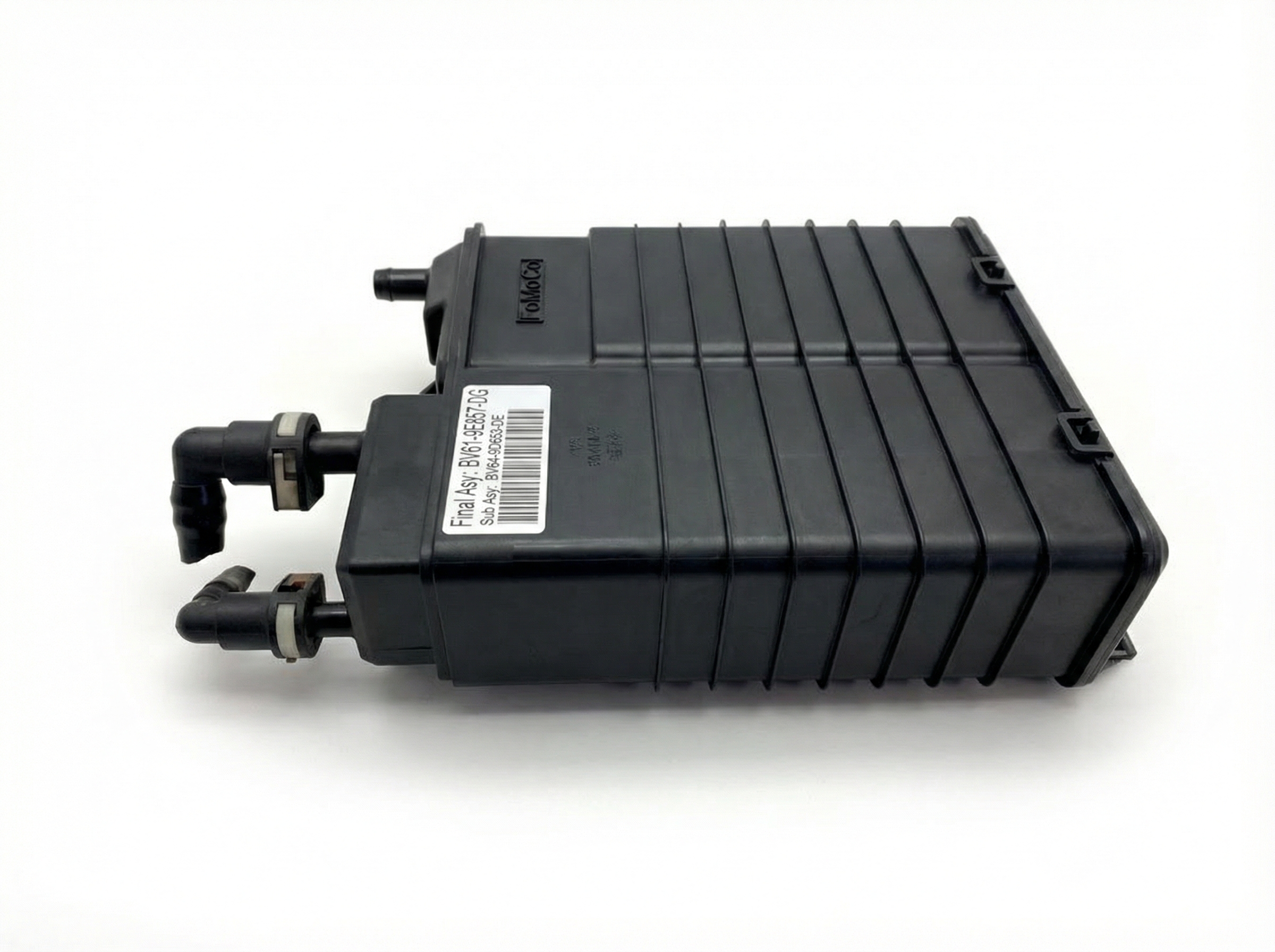
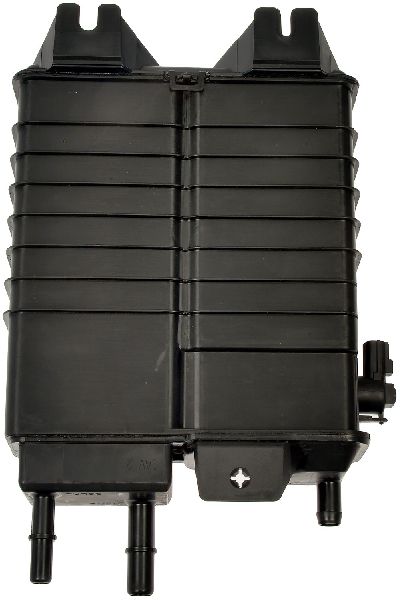
- Replacing the charcoal canister. The canister can be damaged by a stuck-open purge valve pulling in raw fuel, and may need to be replaced as a consequence, but it is not the root cause of the P0443 circuit code itself. The recall procedure includes inspecting and replacing the canister if necessary.
Most Likely Causes

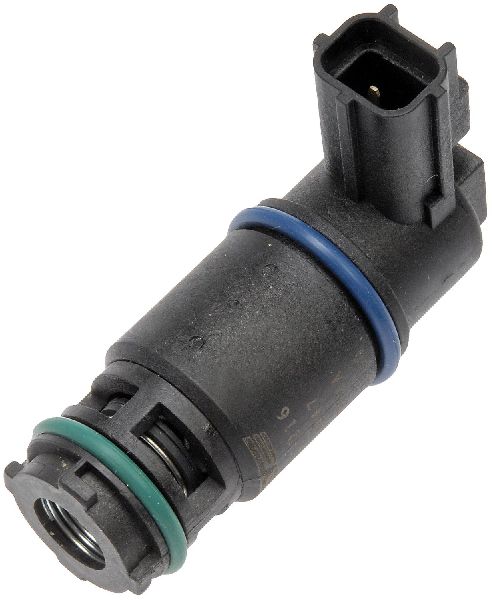
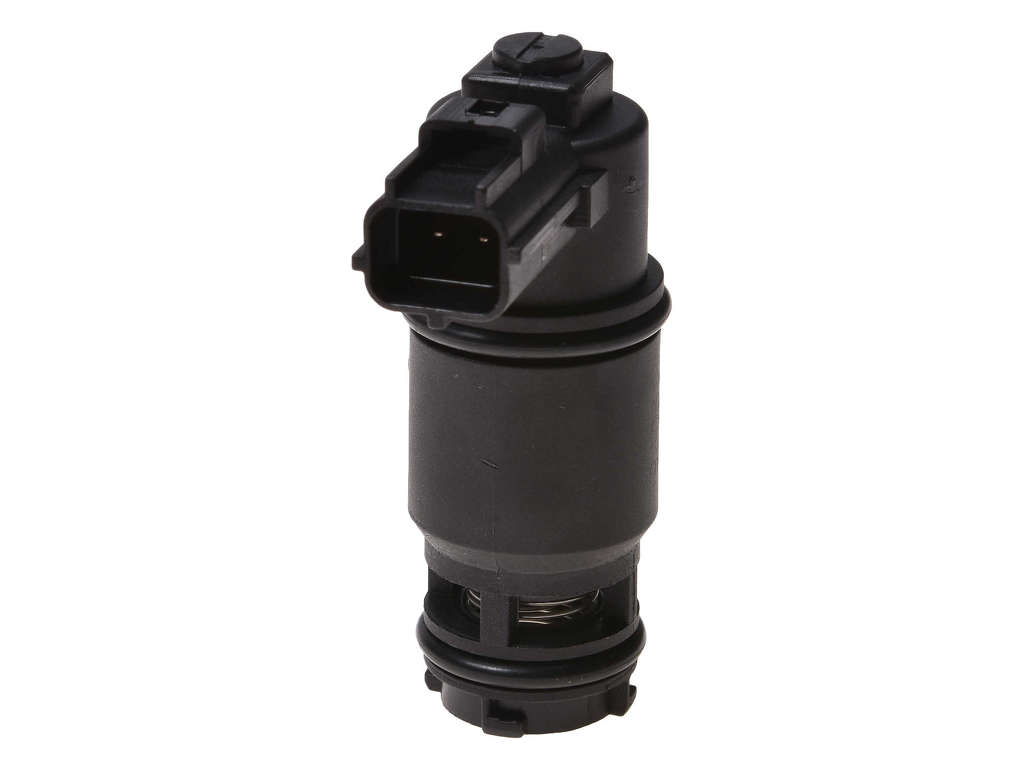
- Failed Canister Purge Valve (Solenoid) 🔴 High Probability This specific part has a very high failure rate on the Mk3 Focus, frequently sticking open. The issue is the subject of Ford Safety Recall 18S32 and a subsequent Customer Satisfaction Program.
How to confirm: Check your VIN with a Ford dealer or on the NHTSA website for open recall 18S32. To test, you can use a scan tool to command the valve open and closed while listening for a click. A more definitive test is to remove the valve and try to blow through it; if air passes when it's unpowered (disconnected), it is stuck open and has failed. You can also check for vacuum at the valve's intake port when the engine is cold; there should be none.
Typical fix: Replace the canister purge valve and its associated hoses, which are often sold as a single assembly. After replacement, clear the codes with a scanner.
Est. part cost: $40-$90 - Damaged Wiring or Electrical Connector ⚪ Low Probability
How to confirm: Visually inspect the wiring harness and connector going to the purge valve for any signs of chafing, breaks, corrosion, or rodent damage. Use a multimeter to check for battery voltage (~12V) at the power pin in the connector with the key on. Check the ground side for continuity back to the PCM.
Typical fix: Repair the damaged section of the wire or clean/replace the connector.
Est. part cost: $5-$25
Rare But Worth Checking
- Powertrain Control Module (PCM) Fault: This is extremely rare. Before suspecting the PCM, all other possibilities (the valve itself and the wiring) must be exhaustively ruled out. A PCM fault would mean the driver circuit that controls the valve has failed internally. The recall (18S32) also involves a PCM software update to better detect a faulty purge valve.
Diagnosis Steps

- Use an OBD-II scanner to confirm P0443 is the active code. Check for other related codes like P1450, P0460, etc.
- Check for Recalls: This is the most important step. Contact a Ford dealership or use the NHTSA website with your VIN to see if Safety Recall 18S32 or 19S22 is open for your vehicle. If it is, the dealer will perform the repair, which typically includes reprogramming the PCM and, if fault codes are present, replacing the purge valve, carbon canister, and/or fuel tank for free.
- Inspect the Purge Valve and Connector: Locate the purge valve on the engine. On the 2.0L, it's near the intake manifold, under the engine cover, with vapor lines attached. Visually inspect its electrical connector and nearby wiring for any obvious damage, corrosion, or loose connections.
- Test the Valve Manually: Disconnect the valve and its hoses. Try to blow through it. If air can pass through, the valve is stuck open and faulty. It should be normally closed with no power applied.
- Test the Circuit: With the connector unplugged and the ignition key in the 'On' position, use a multimeter to check for battery voltage (~12V) at one of the pins in the wiring harness connector. The other pin is the control wire, which the PCM grounds to activate the valve.
- Replace the Purge Valve Assembly: If the recall does not apply and the valve is confirmed bad, replace it. It is typically sold as an assembly with the attached hoses. The process involves removing the engine cover, disconnecting the air intake duct for access, releasing the electrical and hose connectors, and unseating the valve from its rubber mount. 🎬 Watch: Step-by-step guide to replacing the Focus purge valve assembly.
- Clear Codes and Test Drive: After the repair, clear the trouble codes with your scanner and drive the car to ensure the Check Engine Light does not return. The EVAP system monitor may take several drive cycles to run and confirm the fix.
Parts You'll Likely Need

- Vapor Canister Purge Valve / Solenoid
(OEM #9U5Z-9F945-C (Valve/Solenoid only), BV6Z-9D289-E (Hose Assembly))— This is the component that fails in the vast majority of P0443 cases on this vehicle, often sticking open. The valve itself is part number 9U5Z-9F945-C, but it is often sold as part of a larger hose assembly.
Trusted brands: Motorcraft, Bosch, Dorman, Duralast (PV964)
OEM price range: $70-$95
Aftermarket price range: $40-$75
Related Codes That Often Appear With This One
- P1450 — This code means 'Unable to Bleed Up Fuel Tank Vacuum.' It is commonly triggered alongside P0443 on the Focus because a purge valve that is stuck open creates a constant vacuum on the fuel tank that the system cannot relieve. It is one of the primary codes listed in the recall notice.
- P0456 — This code for a 'Very Small EVAP Leak' is also listed in the Ford recall notice as a possible related code, likely triggered by the complex effects of the stuck purge valve on the system.
- P0460 — Stands for 'Fuel Level Sensor 'A' Circuit.' This code is often seen because the fuel tank deformation caused by the stuck purge valve directly affects the fuel level sending unit's operation, causing erratic readings.
- P0420 — 'Catalyst System Efficiency Below Threshold.' This code is also listed as a potential companion code in the recall documents, possibly due to the altered air/fuel mixture from the constant introduction of fuel vapors.
Technical Service Bulletins (TSBs) & Recalls
- Ford Safety Recall 18S32 / NHTSA 18V735: Addresses fuel tank deformation caused by a stuck canister purge valve (CPV) on 2012-2018 Focus vehicles with 2.0L GDI and GTDI engines.
- Ford Safety Recall 19S22: A follow-up to 18S32 for certain vehicles that needed a second PCM softwar
- Manufacturer Bulletin #16-0062: Notes that vehicles may exhibit an illuminated MIL with DTCs P0420, P1450, P0443, P0452, P0456, P0460, and/or P2196, often accompanied by an inaccurate distance to empty calculation.
Platform-Specific Known Issues
- Safety Recall 18S32 / NHTSA 18V-735: Ford issued a recall for 1.3 million 2012-2018 Focus vehicles with 2.0L engines because a stuck-open canister purge valve (CPV) can create excessive vacuum in the fuel system. This can cause the plastic fuel tank to deform, leading to an erratic fuel gauge, incorrect distance-to-empty readings, and potential engine stalling while driving. The fix involves reprogramming the PCM to better detect the fault and, if necessary, replacing the purge valve, carbon canister, and fuel tank at no charge.
- Follow-up Recall 19S22: Some vehicles repaired under the initial recall (18S32) did not receive the correct software update and required a second visit to the dealer for another PCM reprogramming.
- Customer Satisfaction Program (2023): After the recalls, NHTSA opened a new investigation due to continued complaints. In response, Ford initiated a customer satisfaction program to replace the canister purge valve on affected vehicles, acknowledging the part may not function properly even after the software updates.
Mechanic-Grade Diagnostic Values
- Purge Valve Solenoid Connector Voltage (Power Pin) — expected: ~12V (Battery Voltage) with Key On, Engine Off. Failure: 0V indicates an open circuit or blown fuse in the power supply.
- Purge Valve Solenoid Connector Voltage (PCM Control Side) — expected: Approximately battery voltage with valve commanded closed (0% duty cycle). Voltage should drop by at least 3 volts when commanded fully open (100% duty cycle).. Failure: No voltage drop when commanded open suggests a wiring issue or a failed PCM driver.
- Scan Tool PID: EVAPCP (EVAP Canister Purge Commanded Duty Cycle) — expected: 0% at idle when cold. Will vary based on engine load and temperature when running.. Failure: This is the commanded value; use it to compare against the actual flow or pressure.
- Scan Tool PID: EVAP_PCT (Canister Purge Valve Open Percentage) — expected: Should closely match the EVAPCP commanded value.. Failure: If EVAPCP is 0% but EVAP_PCT shows a value like 10%, the valve is physically stuck open.
- Scan Tool PID: FTP (Fuel Tank Pressure) — expected: Near 0 in-H2O when the system is at rest. A slight negative pressure (-2.0 to -4.0 in-H2O) is normal during purge operation.. Failure: A constant negative pressure (e.g., -0.6 PSI or greater than -8.0 in-H2O) when the purge valve should be closed indicates it's stuck open and pulling a vacuum.
Scan Tool Commands That Help
- FORScan, Ford IDS, high-end scanners: EVAP Purge Solenoid Command / Output Control — This bidirectional control allows you to manually command the purge valve open and closed (by percentage) to test its function. You can listen for an audible click from the valve and watch the Fuel Tank Pressure (FTP) PID to see if it responds correctly.
- FORScan, Ford IDS: EVAP System Leak Test — While P0443 is a circuit code, if you suspect other related issues or have companion codes like P0455/P0456, this automated test can seal the system and use the FTP sensor to check for pressure decay, helping to identify or rule out physical leaks.
Wiring & Ground Locations
- Canister Purge Valve Connector — On the purge valve itself, located near the intake manifold, under the engine cover.. This 2-pin connector is the direct interface for the component. Pin 1 is typically the 12V power supply (often a Yellow/Red wire) and Pin 2 is the ground-side control from the PCM (often a Blue/Green wire). Checking for voltage and ground signal here is a primary diagnostic step.
Real Owner Repair Stories
- Ford Edge Forum user (2017 Ford Edge 2.0L EcoBoost, 75,000 miles) — P1450 code initially, which returned a month after replacing the purge valve. Then, P0443 appeared alongside the P1450.
❌ Tried (didn't work) Replacing the canister purge valve (fix only lasted one month).
✅ What actually fixed it The user was advised that the issue could be the vapor canister vent solenoid or the entire purge valve vapor harness, as a simple valve swap did not provide a permanent fix, indicating a more complex or intermittent circuit problem. - Reddit r/FordFocus user (2012-2018 Ford Focus (general)) — Stalling after fill-ups, drivability issues, Check Engine Light.
❌ Tried (didn't work) Assuming the dealer didn't perform the recall correctly when the CEL appeared shortly after the software update.
✅ What actually fixed it The user clarified that the recall's primary fix was a PCM software update to better *detect* the fault. The valve itself can still fail later. The ultimate fix is replacing the canister purge valve when it fails, which can be diagnosed using FORScan to monitor PIDs like FTP, EVAP_PCT, and EVAPCP. - NHTSA ODI #11508880 — An owner reported a reoccurring check engine light with codes P0443 and P0444; repairs included replacing the purge control valve and resetting the computer.
OEM Part Supersession History
BV6Z-9D289-D→BV6Z-9D289-E— Part revision/update by Ford for the hose assembly.7U5Z-9F945-E, 7U5Z-9F945-D→9U5Z-9F945-C— Part revision/update by Ford for the solenoid valve itself.
Model Year Variations Within This Range
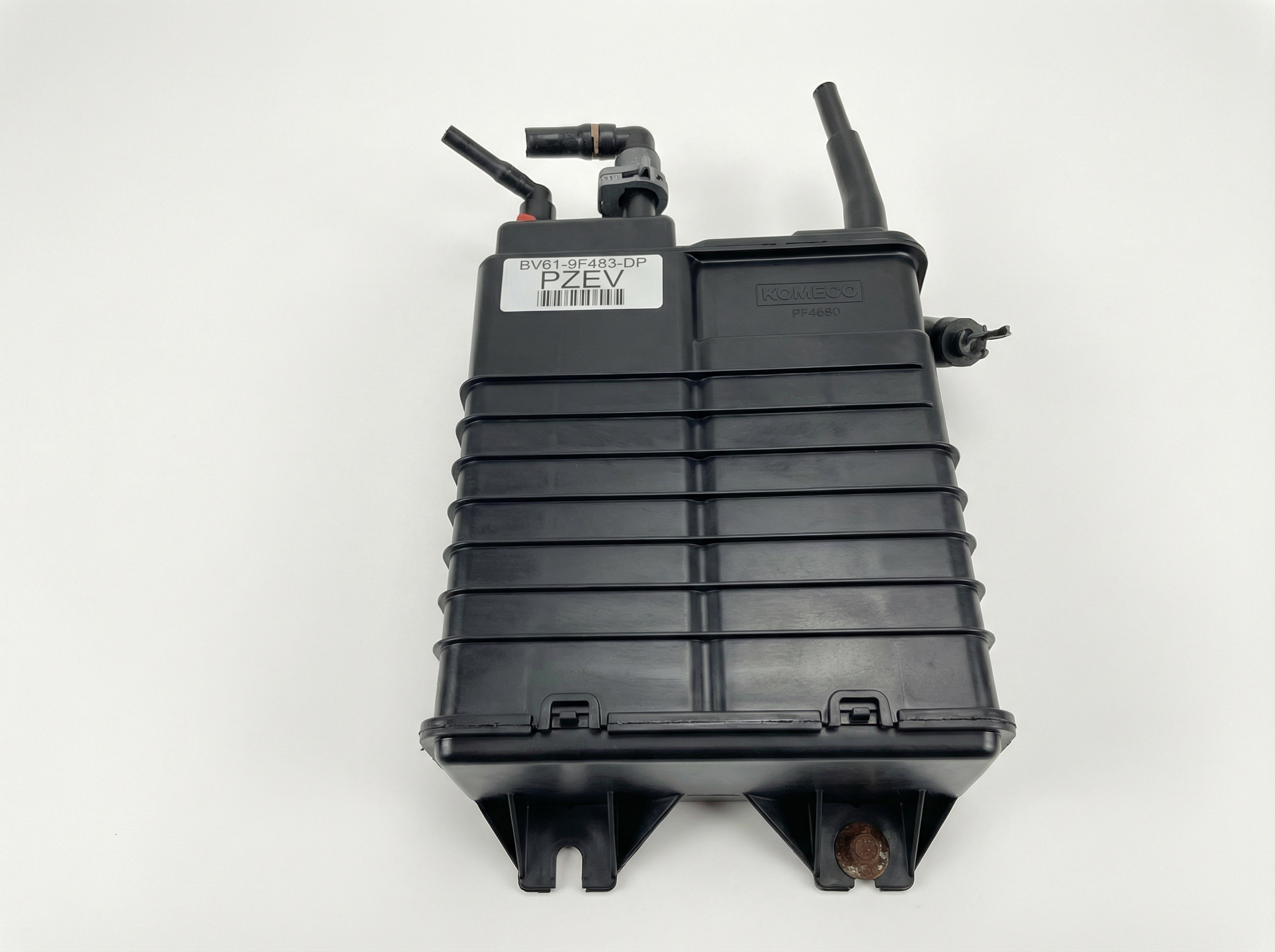
- 2012-2018: While the part and issue are common across the generation, some vehicles are designated as PZEV (Partial Zero Emissions Vehicle). The EVAP canister for a PZEV vehicle is different and not interchangeable with a standard Federal emissions vehicle. While this doesn't affect the P0443 code directly (which is for the purge valve, not the canister), it's a critical detail if secondary damage to the canister is found. The emissions sticker under the hood must be checked before replacing the canister.
Diagnostic Flowchart
Used vs. New Parts: Buying Guide for This Vehicle
When a used part is the smart pick: Never. Given the extremely high failure rate of this specific part on this vehicle, which prompted a safety recall, buying a used canister purge valve from a junkyard is a very poor decision. The used part is highly likely to have the same defect or be near failure itself.
What to inspect on the donor part:
- Not applicable, do not buy this part used.
Aftermarket brands forum-validated for this vehicle:
- Motorcraft (OEM)
- Bosch (often the OEM supplier)
- Dorman (widely available and generally considered a reliable alternative for this part)
Brands owners have reported issues with on this vehicle:
- No-name, unbranded parts from online marketplaces should be avoided due to the critical function and high failure rate of this component.
Real Owner Stories
Aggregated from forums and TSBs cited above. Mileages and costs reflect what owners reported in those sources.
Ford Focus (year not specified) — 190000 miles
Symptoms: The car wouldn't fill with gas properly and the fuel gauge never read below half a tank. The check engine light was on with code P0443.
What fixed it: A commenter suggested replacing the OEM (Bosch) purge valve and noted that there was a recall for the issue.
Source hint: Reddit r/FordFocus
Ford Focus (Mk3)
Symptoms: Owners reported stalling immediately after refueling, erratic fuel gauge behavior, and the Check Engine Light being on with codes P0443 and P1450.
What fixed it: The issue was resolved either by a DIY replacement of the canister purge valve assembly or by having the free repair performed by a dealer under Safety Recall 18S32.
Source hint: focusfanatics.com
2013 Focus
Symptoms: The fuel gauge would not drop below the halfway mark. A scan tool confirmed that trouble code P0443 was present. NHTSA ODI #11443669 confirms symptoms including an illuminated MIL with DTCs P0420, P1450, P0443, P0452, P0456, P0460 and/or P2196, along with an inaccurate or erratic fuel gauge indication.
What fixed it: The context confirms the link between the symptom and the code, which is addressed by Ford Safety Recall 18S32 involving the purge valve and potentially the fuel tank.
Source hint: Reddit r/FordFocus - Thread 'fuel gauge'
2016 Focus
Symptoms: An owner reported an illuminated malfunction indicator lamp (MIL) with diagnostic trouble codes (DTCs) P0420, P1450, P0443, P0452, P0456, P0460 and/or P2196 (NHTSA ODI #11427851).
What fixed it: These codes are typically addressed by inspecting and replacing the canister purge valve as part of the documented pattern failure for this generation.
Source hint: NHTSA ODI #11427851
Related OBD-II Codes
Frequently Asked Questions
Is there a recall for the P0443 code on my 2012-2018 Ford Focus?
Why is my fuel gauge stuck at half a tank and showing P0443?
My Focus stalls or is hard to start right after I get gas. Is this related to P0443?
I already had the 18S32 recall performed, but the check engine light is back. What should I do?
What is the most likely part I need to replace for P0443 on my Focus?
How can I test the purge valve myself to confirm it's bad?
Helpful Videos


Used OEM Parts in Stock

New Aftermarket Parts Available


The information in this article is provided for general reference and educational purposes only. Vehicle specifications, procedures, and part compatibility can vary by production date, trim level, and region. Always consult your vehicle's factory service manual and verify part numbers before purchasing or performing repairs. Safety-critical components such as airbags, seat belts, and braking systems should be installed by a qualified professional.
- Ford Focus:
- 🎬 Helpful Videos
- 🛍️ Shop This Part
- What's Unique About the 2011-2018 Ford Focus
- Symptoms You May Notice
- Most Likely Causes
- Rare But Worth Checking
- Diagnosis Steps
- Parts You'll Likely Need
- Related Codes That Often Appear With This One
- Technical Service Bulletins (TSBs) & Recalls
- Platform-Specific Known Issues
- Mechanic-Grade Diagnostic Values
- Scan Tool Commands That Help
- Wiring & Ground Locations
- Real Owner Repair Stories
- OEM Part Supersession History
- Model Year Variations Within This Range
- Diagnostic Flowchart
- Used vs. New Parts: Buying Guide for This Vehicle
- Real Owner Stories
- Ford Focus (year not specified) — 190000 miles
- Ford Focus (Mk3)
- 2013 Focus
- 2016 Focus
- Related OBD-II Codes
- Frequently Asked Questions
- 🎟️ Get 5% Off