

P0441 on 2016-2021 Volkswagen Jetta: EVAP Incorrect Purge Flow Causes & Fixes
For a 2016-2021 VW Jetta, the P0441 code is most often caused by a faulty EVAP purge valve (N80 solenoid). It's a common failure item that can cause a check engine light and trouble starting after refueling. Replacement is easy on 1.8T and 2.0T engines but very difficult and costly on the popular 1.4T engine, where the valve is located under the intake manifold.
- P0441 on a 2016-2021 Jetta almost always points to a problem with the EVAP purge valve (N80) or its associated hoses.
- Symptoms often include a Check Engine Light and difficulty starting the car right after you get gas.
- Before buying parts, check that your gas cap is tight and its seal is not cracked.
- If your Jetta has a 1.4T engine, be aware that replacing the purge valve is a more complex job that requires removing the intake manifold, increasing labor time and cost.
- In some instances, a simple software update from a VW dealer may resolve the issue, as noted in a manufacturer TSB. [Bulletin #V0122022065992_3]
What's Unique About the 2016-2021 Volkswagen JETTA

On this generation of Jetta, the N80 purge valve is a very common failure point leading to code P0441. A key difference is the location of this valve based on the engine. For the popular 1.4T engine (engine code CZTA), the valve is located under the intake manifold, making replacement a labor-intensive job of 3-5 hours. In contrast, on the 1.8T and 2.0T GLI engines (EA888 family), the valve is typically located on top of the engine and can be replaced in under 30 minutes. Additionally, Volkswagen has issued Technical Service Bulletins (TSBs), such as V0122022065992_3, acknowledging that an ECM software update can proactively fix this code in some cases, indicating a potential software logic issue.
Diagnostic Flowchart

Tap your situation to follow the diagnostic path that matches what you're seeing on this vehicle.
Generation note: This range covers the end of the A6 (Mark 6) generation (2016-2018) and the beginning of the A7 (Mark 7) generation (2019-2021). The most significant difference regarding this code is the location of the N80 purge valve. On the 1.4T engine used in both generations, it is notoriously difficult to access under the intake manifold. VW Technical Tip 01-19-06 was issued to help technicians diagnose this specific valve due to its location. On the 2.0T GLI models, the valve is easily accessible in the engine bay.
Symptoms You May Notice
- Check Engine Light is on 🎬 Watch: A breakdown of P0441 causes and fixes for Volkswagens
- Difficulty starting the engine, especially after refueling 🎬 Watch: How a faulty N80 valve causes starting issues after fueling
- Rough or unstable idle
- A faint smell of fuel
- Slight decrease in fuel economy
- Replacing the gas cap when the purge valve is the actual failure.
- Replacing the expensive charcoal canister before thoroughly testing the purge valve and checking for cracked hoses.
- Replacing the purge valve without checking for charcoal granules in the lines, leading to a repeat failure of the new valve.
Most Likely Causes

- Faulty EVAP Purge Valve (N80 Solenoid) 🔴 High Probability This valve cycles thousands of times and is a very common failure item on VW models, either by getting stuck open, closed, or failing electronically. Debris from a failing charcoal canister can also clog the valve.
How to confirm: With the engine off, remove the valve and try to blow through it. It should be closed (no air passes). If air goes through, it's stuck open and faulty. A scan tool can also command the valve to open and close to check its function. A stuck-open valve will often allow engine vacuum to be present on the EVAP line when it shouldn't be, a test outlined in VW Tech Tip 01-19-06.
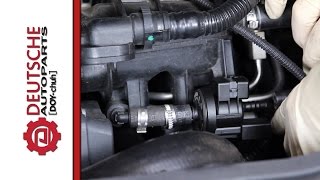
Typical fix: Replace the purge valve. On 1.8T/2.0T engines, this is a simple part to access in the engine bay. 🎬 See this quick walkthrough for replacing the valve on 2.0T engines On the 1.4T engine, it is located under the intake manifold, requiring significantly more labor and cost, with owners reporting shop quotes around $900.
Est. part cost: $25 - $90 - Cracked or Disconnected EVAP Hoses 🟡 Medium Probability The plastic and rubber hoses in the engine bay become brittle over time due to heat cycles and can develop hairline cracks or break. The molded hose assembly connected to the purge valve is a common point of failure.
How to confirm: Visually inspect all accessible EVAP lines for cracks, especially the molded plastic line that connects to the purge valve. A smoke test is the most effective way to find small, hard-to-see leaks in the system.
Typical fix: Replace the cracked or broken hose section. On the 1.4T, the purge valve is often sold as an assembly with the attached hoses.
Est. part cost: $15 - $180 - Outdated ECM Software ⚪ Low Probability VW issued TSB V0122022065992_3 indicating that an ECM software update can proactively repair code P0441, suggesting the fault can be triggered by incorrect diagnostic logic in the original software. This TSB was primarily for a 'low or no heat' issue but included this EVAP code fix.
How to confirm: A Volkswagen dealership or a qualified shop with access to VW's ODIS system can check if your vehicle's ECM has a pending software update by referencing the TSB.
Typical fix: Update the ECM software at a dealership or authorized repair facility. This requires specialized equipment.
Est. part cost: $0 - $200 - Loose or Faulty Gas Cap ⚪ Low Probability While more commonly associated with leak codes like P0455 or P0456, a gas cap that is not sealing correctly can disrupt the EVAP system's pressure and potentially contribute to a P0441 code. However, it is often the first thing checked and rarely the root cause for P0441 specifically.
How to confirm: Ensure the gas cap is tightened until it clicks. Inspect the rubber O-ring on the cap for cracks, dirt, or damage. Some owners report issues with non-OEM gas caps causing codes.
Typical fix: Tighten or replace the gas cap, preferably with an OEM part.
Est. part cost: $15 - $40
Rare But Worth Checking
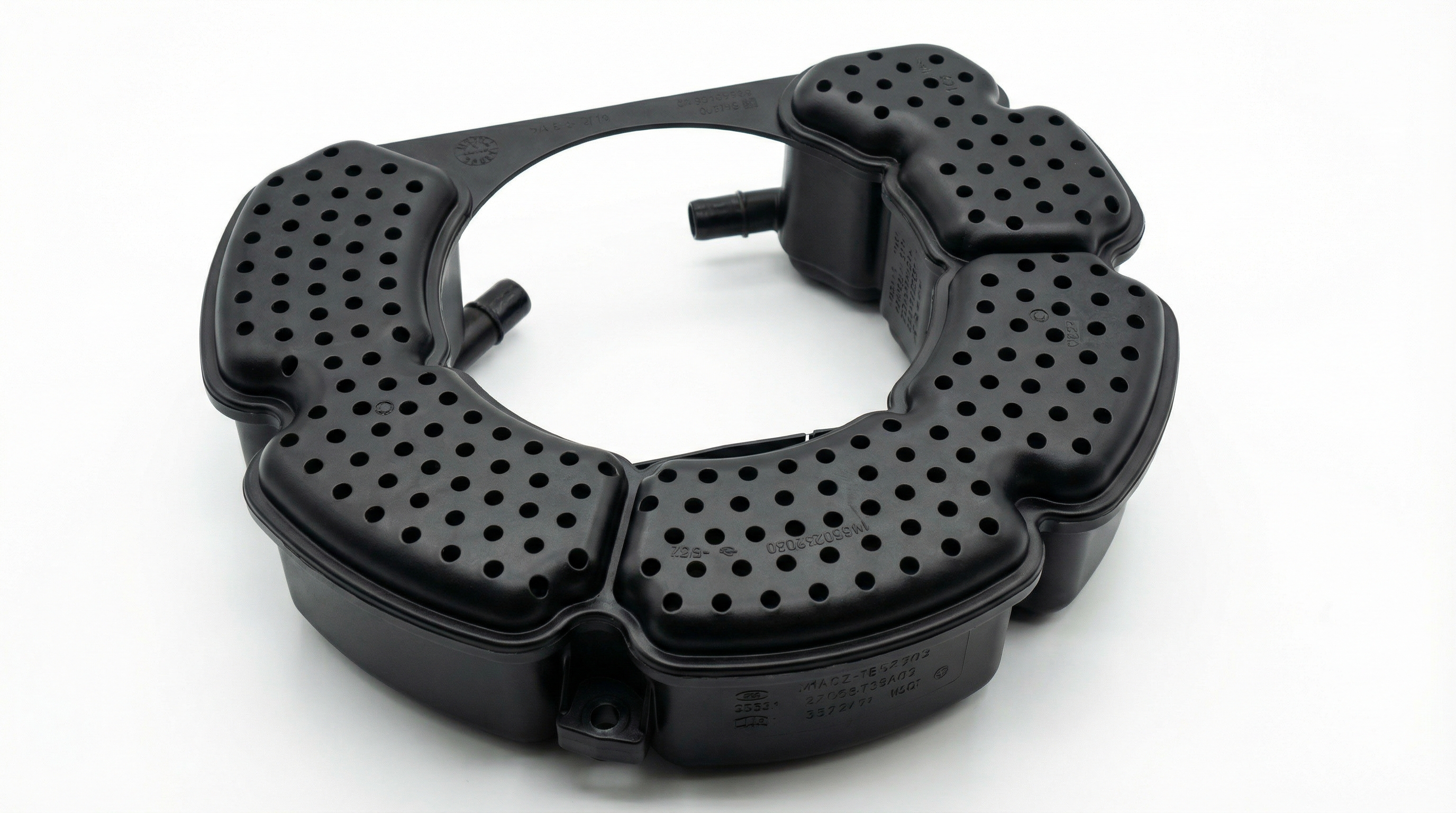
- Clogged or Failing Charcoal Canister: The charcoal canister can fail internally, sending black charcoal pellets into the EVAP lines. These granules then clog the purge valve, causing it to fail. If you replace a purge valve and find black debris inside, the canister is the root cause and must be replaced along with cleaning the lines to prevent repeat failure of the new valve.
- Faulty Leak Detection Pump (LDP): Many VW systems use a Leak Detection Pump (LDP) to pressurize the system for testing. A failure in this pump or its filter can lead to incorrect readings and trigger various EVAP codes, including P0441. Diagnosis can be complex and may require a scan tool with advanced functions.
Diagnosis Steps
- Read the fault codes with an OBD-II scanner and note any other codes present.
- Inspect the gas cap to ensure it is tight and the seal is in good condition.
- Visually inspect the engine bay for any obvious cracked, disconnected, or broken vacuum and EVAP hoses, particularly around the purge valve.
- Test the N80 purge valve. With the engine off, disconnect the valve and attempt to blow air through it. If air passes, the valve is stuck open and must be replaced. Inspect the valve's ports for black charcoal granules.
- If the valve is not stuck open, use a scan tool to command it to cycle while the engine is running to check for operation. You should hear it clicking. For the 1.4T engine, VW Tech Tip 01-19-06 outlines a procedure to test for vacuum at the EVAP line connection without removing the manifold.
- If no other cause is found, check with a VW dealer for any available ECM software updates, referencing TSB V0122022065992_3.
- If no other cause is found, perform a smoke test on the EVAP system to identify hard-to-see leaks in the lines, charcoal canister, or other components.
Parts You'll Likely Need
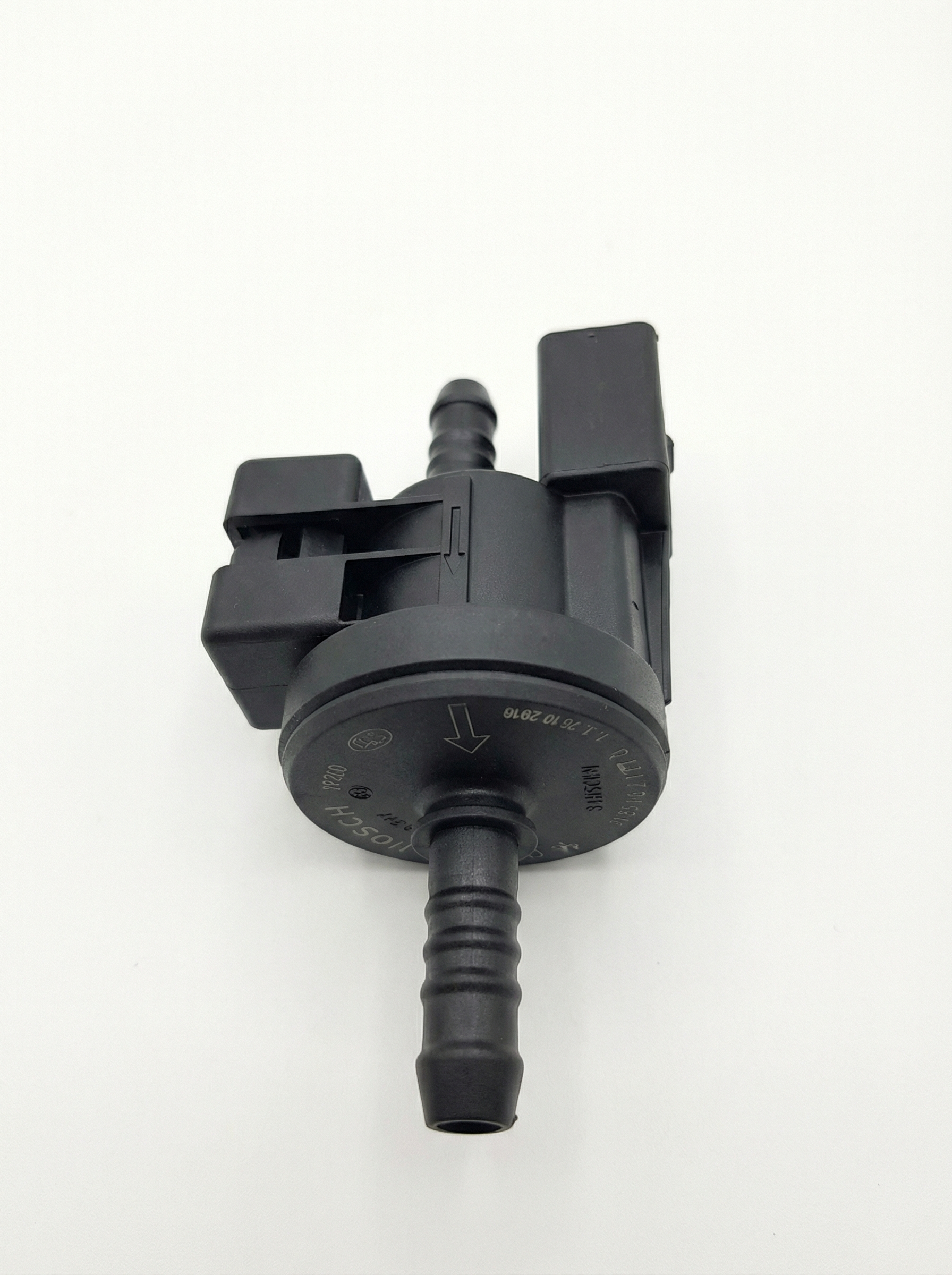
- Vapor Canister Purge Valve / Solenoid (N80) - 1.4T Engine
(OEM #04E906517A)— This is the most common component to fail and directly cause the P0441 code. On the 1.4T, it's often sold with attached hoses.
Trusted brands: Bosch (OEM), Volkswagen (Genuine OEM), Standard Motor Products (SMP)
OEM price range: $60-$100
Aftermarket price range: $30-$70 - Vapor Canister Purge Valve / Solenoid (N80) - 1.8T/2.0T Engines
(OEM #06H906517H or 06E906517A (Varies by year/model))— This is the corresponding part for the larger engines, which is much easier to access and replace.
Trusted brands: Bosch (OEM), Pierburg (OEM), Dorman
OEM price range: $50-$90
Aftermarket price range: $25-$60 - EVAP System Hose Assembly
(OEM #04E133366CQ (Example for 1.4T))— The plastic lines connected to the purge valve can crack or the entire assembly may be replaced with the valve on the 1.4T.
Trusted brands: Volkswagen (Genuine OEM)
OEM price range: $40-$180
Aftermarket price range: $30-$80
Related Codes That Often Appear With This One
- P04F0 — This code is also for 'Incorrect Purge Flow' and is frequently mentioned alongside P0441 in VW TSBs, indicating they are triggered by the same fault conditions. [Bulletin #VIN4APIN20201001, Bulletin #V0122022065992_3]
- P0496 — This code indicates 'EVAP System High Purge Flow,' which often points directly to a purge valve that is stuck open. It is commonly cited with P0441 in manufacturer documents. [Bulletin #V0122022065992_3, Bulletin #VIN4APIN20200320]
- P0456 — This code for a 'Very Small EVAP Leak' can appear with P0441 if the root cause is a cracked hose or a faulty purge valve that isn't sealing correctly. Some owners report this code appearing first before P0441.
Technical Service Bulletins (TSBs) & Recalls
- V0122022065992_3: Published 05/09/2022. States that an ECM software update proactively repairs P0441, P04F0, P148D, P0496, and P060C. It warns technicians not to diagnose or replace parts for these DTCs before performing the update.
- VIN4APIN20201001: Published 10/01/2020. A general information bulletin listing customer complaints, which groups 'MIL-on P04F0 and/or P0441' with several other unrelated potential issues.
- VIN4APIN20200320: Published 03/20/2020. Another general bulletin that lists 'MIL-on with P04F0 P0441' as a potential customer complaint, alongside fuel leaks and no-start conditions.
- TT 01-19-06 (2056714/2): Published 10/02/2020. A Technical Tip (not a TSB for warranty) that provides a specific diagnostic procedure for checking the hard-to-access N80 purge valve on 1.4T engines for leaks related to codes P0441, P0442, P0455, P0456, or P0496.
Platform-Specific Known Issues
- 1.4T Engine Purge Valve Location: On Jetta models with the 1.4T engine, the N80 purge valve is located under the intake manifold. This makes replacement a much more involved and costly job (3-5 hours labor)
Mechanic-Grade Diagnostic Values
- N80 Purge Valve Solenoid Resistance — expected: 22 to 30 Ohms. Failure: A reading of 0 Ohms indicates a short circuit, while an infinite (O.L.) reading indicates an open circuit. Readings outside the specified range suggest an internal failure.
- N80 Purge Valve Connector Voltage — expected: Pin 1: 12V (battery voltage) with key on. Pin 2: Ground-side control from ECM (voltage will vary based on duty cycle).. Failure: Absence of 12V on Pin 1 points to a fuse or wiring issue. Inability of the ECM to command the ground signal on Pin 2 (tested with a scan tool) points to a wiring or ECM fault.
Scan Tool Commands That Help
- VCDS (VAG-COM): Engine -> Output Tests -> Evaporative Emission (EVAP) Canister Purge Regulator Valve (N80) — This test directly commands the N80 valve to cycle on and off. The user should hear an audible clicking from the valve, confirming the electrical circuit and the solenoid itself are functioning. This is a primary step to take before attempting physical removal, especially on the 1.4T engine.
- VCDS (VAG-COM): Engine -> Basic Settings -> EVAP System Function Test (Group 071 on many models) — After confirming the N80 valve clicks, this comprehensive test runs a full system check. It seals the system, checks for pressure drop, and verifies flow. If this test fails after the N80 valve passes its output test, it points towards a leak elsewhere (hoses, canister, gas cap) or a blockage.
Wiring & Ground Locations
- Engine Bay Ground Post — On the driver's side strut tower or nearby on the frame rail in the engine compartment. It is a common grounding point for multiple engine sensors.. The N80 valve's circuit relies on a solid ground. While the ECM provides the switched ground, the main power feed is grounded through the chassis. A corroded or loose main ground point can cause intermittent voltage drops and erratic behavior of solenoids like the N80, potentially triggering a P0441 code even if the valve itself is functional.
- N80 Valve Connector (2-pin) — Directly on the N80 Purge Valve solenoid.. Pin 1 is the 12V power supply (often a Red/Green wire), and Pin 2 is the ground signal controlled by the ECM (often a Brown/Gray wire). Testing for 12V at Pin 1 with the key on is a critical first step in diagnosing a non-responsive valve, ruling out a blown fuse or broken wire before condemning the valve or ECM.
Real Owner Repair Stories
- VWVortex Forums (2017 Volkswagen Jetta 1.4T) — Check Engine Light with code P0441.
❌ Tried (didn't work) Replaced gas cap, Smoke tested the system (no leaks found)
✅ What actually fixed it The N80 purge valve located under the intake manifold was faulty. The owner confirmed that despite passing a smoke test, the valve was the issue. The repair involved removing the intake manifold to access and replace the valve, which resolved the code. - Reddit r/MechanicAdvice (2019 Volkswagen Jetta 1.4T) — CEL with P0441 and P04F0. Car was difficult to start after getting gas.
❌ Tried (didn't work) Initial diagnosis was inconclusive without further testing.
✅ What actually fixed it Confirmed by a mechanic to be the purge valve (N80). The owner was quoted a significant labor cost because on the 1.4T engine the part is under the intake manifold. The repair fixed both codes and the hard starting issue after refueling.
"I Checked Everything" — The Actual Cause
- In a documented case for a 2017 Jetta 1.4T, the EVAP system passed a smoke test, showing no leaks. However, the P0441 code persisted. The ultimate cause was a faulty N80 purge valve that was not leaking externally (which a smoke test would find) but was failing to operate correctly under command from the ECM. This highlights that a passed smoke test only rules out physical leaks, not the electronic or mechanical failure of the purge valve itself.
OEM Part Supersession History
04E906517→04E906517A— Revision and potential improvement of the valve's internal components to increase durability and prevent premature failure.
Heads up: The original part without the 'A' suffix may be less reliable. Always use the latest revision (04E906517A) when replacing the part on a 1.4T engine.
Helpful Videos



We Have This Part in Stock



The information in this article is provided for general reference and educational purposes only. Vehicle specifications, procedures, and part compatibility can vary by production date, trim level, and region. Always consult your vehicle's factory service manual and verify part numbers before purchasing or performing repairs. Safety-critical components such as airbags, seat belts, and braking systems should be installed by a qualified professional.
- Volkswagen JETTA:
- 🎬 Helpful Videos
- 🛍️ Shop This Part
- What's Unique About the 2016-2021 Volkswagen JETTA
- Diagnostic Flowchart
- Symptoms You May Notice
- Most Likely Causes
- Rare But Worth Checking
- Diagnosis Steps
- Parts You'll Likely Need
- Related Codes That Often Appear With This One
- Technical Service Bulletins (TSBs) & Recalls
- Platform-Specific Known Issues
- Mechanic-Grade Diagnostic Values
- Scan Tool Commands That Help
- Wiring & Ground Locations
- Real Owner Repair Stories
- "I Checked Everything" — The Actual Cause
- OEM Part Supersession History
- 🎟️ Get 5% Off