

P0441 on 2006-2012 Ford Fusion: EVAP Incorrect Purge Flow Causes and Fixes
For a 2006-2012 Ford Fusion, code P0441 is most often caused by a failed canister purge valve. This is a common issue, and a related recall exists for 2010-2011 models. Replacing the purge valve is a straightforward DIY job, with the part costing between $40 and $70. This issue is often accompanied by the Ford-specific code P1450 and can cause difficulty starting after refueling.
- P0441 on a 2006-2012 Fusion almost always points to a bad canister purge valve, especially if accompanied by code P1450.
- A key symptom is difficulty starting the car or a rough idle immediately after getting gas.
- Check for open recalls (especially 15S34 for 2010-2011 models) before paying for repairs, as a dealer may fix it for free.
- The purge valve is located in the engine bay and is very easy to replace with basic hand tools, making it an excellent DIY fix.
What's Unique About the 2006-2012 Ford Fusion

On the first-generation Ford Fusion, the canister purge valve is a known high-failure item. The issue is significant enough that Ford issued a recall (15S34) for 2010-2011 models because a stuck purge valve could create excessive pressure changes in the fuel system, potentially leading to a cracked fuel tank. Therefore, while P0441 is a generic code, its most common cause on this specific vehicle is well-documented and has safety implications beyond just emissions. The issue is so common that it frequently appears with code P1450 (Unable to Bleed Up Fuel Tank Vacuum), especially causing hard starting after refueling.
Symptoms You May Notice
- Check Engine Light is on
- Difficulty starting the engine, especially right after refueling.
- Slightly rough idle or engine hesitation.
- A faint fuel odor.
- Audible clicking or buzzing from the purge valve in the engine bay.
- Replacing the gas cap. While a loose or faulty gas cap can cause other EVAP codes (like P0455 or P0457), it is not the typical cause for an 'incorrect purge flow' code like P0441. The Fusion's capless system makes this even less likely.
Most Likely Causes

- Faulty Canister Purge Valve (Solenoid) 🔴 High Probability This component is a known weak point on this platform, leading to a recall for some model years due to its tendency to stick open or closed. An internal diaphragm can fail, or debris can clog the valve, causing incorrect flow.
How to confirm: With the engine off, disconnect the vapor line from the purge valve and try to blow through it. It should be normally closed and not allow air to pass. If you can blow through it, it's stuck open and needs replacement. This is a very common confirmation method shared in owner forums.
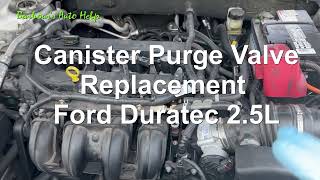
Typical fix: Replace the canister purge valve assembly. It is located in the engine bay, typically near the throttle body, with two hoses and an electrical connector. 🎬 See this step-by-step replacement guide for the 2.5L engine.
Est. part cost: $40-$70
Rare But Worth Checking
- Cracked or Disconnected EVAP Hoses: The plastic and rubber lines in the EVAP system can become brittle over time and crack, causing a vacuum leak that disrupts the purge flow. Check all lines connected to the purge valve and charcoal canister.
- Clogged Charcoal Canister: If the canister becomes saturated with fuel (often from overfilling the gas tank) or clogged with debris, it can restrict vapor flow and trigger a P0441 code.
- Faulty Fuel Tank Pressure (FTP) Sensor: The FTP sensor tells the computer the pressure inside the EVAP system. If it sends incorrect data, the computer may misinterpret the purge flow rate. However, a faulty FTP sensor will usually trigger other codes, like P0453.
Diagnosis Steps

- Check for Recalls: First, check if your vehicle is covered under Ford recall 15S34 (for 2010-2011 models) or 18S32. A dealer will fix the issue for free if it is.
- Scan for Other Codes: Use an OBD-II scanner. If P1450 is present alongside P0441, the canister purge valve is the overwhelming likely culprit.
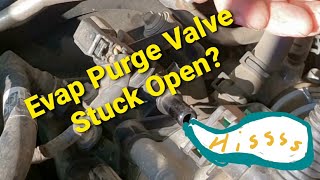
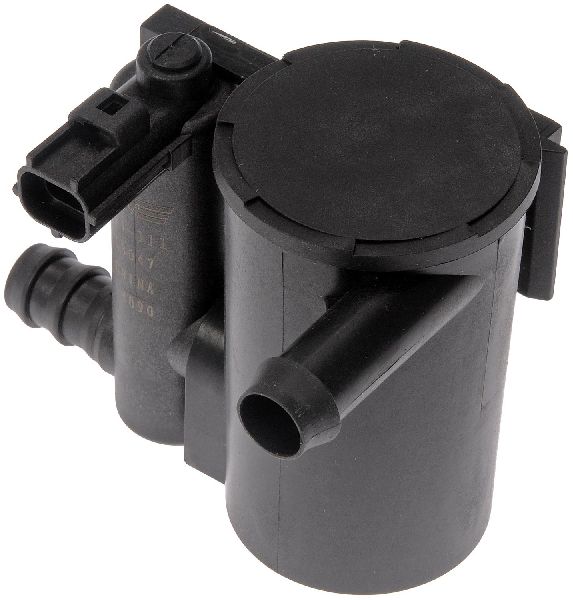
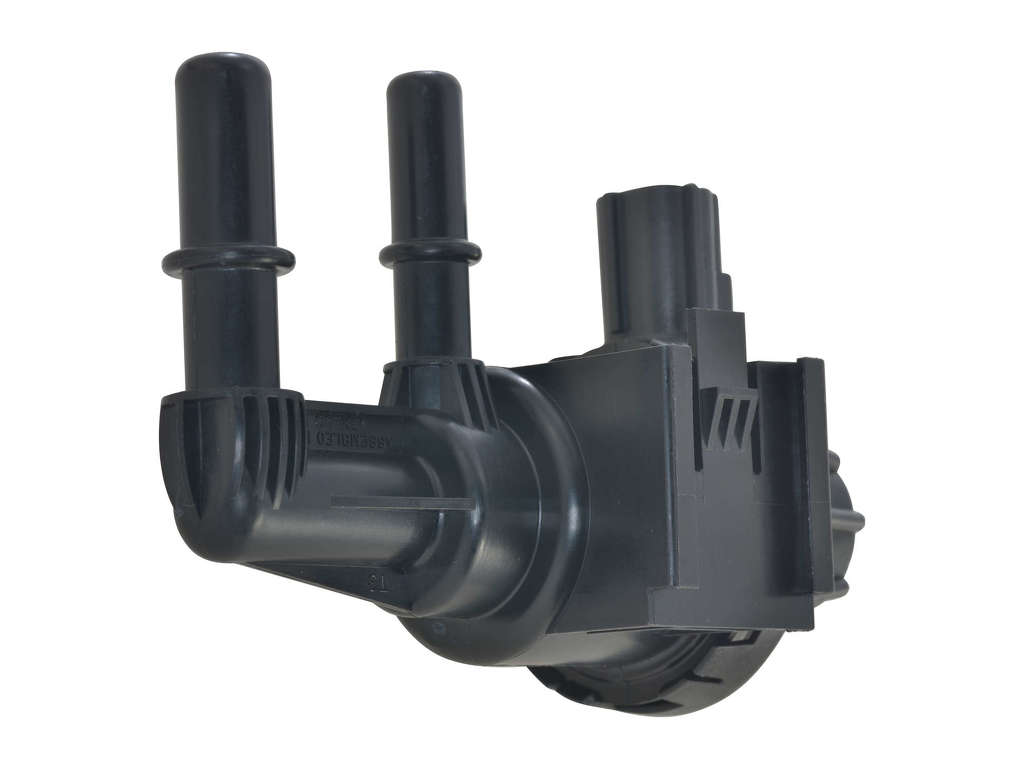
- Test the Purge Valve: Locate the purge valve in the engine bay. It's a small black cylinder with two hoses and an electrical connector. Disconnect the valve and try to blow air through it. It should be sealed shut. If air passes through, it is stuck open and must be replaced. This is the most definitive and simple test. 🎬 Watch: A quick and easy test for a stuck purge valve.
- Inspect EVAP Hoses: Visually inspect all accessible EVAP hoses in the engine bay, especially those connected to the purge valve, for cracks, disconnections, or obvious damage.
- Check for Voltage: If the valve seems to be working mechanically, use a multimeter to check for voltage at the electrical connector with the key on. A lack of voltage could indicate a wiring or fuse issue.
- Consider a Smoke Test: If the purge valve and hoses appear fine, the most effective next step is a professional smoke test. This involves feeding pressurized smoke into the EVAP system to quickly and accurately reveal any hard-to-see leaks in the lines or canister.
Parts You'll Likely Need
- Canister Purge Valve / Solenoid
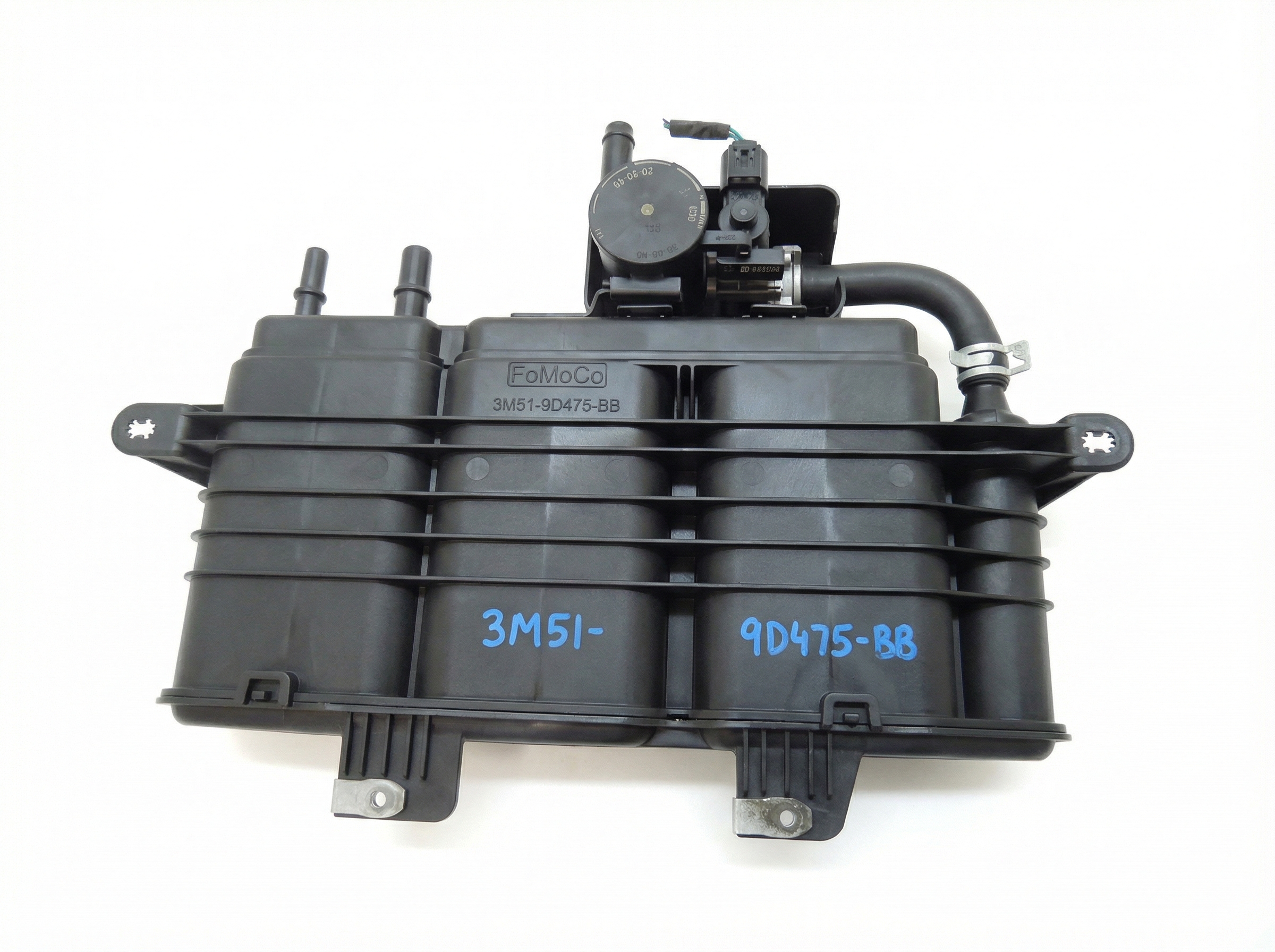
(OEM #9U5Z-9C915-H)— This is the most common failure point for code P0441 on this vehicle. It gets stuck open, disrupting the flow of fuel vapors and often causing code P1450 as well.
Trusted brands: Motorcraft, Dorman, Standard Motor Products
OEM price range: $50-$80
Aftermarket price range: $35-$60
Related Codes That Often Appear With This One

- P1450 — This is a Ford-specific code for 'Unable to Bleed Up Fuel Tank Vacuum'. It often appears with P0441 because a stuck-open purge valve creates a constant vacuum on the fuel tank, which the system detects during its pressure tests. This combination strongly points to a bad purge valve.
- P0442 — This code indicates a 'Small Leak Detected' in the EVAP system. A purge valve that isn't sealing perfectly could be interpreted by the system as a small leak, sometimes causing both codes to appear.
- P0443 — This code indicates a 'Purge Control Valve Circuit' malfunction, pointing to an electrical problem with the valve's solenoid or wiring, rather than just incorrect flow.
Technical Service Bulletins (TSBs) & Recalls

- Ford Recall 15S34 / NHTSA 15V-793: Canister purge valve may stick, causing fuel tank to crack.
- Ford Recall 18S32 / NHTSA 18V-735: PCM software may not detect a stuck-open canister purge valve, leading to fuel tank deformation and potential engine stall.
Platform-Specific Known Issues
- Recall 15S34: Affects 2010-2011 Ford Fusion models. A canister purge valve that sticks open can cause repeated pressure changes in the fuel tank, potentially leading to cracks and fuel leaks.
- Recall 18S32: A broader Ford recall that includes some Fusion models where the PCM software may not detect a stuck-open purge valve, which can deform the fuel tank and lead to stalling.
- Hard Start After Refueling: A classic symptom for this specific issue on Fusions is the engine cranking for a long time or stalling immediately after filling the gas tank. This is caused by the stuck-open purge valve allowing raw fuel vapor to flood the intake manifold. 🎬 Watch: How to fix a Fusion that won't start after refueling.
Mechanic-Grade Diagnostic Values
- Fuel Tank Pressure (FTP) Sensor Voltage — expected: Approximately 2.6V - 2.65V with Key On, Engine Off (KOEO).. Failure: A significant deviation from this voltage at static KOEO, or a voltage that immediately drops upon starting the engine, can indicate a purge valve stuck open.
- Canister Purge Valve Connector Voltage — expected: Battery voltage on the power supply pin (Key On, Engine Off).. Failure: Zero volts indicates a potential open circuit or blown fuse in the power supply to the valve.
- EVAP System Test Vacuum Level — expected: The PCM attempts to pull the system down to a target of approximately -8.0 inches of H2O.. Failure: If the system cannot reach this level of vacuum, it may indicate a leak or a non-functional purge valve, triggering a P0441 or related code.
- EVAP Canister Vent Valve Solenoid Resistance — expected: 12 - 80 Ohms between the two pins of the solenoid.. Failure: Resistance outside this range indicates a faulty vent solenoid, which can affect the system's ability to seal for pressure tests.
Hidden / Shadow Codes Worth Checking
- Mode 6, Test ID $82: While not a hidden code, Mode 6 data provides technician-level insight. For Ford, Test ID $82 (TID $82) often relates to the EVAP Purge Flow Monitoring. It shows the raw test values and the min/max thresholds the PCM uses to determine if the purge flow is correct. A value outside the limits will cause the monitor to fail and eventually set P0441. (see via A professional scan tool or an advanced OBD-II scanner with Mode 6 capability.)
Scan Tool Commands That Help
- Ford IDS (Integrated Diagnostic System): Datalogger & Bidirectional Controls — To perform a manual EVAP system test. A technician can monitor the Fuel Tank Pressure (FTP) sensor PID while using bidirectional controls to command the 'Vapor Management Valve' (Purge Valve) and 'Canister Vent Valve' on and off to verify their function and the system's ability to seal and pull a vacuum.
- Ford IDS (Integrated Diagnostic System): EVAP System Test — This is an automated test that commands the system through a full diagnostic cycle to check for leaks and flow issues. It will provide a pass/fail result and can help confirm a repair. Note that this test has preconditions, such as fuel level being between 15% and 85%.
Wiring & Ground Locations
- Purge Valve Connector C1690 — On the canister purge valve itself, in the engine bay near the throttle body.. This 2-pin connector provides power and control to the valve. Pin 1 is the control signal (ground side switched) from the PCM, and Pin 2 is the power supply from the battery junction box. A fault here (corrosion, loose pin) would cause a P0443 circuit code but could be inspected during a P0441 diagnosis.
- G105 / G111 / G112 — General engine compartment grounds, typically on the front left or right side of the engine compartment on the chassis rails.. The PCM and other related modules rely on clean ground connections. While not a primary cause, a corroded or loose engine bay ground could theoretically cause erratic behavior in the PCM's control of the purge valve solenoid, though this is a very rare cause.
Real Owner Repair Stories
- YouTube channel 'MazdaB3K' (2010 Ford Fusion 3.0L) — Check Engine Light with code P1450 ('Unable to bleed up fuel tank vacuum'), which is commonly associated with P0441.
❌ Tried (didn't work) The video directly proceeds to the fix, implying no other parts were tried first.
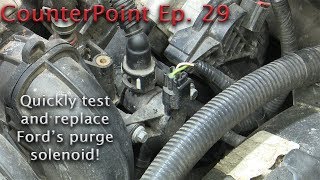
✅ What actually fixed it Replaced the canister purge valve solenoid located in the engine bay behind the throttle body. The repair involved removing two 8mm bolts and the electrical and hose connections. - YouTube channel 'CounterPoint' (Ford Fusion (2.5L/3.0L engine)) — Check Engine Light, likely P0443 or P0455. The diagnostic focuses on a stuck-open purge valve.
✅ What actually fixed it Confirmed the purge valve was stuck open by disconnecting the electrical connector and feeling for vacuum with the engine running. The fix was to replace the purge valve. The video also emphasizes checking the charcoal canister for fuel saturation afterwards, as a stuck-open valve can cause it to become flooded. - NHTSA ODI #11405532 — In a cross-manufacturer reference involving a similar Ford EVAP system, an owner reported that the vehicle bubbles excessively for a couple of minutes after refueling and is only able to drive after a struggle, with the check engine light on for code P0441.
"I Checked Everything" — The Actual Cause
- Code P0441 indicates 'Incorrect Purge Flow', not necessarily a system leak. It's common for a vehicle with P0441 to pass a smoke test. The smoke test is designed to find physical leaks (which cause codes like P0442 or P0455). P0441 is triggered when the PCM commands the purge valve to open but does not see the expected change in fuel tank pressure. If a smoke test is clean, the next step is not to look for more leaks, but to functionally test the components: 1) Is the purge valve mechanically stuck closed, preventing flow? 2) Is the Fuel Tank Pressure (FTP) sensor responding correctly to pressure changes? 3) Is the canister vent valve operating correctly to allow the system to seal? A stuck-closed purge valve is a common cause that a smoke test would not identify.
OEM Part Supersession History
9U5Z-9C915-H→9U5Z-9C915-J— Standard part revision and update by the manufacturer.
Heads up: 9U5Z-9C915-J also replaces the earlier part number 9U5Z-9C915-D. All are considered interchangeable for the specified applications.
Model Year Variations Within This Range
- 2006-2009 vs. 2010-2012: The 2010 model year introduced a major refresh. The base engine changed from a 2.3L I4 to a 2.5L I4, and a 3.5L V6 Sport model was added. While the purge valve part number (9U5Z-9C915-J) is used across many of these engines, its physical location and the routing of EVAP hoses may vary slightly. The recalls (15S34, 18S32) are primarily focused on the refreshed 2010-2012 models.
Diagnostic Flowchart
Other Known Issues on This Vehicle
Issues unrelated to this code that are worth knowing about as an owner of this generation:
- Electronic Throttle Body (ETB) Failure 🔴 High — Common issue across many Ford models of this era. Can cause sudden loss of power ('limp mode') while driving. (Ref: Ford Customer Satisfaction Program 16B32 addressed this for some models, but it affects a wider range.)
- Automatic Transmission (6F35) Issues 🔴 High — Widespread reports of harsh shifting, delayed engagement, shuddering, and premature failure. Problems can stem from the valve body, torque converter, or internal seals. (Ref: Subject of a class-action lawsuit.)
- Electric Power Steering (EPAS) Failure 🔴 High — Commonly reported failure, resulting in a sudden loss of power steering assist, making the vehicle difficult to steer at low speeds. (Ref: Recall 15S18 was issued for 2011-2012 models. NHTSA investigated 2010 models but did not expand the recall.)
- Cracked/Swollen Lug Nuts 🟡 Low — Extremely common annoyance. The two-piece design with a steel core and aluminum cap allows corrosion to build up, causing the cap to swell and making it impossible to use a standard lug wrench.
- Interior Door Handle Breakage 🟡 Low — The plastic interior door handles are known to be brittle and frequently break, requiring replacement.
Used vs. New Parts: Buying Guide for This Vehicle
When a used part is the smart pick: For this repair, using used parts is generally not recommended for the electronic solenoids (purge valve, vent valve). However, simple mechanical components like mounting brackets or undamaged sections of hard plastic EVAP lines could be sourced from a junkyard if needed.
Donor-vehicle mileage cap: roughly under 80000 miles for the part to have meaningful remaining life.
What to inspect on the donor part:
- For hoses: Check for any signs of cracking, brittleness, or swelling. Hoses should still be pliable.
- For purge valves (not recommended): If you must, perform the 'blow-through' test on the spot. It should not allow air to pass.
- Check the vehicle for signs of major impact near the EVAP components.
OEM-only on this vehicle (don't cheap out):
- No parts for this repair are strictly OEM-only. Quality aftermarket replacements are widely available and considered reliable.
Aftermarket brands forum-validated for this vehicle:
- Motorcraft (OEM)
- Dorman
- Standard Motor Products (SMP)
Brands owners have reported issues with on this vehicle:
- No-name, unbranded parts from online marketplaces may have poor quality control and are best avoided, even if inexpensive.
Real Owner Stories
Aggregated from forums and TSBs cited above. Mileages and costs reflect what owners reported in those sources.
2010 Fusion 2.5L
Symptoms: Check engine light on for evap leak, hard start after refueling.
What fixed it: The issue was not resolved after replacing the vapor canister vent solenoid, purge solenoid, and O2 sensor at a shop.
Cost: $900
Source hint: Ford Forum - Enthusiast Forums for Ford Owners quote regarding 'Fusion 2.5 EVAP leak'
2010 Ford Fusion 4-cylinder
Symptoms: Rough idle, failed emissions, engine light, and codes P0455/P0457. Found a rotted O-ring with blue residue and a cracked lip on the purge valve.
What fixed it: Replaced the purge valve with a Duralast part, though the owner reported codes remained present afterward.
Source hint: r/MechanicAdvice
2011 Ford Fusion SE 2.5L
Symptoms: Stalling after refueling and code P1450.
What fixed it: Replacing the purge valve (confirmed via the 'blow-through' diagnostic test).
Source hint: r/Ford - P1450 - 2011 Ford Fusion SE
Related OBD-II Codes
Frequently Asked Questions
Is my 2010-2011 Ford Fusion covered under a recall for this EVAP issue?
Why does my Fusion struggle to start only after I fill up the gas tank?
I have a 2010 Mercury Milan; does it have the same purge valve problem as the Fusion?
How can I quickly test if the purge valve is the cause of my P0441 code?
Could my P0441 code be related to the capless fuel filler neck on my 2010 Fusion?
What is the estimated cost for the purge valve part on a 2006-2012 Fusion?
Helpful Videos

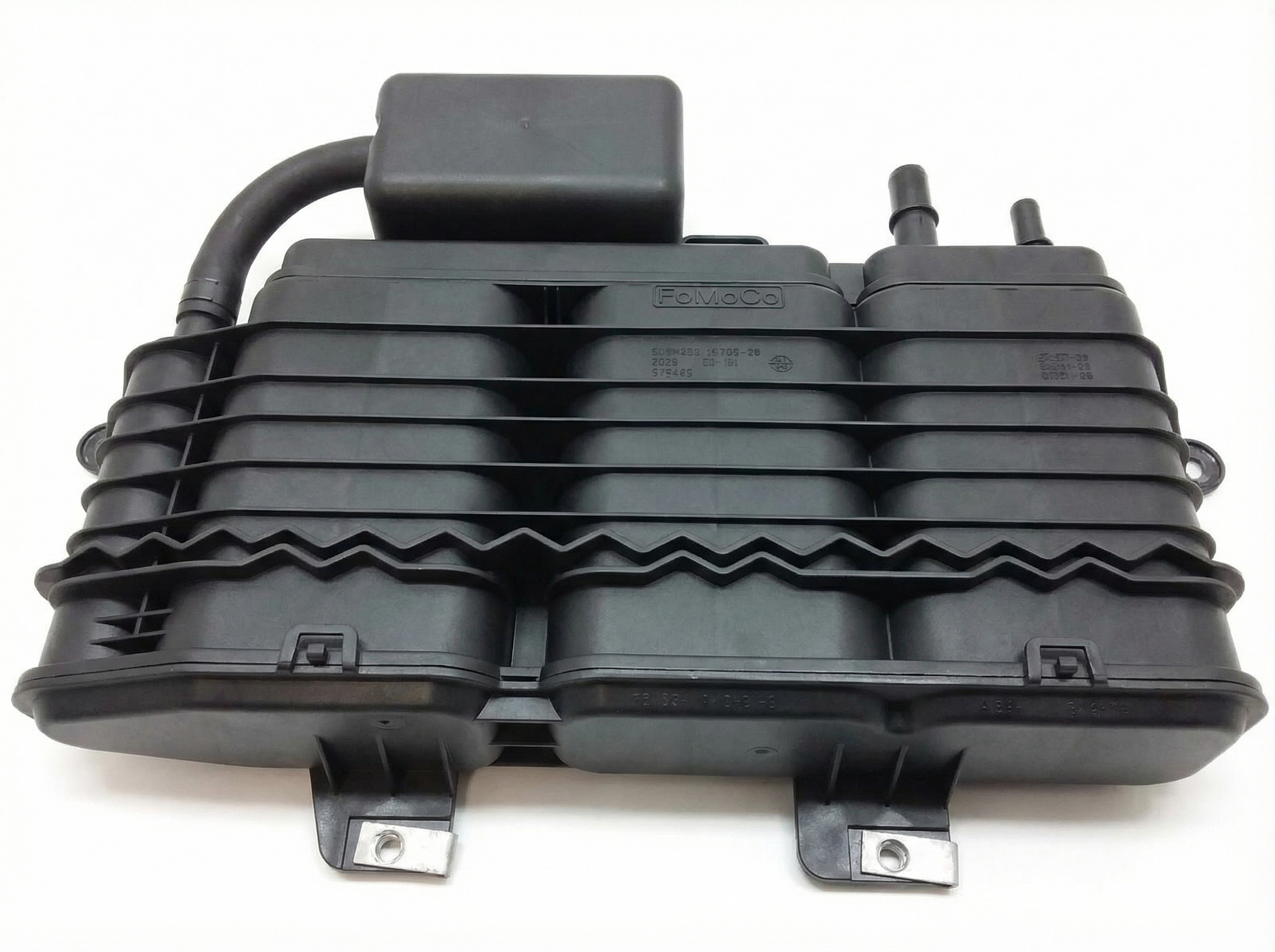
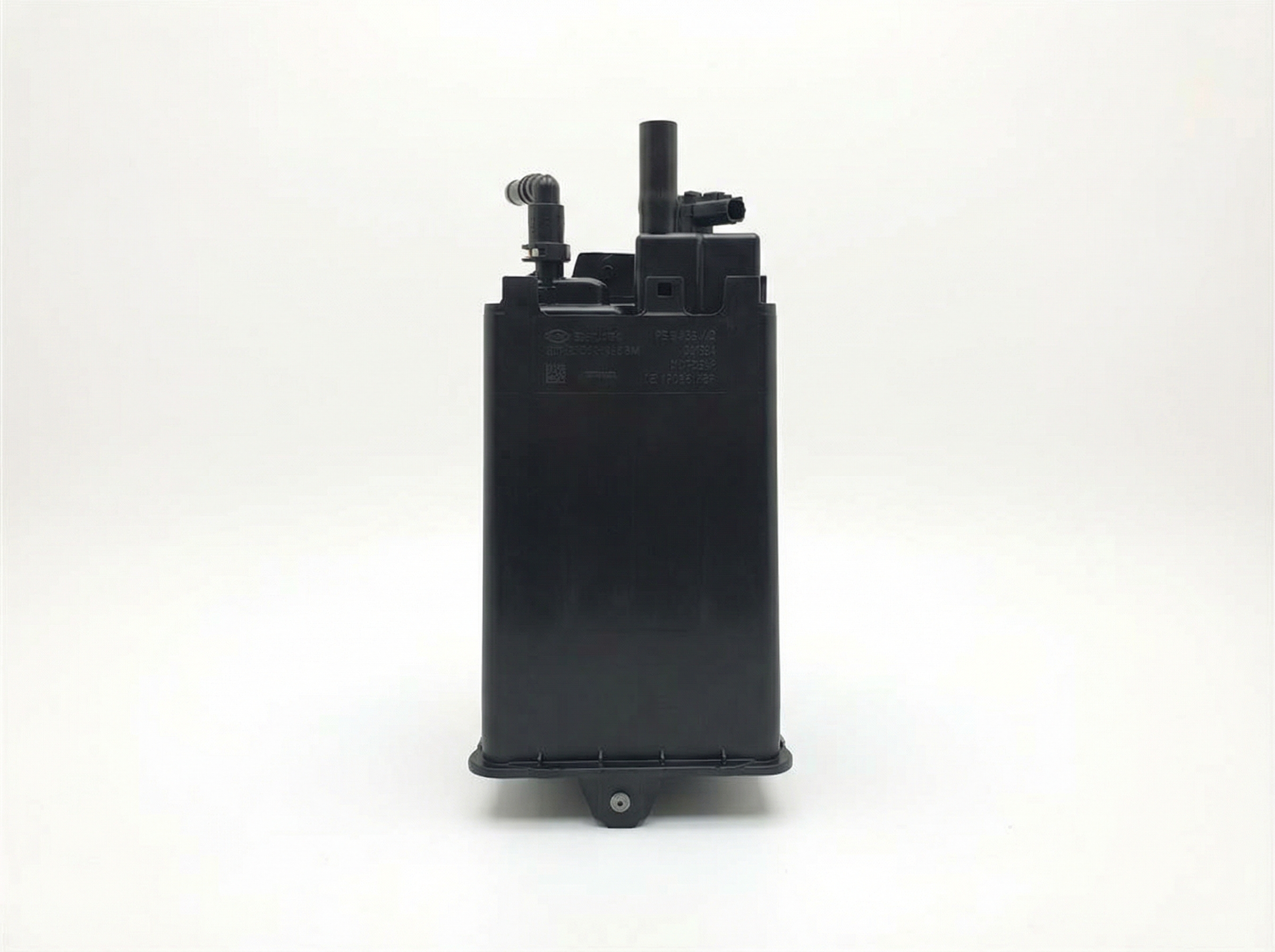
Used OEM Parts in Stock
New Aftermarket Parts Available


The information in this article is provided for general reference and educational purposes only. Vehicle specifications, procedures, and part compatibility can vary by production date, trim level, and region. Always consult your vehicle's factory service manual and verify part numbers before purchasing or performing repairs. Safety-critical components such as airbags, seat belts, and braking systems should be installed by a qualified professional.
- Ford Fusion:
- 🎬 Helpful Videos
- 🛍️ Shop This Part
- What's Unique About the 2006-2012 Ford Fusion
- Symptoms You May Notice
- Most Likely Causes
- Rare But Worth Checking
- Diagnosis Steps
- Parts You'll Likely Need
- Related Codes That Often Appear With This One
- Technical Service Bulletins (TSBs) & Recalls
- Platform-Specific Known Issues
- Mechanic-Grade Diagnostic Values
- Hidden / Shadow Codes Worth Checking
- Scan Tool Commands That Help
- Wiring & Ground Locations
- Real Owner Repair Stories
- "I Checked Everything" — The Actual Cause
- OEM Part Supersession History
- Model Year Variations Within This Range
- Diagnostic Flowchart
- Other Known Issues on This Vehicle
- Used vs. New Parts: Buying Guide for This Vehicle
- Real Owner Stories
- 2010 Fusion 2.5L
- 2010 Ford Fusion 4-cylinder
- 2011 Ford Fusion SE 2.5L
- Related OBD-II Codes
- Frequently Asked Questions
- 🎟️ Get 5% Off