

P0441 on 2007-2014 Ford Edge: EVAP Incorrect Purge Flow Causes and Fixes
For a 2007-2014 Ford Edge, code P0441 almost always points to a faulty canister purge valve. This is a common failure item that is relatively inexpensive and easy to replace, often fixing the issue for under $75 with a DIY approach. This code is frequently seen with P1450, which further confirms the purge valve is stuck open.
- P0441 on a 2007-2014 Edge is overwhelmingly caused by a bad canister purge valve.
- A key symptom specific to this failure is having trouble starting the car right after you fill the gas tank.
- The repair is very simple, requiring basic tools, and can be done in under 30 minutes.
- The presence of code P1450 alongside P0441 is a near-certain diagnosis of a stuck-open purge valve.
- Use an OEM Motorcraft replacement part, as aftermarket versions are known to fail prematurely.
What's Unique About the 2007-2014 Ford Edge
The first-generation Ford Edge (and its 2011-2014 facelift) uses a straightforward EVAP system where the canister purge valve is a very common failure point. Unlike some vehicles that have complex leak detection pumps, the Edge's system is more traditional, making diagnosis simpler. The most frequent symptom tied to this code on the Edge is difficulty starting the vehicle immediately after refueling 🎬 Watch: How to fix hard starting after refueling on your Edge, which is a classic sign of a purge valve stuck open. This is often accompanied by Ford-specific code P1450 ('Unable to Bleed Up Fuel Tank Vacuum'), which is another strong indicator of a stuck-open purge valve. While Ford issued a recall (18S32) for this exact issue on other models like the Focus, no specific recall for P0441/P1450 exists for the 2007-2014 Edge, but the failure pattern is identical and well-documented by owners.
Generation note: The 2007-2014 Ford Edge covers the first generation and its mid-cycle refresh (2011-2014). The primary cause and fix for P0441, the canister purge valve, is consistent across this entire year range, though the specific part number may vary slightly by engine (2.0L vs 3.5L/3.7L). The repair procedure is very similar for all engines offered during this period.
Symptoms You May Notice
- Check Engine Light is on
- Difficulty starting the engine, especially after getting gas
- Rough or erratic idle
- Slight fuel smell (less common)
- Audible suction or 'farting' noise from the rear of the car near the fuel tank after shutdown
- Replacing the gas cap. While a loose or faulty gas cap can cause other EVAP codes (like P0455 or P0457 for a large leak), it is not a typical cause for the specific 'Incorrect Purge Flow' logic of P0441.
Most Likely Causes
- Faulty Canister Purge Valve (Vapor Management Valve) 🔴 High Probability The purge valve is a known high-failure item on many Ford vehicles from this era. It can get stuck open, stuck closed, or leak intermittently due to internal wear. A stuck-open valve is the most common failure, leading to the hard-start-after-fueling symptom and code P1450.
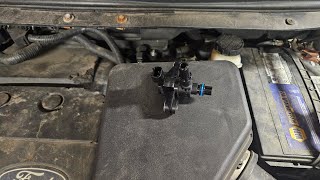
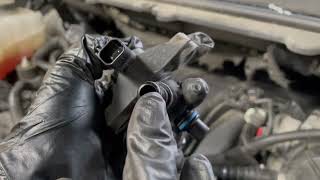
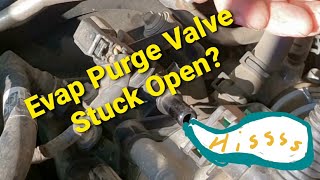
How to confirm: With the engine off, disconnect the vapor line from the purge valve. Use a hand-held vacuum pump to see if the valve holds vacuum; it should. If it doesn't, it's stuck open and bad. Alternatively, with the engine off, try to blow through the valve; if air passes, it is stuck open. 🎬 See this quick and easy test for a stuck valve With the engine idling, check for vacuum at the port that goes to the charcoal canister. There should be no vacuum at idle when the engine is cold; if there is, the valve is stuck open.
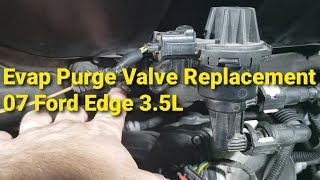
Typical fix: Replace the canister purge valve. It is typically located on or near the intake manifold and is secured by two bolts. Owners strongly recommend using an OEM Motorcraft part, as aftermarket versions have a high rate of premature failure.
Est. part cost: $30-$75 - Cracked or Disconnected EVAP Hoses 🟡 Medium Probability The plastic and rubber hoses in the engine bay can become brittle over time due to heat and age, leading to cracks or loose connections.
How to confirm: Visually inspect all EVAP system hoses between the charcoal canister, the purge valve, and the intake manifold for any visible cracks, breaks, or disconnections. A smoke test can also be performed to pinpoint hard-to-see leaks.
Typical fix: Replace the damaged section of hose. Ensure all connections are secure.
Est. part cost: $10-$50
Rare But Worth Checking
- Clogged or Failed Charcoal Canister: This can happen if you habitually 'top off' your fuel tank. Overfilling can force liquid fuel into the charcoal canister, saturating the charcoal pellets and causing them to break down. These pellets can then travel down the EVAP lines and clog the new purge valve, causing a repeat failure.
- Faulty Fuel Tank Pressure (FTP) Sensor: The FTP sensor monitors pressure in the EVAP system. If it provides incorrect readings to the computer, it can falsely trigger a P0441 code. However, a faulty FTP sensor will usually set other codes as well, such as P0452 or P0453.
Diagnosis Steps
- Scan for Codes: Read the trouble codes with an OBD-II scanner. Note any other codes present, especially P1450 🎬 Watch: How to test and replace the solenoid for code P1450, which strongly points to the purge valve.
- Test the Canister Purge Valve: This is the most likely culprit. Locate the valve on the engine. With the engine off, disconnect the electrical connector and the two vapor lines. Try to blow through the valve; if air passes through, it is stuck open and must be replaced. For a more definitive test, use a hand-held vacuum pump on the port leading to the charcoal canister; the valve should hold vacuum when not energized.
- Inspect EVAP Hoses: While the purge valve is disconnected, inspect the line coming from the charcoal canister for black plastic pellets. If found, the canister has failed and must be replaced along with the purge valve to prevent a repeat failure. Also perform a thorough visual inspection of all accessible EVAP hoses for cracks or damage.
- Check Electrical Connector: Inspect the purge valve's electrical connector for corrosion or damage. With a multimeter, you can verify it is receiving battery voltage on one pin with the key on, engine off.
- Consider a Smoke Test: If the purge valve tests good and no visible hose damage is found, a smoke test is the next step. This involves injecting smoke into the EVAP system to reveal any hard-to-find leaks in the lines or canister.
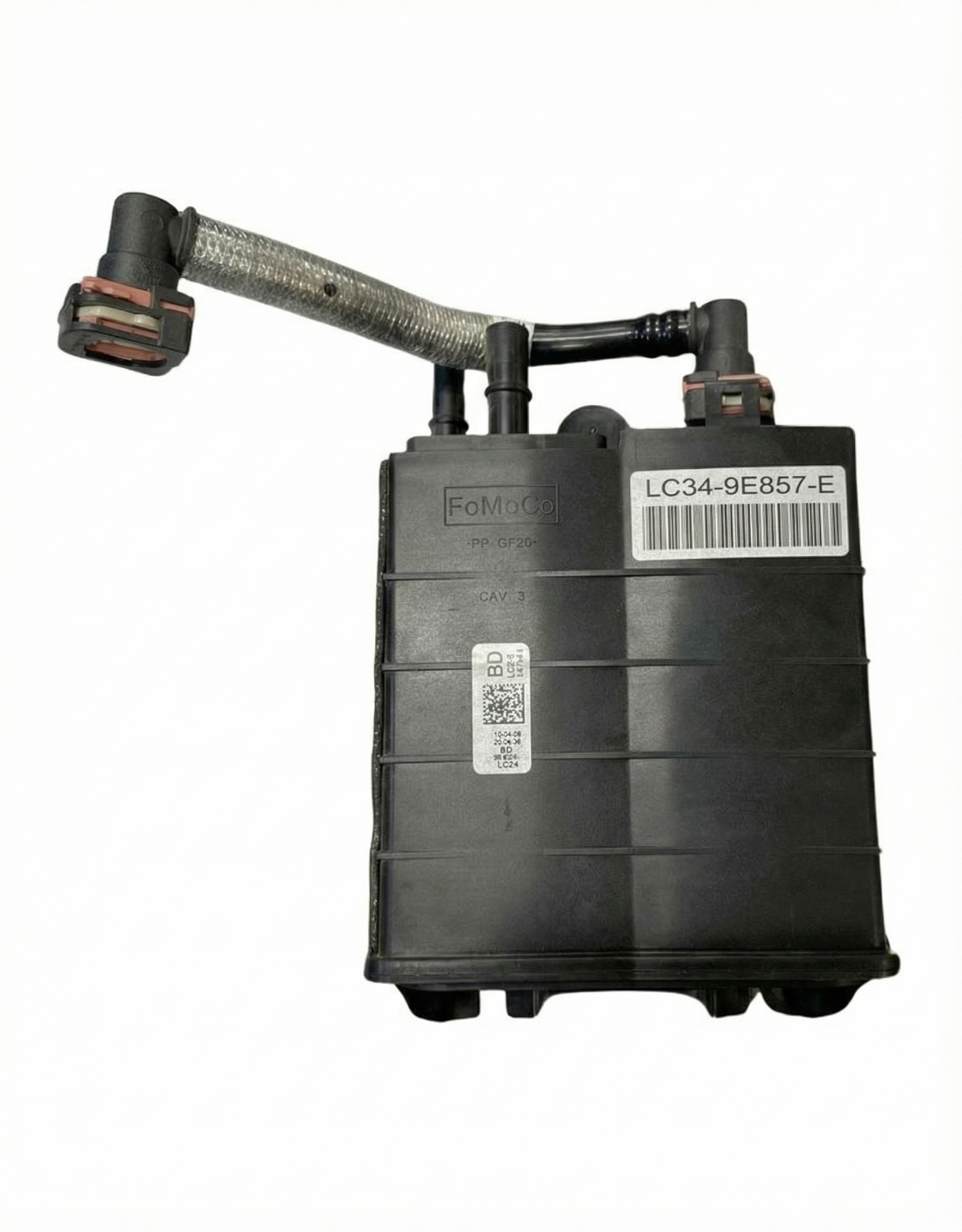
- Inspect Charcoal Canister: Check the charcoal canister (located near the fuel tank) for any physical damage or cracks. If you suspect it's saturated from over-filling the fuel tank, it may need to be replaced.
Parts You'll Likely Need
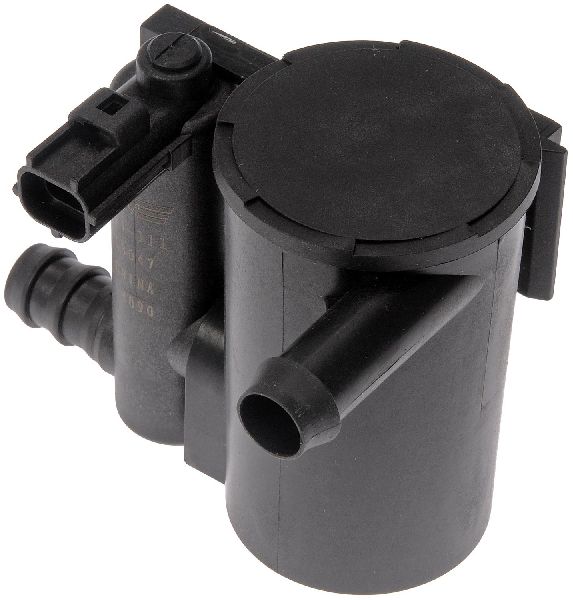
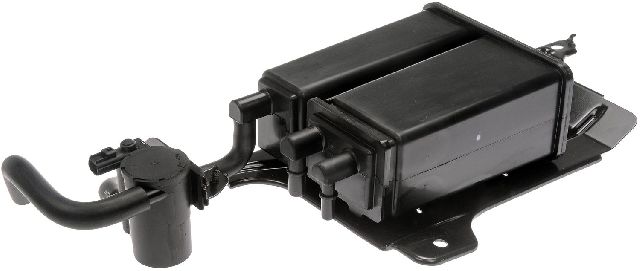
- Canister Purge Valve / Vapor Management Valve
(OEM #9U5Z-9C915-H (Common, but verify by VIN). Other variants include 7T4Z-9C915-A and AU5Z-9C915-B depending on year/engine.)— This valve is the most common failure point for code P0441 on this vehicle. It gets stuck open, causing the incorrect flow condition detected by the PCM. Owner forums consistently report that aftermarket valves fail quickly and that using the OEM Motorcraft part is critical for a lasting repair.
Trusted brands: Motorcraft (Highly Recommended), Bosch, Dorman
OEM price range: $40-$65
Aftermarket price range: $25-$50
Related Codes That Often Appear With This One
- P1450 — This Ford-specific code for 'Unable to Bleed Up Fuel Tank Vacuum' is the most common companion to P0441. It almost definitively confirms the canister purge valve is stuck open, causing constant engine vacuum to be applied to the fuel tank.
- P2196 / P2198 — These codes for 'O2 Sensor Signal Stuck Rich' can appear because a stuck-open purge valve allows un-metered fuel vapors into the intake, creating a rich fuel mixture that the oxygen sensors detect.
- P0442 — 'EVAP System Leak Detected (Small Leak)' can sometimes accompany P0441 if the purge valve is not sealing correctly, creating a small leak path.
Technical Service Bulletins (TSBs) & Recalls
- Ford Safety Recall 18S32 (NHTSA 18V-735): While officially for 2012-2018 Focus models, this recall is highly relevant as it addresses the exact same failure mode: a canister purge valve (CPV) stuck open, causing excessive fuel tank vacuum (P1450), potential fuel tank deformation, stalling after refueling, and inaccurate fuel gauge readings. This establishes a clear pattern of this part's failure across Ford's lineup.
- Ford TSB 19-2207: Issued for Fusion, C-Max, and MKZ Hybrid models, this TSB also confirms that code P1450 is caused by a faulty canister purge valve, further corroborating the widespread nature of this specific component failure on Ford platforms.
Mechanic-Grade Diagnostic Values
- Fuel Tank Pressure (FTP) Sensor Voltage, Key On Engine Off (KOEO) — expected: 2.6V - 2.7V. Failure: A significant deviation from this range indicates a potential sensor issue. If the voltage drops immediately upon starting the engine, it could indicate a purge valve stuck open, pulling the tank into a vacuum.
- EVAP System Pressure during IDS On-Board Test — expected: Target vacuum is approximately -8.0 in-H2O. During the bleed-down test, pressure should hold steady between the test limits shown on the scan tool.. Failure: If the system cannot achieve target vacuum, or if the vacuum bleeds off too quickly past the failure mark, it indicates a leak. If pressure goes more negative after the purge valve is commanded closed, it indicates the purge valve is leaking or stuck open (often setting P1450).
Scan Tool Commands That Help
- Ford IDS (Integrated Diagnostic System): Powertrain > EVAP System Test — This is a factory-level automated test that commands the purge and vent solenoids to check for large leaks, small leaks, and blockages. It's the most definitive way to test the system's integrity after verifying individual components. It can confirm a leak exists before performing a smoke test.
- Ford IDS (Integrated Diagnostic System): Datalogger > Powertrain > Engine > Vapor Management Valve & EVAP Canister Vent Valve — This allows for manual, bidirectional control. A technician can command the purge valve (Vapor Management Valve) open and closed while monitoring fuel tank pressure to confirm its operation. This is useful for isolating a stuck valve without removing it from the vehicle.
Wiring & Ground Locations
- C123 — The electrical connector for the EVAP Canister Purge Valve itself, located on the engine.. This is the primary connector to check for power, ground signal, and corrosion. A bad connection here can prevent the purge valve from operating correctly, mimicking a failed valve.
- G107 — A common engine compartment ground point located on the right front of the engine compartment.. While not exclusively for the EVAP system, many sensors and actuators share common ground points. A corroded or loose G107 could potentially cause erratic behavior in various systems, including the PCM's ability to control the purge valve.
- Purge Valve Connector Wires (Typical Ford) — At the C123 connector for the purge valve.. Pin 1 is typically the power supply (voltage from fuse) and Pin 2 is the control wire (ground signal from PCM). Checking for battery voltage at Pin 1 (Key On) and a pulsing ground signal at Pin 2 (Engine Running, purge commanded) with a multimeter can confirm the wiring and PCM driver are functional.
Real Owner Repair Stories
- Reddit r/FordEdge user (2015 Ford Edge (Note: newer than the specified range, but describes the identical failure pattern)) — Car sputters when starting after filling up the tank.
❌ Tried (didn't work) An aftermarket purge valve from Amazon was installed, but the issue returned.
✅ What actually fixed it Replacing the failed aftermarket part with a genuine OEM Ford purge valve assembly resolved the issue. The user noted the OEM part was significantly more expensive but solved the problem, and the fix has lasted for two years. - NHTSA ODI #11405532 — In a cross-manufacturer reference, an owner of a Ford Focus reported that their vehicle "stumbles excessively for a couple minutes after being able to drive after refueling" with the check engine light on for code P0441.
OEM Part Supersession History
9U5Z-9C915-H→9U5Z-9C915-J— Standard part evolution and revision by the manufacturer.
Heads up: The parts are generally interchangeable, but it is always best practice to use the latest revision ('J') when available. The 'H' revision is also listed as being superseded by 'D' in some catalogs, indicating multiple revisions over time.AU5Z-9C915-A→AU5Z-9C915-B— Standard part evolution and revision. This part number series is often associated with the 2.0L EcoBoost engine.
Model Year Variations Within This Range
- 2011-2014: The 2011 model year marked a significant mid-cycle refresh. While the P0441 issue remains common, the engine options were updated. The base 3.5L V6 received a power increase, the 3.7L V6 was introduced for the Sport model, and the 2.0L EcoBoost 4-cylinder became an option in 2012. The interior was also completely redesigned with the MyFord Touch system. While the purge valve function is the same, the exact part number and location of surrounding components may differ slightly between these engines.
- 2007-2010: These earlier models have a different interior and a slightly less powerful version of the 3.5L V6 engine as the primary powertrain. The EVAP system components and diagnosis for P0441 are fundamentally the same as the later models in this generation.
Diagnostic Flowchart
Other Known Issues on This Vehicle
Issues unrelated to this code that are worth knowing about as an owner of this generation:
- AWD Power Transfer Unit (PTU) Failure 🔴 High — Common, with failures reported as early as 40,000-60,000 miles. The non-serviceable unit's fluid is cooked by the nearby exhaust, leading to lubrication breakdown and gear failure. (Ref: No recall, but a widely documented failure. Symptoms include a grinding/whirring noise that changes with vehicle speed and a distinct 'propane or natural gas' smell from the burnt gear oil.)
- Brake Booster Diaphragm Tear 🟠 Medium — Very common across 2007-2015 models. Leads to a hissing sound from the pedal area, a hard or spongy brake pedal, and increased stopping effort. (Ref: Ford Customer Satisfaction Program 13N02 extended the warranty coverage for the brake booster to 10 years or 150,000 miles.)
- Internal Water Pump Failure (3.5L & 3.7L V6) 🔴 High — A significant design flaw where the water pump is located inside the engine and driven by the timing chain. When the pump's seal fails, it leaks coolant directly into the engine oil, which can lead to catastrophic engine damage with little warning.
- Water Leak into Cabin at A-Pillars 🟡 Low — Commonly reported issue where improperly sealed body seams behind the hood hinges allow water to enter the cabin, soaking the front carpets and causing a musty odor. (Ref: While a specific program (15B21) was issued for 2015 models, the leak is a known issue on earlier model years as well.)
- Door Ajar Sensor Failure 🟡 Low — A faulty sensor inside the door latch assembly causes the 'door ajar' light to remain on, which can prevent doors from locking and drain the battery overnight. (Ref: TSB 18-2013 was issued for 2011-2013 models to address this issue. The fix requires replacing the entire door latch assembly.)
Used vs. New Parts: Buying Guide for This Vehicle
When a used part is the smart pick: For this specific repair, using a used part is strongly discouraged. The primary failure component, the canister purge valve, is a known high-failure, wear-and-tear item. A used valve from a salvage yard is likely to have significant wear and could fail shortly after installation, if it works at all.
What to inspect on the donor part:
- Not applicable as used parts are not recommended for the core component.
OEM-only on this vehicle (don't cheap out):
- Canister Purge Valve (Vapor Management Valve)
Aftermarket brands forum-validated for this vehicle:
- Bosch (often the OEM supplier)
Brands owners have reported issues with on this vehicle:
- Unnamed, low-cost brands from online marketplaces (e.g., Amazon, eBay). Forum and Reddit users consistently report premature failure of these parts, often within weeks or months, leading to the return of the P0441/P1450 codes and symptoms.
Real Owner Stories
Aggregated from forums and TSBs cited above. Mileages and costs reflect what owners reported in those sources.
2014 Ford Edge AWD 3.5L V6
Symptoms: Intermittently hard start even when the engine cranks. No check engine light was on, but a dealer diagnostic found a 'PURGE VAVLE STUCK OPEN' and the vapor canister was fuel contaminated.
What fixed it: The dealer replaced the purge valve, though the owner noted the issue persisted due to the contaminated canister.
Source hint: owner_reports
2012-2018 Ford Edge 2.0L EcoBoost
Symptoms: Classic symptoms of a hard start after fueling, a 'farting noise' from the rear of the car, and a P1450 code.
What fixed it: Replacing the purge valve solenoid.
Source hint: Ford Edge Forum - 'Code P1450 - problem starting after filling up - 2.0L EcoBoost'
2007-2014 Ford Edge 3.5L
Symptoms: Check Engine Light with code P0441.
What fixed it: Replacing the emissions canister purge valve solenoid.
Source hint: Ford Edge Forum - 'Emissions Canister Purge Valve Solenoid Failure - 3.5L'
Related OBD-II Codes
Frequently Asked Questions
Is there a recall for the canister purge valve on my Ford Edge like there is for the Focus?
My 2013 Edge has a 'door ajar' light that won't go off; is this related to the EVAP system?
I'm hearing a 'farting' noise from the rear of my Edge after I turn it off. What is that?
Should I use an aftermarket purge valve to save money on my repair?
Is the hissing sound from my brake pedal related to the P0441 code?
Does TSB 19-2207 apply to the Ford Edge?
Helpful Videos
Used OEM Parts in Stock

New Aftermarket Parts Available


The information in this article is provided for general reference and educational purposes only. Vehicle specifications, procedures, and part compatibility can vary by production date, trim level, and region. Always consult your vehicle's factory service manual and verify part numbers before purchasing or performing repairs. Safety-critical components such as airbags, seat belts, and braking systems should be installed by a qualified professional.
- Ford Edge:
- 🎬 Helpful Videos
- 🛍️ Shop This Part
- What's Unique About the 2007-2014 Ford Edge
- Symptoms You May Notice
- Most Likely Causes
- Rare But Worth Checking
- Diagnosis Steps
- Parts You'll Likely Need
- Related Codes That Often Appear With This One
- Technical Service Bulletins (TSBs) & Recalls
- Mechanic-Grade Diagnostic Values
- Scan Tool Commands That Help
- Wiring & Ground Locations
- Real Owner Repair Stories
- OEM Part Supersession History
- Model Year Variations Within This Range
- Diagnostic Flowchart
- Other Known Issues on This Vehicle
- Used vs. New Parts: Buying Guide for This Vehicle
- Real Owner Stories
- 2014 Ford Edge AWD 3.5L V6
- 2012-2018 Ford Edge 2.0L EcoBoost
- 2007-2014 Ford Edge 3.5L
- Related OBD-II Codes
- Frequently Asked Questions
- 🎟️ Get 5% Off