

P0440 on 2011-2016 Hyundai Elantra: EVAP System Malfunction Causes and Fixes
For a 2011-2016 Hyundai Elantra, P0440 is most often caused by a loose gas cap or a faulty canister purge valve. Always check the gas cap first. If the cap is fine, the purge valve is the next most likely culprit, costing around $30-$90 for the part. A more severe, known issue is charcoal canister failure, which causes refueling difficulty.
- Always check the gas cap first for P0440. Ensure it's tight and the seal is intact.
- If the gas cap is okay, the canister purge valve is the next most likely and affordable part to inspect.
- If you are having trouble filling your gas tank, suspect a failed charcoal canister that has clogged the system—a known issue on these cars.
- A smoke test is the most reliable way to find a leak if the cause isn't obvious.
What's Unique About the 2011-2016 Hyundai Elantra
On this generation of Hyundai Elantra, while the usual suspects like the gas cap and purge valve are common, a more severe and platform-specific issue can be the failure of the charcoal canister. The charcoal pellets inside the canister can break apart, travel through the EVAP lines, and clog the canister close valve (vent valve). This not only triggers the P0440 code but often leads to a distinct symptom where the fuel pump nozzle clicks off repeatedly, making it extremely difficult to refuel the car. This failure can be caused by age, over-filling the fuel tank, or contamination.
Symptoms You May Notice
- Check Engine Light is on
- A faint smell of gasoline, especially around the rear of the car or after refueling
- Difficulty filling the gas tank (fuel pump nozzle shuts off before the tank is full)
- Slightly reduced fuel economy
- Possible rough idle or difficulty starting immediately after refueling if the purge valve is stuck open
- Possible rough idle if the purge valve is stuck open
- Replacing the O2 sensors. O2 sensors are not related to the EVAP system and will not fix a P0440 code.
- Replacing the catalytic converter. This is an expensive and unrelated repair for an EVAP system fault.
Most Likely Causes
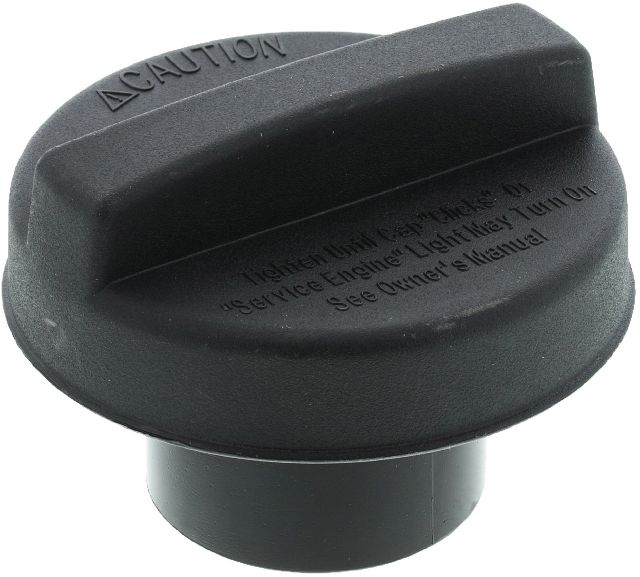
- Loose or Faulty Gas Cap 🔴 High Probability This is the most common cause on nearly all vehicles, as the cap seal can degrade over time or the cap can be simply forgotten to be tightened.
How to confirm: Ensure the gas cap clicks at least once when tightened. Inspect the rubber O-ring seal on the cap for cracks, dirt, or brittleness. A visual crack or stiff, non-pliable seal means it needs replacement.
Typical fix: Tighten the cap until it clicks. If the seal is damaged, replace the gas cap. It is recommended to use an OEM or high-quality aftermarket cap.
Est. part cost: $10-$30 - Faulty Canister Purge Valve (Purge Solenoid) 🟡 Medium Probability The purge valve is an electromechanical part that cycles frequently and is a common failure point on many modern vehicles, including Hyundai. It can get stuck open or closed, leading to EVAP codes like P0440 and P0441.
How to confirm: With the engine running, you can sometimes feel for vacuum suction on the tank-side port of the valve; there should be none at idle. A more definitive test involves removing the valve and trying to blow through it; it should be closed and not allow air to pass. You can also apply 12V to its pins to confirm it clicks open.
Typical fix: Replace the canister purge valve. It is typically located in the engine bay, mounted on the intake manifold, and is relatively easy to access and replace with basic tools.
Est. part cost: $30-$90 - Failed Charcoal Canister / Clogged Canister Close Valve 🟡 Medium Probability A known issue on some Hyundai models is the internal structure of the charcoal canister breaking down, releasing charcoal pellets that clog the EVAP lines and the Canister Close Valve (CCV). This is often exacerbated by habitually 'topping off' the fuel tank.
How to confirm: The primary symptom is extreme difficulty when refueling. To confirm, disconnect the EVAP hose from the canister and check for black charcoal pellets. The Canister Close Valve, located near the canister, may also be full of this debris.
Typical fix: The charcoal canister, canister close valve, and any contaminated hoses must be replaced. All lines must be blown out with compressed air to ensure no debris remains. Failure to clear the lines will cause the new components to fail quickly.
Est. part cost: $150-$300 - Cracked or Disconnected EVAP Hoses ⚪ Low Probability
How to confirm: Visually inspect all accessible EVAP hoses, from the engine bay to the charcoal canister near the fuel tank, for any obvious cracks, disconnections, or rot. A professional smoke test is the best method to find small, hard-to-see leaks.
Typical fix: Replace the damaged section of hose.
Est. part cost: $5-$25
Rare But Worth Checking
- Faulty Canister Close Valve (Vent Valve): This valve, located near the charcoal canister, can fail on its own (stuck open or closed) even if the canister itself is intact. It's less common than a purge valve failure but should be tested if other causes are ruled out.
- Leaking Fuel Tank Filler Neck: Rust or corrosion on the metal filler neck where the gas cap seals can create a leak that the cap itself cannot fix. This is more common in areas that use road salt.
- Faulty Fuel Tank Pressure Sensor: A faulty fuel tank pressure sensor can send incorrect data to the ECM, causing it to believe there is a leak when there isn't one. This is a less common cause and usually requires more advanced diagnostics.
Diagnosis Steps
- Read the code with an OBD-II scanner to confirm P0440 is present and check for any other related codes.
- Inspect the gas cap. Remove it, check the seal for damage, and retighten it until it clicks. Clear the code and drive for a few days to see if it returns. If it does, proceed to the next step.
- Consider replacing the gas cap as it is inexpensive and a very common failure point.
- Locate the canister purge valve in the engine bay. Visually inspect its hoses and electrical connector.
- Test the purge valve. With the engine off, try to blow through the valve; it should be closed. A more advanced test is to use a scan tool to command the valve open and closed while checking for flow.
- If you experience difficulty refueling, inspect the charcoal canister and its associated hoses (located near the fuel tank) for black charcoal pellets.
- Visually inspect all other accessible EVAP lines for cracks or damage.
- If no obvious cause is found, the most effective next step is to have a professional perform a smoke test to pinpoint the exact location of the leak.
Parts You'll Likely Need
- Gas Cap
(OEM #31010-3L600)— This is the most frequent cause of P0440 due to a worn seal or improper tightening.
Trusted brands: Stant, Gates, Hyundai OE
OEM price range: $20-$35
Aftermarket price range: $10-$25 - Canister Purge Valve / Solenoid
(OEM #28910-2E000)— A very common failure item that gets stuck open or closed, causing a system fault.
Trusted brands: Bosch, Dorman, Hyundai OE
OEM price range: $60-$90
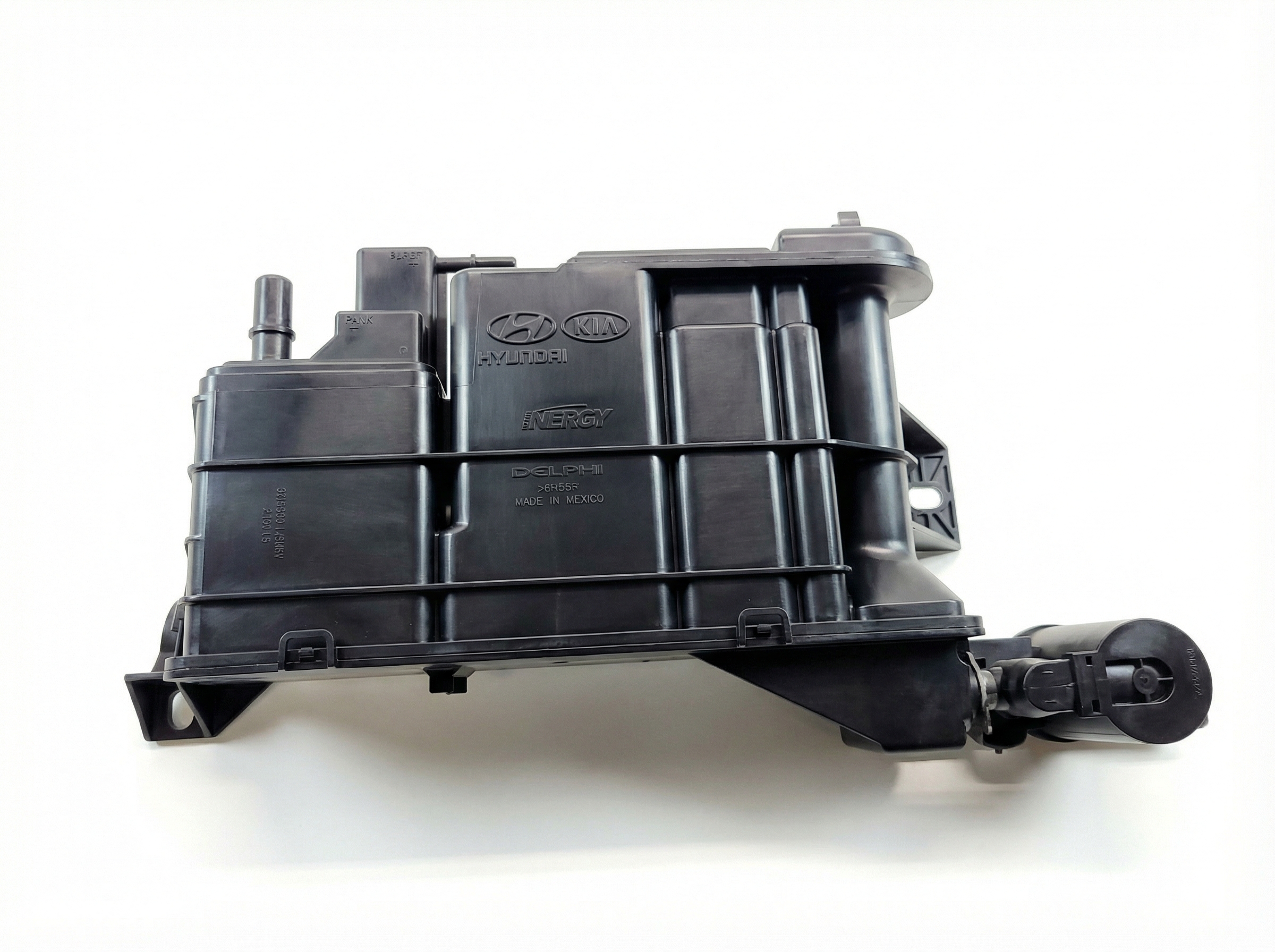
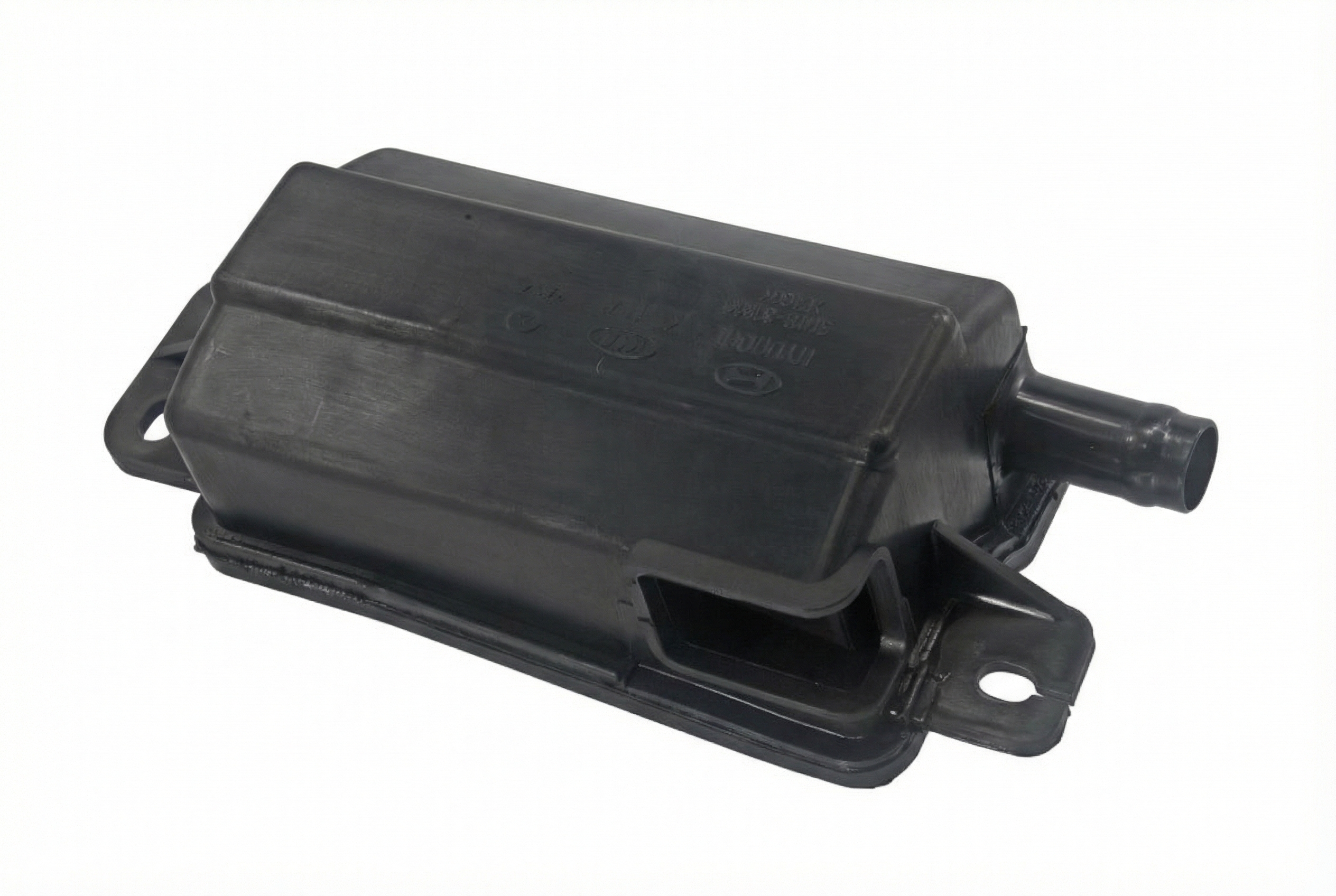
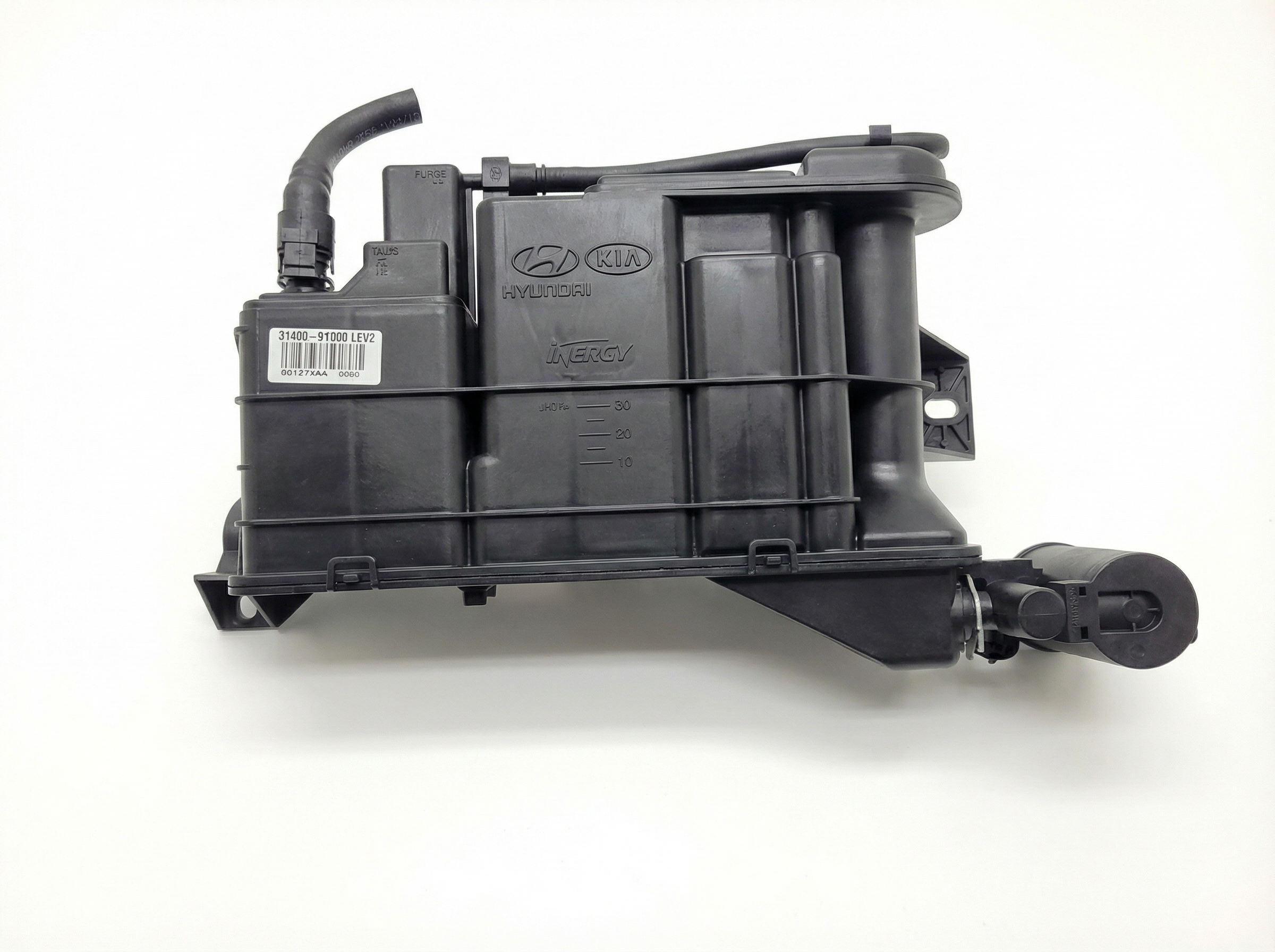
Aftermarket price range: $30-$60 - Charcoal Canister
(OEM #31420-3X500 (Verify by VIN, PZEV vs ULEV models differ))— On these Elantras, the canister can fail internally, releasing charcoal that clogs the system, which is a major vehicle-specific issue.
Trusted brands: Hyundai OE
OEM price range: $150-$250
Aftermarket price range: $100-$180 - Canister Close Valve (Vent Valve)
(OEM #31430-1Y000)— This valve is often replaced along with the charcoal canister, especially if it has been contaminated with charcoal pellets.
Trusted brands: Dorman, Hyundai OE
OEM price range: $80-$120
Aftermarket price range: $40-$70
Related Codes That Often Appear With This One
- P0441 — P0441 indicates 'Incorrect Purge Flow'. It often appears with P0440 when the purge valve is malfunctioning or there's a blockage in the system.
- P0442 — P0442 indicates a 'Small EVAP Leak'. You might see this code alongside P0440 as the system tries to characterize the leak it has detected. On this platform, it can point to cracks in the charcoal canister housing.
- P0455 — P0455 indicates a 'Large EVAP Leak'. While P0440 is a general malfunction, P0455 points more specifically to a large leak, often caused by a missing gas cap or a significant hose disconnection.
Platform-Specific Known Issues
- A notable issue for this Elantra generation is the internal failure of the charcoal canister, which releases charcoal pellets into the EVAP system. This clogs the canister close valve and hoses, causing P0440 and making it very difficult to add fuel to the tank.
- The plastic housing of the charcoal canister itself can become brittle and develop cracks around the mounting bolt holes, creating a small leak that can trigger P0440 or P0442.
Mechanic-Grade Diagnostic Values
- Canister Purge Valve (PCSV) coil resistance — expected: 22.0 - 26.0 Ω at 20°C (68°F). Failure: A reading outside this range, or infinite resistance (OL), indicates a faulty coil.
- Canister Close Valve (CCV) winding resistance — expected: Between 4 and 50 Ω. Failure: A reading of infinite resistance (Open Loop / 'OL') indicates a broken internal motor winding.
- Fuel Tank Pressure Sensor (FTPS) signal voltage at atmospheric pressure — expected: Near 2.5 Volts. Failure: Voltage is stuck high (e.g., 5V), low (e.g., 0V), or does not change when pressure is applied/released.
- Fuel Tank Pressure Sensor (FTPS) power supply wire — expected: ~5 Volts. Failure: Missing voltage indicates a wiring or ECM issue.
Scan Tool Commands That Help
- Hyundai GDS or equivalent professional scanner: EVAP System Active Test / Bidirectional Control — This function is used to manually command the Canister Purge Solenoid Valve (PCSV) and Canister Close Valve (CCV) to open or close. It is a critical step to verify if the valves are responding to commands and are not mechanically stuck.
- Hyundai GDS or equivalent professional scanner: Seal EVAP System (Close CCV) — This command closes the canister close valve (vent valve), sealing the EVAP system. It is the first step before performing a smoke test or a vacuum decay test to check for leaks.
Wiring & Ground Locations
- EM61 — Connector located in the left rear corner of the engine compartment.. This is a key engine harness connector that may carry wiring for EVAP components like the purge solenoid.
- GE02 — Ground point located at the left front corner of the vehicle.. A poor ground at this location could affect various electronic systems, potentially including EVAP sensor and valve circuits.
- FTPS Pin 33 (Green/Orange wire) at ECM — The specific pin for the Fuel Tank Pressure Sensor signal wire at the Engine Control Module.. This is the exact point to test the sensor's signal voltage directly at the computer to rule out wiring issues between the sensor and the ECM.
- FTPS Pin 44 (Red wire) at ECM — The specific pin for the Fuel Tank Pressure Sensor 5V reference power at the Engine Control Module.. This is the point to confirm the ECM is sending the required 5V power to the sensor.
Real Owner Repair Stories
- Reddit user (2011-2016 Hyundai Elantra 1.8L) — Persistent P0455 (Large Leak) code.
❌ Tried (didn't work) Replaced the canister purge valve, Replaced the gas cap, Replaced the charcoal canister
✅ What actually fixed it A professional smoke test was required to find the final source of the leak after all common parts failed to resolve the code. - YouTube - The Flat Rate Mechanic (2014 Hyundai Elantra) — Check Engine Light with code P0442 (Small Leak).
❌ Tried (didn't work) Initial visual inspection did not reveal any obvious leaks.
✅ What actually fixed it A smoke test revealed that the plastic housing of the charcoal canister was cracked and corroded, causing a leak. Replacing the charcoal canister resolved the issue.
"I Checked Everything" — The Actual Cause
- In some cases, a smoke test may not reveal any leaks, but the P0440 code persists. This can happen if the Fuel Tank Pressure Sensor (FTPS) has failed. The sensor may send incorrect data to the ECM, making the computer believe there is a leak when the system is perfectly sealed. Verifying the sensor's voltage output against actual pressure is necessary to diagnose this fault.
OEM Part Supersession History
31430-3X000→31430-1Y000— Part has been updated or consolidated by the manufacturer.
Heads up: The new part number (31430-1Y000) is the correct replacement for the original. Using old stock of 31430-3X000 is acceptable if found, but 31430-1Y000 is the current service part.
Model Year Variations Within This Range
- 2011-2016: There is a critical difference in charcoal canisters based on the vehicle's emissions certification: ULEV (Ultra-Low-Emission Vehicle) vs. PZEV (Partial-Zero-Emission Vehicle). The canisters are not interchangeable. The OEM part number 31420-3X500 is commonly cited, but it is essential to verify the correct part number using the vehicle's VIN before ordering.
Diagnostic Flowchart
Other Known Issues on This Vehicle
Issues unrelated to this code that are worth knowing about as an owner of this generation:
- Engine Ticking / Piston Slap (1.8L Nu Engine) 🔴 High — Widespread issue, particularly noticeable on cold starts. A class-action lawsuit was settled, and Hyundai extended the powertrain warranty for this specific issue, often resulting in a short block or long block replacement. (Ref: Warranty Extension TXXK / TSBs 21-EM-001H, 22-EM-007H)
- Steering Coupler Failure 🟠 Medium — Extremely common. The flexible rubber coupler in the Motor Driven Power Steering (MDPS) disintegrates over time, causing a distinct clicking or clunking noise when turning the steering wheel. (Ref: Warranty Extension TXX7 (10yr/100k miles); TSB 17-ST-002)
- Premature Front Coil Spring Corrosion/Fracture 🔴 High — Common in regions using road salt ('Salt Belt'). Corrosion can cause the front coil spring to fracture, potentially puncturing the tire. (Ref: NHTSA Recall 15V-629)
- Brake Pedal Stopper Deterioration 🟠 Medium — Common enough to warrant a recall. The stopper pad disintegrates, which can cause the brake lights to stay on continuously and may interfere with push-button start functionality. (Ref: Recall Campaign 136 (NHTSA 15V-759) for related Sonata, but issue is known on Elantra.)
Used vs. New Parts: Buying Guide for This Vehicle
When a used part is the smart pick: Used parts are generally not recommended for fixing EVAP issues on this vehicle due to the nature of the failures. However, a used gas cap or EVAP hoses from a low-mileage, non-corroded donor vehicle could be a viable, low-cost option if they are in excellent physical condition.
Donor-vehicle mileage cap: roughly under 60000 miles for the part to have meaningful remaining life.
What to inspect on the donor part:
- For gas caps, check that the rubber O-ring is soft, pliable, and free of any cracks or deformities.
- For hoses, ensure the rubber is not brittle, cracked, or swollen.
- For electrical components like valves, inspect connectors for corrosion or broken locking tabs.
- AVOID used charcoal canisters entirely. The primary failure mode is internal breakdown, which is impossible to see and makes a used part a major gamble.
OEM-only on this vehicle (don't cheap out):
- Canister Purge Valve: Some mechanics report high failure rates and recurring codes with aftermarket purge valves on Hyundai models and strongly recommend using the OEM part (28910-2E000) to ensure a lasting repair.
- Charcoal Canister: Due to the specific internal design and the high rate of internal failure, using a new OEM canister is the only way to guarantee the issue is resolved and won't recur shortly after.
Aftermarket brands forum-validated for this vehicle:
- Dorman (for Canister Close Valve / Vent Valve and some hoses)
- Bosch (for Canister Purge Valve)
Brands owners have reported issues with on this vehicle:
- Unbranded, no-name purge valves from online marketplaces have been reported by owners to fail quickly or not work correctly out of the box.
Real Owner Stories
Aggregated from forums and TSBs cited above. Mileages and costs reflect what owners reported in those sources.
2011-2016 Hyundai Elantra
Symptoms: Extreme difficulty when refueling and the fuel pump nozzle shuts off before the tank is full; P0440 code present.
What fixed it: Replacement of the charcoal canister, canister close valve, and contaminated hoses, followed by blowing out all lines with compressed air to remove charcoal pellets.
Source hint: YouTube - The Car Doctor Channel: Corroborated the specific issue of charcoal canister failure causing refueling problems and P0440.
Related OBD-II Codes
Frequently Asked Questions
Why is it so hard to pump gas into my 2011-2016 Hyundai Elantra when the Check Engine Light is on for P0440?
Does the steering clunk I'm hearing have anything to do with the P0440 code?
Could 'topping off' my gas tank be causing this P0440 code on my Elantra?
Is there a specific TSB for the engine ticking noise I hear along with my EVAP issues?
Can I use a used charcoal canister from a salvage yard to fix my P0440 code?
Helpful Videos
![How to Fix HYUNDAI P0440 Engine Code in 3 Minutes [2 DIY Methods / Only $4.73]](https://img.youtube.com/vi/v1XJfslI9MU/mqdefault.jpg)
Used OEM Parts in Stock

New Aftermarket Parts Available


The information in this article is provided for general reference and educational purposes only. Vehicle specifications, procedures, and part compatibility can vary by production date, trim level, and region. Always consult your vehicle's factory service manual and verify part numbers before purchasing or performing repairs. Safety-critical components such as airbags, seat belts, and braking systems should be installed by a qualified professional.
- Hyundai Elantra:
- 🎬 Helpful Videos
- 🛍️ Shop This Part
- What's Unique About the 2011-2016 Hyundai Elantra
- Symptoms You May Notice
- Most Likely Causes
- Rare But Worth Checking
- Diagnosis Steps
- Parts You'll Likely Need
- Related Codes That Often Appear With This One
- Platform-Specific Known Issues
- Mechanic-Grade Diagnostic Values
- Scan Tool Commands That Help
- Wiring & Ground Locations
- Real Owner Repair Stories
- "I Checked Everything" — The Actual Cause
- OEM Part Supersession History
- Model Year Variations Within This Range
- Diagnostic Flowchart
- Other Known Issues on This Vehicle
- Used vs. New Parts: Buying Guide for This Vehicle
- Real Owner Stories
- 2011-2016 Hyundai Elantra
- Related OBD-II Codes
- Frequently Asked Questions
- 🎟️ Get 5% Off