

P0430 on 2019-2025 Ram 1500: Catalyst Efficiency Bank 2 Causes & Fixes
P0430 on a 2019-2025 Ram 1500 means the catalytic converter on Bank 2 (passenger side) is inefficient. Before replacing the expensive converter, check for crucial software updates as per TSB #18-088-23 and address any engine misfire codes (P030x), as these are common root causes that can quickly destroy a new converter.
- P0430 means the catalytic converter on the passenger side (Bank 2) is not working efficiently.
- **Do not** immediately replace the catalytic converter. First, check for engine misfire codes (P030x) and have a dealer verify if your PCM software is up to date per TSB #1808823.
- A faulty downstream O2 sensor or an exhaust leak (especially at the manifold) are also common, less expensive causes.
- Ignoring a misfire will destroy a brand new catalytic converter, wasting thousands of dollars.
What's Unique About the 2019-2025 Ram 1500

For the 5th Generation (DT) Ram 1500, a P0430 code isn't always a straightforward 'bad catalytic converter' diagnosis. Ram has issued Technical Service Bulletins (TSBs) indicating that the code can be triggered by software glitches that require a PCM reflash to fix (TSB #18-088-23). Furthermore, these trucks often link catalyst efficiency codes with engine misfire codes (like P0305 and P0306), as noted in TSBs #08-087-25 and #08-055-25 REV. A. An unaddressed misfire, potentially caused by the notorious 'Hemi tick' (lifter/camshaft failure), will quickly destroy a new catalytic converter by dumping raw fuel into it, making it critical to diagnose the entire system, not just the converter.
Diagnostic Flowchart

Tap your situation to follow the diagnostic path that matches what you're seeing on this vehicle.
Generation note: The 2019-2025 year range primarily covers the fifth-generation Ram 1500 (DT platform). However, Ram also sold the previous fourth-generation model as the Ram 1500 'Classic' (DS platform) during these years. While the causes are similar, it's important to verify parts and TSBs for your specific 'DT' or 'Classic' (DS) model, as part numbers differ.
Symptoms You May Notice
- Check Engine Light is on
- Vehicle may fail an emissions test
- Reduced engine power and acceleration
- Engine hesitation or misfiring
- A sulfur or "rotten egg" smell from the exhaust
- Reduced fuel economy
- Immediately replacing the catalytic converter without checking for software updates (TSB #18-088-23), misfires, or exhaust leaks. A new converter can be quickly ruined if the root cause isn't fixed first.
- Replacing oxygen sensors when the catalytic converter is truly the part that has failed. Checking live sensor data and converter temperatures can help differentiate.
- Ignoring a P030x misfire code and only addressing the P0430. The misfire is the cause, and the P0430 is the effect.
Most Likely Causes

- Failed Catalytic Converter 🔴 High Probability Converters can fail from age, but more commonly on this platform, they are damaged by unaddressed engine misfires (from spark plugs, coils, or lifter failure) or software issues causing incorrect fuel mixtures. The internal honeycomb substrate can melt or break apart.
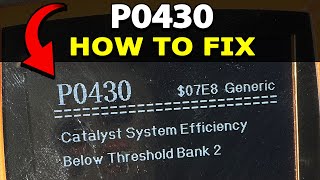
How to confirm: After confirming O2 sensors and exhaust integrity, a professional can use a scan tool to view live O2 sensor data. A healthy downstream sensor shows a steady, flat voltage, while a bad converter will cause it to switch rapidly, mimicking the upstream sensor. 🎬 See this guide on diagnosing and fixing P0430 codes A temperature gun can also be used; the outlet of a working converter should be significantly hotter (100°F+) than the inlet.
Typical fix: Replacement of the Bank 2 catalytic converter assembly. This is often a Y-pipe that includes the converter.
Est. part cost: $550-$3900 - PCM Software Needs Update 🔴 High Probability TSB #18-088-23 specifically states that reprogramming the PCM with the latest software is the required fix for a P0430 code on some 2019 5.7L models. The bulletin notes this is a 0.3-hour job at a dealership. Other software-related TSBs exist for similar issues.
How to confirm: A Ram dealership or a qualified shop with a subscription to Mopar's Tech Authority (using a wiTECH tool) can check 🎬 Watch: How to perform a PCM software flash with WiTech2 your vehicle's current software version against the latest available updates by VIN.
Typical fix: Reprogramming (flashing) the Powertrain Control Module. The TSB specifies maintaining battery voltage between 13.2 and 13.5 volts during the flash.
Est. part cost: $0 (if under warranty) - $200 - Faulty Oxygen (O2) Sensor 🟡 Medium Probability The downstream O2 sensor is the primary reporter on catalyst efficiency. If it becomes lazy, contaminated, or biased, it can send false data to the PCM, incorrectly triggering the P0430 code. It's a common misdiagnosis to replace the converter when only the sensor is bad.
How to confirm: Use a scan tool to graph the O2 sensor's voltage. The downstream (Sensor 2) reading should be relatively stable around 0.6-0.8 volts on a warm engine. If it's stuck low or fluctuating wildly like the upstream sensor, it's likely faulty. Wiggling the sensor wiring while watching live data can also reveal intermittent connection issues.
Typical fix: Replace the Bank 2, downstream (Sensor 2) oxygen sensor.
Est. part cost: $50-$150 - Engine Misfire 🟡 Medium Probability TSBs #08-087-25 and #08-055-25 REV. A directly link P0430 with cylinder misfire codes. A misfire allows unburnt fuel to enter the exhaust and superheat the catalytic converter, destroying its internal structure. On 5.7L Hemis, this can be a simple spark plug/coil issue or a symptom of the more serious lifter/camshaft failure known as 'Hemi tick'.
How to confirm: Scan for other DTCs, specifically P0300-P0308. Address any misfire codes before addressing the P0430 code. Listen for a distinct ticking noise from the engine, which may indicate lifter failure.
Typical fix: Replace faulty spark plugs, ignition coils, or fuel injectors. If lifter failure is diagnosed, it requires replacing the camshaft and all lifters, a much more involved repair.
Est. part cost: $20-$100 per cylinder for ignition parts; $700-$1500+ for lifter/cam replacement parts. - Exhaust Leak ⚪ Low Probability The 5.7L Hemi is known for exhaust manifold bolts breaking, leading to leaks and a characteristic 'ticking' sound when cold. A leak between the upstream and downstream O2 sensors can draw in outside air, fooling the downstream sensor into thinking the catalyst isn't working.
How to confirm: Visually inspect the exhaust manifold (especially the rear bolts) and the entire exhaust system for cracks, loose flanges, or black soot trails indicating a leak. A smoke test can also pinpoint hard-to-see leaks. The ticking sound is often most prominent on a cold start and may quiet down as the metal expands.
Typical fix: Replace the leaking gasket and any broken manifold bolts, which may require extraction. Some owners upgrade to aftermarket manifolds to prevent recurrence.
Est. part cost: $50-$600
Rare But Worth Checking
- Leaking Fuel Injector: A leaking injector can create a rich fuel condition that overwhelms and damages the catalytic converter over time. This often sets other codes like P0175 (System Too Rich Bank 2).
- Contaminated Fuel: Using leaded fuel (if available) or fuel with high levels of sulfur or other contaminants can poison the catalytic converter, reducing its effectiveness.
Diagnosis Steps
- Use an OBD-II scanner to check for any other codes, especially misfire (P030x) or fuel trim (P017x) codes. Resolve these codes first, as they are likely the root cause.
- Check for applicable TSBs. For 2019 5.7L models, TSB #18-088-23 is a critical first step. Contact a dealer with your VIN to verify if your truck's PCM software is current.
- Thoroughly inspect the exhaust system from the engine to the rear O2 sensor for any signs of leaks. Listen for a ticking noise on a cold start, which strongly suggests an exhaust manifold leak from broken bolts on Hemi engines.
- With the engine fully warmed up, use a scan tool with live data capability to graph the voltage of the Bank 2 oxygen sensors. The upstream sensor (Sensor 1) should fluctuate rapidly between ~0.1V and ~0.9V. The downstream sensor (Sensor 2) should hold a relatively steady, higher voltage (e.g., ~0.7V). If the downstream sensor's graph mirrors the upstream sensor's, the converter has likely failed.
- If the downstream sensor's reading is flat, low, or unresponsive, test the sensor itself and its wiring for faults. Check for a solid connection at the harness plug.
- Use an infrared temperature gun to measure the temperature of the pipe at the inlet and outlet of the catalytic converter. A working converter should be at least 100°F hotter at the outlet. If temperatures are similar or the inlet is hotter, the converter is not working or is clogged.
- If all other checks pass, the catalytic converter is the most likely failed component.
Parts You'll Likely Need
- Catalytic Converter (Bank 2)
(OEM #68263748AB (Example for 3.6L), 68091591AG (Example for 5.7L))— This is the component that has been identified as inefficient by the PCM. It's often the final part to be replaced after ruling out other causes. OEM parts can be very expensive.
Trusted brands: Mopar, Walker Exhaust, MagnaFlow, Eastern Catalytic
OEM price range: $2800-$3900
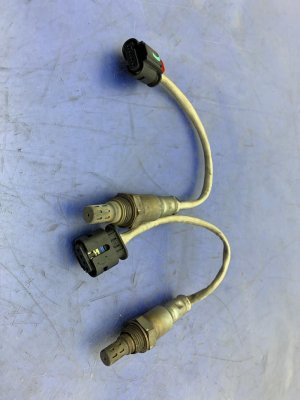
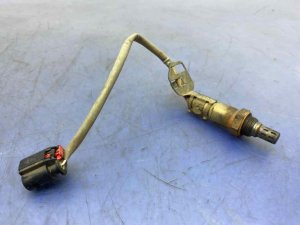
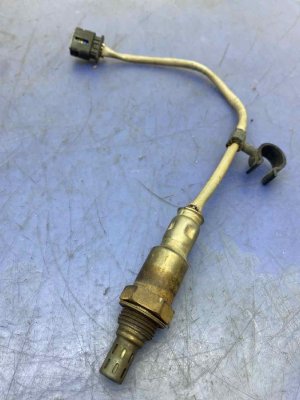
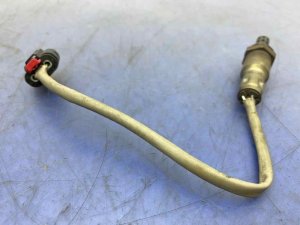
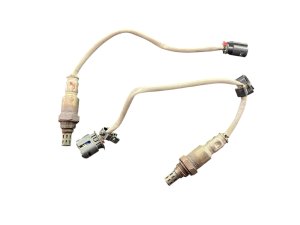
Aftermarket price range: $550-$1300 - Downstream Oxygen Sensor (Bank 2, Sensor 2)
(OEM #68224424AA (Fits 2019-2021 5.7L))— A faulty sensor can send incorrect data, falsely triggering a P0430 code. It's a common wear item and much cheaper to replace than the converter.
Trusted brands: Mopar, NTK, Denso, Bosch
OEM price range: $80-$125
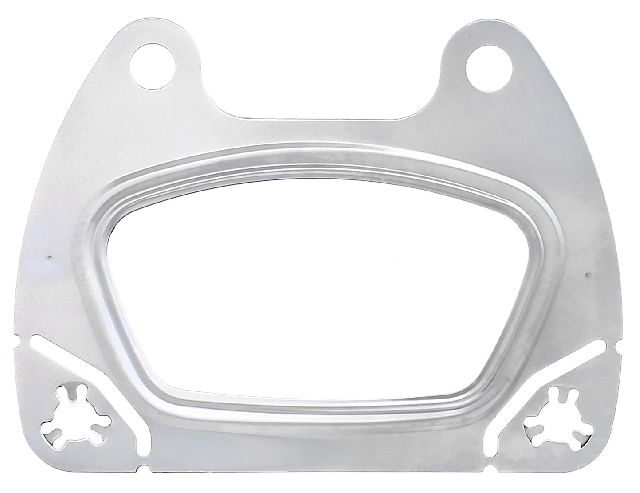
Aftermarket price range: $40-$90 - Exhaust Manifold Gasket Kit — Needed when repairing an exhaust leak at the manifold, a common issue on Hemi engines that can cause P0430.
Trusted brands: Mopar, Fel-Pro
OEM price range: $30-$50
Aftermarket price range: $15-$30
Related Codes That Often Appear With This One
- P0420 — This is the identical catalyst efficiency code but for Bank 1 (driver's side). They often appear together if a systemic issue like a software problem (per TSB #18-088-23), bad fuel, or dual exhaust leaks is affecting both banks.
- P0300, P0302, P0304, P0306, P0308 — These are misfire codes for cylinders on Bank 2 (passenger side). An active misfire is a primary cause of catalytic converter failure and is explicitly mentioned in Ram TSBs. A P0300 indicates a random misfire affecting multiple cylinders.
- P0157, P0158 — These codes indicate a fault (low or high voltage) in the Bank 2 downstream O2 sensor circuit itself, pointing directly to a sensor or wiring problem rather than the converter.
- P0174, P0175 — These are fuel trim codes for Bank 2 (P0174 Lean, P0175 Rich). An incorrect air/fuel mixture can lead to catalyst inefficiency and damage over time, pointing to issues like vacuum leaks or faulty injectors as the root cause.
Technical Service Bulletins (TSBs) & Recalls

- TSB #18-088-23: PCM Reprogram for P0420/P0430 on 2019 5.7L models.
- TSB #08-087-25: Links catalyst codes with cylinder 5 & 6 misfires.
- TSB #08-055-25 REV. A: Also links catalyst codes with misfires and hesitation.
- TSB #18-033-25 REV. A: Groups P0430 with other codes that may be resolved by software updates.
Platform-Specific Known Issues
- PCM Software Update: TSB #1808823 indicates that for some 2019 models, the P0430 code can be resolved simply by reprogramming the PCM with updated software. This should be a primary check.
- Misfire-Related Failure: TSBs #08-087-25 and #08-055-25 REV. A show a strong correlation between P0430 and cylinder misfire codes. The manufacturer acknowledges that misfires can lead to catalyst damage.
- Exhaust Manifold Leaks: The 5.7L Hemi engine, in particular, is known for broken exhaust manifold bolts, which causes a leak right before the catalytic converter. This leak can introduce oxygen and trigger a false P0430 code.
Mechanic-Grade Diagnostic Values
- O2 Sensor Heater Element Resistance — expected: 2.0 to 30.0 Ohms at room temperature (approx. 70°F / 21°C).. Failure: An infinite resistance (open circuit) or zero resistance (short circuit) reading indicates a failed heater element.
- Fuel Pressure (V6 Engine) — expected: Averages 58 PSI at idle.. Failure: Significant deviation from this pressure could indicate fuel delivery issues that might affect the air/fuel ratio and catalytic converter efficiency.
- Mode $06 Catalyst Monitor Test ($82) — expected: The test value should be below the maximum threshold specified by the manufacturer. This data is accessible via an advanced scan tool.. Failure: If the test value exceeds the maximum limit, it confirms the PCM's diagnosis that the catalyst efficiency is below the acceptable threshold.
Scan Tool Commands That Help
- wiTECH 2.0: ECU View - View/Graph Data — Used to graph upstream and downstream O2 sensor voltages in real-time to visually confirm if the downstream sensor is mimicking the upstream, which is a definitive sign of a failed catalytic converter.
- wiTECH 2.0: Flash an ECU — This function is required to perform TSBs like #18-088-23, which updates the PCM software to correct logic errors that can falsely trigger a P0430 code.
- wiTECH 2.0: SCR Performance Test — While primarily for diesel (SCR) systems, similar catalyst efficiency tests can be initiated to force the monitor to run and confirm a pass/fail condition after a repair, without having to complete a full drive cycle.
Wiring & Ground Locations
- Main Chassis Ground — On the driver's side frame rail, forward of the upper control arm.. A poor main ground can cause a variety of electrical issues and incorrect sensor readings. While not a direct cause, verifying this ground is secure is a good practice when chasing intermittent electrical faults.
- Bank 2 Downstream O2 Sensor Connector — On the passenger side of the vehicle, in the exhaust system after the catalytic converter. Access can be tight, especially on 4WD models.. This is the direct connector for the sensor that triggers the P0430 code. Inspecting for corrosion, damage, or a loose connection is a critical diagnostic step. A 'wiggle test' on this connector while watching live data can identify intermittent faults.
- PCM Connectors — The Powertrain Control Module (PCM) is typically located in the engine bay. Its connectors (e.g., C2) are the termination point for the O2 sensor circuits.. When diagnosing a sensor circuit fault (like P0157/P0158) alongside P0430, technicians may need to test for continuity or shorts between the O2 sensor connector and the corresponding pins at the PCM connector.
Real Owner Repair Stories
- YouTube user on 'Ram 1500 5.7 HEMI Exhaust Manifold Leak How to Fix it DIY' (2020 Ram 1500 Limited 5.7L HEMI) — Loud ticking noise from the engine bay, especially when cold. The owner initially suspected a bad gasket.
❌ Tried (didn't work) Initially assumed it was just an exhaust gasket leak.
✅ What actually fixed it Upon disassembly, a large crack was found in the factory exhaust manifold itself. The final fix was replacing the entire passenger side exhaust manifold and the corresponding gaskets.
"I Checked Everything" — The Actual Cause
- In some cases, a very small pinhole leak or a cracked weld on an exhaust pipe (especially a Y-pipe) may not be detected by a standard low-pressure smoke test. However, the 'venturi effect' of high-velocity exhaust gas passing the pinhole can suck in fresh air, which then travels downstream and causes the rear O2 sensor to produce lean readings, falsely triggering a P0430 code. The fix in these situations is to replace the section of pipe with the pinhole leak.
OEM Part Supersession History
68433692AA→68433692AB— Part revision or update by the manufacturer.
Heads up: This part is listed for the 6.2L V8 engine, highlighting the importance of verifying part numbers with a VIN.68414942AA→68414942AB— Part revision or update by the manufacturer.
Heads up: This catalytic converter is for the 3.0L V6 Turbo Diesel engine, not the gasoline V8s or V6s.
Model Year Variations Within This Range
- 2025+: The introduction of the 3.0L Hurricane Straight-Six Turbo (SST) engine changes fuel requirements. The Standard Output (S/O) version is designed for 87 octane but recommends 89 for optimal performance. The High Output (H/O) version requires 91 octane premium fuel. An incorrect fuel type could potentially lead to performance issues that might affect emissions components over time.
Helpful Videos
Used OEM Parts in Stock

New Aftermarket Parts Available

The information in this article is provided for general reference and educational purposes only. Vehicle specifications, procedures, and part compatibility can vary by production date, trim level, and region. Always consult your vehicle's factory service manual and verify part numbers before purchasing or performing repairs. Safety-critical components such as airbags, seat belts, and braking systems should be installed by a qualified professional.
- Ram 1500:
- 🎬 Helpful Videos
- 🛍️ Shop This Part
- What's Unique About the 2019-2025 Ram 1500
- Diagnostic Flowchart
- Symptoms You May Notice
- Most Likely Causes
- Rare But Worth Checking
- Diagnosis Steps
- Parts You'll Likely Need
- Related Codes That Often Appear With This One
- Technical Service Bulletins (TSBs) & Recalls
- Platform-Specific Known Issues
- Mechanic-Grade Diagnostic Values
- Scan Tool Commands That Help
- Wiring & Ground Locations
- Real Owner Repair Stories
- "I Checked Everything" — The Actual Cause
- OEM Part Supersession History
- Model Year Variations Within This Range
- 🎟️ Get 5% Off