

P0430 on 2010-2016 Porsche Panamera 4.8L V8: Catalyst Efficiency Fixes
P0430 on a Panamera 4.8L V8 most often points to a failing catalytic converter on the driver's side, but a lazy downstream oxygen sensor is a common and cheaper initial suspect. Always diagnose the O2 sensor and check for exhaust leaks before replacing the very expensive converter. On 2010-2012 models, be aware of the potential for camshaft adjuster bolt failure, which can cause secondary converter damage.
- P0430 points to an inefficient catalytic converter on the driver's side (Bank 2).
- Do not immediately assume the catalytic converter is bad; this can be a very costly mistake.
- A failing downstream oxygen sensor or an exhaust leak are very common causes for this code on a Panamera.
- The most reliable diagnostic step is to swap the downstream oxygen sensors between the driver's and passenger's side to see if the fault code moves.
- Always address other engine codes (misfires, fuel trim) before tackling P0430.
What's Unique About the 2010-2016 Porsche Panamera
The Porsche Panamera 970 generation (2010-2016) with the 4.8L V8 is a high-performance vehicle with a sophisticated and sensitive emissions system. While the P0430 code's meaning is standard, the cost of parts, particularly the OEM catalytic converter, is significantly higher than on average vehicles, with dealer quotes often exceeding $2,800 for one side. The diagnostic process is critical because misdiagnosis can be extremely expensive. Owners and technicians report that aging downstream O2 sensors can become 'lazy' and falsely trigger this code, making them a common first point of failure before the converter itself. Furthermore, early models (2010-2012) have a known critical issue with aluminum camshaft adjuster bolts that can shear, leading to potential engine failure which can, in turn, destroy the catalytic converters.
Symptoms You May Notice
- Check Engine Light is the most common and often only symptom.
- Failed emissions test.
- Reduced fuel economy over time.
- In cases of a clogged converter, you may experience sluggish acceleration or a noticeable loss of power. 🎬 See why a clogged converter causes sluggish acceleration and power loss.
- A 'rotten egg' or sulfur smell from the exhaust, indicating the converter is not processing gases correctly.
- Rough idle, especially after getting off the highway, has been noted by some owners.
- Immediately replacing the catalytic converter without testing the oxygen sensors or checking for exhaust leaks. This is a very expensive mistake, as a faulty O2 sensor is a frequent cause.
- Replacing the catalytic converter when the root cause is an unaddressed engine issue (e.g., misfire, oil consumption, coolant leak) which will quickly destroy the new converter.
Most Likely Causes
- Failing Downstream (Post-Catalyst) Oxygen Sensor 🔴 High Probability Oxygen sensors, often made by Bosch for Porsche, have a finite lifespan of around 100,000 miles. With age, they can become 'lazy' or slow to respond, sending incorrect data to the DME that mimics a bad catalytic converter. This is the most common reason for a misdiagnosis.
How to confirm: Graph the voltage of the Bank 2 downstream O2 sensor with a scan tool. A good downstream sensor should show a relatively stable voltage. If the voltage is erratic and closely mimics the upstream sensor, the converter may be bad. If the signal is flat, biased, or slow to respond, the sensor is likely faulty. The best test is to swap the Bank 1 and Bank 2 downstream sensors and see if the code follows the sensor (changes to P0420). 🎬 Watch: How to diagnose P0420 and P0430 codes on a Porsche.
Typical fix: Replace the Bank 2 downstream (post-cat) oxygen sensor.
Est. part cost: $80-$200 - Failed Catalytic Converter 🟡 Medium Probability Catalytic converters can degrade over time and with high mileage. Their failure can also be accelerated by other engine issues like misfires, burning oil, or coolant leaks, which are not uncommon in high-performance engines. A rich running condition can overwhelm and eventually poison the precious metals inside.
How to confirm: This is typically confirmed after ruling out all other possibilities. A temperature test using an infrared thermometer (outlet should be significantly hotter than inlet, >100°F difference) can provide evidence; a clogged cat may be hotter before the inlet. If the downstream O2 sensor is confirmed good and there are no leaks, the converter is the prime suspect.
Typical fix: Replace the Bank 2 (driver's side) catalytic converter.
Est. part cost: $1500-$3000+ - Exhaust Leak 🟡 Medium Probability Heat cycles and vibration can cause exhaust manifold gaskets to fail or pipes to crack over time. Even a small leak before or near the downstream O2 sensor can introduce oxygen and skew the readings, tricking the DME into setting a P0430 code. The bolts on the exhaust flanges can also corrode and break, creating a leak point.
How to confirm: Perform a visual inspection for soot trails or cracks around exhaust flanges and welds, especially at the manifold and converter connections. A professional smoke test is the most effective way to find small, hard-to-see leaks.
Typical fix: Replace the leaking gasket or repair the cracked exhaust component.
Est. part cost: $20-$250
Rare But Worth Checking
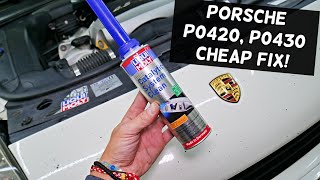
- Engine Misfires or Fuel System Issues: If you have other codes stored, such as for misfires (P0300-P0308) or fuel trim (P0172/P0175, P2098), these must be addressed first. A rich running condition can overwhelm the catalytic converter, causing it to perform poorly and trigger P0430 without the converter itself being faulty. Some owners have also had success using a quality catalyst system cleaner additive as an initial, low-cost step.
- Camshaft Adjuster Bolt Failure (2010-2012 Models): A critical issue on early 4.8L V8s is the shearing of aluminum camshaft adjuster bolts. This can cause the engine timing to jump, leading to misfires, rough running, and immediate check engine lights with multiple codes. This event can quickly destroy a catalytic converter by dumping raw fuel into the exhaust. This is a catastrophic failure that requires immediate attention and is more than just an emissions issue.
Diagnosis Steps
- Read all fault codes stored in the DME. Address any misfire, fuel system, O2 sensor circuit, or camshaft-related codes before diagnosing P0430.
- With the engine cold, perform a thorough visual inspection of the Bank 2 (driver's side) exhaust system. Look for any signs of black soot around flanges, which indicates a leak. Check the integrity of exhaust flange bolts.
- Use a capable OBD-II scanner (e.g., iCarsoft for Porsche) to graph the live data for the Bank 2 oxygen sensors (both Sensor 1/upstream and Sensor 2/downstream).
- At a steady 2500 RPM, observe the sensor readings. The upstream sensor should show rapid switching between ~0.1V and ~0.9V. The downstream sensor should show a relatively stable, flat voltage (typically above 0.5V). If the downstream sensor's graph mirrors the upstream sensor's, it confirms the efficiency problem.
- To isolate a faulty sensor, swap the downstream O2 sensors between Bank 1 and Bank 2. Clear the codes and perform a drive cycle. If the code returns as P0420 (Bank 1), the O2 sensor you moved is bad. If P0430 returns, the sensor is likely good.
- If the sensor is deemed good, perform an exhaust smoke test to definitively check for leaks that may not be visually apparent.
- If no leaks are found and the O2 sensor is confirmed to be working correctly, the catalytic converter is the most likely failed component. An infrared temperature gun can be used to confirm; the outlet pipe of a working converter should be significantly hotter than the inlet pipe.
- For 2010-2012 models, investigate the vehicle's service history or visually inspect (if possible) for evidence that the original aluminum camshaft adjuster bolts have been replaced with the updated steel versions as a preventative measure.
Parts You'll Likely Need
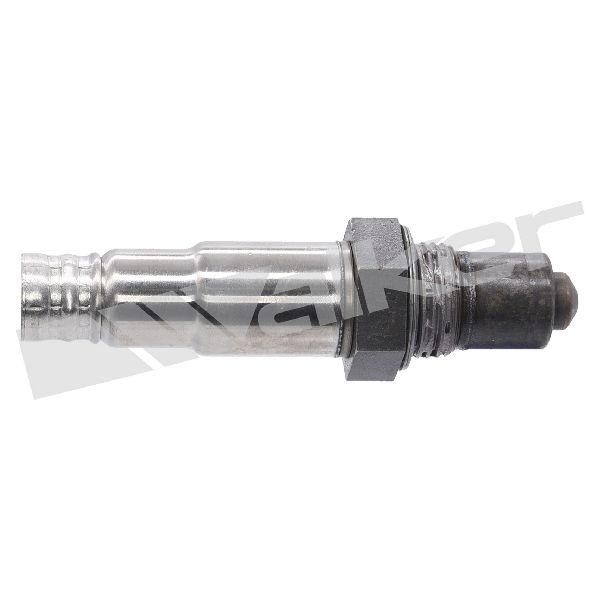
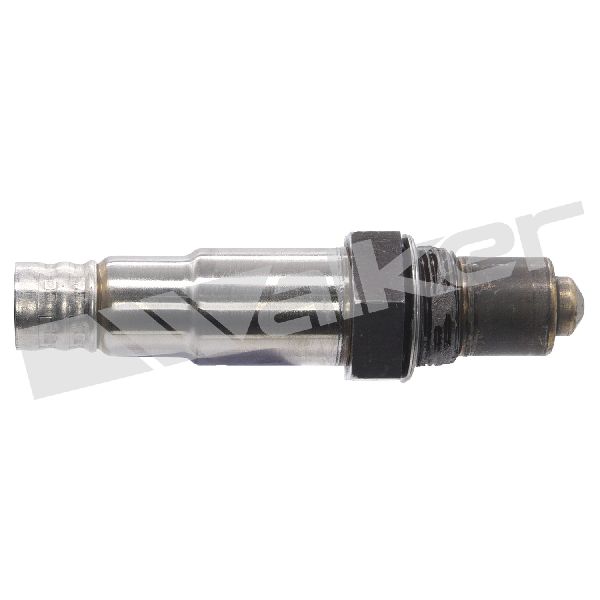
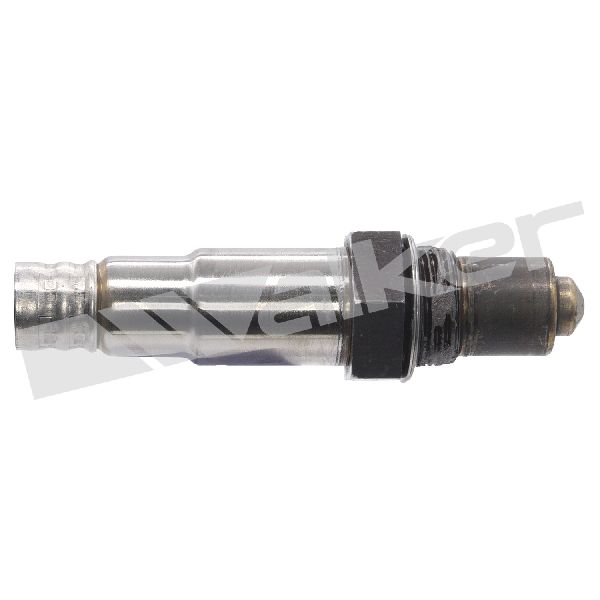
- Downstream Oxygen Sensor (Bank 2)
(OEM #Example Format: 9A1-606-174-01 (Part numbers are frequently superseded; always verify with VIN))— This is the most common misdiagnosed part and a frequent actual cause of the code due to sensor aging. It's the most logical and cost-effective part to replace first after confirming no exhaust leaks.
Trusted brands: Bosch (OEM supplier), NTK
OEM price range: $180-$250
Aftermarket price range: $80-$150 - Catalytic Converter (Bank 2)
(OEM #Example Format: 970.113.xxx.xx (Panamera) or 958-113-022-51 (Cayenne V8 Turbo). Part is specific to engine type (NA vs Turbo) and model year.)— This is the component the code directly implicates. It is the most expensive fix and should only be replaced after ruling out all other possibilities.
Trusted brands: Porsche (OEM), FVD Brombacher (Aftermarket), HJS (Aftermarket)
OEM price range: $2500-$3500
Aftermarket price range: $1200-$2000
Related Codes That Often Appear With This One
- P0420 — If both catalytic converters are of similar age and condition, it's not uncommon for the Bank 1 efficiency code (P0420) to appear around the same time as P0430.
- P0150-P0161 — Codes related to the O2 sensor circuits themselves (heater faults, signal faults like P0158) on Bank 2 can point directly to a bad sensor as the root cause.
- P2098 — 'Post Catalyst Fuel Trim System Too Lean Bank 2'. This code indicates the downstream O2 sensor is detecting excess oxygen, which can be caused by an exhaust leak or a failing sensor, both of which are also root causes for P0430.
Technical Service Bulletins (TSBs) & Recalls
- No specific Porsche TSB has been widely published for resolving code P0430 on the 970 Panamera. However, Porsche did issue service campaigns and updated parts (steel bolts) to address the related camshaft adjuster bolt failure on affected 2010-2012 V8 models, which is a root cause of secondary converter failure.
Platform-Specific Known Issues
- Critical: Camshaft Adjuster Bolt Failure (2010-2012 4.8L V8): A well-documented and severe issue affects the 4.8L V8 engines in 2010-2012 Panamera and Cayenne models. The aluminum bolts securing the camshaft adjuster sprockets are known to fatigue and shear off. When this happens, the camshaft stops turning, causing the engine to run erratically and potentially leading to catastrophic engine damage if pistons contact valves. The driver will experience a sudden loss of power, multiple warning lights (Check Engine, PSM Failure, ABS Failure), and potentially a stiff brake pedal as the vacuum pump (driven by the camshaft) stops working. The sheared bolt heads can fall into the engine, and if not all are recovered, an engine replacement may be necessary. This failure will inevitably ruin the catalytic converters with unburnt fuel and oil. Preventative replacement of the aluminum bolts with the updated steel versions is highly recommended for any affected vehicle that has not yet had this service performed.
Mechanic-Grade Diagnostic Values
- Vehicle Voltage During DME Programming — expected: 13.5 - 14.5 Volts. Failure: Voltage outside this range can cause programming to fail and damage control units.
- Engine Torque During Catalytic Converter Heating Phase (PIWIS) — expected: 85 - 92 Nm (62.6 - 67.8 ft-lb). Failure: A value outside this range indicates the fault was not stored during the cat heating phase, and a DME reprogram may not be the correct action.
- Long Term Fuel Trim (Part-Load) — expected: 0.7 to 1.32 (as a multiplicative factor). Failure: Values significantly outside this range indicate a fueling issue that must be fixed before addressing the P0430.
Scan Tool Commands That Help
- PIWIS Tester: DME Control Unit Reprogramming — Used to resolve check engine lights caused by software logic issues, such as those related to combustion residue on the throttle valve per Workshop Campaign WE04, or coking of fuel injectors causing misfires during the cat heating phase.
- PIWIS Tester: Engine Torque Loss Adaptation — This procedure is performed after certain programming events or repairs to allow the DME to re-learn engine parameters. It is required after the WE04 campaign DME reprogram.
Wiring & Ground Locations
- MB04 — Right front of engine compartment.. A poor engine bay ground can cause erratic sensor readings. This is a primary ground point for multiple components in the front of the vehicle.
- MB31 — Left front of engine compartment.. This ground point serves the driver's side of the engine bay, where Bank 2 components are located. A fault here could directly impact the Bank 2 O2 sensor circuit.
- GP17 — Under passenger's seat.. This is a chassis ground point. While less likely to be the primary cause, poor chassis grounds can introduce electrical noise into sensor circuits.
- O2 Sensor Connector — The connectors for the O2 sensors are typically clipped to the vehicle body or a bracket near the transmission tunnel, above the exhaust pipes.. The connectors themselves can corrode or the wiring can become brittle from heat. A 'wiggle test' on the connector and harness while watching live data can identify intermittent connections that falsely trigger P0430.
Model Year Variations Within This Range
- 2014-2016: The Panamera S model for the 970.2 generation (facelift) no longer uses the 4.8L V8. It was replaced with a 3.0L twin-turbo V6. Therefore, this guide does not apply to a 2014-2016 Panamera S.
- 2014-2016: The 970.2 Panamera GTS received a power increase from 430 hp to 440 hp compared to the 970.1 GTS. The Turbo and Turbo S models also received power bumps. While this doesn't directly change the P0430 diagnosis, it's a key difference in the V8 lineup.
- 2010-2014: A specific workshop campaign (WE04) to reprogram the DME control unit applies to vehicles from 2010 up to 2014. This software update addresses issues that could cause the Check Engine light.
Diagnostic Flowchart
Real Owner Stories
Aggregated from forums and TSBs cited above. Mileages and costs reflect what owners reported in those sources.
Porsche Panamera
Symptoms: Owner faced a bad catalytic converter diagnosis and sought alternatives to the expensive factory replacement.
What fixed it: Community suggested cheaper alternatives like O2 spacers to bypass the code.
Cost: $2800
Source hint: Rennlist.com: Thread 'Bad Cat Convertor — replacement options'
Porsche
Symptoms: Owner received the P0430 fault code after taking the vehicle out of storage.
What fixed it: Analyzed fuel trims to determine the root cause of the code post-storage.
Source hint: Rennlist.com: Thread 'Fault code P0430'
2010-2012 Porsche Panamera 4.8L V8
Symptoms: Discussed the critical camshaft bolt failure where aluminum bolts break inside the engine, causing severe damage.
What fixed it: Preventative replacement of the aluminum bolts with updated steel versions.
Source hint: 6speedonline.com: Thread 'Aluminium Bolts in 4.8L broken engine?!'
Porsche
Symptoms: Diagnosing catalytic converter efficiency issues.
What fixed it: Swapped O2 sensors between banks and used an infrared thermometer to check catalytic converter temperatures.
Source hint: 986forum.com
Related OBD-II Codes
Frequently Asked Questions
Is there a specific Porsche TSB for the P0430 code on my 970 Panamera?
I have a 2011 Panamera 4.8L V8 with a P0430 code, PSM Failure, and ABS Failure lights. What does this mean?
How can I tell if the P0430 on my Panamera is just a bad oxygen sensor or a failed catalytic converter?
What is the typical lifespan of the oxygen sensors on the Porsche 4.8L V8?
Can an exhaust leak cause the P0430 code on my Panamera?
Does the Porsche Cayenne share this same P0430 issue?
Helpful Videos

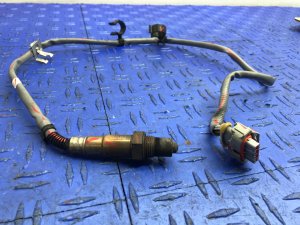
Used OEM Parts in Stock
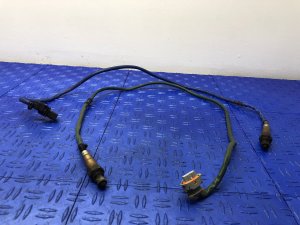
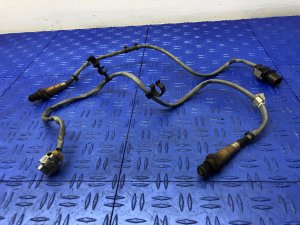
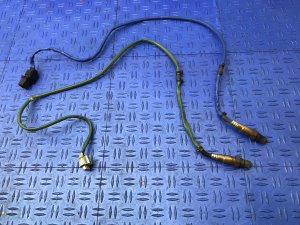
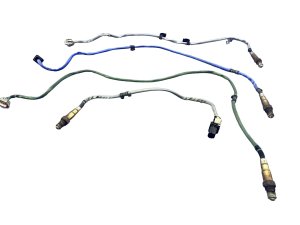
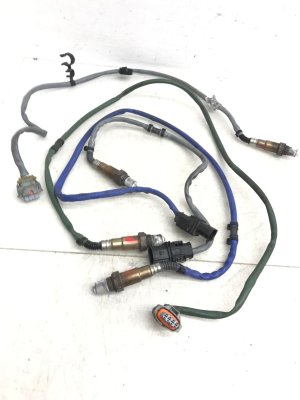
New Aftermarket Parts Available
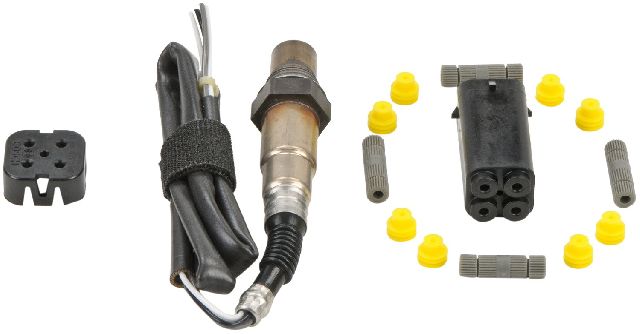

The information in this article is provided for general reference and educational purposes only. Vehicle specifications, procedures, and part compatibility can vary by production date, trim level, and region. Always consult your vehicle's factory service manual and verify part numbers before purchasing or performing repairs. Safety-critical components such as airbags, seat belts, and braking systems should be installed by a qualified professional.
- Porsche Panamera:
- 🎬 Helpful Videos
- 🛍️ Shop This Part
- What's Unique About the 2010-2016 Porsche Panamera
- Symptoms You May Notice
- Most Likely Causes
- Rare But Worth Checking
- Diagnosis Steps
- Parts You'll Likely Need
- Related Codes That Often Appear With This One
- Technical Service Bulletins (TSBs) & Recalls
- Platform-Specific Known Issues
- Mechanic-Grade Diagnostic Values
- Scan Tool Commands That Help
- Wiring & Ground Locations
- Model Year Variations Within This Range
- Diagnostic Flowchart
- Real Owner Stories
- Porsche Panamera
- Porsche
- 2010-2012 Porsche Panamera 4.8L V8
- Porsche
- Related OBD-II Codes
- Frequently Asked Questions
- 🎟️ Get 5% Off