

P0430 on 2006-2011 Mercedes-Benz ML-Class: Catalyst Efficiency (Bank 2) Causes and Fixes
P0430 on a Mercedes ML350 indicates low catalyst efficiency on the driver's side (Bank 2). While it can be a bad oxygen sensor, it most often means the catalytic converter is failing. On 2006-2008 models, this is frequently a symptom of a worn balance shaft gear, a major underlying engine defect. Diagnosis is critical before replacing the expensive converter to avoid repeat failure.
- P0430 on the ML350 means the driver's side catalytic converter is not working efficiently.
- The most likely fix is replacing the catalytic converter, which is an expensive part.
- Before replacing the converter, always check for exhaust leaks and test the oxygen sensors to rule out simpler fixes.
- CRITICAL: On 2006-2008 models, check for timing-related codes (P0016/P0017). Their presence strongly suggests a deeper engine problem (balance shaft) that MUST be fixed to avoid destroying a new converter.
- Due to the potential for a complex and expensive underlying engine issue, professional diagnosis is highly recommended for this code on this vehicle.
What's Unique About the 2006-2011 Mercedes-Benz ML-Class
For the M272 engine, particularly in models built from 2006-2008, a P0430 code requires careful diagnosis. These earlier engines are notorious for a specific defect where the balance shaft gear, made from a soft metal, wears out prematurely. This causes incorrect camshaft timing, which can lead to misfires or an improper air-fuel mixture that quickly destroys a catalytic converter. If you see other codes like P0016, P0017, or the Mercedes-specific codes 1200/1208 along with P0430, this underlying engine problem is the likely culprit. The issue was so widespread it led to a class-action lawsuit and a detailed Technical Service Bulletin (S-B-03.30/08i). 🎬 Watch: Essential guide to the M272 balance shaft issue. Fixing it is a major, engine-out repair that must be done to prevent repeat failure of a new converter.
Symptoms You May Notice
- Check Engine Light is on.
- Reduced engine performance or acceleration, especially if the converter is clogged.
- A rotten egg or sulfur smell from the exhaust, indicating the converter is overheating.
- In some cases, no noticeable symptoms other than the Check Engine Light.
- Immediately replacing the oxygen sensors without proper diagnosis. While O2 sensors can fail, the P0430 code is more frequently caused by the catalytic converter itself. A healthy O2 sensor is what correctly identifies that the converter is failing.
- Replacing the catalytic converter without checking for underlying engine problems like the M272 balance shaft issue, misfires, or fuel system faults. This will lead to the new converter failing prematurely.
Most Likely Causes
- Failing Catalytic Converter 🔴 High Probability Catalytic converter failure is often a symptom of another issue. On early M272 engines (approx. 2006-2008), premature balance shaft wear is a primary cause of conditions that ruin the converter. Misfires or oil consumption can also lead to failure. OEM converters are expensive due to a high loading of precious metals required to meet emissions standards.
How to confirm: A mechanic can use a scan tool to view O2 sensor data; a failing converter will show the downstream O2 sensor voltage switching rapidly, similar to the upstream sensor. 🎬 See how to test your converter like a professional. An infrared thermometer can also be used; the outlet of a working converter should be significantly hotter than the inlet.
Typical fix: Replacement of the Bank 2 (driver's side) catalytic converter, which is integrated with the exhaust manifold. The root cause must be fixed first.
Est. part cost: $1200-$2700 for OEM, $700-$1300 for a quality direct-fit aftermarket unit. - Faulty Oxygen (O2) Sensor 🟡 Medium Probability O2 sensors are wear items and can fail over time, sending incorrect data to the ECM. However, a bad O2 sensor will often set its own specific trouble code. It is a common misdiagnosis to replace the sensor when the converter is the actual problem.
How to confirm: Test the sensor's voltage output with a multimeter or advanced scan tool. A lazy or non-responsive downstream sensor can sometimes trigger a P0430 code.
Typical fix: Replace the downstream (post-catalyst) oxygen sensor on Bank 2.
Est. part cost: $80-$150 for an OEM-quality brand like Bosch. - Exhaust System Leak ⚪ Low Probability Corrosion can cause leaks at gaskets or pipe flanges over time. A leak between the engine and the catalytic converter can introduce oxygen and fool the O2 sensors.
How to confirm: Visually inspect the exhaust system from the manifold to the tailpipe for any signs of black soot, cracks, or holes. Listen for an audible ticking or hissing sound that gets louder with engine RPM. A smoke test can definitively identify leaks.
Typical fix: Replace the leaking gasket or repair the damaged section of the exhaust pipe.
Est. part cost: $20-$100
Rare But Worth Checking
- M272 Balance Shaft Failure: This is a critical issue for 2006-2008 models (engine number up to 2729..30 468993). A worn balance shaft gear throws off engine timing, which ruins the catalytic converter. This is an expensive, engine-out repair. Look for codes P0016, P0017, 1200, or 1208 stored alongside P0430. If these are present, the balance shaft is the primary suspect.
- M272 Intake Manifold Failure: The plastic lever operating the intake runner flaps can break, causing the flaps to stick. This disrupts the air-fuel mixture, which can lead to long-term damage to the catalytic converter. This issue will typically set codes like P2004, P2005, or P2006. 🎬 Watch: Step-by-step M272 intake manifold replacement walkthrough.
- Leaking Fuel Injectors or Fuel Pressure Issues: A rich fuel mixture from a leaking injector or faulty fuel pressure regulator can overwhelm and damage the catalytic converter over time.
- Engine Misfires: Unburned fuel from a misfiring cylinder (due to bad spark plugs or ignition coils) can enter the exhaust and superheat the catalytic converter, causing its internal structure to melt and fail.
Diagnosis Steps
- Scan for all stored trouble codes. Note if any other codes, especially P0016, P0017, P2004-P2006, or misfire codes, are present alongside P0430.
- Address all other codes first. Misfires, fuel system issues, or timing problems must be resolved before addressing the P0430.
- For 2006-2008 models, check the engine serial number against TSB S-B-03.30/08i. If P0016/P0017 are present and the engine is within the affected range, suspect balance shaft failure.
- Inspect the exhaust system thoroughly for any leaks, especially between the engine and the catalytic converter. Pay close attention to manifold gaskets and flange connections. A smoke test is the most effective method.
- Use a scan tool to monitor live data from the Bank 2 oxygen sensors. At a steady RPM (around 2500), the upstream sensor (Sensor 1) should fluctuate rapidly, while the downstream sensor (Sensor 2) should hold a relatively steady voltage. If the downstream sensor is mirroring the upstream sensor, the converter is not working.
- If scan tool data is inconclusive, perform a temperature test. Use an infrared thermometer to measure the temperature of the pipe entering the converter and the pipe exiting it. A working converter should be at least 100°F hotter at the outlet.
- If the converter is suspected to be clogged (causing low power), a backpressure test can be performed by a professional.
- If all other tests pass, the downstream O2 sensor itself may be faulty, but this is less common than a failed converter.
Parts You'll Likely Need
- Catalytic Converter (Bank 2 - Driver Side)
(OEM #A1644904214 (verify with VIN))— This is the most common failed component for a P0430 code, as its internal materials degrade over time or are damaged by engine issues. On the M272, this part is an integrated exhaust manifold and catalytic converter assembly.
Trusted brands: Mercedes-Benz (OEM), MagnaFlow (e.g., 52116), Walker Exhaust, AP Exhaust (e.g., 645263)
OEM price range: $1200-$2700
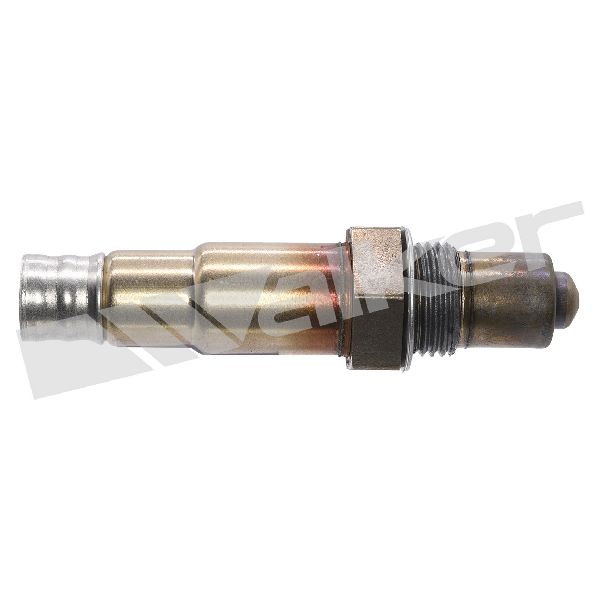
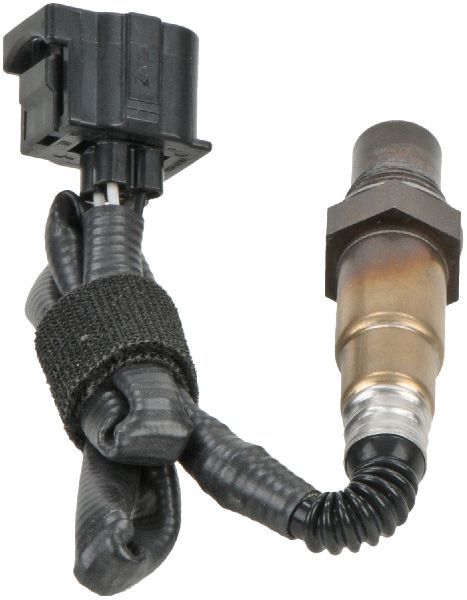
Aftermarket price range: $700-$1300 - Downstream Oxygen Sensor (Bank 2 - Driver Side)
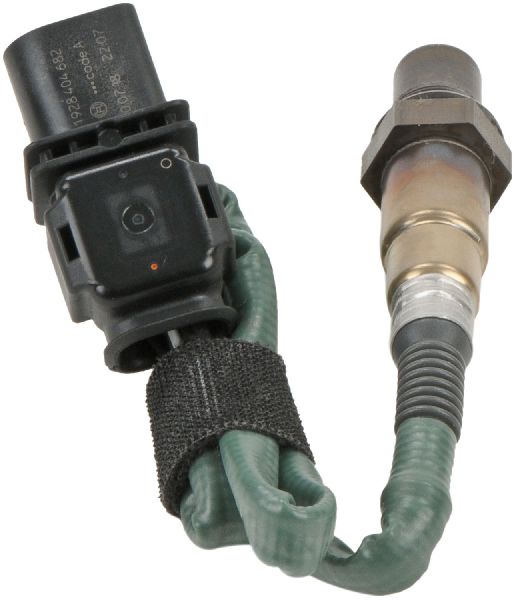
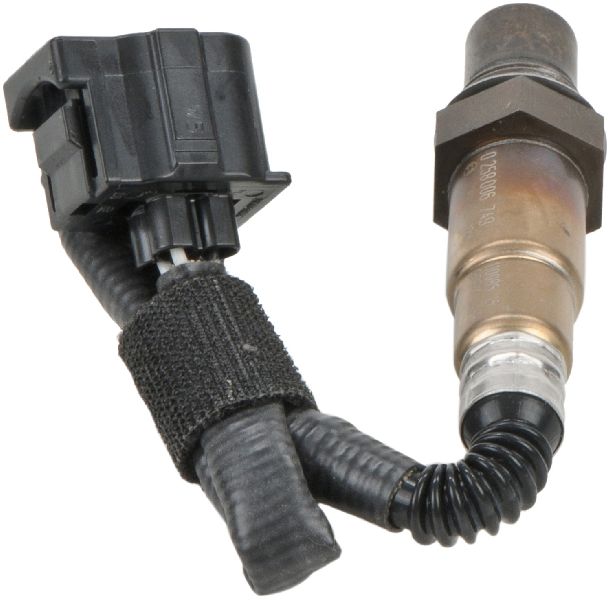
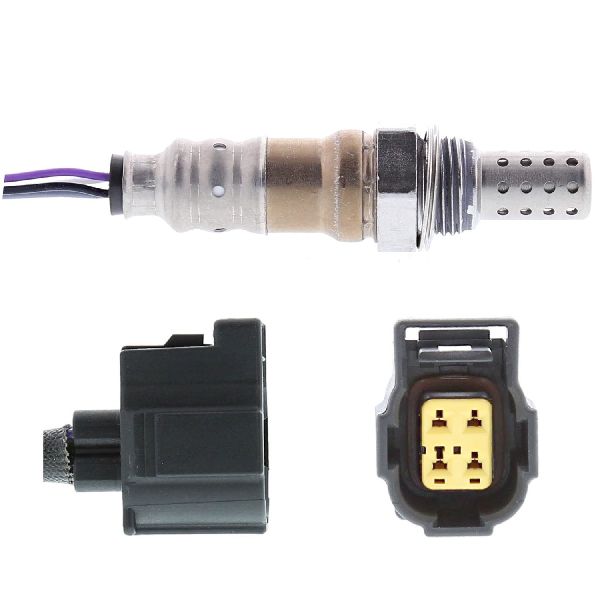
(OEM #A0045420818)— This sensor is responsible for monitoring the converter's efficiency. It can fail and send false readings, or it can be replaced as good practice when installing a new converter.
Trusted brands: Bosch, Denso
OEM price range: $120-$180
Aftermarket price range: $70-$120
Related Codes That Often Appear With This One
- P0420 — This is the identical code but for Bank 1 (passenger side). It is common for both converters to degrade at a similar rate, causing both codes to appear.
- P0016 / P0017 — These codes indicate a crankshaft/camshaft position correlation error. On M272 engines, these are hallmark codes for a failing balance shaft gear, which is a known known root cause of catalytic converter failure on this platform.
- P0300-P0306 — These are misfire codes. An ongoing misfire allows unburned fuel to enter the exhaust, which can quickly destroy the catalytic converter.
- P2004 / P2005 / P2006 — These codes relate to the intake manifold runner control being stuck. This fault affects the air-fuel mixture and can contribute to conditions that damage the catalytic converter over time.
Technical Service Bulletins (TSBs) & Recalls
- {'number': 'S-B-03.30/08i', 'description': 'Addresses check engine light and camshaft/crankshaft correlation codes (P0016/P0017) caused by a worn balance shaft sprocket on M272 engines up to serial number 2729..30 468993. It confirms the root cause is soft sprocket material and details the engine-out procedure for replacement with an improved part.'}
Platform-Specific Known Issues
- Early M272 engines (approx. 2006-2008, check engine serial number) are susceptible to premature balance shaft gear
Mechanic-Grade Diagnostic Values
- Downstream O2 Sensor (Bank 2, Sensor 2) Voltage — expected: Relatively stable voltage, ideally around 0.45V at steady RPM.. Failure: Voltage switching rapidly between ~0.1V and ~0.9V, mimicking the upstream sensor's behavior. This indicates the catalyst is not storing oxygen.
- Upstream O2 Sensor (Bank 2, Sensor 1) Voltage — expected: Rapidly fluctuating voltage between approximately 0.1V (lean) and 0.9V (rich) as the ECU adjusts the fuel mixture.. Failure: A lazy or flat-lined voltage reading.
- Long-Term and Short-Term Fuel Trims (Bank 2) — expected: Combined values should ideally be within +/- 5%.. Failure: Consistently positive values above +10% indicate the ECU is adding excessive fuel to compensate for a perceived lean condition (like an exhaust or vacuum leak). Consistently negative values suggest a rich condition (like a leaking injector). Both scenarios can damage the catalytic converter.
- Fuel Pressure (at idle) — expected: Approximately 50-55 psi.. Failure: Significantly low pressure can indicate a weak pump or clogged filter, leading to a lean condition. High pressure can indicate a faulty regulator, leading to a rich condition.
Hidden / Shadow Codes Worth Checking
- 0443 / P0030: Heating of component G3/4 (Right O2 sensor, before TWC [KAT]) : Open circuit. This is a shadow code stored in the ME 9.7 ECU. (see via Mercedes-Benz STAR/XENTRY or advanced diagnostic tools capable of reading shadow memory.)
- 0447 / P0050: Heating of component G3/3 (Left O2 sensor, before TWC [KAT]) : Open circuit. This is a shadow code for the Bank 2 upstream sensor heater circuit. (see via Mercedes-Benz STAR/XENTRY or advanced diagnostic tools capable of reading shadow memory.)
Scan Tool Commands That Help
- Mercedes STAR/XENTRY: Catalyst Efficiency Test — This is a guided test within the dealer software that actively checks the catalyst's oxygen storage capacity, providing a definitive pass/fail result without relying solely on passive monitoring during a drive cycle.
- Mercedes STAR/XENTRY: Reset adaptations for ME 9.7 ECU — After replacing a catalytic converter or oxygen sensors, it is critical to reset the engine's learned fuel trim and catalyst aging adaptations. Failure to do so can cause the new parts to be evaluated against old, incorrect data, potentially leading to a recurring code.
- Mercedes STAR/XENTRY or compatible tool: ECU Virginizing and Programming — In very rare cases where the ECU itself is faulty and causing incorrect catalyst monitoring, a used ECU can be programmed to the vehicle. This involves 'virginizing' the donor ECU and then coding it with the vehicle's VIN and specific configuration.
Wiring & Ground Locations
- Bank 2 O2 Sensor Connectors (G3/3, G3/5) — The connectors for both upstream and downstream Bank 2 (driver's side) O2 sensors are notoriously difficult to access. They are located on a bracket high up on the transmission bell housing, just above the catalytic converter.. The location exposes the connectors to extreme heat, which can degrade the plastic and wiring over time. A poor connection here can cause incorrect sensor readings, triggering a P0430 code even if the sensor and converter are good. Access often requires small hands or dropping the front section of the exhaust.
- Engine Compartment Ground Points (W10, W11/3) — On the W164, major engine compartment ground points are located on the inner fender structures. On the left (driver's) side, look for a stud with multiple brown wires, often designated W10 or W11/3 in diagrams.. The ME 9.7 ECU and its associated sensors rely on these grounds for accurate readings. A corroded or loose ground point can introduce electrical noise and voltage offsets, potentially affecting O2 sensor signals and catalyst monitoring calculations.
- Battery Compartment / Prefuse Box (F33) — Under the front passenger seat, where the main and auxiliary batteries are located.. This area houses the main power distribution and prefuse boxes. While not a direct cause, any water intrusion or corrosion in this critical area can lead to widespread, unpredictable electrical issues throughout the vehicle, including problems with the SAM (Signal Acquisition Module) and engine control unit that could indirectly contribute to fault codes.
Real Owner Repair Stories
- MBWorld.org Forums (2009 Mercedes-Benz ML350) — Check Engine Light with P0430 code.
❌ Tried (didn't work) Replacing the downstream O2 sensor on Bank 2.
✅ What actually fixed it The owner discovered that the issue was not the sensor itself, but the electrical connector for the downstream O2 sensor. Due to its location high on the transmission, it is difficult to reach and prone to bad connections. After ensuring the connector was properly and securely seated, the code was cleared and did not return.
OEM Part Supersession History
A0035428418→A0045420818— Standard part evolution for improved performance, reliability, or manufacturing efficiency.
Model Year Variations Within This Range
- 2006-2008: Engines within serial number range up to 2729..30 468993 are highly susceptible to balance shaft gear wear. A P0430 on these models, especially if accompanied by P0016/P0017, should immediately shift the diagnosis towards this known mechanical defect as the root cause of catalyst failure.
- 2009-2011: Later M272 engines used improved, hardened material for the balance shaft gear, making this specific failure mode much less common. For these model years, a P0430 is more likely to be a standard failure of the converter, an O2 sensor, or an exhaust leak, without the underlying fear of a major engine-out repair being the root cause.
Diagnostic Flowchart
Other Known Issues on This Vehicle
Issues unrelated to this code that are worth knowing about as an owner of this generation:
- M272 Balance Shaft Sprocket Wear 🔴 High — Very common on engines built before 2009, specifically those with engine number up to 2729..30 468993. Failure can occur between 60k-100k miles. (Ref: TSB S-B-03.30/08i)
- M272 Intake Manifold Runner Flap Failure 🟠 Medium — Common across all years of the M272 engine. The plastic control lever for the swirl flaps breaks, causing performance issues.
- 722.9 (7G-Tronic) Transmission Conductor Plate Failure 🔴 High — A widespread issue where the transmission's internal speed sensors on the conductor plate fail, causing harsh shifting and limp mode.
- Leaking Camshaft Adjustment Solenoids (Magnets) 🟡 Low — Common but inexpensive fix. The solenoids leak oil into the wiring harness. Improved parts were introduced post-2009. (Ref: TSB S-B-03.30/08i references updated parts)
Used vs. New Parts: Buying Guide for This Vehicle
When a used part is the smart pick: A used part is generally not recommended for the key components in this repair. Catalytic converters and oxygen sensors are wear items with a finite lifespan. Installing a used one is a significant gamble, as its remaining life is unknown and it may not meet emissions standards.
Donor-vehicle mileage cap: roughly under 60000 miles for the part to have meaningful remaining life.
What to inspect on the donor part:
- For a catalytic converter, inspect the internal honeycomb structure from both ends with a light. It should be intact, with no signs of melting, crumbling, or blockage.
- Check the exterior for severe rust, cracks at the welds, or damage to the flanges.
- Avoid parts from vehicles that show signs of a major engine failure (like a thrown rod) or fire, as the converter was likely damaged in the process.
OEM-only on this vehicle (don't cheap out):
- Catalytic Converter: While expensive, the OEM converter has the correct loading of precious metals specifically calibrated for the M272 engine's emissions profile. Many mechanics report that aftermarket converters, especially budget-priced ones, fail to keep the P0430 code away for long on these sensitive Mercedes systems.
Aftermarket brands forum-validated for this vehicle:
- Oxygen Sensors: Bosch and Denso are the original equipment manufacturers for Mercedes-Benz. Buying these brands from a reputable auto parts store is equivalent to buying the part from the dealer at a lower cost.
- Catalytic Converters: If an OEM unit is not feasible, brands like MagnaFlow and Walker are considered higher-quality aftermarket options that have a better chance of working correctly than generic, unbranded parts. Ensure the specific part is listed as a 'direct-fit' for the W164 ML350.
Brands owners have reported issues with on this vehicle:
- Unbranded or 'white box' catalytic converters from online marketplaces. These often have insufficient catalyst material and will fail the ECU's efficiency test, causing the P0430 code to return quickly.
- Brands like 'Catco' have been mentioned in forums as being less reliable.
Real Owner Stories
Aggregated from forums and TSBs cited above. Mileages and costs reflect what owners reported in those sources.
ML350
Symptoms: Check engine light for P0430, P0171 (System Too Lean Bank 1), and P0174 (System Too Lean Bank 2). Intake manifold 'potato chip' flaps were completely gone.
What fixed it: Engine-out service to replace the balance shaft and intake manifold simultaneously.
Source hint: MBWorld.org Forums quoted in owner_reports
Related OBD-II Codes
Frequently Asked Questions
Does TSB S-B-03.30/08i apply to my 2007 ML350 with a P0430 code?
Can I just replace the Bank 2 O2 sensor to fix P0430 on my ML-Class?
Why is the OEM catalytic converter for my ML350 so expensive?
Should I fix my P0016 and P0017 codes before addressing P0430?
How can I tell if my ML-Class catalytic converter is actually clogged?
Helpful Videos
Used OEM Parts in Stock

New Aftermarket Parts Available


The information in this article is provided for general reference and educational purposes only. Vehicle specifications, procedures, and part compatibility can vary by production date, trim level, and region. Always consult your vehicle's factory service manual and verify part numbers before purchasing or performing repairs. Safety-critical components such as airbags, seat belts, and braking systems should be installed by a qualified professional.
- Mercedes-Benz ML-Class:
- 🎬 Helpful Videos
- 🛍️ Shop This Part
- What's Unique About the 2006-2011 Mercedes-Benz ML-Class
- Symptoms You May Notice
- Most Likely Causes
- Rare But Worth Checking
- Diagnosis Steps
- Parts You'll Likely Need
- Related Codes That Often Appear With This One
- Technical Service Bulletins (TSBs) & Recalls
- Platform-Specific Known Issues
- Mechanic-Grade Diagnostic Values
- Hidden / Shadow Codes Worth Checking
- Scan Tool Commands That Help
- Wiring & Ground Locations
- Real Owner Repair Stories
- OEM Part Supersession History
- Model Year Variations Within This Range
- Diagnostic Flowchart
- Other Known Issues on This Vehicle
- Used vs. New Parts: Buying Guide for This Vehicle
- Real Owner Stories
- ML350
- Related OBD-II Codes
- Frequently Asked Questions
- 🎟️ Get 5% Off