

P0430 on 2006-2009 Mercedes-Benz E-Class (E350): M272 Catalyst Causes & Fixes
On a Mercedes E350 with the M272 V6 engine, code P0430 almost always means the driver's side (Bank 2) catalytic converter has failed. Before replacing this expensive part, first check for exhaust leaks and ensure there are no engine misfires or rich-running conditions that caused the failure. Many owners replace O2 sensors first, only to have the code return, pointing back to the converter.
- P0430 on your E350 points to an inefficient catalytic converter on the driver's side.
- Before buying a new converter, ALWAYS check for exhaust leaks and failing oxygen sensors first.
- Crucially, you must fix any other engine codes for misfires (P030x) or rich conditions (P0175) BEFORE replacing the converter, or the new one will fail too.
- If no other codes are present and there are no leaks, the catalytic converter has most likely reached the end of its life and needs to be replaced.
What's Unique About the 2003-2009 Mercedes-Benz E-Class
The 2003-2009 E-Class (W211) used the M272 3.5L V6 engine in the E350 model from 2006-2009. While P0430 is a standard code, on these aging vehicles, it's a very common indicator that the original catalytic converter has simply reached the end of its service life. However, the M272 engine can have issues like leaking fuel injectors or faulty sensors that create rich fuel conditions (codes P0172/P0175), which can accelerate the death of a catalytic converter. It's crucial to ensure the engine is running perfectly before condemning the converter. Additionally, exhaust leaks at manifold flanges are a common point of failure that can introduce oxygen and trigger a false P0430 code.
Generation note: The specified year range 2003-2009 covers the entire W211 generation of the Mercedes-Benz E-Class. However, the M272 3.5L V6 engine was primarily featured in the E350 models from 2006 to 2009. Earlier models (2003-2005) used the M112 engine, which may have different characteristics and part numbers.
Symptoms You May Notice
- Check Engine Light is on.
- Failure to pass an emissions test.
- Reduced engine performance and acceleration, particularly if the converter is clogged.
- A sulfur or 'rotten egg' smell from the exhaust, indicating an overheating converter being fed a rich fuel mixture.
- A rattling noise from under the vehicle if the internal ceramic substrate of the converter has broken apart.
- In rare cases of severe blockage, the engine may be difficult to start or stall after running.
- Immediately replacing the oxygen sensors without confirming they are bad. While O2 sensors can fail, the catalytic converter itself is the more common culprit for this code on a higher-mileage M272. Many owners replace sensors only to have the code return.
- Replacing the catalytic converter without fixing the root cause, such as an engine misfire or a rich fuel condition. This will cause the new converter to fail prematurely.
- Using a cheap, low-quality aftermarket converter. Some universal or low-cost converters do not have enough precious metal loading to satisfy the strict parameters of the Mercedes ECU, leading to the P0430 code returning shortly after replacement.
Most Likely Causes
- Failed Catalytic Converter 🔴 High Probability Catalytic converters have a finite lifespan. After 100,000+ miles, the precious metals inside degrade, making them unable to perform the chemical reaction needed to clean the exhaust. This is the most common cause on a high-mileage M272.
How to confirm: After ruling out all other causes, this is the most likely culprit. A mechanic can use a scan tool to monitor O2 sensor data; if the downstream sensor's readings mimic the upstream sensor's, the converter is not working. A temperature check using an infrared thermometer showing the outlet is not significantly hotter (at least 100°F) than the inlet after the engine is fully warmed up also points to failure.
Typical fix: Replace the Bank 2 (driver's side) catalytic converter assembly.
Est. part cost: $700-$1500 for an aftermarket part, $2000+ for OEM. - Failing Oxygen (O2) Sensors 🟡 Medium Probability Oxygen sensors live in a harsh environment and wear out over time. A lazy or biased downstream sensor can send incorrect data to the ECM, falsely triggering a P0430 code. Many owners replace these first as a cheaper potential fix.
How to confirm: Use a scan tool to graph the voltage of the Bank 2 downstream O2 sensor. A healthy sensor monitoring a good converter should show a relatively stable voltage (typically around 0.6V-0.8V). If it's stuck or switching as rapidly as the upstream sensor, it may be faulty.
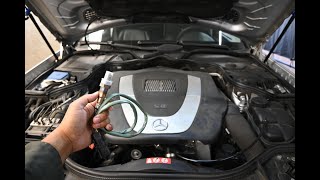
Typical fix: Replace the Bank 2 downstream (post-catalyst) oxygen sensor. It's often wise to replace the upstream sensor at the same time. 🎬 Watch: How to replace M272 O2 sensors and spark plugs.
Est. part cost: $70-$150 per sensor. - Exhaust System Leak 🟡 Medium Probability Corrosion and vibration can cause leaks at gaskets, welds, or in the flex pipe, especially on older vehicles from rust-prone climates. A leak between the upstream and downstream O2 sensors can allow outside oxygen into the exhaust stream, fooling the downstream sensor into thinking the converter isn't working.
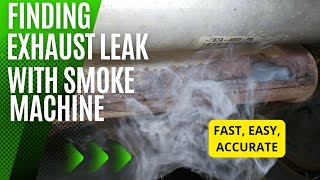
How to confirm: Visually inspect the exhaust system from the engine to the catalytic converter for cracks or black soot marks indicating a leak. A smoke test is the most effective way to find small leaks. 🎬 See how to find exhaust leaks using a smoke machine. Pay close attention to the exhaust manifold and flange connections.
Typical fix: Replace the leaking gasket, tighten bolts, or have the leaking section of pipe welded or replaced.
Est. part cost: $20-$200 depending on the nature of the leak.
Rare But Worth Checking
- Engine Misfires: This is a root cause, not just a related issue. Unburned fuel from misfires (codes P0300-P0306) will destroy a new catalytic converter quickly by overheating it. Always fix misfires before replacing a converter.
- Rich Fuel Condition: Caused by issues like leaking fuel injectors or a bad Mass Airflow (MAF) sensor, a rich condition (codes P0172/P0175) will contaminate and clog the converter over time. This must be corrected to ensure the long-term health of a new converter.
Diagnosis Steps
- Read the trouble codes with an OBD-II scanner. Note all codes present and check for any pending codes.
- If misfire (P030x) or fuel trim (P0175) codes are present, diagnose and fix those issues FIRST. They are likely the root cause of catalyst failure.
- With the engine cool, perform a thorough visual inspection of the Bank 2 (driver's side) exhaust system. Look for cracks, holes, or black soot at gaskets and flanges that would indicate a leak. A common area for leaks is the flange between the exhaust manifold and the catalytic converter.
- Start the engine and listen for hissing or ticking sounds from the exhaust manifold area, which would also indicate a leak. A mechanic's stethoscope can help pinpoint the source.
- Use a scan tool with live data capability. Monitor the upstream (Sensor 1) and downstream (Sensor 2) oxygen sensors for Bank 2. The upstream sensor voltage should fluctuate rapidly between ~0.1V and ~0.9V. The downstream sensor on a healthy, warm converter should remain relatively stable and high (e.g., >0.6V).
- If the downstream O2 sensor's voltage is switching rapidly like the upstream sensor, the catalytic converter is not functioning.
- If the downstream O2 sensor voltage is flat and unresponsive, the sensor itself may have failed.
- Use an infrared temperature gun on a fully warmed-up engine. Measure the temperature of the exhaust pipe just before the converter and just after. The outlet should be at least 100°F (38°C) hotter than the inlet. If it's not, the converter is not 'lighting off' and performing its chemical reaction.
- If no leaks are found and the O2 sensors appear to be functioning correctly, the catalytic converter is the most likely failed component.
Parts You'll Likely Need
- Bank 2 Catalytic Converter
(OEM #A2114903814 (or superseding part numbers))— This is the most common failure item that directly causes the P0430 code on higher-mileage vehicles.
Trusted brands: Bosal, Walker Exhaust, MagnaFlow, Genuine Mercedes-Benz
OEM price range: $2000+
Aftermarket price range: $700-$1500 - Downstream Oxygen Sensor (Bank 2, Sensor 2)
(OEM #A0035428418, A0065424918)— This sensor is responsible for monitoring the converter's efficiency and can fail, causing an incorrect P0430 code. It's often replaced with the converter as a preventative measure.
Trusted brands: Bosch, Denso, Genuine Mercedes-Benz
OEM price range: $180-$250
Aftermarket price range: $70-$150 - Exhaust Manifold to Catalytic Converter Gasket
(OEM #A2114920181)— This gasket must be replaced anytime the catalytic converter is removed to prevent exhaust leaks.
Trusted brands: Victor Reinz, Elring, Genuine Mercedes-Benz
OEM price range: $20-$40
Aftermarket price range: $10-$25
Related Codes That Often Appear With This One
- P0420 — This is the identical code for Bank 1 (passenger side). Since both catalytic converters are the same age and subjected to the same conditions, it's common for them to fail around the same time.
- P0300, P0301-P0306 — These are misfire codes. A misfire dumps raw fuel into the exhaust, which superheats and destroys the catalytic converter, leading to a P0430 code.
- P0175 — This code means 'System Too Rich on Bank 2'. A rich condition from a leaking injector or other issue can contaminate the catalytic converter, causing it to lose efficiency and trigger P0430.
Platform-Specific Known Issues
- Owner Experience: Replacing O2 Sensors First: A common owner experience is to replace the less expensive O2 sensors in hopes of a quick fix, only to have the P0430 code return. This often points to the original, underlying issue being the catalytic converter itself, which has degraded over time.
- ECU Software Updates: In some cases, Mercedes-Benz has issued software updates for the engine control unit (ECU) that can affect how the catalyst monitoring system operates. While less common for this specific model and code, it's worth checking with a dealer if a software update is available, especially if all hardware components check out. Some updates are specifically designed to address lambda control and prevent conditions that could damage the catalytic converter.
- Difficulty in Accessing O2 Sensor Connectors: Owners and technicians report that the electrical connector for the Bank 2 downstream O2 sensor (G3/5) is located in a very tight space above the transmission. It can be extremely difficult to reach and disconnect without small hands or specialized knowledge. Some technicians recommend dropping the front section of the exhaust for better access.
Mechanic-Grade Diagnostic Values
- Upstream O2 Sensor (Bank 2, Sensor 1) Voltage — expected: Rapidly fluctuating between 0.1V and 0.9V at steady RPM.. Failure: Slow or no fluctuation, or voltage stuck high or low.
- Downstream O2 Sensor (Bank 2, Sensor 2) Voltage (Good Catalyst) — expected: Relatively stable voltage, typically between 0.6V and 0.8V when the catalyst is hot and working.. Failure: Voltage fluctuates rapidly, mimicking the upstream sensor's pattern.
- Downstream O2 Sensor (Bank 2, Sensor 2) Voltage (Bad Catalyst) — expected: N/A. Failure: Voltage switching rapidly between high and low values, similar to the upstream sensor, indicating the catalyst is not storing oxygen.
- Long Term and Short Term Fuel Trims (Bank 2) — expected: Within +/- 5% at idle and steady cruise.. Failure: Consistently high positive values (e.g., > +10%) suggest a vacuum leak; high negative values suggest a rich condition (e.g., leaking injector).
Scan Tool Commands That Help
- Mercedes STAR/XENTRY Diagnosis: Catalyst System Test — This is a guided test within the dealer-level software that actively checks the function of the catalytic converter. It may command specific engine conditions to evaluate the oxygen storage capacity and provides a pass/fail result based on manufacturer-specific thresholds, which is more definitive than just watching live data.
- Mercedes STAR/XENTRY Diagnosis: Check for Control Unit Software Updates — Before replacing expensive hardware, it's prudent to check if a software update for the ME-SFI (Motor Electronics) control unit is available. Some updates refine the parameters for catalyst monitoring or correct logic errors that could falsely trigger a P0430 code.
Wiring & Ground Locations
- Bank 2 O2 Sensor Locations — Bank 2 is the driver's side on a US-market W211. Sensor 1 is in the exhaust manifold before the catalytic converter. Sensor 2 is after the catalytic converter.. Correctly identifying Bank 2 is the first step in any diagnosis to avoid working on the wrong side of the engine.
- Bank 2, Sensor 2 Connector (G3/5) — The electrical connector for the downstream O2 sensor is notoriously difficult to access. It is located up on the side of the transmission bell housing, above the catalytic converter.. A poor connection or corrosion at this hard-to-reach connector can mimic a failed sensor. Technicians often struggle with access, sometimes requiring the exhaust to be lowered.
- W16/5 (Engine ground) — Located on the engine block, this is a primary ground connection for various engine components.. A poor engine ground can cause erratic sensor readings and communication issues with the ECU. While not a direct cause, it should be checked for corrosion and tightness during a thorough diagnosis.
- W11 (Battery ground point) — Located in the engine compartment, connecting the battery negative terminal to the chassis.. The main chassis ground point. Issues here can cause a wide range of electrical problems, including faulty sensor readings.
Real Owner Repair Stories
- MBWorld.org Forums (W212 E-Class (similar M276 engine, but relevant issue)) — Check engine light, difficulty accessing O2 sensor.
❌ Tried (didn't work) Attempting to reach the Bank 2, Sensor 2 (G3/5) connector by hand from underneath the car.
✅ What actually fixed it The forum user was advised by an experienced contributor that the connector is extremely difficult to reach and that their independent mechanic has a specific technician with small hands for this job. The recommended professional method was to drop the entire front section of the exhaust to gain proper access to the sensor and its connector.
Model Year Variations Within This Range
- 2003-2005: Pre-facelift E-Class models (2003-2005 E320) used the M112 V6 engine, not the M272. While the P0430 code functions the same, part numbers for catalytic converters, sensors, and gaskets are different and not interchangeable with the 2006-2009 E350.
Diagnostic Flowchart
Other Known Issues on This Vehicle
Issues unrelated to this code that are worth knowing about as an owner of this generation:
- M272 Balance Shaft Gear Wear 🔴 High — Common on engines produced between 2004-2008. The gear material was too soft and wears prematurely, typically between 60,000-100,000 miles, causing timing-related codes (P0016/P0017) and eventually engine rattle. (Ref: Mercedes issued service bulletins (e.g., S-B-03.30/08i) but no official recall. The repair is engine-out and very expensive ($4000+).)
- M272 Intake Manifold Swirl Flap Failure 🟠 Medium — Very common, usually occurs after 80,000 miles. A plastic lever on the intake manifold's variable runner mechanism breaks, causing poor idle, loss of power, and codes like P2004, P2005, P2006. (Ref: No recall. The official fix is to replace the entire intake manifold, but aftermarket metal repair levers are a popular, cheaper DIY solution.)
- W211 Sensotronic Brake Control (SBC) Failure 🔴 High — Affects 2003-2006 models. The SBC pump is a brake-by-wire component with a pre-programmed service life (a set number of brake applications). When it reaches its limit, it triggers a red 'Brake Defective Stop Vehicle' warning. (Ref: Mercedes extended the warranty on the SBC unit to 25 years with unlimited mileage in the US due to a class-action lawsuit. Dealers will replace a failed unit for free.)
Used vs. New Parts: Buying Guide for This Vehicle
When a used part is the smart pick: For this repair, used parts are generally not recommended for the core components. A used catalytic converter is a significant gamble as it has an unknown history and could fail shortly after installation. Used O2 sensors are also not advisable as they are wear items.
Donor-vehicle mileage cap: roughly under 60000 miles for the part to have meaningful remaining life.
What to inspect on the donor part:
- For a catalytic converter, verify the donor car did not have a check engine light or any codes related to misfires or fuel trim issues.
- Visually inspect the converter's honeycomb structure (if possible) to ensure it is not melted, clogged, or broken apart.
- Ensure the part comes from a region without heavy road salt use to minimize corrosion and risk of leaks.
OEM-only on this vehicle (don't cheap out):
- Catalytic Converter: Strongly recommended to use OEM or a high-quality, CARB-compliant (if applicable) aftermarket unit. Cheap aftermarket converters often lack sufficient precious metal loading to satisfy the strict Mercedes ECU monitoring, leading to the P0430 code returning.
Aftermarket brands forum-validated for this vehicle:
- O2 Sensors: Bosch or Denso are typically the OEM suppliers and are highly recommended.
- Catalytic Converters: MagnaFlow and Walker are reputable aftermarket brands, but ensure you purchase their direct-fit, OEM-grade or CARB-compliant models for the best chance of success.
Brands owners have reported issues with on this vehicle:
- Unbranded or 'universal' catalytic converters from online marketplaces. These are very likely to fail the ECU's efficiency test.
Real Owner Stories
Aggregated from forums and TSBs cited above. Mileages and costs reflect what owners reported in those sources.
2006 Mercedes-Benz E350 M272 — ~100000 miles
Symptoms: The owner replaced the less expensive O2 sensors in hopes of a quick fix, but the P0430 code returned shortly after.
What fixed it: Replacement of the catalytic converter assembly after O2 sensors failed to resolve the issue.
Source hint: Owner Experience: Replacing O2 Sensors First
2006 Mercedes-Benz C350 M272 — ~120000 miles
Symptoms: Check engine light with P0430 code; owner sought advice on diagnostic paths including checking for leaks and O2 sensor behavior.
What fixed it: Following the diagnostic path of checking O2 sensors and exhaust leaks.
Source hint: MBWorld Thread on P0430: https://mbworld.org/forums/c-class-w203/576634-p0430-weird-problem-help-please.html
Related OBD-II Codes
Frequently Asked Questions
Where is the Bank 2 downstream O2 sensor connector located on my E-Class?
Is there a software update for the M272 ECU that addresses P0430?
I have high mileage on my E350; is the catalytic converter the most likely cause?
Should I replace my O2 sensors first to fix P0430 on my E-Class?
Can an exhaust leak cause a false P0430 on this vehicle?
What temperature difference should I see across the converter on my M272 engine?
Helpful Videos
Used OEM Parts in Stock

New Aftermarket Parts Available



The information in this article is provided for general reference and educational purposes only. Vehicle specifications, procedures, and part compatibility can vary by production date, trim level, and region. Always consult your vehicle's factory service manual and verify part numbers before purchasing or performing repairs. Safety-critical components such as airbags, seat belts, and braking systems should be installed by a qualified professional.
- Mercedes-Benz E-Class:
- 🎬 Helpful Videos
- 🛍️ Shop This Part
- What's Unique About the 2003-2009 Mercedes-Benz E-Class
- Symptoms You May Notice
- Most Likely Causes
- Rare But Worth Checking
- Diagnosis Steps
- Parts You'll Likely Need
- Related Codes That Often Appear With This One
- Platform-Specific Known Issues
- Mechanic-Grade Diagnostic Values
- Scan Tool Commands That Help
- Wiring & Ground Locations
- Real Owner Repair Stories
- Model Year Variations Within This Range
- Diagnostic Flowchart
- Other Known Issues on This Vehicle
- Used vs. New Parts: Buying Guide for This Vehicle
- Real Owner Stories
- 2006 Mercedes-Benz E350 M272 — ~100000 miles
- 2006 Mercedes-Benz C350 M272 — ~120000 miles
- Related OBD-II Codes
- Frequently Asked Questions
- 🎟️ Get 5% Off