

P0430 on 2007-2012 Hyundai Santa Fe: Bank 2 Catalyst Fixes
The P0430 code on a 2007-2012 Hyundai Santa Fe almost always points to a failing Bank 2 catalytic converter. Before replacing this expensive part, first inspect for exhaust leaks and test the Bank 2 oxygen sensors, which are less costly potential causes. Bank 2 is the cylinder bank located closer to the radiator.
- P0430 means the catalytic converter on Bank 2 (front/radiator side) is not working efficiently.
- The most likely cause is a failed catalytic converter, but always rule out cheaper fixes first.
- Before buying a new converter, thoroughly check for exhaust leaks and test the Bank 2 oxygen sensors.
- Address any other engine codes, especially for misfires (P030x), before replacing the catalytic converter to prevent damaging the new part.
What's Unique About the 2007-2012 Hyundai Santa Fe
For the second-generation (CM) Santa Fe, the P0430 code is a straightforward emissions issue without many platform-specific quirks. The primary causes align with the general reasons for catalyst failure across most vehicles: age, potential for exhaust leaks at gasket flanges, or failing oxygen sensors. Unlike some other Hyundai models, there are no widespread recalls or Technical Service Bulletins (TSBs) directly linking premature catalytic converter failure to this specific code on the 2007-2012 Santa Fe V6 engines. However, a known issue with leaking valve cover gaskets on the 3.3L V6 can lead to oil dripping onto the alternator and potentially the exhaust, which could contribute to downstream issues, though a direct link to P0430 is not commonly cited. The diagnostic process is standard for this type of fault.
Symptoms You May Notice
- Check Engine Light is on.
- Vehicle may fail an emissions test.
- Reduced fuel economy.
- Sluggish acceleration or lack of power, especially if the converter is clogged.
- A sulfur or "rotten egg" smell from the exhaust.
- Increased engine noise if an exhaust leak is the underlying cause.
- Immediately replacing the oxygen sensors without testing them. While an O2 sensor can be the cause, the catalytic converter itself is more common. A proper diagnosis is needed to avoid wasting money on parts.
- Replacing the catalytic converter without addressing underlying engine problems like misfires or rich fuel conditions, which will cause the new converter to fail prematurely.
- Using a cheap, low-quality aftermarket catalytic converter. Some universal or non-OEM grade converters may not have enough precious metal loading to satisfy the PCM's monitoring, causing the P0430 code to return.
Most Likely Causes
- Failing Catalytic Converter (Bank 2) 🔴 High Probability Catalytic converters are wear items that degrade over time and with mileage. Contamination from engine issues like misfires or burning oil can accelerate this failure. On this platform, it is the most cited reason for a persistent P0430 code after other causes are ruled out.
How to confirm: After confirming O2 sensors and the exhaust system are good, use a scan tool to view live data. The Bank 2 downstream O2 sensor (B2S2) voltage should be stable. If it's fluctuating rapidly like the upstream sensor (B2S1), the converter is bad. An infrared thermometer can also be used; the outlet of the converter should be significantly hotter (by at least 100°F) than the inlet on a working unit. If it's cooler or the same temperature, it's not working.
Typical fix: Replace the Bank 2 catalytic converter. This is the converter located at the front of the engine bay, near the radiator. Both manifold-converter assemblies and direct-fit converters are available.
Est. part cost: $300-$800 - Faulty Oxygen Sensor (Bank 2) 🟡 Medium Probability Oxygen sensors have a finite lifespan and can fail, sending incorrect data to the PCM. A lazy or biased downstream (post-cat) sensor can mimic the symptoms of a bad converter, and it is a common practice to replace them before condemning the much more expensive converter.
How to confirm: Use a scan tool to graph the sensor's voltage. A healthy downstream sensor should show a relatively steady voltage. If it's stuck high, low, or not responding, it's likely faulty. Swapping the downstream sensors from Bank 1 and Bank 2 (if they are identical and accessible) and seeing if the code changes to P0420 is a definitive test.
Typical fix: Replace the faulty oxygen sensor. The downstream sensor (Sensor 2) is the most likely O2 sensor to cause this code, but the upstream (Sensor 1) can also be a factor.
Est. part cost: $50-$150 - Exhaust Leak ⚪ Low Probability Gaskets at the exhaust manifold or flanges before or near the catalytic converter can fail over time, allowing oxygen to enter the exhaust stream, which fools the O2 sensors.
How to confirm: Visually inspect the exhaust system from the engine to the catalytic converter for black soot marks, which indicate a leak. Listen for an audible ticking or hissing sound that gets louder with engine RPM. A smoke machine test is the most effective way to find small leaks.
Typical fix: Replace the leaking gasket or repair the cracked pipe.
Est. part cost: $10-$50
Rare But Worth Checking
- Engine Misfires or Fuel Mixture Issues: If the engine is misfiring or running consistently rich, it can send unburned fuel into the exhaust, which overheats and damages the catalytic converter. Always check for and resolve other codes (like P030x, P0172, P0175) before replacing the converter.
- PCM Software Issues: In very rare cases, the PCM's software may have overly sensitive parameters for monitoring catalyst efficiency. Check with a Hyundai dealer to see if any software updates are available for your vehicle's VIN. One Hyundai TSB (10-FL-004) mentions a PCM update for catalyst monitoring logic, though it was primarily for other models, it's worth checking for applicability.
Diagnosis Steps
- Check for other DTCs. If any misfire, fuel system, or O2 sensor circuit codes are present, diagnose and repair them first.
- Visually inspect the exhaust system for any leaks, paying close attention to the exhaust manifold and the flanges before and after the Bank 2 catalytic converter. A common leak spot is the gasket between the manifold and the converter.
- Use a scan tool to monitor live data for the Bank 2 oxygen sensors (B2S1 and B2S2) with the engine fully warmed up and at a steady 2,500 RPM.
- Analyze the O2 sensor readings: The upstream sensor (B2S1) should show a rapidly fluctuating voltage between approximately 0.1V and 0.9V. The downstream sensor (B2S2) should show a much steadier, stable voltage, typically above 0.5V.
- If the B2S2 voltage is mirroring the B2S1 voltage, and no exhaust leaks are present, the catalytic converter has failed.
- If the B2S2 voltage is stuck (e.g., at 0V or 1V) or responds very slowly, the sensor itself is likely bad.
- If in doubt, swap the downstream O2 sensors between Bank 1 and Bank 2. Clear the codes and drive the vehicle. If the code returns as P0420 (Bank 1), you have confirmed a bad O2 sensor.
- Perform a temperature test using an infrared thermometer. Measure the temperature of the pipe just before the converter and just after. The outlet should be at least 100°F hotter than the inlet. If not, the catalyst is not functioning.
Parts You'll Likely Need
- Bank 2 Catalytic Converter
(OEM #28510-3E836 (for 2.7L), 28950-3E140 (for 3.3L, check specific application))— This is the most common cause of a P0430 code, as the catalyst materials degrade over time.
Trusted brands: Walker Exhaust, MagnaFlow, Bosal, Eastern Catalytic
OEM price range: $900-$1500+
Aftermarket price range: $300-$800 - Bank 2, Sensor 2 (Downstream) Oxygen Sensor
(OEM #39210-3C860 (for 3.3L, check specific application))— This sensor is responsible for reporting the converter's efficiency. If it fails, it can send false data that triggers the code.
Trusted brands: Denso, Bosch, NGK/NTK
OEM price range: $100-$180
Aftermarket price range: $50-$100 - Exhaust Gaskets — These should always be replaced when an exhaust component like a catalytic converter is removed to ensure a leak-free seal.
Trusted brands: Fel-Pro, Walker Exhaust, Bosal
OEM price range: $15-$30
Aftermarket price range: $5-$15
Related Codes That Often Appear With This One
- P0420 — This is the equivalent code for Bank 1 (the firewall side). Seeing both codes together could indicate a systemic issue like contaminated fuel or a problem affecting the entire engine.
- P0300-P0306 — These are misfire codes. Unburned fuel from a misfiring cylinder can destroy a catalytic converter. These must be fixed first.
- P013x / P015x — These codes relate directly to oxygen sensor circuits. If you have one of these alongside P0430, it strongly suggests the O2 sensor or its wiring is the root cause.
Technical Service Bulletins (TSBs) & Recalls
- TSB 15-01-031: While not for P0430 directly, this TSB and associated service campaign address the front valve cover gasket oil leak on the 3.3L V6, which can cause alternator failure. This is a relevant maintenance item for owners to be aware of.
Platform-Specific Known Issues
- Valve Cover Gasket Oil Leak (3.3L V6): The front (Bank 2) valve cover gasket is known to leak oil directly onto the alternator, causing charging system failure. While not a direct cause of P0430, a significant oil leak can introduce oil into the combustion process if PCV systems are overwhelmed, potentially contaminating the catalytic converter over time. Hyundai issued a service campaign (related to TSB 15-01-031) for this issue on 2007-2009 models.
Mechanic-Grade Diagnostic Values
- Heated Oxygen Sensor (HO2S) Heater Resistance — expected: Approximately 9.4 Ω at 20°C (68°F). Failure: An open circuit (infinite resistance) or a short (near zero resistance) indicates a failed heater element within the sensor.
- HO2S Heater Control Circuit Voltage (at harness connector) — expected: Battery voltage (approx. 12V) with Key On, Engine Off.. Failure: 0V indicates a problem with the power supply from the main relay or a break in the wire. This test confirms the sensor is receiving power to operate its heater.
Scan Tool Commands That Help
- Hyundai GDS (Global Diagnostic System): Resetting Adaptive Values — After replacing a catalytic converter or oxygen sensors, it is good practice to use this function. It clears the long-term fuel trims and other learned values from the ECM, forcing it to relearn based on the new components. This can help resolve a persistent code if the old adaptive values were compensating for a failing part.
Wiring & Ground Locations
- G52 — Located at the left rear of the engine compartment.. This is a primary engine ground point. A corroded or loose connection here can cause erratic sensor readings, including from the oxygen sensors, potentially leading to a false P0430 code.
- Bank 2 O2 Sensor Connectors (Upstream and Downstream) — The Bank 2 (front) sensors' wiring follows the exhaust manifold near the radiator. The connectors are typically clipped to brackets on the engine or firewall for accessibility.. The wiring for the front bank is exposed to heat and potential physical damage. Technicians should inspect the harness for melting or chafing, and check the connector pins for corrosion, especially the 4-pin connectors for the upstream and downstream sensors.
- ECM Pins (for 2.7L V6) — The Engine Control Module (ECM) is located in the engine compartment.. For deep diagnostics, one might need to test continuity or voltage directly at the ECM. For the 2.7L, key pins include those for O2 sensor signals and grounds. For example, Pin 4, 5, and 6 on connector C133-1 are ECM grounds. A wiring diagram is essential for this level of testing.
Real Owner Repair Stories
- Hyundai Forums user (2006 Hyundai Santa Fe (similar CM generation)) — P0430 code appeared after having the catalytic converter replaced.
❌ Tried (didn't work) The new (likely aftermarket) catalytic converter did not fix the code.
✅ What actually fixed it The forum discussion pointed to the high probability that a cheap aftermarket converter was used, which often lacks the necessary precious metals to satisfy the ECU's efficiency monitoring, causing the code to return. The implied solution is to use a higher-quality or OEM converter. - YouTube video by 'Reparaciones Hecmar' (2007 Hyundai Santa Fe) — P0430 code.
❌ Tried (didn't work) Replacing the Bank 2 oxygen sensor with a new Bosch sensor did not fix the issue. The new sensor produced the same lazy waveform as the old one.
✅ What actually fixed it The live data graphing clearly showed the downstream O2 sensor waveform beginning to mirror the upstream sensor's waveform, confirming the catalytic converter itself was faulty and not the sensor. The final fix was replacing the catalytic converter.
When the Usual Fixes Don't Work
- In several documented cases, owners replaced both the catalytic converter and the O2 sensors, yet the P0430 code returned. This strongly points to two scenarios that contradict the 'common fixes': 1) The use of a low-quality aftermarket catalytic converter that cannot perform to OEM standards, which the ECU detects as a failure. 2) An underlying, unaddressed issue upstream, such as a small, hard-to-detect exhaust manifold crack or a persistent fuel mixture problem that is slowly damaging the new converter.
Model Year Variations Within This Range
- 2007-2009: These models were equipped with the Mu 2.7L V6 and the Lambda 3.3L V6 engines.
- 2010-2012: For the 2010 model year refresh, Hyundai replaced the V6 engines. The 2.7L and 3.3L were discontinued and replaced with a 2.4L I4 and a more powerful 3.5L Lambda II V6. While the P0430 code functions the same way, the specific part numbers for the catalytic converter and sensors are different for these later engines.
Diagnostic Flowchart
Other Known Issues on This Vehicle
Issues unrelated to this code that are worth knowing about as an owner of this generation:
- Faulty Fuel Level Sensors 🟠 Medium — Very common. The fuel gauge becomes erratic or reads empty, often triggering codes like P0463. The issue is with the sender units in the tank.
- Leaking Valve Cover Gaskets 🟠 Medium — Common, especially on the 3.3L V6. The front (Bank 2) gasket leaks oil onto the alternator, causing it to fail. The rear is also prone to leaking. (Ref: Service Campaign T9R (related to TSB 15-01-031))
- Engine Failure (2012 models w/ 2.4L) 🔴 High — Significant issue primarily affecting the 2.4L Theta II 4-cylinder engine in the 2012 model year, leading to connecting rod bearing failure and engine seizure. The V6 engines in scope for this article are generally not affected by this specific failure mode. (Ref: Related to widespread Hyundai/Kia Theta II engine recalls, but VIN eligibility varies.)
- Airbag Occupant Classification System (OCS) Failure 🔴 High — Common enough to warrant a recall. The system may fail to detect a front passenger, preventing the airbag from deploying in a crash. (Ref: NHTSA Recall 11V371000)
- Transmission Hesitation / Hard Shifting 🟡 Low — Some owners report issues with sluggish or jerky shifting, though it is less widespread than other problems.
Used vs. New Parts: Buying Guide for This Vehicle
When a used part is the smart pick: For this repair, sourcing a used OEM catalytic converter from a low-mileage, rear-ended donor vehicle can be a cost-effective alternative to a new OEM part. It is often a better choice than a new, cheap aftermarket converter. Used oxygen sensors are generally not recommended due to their finite lifespan and sensitivity.
Donor-vehicle mileage cap: roughly under 80000 miles for the part to have meaningful remaining life.
What to inspect on the donor part:
- Check for a VIN on the donor vehicle to confirm mileage and ensure it wasn't from a flood-damaged car.
- Visually inspect the converter for any signs of physical damage, dents, or rattling, which indicates a broken internal substrate.
- Look at the inlet of the converter for heavy black soot (indicating a rich-running donor car) or oily residue, which could mean the converter is already contaminated.
- Ensure the donor vehicle is from a state with similar emissions standards (e.g., avoid a 49-state converter if you need a CARB-compliant one).
OEM-only on this vehicle (don't cheap out):
- Catalytic Converter: Strongly recommended. Many aftermarket converters, especially budget-priced ones, lack sufficient precious metal loading. This can cause the P0430 code to return shortly after installation because they cannot meet the efficiency thresholds monitored by the PCM.
Aftermarket brands forum-validated for this vehicle:
- Oxygen Sensors: Denso, Bosch, and NGK/NTK are reputable OEM suppliers and are considered reliable choices.
- Catalytic Converters: If OEM is not an option, higher-tier brands like MagnaFlow and Walker (specifically their OEM-grade or CARB-compliant lines) have a better reputation than generic, unbranded parts.
Brands owners have reported issues with on this vehicle:
- Generic, unbranded catalytic converters sold on platforms like eBay or Amazon are frequently cited in forums as being unable to resolve P0420/P0430 codes long-term.
Real Owner Stories
Aggregated from forums and TSBs cited above. Mileages and costs reflect what owners reported in those sources.
2007-2012 Hyundai Santa Fe
Symptoms: The user was advised on the function of the four O2 sensors and told to rule out exhaust leaks and bad sensors before replacing the expensive catalytic converter.
What fixed it: Rule out exhaust leaks and bad sensors first; if B2S2 voltage mirrors B2S1, replace the catalytic converter.
Source hint: Mechanics Stack Exchange thread titled 'hundai-p0430-dtc-santa-fe'
2007-2012 Hyundai Santa Fe
Symptoms: Check engine light came on; discussion focused on whether to replace the catalytic converter or try a cheaper oxygen sensor first.
What fixed it: Replacing either the catalytic converter or, less frequently, an oxygen sensor.
Source hint: hyundai-forums.com thread titled 'issue-with-p0430'
2007-2012 Hyundai Santa Fe
Symptoms: P0430 code present with no other codes or visible exhaust leaks.
What fixed it: Replacement of the catalytic converter, as technicians advise it is almost certainly the culprit when no other codes exist.
Source hint: Reddit r/MechanicAdvice thread titled 'p0430_code_check_engine_light_came_on_and_got'
Related OBD-II Codes
Frequently Asked Questions
Does TSB 15-01-031 for the 3.3L V6 Santa Fe directly address the P0430 code?
Where is the Bank 2 catalytic converter located on my 2.7L or 3.3L Santa Fe?
Can I just swap parts between banks to see if the O2 sensor is bad before buying a new converter?
Is there a specific temperature difference I should look for to confirm my Santa Fe's converter is working?
Why is my Santa Fe experiencing sluggish acceleration along with the P0430 code?
Could an exhaust leak be causing my P0430 code instead of a bad converter?
Helpful Videos
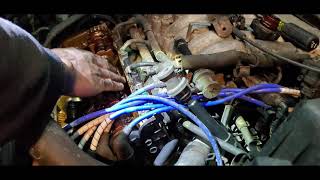
We Have This Part in Stock

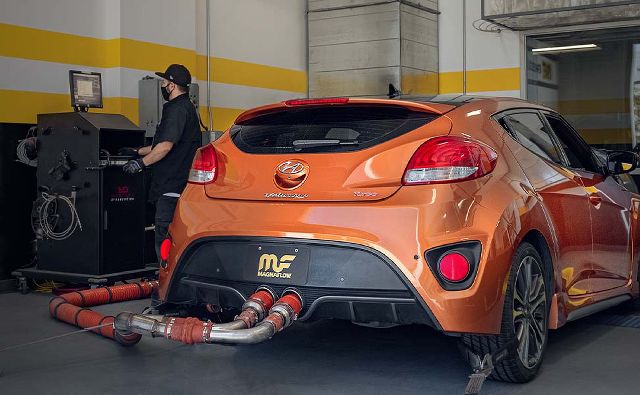
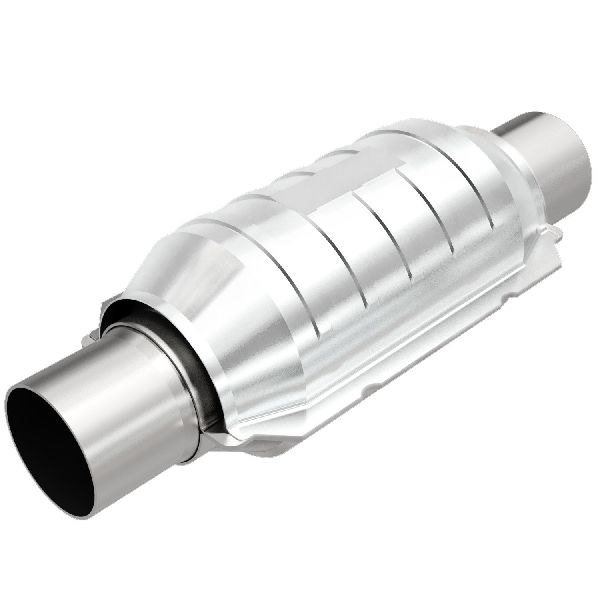

The information in this article is provided for general reference and educational purposes only. Vehicle specifications, procedures, and part compatibility can vary by production date, trim level, and region. Always consult your vehicle's factory service manual and verify part numbers before purchasing or performing repairs. Safety-critical components such as airbags, seat belts, and braking systems should be installed by a qualified professional.
- Hyundai Santa Fe:
- 🎬 Helpful Videos
- 🛍️ Shop This Part
- What's Unique About the 2007-2012 Hyundai Santa Fe
- Symptoms You May Notice
- Most Likely Causes
- Rare But Worth Checking
- Diagnosis Steps
- Parts You'll Likely Need
- Related Codes That Often Appear With This One
- Technical Service Bulletins (TSBs) & Recalls
- Platform-Specific Known Issues
- Mechanic-Grade Diagnostic Values
- Scan Tool Commands That Help
- Wiring & Ground Locations
- Real Owner Repair Stories
- When the Usual Fixes Don't Work
- Model Year Variations Within This Range
- Diagnostic Flowchart
- Other Known Issues on This Vehicle
- Used vs. New Parts: Buying Guide for This Vehicle
- Real Owner Stories
- 2007-2012 Hyundai Santa Fe
- 2007-2012 Hyundai Santa Fe
- 2007-2012 Hyundai Santa Fe
- Related OBD-II Codes
- Frequently Asked Questions
- 🎟️ Get 5% Off