

P0430 on 2007-2010 Hummer H3 I5: Catalyst System Causes and Fixes
On the Hummer H3 with an I5 engine, a P0430 code almost always points to a problem with the single catalytic converter. The most common cause is a cracked exhaust manifold, which is integrated with the converter. This is a well-known issue shared with its platform-mates, the Chevy Colorado and GMC Canyon. Expect to pay $300-$800+ for a replacement part, with DIY difficulty at 4/5 due to rusted and broken bolts.
- Before buying any parts, thoroughly inspect the exhaust manifold for cracks. This is the most likely cause of P0430 on your H3.
- Even though the code is for 'Bank 2', your I5 engine only has one bank. This code points to a problem with your single catalytic converter system.
- Do not replace the O2 sensors hoping for a fix without first ruling out an exhaust leak.
- If you have any engine misfire codes, you must fix those first, or you will destroy your new catalytic converter.
What's Unique About the 2007-2010 Hummer H3
The most significant issue for the I5 engine in the H3 and its platform-mates (Chevy Colorado/GMC Canyon) is the factory cast iron exhaust manifold, which is integrated with the primary catalytic converter. This manifold is notoriously prone to cracking and breaking bolts, especially the rearmost ones. A crack or leak allows outside air to be sucked into the exhaust, which fools the downstream oxygen sensor into thinking the catalytic converter has failed, triggering a P0420 or, less commonly, a P0430 code. Many owners have replaced expensive converters only to find the root cause was a hairline crack in the manifold or a broken manifold bolt.
Symptoms You May Notice
- Check Engine Light is on
- Reduced fuel economy
- Sluggish acceleration or loss of power, especially if the converter is clogged
- A ticking or hissing noise from the engine bay, particularly when cold, indicating a cracked manifold or broken manifold bolt
- Possible sulfur or 'rotten egg' smell from the exhaust, though this can also indicate a rich fuel condition that is destroying the converter
- Hesitation or sputtering during acceleration or at idle, which could be related to the camshaft actuator solenoid, another known I5 issue that can present with catalyst codes
- Replacing only the oxygen sensors without checking for exhaust leaks. The cracked manifold or a broken manifold bolt is a very common issue and will cause the code to return.
- Replacing the catalytic converter without diagnosing the root cause. If an engine misfire or rich fuel condition destroyed the original converter, it will destroy the new one as well.
- Assuming the P0430 code is for a non-existent 'Bank 2' and getting confused. On the I5, both P0420 and P0430 point to the same single exhaust bank.
Most Likely Causes
- Cracked Exhaust Manifold / Catalytic Converter Assembly 🔴 High Probability The original cast iron manifold/converter assembly is a well-documented failure point on the 3.5L and 3.7L I5 engines, known to develop cracks or shear off bolts over time due to thermal stress. This issue is shared with the Chevy Colorado and GMC Canyon.
How to confirm: Visually inspect the entire exhaust manifold for hairline cracks, often near the welds or collector. Check for broken or missing bolt heads, especially at the rear of the manifold. A cold start may reveal an audible ticking sound that quiets as the metal expands. A smoke test is the most definitive way to locate leaks.
Typical fix: Replace the entire exhaust manifold and catalytic converter assembly. Due to the high failure rate of the original design, many owners opt for aftermarket stainless steel headers or a revised OEM part. 🎬 Watch: Step-by-step guide to replacing the exhaust manifold and converter. Upgraded ARP bolts (part #134-1103) are recommended.
Est. part cost: $300-$800 - Failed Catalytic Converter (Internal Failure) 🟡 Medium Probability High mileage and/or underlying engine issues like misfires, a bad camshaft actuator solenoid, or fuel system problems can cause the catalyst substrate to degrade, melt, or become contaminated, reducing its efficiency.
How to confirm: After ruling out exhaust leaks and O2 sensor failure, this is the likely cause. A temperature gun can be used to check for a significant temperature increase (100°F+) from the converter's inlet to its outlet; no increase suggests a dead converter. A rattling sound may indicate a broken internal substrate. An exhaust back-pressure test can confirm a clog.
Typical fix: Replace the catalytic converter assembly. Crucially, a new converter requires a specific break-in procedure to prevent a recurring code, as outlined in GM TSB PIP3119P (and later revisions like PIP3119N).
Est. part cost: $300-$800 - Faulty Downstream Oxygen (O2) Sensor ⚪ Low Probability
How to confirm: Use a scan tool to graph the voltage of the downstream O2 sensor (Sensor 2). A healthy sensor on a good converter should show a relatively steady, stable voltage above 0.6V. If the sensor's voltage is stuck, erratic, or fluctuating rapidly like the upstream sensor (after confirming no exhaust leaks), it may be faulty.
Typical fix: Replace the downstream (post-catalyst) oxygen sensor. Soaking the old sensor in penetrating oil is highly recommended as they are often seized in the exhaust pipe. Access often requires removing the inner fender liner.
Est. part cost: $40-$90
Rare But Worth Checking
- Exhaust Leak Elsewhere: A leak at the flange gasket between the manifold/converter and the rest of the exhaust system can also introduce oxygen and skew sensor readings, causing a false code.
- Engine Misfires or Fuel System Issues: Unaddressed misfires (P0300-P0305), a faulty camshaft actuator solenoid, or fuel trim issues (P0171) can dump raw fuel into the exhaust, destroying a new catalytic converter quickly. Always fix these issues first.
- Improper Break-In of New Converter: Per GM TSB PIP3119P and its revisions, if a new converter is installed, a specific highway drive cycle must be performed to allow the internal materials to 'out-gas'. Skipping this can cause a false P0420/P0430 code to appear shortly after the repair.
Diagnosis Steps
- Check for other DTCs. Address any misfire, fuel system, or O2 sensor circuit codes before diagnosing the P0430. A faulty camshaft actuator solenoid is also a known issue on these engines that can affect performance.
- Inspect for Exhaust Leaks. This is the most critical step for this vehicle. Start the engine when cold and listen for any ticking or hissing sounds from the exhaust manifold area. Visually inspect the manifold for cracks and for broken/missing bolt heads, especially near cylinder 5 (the rearmost one). A smoke machine is the most effective tool for finding leaks.
- Analyze Oxygen Sensor Data. Use a scan tool to graph the upstream (Sensor 1) and downstream (Sensor 2) oxygen sensors. The upstream sensor should fluctuate rapidly between ~0.1V and ~0.9V. The downstream sensor should show a much steadier, flatter voltage, typically above 0.6V. If the downstream sensor is mirroring the upstream, it confirms the converter is not working or an exhaust leak is present.
- Test the Downstream O2 Sensor. If no exhaust leak is found, test the sensor itself. If its readings are stuck low (e.g., 0V) or high (e.g., 1V) regardless of engine condition, it may be the culprit, though this is less common than a cracked manifold.
- Check Converter Temperature. Use an infrared thermometer to measure the pipe temperature before and after the catalytic converter once the engine is fully warmed up. The outlet should be at least 100°F hotter than the inlet. If not, the converter is likely inactive.
- Confirm Converter Failure. If all other possibilities have been ruled out, the catalytic converter itself has failed internally and requires replacement. Be prepared for seized bolts and consider replacing them with upgraded hardware. 🎬 Watch: A clever trick for removing stuck manifold bolts.
Parts You'll Likely Need
- Catalytic Converter with Integrated Exhaust Manifold
(OEM #12604221)— This is the most common failure. The original cast iron manifold is prone to cracking or breaking bolts, causing a false catalyst code. The entire assembly must be replaced.
Trusted brands: Walker (e.g., 16468), MagnaFlow (e.g., 51205), AP Exhaust, ACDelco (OEM)
OEM price range: $600-$900
Aftermarket price range: $300-$600 - Downstream Oxygen Sensor
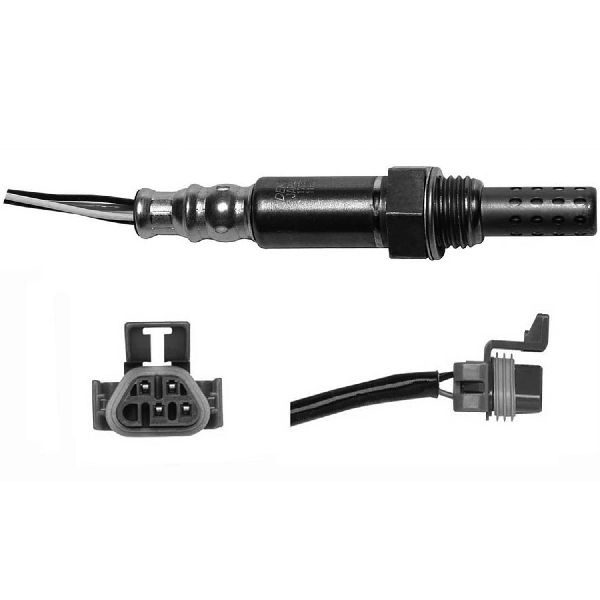
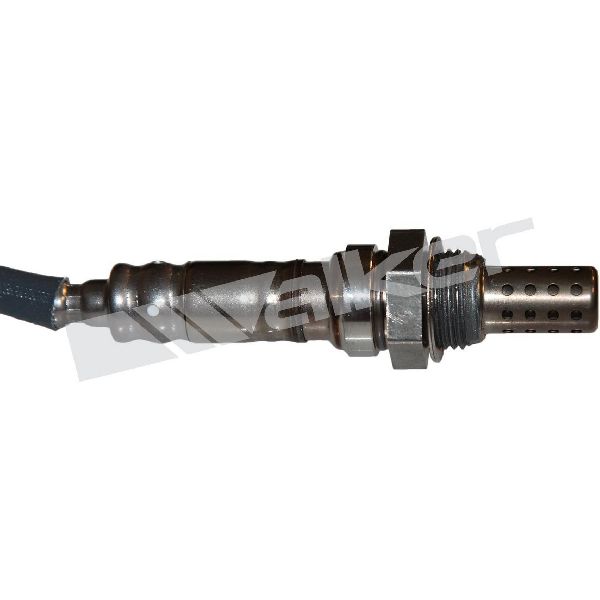
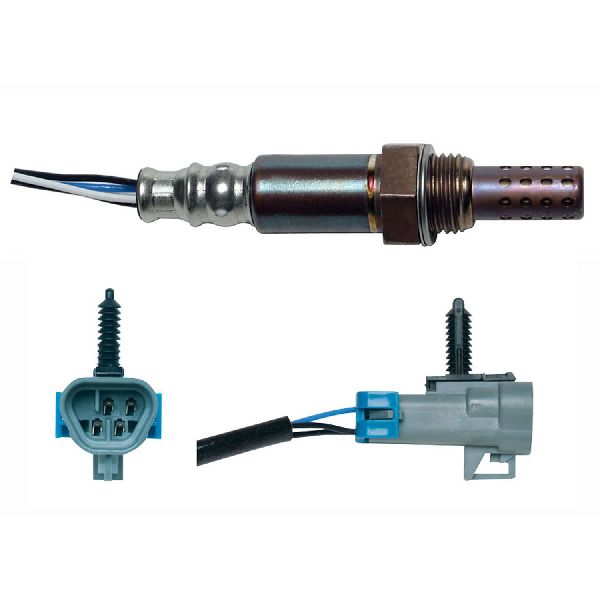
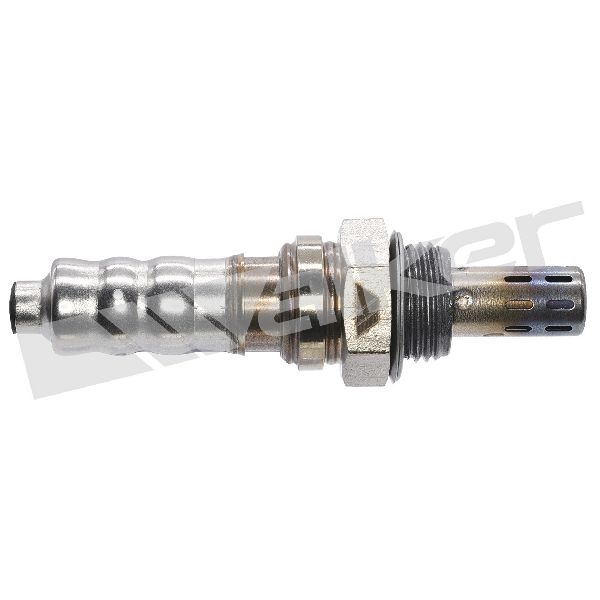
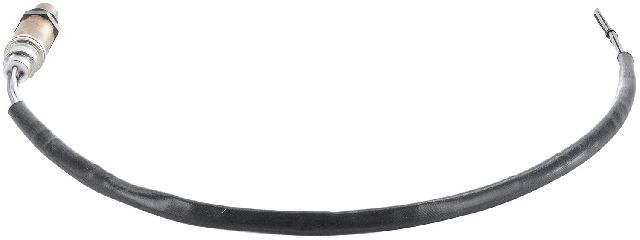
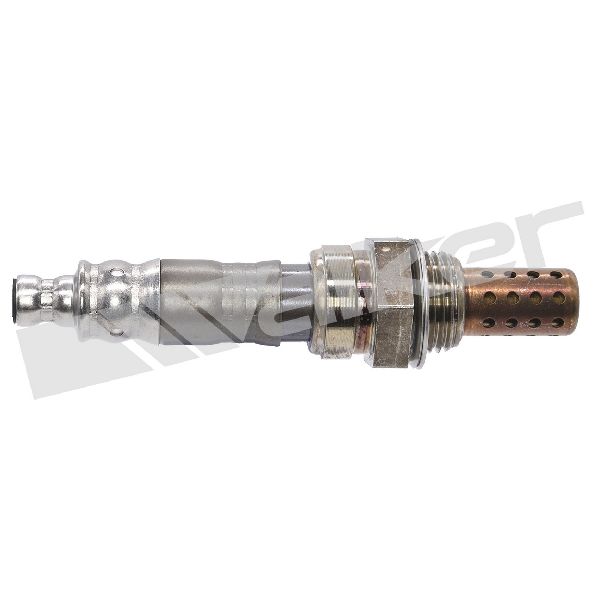
(OEM #213-4243)— While less common than a cracked manifold, a failing O2 sensor can trigger this code. It's often replaced along with the converter as a preventative measure. It can be difficult to remove without damage.
Trusted brands: Denso, Bosch, ACDelco (e.g., 213-3908), NTK
OEM price range: $80-$120
Aftermarket price range: $40-$90 - Exhaust Manifold Gasket
(OEM #12597931)— Must be replaced whenever the exhaust manifold is removed.
Trusted brands: Fel-Pro, Mahle, ACDelco
OEM price range: $20-$40
Aftermarket price range: $10-$25
Related Codes That Often Appear With This One
- P0420 — This is the more common code for 'Catalyst System Efficiency Below Threshold (Bank 1)'. Since the I5 engine only has one bank, P0420 and P0430 point to the same physical components and are often caused by the same cracked manifold issue.
- P0300, P0301, P0302, P0303, P0304, P0305 — A misfire on any cylinder will send unburned fuel into the exhaust, which can overheat and damage the catalytic converter, leading to a P0430 code.
Technical Service Bulletins (TSBs) & Recalls
- PIP3119P: This is the most recent version, superseding PIP3119N. It details the catalytic converter break-in procedure required after replacement to prevent a false P0420 or P0430 code. The procedure involves specific highway driving and engine-off periods.
- Bulletin #PIP3119N: This bulletin notes that some vehicles may experience a Malfunction Indicator Lamp at low mileage with codes P0420 and/or P0430. It advises technicians that these efficiency codes are actually disabled for the first hour of operation.
Platform-Specific Known Issues
- The cast iron exhaust manifold integrated with the catalytic converter is highly prone to cracking, which is the number one cause of P0420/P0430 codes on this platform.
- Broken exhaust manifold bolts are also extremely common, causing the same exhaust leak that triggers the code. Owners report the rear-most bolts are most likely to fail.
- The I5 engine can also have issues with the Camshaft Actuator Solenoid (GM part #12615873), which can cause hesitation and performance problems that may be confused with or contribute to catalytic converter issues.
Mechanic-Grade Diagnostic Values
- Engine Oil Pressure (3.7L LLR) — expected: Minimum 12 psi (85 kPa) at 1200 RPM.. Failure: Very low oil pressure can affect components like the camshaft actuator solenoid, which can indirectly lead to catalyst-damaging conditions.
- Mode $06 Catalyst Monitor Test (TID $21) — expected: The test value should be below the maximum threshold stored in the PCM. A scan tool is required to view this data.. Failure: A test value that exceeds the maximum limit indicates the catalyst failed the PCM's internal efficiency test, confirming the P0420/P0430 code.
- Short-Term Fuel Trim (STFT) — expected: Should fluctuate within +/- 5% at idle on a healthy engine.. Failure: Consistently high positive fuel trims can indicate an unmetered air leak (like a cracked manifold), while high negative trims can point to a rich condition destroying the converter.
Scan Tool Commands That Help
- Tech2 / GDS2: Catalyst System Test — This is a guided diagnostic function that actively runs the catalyst monitor and provides a pass/fail result, which can be more definitive than just observing O2 sensor data on a drive.
- Tech2 / GDS2: Reset Fuel Trims — After a repair, especially one that addresses a vacuum/exhaust leak or a fuel delivery problem, resetting the long-term fuel trim values forces the PCM to relearn, preventing the old, skewed values from causing driveability issues or false codes.
Wiring & Ground Locations
- G102 — On the lower left side of the engine block, rearward of G103.. This ground is critical for the ignition coils. An intermittent or poor ground here can cause weak spark or misfires that may not be severe enough to set a P030x code but can still damage the catalytic converter over time.
- G103 / G104 / G110 — Grouped on the lower left side of the engine block, near the starter.. These are primary ground points for the Engine Control Module (ECM). A compromised ground here can cause a host of erratic sensor readings and unpredictable behavior, including false catalyst codes.
- G120 — On the left lower inner wheelwell, near the engine mount.. This is another engine block to chassis ground point. Ensuring a clean, tight connection here is vital for overall engine electronics stability.
- ECM Connector — Located in the right rear corner of the engine compartment.. This is the termination point for the O2 sensor signal and heater circuits. If sensor readings are erratic and the sensor/wiring test good, inspecting the pins at the ECM connector for corrosion or damage is a necessary final step.
Real Owner Repair Stories
- Go-Parts.com user-submitted story (2008 Hummer H3 (Engine not specified but symptoms match I5)) — Check Engine Light with P0430.
❌ Tried (didn't work) Initial visual inspection missed the problem.
✅ What actually fixed it A mechanic found a broken exhaust manifold bolt on the rearmost cylinder by feeling for it rather than just looking. The fix was to drill out the broken bolt and reseal the manifold, which resolved the exhaust leak and the code. - Schwarttzy.com blog post (2008 Hummer H3 Alpha 5.3L V8 (Note: V8, but illustrates a strange diagnostic path)) — Check Engine Light with P0430.
❌ Tried (didn't work) Replacing the downstream O2 sensor., Trying poorly made aftermarket catalytic converters.
✅ What actually fixed it In a bizarre turn, the vehicle's water pump failed. After it was replaced by a GM dealer who also reset the ECU, the P0430 code did not return for over 600 miles, suggesting a possible unrelated system or software reset cleared the condition.
"I Checked Everything" — The Actual Cause
- In cases where a smoke test passes, the root cause can be a hairline crack in the manifold that only opens up under the thermal expansion of a fully hot engine, or under the torque of engine load. A cold smoke test may not reveal this type of leak.
Model Year Variations Within This Range
- 2007 vs 2008-2010: The 2007 H3 used the 3.5L L52 engine. For 2008-2010, this was updated to the 3.7L LLR engine, which produced slightly more power. While they share the same core architecture and the cracked manifold issue, some associated parts and software calibrations may differ slightly. The LLR engine code was revised in 2009 from 242 hp to 239 hp.
Diagnostic Flowchart
Real Owner Stories
Aggregated from forums and TSBs cited above. Mileages and costs reflect what owners reported in those sources.
2008 Hummer H3 Alpha — 106000 miles
Symptoms: Check engine light came on at 106K miles shortly after having the transmission replaced.
What fixed it: Dealer diagnosed the P0430 code and recommended replacing the catalytic converter.
Cost: $3000-$3000
Source hint: Hummer Forums
2008 Hummer H3 Alpha 5.3L V8
Symptoms: Persistent P0430 code and struggles with poorly made aftermarket catalytic converters.
What fixed it: Initially misdiagnosed and replaced the O2 sensor with no luck. Eventually, a dealer ECU reset temporarily cleared the code.
Source hint: Schwarttzy.com Blog Post
2006 Hummer H3 3.5L
Symptoms: Exhaust leak caused by a cracked manifold and stuck/broken bolts.
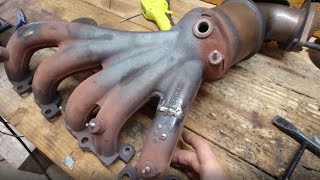
What fixed it: Welded the cracked manifold, extracted the broken bolts, and reassembled the unit using upgraded ARP bolts (p/n 134-1103).
Source hint: YouTube - Justin Biddix Channel
Related OBD-II Codes
Frequently Asked Questions
Why is my Hummer H3 making a ticking noise when cold and showing a P0430 code?
Do I need to do anything special after replacing the catalytic converter on my H3?
Should I reuse the factory exhaust manifold bolts when fixing the leak?
Can a bad camshaft actuator solenoid cause a P0430 code on the 3.7L I5?
Is the cracked exhaust manifold issue unique to the Hummer H3?
Helpful Videos
We Have This Part in Stock

The information in this article is provided for general reference and educational purposes only. Vehicle specifications, procedures, and part compatibility can vary by production date, trim level, and region. Always consult your vehicle's factory service manual and verify part numbers before purchasing or performing repairs. Safety-critical components such as airbags, seat belts, and braking systems should be installed by a qualified professional.
- Hummer H3:
- 🎬 Helpful Videos
- 🛍️ Shop This Part
- What's Unique About the 2007-2010 Hummer H3
- Symptoms You May Notice
- Most Likely Causes
- Rare But Worth Checking
- Diagnosis Steps
- Parts You'll Likely Need
- Related Codes That Often Appear With This One
- Technical Service Bulletins (TSBs) & Recalls
- Platform-Specific Known Issues
- Mechanic-Grade Diagnostic Values
- Scan Tool Commands That Help
- Wiring & Ground Locations
- Real Owner Repair Stories
- "I Checked Everything" — The Actual Cause
- Model Year Variations Within This Range
- Diagnostic Flowchart
- Real Owner Stories
- 2008 Hummer H3 Alpha — 106000 miles
- 2008 Hummer H3 Alpha 5.3L V8
- 2006 Hummer H3 3.5L
- Related OBD-II Codes
- Frequently Asked Questions
- 🎟️ Get 5% Off