

P0430 on 2007-2016 GMC Acadia 3.6L: Catalyst Efficiency Causes and Fixes
On a 2007-2016 GMC Acadia, code P0430 almost always points to a failing Bank 2 catalytic converter, often destroyed by underlying engine issues like stretched timing chains or oil consumption. Before replacing the expensive converter (Bank 2, radiator side), investigate these root causes to prevent a repeat failure. Root causes often stem from a poorly designed PCV system leading to oil consumption or extended oil change intervals causing timing chain wear.
- P0430 on a GMC Acadia means the front (radiator side) catalytic converter is failing.
- DO NOT replace the converter without investigating root causes. The 3.6L V6 is known for stretched timing chains and oil consumption that will destroy a new converter.
- Check for other codes first. Misfire codes (P030x) or timing codes (P0008, P0017) are red flags that point to a deeper engine problem.
- As a first diagnostic step after checking for other codes, inspect for exhaust leaks and consider replacing the cheaper downstream O2 sensor before condemning the expensive converter.
- Adhering to strict oil change intervals with quality synthetic oil is the best preventative measure against the timing chain issues that often lead to this code.
What's Unique About the 2007-2016 GMC Acadia

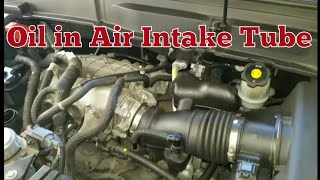
The GMC Acadia and its platform-mates (Buick Enclave, Chevy Traverse, Saturn Outlook) with the 3.6L V6 are notoriously prone to premature catalytic converter failure. This isn't usually because the converter itself is low quality, but because the engine has well-documented issues that kill it. The most significant are premature timing chain stretching (often linked to long oil change intervals) and high oil consumption (frequently caused by a flawed PCV system design that allows oil into the intake 🎬 Watch: How to check for oil in your air intake tube.). These problems lead to misfires, contaminated exhaust (oil/coolant), and rich/lean conditions which quickly overheat and destroy the ceramic core of the catalytic converter. Simply replacing the converter without addressing these root causes will likely lead to the new part failing in a short time.
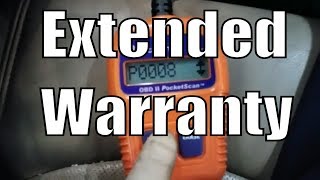
Generation note: The 2007-2016 GMC Acadia is a single generation, but it used three different versions of the 3.6L V6 engine: the LY7 (2007-2008), the direct-injected LLT (2009-2011), and the LFX (2012-2016). While the prompt specifies the LLT, the root causes of P0430, especially timing chain wear (see TSB 12-06-01-009E 🎬 See this breakdown of timing chain codes and warranty info.) and oil consumption (see TSB 10-06-01-008H), are common across all three engines in this platform.
Symptoms You May Notice
- Check Engine Light is on
- Reduced engine power and sluggish acceleration, especially under load
- Decreased fuel economy
- A sulfur or 'rotten egg' smell from the exhaust
- In severe cases of a clogged converter, the engine may struggle to run, stall, or fail to start
- Rattling noise from under the vehicle if the converter's internal honeycomb has broken apart
- Replacing the catalytic converter without first diagnosing underlying engine problems like stretched timing chains, oil consumption, or misfires. The new converter will likely fail again.
- Replacing oxygen sensors when the catalytic converter is truly degraded. While O2 sensors can fail, they are often correctly reporting the failure of the converter.
- Mistaking an exhaust leak for a bad converter. A small leak before the downstream O2 sensor can trick the sensor into reporting low efficiency.
Most Likely Causes

- Failed Catalytic Converter (Bank 2) 🔴 High Probability Often a symptom of a deeper engine problem. The 3.6L V6 is known for issues like stretched timing chains and oil consumption that destroy converters by overheating or contaminating them with oil and unburnt fuel.
How to confirm: Use a scan tool to watch O2 sensor data; the Bank 2 Sensor 2 reading should be stable (around 0.6-0.8V), not fluctuating like Sensor 1. An infrared thermometer should show the converter outlet is at least 100°F (or 20%) hotter than the inlet after the engine is fully warmed up; if not, it's not working.
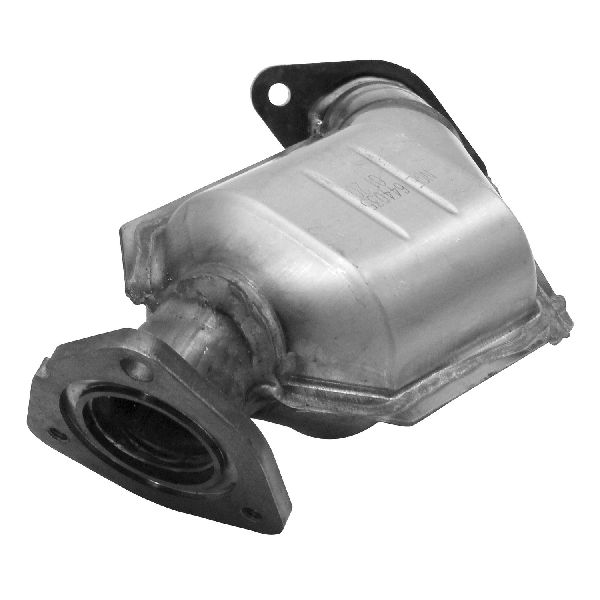
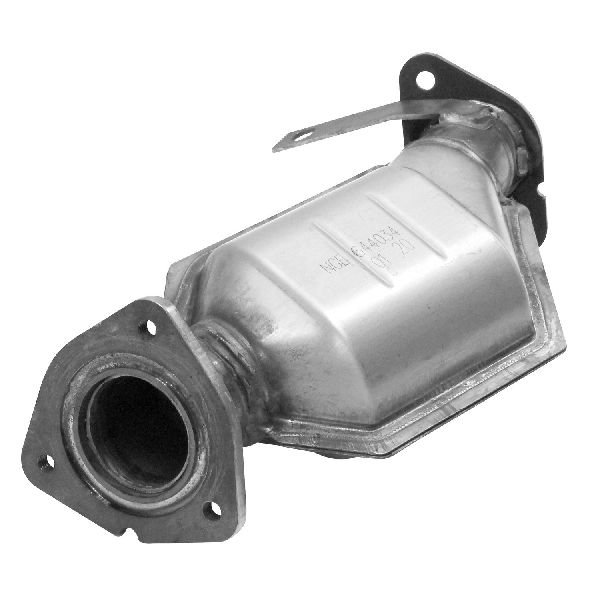
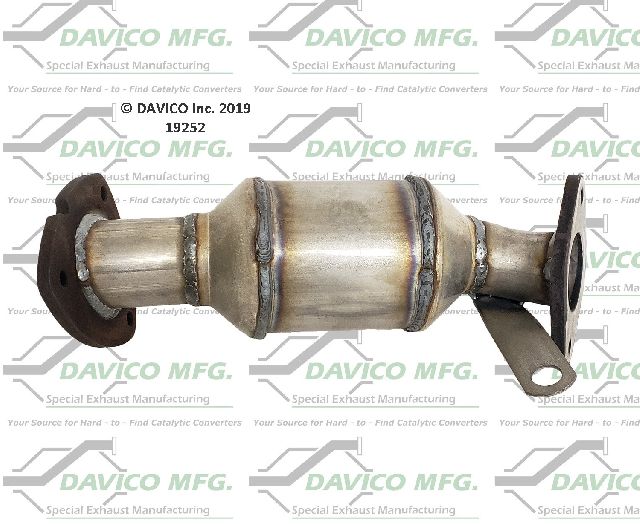
Typical fix: Replace the Bank 2 (front/radiator side) catalytic converter. Crucially, you must fix the root cause (misfires, oil burning, timing issues) first to prevent repeat failure.
Est. part cost: $300-$1200 - Stretched Timing Chains 🟡 Medium Probability This is a widely documented, notorious problem on the 3.6L V6, especially the LY7 and early LLT engines. Lack of lubrication from long oil change intervals (following the factory Oil Life Monitor) is a primary contributor. GM released TSB 12-06-01-009E with updated timing chain kits to address this.
How to confirm: Check for related trouble codes like P0008, P0017, or P0019. A rattling noise from the engine on a cold start is a classic symptom. A technician can also check camshaft deviation angles with a high-end scan tool.
Typical fix: This is a major, labor-intensive repair requiring replacement of the timing chains, tensioners, and guides. It is often done by a professional.
Est. part cost: $400-$900 - Faulty Downstream Oxygen Sensor (Bank 2) 🟡 Medium Probability
How to confirm: Graph the sensor's voltage on a scan tool. If the voltage is stuck (e.g., at 0V or 1V), or if it fluctuates wildly mimicking the upstream sensor when the converter is known to be good, the sensor is likely bad. Test the sensor's heater circuit and wiring. Swapping the Bank 1 and Bank 2 downstream sensors can also be a diagnostic step; if the code follows the sensor to P0420, the sensor is bad.
Typical fix: Replace the Bank 2, downstream (post-converter) oxygen sensor. A common part number for the LLT engine is Bosch 16089.
Est. part cost: $40-$100 - Exhaust Leak ⚪ Low Probability Flex pipes and manifold-to-converter gaskets are common failure points. An exhaust leak before the downstream O2 sensor can introduce oxygen into the exhaust stream, confusing the sensor and leading to a false P0430 code.
How to confirm: Visually inspect the exhaust manifold and the piping leading to the catalytic converter for cracks or black soot trails. Listen for a ticking or hissing noise that gets louder with RPM. A smoke test is the most definitive way to find a leak.
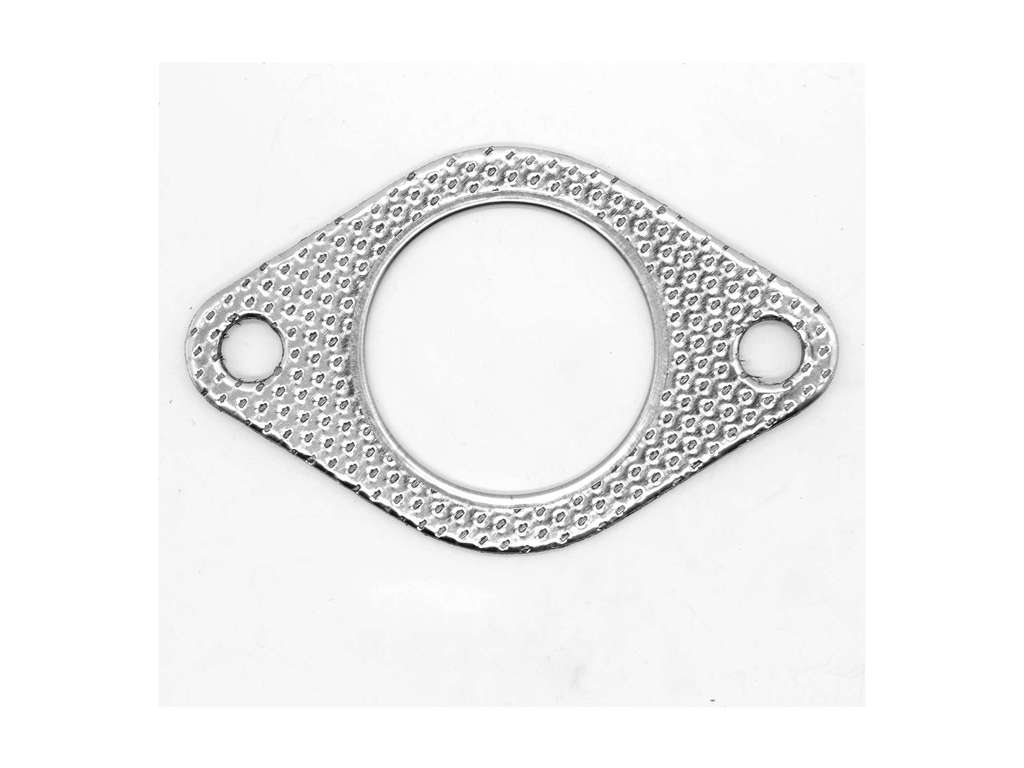
Typical fix: Replace the leaking gasket or repair/replace the cracked pipe section. Manifold to converter gaskets should always be replaced when the converter is serviced.
Est. part cost: $20-$100
Rare But Worth Checking
- Engine Misfires or Fuel System Issues: Misfires (from bad plugs/coils) or leaking fuel injectors dump raw fuel into the exhaust, which will quickly destroy a new catalytic converter. Always resolve codes like P030x (misfires) or P2099 (rich condition) before replacing a converter.
- PCM Software Update Required: In some cases, the vehicle's computer may be too sensitive. A dealership can check for and apply software updates that widen the acceptable parameters for catalyst efficiency, which can sometimes resolve the code without replacing parts. Check for TSBs related to ECM/PCM calibration.
- PCV System Malfunction: The 3.6L V6 has a known issue with its PCV system, where a clogged rear PCV orifice can cause excessive crankcase pressure, forcing oil past piston rings and into the intake, fouling the catalytic converters. TSB 10-06-01-008H discusses oil consumption and related PCV fixes for some GM V-engines.
Diagnosis Steps

- Use an OBD-II scanner to check for any other codes. Codes for misfires (P030x), timing (P00xx), or fuel trim (P017x, P2xxx) must be diagnosed and fixed first, as they are likely the root cause.
- Inspect the exhaust system from the engine manifold to the post-converter O2 sensor. Look for cracks, holes, or broken flange bolts that could cause a leak. A common area for leaks is the flex pipe or manifold gaskets.
- With a scan tool, observe the live data for the Bank 2 oxygen sensors. At operating temperature and steady RPM (around 2000 RPM), the upstream sensor (Sensor 1) should fluctuate rapidly between ~0.1V and ~0.9V. The downstream sensor (Sensor 2) should hold a relatively steady, high voltage (e.g., >0.6V). If Sensor 2 mirrors Sensor 1's fluctuations, the converter is not working.
- Perform a temperature check. After warming the engine, use an infrared thermometer to measure the temperature of the pipe entering the converter and the pipe exiting. The outlet should be at least 100°F hotter than the inlet. If temperatures are similar or the inlet is hotter, the converter is not functioning.
- Investigate root causes. Check engine oil level and history. Excessive oil consumption is a known issue (see TSB 10-06-01-008H). Listen for a startup rattle indicating timing chain wear (see TSB 12-06-01-009E).
- If performance is very poor, perform an exhaust backpressure test by threading a gauge into the upstream O2 sensor port. Pressure should not exceed 1.5-2 PSI at 2500 RPM. Higher readings indicate a clogged converter.
Parts You'll Likely Need

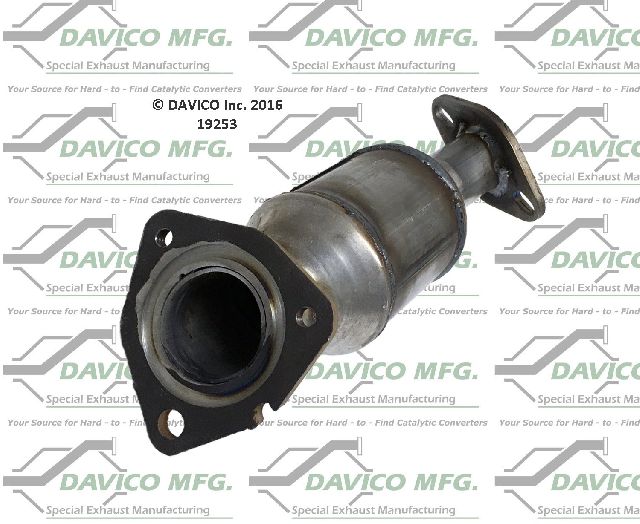
- Catalytic Converter (Bank 2 - Front/Radiator Side)
(OEM #GM 12645875 (for LLT, may vary))— This is the direct cause of the P0430 code, indicating its efficiency has degraded. However, it is often the victim of other engine problems. - Downstream Oxygen Sensor (Bank 2, Sensor 2)
(OEM #GM 213-3868 (for LFX, may vary))— Can fail and give false readings, though it's more common for it to be correctly reporting a bad converter. Common replacement part numbers include Bosch 16089. - Exhaust Gaskets — Exhaust leaks at the manifold or converter flanges are a common cause of false P0430 codes and should always be replaced when servicing the converter.
- Timing Chain Kit
(OEM #GM 12650230 (for 2007 LY7, check specific TSB for your year))— If codes like P0008 or P0017 are present, the stretched timing chains are the root cause that destroyed the converter and must be replaced.
Related Codes That Often Appear With This One
- P0420 — This is the same efficiency code but for Bank 1 (firewall side). It's common for both converters to fail around the same time, especially if there's a systemic engine problem like oil consumption or timing chain wear.
- P0008, P0017, P0019 — These codes indicate a timing correlation error between the crankshaft and camshafts, strongly pointing to stretched timing chains, a common root cause of converter failure on this engine.
- P0300, P0302, P0304, P0306 — These are random or specific misfire codes for cylinders on Bank 2 (front bank). Misfires cause unburnt fuel to enter the exhaust, which will superheat and destroy the catalytic converter. The misfire MUST be fixed first.
- P2099 — Post Catalyst Fuel Trim System Too Rich Bank 2. This code often points to leaking fuel injectors on Bank 2, which is a direct cause of converter failure due to overheating. TSB PIP4964F addresses this link.
Technical Service Bulletins (TSBs) & Recalls

- TSB 12-06-01-009E: Announcing updated timing chain service kits for 2007-2012 High Feature V6 engines to address premature wear.
- TSB 10-06-01-008H: Addresses excessive engine oil consumption on various GM engines, outlining diagnostic steps including checking the PCV system and, in severe cases, replacing pistons/rings.
- TSB PIP4964F: Links rich fuel trim codes (P2097/P2099) to leaking fuel injectors on the 3.6L V6, a direct cause of catalytic converter damage.
Platform-Specific Known Issues
- Timing Chain Wear from Extended Oil Change Intervals: The early 3.6L V6 engines (especially LY7 and LLT) were highly susceptible to timing chain stretching. This was exacerbated by the GM Oil Life Monitor (OLM) system, which could allow for oil change intervals of up to 10,000 miles. Over time, the oil would break down, losing its lubricating properties and causing accelerated wear on the chains and guides. This leads to incorrect cam timing, misfires, and ultimately, a rich exhaust condition that destroys the catalytic converters. GM acknowledged this with TSB 12-06-01-009E, releasing improved chain kits.
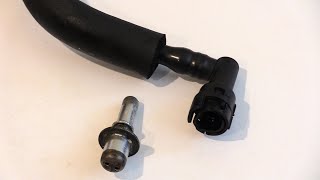
- Oil Consumption Due to PCV System Design: A critical flaw in the 3.6L V6 involves the Positive Crankcase Ventilation (PCV) system. The rear (firewall side) valve cover contains a small, fixed PCV orifice that is prone to clogging with sludge. When it clogs, the crankcase cannot ventilate properly. This builds pressure and causes the engine to suck oil vapor through the front (radiator side) valve cover's fresh air tube, directly into the intake snorkel and combustion chambers. This burned oil contaminates O2 sensors and coats the catalytic converter substrate, rendering it useless and triggering P0420/P0430. Some owners have resorted to drilling out the clogged orifice as a DIY fix.
Mechanic-Grade Diagnostic Values
- Downstream O2 Sensor (Bank 2, Sensor 2) Voltage — expected: Relatively stable voltage between 0.6V and 0.8V on a warm, running engine in closed loop.. Failure: If the voltage fluctuates rapidly, mimicking the upstream sensor, the catalytic converter has failed. If it's stuck high (>0.8V), it's correctly reading a rich condition that needs to be diagnosed separately (e.g., leaking injector).
- Fuel Injector Coil Resistance (LLT/LFX Direct Injection) — expected: 1.5 - 2.5 Ohms.. Failure: A reading outside this range, or an open (OL) or shorted (near 0 Ohms) reading, indicates a faulty injector coil.
- Injector Pulse Width at Idle — expected: 2.0 - 4.0 milliseconds (ms).. Failure: A value of 0 ms indicates the ECM has disabled the injector. A jump to a high value (e.g., over 8ms) can indicate a short.
- Camshaft/Crankshaft Correlation Deviation (Scan Tool PID) — expected: Less than 9-11 degrees at idle.. Failure: A deviation greater than this (e.g., >10° retarded or 13° advanced) will set timing codes like P0017/P0018, which are root causes for P0430.
- VVT Solenoid (Camshaft Position Actuator) Resistance — expected: 7-12 Ω (LFX) or 4.6-7.5 Ohms (LY7).. Failure: A reading of 0 Ω (short) or infinite/OL (open) indicates a failed solenoid.
Scan Tool Commands That Help
- GDS2 / Tech2: Camshaft Position Actuator Control — When timing codes (P0008, P0017, etc.) are present with P0430. This bidirectional control manually commands the VVT solenoids to check if they are responding electrically and if the mechanical phasers are moving. This helps isolate a bad solenoid from a stretched chain.
- GDS2 / High-End Scan Tool: Crankshaft Position Variation Learn — This procedure must be performed after replacing the Engine Control Module (ECM) or the crankshaft position sensor to allow the ECM to learn the variations in the crankshaft reluctor wheel.
- GDS2 / High-End Scan Tool: Catalyst System Test — This is a specific service function that runs the engine at set parameters to actively test the catalytic converter's efficiency and oxygen storage capacity, providing a more definitive pass/fail result than just observing O2 sensor data during normal driving.
Wiring & Ground Locations
- G112 — Rear of engine, mounted to the rear of the cylinder head.. This is a primary engine ground. A poor connection here can cause erratic behavior from multiple sensors, including camshaft and crankshaft position sensors, which can lead to timing issues that ultimately cause a P0430.
- G114 — Left rear of engine.. Another critical engine ground point. High resistance at this ground can affect sensor readings and actuator performance, contributing to conditions that damage the catalytic converter.
- O2 Sensor Harness — Runs along the exhaust system from the sensors to the main engine harness.. The wiring for the downstream O2 sensor is susceptible to heat damage, melting, or physical abrasion. A 'wiggle test' on the connector and harness while watching live data can reveal intermittent shorts or opens that cause a false P0430 code.
Real Owner Repair Stories
- acadiaforum.net user (2011 GMC Acadia) — Check engine light with codes P0420, P0430, P0008, P0017.
❌ Tried (didn't work) The owner was initially told they needed new catalytic converters.
✅ What actually fixed it The combination of catalyst codes (P0420/P0430) with timing codes (P0008/P0017) correctly pointed to stretched timing chains as the root cause. The owner had the timing chains replaced, which resolved all codes. This highlights the importance of diagnosing timing codes before replacing converters. - enclaveforum.net user (Buick Enclave, same platform) (2011 Buick Enclave with 115,000 miles) — P0430 and P2099 codes, indicating catalyst inefficiency and a rich condition on Bank 2.
❌ Tried (didn't work) Initial thought was a bad O2 sensor or catalytic converter.
✅ What actually fixed it Following advice related to GM TSB PIP4964F, the owner focused on the P2099 rich code first. The cause was determined to be a leaking fuel injector on Bank 2. Replacing the faulty fuel injector resolved both the P2099 and the subsequent P0430 code, preventing the unnecessary replacement of the catalytic converter. - NHTSA ODI #11668471 — An owner reported a rattle sound in the engine and suspected the timing chain. The vehicle triggered code P0430 stating the Bank 2 catalytic converter needed replacement. Despite replacing the downstream O2 sensor on Bank 2 and clearing the code, the underlying mechanical issue remained.
"I Checked Everything" — The Actual Cause
- In some cases on GM platforms, a smoke test may not reveal a small crack in the exhaust manifold or Y-pipe, especially one that only opens up when the metal is hot. A technician might hear a faint ticking noise on a cold start that disappears as the engine warms and the metal expands, sealing the crack. This can lead to a false P0430 that is difficult to trace, as the leak allows oxygen into the exhaust stream, confusing the O2 sensor.
OEM Part Supersession History
Varies by year (pre-2012)→GM Timing Chain Kit P/N 12650230 (for 2007 models, other P/Ns for later years)— The original timing chains were prone to premature stretching. TSB 12-06-01-009 provided updated kits with more durable chains to resolve codes like P0008, P0017, etc., which are root causes for P0430.
Heads up: The TSB explicitly states that idler sprockets, actuator gears, and guides should not be replaced for a stretched chain issue, as they are not the cause of wear. Using the correct kit for the specific model year is critical.Original Bank 1 Valve Cover (pre-2011)→GM P/N 12642655 (for 2009-2011 LLT)— Per TSB 10-06-01-008H, the original valve cover had a PCV drain hole design that could allow oil to be pulled into the intake manifold. The updated cover has a relocated PCV drain to mitigate this oil consumption issue.
Heads up: The rocker covers are year-specific as the PCV orifice is different for each. The correct cover must be used to prevent setting other engine codes.
Model Year Variations Within This Range
- 2007-2011 (LY7, LLT): These engines use traditional bolt-on exhaust manifolds and a Bosch ECM. The PCV system issues and timing chain stretch are most prominent in this range.
- 2012-2016 (LFX): The LFX engine, introduced in 2012, features cylinder heads with integrated exhaust manifolds, making exhaust leaks harder to detect as they can be hairline cracks in the head itself. It also uses a composite intake manifold instead of aluminum and a Delphi ECM. While the timing chains were improved, they can still be a failure point.
Diagnostic Flowchart
Real Owner Stories
Aggregated from forums and TSBs cited above. Mileages and costs reflect what owners reported in those sources.
GMC Acadia 3.6L V6
Symptoms: Experienced P0420 and P0430 codes in conjunction with high oil consumption and timing chain issues.
What fixed it: Diagnosed and fixed the root cause (timing chains and oil consumption) before replacing the catalytic converters to prevent repeat failure.
Source hint: acadiaforum.net
Chevrolet Traverse 3.6L V6
Symptoms: Struggled with a P0430 code that appeared alongside the P0008 timing chain code and noticeable oil consumption.
What fixed it: Addressed the timing chain stretch and oil burning issues that were destroying the catalytic converter.
Source hint: traverseforum.com
GM SUV 3.6L V6
Symptoms: Triggered a false P0430 code due to an exhaust leak upstream of the post-cat O2 sensor, rather than a failed catalytic converter.
What fixed it: Identified and repaired the exhaust leak before the downstream oxygen sensor.
Source hint: Reddit r/MechanicAdvice
GMC Acadia 3.6L V6
Symptoms: Engine was sucking oil vapor through the front valve cover's fresh air tube due to a clogged PCV orifice, burning oil and ruining the catalytic converter.
What fixed it: Drilled out the clogged PCV orifice in the rear valve cover as a DIY fix to restore crankcase ventilation.
Source hint: Vehicle Specific Issues (PCV System Design)
Related OBD-II Codes
Frequently Asked Questions
Does TSB 12-06-01-009E apply to my GMC Acadia for the P0430 code?
Why is my 3.6L V6 burning so much oil and causing a P0430 code?
Can I just replace the Bank 2 catalytic converter to fix P0430 permanently?
What is the DIY fix for the clogged PCV system on the Acadia?
Are there specific oxygen sensors recommended for the LLT engine if the sensor is at fault?
Could an exhaust leak cause a false P0430 on my Acadia?
Helpful Videos
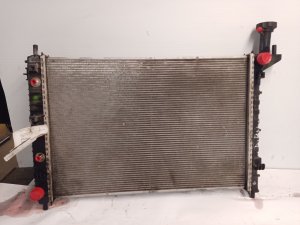
Used OEM Parts in Stock
New Aftermarket Parts Available
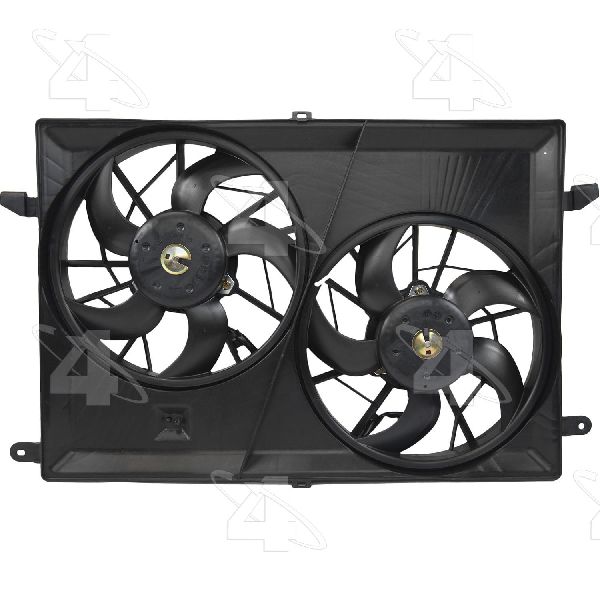

The information in this article is provided for general reference and educational purposes only. Vehicle specifications, procedures, and part compatibility can vary by production date, trim level, and region. Always consult your vehicle's factory service manual and verify part numbers before purchasing or performing repairs. Safety-critical components such as airbags, seat belts, and braking systems should be installed by a qualified professional.
- GMC Acadia:
- 🎬 Helpful Videos
- 🛍️ Shop This Part
- What's Unique About the 2007-2016 GMC Acadia
- Symptoms You May Notice
- Most Likely Causes
- Rare But Worth Checking
- Diagnosis Steps
- Parts You'll Likely Need
- Related Codes That Often Appear With This One
- Technical Service Bulletins (TSBs) & Recalls
- Platform-Specific Known Issues
- Mechanic-Grade Diagnostic Values
- Scan Tool Commands That Help
- Wiring & Ground Locations
- Real Owner Repair Stories
- "I Checked Everything" — The Actual Cause
- OEM Part Supersession History
- Model Year Variations Within This Range
- Diagnostic Flowchart
- Real Owner Stories
- GMC Acadia 3.6L V6
- Chevrolet Traverse 3.6L V6
- GM SUV 3.6L V6
- GMC Acadia 3.6L V6
- Related OBD-II Codes
- Frequently Asked Questions
- 🎟️ Get 5% Off