

P0430 on 2011-2020 Dodge Grand Caravan: Catalyst Efficiency Fixes for Bank 2
P0430 on a Dodge Grand Caravan means the Bank 2 catalytic converter (the one near the radiator) is failing. While an O2 sensor or exhaust leak could be the cause, it's most often a bad catalytic converter. Before replacing the converter, check for engine oil leaks and ensure PCM software is up-to-date. Expect to pay $500-$650 at a shop for an aftermarket replacement.
- P0430 points to the catalytic converter on the radiator side (Bank 2) of the engine.
- Before replacing the expensive converter, thoroughly check for exhaust leaks and test the upstream and downstream oxygen sensors.
- Always investigate underlying engine problems, especially oil leaks from the filter housing, which are a known issue on the 3.6L Pentastar engine and can destroy a new converter.
- If you live in a state with CARB emissions standards (like CA, NY), you must use a more expensive CARB-compliant replacement converter to be legal and pass inspection.
What's Unique About the 2011-2020 Dodge Grand Caravan

The Dodge Grand Caravan from this era uses the well-known 3.6L Pentastar V6. While generally reliable, a catalytic converter failure that triggers P0430 is not uncommon as these vans age. It's critical to know that Bank 2 is the front converter (radiator side), which is easier to access than Bank 1 (firewall side). Furthermore, this engine has some known issues, like oil filter housing leaks, that can leak oil into the exhaust and contaminate the catalytic converter, causing it to fail prematurely. Always check for underlying engine problems before replacing the converter. Some early model years also had TSBs for PCM updates to address misfires and other issues that could indirectly lead to converter damage. Manufacturer service bulletins for other Dodge models with the 3.6L engine, such as TSB Bulletin #18-040-25 and TSB Bulletin #1808323, also highlight P0430 as a primary diagnostic trouble code requiring PCM software improvements or powertrain inspections.
Symptoms You May Notice
- Check Engine Light is on.
- Reduced engine performance or sluggish acceleration.
- Worse than usual fuel economy.
- A sulfur or 'rotten egg' smell from the exhaust.
- A rattling sound from under the vehicle if the converter's internal structure has broken apart.
- Replacing the catalytic converter without first checking for exhaust leaks or faulty O2 sensors.
- Replacing only the downstream O2 sensor when the upstream sensor was the actual cause of the incorrect readings.
- Installing a new catalytic converter without fixing the root cause of the original failure, such as an engine oil leak or persistent misfires, leading to a repeat failure.
Most Likely Causes

- Failed Catalytic Converter 🔴 High Probability Converters fail from age or contamination. The Pentastar engine has known issues like oil leaks from the oil filter housing that can poison the catalytic converter. A failed thermostat can also cause the engine to run rich, leading to premature converter failure.
How to confirm: After confirming O2 sensors and the exhaust system are good, the converter is the likely cause. A temperature test using an infrared thermometer should show the outlet is significantly hotter than the inlet; if not, it's not working. A visual inspection after removal may show a clogged or melted honeycomb structure.
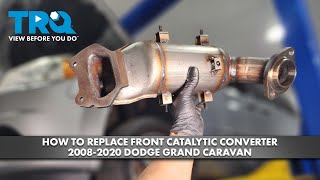
Typical fix: Replace the Bank 2 (front) catalytic converter. 🎬 Watch: Step-by-step guide to replacing the front catalytic converter. It is crucial to fix any underlying engine issues like oil leaks or misfires first.
Est. part cost: $250-$400 for an aftermarket direct-fit unit. - Faulty Oxygen (O2) Sensor 🟡 Medium Probability O2 sensors wear out over time and can provide inaccurate readings to the computer. The service manual notes that a mismatched pairing of an old upstream sensor and a new downstream sensor can trigger this code. Many owners attempt to replace the O2 sensors first as a cheaper potential fix.
How to confirm: Use a scan tool to monitor the voltage of the Bank 2 upstream (B2S1) and downstream (B2S2) sensors. The B2S1 sensor should fluctuate rapidly, while the B2S2 sensor should remain relatively steady. If B2S2 is fluctuating wildly, mirroring B2S1, it indicates the converter is bad, but if B2S2 is stuck or slow to respond, the sensor itself is likely faulty.
Typical fix: Replace the faulty O2 sensor, typically the downstream (Bank 2, Sensor 2). 🎬 See how to replace both Bank 2 oxygen sensors yourself. It is often recommended to replace them in pairs (upstream and downstream) or to use sensors of the same brand and age.
Est. part cost: $40-$90 per sensor. - Exhaust System Leak ⚪ Low Probability Rust and corrosion can cause leaks at gaskets or weld points in the exhaust system, especially in regions that use road salt. Flex pipes are also a common point of failure. A cracked exhaust manifold can also be a cause.
How to confirm: Visually inspect the exhaust system from the engine to the rear O2 sensor for black soot marks, which indicate a leak. A smoke test can also be performed to pinpoint the exact location of a leak. An audible hissing or ticking sound that gets louder with RPM can also indicate a leak.
Typical fix: Repair the leak by replacing the damaged pipe section or gasket.
Est. part cost: $20-$100 depending on the repair needed.
Rare But Worth Checking
- Engine Misfires or Fuel System Issues: Unburnt fuel from a misfiring cylinder can enter the exhaust and superheat the catalytic converter, causing rapid failure. If you have any misfire codes (P0300-P0306), you must fix that problem first or you will destroy the new converter. TSB 18-007-13 addresses rough running and P0300 on 2013 models due to factory fuel fill issues. Furthermore, TSB Bulletin #18-035-26 notes that misfire codes like P0306 can be accompanied by a rough idle and P0430.
- Contaminated Fuel: While uncommon, using low-quality or E10 blended gasoline has been anecdotally linked to triggering this emissions code on some vehicles. If the problem is intermittent, consider the fuel source.
- PCM Software Issue: On some related platforms, Chrysler has issued TSBs to update PCM software for being too sensitive in triggering catalyst efficiency codes. While no specific TSB for P0430 on the Grand Caravan was found, it is a known possibility in the broader family. TSBs like 18-031-13 and 18-053-13 address PCM improvements for other diagnostic issues.
Diagnosis Steps

- Read all diagnostic trouble codes. If any misfire (P030x), oxygen sensor circuit (P013x-P016x), or fuel trim (P017x) codes are present, diagnose and repair them before addressing P0430.
- Check for Technical Service Bulletins (TSBs) related to PCM software updates for your specific vehicle year, as some updates address emissions system logic.
- Visually inspect the exhaust system for any signs of leaks, cracks, or damage, particularly between the engine and the Bank 2 downstream O2 sensor. Pay close attention to manifold gaskets and flex pipes.
- Use a scan tool to observe live data. Watch the voltage signals for the Bank 2 upstream (B2S1) and downstream (B2S2) O2 sensors. A healthy system will show B2S1 fluctuating rapidly between ~0.1V and ~0.9V, while B2S2 holds a steady, higher voltage (typically >0.5V).
- If the B2S2 voltage is mirroring the B2S1 voltage, it confirms the catalytic converter is not storing oxygen and has likely failed.
- If the O2 sensor signals appear lazy, stuck, or otherwise incorrect, test the sensors and their wiring before condemning the converter.
- Inspect for underlying engine issues known to cause converter failure on this platform, specifically oil leaks from the oil filter housing assembly dripping onto the exhaust.
- If all other possibilities are ruled out, the catalytic converter is faulty and needs replacement.
Parts You'll Likely Need

- Catalytic Converter (Bank 2, Front/Radiator Side)
(OEM #68105732AE (Verify with VIN))— This is the most common cause of a P0430 code, indicating the converter has lost its chemical efficiency due to age, contamination, or damage.
Trusted brands: Walker, MagnaFlow, Davico, Evan Fischer
OEM price range: $1400+
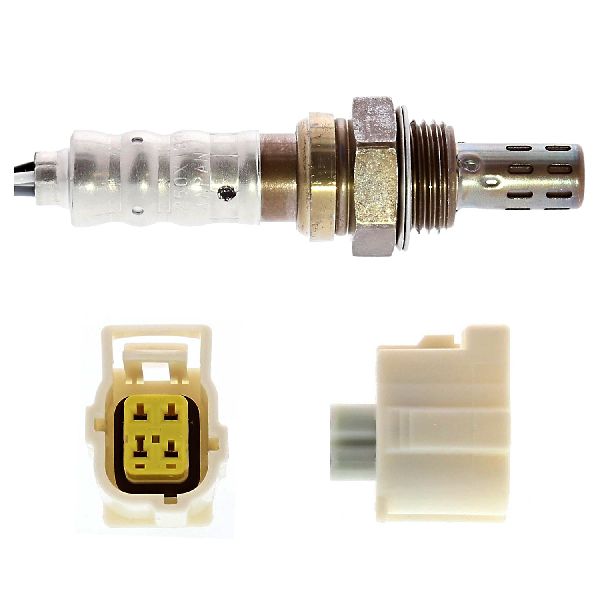
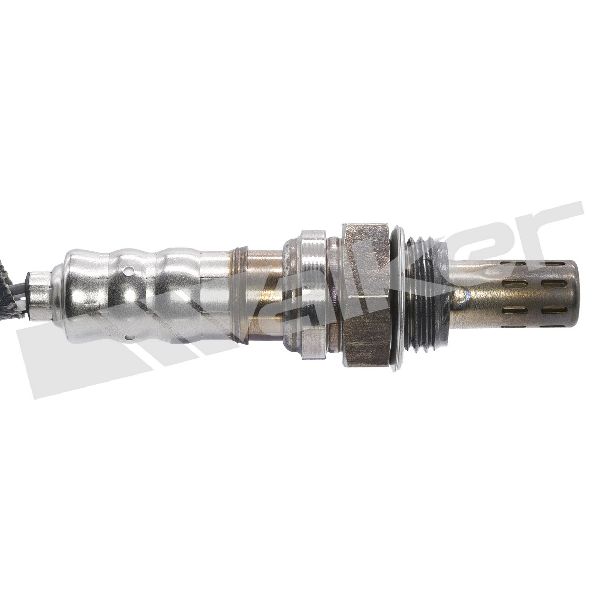
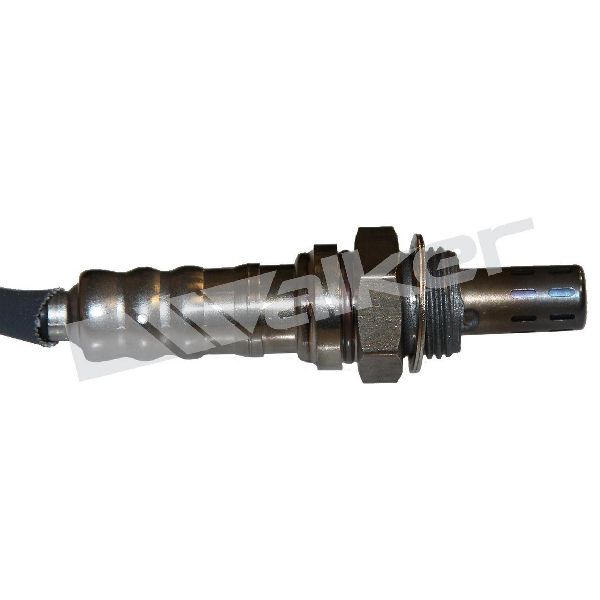
Aftermarket price range: $250-$450 - Downstream Oxygen Sensor (Bank 2, Sensor 2)
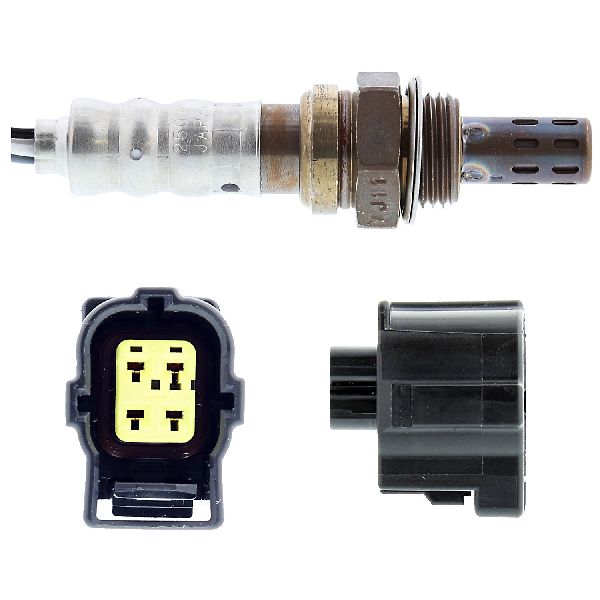
(OEM #5149181AA (Verify with VIN))— This sensor is responsible for reporting the converter's efficiency. It can fail and send incorrect data, falsely triggering the P0430 code. Many owners replace this first as a troubleshooting step.
Trusted brands: Denso (234-4547), Bosch, NGK/NTK, Mopar
OEM price range: $80-$150
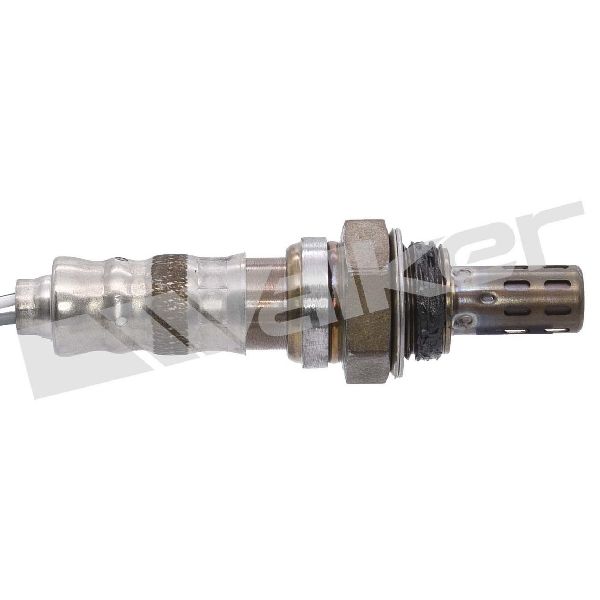
Aftermarket price range: $40-$90 - Upstream Oxygen Sensor (Bank 2, Sensor 1)
(OEM #5149171AB (Verify with VIN))— An aging or failing upstream sensor can affect the engine's air-fuel mixture, which can in turn affect the converter's performance and the downstream sensor's readings.
Trusted brands: Denso (234-5058), Bosch, NGK/NTK, Mopar
OEM price range: $70-$140
Aftermarket price range: $40-$80
Related Codes That Often Appear With This One
- P0420 — This is the identical code but for Bank 1 (the firewall-side converter). It is not uncommon for both converters to fail around the same time, triggering both codes.
- P0300, P0301-P0306 — These are misfire codes. A misfire is a primary cause of catalytic converter failure, as it allows raw fuel to be dumped into the exhaust, where it burns and melts the converter's internal structure.
- P0128 — This code indicates a Coolant Thermostat issue where the engine is not reaching proper operating temperature. A cold-running engine will run rich, which can contaminate and damage the catalytic converter over time, leading to P0430.
Technical Service Bulletins (TSBs) & Recalls
- TSB 18-007-13: Addresses MIL illumination for P0300 (Multiple Misfire) on 2013 models due to factory fill fuel issues. A persistent misfire can destroy a catalytic converter.
- TSB 18-031-13: A PCM flash to address various diagnostic and system improvements on 2013 Ram 1500 with the 3.6L engine. While not directly for the Grand Caravan, it shows a history of PCM updates for this engine family.
- TSB 18-053-13 / 18-027-14 / 18-008-15: Superseding bulletins for PCM software updates on 2013-2014 Chrysler/Dodge vehicles with the 3.6L engine to improve powertrain diagnostics.
- TSB Bulletin #18-040-25: A manufacturer bulletin noting that vehicles may exhibit P0420 or P0430 codes alongside EVAP system performance issues.
- TSB Bulletin #1808323: Describes conditions where the engine may set P0420 or P0430, potentially accompanied by a P0606 internal control processor code.
- TSB Bulletin #18-035-26: Addresses rough idle conditions and misfire codes (P0306-P0308) that can occur in conjunction with catalyst efficiency codes P0420 and P0430.
Platform-Specific Known Issues

- The 3.6L Pentastar engine is known for potential oil leaks from the oil filter housing/cooler assembly. This can cause oil to drip onto the exhaust and contaminate the catalytic converter, leading to premature failure. This should be inspected whenever a P0430 code is present.
Mechanic-Grade Diagnostic Values
- Downstream O2 Sensor (B2S2) Voltage at Idle — expected: A fairly constant and stable voltage around 0.45V.. Failure: Voltage fluctuating rapidly, mirroring the upstream sensor, indicates a failed converter. A stuck or unresponsive voltage indicates a failed sensor.
- O2 Sensor Reference Voltage (KOEO) — expected: Approximately 2.5V when jumping the signal and return circuits at the sensor connector. Some systems may use 0.45V or 5V.. Failure: A reading near 0V indicates a short to ground in the harness or a shorted sensor on the shared circuit.
- O2 Sensor Heater Resistance — expected: Between 2 and 30 Ohms when measured across the two heater pins on the sensor itself.. Failure: A reading of 0 Ohms indicates a short, while an infinite reading (OL) indicates an open circuit in the heater element.
- Mode $06, Catalyst Monitor Bank 2 — expected: The test value should be below the maximum calibrated threshold. For example, on many Chrysler vehicles, this is TID $02, CID $81 (Test ID $02, Component ID $81).. Failure: If the test value reported by the scan tool exceeds the maximum limit, it confirms the PCM's diagnosis of low catalyst efficiency.
Scan Tool Commands That Help
- wiTECH (Chrysler Dealer Tool): Catalyst Efficiency Test — This is a guided diagnostic routine that forces the catalyst monitor to run under controlled conditions, allowing a technician to verify the failure without extensive road testing. It will graph O2 sensor data and provide a pass/fail result based on PCM criteria.
Wiring & Ground Locations
- Engine Ground Strap — Typically connects from the engine block or cylinder head to the chassis frame, often near the upper engine mount on the passenger side.. A broken or corroded main engine ground strap can cause erratic behavior in all engine sensors, including O2 sensors, as they may seek ground through other, less reliable paths. This can lead to incorrect sensor readings and false codes.
- G304 (Example Ground Point) — Ground points like G304 are located on the chassis, often near the respective component harnesses. A wiring diagram is essential for locating the specific ground for the O2 sensor return circuit.. The O2 sensor return circuit must have a clean ground. High resistance or a loose connection at the chassis ground point can skew sensor voltage readings, potentially mimicking a catalyst efficiency problem.
- O2 Sensor Connectors — Bank 2 Sensor 1 (Upstream) is on the front exhaust manifold. Bank 2 Sensor 2 (Downstream) is located after the catalytic converter, further down the exhaust pipe. The connectors are typically 4-wire, grey or black plastic connectors.. These connectors are exposed to heat and road debris. Corrosion or damage to the pins or wiring at the connector is a common point of failure that can cause incorrect signals without the sensor itself being faulty.
Real Owner Repair Stories
- 2CarPros Forum User (Dodge Grand Caravan, 3.6L V6) — P0430 code, rough running, exhaust fumes, audible noise.
❌ Tried (didn't work) Patching the hole in the exhaust manifold with putty.
✅ What actually fixed it The root cause was a large hole that had rusted through the Bank 2 (driver's side) exhaust manifold. This leak, occurring before the upstream O2 sensor, severely skewed the air/fuel readings and triggered the P0430 code. Replacing the cracked exhaust manifold was the necessary repair. - DodgeForum.com User (2012 Dodge Grand Caravan) — Intermittent P0430 code, rough running.
❌ Tried (didn't work) Mechanics had thrown some unspecified parts at it.
✅ What actually fixed it The user was advised that while it could be the catalytic converter, it was unusual for a 2012 model at the time of posting (2014). The official Dodge representative on the forum recommended a dealer visit for diagnosis under the emissions warranty, which is a critical step often overlooked by owners facing this code on a relatively new vehicle. - NHTSA ODI #11270820 — An owner reported being told by a dealership that their vehicle was receiving a P0430 code, which indicated issues with the catalytic converter, and was informed that a large number of vehicles in the manufacturer's lineup had similar issues.
- NHTSA ODI #11315997 — An owner experienced a persistent check engine light for code P0430 indicating the Bank 2 catalytic converter. Even after having the catalytic converter changed, the code returned a short time later.
Model Year Variations Within This Range
- 2011-2015 vs 2016-2020: In 2016, the 3.6L Pentastar engine was significantly updated. Changes included a two-stage variable valve lift (VVL) system, a higher compression ratio (11.3:1 vs 10.2:1), and cooled EGR. While the fundamental cause of P0430 (catalyst efficiency) remains the same, the engine's operating characteristics and fuel/air management are different, which could subtly affect catalyst aging and the conditions under which the monitor runs.
- 2011-2013: The earliest Pentastar engines (2011-2013) were known for a left-bank cylinder head issue that could cause misfires and other problems, though this primarily affected the #2 cylinder and would more commonly trigger a P0420 (Bank 1) code. However, any significant engine issue can lead to downstream catalyst damage on either bank.
Diagnostic Flowchart
Real Owner Stories
Aggregated from forums and TSBs cited above. Mileages and costs reflect what owners reported in those sources.
2012 Dodge Grand Caravan
Symptoms: Experienced a recurring P0430 check engine light code.
What fixed it: The dealer initially misdiagnosed the issue as a slow O2 sensor (P0159) and replaced it, but the light returned the same day, highlighting that the underlying catalytic converter issue remained unresolved.
Cost: $300-$300
Source hint: DodgeForum.com: 5th Gen 08+ Check Engine light code p-0430
Chrysler Town & Country (Platform Mate)
Symptoms: Persistent P0430 code that caused the owner to lose their mind trying to diagnose.
What fixed it: The owner had the catalytic converter tested (which passed) and replaced all O2 sensors, but the code still persisted, reinforcing the need for systematic diagnosis beyond just throwing parts at it.
Source hint: Chrysler Forum: Please help! Loosing my mind!
Dodge Grand Caravan 3.6L Pentastar V6
Symptoms: P0430 and P0420 codes requiring catalytic converter replacement.
What fixed it: Replaced the Bank 2 (front) catalytic converter. The mechanic noted it was accessible after removing the cooling fans, making it a viable DIY job compared to the rear Bank 1 converter.
Source hint: YouTube: Replacing your Catalytic Convertor. Is this a DIY Job? P0430 P0420 3.6 Pentastar V6 problems
Related OBD-II Codes
Frequently Asked Questions
Is the P0430 code related to the oil leak I have on my 3.6L Pentastar engine?
Are there any PCM software updates or TSBs for the Dodge Grand Caravan that address P0430?
Can I replace the Bank 2 catalytic converter myself on my Grand Caravan?
I replaced the O2 sensor on my Grand Caravan but the P0430 code came back. Why?
Where should I check for exhaust leaks on my 3.6L Pentastar that could cause P0430?
Helpful Videos

Used OEM Parts in Stock

New Aftermarket Parts Available

The information in this article is provided for general reference and educational purposes only. Vehicle specifications, procedures, and part compatibility can vary by production date, trim level, and region. Always consult your vehicle's factory service manual and verify part numbers before purchasing or performing repairs. Safety-critical components such as airbags, seat belts, and braking systems should be installed by a qualified professional.
- Dodge Grand Caravan:
- 🎬 Helpful Videos
- 🛍️ Shop This Part
- What's Unique About the 2011-2020 Dodge Grand Caravan
- Symptoms You May Notice
- Most Likely Causes
- Rare But Worth Checking
- Diagnosis Steps
- Parts You'll Likely Need
- Related Codes That Often Appear With This One
- Technical Service Bulletins (TSBs) & Recalls
- Platform-Specific Known Issues
- Mechanic-Grade Diagnostic Values
- Scan Tool Commands That Help
- Wiring & Ground Locations
- Real Owner Repair Stories
- Model Year Variations Within This Range
- Diagnostic Flowchart
- Real Owner Stories
- 2012 Dodge Grand Caravan
- Chrysler Town & Country (Platform Mate)
- Dodge Grand Caravan 3.6L Pentastar V6
- Related OBD-II Codes
- Frequently Asked Questions
- 🎟️ Get 5% Off