

P0426 on 2004-2008 Ford F-150 5.4L: Catalyst Temp Sensor Causes and Fixes
This code almost always points to a failing upstream oxygen (O2) sensor on the passenger side (Bank 1), not the expensive catalytic converter. Bank 1 is the passenger side on V8 F-150s. Expect to pay $50-$120 for an aftermarket sensor and $100-$180 for an OEM Motorcraft part. It's a DIY-friendly fix for most home mechanics, often taking less than an hour with the right O2 sensor socket.
- Do not replace the catalytic converter for a P0426 code until you have definitively ruled out the upstream O2 sensor and any exhaust leaks.
- The problem is on Bank 1, which is the passenger side of the 5.4L V8 engine.
- The most likely fix is replacing the upstream (pre-catalytic converter) oxygen sensor.
- Before buying parts, perform a thorough visual inspection of the O2 sensor wiring for heat damage and the exhaust manifold for cracks or leaks.
- This is a DIY-friendly repair for those with basic tools, but the sensor can be difficult to access and may require a special O2 sensor socket.
What's Unique About the 2004-2008 Ford F-150
For this generation of F-150 (the 11th), the P0426 code is a classic case of an aging component. These trucks expose their exhaust components to extreme heat cycles, which simply wears out the upstream oxygen sensors over time. Unlike on some other vehicles where this code can indicate complex software or PCM issues, the cause on the F-150 is almost always a straightforward hardware failure: a bad sensor, a damaged wire, or an exhaust leak.
Symptoms You May Notice
- Check Engine Light is on
- Reduced fuel economy
- Sluggish acceleration or loss of power
- Engine hesitation or rough idling
- Failing a state emissions test
- A 'rotten egg' or sulfur smell from the exhaust, indicating the converter is overheating or failing
- Replacing the catalytic converter first. The P0426 code points to the sensor's *performance*, not necessarily the converter's *efficiency*. The O2 sensor is the most likely culprit and is far cheaper to replace.
- Replacing the downstream O2 sensor. This code is specifically for the upstream (Sensor 1) sensor's inferred temperature reading.
Most Likely Causes
- Failing Upstream Oxygen (O2) Sensor (Bank 1) 🔴 High Probability The O2 sensor is a wear-and-tear item. Constant exposure to extreme exhaust heat degrades the sensor's internal components over time, causing its signal to become unreliable. This is the most common failure for P0426.
How to confirm: Use an OBD-II scanner with live data capability. Graph the voltage of the Bank 1, Sensor 1 (upstream) O2 sensor. A healthy sensor will show rapidly fluctuating voltage between approximately 0.1V and 0.9V. A lazy or dead sensor will be slow to respond, flatline, or show voltage outside this range.
Typical fix: Replace the Bank 1 (passenger side) upstream oxygen sensor. An O2 sensor socket is highly recommended for removal.
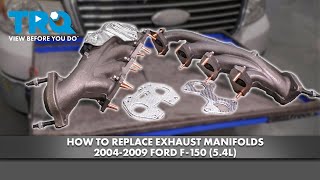
Est. part cost: $50-$180 - Exhaust Leak 🟡 Medium Probability The exhaust manifolds on the 5.4L Triton V8, particularly on the passenger side, are known to develop cracks or have gasket failures due to heat cycles, leading to leaks.
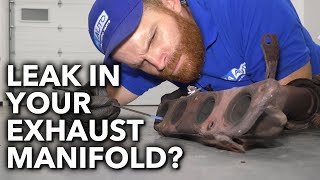
How to confirm: Visually inspect the exhaust manifold on the passenger side for cracks or black soot trails indicating a leak. Listen for a 'ticking' or 'hissing' sound from the engine bay, especially when the engine is cold, as this is a classic symptom. 🎬 Watch: How to diagnose an exhaust manifold leak
Typical fix: Replace the cracked exhaust manifold or leaking gasket. This is a more labor-intensive repair than the O2 sensor itself.
Est. part cost: $150-$400 for a manifold - Damaged O2 Sensor Wiring or Connector ⚪ Low Probability The wiring harness is close to hot exhaust components and can become brittle, melted, or chafed over time. The harness often routes over the transmission, where it can be susceptible to damage. The connector can also accumulate dirt and corrode.
How to confirm: Visually inspect the entire length of the O2 sensor's wiring harness from the sensor to the main loom. Check for melted plastic, frayed wires, or green corrosion inside the connector plug.
Typical fix: Repair the damaged section of the harness or replace the connector pigtail. Dielectric grease on the new connection can help prevent future corrosion.
Est. part cost: $15-$50
Rare But Worth Checking
- Failing Catalytic Converter: While P0420 is the primary code for converter failure, a partially clogged or failing converter can cause erratic exhaust temperatures, which may trigger a P0426 from the O2 sensor. This should only be considered after ruling out the sensor and exhaust leaks. A rattling noise when tapping the converter can indicate a broken internal structure. You can also test it with an infrared thermometer; the outlet should be at least 50-100°F hotter than the inlet on a warm engine.
- Powertrain Control Module (PCM) Fault: This is extremely rare. The PCM is the last item to suspect. All other possibilities, including sensors, wiring, and exhaust integrity, must be exhaustively ruled out first.
Diagnosis Steps
- Scan for Codes: Use an OBD-II scanner to confirm P0426 and check for any other related codes (like P0135, P0171, or P0420). Note and freeze frame data.
- Visual Inspection (Wiring): Carefully inspect the wiring harness and connector for the Bank 1 (passenger side) upstream O2 sensor. Look for any signs of melting, chafing, or corrosion. The harness often runs over the transmission.
- Visual Inspection (Exhaust): With the engine cold, start it and listen for a distinct 'ticking' or 'hissing' from the passenger-side exhaust manifold, which would indicate a leak. Visually check for black soot marks around the manifold gaskets.
- Analyze Live Data: Use a scanner to monitor the live voltage data from the Bank 1, Sensor 1 O2 sensor. At operating temperature, it should switch rapidly between ~0.1V and ~0.9V. If it's slow, stuck, or erratic, the sensor is likely bad.
- Test the Sensor: If the visual inspection is clear but the data is bad, the sensor is the prime suspect. You can confirm by checking for proper voltage and ground at the sensor connector.
- Replace the Sensor: If the sensor is confirmed to be faulty, replace it. Using penetrating oil on the threads before removal is highly recommended.
- Address Other Causes: If a new sensor does not fix the issue, re-investigate for a hard-to-find exhaust leak or, in very rare cases, consider a PCM issue. Sometimes a code will reappear if the Keep Alive Memory (KAM) is not cleared after the repair.
Parts You'll Likely Need
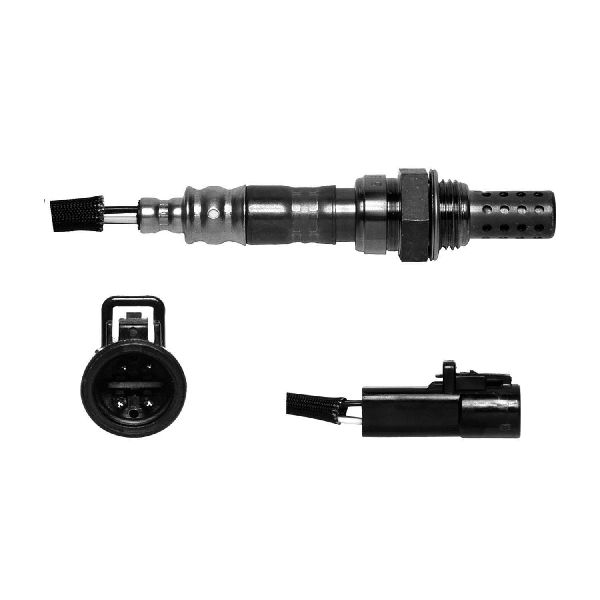
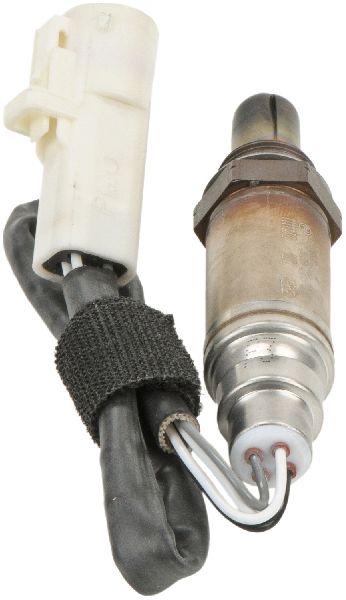
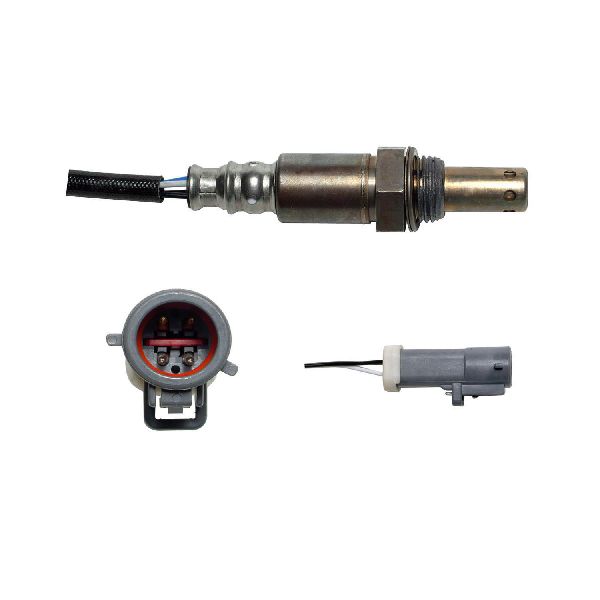
- Upstream Oxygen Sensor (Bank 1, Sensor 1)
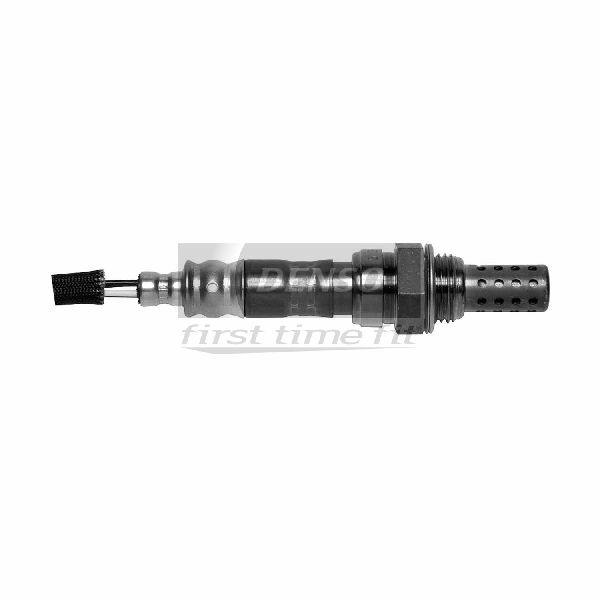
(OEM #Motorcraft DY835 (or DY997, check specific VIN))— This is the most common failure point for code P0426 on this vehicle. It is a standard wear item that degrades over time from heat and contamination.
Trusted brands: Motorcraft, Bosch, Denso, NGK/NTK
OEM price range: $100-$180
Aftermarket price range: $50-$120
Related Codes That Often Appear With This One
- P0420 — P0420 indicates 'Catalyst System Efficiency Below Threshold'. P0426 can be a precursor to P0420, as a faulty sensor reading can eventually be caused by or lead to converter failure.
- P0135 — This code indicates a fault in the heater circuit for the same O2 sensor (Bank 1, Sensor 1). They often appear together when the sensor has failed internally.
- P0171 — This 'System Too Lean (Bank 1)' code can be caused by an exhaust leak before the O2 sensor. The leak allows unmetered oxygen into the exhaust, which the sensor reads as a lean condition, triggering both P0171 and potentially the erratic readings for P0426.
- P0133 — Indicates 'O2 Sensor Circuit Slow Response (Bank 1, Sensor 1)'. This is often caused by the same degradation of the O2 sensor that triggers P0426, as an aging sensor becomes 'lazy' and cannot switch voltage quickly enough.
Technical Service Bulletins (TSBs) & Recalls
- No TSBs were found specifically addressing code P0426 for this vehicle. TSBs 08-7-6 and 06-19-8 exist for other common 5.4L engine issues (spark plugs and cam phasers, respectively) but are not directly related to this code.
Platform-Specific Known Issues
- Access to the passenger side upstream O2 sensor can be tight. It may require working from both underneath the truck and through the passenger-side wheel well with an O2 sensor socket (often a crow's foot style) and a long extension.
- The sensor can be seized in the exhaust pipe due to rust. Applying a quality penetrating oil and letting it soak before attempting removal is crucial to avoid damaging the threads.
Mechanic-Grade Diagnostic Values
- Upstream O2 Sensor (B1S1) Live Data Voltage — expected: Rapidly fluctuating between ~0.1V and ~0.9V at operating temperature.. Failure: Voltage is stuck (e.g., at 0.45V), biased high or low, or switches very slowly ('lazy' sensor).
- O2 Sensor Heater Circuit Resistance — expected: Between 3 and 30 Ohms when measured across the two heater pins on a cold sensor. A common reading is around 4 Ohms.. Failure: A reading of infinity/OL (Open Loop) indicates a broken heater element, while a reading near 0 Ohms indicates a short circuit.
- O2 Sensor Heater Circuit Power Supply (KOEO) — expected: Battery voltage (~12V) at the power supply pin on the harness-side of the connector.. Failure: No voltage or significantly low voltage points to a wiring or fuse issue, not a sensor failure.
- Disconnected O2 Sensor Voltage (via FORScan) — expected: N/A. Failure: Forum users report that with a sensor disconnected, the FORScan diagnostic tool may show a static reading of 1.27V, indicating an open circuit detected by the PCM.
Hidden / Shadow Codes Worth Checking
- Mode $06, Test ID $81: This is not a trouble code but a diagnostic monitor for the 'HO2S Heater Circuit Current (Bank 1)'. It provides raw data on the performance of the heater circuit. (see via A professional scan tool capable of reading Mode $06 data. The expected current should be between 0.220A and 3.0A; readings outside this range indicate a fault that can trigger codes like P0135 and contribute to P0426.)
Scan Tool Commands That Help
- Ford IDS / FORScan / Capable OBD-II Scanners: Reset Keep Alive Memory (KAM) — This should be performed after replacing an O2 sensor or fixing an exhaust/fuel system issue. The KAM stores long-term fuel trim adjustments. Failing to reset it can cause the new, correct sensor readings to conflict with old learned values, potentially causing the code to return or leading to poor driveability.
- Ford IDS: HO2S Heater Monitor Status — A technician can use the Ford dealer tool to view the live status of the heater circuit monitor (e.g., 'Heater Fault: Yes/No'). This helps confirm if the PCM is actively detecting a fault, which is useful for diagnosing intermittent wiring problems.
Wiring & Ground Locations
- G101 / G104 — Located on the passenger side (Right side) of the engine compartment, near the firewall/cowl area and behind the battery.. These are critical chassis and engine harness grounds. Corrosion or a loose connection at these points can create unstable voltage for the PCM and all its sensors, including the O2 sensor, leading to erratic readings and false codes.
- Bank 1 Sensor 1 Connector — On the passenger side of the vehicle, where the upstream O2 sensor's pigtail connects to the main engine harness. It is typically clipped to the transmission bellhousing or a nearby bracket.. This is the primary point for electrical testing (voltage, ground, resistance). Its proximity to the exhaust and transmission makes it vulnerable to heat damage, melting, and contamination from fluid leaks.
- Firewall Ground Strap — A braided ground strap running from the passenger side firewall to a stud on the back of the passenger side cylinder head.. Provides the primary ground path for the engine block to the chassis. A compromised strap can cause the PCM and sensors to seek alternative, unstable ground paths, leading to a host of electrical gremlins including O2 sensor codes.
Real Owner Repair Stories
- Go-Parts Repair Database citing a 'T R Q' YouTube video (2012 Ford F-150 5.0L (similar architecture)) — Ticking/hissing exhaust noise and an associated trouble code like P0426.
❌ Tried (didn't work) Initial suspicion might be the O2 sensor itself due to the code.
✅ What actually fixed it The root cause was a pinhole crack in the passenger side exhaust manifold. Replacing the entire manifold resolved the issue. - f150forum.com user (2004 F-150 5.4L) — Surging at highway speeds, which eventually progressed to severe rhythmic bucking under any acceleration. No initial Check Engine Light.
❌ Tried (didn't work) Initially suspected a coil/plug problem.
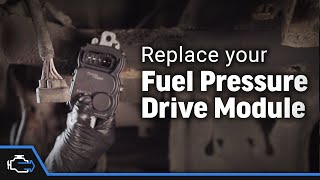
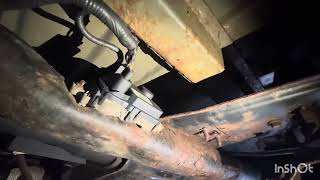
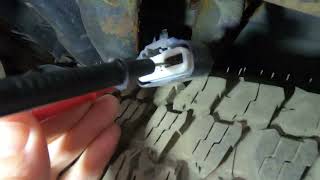
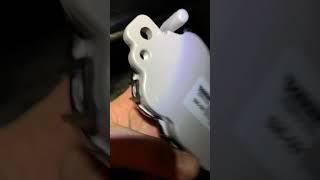
✅ What actually fixed it The user heard the fuel pump cycling on and off at idle and correctly diagnosed a failing Fuel Pump Driver Module (FPDM). Replacing the corroded FPDM located above the spare tire resolved all symptoms.
"I Checked Everything" — The Actual Cause
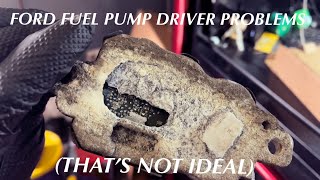
- A common scenario on the 2004-2008 F-150 is for a technician to find no exhaust leaks via a smoke test and a seemingly functional O2 sensor, yet the P0426 code persists. The actual cause is often a failing Fuel Pump Driver Module (FPDM). The FPDM, located above the spare tire, corrodes due to galvanic reaction between its aluminum housing and the steel frame. As it fails, it delivers erratic voltage to the fuel pump, causing fuel pressure fluctuations. This lean/rich swing affects exhaust gas temperature and composition, which the upstream O2 sensor reads as an illogical 'performance' issue, triggering P0426. The symptoms are often mistaken for an ignition or exhaust problem, but the root cause is in the fuel delivery system.
OEM Part Supersession History
XL3Z-9F472-AA (Ford Engineering #)→Motorcraft DY-835 (Service Part #)— Standard part number transition from engineering/assembly line number to service/retail part number.
Heads up: DY-835 is the correct upstream sensor for this application. It is cross-referenced by aftermarket brands like Denso (234-4401) and Bosch. Ensure any replacement is specified for the upstream, passenger side position.
Model Year Variations Within This Range
- 2004-2008: This generation is known for the failure-prone aluminum-bodied Fuel Pump Driver Module (FPDM). Later generations (2009+) used a redesigned plastic-bodied module with better standoffs to prevent the corrosion that plagues the 2004-2008 models.
- 2004-2008 vs 2009+: While the general cause of P0426 remains similar, the PCM connectors and specific pinout locations for the O2 sensor circuits are different between the 11th generation (2004-2008) and the 12th generation (2009-2014). This is critical information for anyone performing advanced wiring diagnostics.
Diagnostic Flowchart
Other Known Issues on This Vehicle
Issues unrelated to this code that are worth knowing about as an owner of this generation:
- Ford 5.4L 3-Valve Cam Phaser Failure 🔴 High — Extremely common on 2004-2010 models. Often presents as a diesel-like ticking or knocking noise at hot idle, most audible from the passenger wheel well. Can lead to timing chain failure if ignored. (Ref: TSB 06-19-8)
- Ford 5.4L 3-Valve Spark Plug Breakage 🔴 High — Very common on 2004-2008 models. A two-piece spark plug design allows carbon to build up, causing the plug to seize and break during removal, leaving the lower portion in the cylinder head. (Ref: TSB 08-7-6 (provides a specific removal procedure to minimize breakage))
- Fuel Pump Driver Module (FPDM) Failure 🟠 Medium — Common across the 2004-2008 generation. The module is mounted to a steel crossmember above the spare tire, causing its aluminum body to corrode and fail. Symptoms include a no-start condition, stalling, or sputtering, often with code P1233.
- Cracked Exhaust Manifolds 🟠 Medium — A frequent issue, especially on the passenger side. Heat cycles cause the manifold to crack, resulting in a ticking noise when cold that may quiet down as the engine warms and the metal expands. Can cause lean codes like P0171 and contribute to P0426.
Used vs. New Parts: Buying Guide for This Vehicle
When a used part is the smart pick: For a cracked exhaust manifold, a used part from a dry-climate, low-mileage donor vehicle can be a cost-effective option. Inspect it thoroughly for cracks or warped flanges before purchase.
Donor-vehicle mileage cap: roughly under 100000 miles for the part to have meaningful remaining life.
What to inspect on the donor part:
- For an exhaust manifold, check for hairline cracks, especially around the collector and bolt flanges.
- Ensure the mounting surfaces are flat and not severely pitted.
- For any used part, check for signs of extreme rust, which is common in salt-belt regions and can make parts brittle.
OEM-only on this vehicle (don't cheap out):
- Fuel Pump Driver Module (FPDM) - The OEM Motorcraft replacement is a redesigned part. While aftermarket options from brands like Dorman exist, owner reviews are mixed, and the OEM part is proven to solve the corrosion issue.
- Catalytic Converter - Aftermarket converters for this truck are notorious for failing to meet the PCM's strict efficiency monitoring, often leading to a P0420 code shortly after installation. OEM or high-quality CARB-compliant converters are strongly recommended if replacement is necessary.
Aftermarket brands forum-validated for this vehicle:
- O2 Sensors: NTK, Denso, and Bosch are widely regarded as reliable alternatives to OEM Motorcraft. They are often the original equipment manufacturers for Ford.
Brands owners have reported issues with on this vehicle:
- Generic/unbranded 'economy' oxygen sensors sold on sites like eBay or Amazon. Forum and repair database reports frequently mention these parts being dead-on-arrival or failing within a few months, causing the code to return.
Real Owner Stories
Aggregated from forums and TSBs cited above. Mileages and costs reflect what owners reported in those sources.
2004-2008 Ford F-150 5.4L Triton V8
Symptoms: The owner experienced a rough idle and engine hesitation along with the P0426 code and other related mixture codes.
What fixed it: Replacing the upstream O2 sensor on the passenger side.
Source hint: ford-trucks.com
2004-2008 Ford F-150 5.4L Triton V8
Symptoms: The owner noted that the O2 sensor wiring was difficult to access because it routes over the transmission, making the repair tricky without a lift.
What fixed it: Replacing the Bank 1 Sensor 1 (upstream) O2 sensor.
Source hint: f150forum.com: Multiple threads corroborate that P0426 is typically resolved by replacing the upstream O2 sensor on the passenger side.
2018 Ford F-150
Symptoms: Persistent O2-related codes (P0420, P0171) continued even after the owner replaced the sensors.
What fixed it: The case highlighted the necessity of checking for underlying exhaust leaks rather than just replacing sensors.
Source hint: Reddit r/MechanicAdvice: A user with a different F-150 experienced persistent O2-related codes (P0420, P0171) even after replacing sensors
Related OBD-II Codes
Frequently Asked Questions
Does TSB 08-7-6 or TSB 06-19-8 address the P0426 code on my 5.4L Triton?
Where is the Bank 1 Sensor 1 O2 sensor located on my F-150?
Why does my F-150 have a ticking sound when cold along with the P0426 code?
Can I use a used exhaust manifold to fix this issue on my 2004-2008 truck?
Is there a specific tool recommended for removing the O2 sensor on this vehicle?
Will clearing the Keep Alive Memory (KAM) help with a recurring P0426?
Helpful Videos
We Have This Part in Stock



The information in this article is provided for general reference and educational purposes only. Vehicle specifications, procedures, and part compatibility can vary by production date, trim level, and region. Always consult your vehicle's factory service manual and verify part numbers before purchasing or performing repairs. Safety-critical components such as airbags, seat belts, and braking systems should be installed by a qualified professional.
- Ford F-150:
- 🎬 Helpful Videos
- 🛍️ Shop This Part
- What's Unique About the 2004-2008 Ford F-150
- Symptoms You May Notice
- Most Likely Causes
- Rare But Worth Checking
- Diagnosis Steps
- Parts You'll Likely Need
- Related Codes That Often Appear With This One
- Technical Service Bulletins (TSBs) & Recalls
- Platform-Specific Known Issues
- Mechanic-Grade Diagnostic Values
- Hidden / Shadow Codes Worth Checking
- Scan Tool Commands That Help
- Wiring & Ground Locations
- Real Owner Repair Stories
- "I Checked Everything" — The Actual Cause
- OEM Part Supersession History
- Model Year Variations Within This Range
- Diagnostic Flowchart
- Other Known Issues on This Vehicle
- Used vs. New Parts: Buying Guide for This Vehicle
- Real Owner Stories
- 2004-2008 Ford F-150 5.4L Triton V8
- 2004-2008 Ford F-150 5.4L Triton V8
- 2018 Ford F-150
- Related OBD-II Codes
- Frequently Asked Questions
- 🎟️ Get 5% Off