

P0422 on 2015-2019 Hyundai Sonata 2.4L: Main Catalyst Failure Causes and Fixes
Code P0422 on a 2015-2019 Sonata 2.4L almost always means the catalytic converter has failed. This is often caused by the engine's known tendency to burn excessive oil, which contaminates the converter. Before replacing the expensive converter, you must verify and fix any oil consumption, exhaust leak, or oxygen sensor issues.
- P0422 on this Sonata is a strong indicator of a failed catalytic converter, but the converter is often the victim, not the cause.
- The #1 underlying cause is the engine's tendency to burn oil, which poisons the converter. You MUST check your oil level.
- Before spending over $1,000 on a new converter, rule out cheaper fixes: a bad downstream O2 sensor and leaks in the exhaust manifold or flex pipe.
- If you replace the converter without fixing an oil consumption problem, the new converter will be destroyed in a short time.
- Check if your vehicle is covered under the federal emissions warranty (8 years/80,000 miles) for the catalytic converter.
What's Unique About the 2015-2019 Hyundai Sonata
For this specific Sonata, P0422 is often a direct consequence of the Theta II 2.4L GDI engine's known problems. These engines are widely documented to suffer from excessive oil consumption due to issues with piston rings and carbon buildup. This burning oil sends contaminants down the exhaust, which quickly poisons and destroys the precious metals inside the catalytic converter, leading to premature failure and the P0422 code. Therefore, the code is frequently a symptom of a larger engine problem, not just a simple case of an old converter. This issue is so prevalent that it has led to class-action lawsuits and specific TSBs regarding oil consumption tests.
Symptoms You May Notice
- Check Engine Light is on
- Reduced engine power and poor acceleration
- Hesitation, especially when going uphill
- Rotten egg or sulfur smell from the exhaust
- Engine may stall or be hard to start if the converter is severely clogged
- A hissing noise from the engine area on acceleration
- Replacing the catalytic converter without first diagnosing and fixing the root cause, such as excessive oil consumption or an exhaust leak. The new converter will fail again quickly.
- Replacing oxygen sensors when the catalytic converter is truly the part that has failed. A lazy O2 sensor can be a cause, but often it is correctly reporting the failure of the converter.
Most Likely Causes
- Failed Catalytic Converter 🔴 High Probability The primary cause is contamination from excessive oil consumption, a well-known issue with the Theta II 2.4L GDI engine. Unburned fuel from misfires can also overheat and melt the internal structure. The converter itself is an integrated exhaust manifold unit.
How to confirm: A temperature gun can be used to check the inlet and outlet temperatures of the converter; the outlet should be significantly hotter (at least 100°F). A mechanic can also perform a backpressure test or use a borescope to visually inspect the catalyst brick.
Typical fix: Replace the catalytic converter assembly. Crucially, the root cause (like oil burning) must be fixed first, or the new converter will also fail. This involves replacing the entire exhaust manifold.
Est. part cost: $1200-$1800 (OEM), $250-$950 (Aftermarket) - Excessive Engine Oil Consumption 🔴 High Probability The GDI engine design can lead to carbon buildup on piston oil control rings, causing them to stick and allowing oil to enter the combustion chamber. This issue was the subject of class-action lawsuits and TSB 23-EM-007H provides guidelines for dealers to inspect and repair this concern.
How to confirm: Monitor oil levels frequently; a loss of a quart in 1,000 miles is a common complaint. A dealership can perform a formal oil consumption test as outlined in service bulletins.
Typical fix: This is a complex engine issue. Dealers may perform a combustion chamber cleaning procedure. In severe cases, it requires piston/ring replacement or a complete engine replacement to fully resolve.
Est. part cost: $15-$30 (PCV Valve), $2000+ (Engine work) - Faulty Downstream Oxygen Sensor (Bank 1, Sensor 2) 🟡 Medium Probability
How to confirm: Use a scan tool to graph the voltage of the downstream O2 sensor. A healthy sensor on a good converter will show a steady voltage (typically ~0.7-0.8V). If it's fluctuating rapidly like the upstream sensor, but the converter is known to be good, the sensor is likely faulty.
Typical fix: Replace the downstream (post-catalyst) oxygen sensor. It is often recommended to replace this sensor whenever the catalytic converter is replaced.
Est. part cost: $180-$255 (OEM), $90-$185 (Aftermarket) - Exhaust Leak 🟡 Medium Probability Owners of this platform have specifically reported that small cracks in the exhaust manifold (which is integrated with the catalytic converter) or leaks at the flex pipe can trigger catalyst efficiency codes by allowing oxygen to enter the exhaust stream, confusing the O2 sensors.
How to confirm: Perform a visual inspection of the exhaust manifold and flex pipe for cracks or black soot trails. A smoke test is the most effective way to find small leaks.
Typical fix: Replace the leaking component, which could be an exhaust gasket, the flex pipe, or the entire exhaust manifold assembly.
Est. part cost: $20-$50 (Gaskets), $100-$300 (Flex Pipe)
Rare But Worth Checking
- Engine Misfires or Rich Fuel Condition: A bad spark plug, ignition coil, or leaking fuel injector can send unburned fuel into the exhaust, which acts like a blowtorch on the catalytic converter, causing it to fail. Always resolve misfire codes (e.g., P0300-P0304) before replacing a converter.
- Faulty Engine Coolant Temperature Sensor: A faulty ECT sensor can cause the engine to run in a continuous rich fuel condition, which can damage the catalytic converter over time.
- Evaporative Emission System Leaks: While P0422 is primarily a catalyst code, related Hyundai platforms have shown that disconnected fuel vapor pipes at the EVAP canister can trigger this code; NHTSA ODI #10457133 describes a situation where disconnected pipes from the fuel tank triggered a P0422, indicating a leak in the EVAP system.
Diagnosis Steps
- Check for any other stored trouble codes. Address any codes for misfires, oxygen sensor circuits, fuel trim, or knock sensors (P1326) before proceeding with P0422 diagnosis.
- Inspect the exhaust system thoroughly from the engine to the rear O2 sensor. Look for black soot marks indicating a leak at gaskets, the flex pipe, or cracks in the exhaust manifold. A smoke test is definitive.
- Using a scan tool, observe the live data for the upstream (Sensor 1) and downstream (Sensor 2) oxygen sensors. The upstream sensor should fluctuate rapidly between approximately 0.1V and 0.9V. The downstream sensor should hold a relatively steady, high voltage (above 0.6V). If it mirrors the upstream sensor's fluctuations, the converter is likely not working.
- Use an infrared thermometer to measure the temperature of the exhaust pipe before and after the catalytic converter (after the engine is fully warmed up). The outlet should be at least 100°F hotter than the inlet. If it's the same temperature or cooler, the converter is not functioning.
- Check engine oil level and service history. If it is low or there's a history of frequent top-offs, suspect the common oil consumption issue. This must be addressed before replacing the converter.
- If all other possibilities are ruled out, the catalytic converter has failed and needs replacement.
Parts You'll Likely Need
- Manifold Catalytic Converter
(OEM #28510-2GAV0)— This is the primary part that fails and triggers the code, usually due to contamination from oil burning or age. It is an integrated unit with the exhaust manifold.
Trusted brands: Hyundai (OEM), Walker, MagnaFlow, Davico, AP Exhaust
OEM price range: $1380-$1830
Aftermarket price range: $250-$950 - Downstream Oxygen Sensor (Bank 1 Sensor 2)
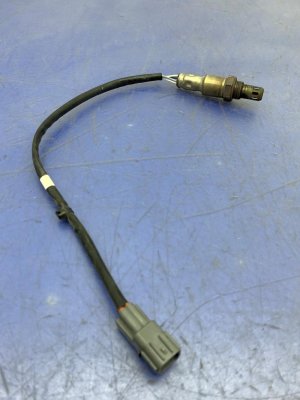
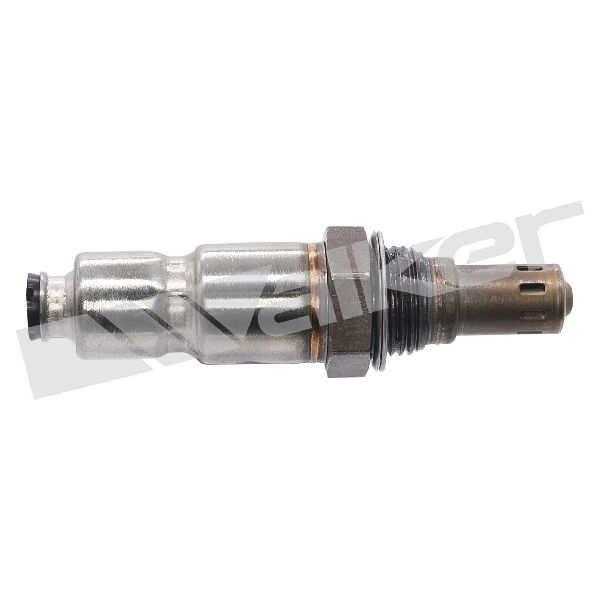
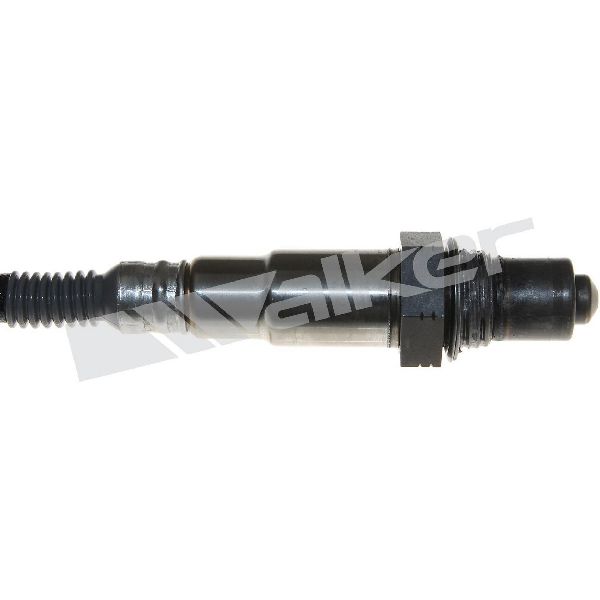
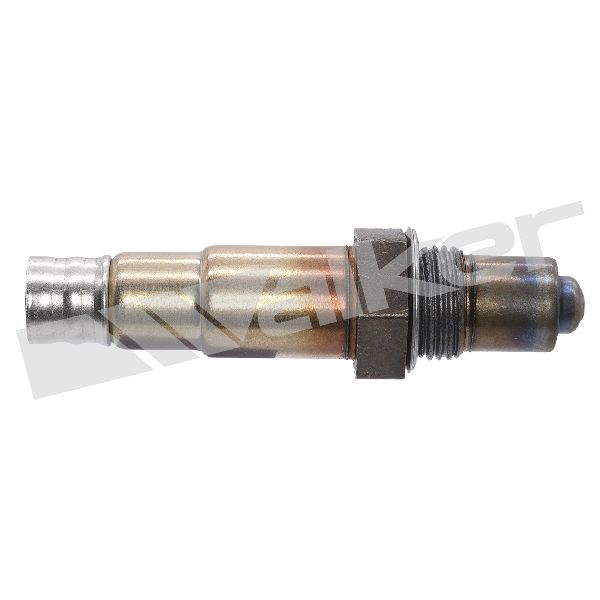
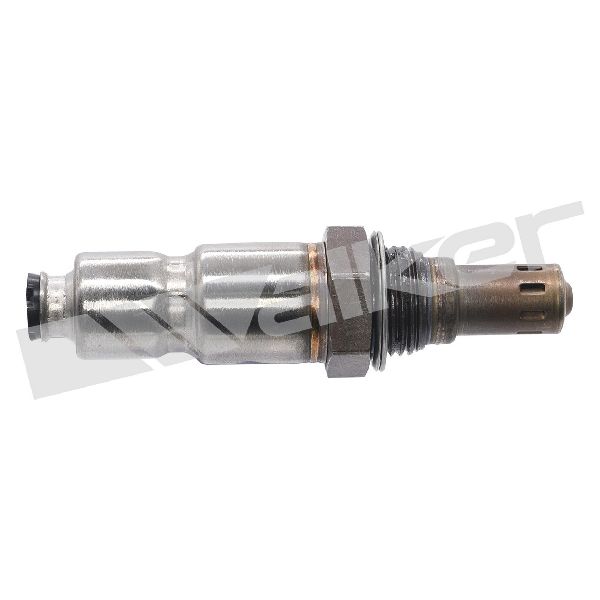
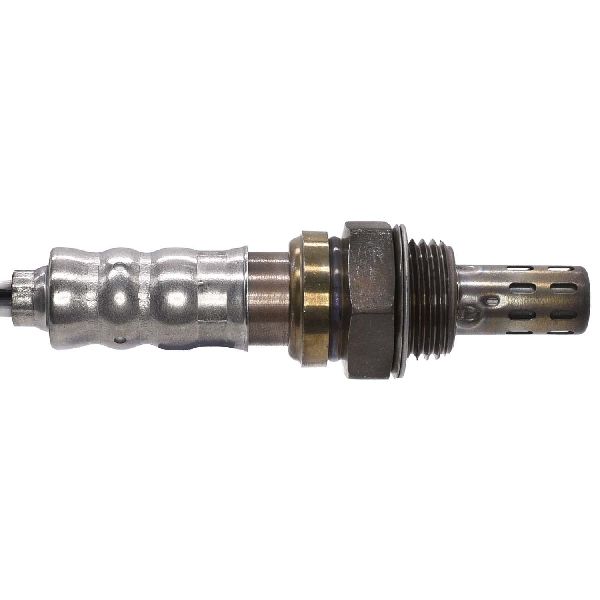
(OEM #39210-2G260)— A faulty or 'lazy' sensor can send incorrect data to the computer, falsely triggering a P0422 code. It's often replaced as a precaution when the converter is changed.
Trusted brands: Hyundai (OEM), NGK/NTK, Denso, Bosch
OEM price range: $180-$255
Aftermarket price range: $90-$185
Related Codes That Often Appear With This One
- P0420 — P0420 is the more common code for the same issue, 'Catalyst System Efficiency Below Threshold'. P0422 is a less common but similar code indicating a main catalyst issue. They share the same causes and diagnostic steps.
- P1326 — This code indicates a problem with the Knock Sensor Detection System and is famously associated with the connecting rod bearing failure on Theta II engines. If you have P1326 with P0422, engine failure is imminent and is the likely root cause of exhaust system damage. Hyundai addressed this with Campaign 953 🎬 Watch: How to diagnose the P1326 knock sensor code and Campaign 966, a software update to detect bearing wear.
- P0300, P0301, P0302, P0303, P0304 — These are misfire codes. An engine misfire allows raw, unburned fuel to enter the exhaust, which will rapidly overheat and destroy the catalytic converter.
Technical Service Bulletins (TSBs) & Recalls
- TSB 23-EM-007H: Provides guidelines for dealerships on inspecting and repairing engine oil consumption issues, often involving combustion chamber cleaning.
- TSB 22-EM-001H: Supersedes a previous TSB and details the procedure for addressing DTC P1326, which involves inspecting for bearing wear and either updating ECU software or replacing the engine.
Platform-Specific Known Issues
- The Theta II 2.4L GDI engine is subject to a class-action lawsuit and numerous owner complaints for excessive oil consumption, which directly leads to catalytic converter failure.
- These engines are also known for catastrophic rod bearing failure, which can send debris into the exhaust system, damaging components. This led to multiple recalls and warranty extensions.
- A software update, part of Campaign 953 and 966, was issued to install a Knock Sensor Detection System (KSDS) to warn drivers of impending bearing failure and place the engine in a reduced-power 'limp mode'.
Mechanic-Grade Diagnostic Values
- Downstream O2 Sensor (B1S2) Voltage at warm idle — expected: Relatively stable voltage between 0.6V and 0.8V. Failure: Voltage fluctuates rapidly, mirroring the upstream sensor, or is stuck low (below 0.2V) or high (above 0.9V)
- Upstream O2 Sensor (B1S1) Voltage at warm idle — expected: Constantly fluctuating between 0.1V and 0.9V. Failure: Slow or no fluctuation
- Downstream O2 Sensor (B1S2) Voltage during deceleration (fuel cut) — expected: Voltage should drop below 0.2V. Failure: Voltage fails to drop below 0.2V for 7 seconds or more
- O2 Sensor Heater Circuit Resistance — expected: 4–20 ohms at room temperature. Failure: Reading of OL (Open Loop) or near-zero ohms (shorted)
Hidden / Shadow Codes Worth Checking
- P1326: Knock Sensor Detection System (KSDS) has detected abnormal engine vibrations, indicative of imminent connecting rod bearing failure. The MIL will flash and the vehicle will enter limp mode. (see via Standard OBD-II scanner. This code is triggered by the special KSDS software logic installed via a Hyundai service campaign.)
- Mode $06, TID $81, CID $01 (example): This is not a trouble code, but a way to access the raw test data from the catalyst efficiency monitor. A technician can view the test value and compare it against the minimum/maximum thresholds stored in the ECU to see how close the catalyst is to failing, even before the P0422 code is set. (see via A professional scan tool with Mode $06 data viewing capabilities. The specific Test ID (TID) and Component ID (CID) may vary by exact ECU software version.)
Scan Tool Commands That Help
- Hyundai GDS (Global Diagnostic System) or equivalent professional scanner: ECU Update / Software Management — Used to perform the KSDS (Knock Sensor Detection System) software update as part of Hyundai campaigns 953, 966, or others. This is not a diagnostic test for P0422, but a critical preventative measure and prerequisite for warranty claims related to the engine issues that cause P0422.
- Any graphing scan tool: Live Data Graphing for O2 Sensor B1S1 and B1S2 — This is the primary diagnostic step for P0422. By graphing both sensors on the same screen, a technician can visually confirm if the downstream sensor is mimicking the upstream sensor, which proves the catalytic converter is not storing oxygen and has failed.
Wiring & Ground Locations
- Downstream O2 Sensor Connector (C245) — Located under the vehicle, connected to the O2 sensor that is screwed into the exhaust pipe after the catalytic converter.. This is the primary connector to test for voltage, ground, and signal integrity from the downstream O2 sensor. The wiring harness near this connector is susceptible to melting if plastic retaining clips break and it contacts the hot exhaust pipe.
- ECM/PCM Main Grounds — Typically bolted to the chassis/inner fender in the engine bay, near the battery or the ECM itself. Look for multiple black wires bundled together and terminating on a single bolt.. A poor engine or ECM ground can cause erratic sensor readings, including from the oxygen sensors, potentially leading to false codes. Verifying grounds are clean and tight is a fundamental step in any electrical diagnosis.
- SENSOR 1 Fuse — Located in the under-hood fuse box, usually a 15A fuse.. This fuse provides power to the oxygen sensor heater circuits. While a blown fuse typically sets a specific heater circuit code (like P0141), an intermittent connection here could affect sensor performance and contribute to inaccurate readings.
Real Owner Repair Stories
- Synthesized from multiple forum discussions on hyundai-forums.com and Reddit (2015-2019 Hyundai Sonata 2.4L) — Check Engine Light with code P0422, often accompanied by noticeable oil consumption (e.g., adding a quart every 1000-1500 miles).
❌ Tried (didn't work) Replacing the downstream O2 sensor., Using a 'catalytic converter cleaner' fuel additive., Clearing the code, only for it to return within 50-100 miles.
✅ What actually fixed it The definitive fix followed a two-step process: 1) The root cause of oil consumption was addressed, often by a Hyundai dealer under warranty extension or lawsuit settlement. This involved either extensive engine cleaning (pistons, rings) or a complete engine short block replacement. 2) After the engine repair, the oil-poisoned catalytic converter was replaced with a new OEM unit. The P0422 code did not return after both steps were completed. - Reddit r/Hyundai and r/MechanicAdvice user experiences (2017 Hyundai Sonata Sport 2.4L) — High oil consumption and eventually a P0422 code.
❌ Tried (didn't work) Using thicker weight oil (e.g., 5W-30 instead of 5W-20) to slow consumption, which was only a temporary band-aid.
✅ What actually fixed it For some owners with moderate oil consumption, replacing the PCV (Positive Crankcase Ventilation) valve significantly reduced or eliminated the oil burning. After replacing the PCV valve and performing an oil change, the catalytic converter was replaced, resolving the P0422 code. This is considered a much cheaper first step before assuming a full engine rebuild is needed.
"I Checked Everything" — The Actual Cause
- On the 2015-2019 Sonata 2.4L, it is common for a smoke test of the exhaust system to come back clean, showing no leaks. Technicians may then suspect a faulty O2 sensor. However, the actual root cause is frequently internal: excessive oil consumption from failing piston rings is poisoning the catalyst. The smoke test cannot detect this internal engine issue, leading to a misdiagnosis where the focus remains on the exhaust components instead of the engine itself as the source of the contamination that destroys the converter.
OEM Part Supersession History
28510-2GAV0→28510-2GAV0 (current)— No supersession found; this part number appears to be consistent for the entire model range.
Heads up: CRITICAL: This part number is for Federal/ULEV emissions. Vehicles originally sold in California or other CARB states may require a different, SULEV/PZEV-compliant catalytic converter. Installing a Federal-spec converter on a CARB-spec vehicle will cause the check engine light to return as it cannot meet the stricter monitoring parameters. Always verify the vehicle's original emissions standard via the underhood sticker or VIN.
Model Year Variations Within This Range
- 2018-2019: The Sonata received a significant cosmetic facelift for the 2018 model year, including new front and rear fascias and interior updates. However, the base 2.4L Theta II GDI engine and its associated emissions control system remained fundamentally the same as the 2015-2017 models. Therefore, the causes and fixes for code P0422 are consistent across the entire 2015-2019 range.
- 2015-2019: The most significant variation is not model year, but whether the vehicle has received the Knock Sensor Detection System (KSDS) software update (e.g., Campaign 966). Vehicles with this update have enhanced monitoring for the rod bearing failures that plague these engines. The presence of this software is a key diagnostic clue if a P1326 code appears alongside P0422.
Diagnostic Flowchart
Other Known Issues on This Vehicle
Issues unrelated to this code that are worth knowing about as an owner of this generation:
- Catastrophic Engine Failure (Rod Bearing) 🔴 High — Widespread across Theta II engines, leading to multiple class-action lawsuits and recalls. Can occur at various mileages, often without warning. (Ref: Hyundai Recall 162, Campaign 953 (KSDS Update), Extended Powertrain Warranty (15yr/150k miles for this issue).)
- Excessive Oil Consumption 🔴 High — Very common complaint for the 2.4L GDI engine. Often starts between 60,000 and 100,000 miles. It is the primary root cause for P0422 on this platform. (Ref: TSB 23-EM-007H (Oil Consumption Inspection and Repair).)
- Peeling Exterior Paint (White Colors) 🟠 Medium — Common on vehicles with factory white paint, often starting to peel after 3-5 years. Affects multiple panels like the hood and roof. (Ref: Warranty Extension Z05 (extends coverage to 10 years/unlimited miles for this specific issue).)
- Non-Crash Engine Fires 🔴 High — A significant number of fires were reported, leading to a NHTSA investigation (PE 19-003). The fires are often linked to the same engine defects causing oil/fuel leaks onto hot components. (Ref: NHTSA Investigation PE 19-003, Recalls 20V-746 and 21V-727 on related models.)
Used vs. New Parts: Buying Guide for This Vehicle
When a used part is the smart pick: For this specific repair, using used parts is highly discouraged for the catalytic converter itself. A used engine assembly from a reputable recycler with a known history (and preferably from a vehicle not suffering from oil consumption) can be a cost-effective alternative to a dealer rebuild if the original engine is the root cause.
Donor-vehicle mileage cap: roughly under 60000 miles for the part to have meaningful remaining life.
What to inspect on the donor part:
- For a used engine: Ask for service history to check for regular oil changes.
- Pull the spark plugs and inspect for heavy oil fouling.
- Use a borescope to look for carbon scoring on cylinder walls.
- Check for evidence of sludge under the oil cap or in the valve cover.
OEM-only on this vehicle (don't cheap out):
- Manifold Catalytic Converter: Aftermarket converters for this specific Hyundai model are widely reported to have insufficient precious metal loading. The ECU's catalyst monitor is very sensitive, and many aftermarket units will fail the efficiency test and cause the P0422 code to return within a few hundred to a few thousand miles.
Aftermarket brands forum-validated for this vehicle:
- For Oxygen Sensors: Denso, NGK/NTK, Bosch are widely regarded as OEM-quality or the original equipment supplier.
- For Catalytic Converters (if OEM is not an option): MagnaFlow and Walker are higher-tier aftermarket brands that offer CARB-compliant options and have a better (but not guaranteed) success rate than cheaper brands.
Brands owners have reported issues with on this vehicle:
- Avoid unbranded, low-cost catalytic converters from online marketplaces like eBay or Amazon. These are almost guaranteed to fail and cause the code to return, wasting time and money.
Real Owner Stories
Aggregated from forums and TSBs cited above. Mileages and costs reflect what owners reported in those sources.
2015-2019 Hyundai Sonata 2.4L GDI — ~80000 miles
Symptoms: Excessive oil consumption, losing approximately a quart every 1,000 miles, leading to catalytic converter failure.
What fixed it: Dealers may perform a combustion chamber cleaning procedure per TSB 23-EM-007H; severe cases require piston/ring replacement or complete engine replacement.
Source hint: TSB 23-EM-007H and hyundai-forums.com
2015-2019 Hyundai Sonata 2.4L GDI
Symptoms: Hissing noise from the engine area on acceleration and hesitation when going uphill.
What fixed it: Replacement of the integrated exhaust manifold and catalytic converter assembly.
Source hint: Article Context Symptoms
2015-2019 Hyundai Sonata 2.4L GDI
Symptoms: Check Engine Light with a P0422 code; visual inspection revealed black soot trails on the exhaust manifold.
What fixed it: Replacement of the exhaust manifold assembly due to cracks allowing oxygen to enter the exhaust stream.
Source hint: Article Context Common Causes
Documented NHTSA Reports
Hyundai Platform EVAP and Catalyst Issues
Symptoms: Check Engine Light (P0422) triggered by a leak in the EVAP system.
What fixed it: NHTSA ODI #10457133 describes a case where fuel vapor pipes disconnected from the EVAP canister, triggering the P0422 code and preventing the vehicle from passing inspection.
Source hint: NHTSA ODI #10457133
Related OBD-II Codes
Frequently Asked Questions
Is there a TSB for the oil consumption issue causing my P0422 code on my 2017 Sonata?
Can I just replace the catalytic converter to fix the P0422 code?
What is the Knock Sensor Detection System (KSDS) update, and is it related to my exhaust issues?
My Sonata is hesitating uphill and smells like rotten eggs; is this common for the P0422?
Is there a warranty extension that might cover my engine issues related to this code?
Can an exhaust leak cause a P0422 instead of a bad converter?
Helpful Videos

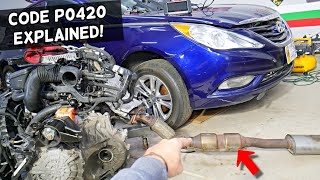
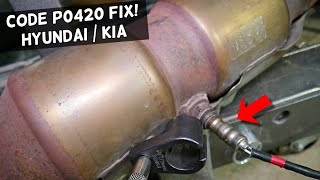
Used OEM Parts in Stock
New Aftermarket Parts Available


The information in this article is provided for general reference and educational purposes only. Vehicle specifications, procedures, and part compatibility can vary by production date, trim level, and region. Always consult your vehicle's factory service manual and verify part numbers before purchasing or performing repairs. Safety-critical components such as airbags, seat belts, and braking systems should be installed by a qualified professional.
- Hyundai Sonata:
- 🎬 Helpful Videos
- 🛍️ Shop This Part
- What's Unique About the 2015-2019 Hyundai Sonata
- Symptoms You May Notice
- Most Likely Causes
- Rare But Worth Checking
- Diagnosis Steps
- Parts You'll Likely Need
- Related Codes That Often Appear With This One
- Technical Service Bulletins (TSBs) & Recalls
- Platform-Specific Known Issues
- Mechanic-Grade Diagnostic Values
- Hidden / Shadow Codes Worth Checking
- Scan Tool Commands That Help
- Wiring & Ground Locations
- Real Owner Repair Stories
- "I Checked Everything" — The Actual Cause
- OEM Part Supersession History
- Model Year Variations Within This Range
- Diagnostic Flowchart
- Other Known Issues on This Vehicle
- Used vs. New Parts: Buying Guide for This Vehicle
- Real Owner Stories
- 2015-2019 Hyundai Sonata 2.4L GDI — ~80000 miles
- 2015-2019 Hyundai Sonata 2.4L GDI
- 2015-2019 Hyundai Sonata 2.4L GDI
- Documented NHTSA Reports
- Hyundai Platform EVAP and Catalyst Issues
- Related OBD-II Codes
- Frequently Asked Questions
- 🎟️ Get 5% Off