

P0422 on 2011-2016 Ford F-150 5.0L: Main Catalyst Efficiency Causes and Fixes
On a 2011-2016 F-150 with the 5.0L V8, the P0422 code almost always means the catalytic converter on Bank 1 (passenger side) has failed, especially on trucks with over 100,000 miles. Before replacing the expensive converter, it's wise to check for exhaust leaks and test the downstream oxygen sensor, as these are less common but possible causes.
- P0422 on a 2011-2016 F-150 5.0L points to a problem with the passenger side (Bank 1) catalytic converter.
- The most likely cause, especially over 100,000 miles, is the catalytic converter itself has worn out.
- Before replacing the expensive converter, always rule out a bad downstream O2 sensor and check for exhaust leaks.
- If you have any engine misfire codes (P03xx), you MUST fix them before replacing the converter, or the new part will be quickly damaged.
What's Unique About the 2011-2016 Ford F-150
For the 5.0L V8 F-150 in this year range, the P0422 code is a straightforward indicator of catalyst failure due to age and mileage. Unlike some other vehicles where oxygen sensors are a very frequent cause, on these high-mileage trucks, the converter itself is the most common point of failure. While no specific TSB for P0422 on this exact platform was found, some sources indicate that certain 2011-2016 models with the 5.0L engine could benefit from a PCM reflash, a procedure noted in TSBs for similar codes on other Ford models.
Generation note: The 2011-2016 model years span two F-150 generations: the 12th generation (2011-2014) and the 13th generation (2015-2016). However, for the 5.0L V8 engine, the causes, diagnosis, and repair for a P0422 code are consistent across these two generations.
Symptoms You May Notice
- Check Engine Light is on
- Vehicle fails emissions/smog test
- Reduced fuel economy
- Possible loss of engine power if the converter is severely clogged
- A rattling noise from the exhaust if the internal honeycomb of the converter has broken apart
- A 'rotten egg' (sulfur) smell from the exhaust
- Replacing the upstream (Bank 1, Sensor 1) oxygen sensor. This sensor is used for fuel trim calculations and is not the primary sensor for monitoring catalyst efficiency.
- Replacing the catalytic converter without first checking for exhaust leaks or diagnosing a potential O2 sensor fault. This can lead to an expensive and unnecessary repair.
Most Likely Causes
- Failing or Worn-Out Catalytic Converter 🔴 High Probability On high-mileage F-150s (typically over 100,000 miles), the precious metals inside the converter simply degrade over time and lose their effectiveness. This is considered a wear-and-tear item.
How to confirm: A mechanic can use a scan tool to graph the upstream and downstream O2 sensor data. A healthy converter shows a steady downstream sensor reading, while a failing one shows a downstream reading that mimics the upstream sensor. A backpressure test can also confirm a clog. An infrared thermometer can also be used; the outlet of the converter should be significantly hotter than the inlet.
Typical fix: Replace the Bank 1 (passenger side) catalytic converter assembly.
Est. part cost: $400-$1200 for an aftermarket assembly, $1500+ for OEM. - Faulty Downstream Oxygen (O2) Sensor 🟡 Medium Probability The O2 sensor provides the data the PCM uses to judge the converter. A slow or biased sensor can send incorrect data, tricking the computer into thinking the converter is bad when it's not. These sensors have a finite lifespan and can fail due to age and contamination.
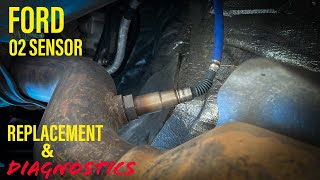
How to confirm: Use a scan tool to observe the live data from the Bank 1, Sensor 2 (downstream) O2 sensor. If the voltage is stuck or responds very slowly compared to the upstream sensor, it's likely faulty. Swapping the downstream sensors from Bank 1 and Bank 2 and seeing if the code changes to P0430 (for Bank 2) is another effective diagnostic step.
Typical fix: Replace the Bank 1, Sensor 2 oxygen sensor.
Est. part cost: $50-$100 - Exhaust System Leak ⚪ Low Probability Rust can cause leaks in the exhaust manifold, gaskets, or pipes located between the upstream and downstream O2 sensors. This allows outside air to be drawn in, skewing the downstream O2 sensor's readings and triggering a false code. Manifold gaskets and the flange gaskets before the converter are common leak points.
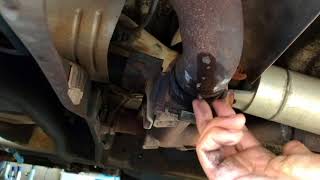
How to confirm: Perform a visual inspection of the exhaust system from the engine to the rear O2 sensor. Look for black soot trails or listen for hissing/ticking sounds. A smoke test is the most effective way to pinpoint small leaks. 🎬 Watch: How to find tricky exhaust leaks
Typical fix: Replace the leaking gasket or repair the damaged section of the exhaust pipe.
Est. part cost: $20-$150
Rare But Worth Checking
- Engine Misfires or Rich/Lean Fuel Condition: This is more of a root cause for converter failure than a direct cause of the code. Unburned fuel from misfires (codes P0300-P0308) or a rich fuel mixture can enter the exhaust and overheat, melting the internal structure of the catalytic converter. Always fix misfires before replacing a converter, or the new one will be quickly destroyed. Early 5.0L engines (2011-2013) were known for premature intake valve wear that could lead to compression loss and persistent misfires.
- Powertrain Control Module (PCM) Software: While no specific TSB for P0422 was found for this model, some sources mention that a PCM reflash can be a potential fix. Ford has issued TSBs for other models and years for overly sensitive catalyst monitoring software, making this a possibility if all other components check out.
- Evaporative System Leaks: While less common on the F-150, cross-manufacturer data from Ford Flex owners (NHTSA ODI #10406393) shows that a P0422 code can sometimes be triggered by an evaporative system leak, such as a cracked fuel filler pipe, which may be flagged as a safety issue.
Diagnosis Steps
- Check for Other Codes: Scan the PCM for any other stored trouble codes. Misfire codes (P03xx) or fuel system codes (P017x) must be diagnosed and repaired first, as they are likely the root cause of the catalyst failure.
- Inspect for Exhaust Leaks: Visually inspect the entire exhaust system for Bank 1 (passenger side) from the exhaust manifold to the downstream O2 sensor. Look for cracks, holes, or bad gaskets. A smoke test is the most reliable method to find leaks.
- Analyze Oxygen Sensor Data: Use a scan tool with live data graphing capabilities. Observe the voltage signals from the upstream (B1S1) and downstream (B1S2) oxygen sensors. The B1S1 sensor should fluctuate rapidly between approximately 0.1 and 0.9 volts. A healthy converter will show a steady B1S2 reading above 0.5 volts. If the B1S2 sensor's voltage mimics the B1S1 sensor, the catalytic converter is not working. If the B1S2 sensor's voltage is flat or slow to respond, the sensor itself is likely faulty.
- Test the Oxygen Sensor: If the sensor is suspected, you can swap the downstream sensors between Bank 1 and Bank 2. Clear the codes and drive the vehicle. If the code returns as P0430 (for Bank 2), the oxygen sensor is bad. If P0422 returns, the catalytic converter is the problem. 🎬 See this guide on diagnosing downstream O2 sensors
- Check for Backpressure: If a severe loss of power is a symptom, an exhaust backpressure test can be performed to check if the converter is physically clogged.
- Check for TSBs: Contact a Ford dealership with your VIN to see if any PCM software updates related to emissions or catalyst monitoring are available for your specific vehicle.
Parts You'll Likely Need
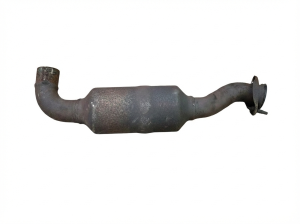
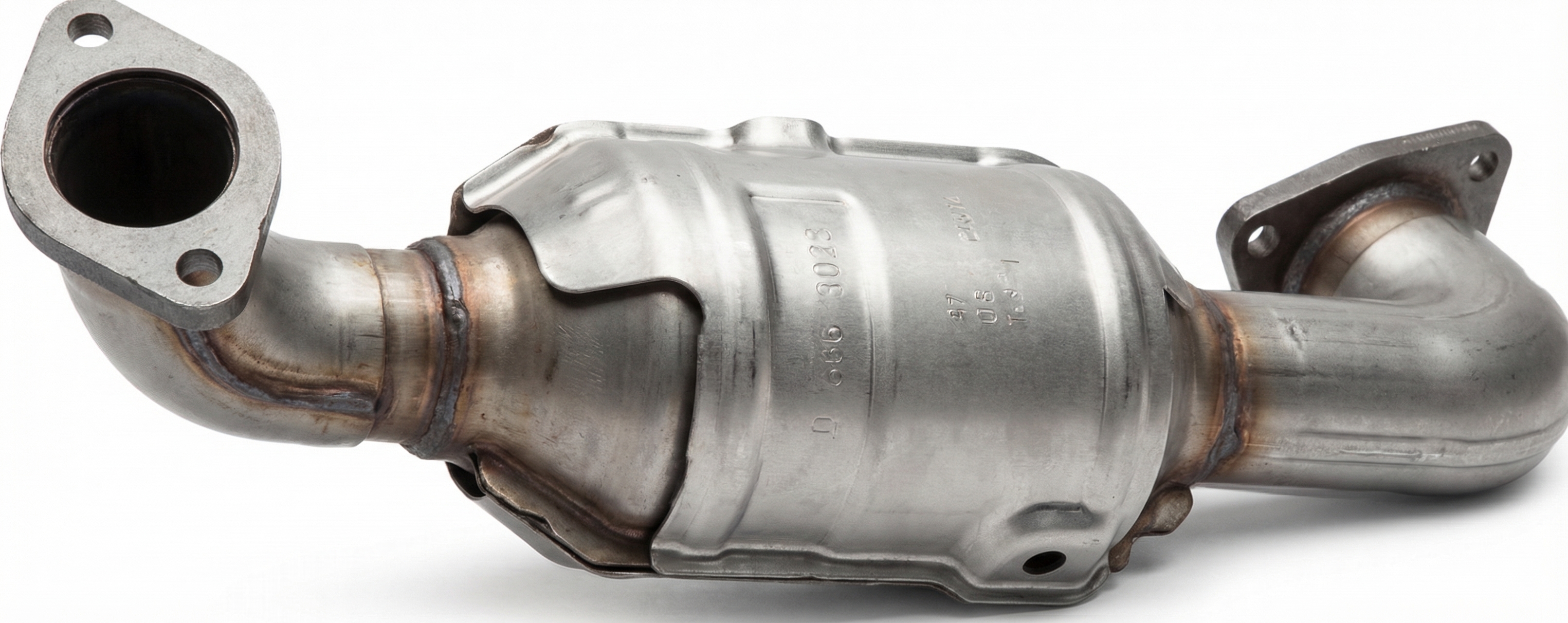
- Bank 1 Catalytic Converter Assembly
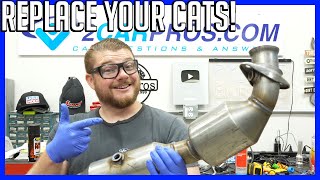
(OEM #DL3Z-5E212-A)— This is the most common failure on high-mileage 5.0L F-150s that triggers the P0422 code. Note that part number DL3Z-5E212-A is often listed for the Left (Driver's) side, which corresponds to Bank 2 (P0430). The Bank 1 (Passenger side) equivalent should be verified by VIN, but is often part number BL3Z-5E212-A. 🎬 Watch: Step-by-step catalytic converter replacement walkthrough
Trusted brands: Motorcraft, Walker Exhaust, MagnaFlow, AP Exhaust
OEM price range: $1500+
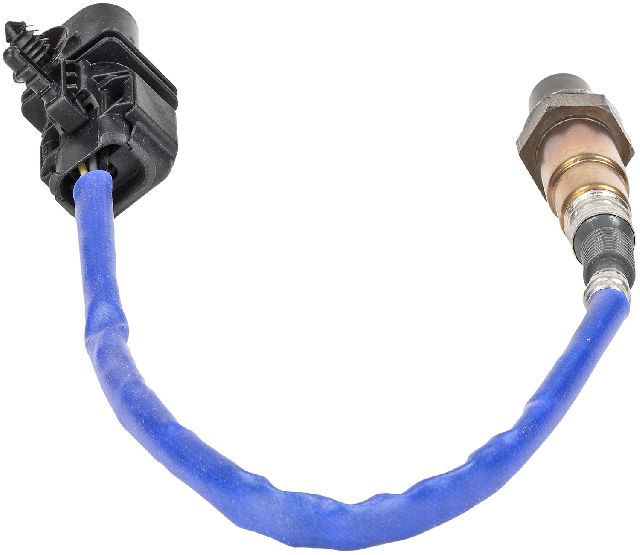
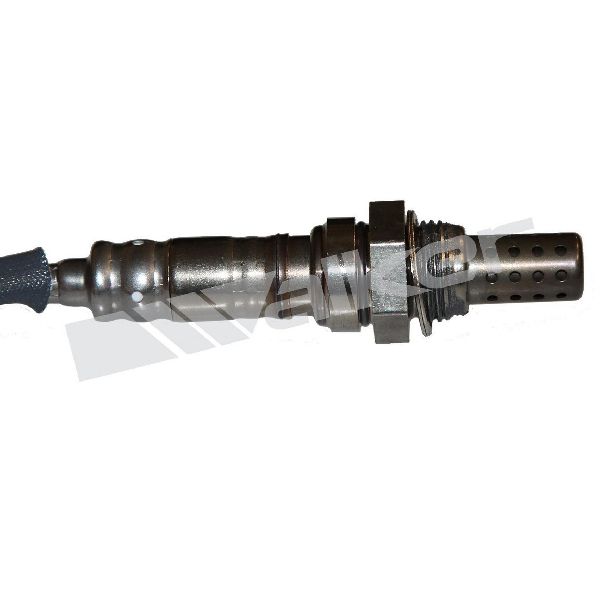
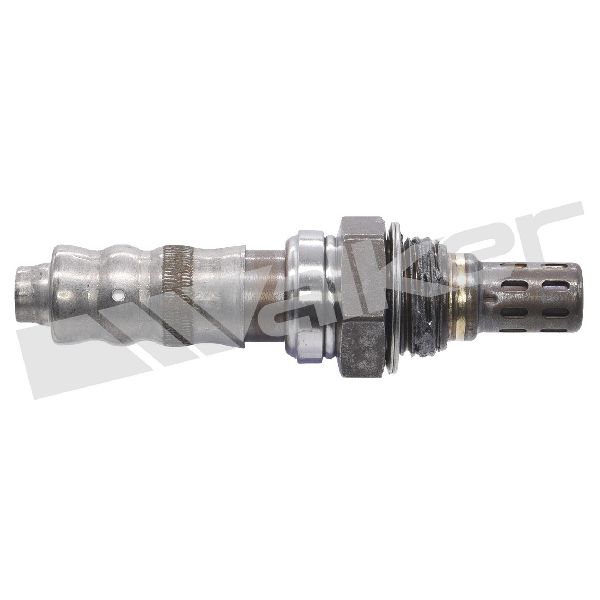
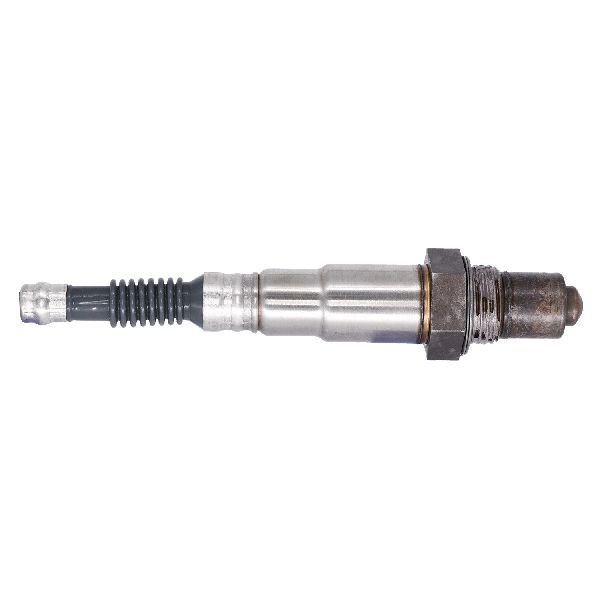
Aftermarket price range: $400-$1200 - Downstream Oxygen Sensor (Bank 1, Sensor 2)
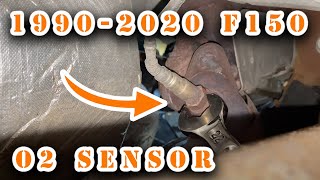
(OEM #BL3Z-9G444-A)— A faulty sensor can send incorrect data, leading to a misdiagnosis of the catalytic converter. It's often replaced as a precaution when the converter is changed. This part number fits both downstream positions for the 2011-2014 5.0L F-150.
Trusted brands: Motorcraft, Bosch, Denso, NGK/NTK
OEM price range: $80-$140
Aftermarket price range: $50-$100
Related Codes That Often Appear With This One
- P0430 — This is the identical code but for Bank 2 (driver's side). If both converters are of similar age and mileage, they often fail around the same time. Seeing both P0422 and P0430 strongly suggests the converters are at the end of their life.
- P0300, P0301-P0308 — These are misfire codes. An ongoing misfire will dump raw fuel into the exhaust, which will quickly destroy the catalytic converter, leading to a P0422 code. The misfire is the root cause that must be fixed first.
- P0136-P0141 — These codes point to a fault with the Bank 1, Sensor 2 (downstream) oxygen sensor circuit itself. If one of these codes is present with P0422, the O2 sensor is the primary suspect and should be diagnosed before the converter.
Platform-Specific Known Issues
- Owner Experiences: Multiple owners on forums like F150Forum.com and Ford-Trucks.com confirm that on high-mileage 5.0L trucks, the P0422/P0430 codes almost invariably point to failed catalytic converters rather than O2 sensors or exhaust leaks. The general consensus is that after 100,000-150,000 miles, the converters are simply at the end of their service life.
Mechanic-Grade Diagnostic Values
- Downstream O2 Sensor (B1S2) Voltage at Idle/Steady RPM — expected: A relatively steady voltage between 0.6V and 0.8V on a warm engine.. Failure: Voltage fluctuates rapidly between approximately 0.1V and 0.9V, mirroring the upstream sensor's waveform.
- Mode $06, Catalyst Monitor Test Value (Bank 1) — expected: The test value should be below the maximum threshold stored in the PCM. For example, a healthy converter might have a value of 0.3437 against a maximum allowed value of 0.9023.. Failure: The measured value exceeds the maximum limit. For example, a failing value of 0.805 when the upper limit was 0.785.
- Catalytic Converter Temperature Differential — expected: The outlet pipe temperature should be significantly hotter than the inlet pipe temperature (e.g., 100°F or more) on a fully warmed-up engine.. Failure: The outlet temperature is the same as or cooler than the inlet temperature, indicating the catalyst is not 'lighting off' and performing the chemical reaction.
Hidden / Shadow Codes Worth Checking
- Mode $06, Monitor ID $21, Test ID $81: This is not a DTC but the raw data for the Bank 1 Catalyst Efficiency monitor. It allows a technician to see how close the converter is to the failing threshold before the P0422 code is set. The value represents the oxygen storage capacity. (see via Advanced OBD-II scan tool with Mode $06 capability (such as FORScan or a professional-grade scanner).)
Scan Tool Commands That Help
- Ford IDS / FORScan: Retrieve OBD Mode 6 Data — Use this function to view the raw test results of the catalyst monitor (Monitor ID $21). This is crucial for diagnosing a borderline converter that may not set a code consistently. It provides the numerical efficiency value the PCM is using for its pass/fail decision.
Wiring & Ground Locations
- G101 — On the RH (passenger side) front of the engine compartment, on the front of the fender apron.. This is a primary engine and chassis ground. Corrosion or a loose connection here can create a poor ground reference for the PCM and sensors, including the oxygen sensors, potentially causing incorrect readings that could falsely trigger a P0422 code.
- G104 — Rear of the LH (driver's side) fender apron.. Another critical chassis ground point. While on the opposite side of the engine, poor grounding can affect the entire electrical system. It's a known trouble spot for corrosion on F-150s and should be inspected and cleaned as part of any electrical diagnosis.
- Body-to-Frame Ground Strap — Typically located on the passenger side, connecting the cab body to the frame near the transmission area.. This strap is notorious for corroding and breaking on F-150s. A bad connection here can cause a host of intermittent electrical issues and communication codes as modules struggle to find a stable ground path, which can interfere with accurate sensor data processing by the PCM.
Real Owner Repair Stories
- f150forum.com user report (2011 Ford F-150 5.0L, ~150,000 miles) — Check Engine Light with P0422 and P0430 codes.
❌ Tried (didn't work) Replacing all four oxygen sensors.
✅ What actually fixed it Replacing both catalytic converters. The user noted that after replacement, the truck ran noticeably better and the codes did not return. - NHTSA ODI #10406393 — An owner reported that after a P0422 code appeared, a diagnostics check verified an evaporative system leak caused by a cracked fuel filler pipe, which was deemed a safety issue.
OEM Part Supersession History
BL3Z-9G444-A→Current— This remains the standard OEM part number for the downstream oxygen sensor for 2011-2014 models.
Heads up: This part number is specified for both rear (downstream) positions on the 5.0L and 6.2L engines for the 2011-2014 model years.
Model Year Variations Within This Range
- 2015-2016: The Gen 2 5.0L Coyote engine (2015-2017) received updates including Charge Motion Control Valves (CMCV) in the intake manifold to improve emissions and slight increases in horsepower and torque. While the fundamental cause of P0422 (catalyst failure) remains the same, the part numbers for the catalytic converters and sensors may differ from the 2011-2014 generation. Always verify parts by VIN for these later years.
Diagnostic Flowchart
Other Known Issues on This Vehicle
Issues unrelated to this code that are worth knowing about as an owner of this generation:
- Coolant Leaks from Hoses/Connectors 🟠 Medium — Common across 2011-2016 models. Leaks often develop at the Y-pipe connector and various O-rings in the cooling system, especially the upper radiator hose connector. (Ref: TSB 15-0073 addresses a specific heater outlet hose leak on some 2015 models.)
- Premature Intake Valve Wear 🔴 High — Primarily affects early 2011-2013 models. The intake valves were reportedly too soft, leading to wear, loss of compression, and persistent cylinder-specific misfires.
- Engine Knock / 'Typewriter' Tick 🟡 Low — A light ticking or knocking sound, especially when warm at idle, is a documented characteristic of many 5.0L engines from this era. It's often heard from the wheel wells. (Ref: SSM 49761 states this noise is a normal operating characteristic and no repairs should be attempted.)
- 6R80 Transmission Lead Frame Failure 🔴 High — Affects 2011-2017 models. Can cause sudden, unexpected downshifts, loss of speed signal, and erratic transmission behavior. (Ref: Multiple recalls, including 12C23 and 26S28 (NHTSA 26V-237), were issued to inspect, replace the lead frame, or update PCM software.)
- Excessive Oil Consumption 🟠 Medium — More prevalent in later models (2018+), but some owners of 2015-2016 models have also reported higher than expected oil consumption.
Used vs. New Parts: Buying Guide for This Vehicle
When a used part is the smart pick: A used OEM catalytic converter from a low-mileage, rust-free donor vehicle can be a cost-effective option, as OEM converters are generally more durable and effective than many aftermarket alternatives. Used oxygen sensors are generally not recommended due to their limited lifespan and sensitivity.
Donor-vehicle mileage cap: roughly under 80000 miles for the part to have meaningful remaining life.
What to inspect on the donor part:
- Check for any rattling noise when shaken, which indicates a broken internal substrate.
- Inspect the inlet and outlet for heavy carbon or oil deposits, which could suggest the donor vehicle had engine problems that may have damaged the converter.
- Ensure there are no cracks or severe rust on the converter body or flanges.
- Verify the donor vehicle is from a region that does not use road salt to minimize rust issues.
OEM-only on this vehicle (don't cheap out):
- Catalytic Converter: Many forum users and mechanics strongly advise using OEM/Motorcraft converters. Aftermarket converters, especially budget-priced ones, are known to fail prematurely or not meet the PCM's strict efficiency monitoring parameters, causing the P0422/P0430 codes to return within a year.
Aftermarket brands forum-validated for this vehicle:
- O2 Sensors: NTK (also known as NGK) and Denso are highly regarded as OEM suppliers and are considered reliable replacements.
- Catalytic Converters: MagnaFlow and Walker are established aftermarket brands that offer direct-fit converters, though they may not have the same longevity as the OEM Ford part.
Brands owners have reported issues with on this vehicle:
- Unbranded or generic 'eBay special' catalytic converters should be avoided. They often use a minimal amount of precious metals and cannot effectively clean the exhaust, leading to a quick return of the P0422 code.
Real Owner Stories
Aggregated from forums and TSBs cited above. Mileages and costs reflect what owners reported in those sources.
2011-2014 Ford F-150 5.0L — ~125000 miles
Symptoms: Owners report that after 100,000-150,000 miles, the P0422/P0430 codes appear, indicating the converters are at the end of their service life.
What fixed it: Replacement of the catalytic converter assembly, as codes almost invariably point to failed converters rather than sensors on high-mileage trucks.
Source hint: f150forum.com: Multiple threads corroborate that P0420/P0430 codes on the 5.0L F-150 are commonly due to converter failure at high mileage.
2011-2014 Ford F-150 5.0L
Symptoms: Engine knock and potential misfires leading to catalytic converter damage.
What fixed it: Addressing bottom-end knock and cylinder distortion which can act as a root cause for catalyst failure.
Source hint: ford-trucks.com: A thread titled '11-14 5.0 Engine KNOCK: looking for feedback'
Ford Flex Owner Report (Cross-Manufacturer Reference)
Symptoms: Check engine light warning came on with code P0422.
What fixed it: A diagnostics check verified an evaporative system leak due to a cracked fuel filler pipe. (NHTSA ODI #10406393)
Related OBD-II Codes
Frequently Asked Questions
I have a 2015 F-150 5.0L and I'm smelling rotten eggs and seeing P0422. Is this common?
Could my P0422 code be related to the 'typewriter tick' noise my 5.0L engine makes?
Can I just swap the oxygen sensors to see if the sensor is the problem?
I have a misfire code (P03xx) along with P0422. Which should I fix first?
Is there a TSB for the 5.0L F-150 regarding emissions software updates?
My 2011 F-150 has a P0422 and a rough idle. Could it be the intake valves?
Helpful Videos
Used OEM Parts in Stock
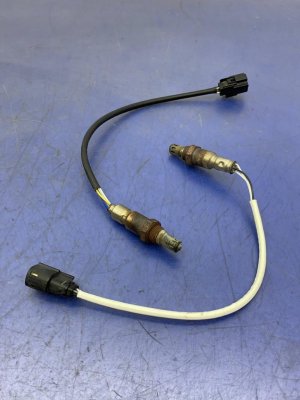
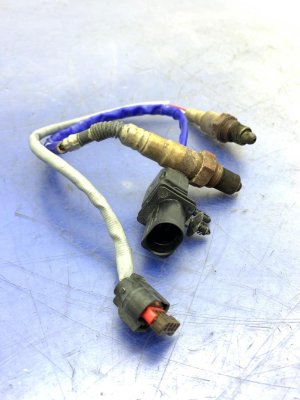
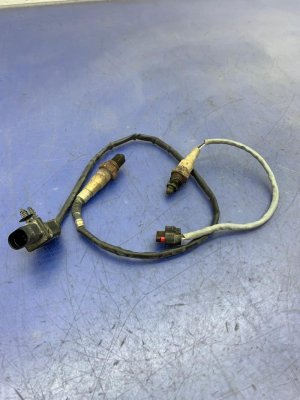
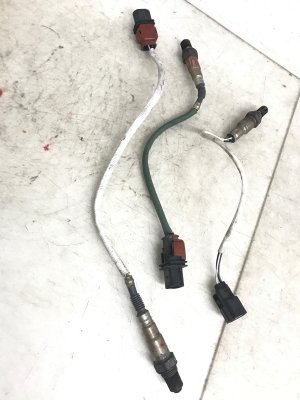
New Aftermarket Parts Available


The information in this article is provided for general reference and educational purposes only. Vehicle specifications, procedures, and part compatibility can vary by production date, trim level, and region. Always consult your vehicle's factory service manual and verify part numbers before purchasing or performing repairs. Safety-critical components such as airbags, seat belts, and braking systems should be installed by a qualified professional.
- Ford F-150:
- 🎬 Helpful Videos
- 🛍️ Shop This Part
- What's Unique About the 2011-2016 Ford F-150
- Symptoms You May Notice
- Most Likely Causes
- Rare But Worth Checking
- Diagnosis Steps
- Parts You'll Likely Need
- Related Codes That Often Appear With This One
- Platform-Specific Known Issues
- Mechanic-Grade Diagnostic Values
- Hidden / Shadow Codes Worth Checking
- Scan Tool Commands That Help
- Wiring & Ground Locations
- Real Owner Repair Stories
- OEM Part Supersession History
- Model Year Variations Within This Range
- Diagnostic Flowchart
- Other Known Issues on This Vehicle
- Used vs. New Parts: Buying Guide for This Vehicle
- Real Owner Stories
- 2011-2014 Ford F-150 5.0L — ~125000 miles
- 2011-2014 Ford F-150 5.0L
- Ford Flex Owner Report (Cross-Manufacturer Reference)
- Related OBD-II Codes
- Frequently Asked Questions
- 🎟️ Get 5% Off