

P0420 on 2001-2009 Volvo S60: Catalyst Efficiency Causes and Fixes
On a 2001-2009 Volvo S60, code P0420 often points to a failing rear oxygen sensor or an exhaust leak, not always a bad catalytic converter. Start by checking for exhaust leaks and testing the O2 sensors before considering a costly converter replacement. Owners frequently report that these less expensive fixes resolve the code.
- Do not immediately replace the catalytic converter. A faulty rear O2 sensor or an exhaust leak are very common and much cheaper fixes.
- Always diagnose thoroughly. Use a scan tool to check live O2 sensor data and perform a smoke test to find any exhaust leaks.
- Address other engine codes first. Misfires or fuel mixture problems will trigger a P0420 and will destroy a new catalytic converter if left unfixed.
- If you do need a new converter, ensure you are buying a quality part. Cheap aftermarket converters are known to fail quickly and cause the code to return.
What's Unique About the 2001-2009 Volvo S60

For the first-generation Volvo S60 (P2 platform), the P0420 code is a frequent topic in owner forums. While the code directly blames the catalytic converter, experienced owners and technicians strongly advise against replacing it without a thorough diagnosis. The most common culprits are often less expensive parts, such as a failing rear oxygen sensor or a small, hard-to-see exhaust leak, particularly from the flexible pipe section or exhaust manifold gasket. These issues can trick the sensors into reporting false data, leading to a misdiagnosis of a failed converter. A clogged PCV system is another known issue on these engines that can contribute to conditions that trigger the code.
Symptoms You May Notice
- Check Engine Light (CEL) is illuminated
- Failing an emissions/smog test
- Noticeable 'rotten egg' or sulfur smell from the exhaust, indicating a rich fuel mixture or an overworked/failing converter.
- Reduced engine power or sluggish acceleration, especially if the converter is clogged.
- A ticking or hissing sound from the exhaust system, especially on a cold start, which points to an exhaust leak.
- A whistling noise from the engine bay, which can be a symptom of a clogged PCV system, a known contributor to this code.
- Immediately replacing the catalytic converter without diagnosing other potential causes. This is a very expensive mistake, as the true fault often lies with a much cheaper O2 sensor or an exhaust leak.
Most Likely Causes

- Failing Rear (Downstream) Oxygen Sensor 🔴 High Probability Oxygen sensors have a finite lifespan (typically around 100,000 miles) and a lazy or biased sensor can send incorrect data to the ECM, mimicking the signal of an inefficient converter. Many owners on forums for P2 platform Volvos have fixed their P0420 code simply by replacing the rear O2 sensor.
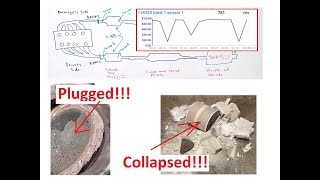
How to confirm: Use a scan tool to graph the voltage of the front and rear O2 sensors. The front sensor should fluctuate rapidly between ~0.1V and ~0.9V. A healthy rear sensor should show a relatively steady, stable voltage (typically >0.5V). If the rear sensor is fluctuating wildly like the front one, or is stuck at a certain voltage, it is likely faulty.
Typical fix: Replace the rear (post-catalyst) oxygen sensor. Using a quality OEM-supplier brand like Bosch or Denso is highly recommended by forum members to ensure compatibility.
Est. part cost: $60-$150 - Exhaust Leak 🟡 Medium Probability The flex pipe and exhaust manifold gaskets are common failure points on higher-mileage P2 vehicles. A leak before or even just after the rear O2 sensor allows outside air to enter the exhaust stream. This skews sensor readings and tricks the ECM into thinking the catalyst is inefficient.
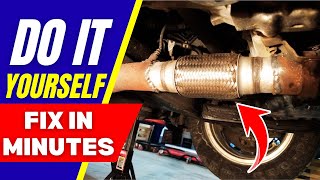
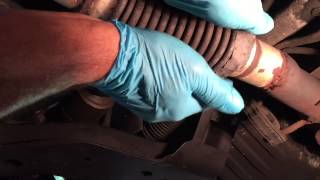
How to confirm: Perform a visual inspection for soot marks or cracks around the exhaust manifold, gaskets, and especially the flex pipe. 🎬 Watch: Pro tips for fixing a leaking exhaust flex pipe. A professional smoke test is the most reliable way to pinpoint small leaks. Another DIY method involves using a shop-vac in reverse to pressurize the exhaust system and spraying soapy water on joints to look for bubbles.
Typical fix: Repair the leak by replacing the faulty gasket or welding/replacing the damaged pipe section. Exhaust putty can be a temporary fix for small leaks.
Est. part cost: $20-$250 - Worn or Inefficient Catalytic Converter 🟡 Medium Probability
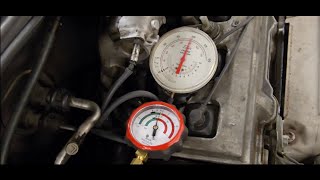
How to confirm: This should only be confirmed after ruling out O2 sensors and exhaust leaks. A temperature test (checking inlet vs. outlet temps with an infrared thermometer) or a backpressure test can help confirm a clogged or failed converter. The outlet should be significantly hotter (at least 100°F) than the inlet when holding RPMs around 2000. If there is no temperature difference, the catalyst is not working.
Typical fix: Replace the catalytic converter assembly. This is the most expensive repair. This is often caused by another underlying issue, so it's critical to fix the root cause (like misfires or oil burning) or the new converter will fail prematurely.
Est. part cost: $400-$1200 - Engine Misfires or Rich Fuel Mixture ⚪ Low Probability Unaddressed engine problems can destroy a catalytic converter. Raw fuel from misfires (due to bad spark plugs, ignition coils) can enter the exhaust and overheat the converter, damaging its internal structure. Similarly, issues causing a rich fuel mixture, like a faulty MAF sensor or leaking fuel injectors, can have the same effect over time.
How to confirm: Check for other trouble codes related to misfires (P030x), fuel trim (P0171, P0172), or MAF sensor issues. Address these codes first. A history of oil consumption can also lead to a fouled catalytic converter.
Typical fix: Perform a full engine tune-up, including replacing spark plugs, ignition coils, fuel filter, and addressing any vacuum leaks or fuel injector problems.
Est. part cost: $50-$500
Rare But Worth Checking
- Clogged PCV System (Flame Trap/Oil Trap): Many owners on Volvo forums have reported a connection between a clogged PCV system and various engine issues, including codes like P0420, sometimes accompanied by a whistling noise. A clogged system increases crankcase pressure, which can lead to oil leaks and increased oil consumption, eventually fouling the O2 sensors and catalytic converter. Performing the 'glove test' (placing a rubber glove over the oil filler neck to see if it inflates) is a common way to check for positive crankcase pressure.
Technical Service Bulletins (TSBs) & Recalls
- TSB Bulletin #KC-784: This manufacturer bulletin specifically addresses the P0420 Diagnostic Trouble Code (DTC) illuminating the Malfunction Indicator Lamp (MIL) across various Volvo chassis. It serves as an authoritative reference for technicians diagnosing catalyst efficiency issues on this platform.
Diagnosis Steps

- Scan for all stored trouble codes. Address any misfire (P030x), fuel system (P0171/P0172), or other O2 sensor codes before proceeding with P0420 diagnosis.
- Inspect the entire exhaust system from the engine manifold to the rear muffler. Look for black soot stains, cracks, or holes, paying close attention to the manifold gasket and the flex pipe. Listen for hissing or ticking sounds when the engine is cold. A smoke test is highly recommended to find hidden leaks.
- Check the PCV system. With the engine running, remove the oil cap and place a surgical glove over the opening. If the glove inflates, the PCV system is clogged and needs to be serviced. This can cause oil consumption that fouls the catalyst.
- Using a scan tool with live data capability, graph the voltage signals from both the upstream (Bank 1, Sensor 1) and downstream (Bank 1, Sensor 2) oxygen sensors. The upstream sensor should fluctuate rapidly between ~0.1V and ~0.9V. The downstream sensor should hold a steady, higher voltage (typically >0.5V).
- If the downstream sensor's signal mirrors the upstream sensor's fluctuations, and you have confirmed there are NO exhaust leaks, the catalytic converter is likely inefficient.
- If the downstream sensor's signal is flat, unresponsive, or slow, the sensor itself is the most likely culprit.
- If all sensors and the exhaust system check out, investigate the health of the engine. Check spark plugs, ignition coils, and look for vacuum leaks that could be causing an incorrect fuel mixture, which can affect converter efficiency over time.
Parts You'll Likely Need

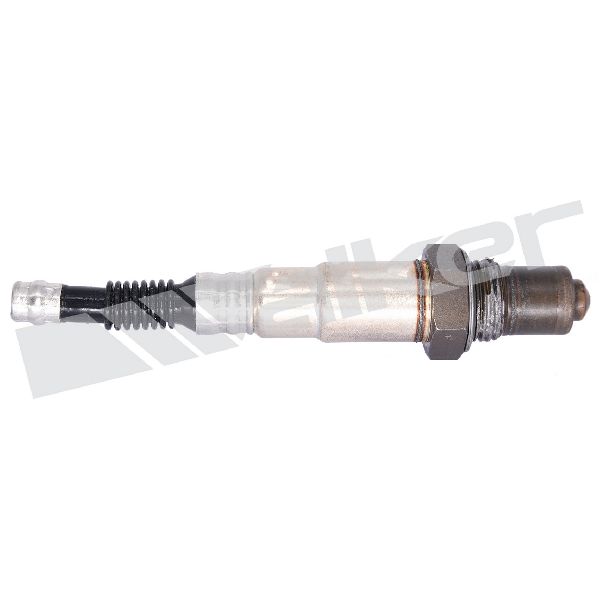
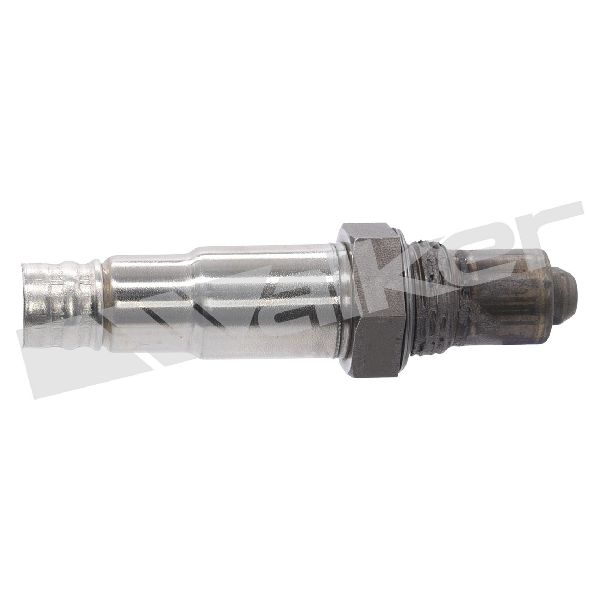
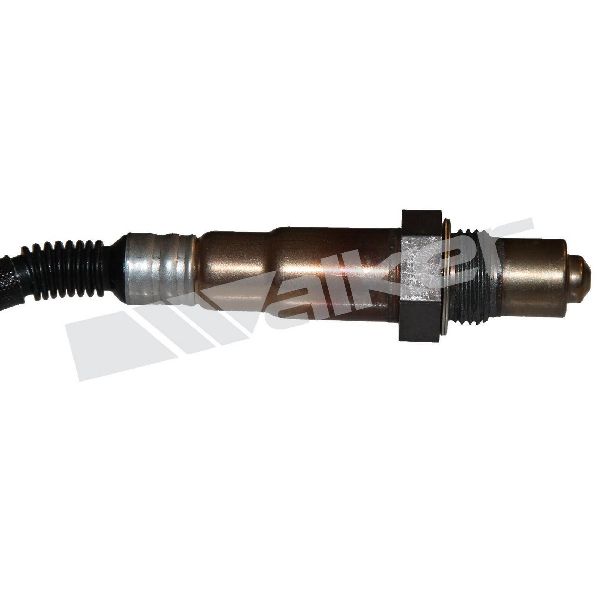
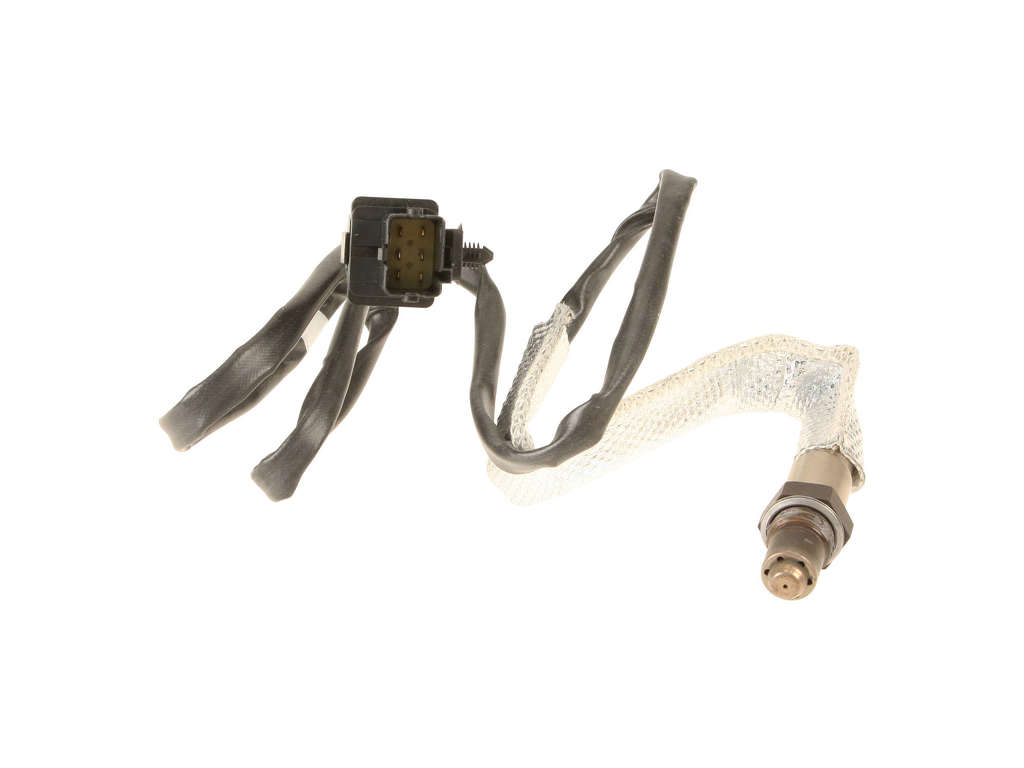
- Rear Oxygen Sensor (Downstream)
(OEM #8642230 (For 02-04 2.4T/T5 models, check VIN for others))— This sensor is a common failure point and is often the true cause of a P0420 code when the catalytic converter is actually still functional.
Trusted brands: Bosch, Denso
OEM price range: $120-$200
Aftermarket price range: $60-$150 - Catalytic Converter — This is the part indicated by the code, but should only be replaced after verifying O2 sensors and the exhaust system are functioning correctly. A failed converter is often the result of another unaddressed engine problem.
Trusted brands: Walker Exhaust, Bosal, MagnaFlow
OEM price range: $800-$1500
Related Codes That Often Appear With This One
- P0131 — This code indicates a low voltage from the upstream O2 sensor, which can affect the fuel mixture and contribute to the P0420 code.
- P0171 — A 'System Too Lean' code means the engine is getting too much air or not enough fuel. This can be caused by vacuum leaks or exhaust leaks, which are also root causes for a false P0420.
- P0300-P0305 — Misfire codes (P0300 for random, P0301-P0305 for specific cylinders) indicate that unburnt fuel is entering the exhaust, which can quickly overheat and destroy the catalytic converter, leading to a legitimate P0420 code.
Platform-Specific Known Issues

- Flex Pipe Failure: On MatthewsVolvoSite, multiple users with P2 platform cars (S60/V70) report that a cracked or leaking exhaust flex pipe was the root cause of their P0420 code. A visual inspection may not be enough; a smoke test or pressurizing the exhaust is often required to find the leak.
- Rear O2 Sensor as the Culprit: A thread on Swedespeed.com details an owner's experience with a persistent P0420 on a 2004 S60. After confirming no exhaust leaks, replacing the rear Denso O2 sensor (part #234-4600) permanently solved the issue, confirming that a 'lazy' sensor can mimic a bad catalytic converter.
- PCV System Causing Oil Consumption: A user on VolvoForums described chasing a P0420 code and a whistling noise. The issue was traced to a completely clogged PCV system. Replacing the oil trap and associated hoses stopped the noise and, after cleaning the fouled O2 sensor, the P0420 code did not return, highlighting the link between crankcase pressure and exhaust system health.
Mechanic-Grade Diagnostic Values
- Downstream O2 Sensor (Narrowband) Voltage at idle/cruise — expected: Relatively steady voltage above 0.5V, typically 0.6V-0.8V.. Failure: Voltage fluctuates rapidly, mirroring the upstream sensor's pattern, or is stuck low (e.g., <0.2V).
- Upstream O2 Sensor (Narrowband) Voltage at idle/cruise — expected: Rapidly fluctuates between approximately 0.1V and 0.9V.. Failure: Slow response, or voltage is stuck high or low.
- Upstream O2 Sensor (Wideband/AFR) Current at idle (if equipped) — expected: A specific current reading in milliamps (mA) that varies with fuel mixture. The reading in VIDA is not in volts.. Failure: Erratic or non-responsive current readings.
- Catalytic Converter Temperature Differential — expected: Outlet pipe temperature should be at least 100°F hotter than the inlet pipe temperature after the engine is warmed up and held at ~2000 RPM.. Failure: Outlet temperature is the same as or cooler than the inlet temperature, indicating the catalyst is not performing its exothermic reaction.
- Mode $06 Catalyst Efficiency Monitor (TID $21, CID $A9) — expected: The test value should be above the minimum threshold specified by the ECU. For example, a value of 1.345 against a minimum of 1.299 indicates a pass.. Failure: The test value falls below the minimum threshold, indicating the catalyst monitor test has failed.
Hidden / Shadow Codes Worth Checking
- ECM-4201: Three-way catalytic converter (TWC) efficiency, bank 1. This is the Volvo-specific equivalent of the generic P0420 code. (see via Volvo-specific diagnostic tools like VIDA (Vehicle Information and Diagnostics for Aftersales) or high-end professional scanners.)
Wiring & Ground Locations
- Engine Control Module (ECM) — Located in a black plastic box in the engine bay, on the passenger side (right side of vehicle), near the coolant reservoir. The ECM is the Bosch-branded unit inside this box.. The ECM processes all O2 sensor data and triggers the P0420 code. Poor connections or water intrusion into this box can cause a host of erratic engine codes.
- Main Engine Ground Strap — Runs from a 10mm bolt on the top of the engine, near the timing belt cover, to a connection point on the vehicle's chassis/frame.. A corroded or loose main engine ground can cause incorrect sensor readings throughout the engine management system, including from the oxygen sensors, potentially leading to a false P0420 code.
- Rear O2 Sensor Connector — The sensor wiring harness runs from the exhaust pipe up through the vehicle floor. The electrical connector is located inside the cabin, under the carpet in the passenger footwell area.. When replacing the rear O2 sensor, the connection is not made under the car but inside, requiring interior trim removal. This location protects it from the elements but can be an unexpected step for DIY repair.
Real Owner Repair Stories
- Medium article by user 'vovkasol' (2002 Volvo S60) — Persistent P0420 Check Engine Light.
❌ Tried (didn't work) Using a fuel system/catalyst cleaner (OXICAT) provided a temporary fix for a few months, but the code returned.
✅ What actually fixed it Replacing the rear (post-catalytic converter) oxygen sensor with a new Denso part permanently resolved the code. - Volvo Forums user 'Spencercat' (Volvo V70 2.4 NA with 280,000 miles) — P0420 code.
❌ Tried (didn't work) Replacing the rear O2 sensor.
✅ What actually fixed it After replacing the sensor, the code remained. Live data showed the new rear O2 sensor voltage was still fluctuating wildly, mirroring the front sensor. The owner concluded that due to the extremely high mileage, the catalytic converter itself had failed and was the true cause. - Volvo Forums user 'Hudini' (Volvo S40 (related P1 platform)) — P0420 code, accompanied by a 'sewing machine' sound when cold.
❌ Tried (didn't work) Initial diagnosis pointed towards the catalytic converter or O2 sensors.
✅ What actually fixed it The owner installed a 'CEL Boss' from IPD, which is an O2 sensor spacer that pulls the sensor out of the direct exhaust stream. This tricked the ECU and turned off the light. The underlying cause was likely a borderline-efficient converter or a small, undetected exhaust leak.
"I Checked Everything" — The Actual Cause
- While no specific stories matched this pattern exactly, a common scenario discussed on forums involves passing a smoke test but still having the P0420 code. In these cases, the root cause is often not an air leak but an engine-related issue that contaminates the catalyst over time. A prime example is a clogged PCV system causing high oil consumption, which fouls the O2 sensors and the catalyst substrate. Another is a leaking fuel injector creating a rich condition that overheats and degrades the converter. These issues would not be found with an exhaust or intake smoke test.
When the Usual Fixes Don't Work
- While replacing the rear O2 sensor is a very common fix, it is not a guaranteed solution. In a documented case involving a V70 with 280,000 miles, the owner replaced the rear O2 sensor, but the P0420 code persisted. Live data confirmed the new sensor was working but accurately reporting poor catalyst performance (fluctuating voltage). This indicates that on very high-mileage vehicles, the catalytic converter can simply wear out from age, and replacing it becomes the only correct fix after other components are ruled out.
OEM Part Supersession History
8642230→Unknown— This is a known good OEM part number for the rear oxygen sensor.
Heads up: Different engine types and model years (especially post-facelift 2005+) use different sensors. For example, part number 30774570 is listed for later 2.5L models. Always verify the correct part number with the vehicle's VIN.
Model Year Variations Within This Range
- 2005-2009: The 2005 model year marked a significant facelift, including revised engines (e.g., T5 moved from 2.3L to 2.4L), different exterior/interior styling, and potentially different emissions components. Diagnosis and parts selection should account for pre- and post-facelift differences.
- 2004+: Introduction of Partial Zero Emission Vehicle (PZEV) models in some markets. These vehicles have more complex emissions control systems, including a dual-canister evaporative emissions system, which differ from standard models.
- 2004+ (specific trims like 2.5T): Some models began using a 5-wire wideband (Air/Fuel Ratio) sensor for the front/upstream position instead of a traditional 4-wire narrowband O2 sensor. A wideband sensor's output is measured in current (mA) on a scan tool like VIDA, not voltage, which is critical for correct diagnosis.
Diagnostic Flowchart
Real Owner Stories
Aggregated from forums and TSBs cited above. Mileages and costs reflect what owners reported in those sources.
2004 Volvo S60
Symptoms: Persistent P0420 code with no exhaust leaks found during inspection.
What fixed it: Replaced the rear oxygen sensor with a Denso O2 sensor (part #234-4600), which permanently solved the issue by fixing a 'lazy' sensor that was mimicking a bad catalytic converter.
Source hint: Swedespeed.com thread
Volvo S60/V70 (P2 Platform) — ~150000 miles
Symptoms: P0420 code triggered by an exhaust leak that was not immediately visible.
What fixed it: Performed a smoke test/pressurized the exhaust to find a cracked and leaking exhaust flex pipe. Repairing the flex pipe resolved the code.
Source hint: MatthewsVolvoSite
Volvo S60
Symptoms: Chasing a P0420 code accompanied by a noticeable whistling noise coming from the engine bay.
What fixed it: Traced the issue to a completely clogged PCV system. Replaced the oil trap and associated hoses, and cleaned the fouled O2 sensor. The noise stopped and the P0420 code did not return.
Source hint: VolvoForums.com
Volvo S60
Symptoms: Check Engine Light illuminated with a P0420 code.
What fixed it: Found and repaired a leak in the exhaust flex pipe, which resolved the code.
Source hint: bobistheoilguy.com
Volvo S60 — ~180000 miles
Symptoms: P0420 code present on a high-mileage vehicle with a history of oil consumption and engine misfires.
What fixed it: Replaced the catalytic converter. Master Techs noted that while other causes are possible, high-mileage cars with oil consumption or misfire histories very often have a genuinely failed catalytic converter.
Source hint: turbobricks.com
Related OBD-II Codes
Frequently Asked Questions
Is the whistling noise from my engine bay related to the P0420 code on my S60?
What brand of oxygen sensor should I use to fix a P0420 on my 2001-2009 Volvo S60?
How can I test if my S60's PCV system is clogged and contributing to the P0420 code?
Where are the most common exhaust leaks located on the P2 Volvo S60?
Should I replace the catalytic converter immediately if I get a P0420 on my S60?
Helpful Videos


We Have This Part in Stock


The information in this article is provided for general reference and educational purposes only. Vehicle specifications, procedures, and part compatibility can vary by production date, trim level, and region. Always consult your vehicle's factory service manual and verify part numbers before purchasing or performing repairs. Safety-critical components such as airbags, seat belts, and braking systems should be installed by a qualified professional.
- Volvo S60:
- 🎬 Helpful Videos
- 🛍️ Shop This Part
- What's Unique About the 2001-2009 Volvo S60
- Symptoms You May Notice
- Most Likely Causes
- Rare But Worth Checking
- Technical Service Bulletins (TSBs) & Recalls
- Diagnosis Steps
- Parts You'll Likely Need
- Related Codes That Often Appear With This One
- Platform-Specific Known Issues
- Mechanic-Grade Diagnostic Values
- Hidden / Shadow Codes Worth Checking
- Wiring & Ground Locations
- Real Owner Repair Stories
- "I Checked Everything" — The Actual Cause
- When the Usual Fixes Don't Work
- OEM Part Supersession History
- Model Year Variations Within This Range
- Diagnostic Flowchart
- Real Owner Stories
- 2004 Volvo S60
- Volvo S60/V70 (P2 Platform) — ~150000 miles
- Volvo S60
- Volvo S60
- Volvo S60 — ~180000 miles
- Related OBD-II Codes
- Frequently Asked Questions
- 🎟️ Get 5% Off