

P0420 on 2008-2011 Subaru Impreza 2.5L: Catalyst and O2 Sensor Guide
On the 2008-2011 Impreza, P0420 most often means the front catalytic converter is failing, a common and well-documented issue for this platform. Before replacing the expensive converter, first rule out exhaust leaks (especially donut gaskets) and failing oxygen sensors. An ECM software update may also be available to widen the monitoring parameters. A new OEM converter can cost over $1,000.
- P0420 on a 2008-2011 Impreza most likely points to a failed catalytic converter, which is a common issue on this platform.
- Before spending over $1,000 on a new converter, you must rule out cheaper problems: check for exhaust leaks and consider replacing the rear O2 sensor first.
- Use a scan tool to watch live data from the O2 sensors. If the rear sensor's graph copies the front sensor's graph, the converter is bad.
- Be aware that when the Check Engine Light is on for any reason, your Subaru will disable the cruise control.
- If your engine is burning oil or has other running issues, you must fix them before replacing the converter, or the new one will fail too.
What's Unique About the 2008-2011 Subaru Impreza

Subaru's EJ-series boxer engines are known for certain characteristics that can make them more susceptible to the P0420 code. These engines can have higher rates of oil consumption or develop head gasket leaks, both of which can send contaminants like oil and coolant into the exhaust, poisoning and degrading the catalytic converter over time. The design of the exhaust system, with a catalytic converter located very close to the engine, also subjects it to intense heat cycles. As a result, premature catalytic converter failure is a well-documented issue on these Imprezas, often more so than on other vehicles where an O2 sensor is the more likely culprit. Some technicians also note that fuel formulations in certain regions can contribute to the sensitivity of the system.
Symptoms You May Notice
- Check Engine Light is on
- Cruise control is disabled (a common Subaru feature when the CEL is active)
- Vehicle will fail an emissions test
- In severe cases of a clogged converter, loss of engine power, hesitation, or a rotten egg (sulfur) smell from the exhaust
- Rattling noise from the exhaust if the internal catalyst substrate has broken apart
- Replacing the rear O2 sensor when the catalytic converter is truly dead. While it's a good diagnostic step, many owners replace the sensor only to have the code return, indicating the converter was the issue all along.
- Replacing the catalytic converter without fixing an underlying engine issue (like oil consumption, a rich fuel mixture from a bad A/F sensor, or misfires), which will cause the new converter to fail prematurely.
- Ignoring a small exhaust leak, which is a frequent and inexpensive cause for a false P0420 code.
Most Likely Causes

- Failing Front Catalytic Converter 🔴 High Probability Subaru catalytic converters of this era are known to have a finite lifespan and are sensitive to oil or coolant contamination from the engine. The internal catalyst material can degrade, become poisoned, or physically break apart, losing its ability to clean the exhaust. This is widely cited in owner forums as the ultimate fix after trying other cheaper solutions.
How to confirm: Use a scan tool to graph the voltage of the front A/F sensor and rear O2 sensor. If the rear O2 sensor's voltage graph mimics the fluctuating pattern of the front sensor, the converter is not working. An infrared thermometer can also be used; the outlet of the converter should be at least 100°F hotter than the inlet after the engine is fully warmed up. A lack of temperature difference indicates the catalyst is inactive.
Typical fix: Replace the front catalytic converter assembly. Due to emissions regulations, this is often an expensive part. It is critical to fix any underlying engine issues (oil consumption, misfires) first, or the new converter will be destroyed.
Est. part cost: $800-$1500+ - Failing Rear Oxygen (O2) Sensor 🟡 Medium Probability Oxygen sensors are wear items and can become lazy or biased over time, sending incorrect data to the ECM. While the converter is a more common failure point on this model, a faulty rear O2 sensor can falsely trigger a P0420. Many owners replace this sensor first due to its lower cost.
How to confirm: If the catalytic converter appears to be working based on temperature tests, but the rear O2 sensor voltage is erratic, flatlined, or slow to respond on a scan tool, the sensor itself is the likely cause. A healthy rear O2 sensor should show a relatively steady voltage (e.g., >0.6V) at cruising RPM.
Typical fix: Replace the rear (downstream) oxygen sensor. Use of a quality OEM-supplier part like Denso or NTK is highly recommended.
Est. part cost: $60-$180 - Exhaust Leak 🟡 Medium Probability Gaskets and exhaust pipe flanges can corrode and fail, especially in regions with road salt. A common failure point is the 'donut' gasket between the catalytic converter and the mid-pipe. An exhaust leak between the front and rear O2 sensors can allow outside oxygen to enter the exhaust stream, skewing the rear O2 sensor's readings and tricking the ECM into setting a P0420 code.
How to confirm: Perform a visual inspection of the exhaust system from the engine to the rear O2 sensor. Look for rust, cracks, or black soot around flanges and gaskets. A smoke test is the most effective way to find small leaks. 🎬 See how to perform a professional exhaust leak and converter test. You can also carefully feel for puffs of air at the gasket joints when the engine is cold and first started.
Typical fix: Replace the leaking gasket (e.g., donut gasket P/N 44022AA123) or repair the cracked section of the exhaust pipe.
Est. part cost: $10-$50 - Failing Front Air/Fuel (A/F) Ratio Sensor ⚪ Low Probability A lazy or failing front A/F sensor can cause an improper fuel mixture (running rich or lean), which over time can damage the catalytic converter. While it's less likely to be the direct cause of the P0420, its failure is a significant contributing factor that can destroy a new converter.
How to confirm: A healthy front A/F sensor should show rapid fluctuations on a scan tool's graph. If it's slow to respond or stuck, it may be faulty. This issue is often accompanied by other codes like P0171 (System Too Lean) or poor fuel economy.
Typical fix: Replace the front (upstream) air/fuel ratio sensor. This is often done as a preventative measure when replacing the catalytic converter.
Est. part cost: $100-$250
Rare But Worth Checking
- Engine Issues Causing Contamination: Underlying problems like leaking head gaskets (a known EJ25 issue), excessive oil consumption from worn piston rings, or leaking fuel injectors can send unburned fuel, coolant, or oil into the exhaust. This will destroy a new catalytic converter quickly. If you replace a converter, it's crucial to ensure the engine is in good health. A user on Reddit noted their P0420 appeared after fixing a misfire on a cylinder that was saturated with oil.
- Outdated ECM Software: Subaru has released software updates for the Engine Control Module (ECM) on various models that adjust the monitoring parameters for the P0420 code, making it less sensitive. It's worth checking with a dealer if any such updates apply to your vehicle's VIN before performing expensive repairs. A service bulletin (WVM-23R) exists for this issue, which involves reprogramming the ECM.
Diagnosis Steps

- Read the code with an OBD-II scanner to confirm P0420 is the only code present. If other codes exist (e.g., for misfires, fuel trim, or other sensor faults), address them first as they can cause the P0420.
- Visually and audibly inspect the exhaust system for any obvious leaks, damage, or corrosion, paying close attention to the gaskets before and after the catalytic converter, especially the donut gasket.
- Use a scan tool with live data capabilities. Warm up the engine to operating temperature and hold the RPM steady around 2,000-2,500 RPM.
- Observe the voltage graphs for the front A/F sensor (Bank 1, Sensor 1) and the rear O2 sensor (Bank 1, Sensor 2).
- A healthy system will show the front sensor fluctuating rapidly and the rear sensor holding a relatively steady, high voltage (e.g., >0.6V).
- If the rear sensor's graph mirrors the front sensor's fluctuations, the catalytic converter has failed.
- If the rear sensor's signal is flat, stuck, or slow to respond, suspect a faulty rear O2 sensor.
- Use an infrared thermometer to measure the temperature of the exhaust pipe just before and just after the catalytic converter. The outlet should be at least 100°F hotter than the inlet. If not, the catalyst is not working.
- Before replacing parts, check with a Subaru dealer for any available ECM software updates related to P0420 for your specific VIN.
- As a last resort before replacing the converter, some owners have reported success using a high-quality catalytic converter cleaner additive in the fuel tank, though this is not a guaranteed fix.
Parts You'll Likely Need

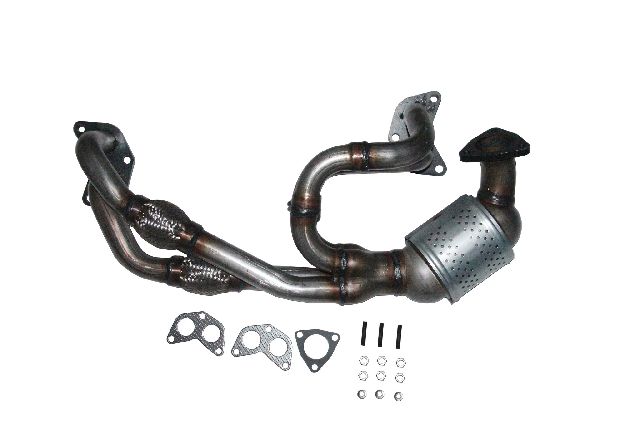
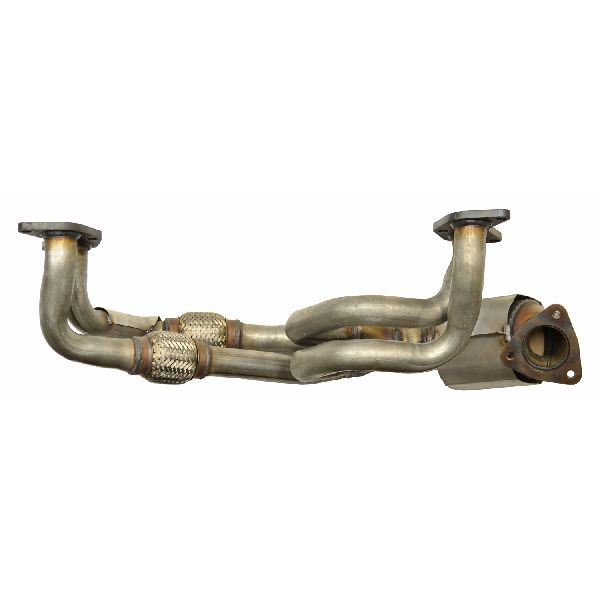
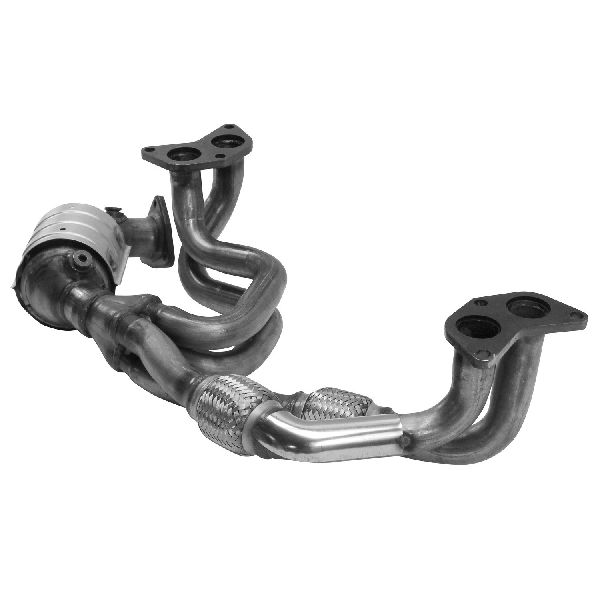
- Front Catalytic Converter Assembly
(OEM #44620AB24A (Verify by VIN))— This is the most common failure item for a P0420 code on this specific vehicle due to known longevity issues.
Trusted brands: Walker Exhaust, MagnaFlow, Dorman
OEM price range: $1000-$2200
Aftermarket price range: $600-$1200 - Rear Oxygen Sensor
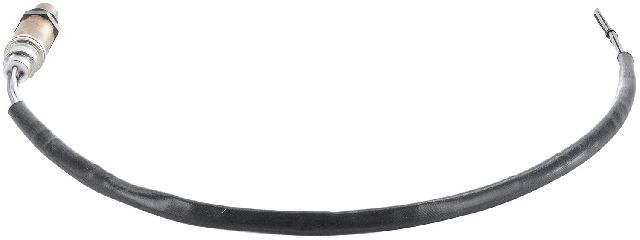
(OEM #22690AA810)— This sensor is responsible for monitoring the converter's efficiency. It can fail and falsely trigger the P0420 code, and is a common first part to replace during diagnosis due to its lower cost.
Technical Service Bulletins (TSBs) & Recalls
- While a specific TSB number for the 2008-2011 Impreza was not found in the search, multiple sources reference the existence of ECM reprogramming updates for P0420 issues on Subarus of this era. For example, TSB 11-81-07R applied to earlier models. Owners should inquire with a dealer about software updates for their specific VIN.
- Manufacturer TSB Bulletin #09-110-23R announces specific diagnostic service procedures to be followed when DTC P0420 (Catalyst System Efficiency Below Threshold Bank 1) is detected by the Engine Control Module (ECM).
Platform-Specific Known Issues
- The cruise control system is automatically disabled whenever the Check Engine Light is illuminated, which is a frequent complaint from owners experiencing this code.
- Due to the high cost of OEM catalytic converters, some owners resort to using an O2 sensor spacer (also called a 'non-fouler' or 'anti-fouler') on the rear sensor to pull it out of the direct exhaust stream. This tricks the ECM and can turn off the light, but it does not fix the underlying emissions problem and is illegal in many jurisdictions.
- Subaru has issued Technical Service Bulletins (TSBs) for some models that involve reprogramming the ECM with updated software to make the P0420 threshold less sensitive. It is worth investigating if one applies to your vehicle.
Mechanic-Grade Diagnostic Values
- Ignition Coil Primary Side Resistance — expected: 12,800 Ohms (12.8 kOhms) +/- 15%. Failure: Reading is significantly outside the specified range.
- Ignition Coil Secondary Side Resistance — expected: 0.73 Ohms +/- 10%. Failure: Reading is significantly outside the specified range.
- Fuel Pressure — expected: 49 - 52 PSI. Failure: Pressure is below or above this range, indicating a potential fuel delivery issue that could affect the air/fuel ratio and trigger a P0420.
- Mode $06 Catalyst Monitor (TID $81, CID $01) — expected: The test value should be below the maximum limit specified by the scan tool.. Failure: If the test value exceeds the maximum threshold, it indicates the catalyst's oxygen storage capacity is degraded, confirming the P0420 fault.
Hidden / Shadow Codes Worth Checking
- Mode $06, Test ID $81: This is not a hidden code, but a specific monitor test for Catalyst Efficiency. Accessing this data on a capable scan tool can show the raw test values and limits the ECU uses to determine if the catalyst passes or fails, often before a permanent DTC is set. (see via Use an advanced OBD-II scan tool that supports Mode $06 data display.)
Scan Tool Commands That Help
- Subaru Select Monitor (SSMIII or SSM4): Each System Check / Engine Control System / OBD System / Current Data Display — This is the OEM tool workflow to access live data streams for the A/F and O2 sensors, view current and memorized DTCs, and check monitor readiness status, which is essential for a complete P0420 diagnosis.
- Subaru Select Monitor (SSMIII or SSM4): ECM Reprogramming — Used to apply factory software updates. Subaru issued bulletin WVM-23R which involves reprogramming the ECM to make the P0420 catalyst monitor logic less sensitive. This should be checked for applicability before replacing expensive hardware.
Wiring & Ground Locations
- Rear O2 Sensor Harness Connector — The rear sensor has a short harness that runs up the side of the transmission and plugs into the main harness on top of the bell housing.. Damage to this harness or corrosion in the connector can disrupt the rear O2 sensor signal, causing a false P0420. Knowing its location is critical for testing sensor wiring continuity back to the ECM.
- Engine-to-Chassis Ground Strap — A key ground strap is located between the cylinder head and the front chassis rail.. This ground strap is noted to be of poor quality (tinned copper) and can degrade or break over time. A poor ground can introduce electrical noise and voltage offsets, potentially affecting sensor readings and contributing to false codes.
- Rear O2 Sensor Wires (at sensor) — The sensor itself typically has two white wires (heater circuit, polarity doesn't matter), and one black wire (signal).. When testing or replacing a sensor where the connector is damaged, knowing the wire functions is crucial. The two white wires are for the heater, and the black wire is the signal wire that sends voltage back to the ECM.
Real Owner Repair Stories
- Reddit user MasterCheeef in r/subaruimpreza (2008 Impreza 2.5i) — P0420 code appeared after changing spark plugs, battery, and air filter. Car was also close to stalling when braking after clearing the code.
❌ Tried (didn't work) Performing an idle relearn procedure while the engine was hot.
✅ What actually fixed it Performing the idle relearn procedure the next day when the engine was cold. This fixed the stalling issue and the P0420 code did not return after a 30-minute highway test drive. This suggests the new parts and battery disconnect caused the ECU to lose its idle calibration, affecting engine operation enough to trigger the catalyst monitor. - YouTube channel 'Fixing a Subaru P0420 - the cheap and nasty method' (Low-kilometer Subaru Impreza (exact year not specified, but similar platform)) — P0420 code would set very quickly after being cleared. Scan tool showed the rear O2 sensor was switching rapidly, mimicking the front sensor.
❌ Tried (didn't work) The owner was quoted $2200 for a new OEM catalytic converter and sought an alternative.
✅ What actually fixed it Installation of a mechanical O2 sensor spacer (also called a riser or non-fouler) on the rear O2 sensor. This pulled the sensor tip out of the direct exhaust stream, which dampened the readings and made the signal stable on the scan tool, preventing the P0420 from re-setting. The narrator notes this is legally questionable and does not fix the underlying emissions issue. - YouTube channel 'Subaru P0420 - Quick Diag & Estimate' (2007 Subaru Outback (similar EJ25 engine and exhaust design)) — P0420 code, disabled cruise control, and an audible exhaust leak.
❌ Tried (didn't work) N/A - this was a diagnostic video.
✅ What actually fixed it The diagnosis was a cracked exhaust manifold right where the pipes merge before the catalytic converter. The leak was introducing air before the front A/F sensor, causing fuel control issues and triggering the P0420. The definitive fix was replacing the entire exhaust manifold/catalytic converter assembly.
"I Checked Everything" — The Actual Cause
- In some cases, a P0420 can be caused by a cracked exhaust manifold, particularly at the collector welds before the catalytic converter. A smoke test might not reveal this leak effectively if it only opens up under the heat and vibration of a running engine. The leak introduces unmetered oxygen, which causes the front A/F sensor to report a lean condition, the ECM adds fuel, and this rich mixture can degrade the catalyst over time and skew sensor readings, triggering the P0420.
When the Usual Fixes Don't Work
- While the most common cause is a failed catalytic converter, a significant number of owners report fixing the P0420 code by addressing other issues first. Multiple forum and Reddit threads describe scenarios where replacing a lazy front A/F sensor, fixing a corroded engine ground strap, or even correcting a vacuum leak resolved the code. One owner found that after replacing spark plugs, the code appeared due to the ECU losing its idle calibration; a cold-engine idle relearn procedure fixed the problem without any parts related to the exhaust. These cases highlight the importance of a full diagnostic check before condemning the expensive catalytic converter, as the P0420 code can often be a symptom of another underlying issue affecting the air/fuel mixture.
OEM Part Supersession History
Unknown→44620AB24A— This is the current OEM part number listed for the front catalytic converter assembly for many 2008-2009 models.
Heads up: Part number 44620AB24A is listed for the 2008-2009 Legacy/Outback but is often cross-referenced for the Impreza. It is critical to verify the correct part number by VIN, as there can be differences between Federal (EPA) and California (CARB) emissions versions, and slight fitment changes across model years. Aftermarket converters for Subarus are notoriously hit-or-miss, often failing to meet the ECU's strict monitoring parameters and causing the P0420 to return.
Model Year Variations Within This Range
- 2008-2011: Subaru issued a Technical Service Bulletin (WVM-23R) for a software update to the ECM. This update modifies the catalyst monitor logic to be less sensitive, potentially preventing a P0420 code on a marginally efficient converter. A dealer can check if this update has been applied to a specific vehicle's VIN. The bulletin states that if a P0420 is present, the converter should be replaced *before* reprogramming.
Diagnostic Flowchart
Real Owner Stories
Aggregated from forums and TSBs cited above. Mileages and costs reflect what owners reported in those sources.
2009 Subaru Impreza 2.5L — 201000 miles
Symptoms: The owner experienced a persistent P0420 code and replaced both the front and rear oxygen sensors, but the code remained.
What fixed it: Determined that the catalytic converter itself was bad and required replacement after sensor replacements failed to resolve the issue.
Source hint: Reddit r/subaruimpreza: 'Has anyone solved a P0420 code?'
2008 Subaru Impreza 2.5L — 190000 miles
Symptoms: The owner replaced both oxygen sensors and ran a catalytic converter cleaner additive through the fuel tank, but the P0420 code returned.
What fixed it: Concluded that the catalytic converter had failed and was the final issue needing replacement.
Source hint: Reddit r/AskMechanics: '2008 Subaru Impreza p0420 help'
Subaru Impreza 2.5L
Symptoms: Frustration with a recurring P0420 code and the high cost of replacing the OEM catalytic converter.
What fixed it: Installed a mechanical anti-fouler spacer on the rear O2 sensor to trick the ECM and turn off the Check Engine Light as a workaround.
Source hint: Ultimate Subaru Message Board: 'how i fixed my F***ing 420 code'
Related OBD-II Codes
Frequently Asked Questions
Why is my cruise control disabled when the P0420 code triggers on my 2008-2011 Impreza?
Is there an ECM software update to fix the P0420 code on my Impreza?
Can an exhaust leak cause a P0420 on the EJ253 engine?
I replaced the rear O2 sensor but the P0420 came back. What's next?
Will an O2 sensor spacer fix the P0420 code on my Impreza?
How can I test if the catalytic converter is actually bad on my 2.5L Impreza?
Helpful Videos
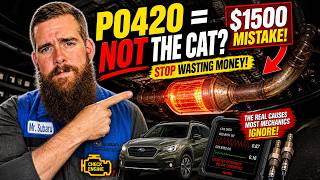
We Have This Part in Stock



The information in this article is provided for general reference and educational purposes only. Vehicle specifications, procedures, and part compatibility can vary by production date, trim level, and region. Always consult your vehicle's factory service manual and verify part numbers before purchasing or performing repairs. Safety-critical components such as airbags, seat belts, and braking systems should be installed by a qualified professional.
- Subaru Impreza:
- 🎬 Helpful Videos
- 🛍️ Shop This Part
- What's Unique About the 2008-2011 Subaru Impreza
- Symptoms You May Notice
- Most Likely Causes
- Rare But Worth Checking
- Diagnosis Steps
- Parts You'll Likely Need
- Technical Service Bulletins (TSBs) & Recalls
- Platform-Specific Known Issues
- Mechanic-Grade Diagnostic Values
- Hidden / Shadow Codes Worth Checking
- Scan Tool Commands That Help
- Wiring & Ground Locations
- Real Owner Repair Stories
- "I Checked Everything" — The Actual Cause
- When the Usual Fixes Don't Work
- OEM Part Supersession History
- Model Year Variations Within This Range
- Diagnostic Flowchart
- Real Owner Stories
- 2009 Subaru Impreza 2.5L — 201000 miles
- 2008 Subaru Impreza 2.5L — 190000 miles
- Subaru Impreza 2.5L
- Related OBD-II Codes
- Frequently Asked Questions
- 🎟️ Get 5% Off