

P0420 on 2003-2007 Saturn Ion 2.2L: Catalyst Efficiency Causes and Fixes
On a 2003-2007 Saturn Ion, code P0420 most often means the catalytic converter has failed, frequently as a direct result of a previous engine misfire (P0300) caused by a bad ignition control module. However, a faulty downstream oxygen (O2) sensor can also be the culprit. Before replacing the expensive converter, it's critical to confirm any misfire issues are resolved and to rule out exhaust leaks. Many owners replace the downstream O2 sensor as a cost-effective first diagnostic step.
- Before replacing any parts for a P0420, check for other engine codes. Misfire codes (P0300) MUST be fixed first to prevent damaging a new catalytic converter.
- A common issue on the Saturn Ion is a faulty downstream O2 sensor falsely triggering the P0420 code. Consider replacing this sensor before condemning the more expensive converter.
- Thoroughly inspect the exhaust system for leaks between the two oxygen sensors, as this can also cause the code.
- The definitive test is to graph the two O2 sensors on a scan tool. If the downstream sensor's signal mirrors the upstream sensor's, the catalytic converter has failed.
What's Unique About the 2003-2007 Saturn Ion
The Saturn Ion and its platform mates (Chevy Cobalt, HHR) using the 2.2L Ecotec L61 engine have a well-documented, high-failure-rate item: the Ignition Control Module (ICM). Heat soak from its location on top of the engine causes the ICM to fail, leading to random misfires (P0300). Driving with this misfire dumps unburned fuel into the exhaust, which rapidly overheats and destroys the catalytic converter's internal structure, causing a P0420 code to appear. This sequence is so common that a P0420 should be considered a direct consequence of an existing or recently repaired P0300. Additionally, forum consensus indicates that an aging downstream O2 sensor can fail and falsely trigger P0420, making it a logical first part to replace in diagnosis.
Symptoms You May Notice
- Check Engine Light is on
- Failure to pass an emissions test
- Reduced fuel economy
- Noticeable loss of engine power, especially on acceleration (if the converter is clogged)
- A sulfur or "rotten egg" smell from the exhaust
- Rough idle or stalling at stops
- A rattling noise from the exhaust if the internal catalyst brick has broken apart
- Replacing the catalytic converter when only the less expensive downstream O2 sensor was faulty.
- Replacing the O2 sensors and/or catalytic converter without first fixing an underlying engine misfire (P0300), leading to the new converter being quickly damaged.
- Replacing the catalytic converter when the actual problem was a small, hard-to-find exhaust leak from a cracked flex pipe or manifold.
Most Likely Causes
- Failed Catalytic Converter 🔴 High Probability Converters are often the ultimate failure point, but they are usually 'killed' by another problem. The most common root cause is an engine misfire (P0300) from a failed Ignition Control Module, which is a known weak point on the 2.2L Ecotec engine.
How to confirm: Use a scan tool to graph O2 sensor data; if the downstream sensor voltage mimics the upstream sensor's rapid fluctuations, the converter has failed. Another method is to use an infrared thermometer to measure the exhaust pipe temperature before and after the converter (when hot). The outlet should be at least 100°F hotter than the inlet; if it's the same or cooler, the converter is not working.
Typical fix: Replace the catalytic converter assembly. It is absolutely critical to ensure any other engine codes (especially P0300-P0304) are fixed first, or the new converter will be quickly destroyed.
Est. part cost: $250-$600 for an aftermarket direct-fit unit. - Failed Downstream (Rear) Oxygen Sensor 🟡 Medium Probability Numerous owner discussions on forums like SaturnFans.com confirm that a lazy or failed rear O2 sensor can send incorrect data, falsely triggering a P0420 code even when the converter is functional. Given its relatively low cost, it's a very common first attempt at a fix.
How to confirm: The definitive way is to analyze the sensor's response time and voltage on a professional scan tool. However, due to its low cost ($40-$80) compared to a converter ($300+), many owners opt to replace it as a primary diagnostic step, especially if the vehicle has over 80,000 miles.
Typical fix: Replace the downstream (post-catalyst) O2 sensor. Using a quality OEM brand like ACDelco or Denso is highly recommended to avoid compatibility issues.
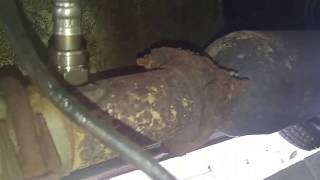
Est. part cost: $40-$80 - Exhaust System Leak ⚪ Low Probability Leaks can occur from rust or damaged gaskets on any aging vehicle. On the Ion and its platform mates, the flexible pipe section of the exhaust is a common failure point. A cracked exhaust manifold is also a known, though less common, issue on the L61 engine. A leak between the two O2 sensors allows outside air in, which causes the downstream sensor to report inaccurate readings and trigger a P0420.
How to confirm: Perform a visual inspection of the exhaust system, looking for black soot marks around flanges or cracks. Listen for hissing or ticking sounds, especially on a cold start. A smoke test is the most effective way to find small leaks.
Typical fix: Repair the leak. This may involve replacing a gasket, welding a crack, or replacing the front flex pipe or exhaust manifold.
Est. part cost: $10-$200 depending on the location and severity of the leak. - Engine Misfires or Rich/Lean Running Condition ⚪ Low Probability This is a root cause, not a direct trigger. The 2.2L Ecotec is notorious for Ignition Control Module (ICM) failures causing random misfires (P0300). Unburned fuel from these misfires enters the exhaust and melts the internal structure of the catalytic converter.
How to confirm: Check for other diagnostic trouble codes, especially P0300-P0304 (misfires) or P0171/P0172 (fuel trim). Address these codes FIRST before touching any part of the exhaust.
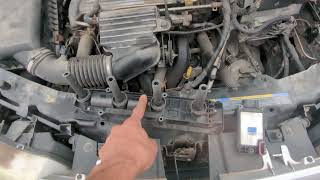
Typical fix: Repair the underlying cause. For the Ion, this almost always involves replacing the Ignition Control Module 🎬 Watch: Diagnosing common misfire codes on the 2.2L engine. and the ignition coil pack assembly as a single unit, along with new spark plugs.
Est. part cost: $100-$250 for ignition components.
Diagnosis Steps
- Scan for Codes: Use an OBD-II scanner to confirm P0420 is present. Check for any other codes, especially misfire (P0300-P0304) or fuel system (P0171, P0172) codes. If any misfire codes are present, you must diagnose and fix them first. A misfire will destroy a new catalytic converter.
- Inspect for Exhaust Leaks: Visually and audibly inspect the entire exhaust system from the engine to the tailpipe, especially on a cold start when leaks are louder. Pay close attention to the exhaust manifold for cracks, the flexible pipe section before the converter, and all gasket flanges. A professional smoke test is the best method for finding elusive leaks.
- Analyze O2 Sensor Data: Using a scan tool with live data graphing, warm the engine to operating temperature and hold the RPM steady at around 2,500.
- - A good converter will show the upstream sensor (Sensor 1) fluctuating rapidly between ~0.1V and ~0.9V, while the downstream sensor (Sensor 2) remains relatively stable and steady, typically above 0.5V.
- - A bad converter is indicated if the downstream sensor's voltage begins to fluctuate widely, mirroring the pattern of the upstream sensor.
- Test with Infrared Thermometer: As an alternative or confirmation, use an infrared temperature gun on the hot exhaust. Measure the pipe temperature just before the catalytic converter and just after it. A functioning converter should be at least 100°F hotter at the outlet.
- Consider the Downstream O2 Sensor: If the converter appears inefficient but isn't completely dead, and the sensor is original or has high mileage, replacing the downstream O2 sensor is a logical and cost-effective diagnostic step before condemning the converter.
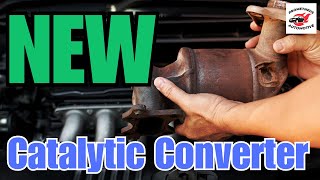
- Condemn the Catalytic Converter: If all other causes (misfires, leaks, faulty O2 sensor) have been definitively ruled out and the diagnostic tests clearly show inefficiency, the catalytic converter has failed and needs to be replaced. 🎬 Watch: Step-by-step Saturn Ion catalytic converter replacement walkthrough.
Parts You'll Likely Need
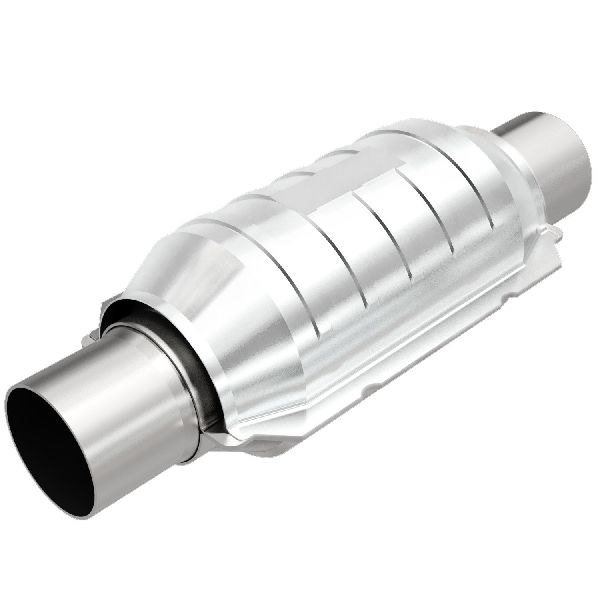
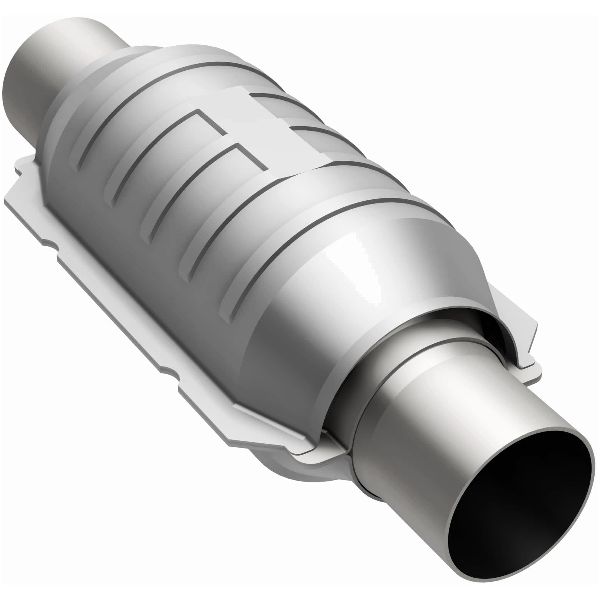
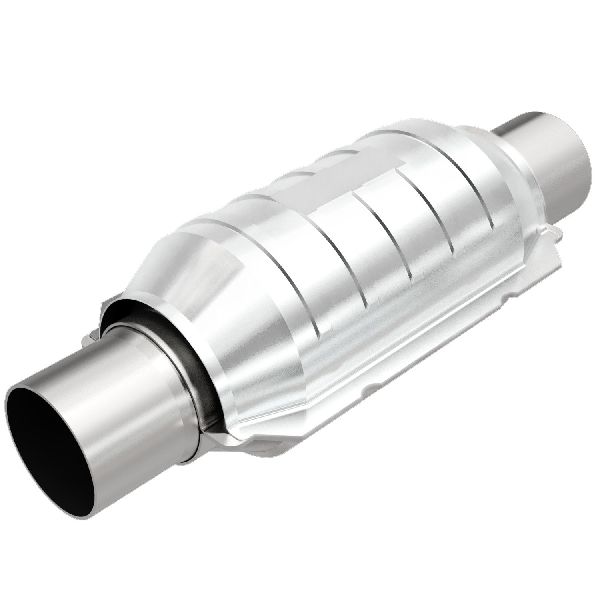
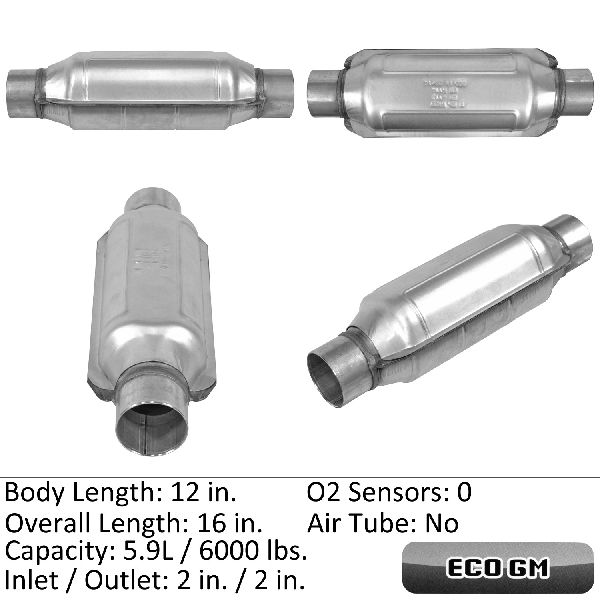
- Catalytic Converter — This is the most common direct cause for the P0420 code, indicating the part has reached the end of its service life or, more likely, has been damaged by an engine issue like a misfire.
Trusted brands: Walker, MagnaFlow, AP Exhaust, Eastern Catalytic
OEM price range: $700-$1200+ (Note: OEM converters are often part of a larger assembly and can be very expensive)
Aftermarket price range: $250-$600
Related Codes That Often Appear With This One
- P0300 — This is the most common companion code. A random misfire, typically from a failed ICM on the L61 engine, allows unburned fuel to enter the exhaust, which destroys the catalytic converter and triggers P0420 as a direct result.
- P0171 — A 'System Too Lean' condition, often caused by a vacuum leak or a failing upstream O2 sensor, can alter combustion chemistry and contribute to catalyst inefficiency over the long term.
- P0139 — 'O2 Sensor Circuit Slow Response (Bank 1, Sensor 2)'. This code indicates the downstream sensor itself is failing. If you see this code, the sensor is the problem, not the converter. Replacing a sensor with this code may then reveal a P0420 if the new, working sensor correctly identifies a bad converter that the old sensor was too slow to report.
Technical Service Bulletins (TSBs) & Recalls
- TSB 07-06-04-019E: While often cross-referenced online with emissions issues, this TSB actually pertains to water leaks into the cabin causing shorts in the accelerator pedal position sensor harness, leading to a P2138 code and Reduced Engine Power, not P0420.
- Informational Bulletin for 2006 models: A GM bulletin for 2006 Ions and Cobalts (L61 engine) acknowledged that the ECM could set a false P0420 because manufacturing coatings inside a new converter could temporarily affect efficiency readings until they burned off.
Platform-Specific Known Issues
- Ignition System Failure Cascade: The most significant issue for this platform is the failure cascade: 1) The Ignition Control Module (ICM) fails from heat. 2) This causes a P0300 random misfire. 3) The misfire dumps raw fuel into the exhaust. 4) The fuel destroys the catalytic converter. 5) A P0420 code appears. Any P0420 diagnosis must begin by investigating the health of the ignition system.
- Cracked Exhaust Manifold/Flex Pipe: While not universal, a notable number of owners report exhaust leaks from a cracked exhaust manifold or a torn flex pipe, either of which can trigger a false P0420.
- Early Model TSB Context: GM noted in a bulletin for early model year platform mates (2006 Cobalt/Ion) that a P0420 could be set prematurely on new vehicles as manufacturing coatings inside the converter had not yet fully burned off, affecting initial sensor readings. While not applicable to most repair scenarios, it shows the sensitivity of the monitoring system.
Mechanic-Grade Diagnostic Values
- Downstream O2 Sensor (Sensor 2) Voltage — expected: Relatively stable reading between 0.4V and 0.7V when the catalyst is working efficiently.. Failure: Voltage fluctuates rapidly, mimicking the upstream sensor's pattern (swinging between ~0.1V and ~0.9V). A voltage stuck between 0.426V and 0.461V can indicate a 'No Activity' fault (P0140).
- Long Term Fuel Trim (LTFT) — expected: Within +/- 10% at idle and steady cruise.. Failure: A sustained LTFT greater than +20.3% will trigger a P0171 (System Too Lean) code, which is a common underlying cause of catalyst damage.
- Rear O2 Sensor High Voltage DTC Trigger — expected: Voltage should remain below 1.0V.. Failure: The PCM will set a P0138 code if the sensor voltage exceeds 1.065V, indicating a short to voltage in the circuit or a faulty sensor.
Hidden / Shadow Codes Worth Checking
- Mode $06, Test ID $21: This is not a DTC but a view into the raw data for the Catalyst Monitor test for Bank 1. It allows a technician to see the catalyst's current efficiency value as calculated by the PCM, compared against the minimum and maximum passing thresholds. (see via A professional scan tool capable of displaying Mode $06 data. The value for Test ID $21 can be checked; if it is very close to the failure threshold, the converter is marginal, even if a P0420 has not been set yet.)
Scan Tool Commands That Help
- GM Tech2 or equivalent professional scan tool: Crankshaft Position (CKP) System Variation Learn — This procedure is critical after replacing the Ignition Control Module (ICM) or crankshaft position sensor to fix a P0300 misfire. Failure to perform the relearn can cause the PCM to inaccurately detect misfires, leading to confusion when diagnosing a subsequent P0420.
- GM Tech2 or equivalent professional scan tool: Injector Balance Test — Used to diagnose a potential root cause for catalyst failure. This test fires each fuel injector individually and measures the corresponding fuel pressure drop, helping to identify a leaking or clogged injector that could be creating a rich/lean condition and damaging the converter over time.
Wiring & Ground Locations
- G105 — On the lower left rear of the engine, above or near the starter motor.. This is a primary engine ground. Corrosion or a loose connection here can create electrical noise and unstable sensor readings for critical components like the O2 sensors and the ECM itself, potentially causing a false P0420 code.
- G107 — On the left rear corner of the cylinder head.. A poor ground connection at the cylinder head can directly impact the performance and readings of sensors mounted on the engine, including the upstream O2 sensor. An erratic upstream signal can disrupt the PCM's ability to accurately calculate catalyst efficiency.
- Braided Ground Strap — Typically connects the valve cover to the cylinder head or chassis.. This strap ensures the ignition system components mounted to the valve cover are properly grounded. A missing or corroded strap can contribute to weak spark and intermittent misfires, which is the primary killer of catalytic converters on this engine.
Real Owner Repair Stories
- SaturnFans.com forum discussion (2003 Saturn Ion 2.2L) — Initially had a P0300 random misfire. After fixing that, a P0420 code appeared along with engine stuttering and stalling at stops.
❌ Tried (didn't work) Replacing air filter, fuel filter, spark plugs, and using injector cleaner did not fix the initial P0300.
✅ What actually fixed it The P0300 was fixed by replacing the ignition control module and coil packs. The subsequent P0420 and stalling pointed towards a damaged converter or faulty O2 sensor. The forum advice was to replace the rear O2 sensor first with a Denso brand part, clear the codes, and drive for over 50 miles to allow the catalyst monitor to run. - Reddit user in r/Saturn_Cars (Saturn Ion with only 18,000 original miles) — Persistent P0420 Check Engine Light.
❌ Tried (didn't work) Replacing the post-catalyst (downstream) O2 sensor., Installing an O2 sensor defouler/spacer., Using a chemical catalytic converter cleaner twice.
✅ What actually fixed it The consensus from other users was that these attempted fixes would not work and the catalytic converter itself had failed, despite the low mileage. The likely root cause was a prior failure of the ignition module, which is known to destroy the catalyst quickly. The final fix required replacing the catalytic converter. - Reddit user in r/volt (Chevrolet Volt (different vehicle, but same code and relevant principle)) — P0420 code appeared.
❌ Tried (didn't work) Took car to the dealer, who diagnosed it as a failed catalytic converter and O2 sensors.
✅ What actually fixed it The actual cause was a leaking PCV valve, which is integrated into the valve cover on that engine. The leak allowed unmetered air into the crankcase, affecting the air/fuel mixture and triggering the P0420. Replacing the valve cover resolved the code, proving the dealer's initial diagnosis was incorrect. - NHTSA ODI #10653681 — An owner reported a slight shudder at a stoplight followed by a loss of acceleration and power steering. Upon inspection, P0420 for the catalytic converter was the only code that appeared, despite the battery and alternator testing fine.
"I Checked Everything" — The Actual Cause
- A common scenario for the 2.2L Ecotec is a P0420 caused by a heat-sensitive failure within the Ignition Control Module (ICM). An exhaust smoke test will come back clean, and the car may run perfectly when cold. However, once the engine warms up, the ICM fails intermittently, causing misfires that destroy the catalytic converter. The root cause is electronic, not a physical leak.
- A leaking PCV valve, sometimes integrated into the valve cover, can introduce unmetered air into the engine. This won't be found with a standard exhaust smoke test. The lean condition created by the extra air can alter engine operation and cause the PCM to incorrectly flag the catalyst's efficiency, setting a P0420 code.
OEM Part Supersession History
ACDelco 213-1570 (GM OE 12573721)→Part is listed as discontinued by some vendors. Replacement is typically sourced from other brands.— End of production life for the specific part number.
Heads up: Forum veterans strongly recommend using the OEM manufacturer, Denso, for replacement O2 sensors on this platform. Using other brands, particularly Bosch, has been anecdotally reported to cause persistent issues or incorrect readings.
Model Year Variations Within This Range
- 2007 only: The 2.2L L61 engine in the 2007 Ion was upgraded with the more powerful Engine Control Unit (ECU) from the 2.4L engine. This change in the PCM could result in different software logic for diagnostics, different sensor calibrations, and require model-year-specific software updates compared to 2003-2006 models.
- 2005-2007: For 2005, the optional 5-speed automatic and CVT were replaced by a single 4-speed 4T45-E automatic transmission. While not a direct engine part, the PCM software is different between automatic and manual cars, and a major transmission change often involves PCM software tweaks that could subtly affect how engine parameters are monitored.
Diagnostic Flowchart
Real Owner Stories
Aggregated from forums and TSBs cited above. Mileages and costs reflect what owners reported in those sources.
2003 Saturn Ion 2.2
Symptoms: A P0420 code appeared immediately after replacing the ICM and coils to fix a P0300 misfire.
What fixed it: Diagnosing the O2 sensors versus the catalytic converter, as the previous misfire had likely initiated a failure cascade that damaged the converter.
Source hint: SaturnFans.com thread titled 'P0300 fixed but now have P0420 (2003 Saturn Ion 2.2)'
Saturn Ion L61
Symptoms: Triggered a P0420 code due to an exhaust leak.
What fixed it: Identifying and addressing a cracked exhaust manifold, which members confirmed is a known, if rare, issue on the L61 engine.
Source hint: SaturnFans.com thread titled 'Are there any known issues relating to the exhaust manifold?'
Related OBD-II Codes
Frequently Asked Questions
I have a P0300 and a P0420 code on my 2.2L Ecotec. Which should I fix first?
Does TSB 07-06-04-019E apply to my P0420 code?
Could a cracked exhaust manifold cause a P0420 on my Saturn Ion?
Is there a TSB for false P0420 codes on the 2006 Saturn Ion?
What brand of oxygen sensor should I use if replacing the downstream sensor?
Helpful Videos
We Have This Part in Stock

The information in this article is provided for general reference and educational purposes only. Vehicle specifications, procedures, and part compatibility can vary by production date, trim level, and region. Always consult your vehicle's factory service manual and verify part numbers before purchasing or performing repairs. Safety-critical components such as airbags, seat belts, and braking systems should be installed by a qualified professional.
- Saturn Ion:
- 🎬 Helpful Videos
- 🛍️ Shop This Part
- What's Unique About the 2003-2007 Saturn Ion
- Symptoms You May Notice
- Most Likely Causes
- Diagnosis Steps
- Parts You'll Likely Need
- Related Codes That Often Appear With This One
- Technical Service Bulletins (TSBs) & Recalls
- Platform-Specific Known Issues
- Mechanic-Grade Diagnostic Values
- Hidden / Shadow Codes Worth Checking
- Scan Tool Commands That Help
- Wiring & Ground Locations
- Real Owner Repair Stories
- "I Checked Everything" — The Actual Cause
- OEM Part Supersession History
- Model Year Variations Within This Range
- Diagnostic Flowchart
- Real Owner Stories
- 2003 Saturn Ion 2.2
- Saturn Ion L61
- Related OBD-II Codes
- Frequently Asked Questions
- 🎟️ Get 5% Off