

P0420 on 2014-2021 Ram 1500 5.7L Hemi: Cracked Manifold, O2 Sensor, or Bad Cat?
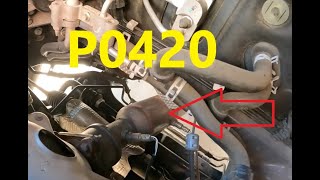
On a 2014-2021 Ram 1500, P0420 is most often caused by a failing catalytic converter, a faulty downstream oxygen sensor, or an exhaust leak. For models with the 5.7L Hemi engine, a cracked exhaust manifold due to broken mounting bolts is a very common cause of leaks that trigger this code. A software update may also be required per manufacturer TSBs.
- On a Ram 1500 with a 5.7L Hemi, always suspect an exhaust manifold leak (cracked manifold, broken bolts) as a primary cause for P0420.
- Do not replace the expensive catalytic converter until you have ruled out exhaust leaks and a faulty downstream O2 sensor.
- A ticking noise from the engine bay on a cold start is a classic symptom of an exhaust manifold leak on these trucks.
- Check with a dealer to see if your truck's VIN has an open campaign or TSB for a PCM software update, which could be a simple fix.
What's Unique About the 2014-2021 Ram 1500

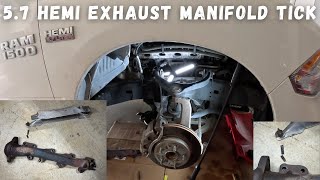
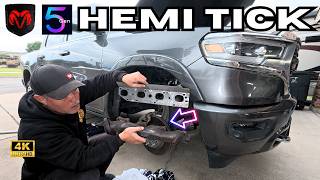
For the Ram 1500, especially those equipped with the 5.7L Hemi engine, the P0420 code is frequently linked to a platform-specific weakness: cracked exhaust manifolds and broken manifold bolts. These cracks create exhaust leaks that allow unmetered oxygen to enter the system, confusing the oxygen sensors and incorrectly signaling a bad catalytic converter. The most common failure point is the rearmost bolt on the passenger side manifold. 🎬 Watch: Why these manifold bolts break and how to spot the leak. Additionally, Ram has issued several Technical Service Bulletins (TSBs) that address this code with a PCM software update, indicating the factory diagnostic thresholds can be overly sensitive.
Diagnostic Flowchart
Tap your situation to follow the diagnostic path that matches what you're seeing on this vehicle.
Generation note: This range covers the end of the 4th generation (2014-2018 'Classic') and the start of the 5th generation (2019-2021 'DT'). The issue of cracked exhaust manifolds and broken bolts is particularly well-documented on the 4th and 5th generation 5.7L Hemi engines. While the code's meaning is the same, part numbers for catalytic converters and O2 sensors will differ between generations and even body styles (Classic 'DS' vs. new 'DT').
Symptoms You May Notice
- Check Engine Light is on.
- Reduced engine performance or acceleration.
- A distinct ticking noise from the engine bay (often the passenger side), especially when cold, that may quiet down as the engine warms up. This is a classic sign of an exhaust manifold leak.
- A sulfur or "rotten egg" smell from the exhaust, indicating a failing catalytic converter.
- Vehicle will fail an emissions test.
- Immediately replacing the catalytic converter without first checking for exhaust leaks (especially cracked manifolds on Hemis) or testing the oxygen sensors. An exhaust leak is a very common and less expensive root cause on these trucks.
Most Likely Causes

- Cracked Exhaust Manifold / Exhaust Leak 🔴 High Probability The 5.7L Hemi engine's cast iron manifolds are known to crack or warp due to repeated heat cycles, often breaking the rearmost mounting bolts. This is a widely reported issue in owner forums, with many threads dedicated to the 'Hemi tick'.
How to confirm: Perform a visual inspection of the exhaust manifolds, looking for cracks, especially behind the heat shield. Check for loose heat shields, which can indicate broken bolts underneath. Listen for a distinct ticking noise on a cold start that fades as the truck warms. A smoke test of the exhaust system is the most definitive way to find leaks.
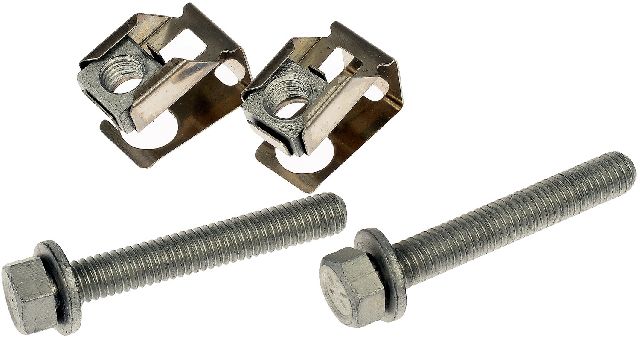
Typical fix: Replace the cracked exhaust manifold, broken bolts, and gaskets. Many owners upgrade to stronger aftermarket bolts (like ARP or Stage 8) or shorty/long-tube headers to prevent recurrence. Some aftermarket manifolds from brands like BD Diesel are made from thicker, high-silicon ductile iron to resist warping.
Est. part cost: $150-$400 for an OEM or aftermarket manifold kit. - Failing Catalytic Converter 🔴 High Probability Catalytic converters can fail from age, contamination from engine oil/coolant, or damage from an unresolved engine misfire sending unburnt fuel into the exhaust.
How to confirm: After ruling out exhaust leaks and O2 sensor issues, the converter is the likely culprit. A mechanic can use a scan tool to graph O2 sensor data; if the downstream sensor voltage mirrors the upstream sensor, the converter is not working. An infrared thermometer can also be used to check temperatures before and after the converter; it should be significantly hotter (100°F+) after the converter when at operating temperature.
Typical fix: Replace the catalytic converter assembly. This is often part of the Y-pipe. Ensure any underlying engine issues are fixed first to avoid damaging the new converter.
Est. part cost: $600-$1800+ - Faulty Downstream Oxygen (O2) Sensor 🟡 Medium Probability O2 sensors are wear items and can become 'lazy' or contaminated over time, sending incorrect signals that mimic a bad converter.
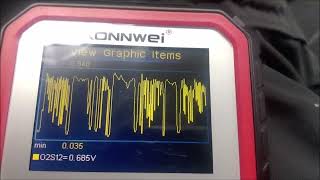
How to confirm: Use a scan tool to graph the downstream O2 sensor's voltage at a steady RPM. A healthy sensor should show a relatively stable voltage (e.g., ~0.5-0.7V). If it's flatlined or switching rapidly like the upstream sensor, it may be faulty. A common diagnostic trick is to swap the Bank 1 and Bank 2 downstream sensors (if they are interchangeable) and see if the code changes to P0430.
Typical fix: Replace the Bank 1 downstream (Sensor 2) oxygen sensor.
Est. part cost: $50-$120 - Outdated PCM Software ⚪ Low Probability Ram has released multiple TSBs (e.g., #18-033-25 REV. A, #1808723) indicating that the PCM may need to be reprogrammed to correct an overly sensitive catalyst monitor. This can also address other issues like rough idle or emissions test readiness problems.
How to confirm: A dealership or qualified shop with access to FCA's service database can check your VIN to see if your vehicle's PCM software is up to date and if any TSBs apply.
Typical fix: Reprogram the Powertrain Control Module (PCM) with the latest software.
Est. part cost: $0 under warranty, or $100-$250 for labor.
Rare But Worth Checking
- Engine Misfires or Fuel System Issues: An underlying issue like a leaking fuel injector, bad spark plug, or vacuum leak can cause a rich or lean condition. This can send unburnt fuel into the exhaust, overheating and destroying the catalytic converter over time. These issues will typically set other codes (e.g., P030x, P017x) alongside P0420.
- Exhaust Leak After the O2 Sensor: While less common, some owners have reported that a significant exhaust leak even after the downstream O2 sensor can, in some cases, draw in ambient air during exhaust pulses and cause an erroneous P0420 code.
Diagnosis Steps
- Scan for any other DTCs. Address any misfire (P0300-P0308), fuel trim (P0171, P0174), or O2 sensor circuit codes first, as they can be the root cause.
- On a cold engine, start the truck and listen for a distinct 'ticking' sound from the exhaust manifolds, which would indicate a leak. The sound often diminishes as the metal expands with heat.
- Visually inspect the exhaust system from the cylinder heads to the post-catalyst O2 sensor. Pay extremely close attention to the exhaust manifolds for cracks and check for broken manifold bolts, a known issue on the 5.7L Hemi. Check if the heat shield is loose, as this can signal broken bolts.
- If no obvious leaks are found, use a scan tool with live data graphing capabilities. Warm the engine to operating temperature.
- Graph the voltage for the Bank 1 Sensor 1 (upstream) and Bank 1 Sensor 2 (downstream) O2 sensors.
- The upstream sensor (B1S1) should fluctuate rapidly between approximately 0.1 and 0.9 volts.
- The downstream sensor (B1S2) should show a much steadier, flatter voltage (typically above 0.5V) if the catalytic converter is working properly.
- If the B1S2 voltage is mirroring the rapid fluctuations of B1S1, the catalytic converter has likely failed or there is an exhaust leak upstream of it.
- If the B1S2 voltage is flatlined (stuck at one voltage) or very slow to respond, the sensor itself is likely the problem.
- If all hardware checks out, contact a dealer to see if any PCM software updates related to TSBs #18-033-25 or #1808723 are available for your vehicle.
Parts You'll Likely Need

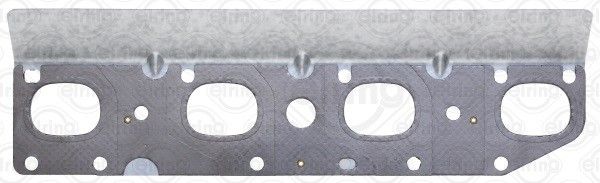
- Exhaust Manifold Kit (Bank 1 / Passenger Side)
(OEM #68591585AA (for 5.7L Hemi, check specific application))— A cracked exhaust manifold is a very common cause of P0420 on Hemi-equipped Ram 1500s. The kit should include the manifold, gasket, and new bolts.
Trusted brands: Mopar, Dorman, BD Diesel
OEM price range: $200-$350
Aftermarket price range: $150-$300 - Catalytic Converter Assembly
(OEM #Varies greatly by year and configuration (e.g., 68263748AA for some 2019 models))— If the converter has failed internally due to age, contamination, or engine issues, it must be replaced to resolve the code.
Trusted brands: Walker Exhaust, MagnaFlow, AP Exhaust Technologies
OEM price range: $1000-$1800+
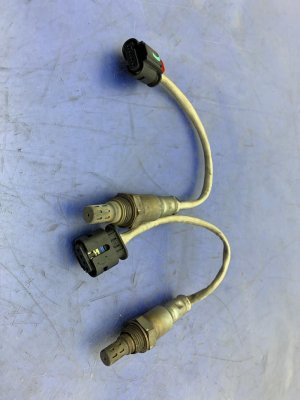
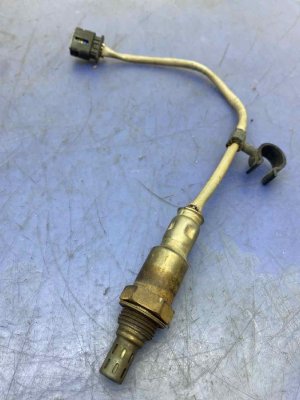
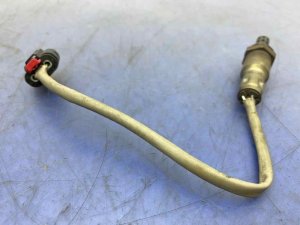
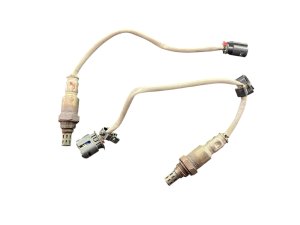
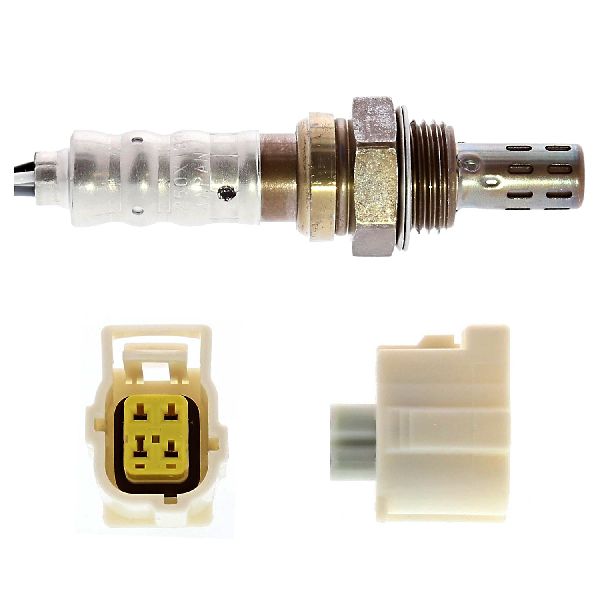
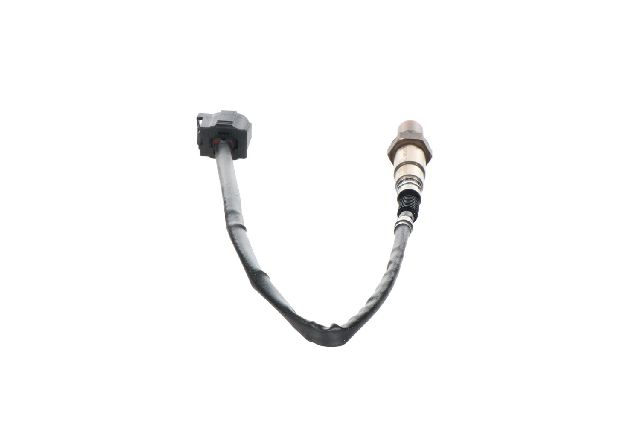
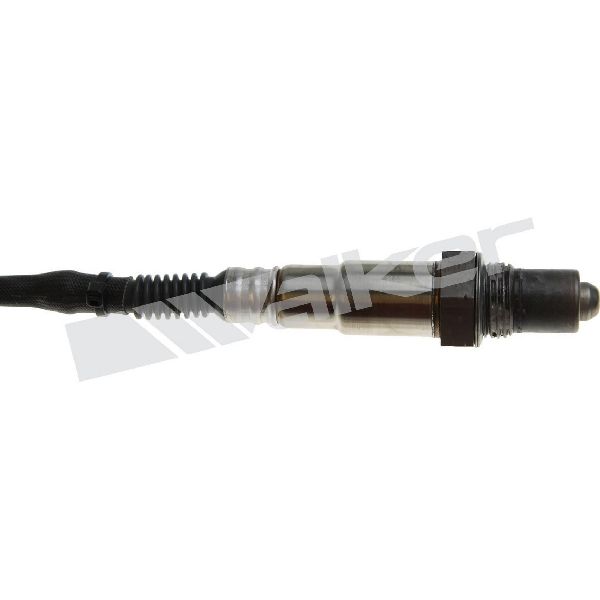
Aftermarket price range: $600-$1200 - Oxygen Sensor (Bank 1, Sensor 2)
(OEM #68090640AB (fits many 5.7L applications, but verify))— The downstream O2 sensor is what monitors converter efficiency. A faulty sensor can provide incorrect readings, falsely triggering the P0420 code.
Trusted brands: Mopar, NTK/NGK, Denso, Bosch
OEM price range: $70-$130
Aftermarket price range: $50-$120
Related Codes That Often Appear With This One
- P0430 — This is the identical code for Bank 2 (the driver's side of the engine). Seeing both P0420 and P0430 together strongly points towards a systemic issue like a need for a PCM software update as mentioned in TSB #18-033-25 REV. A, a fuel delivery problem, or a common exhaust leak affecting both banks. It is also common to see both codes when aftermarket headers without catalytic converters are installed.
Technical Service Bulletins (TSBs) & Recalls
- 18-033-25 REV. A
- 1808723
- 18-019-15 REV C
- 09-019-23
Platform-Specific Known Issues
- Cracked exhaust manifolds and broken manifold bolts on the 5.7L Hemi are the most significant platform-specific issue causing P0420. The 'Hemi tick' on cold starts is the primary symptom owners report.
- Forum discussions frequently recommend replacing factory manifolds with aftermarket shorty headers and using upgraded bolts from brands like ARP to provide a more permanent solution than simply replacing with another OEM manifold that may fail again.
Mechanic-Grade Diagnostic Values
- Upstream O2 Sensor (B1S1) Voltage — expected: Rapidly fluctuating between ~0.1V and ~0.9V at operating temperature.. Failure: Slow or no fluctuation, stuck at a specific voltage.
- Downstream O2 Sensor (B1S2) Voltage — expected: Relatively stable voltage, typically between 0.5V and 0.8V at steady RPM.. Failure: Voltage fluctuates rapidly, mirroring the upstream sensor, or is stuck very low (near 0V).
- Mode $06 Catalyst Monitor Test (Bank 1) — expected: The measured value should be within the MIN/MAX range specified by the scan tool. For some scanners, this may be TID $21 or TID $A9.. Failure: The test result is marked as 'FAIL' or the measured value is outside the acceptable range.
- Catalytic Converter Temperature Differential — expected: The outlet temperature should be at least 100°F hotter than the inlet temperature after the engine is fully warmed up and running.. Failure: Little to no temperature difference between the inlet and outlet pipes of the converter.
Hidden / Shadow Codes Worth Checking
- Pending Codes (Mode 7): A P0420 code may first appear as a 'pending' or 'maturing' fault in Mode 7 of a generic OBD-II scanner before it fully matures and illuminates the Malfunction Indicator Lamp (MIL). (see via Use an OBD-II scan tool and look for a 'Pending DTCs' or 'Mode 7' menu option.)
Scan Tool Commands That Help

- wiTECH (or advanced aftermarket scanner): Catalyst Monitor Drive Cycle / Readiness Test — To force the PCM to run the internal test for catalyst efficiency after a repair or clearing codes. This helps verify the fix without waiting for the monitor to run on its own. A specific drive cycle must be followed.
- wiTECH (or advanced aftermarket scanner): Live Data Graphing (O2 Sensors) — This is the primary diagnostic step to visually compare the upstream and downstream O2 sensor signals to determine if the catalytic converter is functioning or if a sensor is faulty.
- wiTECH: Check for PCM Calibration Updates — Used to verify if the vehicle's software is outdated, as several TSBs for P0420 on Ram trucks are resolved by a PCM flash.
Wiring & Ground Locations
- Engine Ground Strap — Typically runs from the back of the cylinder head to the firewall or frame.. A poor engine ground can cause erratic sensor readings, including from the O2 sensors, leading to false diagnostic codes.
- Frame Ground Point — A common ground point is located on the frame in the driver's side wheel well, forward of the upper control arm.. Multiple sensors and modules share common ground points. Corrosion or looseness at this location can affect the PCM and its sensor inputs.
- PCM Ground Circuits — Located at the PCM connector itself. Diagnosis requires a breakout box to avoid damaging terminals.. Directly testing the PCM's own ground circuits is a critical step if sensor readings are erratic and other grounds appear intact.
Real Owner Repair Stories
- Medium.com user story (2002 Volvo S60 (demonstrates a common P0420 pattern applicable across brands)) — Check Engine Light with P0420 code.
❌ Tried (didn't work) Using a fuel system cleaner (CLEANTEC)., Using a catalytic converter cleaner (OXICAT), which worked temporarily but the code returned months later.
✅ What actually fixed it Replacing the downstream (post-catalytic converter) oxygen sensor. - DodgeForum.com user 'GrossmeisterB' (2004 Ram 1500 5.7L HEMI) — Very rough idle, sputtering/hesitation when driving, P0300 (Random Misfire) code that went away, but driveability issues remained.
❌ Tried (didn't work) Replacing some wiring.
✅ What actually fixed it The user was in the process of diagnosing faulty O2 sensors as the next logical step after addressing the misfire code, demonstrating the link between engine performance issues and subsequent catalyst efficiency codes. The final fix was not posted, but the diagnostic path is instructive.
"I Checked Everything" — The Actual Cause
- A common scenario for the 5.7L Hemi is a hairline crack in the exhaust manifold that produces the 'Hemi tick' when cold but seals itself when the engine warms up and the metal expands. A smoke test performed on a warm engine may therefore show no leaks, leading a technician to misdiagnose the issue as a bad catalytic converter. The true cause is the manifold leak that only occurs during the cold-start and warm-up phase, which is when the catalyst monitor often runs.
OEM Part Supersession History
Varies→68591585AA— This is the current Mopar part number for the passenger side (Bank 1) exhaust manifold kit.
Heads up: This part number is a kit that includes the manifold, gaskets, bolts, and heat shield, intended as a complete replacement.
Model Year Variations Within This Range
- 2019: In 2019, Ram sold both the 4th generation body style as the 'Ram 1500 Classic' (DS platform) and the all-new 5th generation (DT platform). While they share the 5.7L Hemi, exhaust components and other parts are not always interchangeable. Parts for a 2018 DS are generally compatible with a 2019 DS Classic, but not a 2019 DT.
Helpful Videos

Used OEM Parts in Stock

New Aftermarket Parts Available


The information in this article is provided for general reference and educational purposes only. Vehicle specifications, procedures, and part compatibility can vary by production date, trim level, and region. Always consult your vehicle's factory service manual and verify part numbers before purchasing or performing repairs. Safety-critical components such as airbags, seat belts, and braking systems should be installed by a qualified professional.
- Ram 1500:
- 🎬 Helpful Videos
- 🛍️ Shop This Part
- What's Unique About the 2014-2021 Ram 1500
- Diagnostic Flowchart
- Symptoms You May Notice
- Most Likely Causes
- Rare But Worth Checking
- Diagnosis Steps
- Parts You'll Likely Need
- Related Codes That Often Appear With This One
- Technical Service Bulletins (TSBs) & Recalls
- Platform-Specific Known Issues
- Mechanic-Grade Diagnostic Values
- Hidden / Shadow Codes Worth Checking
- Scan Tool Commands That Help
- Wiring & Ground Locations
- Real Owner Repair Stories
- "I Checked Everything" — The Actual Cause
- OEM Part Supersession History
- Model Year Variations Within This Range
- 🎟️ Get 5% Off