

P0420 on 2009-2010 Pontiac Vibe 2.4L: Catalyst Efficiency Causes and Fixes
On the 2009-2010 Pontiac Vibe with the 2.4L Toyota 2AZ-FE engine, a P0420 code is most often caused by a catalytic converter that has failed due to excessive oil consumption. This oil burning is a known, widespread issue with this engine due to a piston ring design flaw. Before replacing the expensive converter, you must investigate and ideally fix the engine's oil burning issue, otherwise the new converter will fail again.
- For the 2009-2010 Vibe 2.4L, P0420 is almost always caused by a catalytic converter killed by engine oil.
- Before replacing the catalytic converter, you MUST check for excessive oil consumption. A new converter will fail again if the oil burning issue is not addressed.
- Diagnose by graphing the upstream and downstream O2 sensors. If the rear sensor mimics the front, the converter is bad.
- While a bad O2 sensor or exhaust leak can cause P0420, they are less likely than a fouled converter on this specific engine.
What's Unique About the 2009-2010 Pontiac Vibe
The 2009-2010 Pontiac Vibe is a unique joint-venture vehicle, mechanically identical to the Toyota Matrix. It uses the Toyota 2.4L 2AZ-FE engine, which is widely known for a design flaw in the piston rings that leads to excessive oil consumption. The oil return holes in the pistons become clogged with carbon, preventing oil from returning to the crankcase and causing it to be burned in the combustion chamber. This burning oil contaminates the exhaust and is the primary reason catalytic converters fail prematurely on these specific vehicles, making the P0420 code a very common and expensive problem. Simply replacing the converter without addressing the oil consumption will likely lead to the new converter failing again quickly.
Symptoms You May Notice
- Check Engine Light is on
- Vehicle fails an emissions test
- Reduced engine power and sluggish acceleration, especially under load
- Worse than usual fuel economy
- Rattling noise from under the car if the converter's internal structure has broken apart
- A sulfur or "rotten egg" smell from the exhaust
- Excessive oil consumption (losing a quart every 1,000-1,500 miles) is a precursor symptom
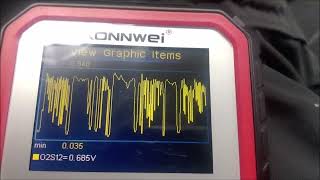
- Replacing the oxygen sensors when the catalytic converter is truly the failed part. The P0420 code often means the sensors are working correctly and have accurately detected a bad converter. Graphing sensor data is key to avoiding this. 🎬 Watch: How to tell if it's a bad converter or O2 sensor.
Most Likely Causes
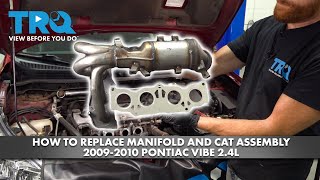
- Failed Catalytic Converter due to Oil Contamination 🔴 High Probability The 2.4L 2AZ-FE engine has a well-documented history of excessive oil consumption from faulty piston ring design. The oil return holes clog, causing oil to burn and travel into the exhaust, where it coats the precious metals inside the catalytic converter, rendering it useless.
How to confirm: First, confirm excessive oil consumption by monitoring the oil level between changes; a loss of a quart in under 1,200 miles is a definitive sign. Second, use a scan tool to graph O2 sensor data. At a steady 2,500 RPM, if the downstream sensor's voltage reading fluctuates rapidly, mirroring the upstream sensor, the converter is not working. A healthy converter will show a much flatter, steadier downstream reading.
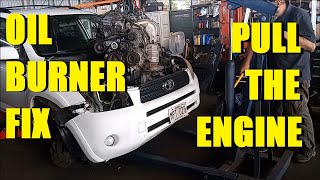
Typical fix: The proper fix is to first address the engine's oil consumption (which requires piston/ring replacement 🎬 See what's involved in a full 2AZ-FE engine oil burner fix.) and then replace the catalytic converter. Due to the high cost of engine repair (often exceeding vehicle value), many owners opt to only replace the converter and monitor oil levels closely, or use thicker oil (like 5W-30 instead of 0W-20) to slow consumption.
Est. part cost: $300-$800 for an aftermarket converter; $1000+ for OEM. - Failed Downstream Oxygen (O2) Sensor 🟡 Medium Probability
How to confirm: Use a scan tool to graph the downstream O2 sensor's voltage at a steady 2500 RPM. A healthy sensor on a working converter should show a relatively stable voltage (e.g., >0.5V). If the sensor's reading is stuck at one voltage, is slow to respond, or is erratic without mirroring the upstream sensor, the sensor itself is likely faulty. It's a much cheaper part to replace for diagnosis than the converter.
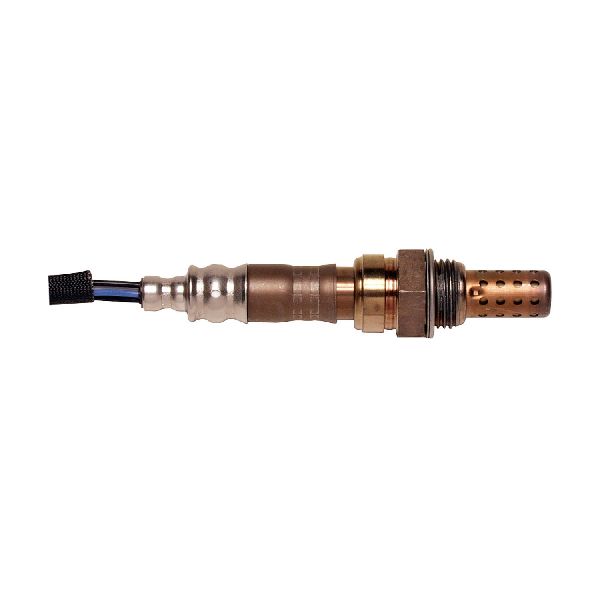
Typical fix: Replace the downstream (Bank 1, Sensor 2) oxygen sensor. Denso is the original equipment manufacturer (OEM).
Est. part cost: $45-$100 - Exhaust System Leak ⚪ Low Probability
How to confirm: Visually inspect the exhaust system from the engine to the rear O2 sensor for any cracks, holes, or failing gaskets, especially at the manifold and flex pipe. A smoke test is the most effective way to pinpoint small, hard-to-see leaks. A leak can allow outside oxygen in, fooling the rear O2 sensor and mimicking a bad converter.
Typical fix: Repair the leak by replacing the damaged pipe section or gasket.
Est. part cost: $20-$200
Rare But Worth Checking
- Failing Upstream Air/Fuel Ratio Sensor: A failing front A/F sensor can cause an incorrect air/fuel mixture. Running too rich can overwhelm the catalytic converter over time, leading to a P0420 code. This would usually be accompanied by other codes or poor fuel economy.
- Engine Misfires: Unburned fuel from an engine misfire can enter the exhaust and overheat the catalytic converter, causing rapid damage. You would typically have other codes like P0300-P0304 stored along with P0420.
Diagnosis Steps
- Check for any other stored trouble codes with an OBD-II scanner. Address any misfire, fuel system, or other sensor codes first, as they can be the root cause.
- Monitor your engine's oil level closely over 1,000 miles. If you are adding more than half a quart, you likely have the 2AZ-FE oil consumption issue which is the primary suspect.
- Inspect the exhaust system thoroughly for any leaks between the engine and the downstream O2 sensor. Pay close attention to the manifold and flange gaskets. A shop can perform a smoke test to be certain.
- Use a scan tool with live data graphing capabilities. Bring the engine to full operating temperature.
- Set engine RPM to a steady 2,500. Graph the voltage of the upstream (Bank 1, Sensor 1 A/F sensor) and downstream (Bank 1, Sensor 2 O2 sensor).
- The upstream A/F sensor should fluctuate rapidly. The downstream O2 sensor on a good converter should show a relatively steady, flat voltage (typically above 0.5V).
- If the downstream sensor's graph line mirrors the upstream sensor's rapid fluctuations, the catalytic converter has failed and is not storing oxygen.
- If the downstream sensor's voltage is flat but very low (e.g., <0.2V), this could indicate an exhaust leak. If it is stuck and unresponsive, the sensor itself may be bad.
- If diagnosis points to a bad converter, you must decide whether to address the underlying oil consumption issue (engine rebuild), mitigate it (thicker oil, frequent top-offs), or accept that the new converter will have a shortened lifespan.
Parts You'll Likely Need
- Catalytic Converter (Direct Fit)
(OEM #Interchanges with Toyota P/N 17420-0D160, 17420-0D170.)— This is the most common failure on the 2.4L Vibe, usually as a direct result of oil contamination from the engine's known consumption issue. Aftermarket converters are significantly cheaper but may have a shorter lifespan (30k-60k miles) than OEM.
Trusted brands: Walker (e.g., 54735 EPA), MagnaFlow (e.g., 51078 Manifold, 49502 Direct-Fit), Eastern Catalytic
OEM price range: $1000+
Aftermarket price range: $300-$800 - Downstream Oxygen Sensor (Bank 1 Sensor 2)
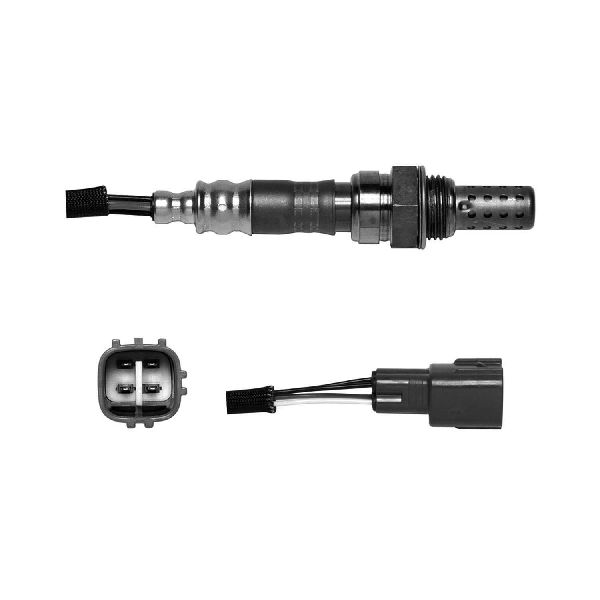
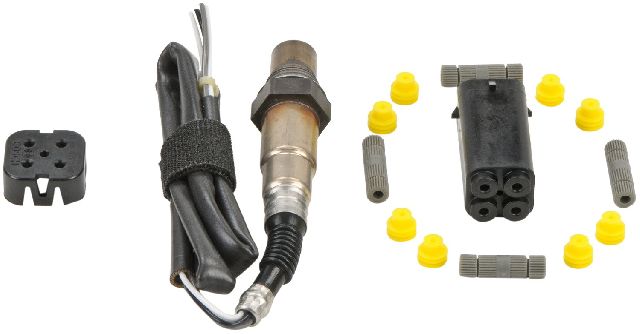
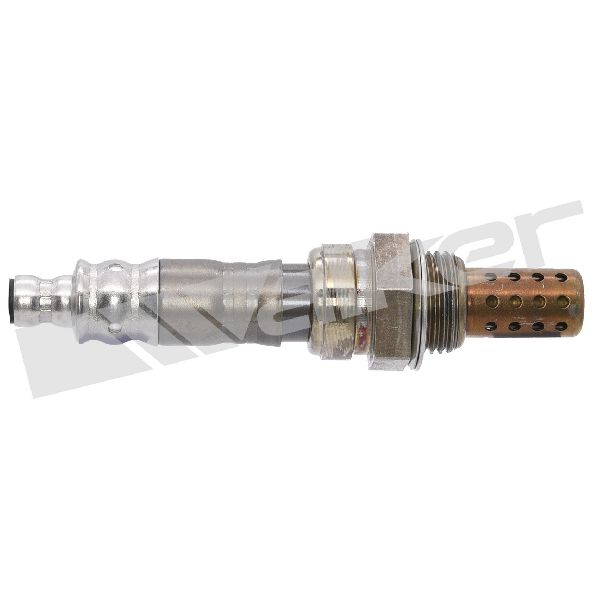
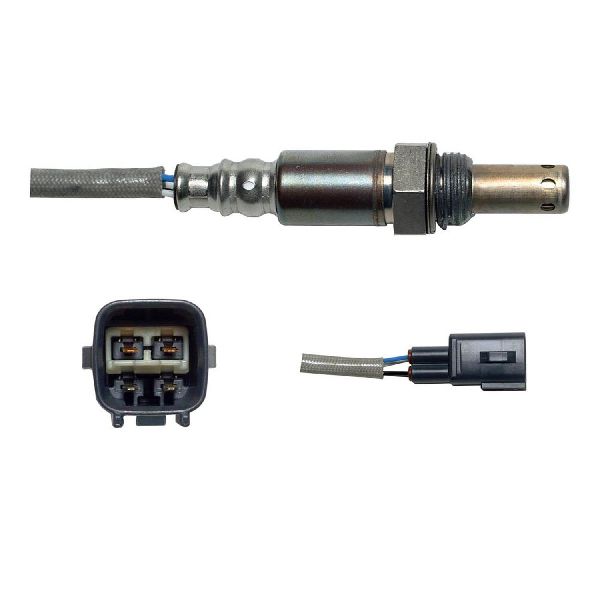
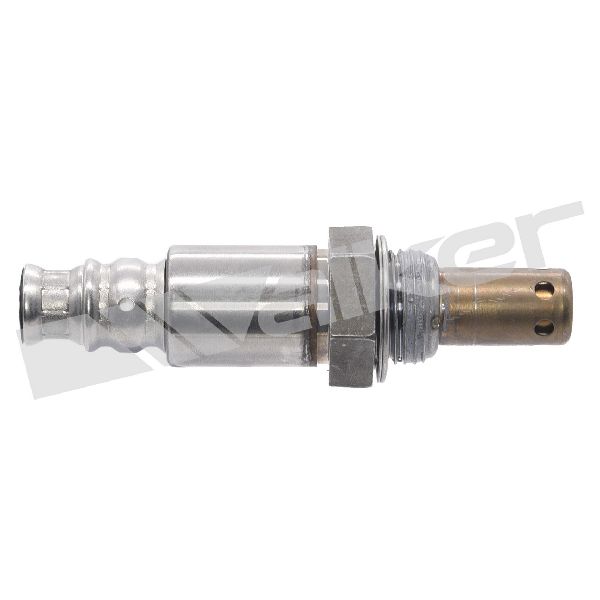
(OEM #Denso 234-4622 is the direct OEM equivalent. Cross-references to GM 88975493 and Toyota 89465-21110.)— A faulty rear O2 sensor can send incorrect data to the computer, falsely triggering a P0420 code. It is a common maintenance item and a logical part to test or replace before the more expensive converter.
Trusted brands: Denso (OEM), Bosch, NGK/NTK
OEM price range: $80-$120
Aftermarket price range: $45-$90
Related Codes That Often Appear With This One
- P0171 — System Too Lean. This can indicate an intake or exhaust leak that is contributing to the P0420 code by introducing unmetered air.
- P0300, P0301, P0302, P0303, P0304 — Random or specific cylinder misfires. Misfires allow unburnt fuel into the exhaust, which can superheat and destroy the catalytic converter, causing a P0420 code.
Technical Service Bulletins (TSBs) & Recalls
- Toyota TSB T-SB-0094-11 (Rev2, Aug 2011): Titled '2AZ-FE Engine Oil Consumption', this bulletin officially acknowledged the issue for models including the 2009 Matrix. It outlined the repair procedure, which involv
Platform-Specific Known Issues
- The 2AZ-FE Oil Consumption Defect: The Toyota 2AZ-FE 2.4L engine used in this vehicle is notorious for excessive oil consumption due to a piston ring design flaw. The oil control ring's drainage holes are too small and become clogged with carbon over time. This prevents oil from returning to the crankcase, causing it to be burned off in the combustion chamber. This is the root cause of most P0420 codes on this platform, as the burning oil poisons the catalytic converter.
- Real Owner Story: On GenVibe.com, a user with a 2009 Vibe 2.4L reported burning a quart and a half of oil every 2500 miles at only 55k miles. When they contacted GM dealers, they were told there was no active warranty or recall for the Vibe, despite the well-known Toyota issue. This highlights the difficult position Vibe owners are in, as the GM branding complicates claims related to the underlying Toyota engine defect.
Mechanic-Grade Diagnostic Values
- Upstream Air/Fuel (A/F) Sensor Voltage (Forced Rich) — expected: Less than 3.0 V. Failure: Voltage does not drop below 3.0 V when fuel injection volume is increased by 25% via a scan tool.
- Upstream Air/Fuel (A/F) Sensor Voltage (Forced Lean) — expected: More than 3.35 V. Failure: Voltage does not rise above 3.35 V when fuel injection volume is decreased by 12.5% via a scan tool.
- Downstream Oxygen (O2) Sensor Voltage (Warm Idle) — expected: Relatively steady voltage, typically drifting above 0.5V (500mV).. Failure: Voltage fluctuates rapidly between ~0.1V and ~0.9V, mirroring the upstream sensor, indicating a failed converter.
- O2 Sensor Heater Circuit Resistance — expected: 1.8 to 3.4 ohms for the upstream sensor on similar Toyota engines. Some sources suggest a broader range of 10-25 ohms is acceptable for O2 heaters in general.. Failure: A very low resistance (e.g., 1.7 ohms or less) indicates a near-short, while a very high or open reading indicates a failed heater.
- Long Term Fuel Trim (LTFT) — expected: Ideally close to 0%, but within +/- 10%.. Failure: Sustained high positive fuel trims (e.g., +19% or more) indicate the engine is compensating for a lean condition (like a vacuum or exhaust leak), which can overheat and damage the catalytic converter over time.
Hidden / Shadow Codes Worth Checking
- Mode $06, TID $21: This is not a DTC, but a specific monitor ID within the OBD-II system's Mode $06 data. TID $21 corresponds to the Catalyst Monitor Bank 1. Technicians can view the test value and compare it against the minimum/maximum thresholds set by the manufacturer to see how close the catalyst is to failing, even before the P0420 code is set. (see via A professional scan tool capable of displaying Mode $06 data is required.)
Scan Tool Commands That Help
- Toyota Techstream: Active Test: 'Control the Injection Volume for A/F Sensor' — This function allows a technician to manually command a rich or lean air/fuel mixture (+25% or -12.5%) and observe the reaction of the upstream A/F sensor and downstream O2 sensor. It is a definitive way to test sensor response and oxygen storage capacity of the catalyst.
- Toyota Techstream: Data List: 'CAT MON' — While driving under specific enabling conditions, this data PID will change from 'INCMPL' (Incomplete) to 'COMPL' (Complete). If it completes and no code is set, the monitor has passed for that drive cycle. It helps in verifying if a repair was successful without waiting for the MIL to come back on.
Wiring & Ground Locations
- G102 — Left front of the engine compartment.. This is a primary engine compartment ground. A poor connection here can affect the Powertrain Control Module (PCM) and its sensor readings, potentially causing erratic signals from the O2 sensors.
- G105 — Left rear of the engine, on the engine itself.. This is a critical engine block ground. The O2 sensors rely on a solid engine ground for accurate readings. Corrosion or a loose connection at this point can introduce voltage offsets and trigger false codes.
- PCM Connector X2, Pin 109 (Red wire) — At the Powertrain Control Module (PCM), which is located on the left side of the engine compartment.. This pin supplies the ground for the O2 sensor heater circuit, which is controlled by the PCM. If heater circuit codes are present with P0420, checking for 12V at this pin (with connector unplugged, key on) can verify the integrity of the circuit up to the PCM.
Real Owner Repair Stories
- GenVibe.com user 'Derf' (2005 Pontiac Vibe 1.8L (similar diagnostic principle)) — Random P0420 code, seemed more frequent on cold days.
❌ Tried (didn't work) Replacing the upstream (pre-cat) oxygen sensor made the code appear more frequently.
✅ What actually fixed it Replacing the downstream (post-cat) oxygen sensor with an OEM Denso part resolved the code. The previous owner had installed a non-OEM sensor which failed prematurely. - ScannerDanner Forum user (2003 Toyota Camry 2.4L 2AZ-FE with 178,000 miles) — Persistent P0420 code.
❌ Tried (didn't work) Standard O2 sensor tests at idle were inconclusive.
✅ What actually fixed it The user concluded the catalytic converter was poisoned and had failed. The root cause was identified as a flex pipe leak that went unfixed for months, causing the engine to run with very high positive fuel trims. This rich condition eventually destroyed the converter. The final fix was replacing the catalytic converter. - NHTSA ODI #11163266: An owner reported that after three major tune-ups, the engine light would only shut off temporarily before returning with codes P0300 and P0420.
- NHTSA ODI #10552104: A driver noted that after replacing spark plugs and an intake cam actuator solenoid, they were informed the P0420 code for the catalytic converter was returning.
When the Usual Fixes Don't Work
- While the P0420 code on the 2AZ-FE engine is overwhelmingly caused by a failed catalytic converter due to oil burning, it is not a 100% certainty. In one documented case on a similar vehicle, a user replaced the catalytic converter but the P0420 code returned almost immediately. The issue was only resolved after also replacing a faulty non-OEM downstream oxygen sensor with a proper OEM Denso unit. This highlights that even when the primary cause is highly probable, secondary faults with cheaper components like sensors should not be dismissed, especially if non-OEM parts were used in previous repairs.
Diagnostic Flowchart
Real Owner Stories
Aggregated from forums and TSBs cited above. Mileages and costs reflect what owners reported in those sources.
2009 Pontiac Vibe 2.4L — 55000 miles
Symptoms: Burned a quart and a half of oil every 2500 miles. When contacting GM dealers, the owner was told there was no active warranty or recall for the Vibe, despite the well-known Toyota engine defect.
What fixed it: Not specified in source; owner was denied warranty coverage by GM dealers.
Source hint: GenVibe.com - Thread '2009+ Vibe Oil Consumption?'
2009 Pontiac Vibe 2.4L
Symptoms: Owner reported burning a quart of oil every 1000-1200 miles, which was subsequently followed by a P0420 code.
What fixed it: Not specified in source.
Source hint: BobIsTheOilGuy.com - Thread 'P0420 code (possible lemon)'
Toyota 2AZ-FE 2.4L Engine — ~90000 miles
Symptoms: Severe oil consumption due to clogged piston oil return holes, with the issue often becoming severe around 80k-100k miles.
What fixed it: Not specified in source.
Source hint: BobIsTheOilGuy.com - Thread 'Toyota 2AZ-FE oil burn'
Related OBD-II Codes
Frequently Asked Questions
Does Toyota TSB T-SB-0094-11 for oil consumption apply to my 2009-2010 Pontiac Vibe 2.4L?
Why is my 2.4L Vibe burning so much oil before triggering the P0420 code?
Can I just replace the catalytic converter on my Vibe without rebuilding the engine?
What brand of oxygen sensor should I buy if the downstream sensor is causing the P0420 on my Vibe?
How can I tell if my Vibe's P0420 is caused by a bad catalytic converter or just an exhaust leak?
Helpful Videos
We Have This Part in Stock

The information in this article is provided for general reference and educational purposes only. Vehicle specifications, procedures, and part compatibility can vary by production date, trim level, and region. Always consult your vehicle's factory service manual and verify part numbers before purchasing or performing repairs. Safety-critical components such as airbags, seat belts, and braking systems should be installed by a qualified professional.
- Pontiac Vibe:
- 🎬 Helpful Videos
- 🛍️ Shop This Part
- What's Unique About the 2009-2010 Pontiac Vibe
- Symptoms You May Notice
- Most Likely Causes
- Rare But Worth Checking
- Diagnosis Steps
- Parts You'll Likely Need
- Related Codes That Often Appear With This One
- Technical Service Bulletins (TSBs) & Recalls
- Platform-Specific Known Issues
- Mechanic-Grade Diagnostic Values
- Hidden / Shadow Codes Worth Checking
- Scan Tool Commands That Help
- Wiring & Ground Locations
- Real Owner Repair Stories
- When the Usual Fixes Don't Work
- Diagnostic Flowchart
- Real Owner Stories
- 2009 Pontiac Vibe 2.4L — 55000 miles
- 2009 Pontiac Vibe 2.4L
- Toyota 2AZ-FE 2.4L Engine — ~90000 miles
- Related OBD-II Codes
- Frequently Asked Questions
- 🎟️ Get 5% Off