

P0420 on 2013-2024 Mazda CX-5: Catalyst Efficiency Causes and Fixes
On a 2013-2024 Mazda CX-5, code P0420 often points to a failing catalytic converter, but it's critical to rule out cheaper problems first. A faulty downstream oxygen (O2) sensor or an exhaust leak are common, less expensive culprits. Expect to pay ~$80-$150 for an aftermarket O2 sensor, or over $1,200 for a new catalytic converter. For 2014-2016 models, a related code (P0421) is often caused by a simple PCM software bug that requires a dealer update, not a new converter.
- Do not immediately replace the catalytic converter. It is the most expensive part and may not be the problem.
- Always diagnose in order: check for other codes, inspect for exhaust leaks, and then test the oxygen sensors.
- A scan tool that can graph live data is the most important tool for diagnosing P0420 correctly.
- For 2014-2016 models, ask a dealer about a potential PCM software update related to catalyst monitoring before performing expensive repairs.
- Any engine misfires or running issues MUST be fixed before replacing the catalytic converter, or the new one will be damaged as well.
What's Unique About the 2013-2024 Mazda CX-5

For the first-generation CX-5 (2013-2016), Mazda issued a Technical Service Bulletin (TSB 01-010/16) for a related code, P0421, caused by overly sensitive PCM software that could incorrectly flag the catalyst. While not P0420 specifically, it shows a history of catalyst monitoring sensitivity and should be investigated before any part replacement on these model years. Additionally, a major recall (Mazda recall 3719F / NHTSA 19V497000) for 2018-2019 models addressed PCM software that could cause misfires due to improper cylinder deactivation control, a known cause of catalytic converter damage. This means that before replacing an expensive converter, it's crucial to ensure the vehicle's software is up to date and that other potential causes are thoroughly investigated.
Generation note: This guide covers two generations of the Mazda CX-5: the first generation (KE, 2013-2016) and the second generation (KF, 2017-2024). While the fundamental causes of P0420 are the same, a specific TSB regarding catalyst monitoring software (TSB 01-010/16 for P0421) is highly relevant for the KE generation. The KF generation (specifically 2018-2019 models) is subject to a PCM recall that can cause misfires, a primary killer of catalytic converters.
Symptoms You May Notice
- Check Engine Light is on
- Vehicle may fail an emissions inspection
- Reduced fuel economy (in some cases)
- Sluggish acceleration or lack of power (if the converter is clogged)
- Sulphur or 'rotten egg' smell from the exhaust (less common)
- Immediately replacing the catalytic converter without testing the oxygen sensors or checking for exhaust leaks. The O2 sensor is a much cheaper part and a common cause of a false P0420 code.
- On 2014-2016 models, replacing the catalytic converter for a P0421 code without first performing the PCM software update specified in TSB 01-010/16.
Most Likely Causes

- Failing Downstream Oxygen (O2) Sensor 🔴 High Probability Oxygen sensors are wear items and are a frequent point of failure on most vehicles as they age. They can become 'lazy' and send incorrect data, falsely triggering a P0420 code. It is one of the most common misdiagnoses for a bad catalytic converter.
How to confirm: Use a scan tool with live data graphing. Observe the voltage of the downstream O2 sensor (Bank 1, Sensor 2) at a steady 2,500 RPM on a warm engine. A healthy sensor paired with a good converter will show a relatively stable voltage (e.g., 0.6V-0.8V). If the sensor's voltage is flat, stuck, or slow to respond, the sensor itself is likely bad.
Typical fix: Replace the downstream (post-catalyst) oxygen sensor.
Est. part cost: $70-$180 - Failing Catalytic Converter 🟡 Medium Probability Converters can fail from age, but failure is often accelerated by other engine problems like misfires or burning oil, which dump unburned fuel or contaminants into the exhaust, overheating and destroying the catalyst substrate. A Reddit user with a 2019 CX-5 experienced an intermittent P0420 at only 50k miles, highlighting that premature failure can occur.
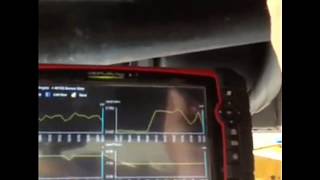
How to confirm: After confirming O2 sensors and the exhaust system are good, use a scan tool to graph both upstream and downstream O2 sensors. If the downstream sensor's waveform mimics the upstream sensor's rapid fluctuations, the converter is not storing oxygen and has failed. A non-contact thermometer can also be used; the outlet of a working converter should be significantly hotter than the inlet.
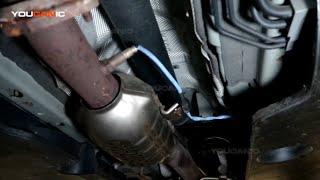
Typical fix: Replace the catalytic converter assembly. On Skyactiv engines, this is often integrated with the exhaust manifold.
Est. part cost: $1200-$2500 - Exhaust System Leak 🟡 Medium Probability Leaks from cracked exhaust manifolds, failed gaskets, or rusted flex pipes can allow outside oxygen into the exhaust stream. This extra oxygen fools the downstream O2 sensor into providing readings that suggest poor catalyst efficiency. A cracked flex pipe is a known issue on some CX-5 models.
How to confirm: Perform a visual inspection of the exhaust system from the engine to the rear O2 sensor, looking for black soot marks, cracks, or rust holes. Listen for ticking or hissing noises, especially when the engine is cold. A professional smoke test is the most effective way to pinpoint hard-to-see leaks. 🎬 Watch: How an exhaust leak can trigger a P0420 code
Typical fix: Repair the leak by replacing the failed gasket, welding the crack, or replacing the damaged section of pipe.
Est. part cost: $20-$300 - Engine Misfires or Fuel Mixture Issues ⚪ Low Probability Worn spark plugs, failing ignition coils, or leaky fuel injectors can cause incomplete combustion. This sends raw fuel into the catalytic converter, where it ignites and can melt the internal structure, leading to a P0420 code. The 2018-2019 CX-5 was recalled for a software issue that could induce misfires, making this a critical check on those models.
How to confirm: Check for other stored trouble codes, especially misfire codes (P0300-P0304) or fuel trim codes (P0171, P0172). Inspect spark plugs and ignition coils for wear or damage. Monitor fuel trim data with a scan tool. Ensure OEM-spec spark plugs are used, as off-brand plugs can cause issues on Skyactiv engines.
Typical fix: Address the root cause of the misfire or fuel issue, such as replacing spark plugs, ignition coils, or fuel injectors.
Est. part cost: $100-$500
Rare But Worth Checking
- PCM Software Out of Date: On 2014-2016 models, Mazda released TSB 01-010/16 for a related P0421 code caused by overly sensitive software. It's worth checking with a dealer if a PCM update is available, as it could resolve incorrect catalyst efficiency monitoring. Owners on forums report this should be the first step for a P0421 code.
Diagnosis Steps

- Check for other DTCs. Use a scan tool to see if any other codes are present. Misfire, fuel system, or O2 sensor circuit codes must be diagnosed and repaired first.
- Inspect for Exhaust Leaks. Visually and audibly inspect the entire exhaust system from the engine block to the downstream O2 sensor. Pay close attention to the manifold gasket and flex pipe. A smoke test is the most reliable method.
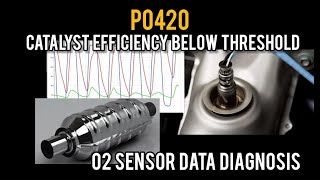
- Analyze Oxygen Sensor Data. Use a scan tool with live graphing capabilities. Warm up the engine to operating temperature. View the graphs for the upstream (Sensor 1) and downstream (Sensor 2) oxygen sensors.
- Interpret Sensor Graphs. A good 🎬 Watch: How to diagnose catalyst efficiency using O2 sensor data catalytic converter will show the upstream sensor fluctuating rapidly between ~0.1V and ~0.9V, while the downstream sensor remains relatively steady and stable (e.g., >0.5V). If the downstream sensor's graph mirrors the upstream sensor's fluctuations, the catalytic converter is not working.
- Test the Downstream O2 Sensor. If the downstream sensor's reading is flat, stuck, or very slow to respond, the sensor itself is likely faulty. Replacing it is a logical next step before condemning the converter.
- Check for TSBs and Software Updates. Especially for 2013-2016 models, check with a Mazda dealer if your vehicle's PCM software is up to date, referencing TSB 01-010/16 for catalyst monitoring issues (P0421). For 2018-2019 models, ensure recall 3719F has been performed.
- Confirm Catalytic Converter Failure. Only after ruling out all other possibilities should the catalytic converter be replaced.
Parts You'll Likely Need

- Downstream Oxygen Sensor (Bank 1, Sensor 2)
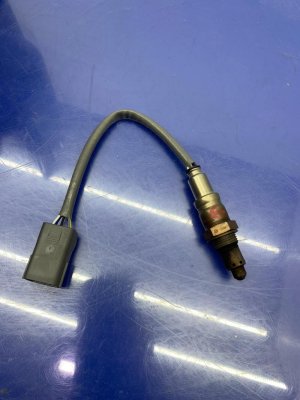
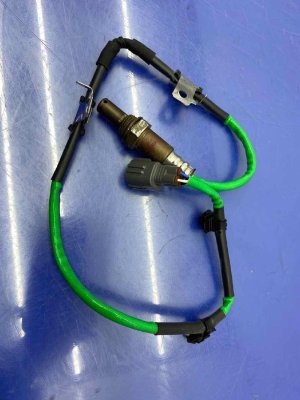
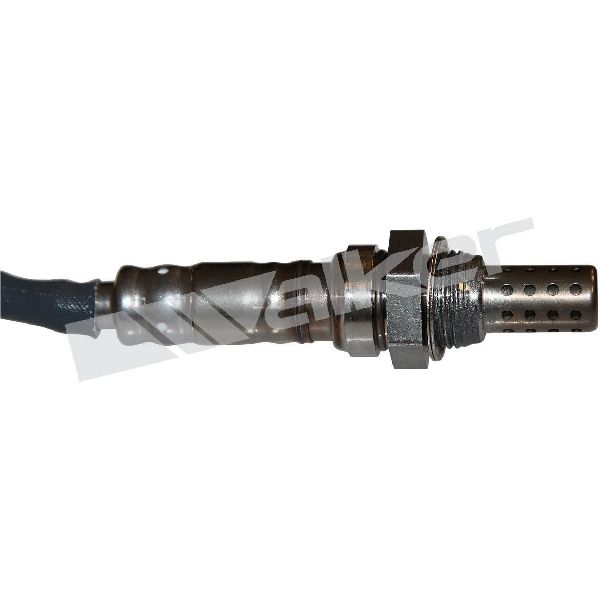
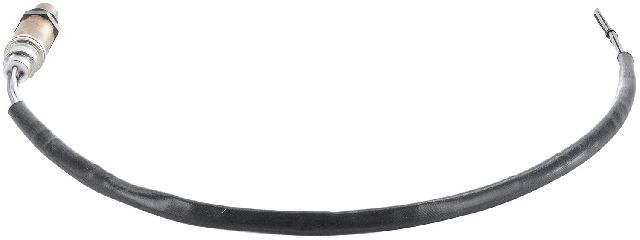
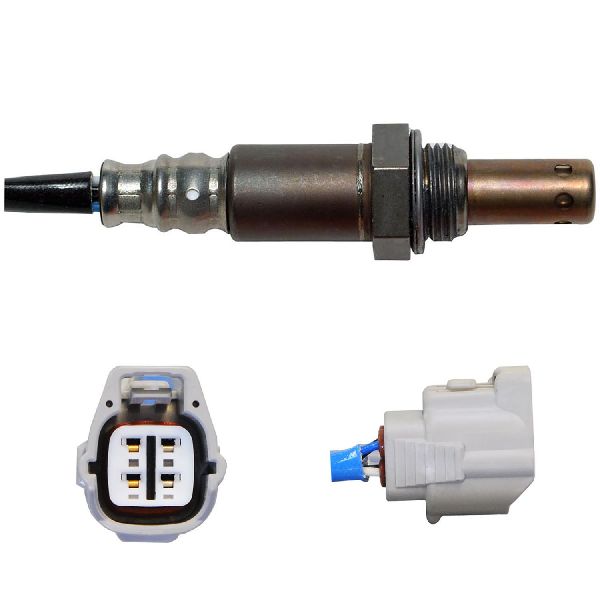
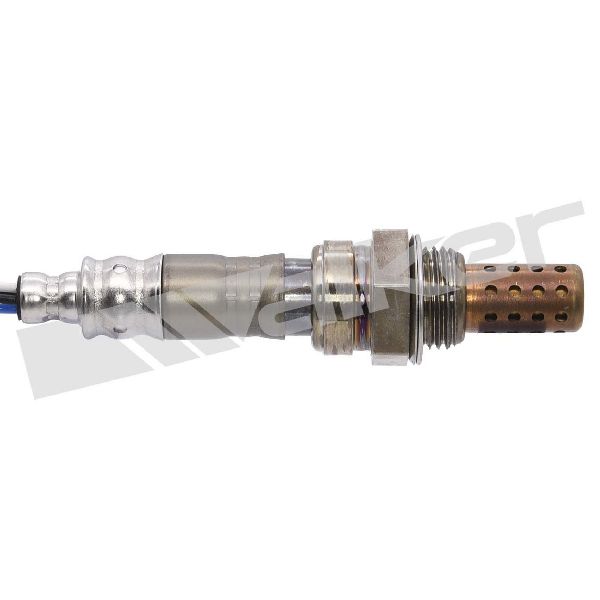
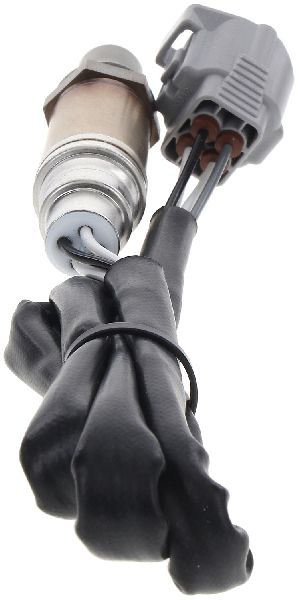
(OEM #PE2S-18-861 (2.0L), PY8J-18-861 (2.5L) - Part numbers can vary, always verify with VIN.)— This sensor is responsible for reporting the catalytic converter's efficiency. It is a common failure point and can trigger a false P0420 code. It is much cheaper to replace than the converter. 🎬 See this walkthrough for replacing the downstream O2 sensor
Trusted brands: Denso, NGK, Bosch
OEM price range: $250-$370
Aftermarket price range: $70-$150 - Catalytic Converter Assembly
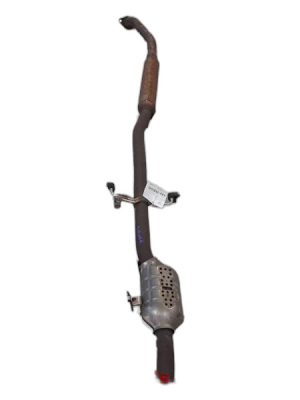
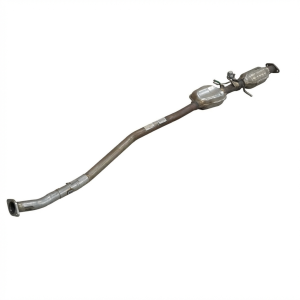
(OEM #PY42-20-50X (Example for 2014-2016 2.5L FWD) - Part numbers vary significantly by year, engine, and AWD/FWD. Always)— This is the component the P0420 code directly refers to. It fails due to age or, more commonly, contamination from engine issues like misfires or oil burning.
Trusted brands: Mazda (OEM), MagnaFlow, Walker, Dorman
OEM price range: $1200-$2500
Aftermarket price range: $400-$900
Related Codes That Often Appear With This One
- P0300-P0304 — Cylinder misfire codes. A misfire is a primary cause of catalytic converter failure, as it sends unburned fuel into the exhaust.
- P0171 — System Too Lean. An unmetered air leak (like a vacuum or exhaust leak) can cause the engine to run lean and may also contribute to a P0420 code.
- P0137 — O2 Sensor Circuit Low Voltage (Bank 1, Sensor 2). This code points directly to an issue with the downstream oxygen sensor, which must be fixed before diagnosing P0420.
- P0421 — Warm Up Catalyst Efficiency Below Threshold. This is a closely related code. On 2014-2016 models, it is often caused by a PCM software issue per TSB 01-010/16.
Technical Service Bulletins (TSBs) & Recalls
- 01-010/16 - MULTI-MODEL - CHECK ENGINE LIGHT ON WITH DTC P0421
Platform-Specific Known Issues
- P0421 Software Glitch (2014-2016): Many first-generation CX-5s (and platform mates) can throw a P0421 code due to overly sensitive PCM software, not a failed part. Mazda TSB 01-010/16 addresses this with a software update. This should be the first diagnostic step for a P0421 code on these model years.
- Cylinder Deactivation Misfire Recall (2018-2019): A recall (3719F) was issued for 2018-2019 models where the PCM software controlling cylinder deactivation could cause a rocker arm to be displaced, leading to misfires. Since misfires quickly destroy catalytic converters, ensuring this recall is performed is critical before diagnosing a P0420.
Mechanic-Grade Diagnostic Values
- Exhaust Manifold to Cylinder Head Nut Torque (2013-2016 KE) — expected: 32-47 lb-ft. Failure: N/A - This is an installation specification to prevent exhaust leaks.
- Exhaust Manifold to Cylinder Head Nut Torque (2017+ KF, 2.5T) — expected: 37-42 ft-lbf (50-57 N·m). Failure: N/A - This is an installation specification to prevent exhaust leaks.
- Mode $06 Catalyst Monitor Test — expected: The test value should be below the maximum threshold set by the manufacturer.. Failure: Using a capable OBD-II scanner, check the results for the Catalyst Monitor Bank 1 (often TID $81-$84). If the reported value exceeds the maximum limit, it indicates the PCM has registered an efficiency failure on that drive cycle.
Wiring & Ground Locations
- Body Ground Points (General) — A 2013 CX-5 service document shows multiple body ground points throughout the chassis, including in the engine bay, under the dash, and in the rear cargo area. A similar document was referenced for 2016 models.. A poor ground connection for the PCM or the oxygen sensor circuits can introduce electrical noise or incorrect voltage offsets, leading to false sensor readings and triggering a P0420 code.
- OBD-II Connector Grounds — On a 2018 model, pins 4 and 5 of the OBD-II diagnostic port are the chassis ground and signal ground, respectively.. Ensuring the diagnostic port has a solid ground is critical for getting accurate data from your scan tool when diagnosing O2 sensor performance and other live data parameters.
- PCM Ground — The PCM's main ground wires are typically bolted to the chassis near where the PCM is mounted.. The PCM is the reference point for all sensor readings. A compromised PCM ground can cause a variety of erroneous codes, including P0420, as it can no longer accurately interpret sensor voltage signals.
Model Year Variations Within This Range
- 2013-2016 (KE) vs. 2017-2024 (KF): The second generation (KF) CX-5, introduced for the 2017 model year, features a re-engineered chassis and different styling. While the base engines are similar, parts like the exhaust manifold/catalytic converter assembly may not be interchangeable between generations.
- 2019+: Starting in 2019, a 2.5L turbocharged engine option was added. More significantly for P0420 causes, later 2.5L non-turbo engines introduced cylinder deactivation. This system has been associated with some engine issues, and the recall for 2018-2019 models was related to software controlling this system that could cause misfires, a direct cause of converter failure.
- 2022+: For the 2022 model year refresh, Mazda made All-Wheel Drive (AWD) standard, eliminating FWD configurations. The chassis was stiffened and the automatic transmission was recalibrated. This means FWD-specific parts, like certain exhaust components, are only applicable to pre-2022 models.
Diagnostic Flowchart
Other Known Issues on This Vehicle
Issues unrelated to this code that are worth knowing about as an owner of this generation:
- Intake Valve Carbon Buildup 🟠 Medium — A known characteristic of all direct-injection (GDI) engines. Becomes more likely after 60,000-70,000 miles, especially with frequent short trips. Can lead to lean codes (P0171) or rough idle.
- Infotainment 'Ghost Touch' 🟡 Low — Common on 2017-2020 models. The infotainment screen registers phantom touches, causing random selections. Often triggered by heat/sunlight. A common DIY fix is to disconnect the touchscreen ribbon cable, forcing reliance on the commander knob. (Ref: A service program (SSPB6) was issued for Mazda 3 but not officially for CX-5, though the issue is identical.)
- Premature Brake Wear 🟡 Low — Some owners of earlier models (approx. 2013-2016) reported needing to replace brake pads and rotors sooner than expected, sometimes under 40,000 km.
- Cracked Windshields 🟡 Low — Owners of first-generation (2013-2016) models have reported that the windshields seem prone to cracking from small impacts or even temperature changes.
- Daytime Running Light (DRL) Failure 🟡 Low — On 2016 models specifically, the signature LED DRLs are known to fail. This requires replacing the entire headlamp assembly, which is expensive if out of warranty. (Ref: Mazda issued a warranty extension for this specific issue on 2016 models.)
Used vs. New Parts: Buying Guide for This Vehicle
When a used part is the smart pick: For this repair, using a used part is generally not recommended for the catalytic converter or oxygen sensors. The only potential exception is sourcing a complete, low-mileage exhaust manifold assembly from a known-good donor vehicle if you have a physical crack in your original manifold and want an OEM part without the high cost.
Donor-vehicle mileage cap: roughly under 50000 miles for the part to have meaningful remaining life.
What to inspect on the donor part:
- For a used catalytic converter: Check for any rattling (indicates broken internal substrate), ensure the honeycomb is visible and not melted or clogged, and verify the donor vehicle had no misfire or oil burning issues.
- For a used O2 sensor: Visually inspect for physical damage to the sensor tip, wiring, and connector. However, there is no way to visually confirm its remaining life or accuracy, making it a risky purchase.
OEM-only on this vehicle (don't cheap out):
- Catalytic Converter: While cheaper aftermarket options from brands like MagnaFlow and Walker exist, many owners and technicians report that the P0420 code returns within a year because their catalyst loading isn't sufficient for the sensitive Mazda ECU. For a permanent fix that passes emissions testing, an OEM converter is the most reliable choice.
- Oxygen Sensor: While not strictly 'OEM-only', using an OEM-supplier brand is critical. For the CX-5, this means Denso or NTK.
Aftermarket brands forum-validated for this vehicle:
- Oxygen Sensors: Denso and NTK are the trusted OEM suppliers and the most recommended brands for replacement.
- Catalytic Converters: MagnaFlow and Walker are reputable brands, but be aware they may not solve the code long-term on this specific platform.
Brands owners have reported issues with on this vehicle:
- Oxygen Sensors: Avoid generic, unbranded sensors or brands with poor reviews on vehicle-specific forums. One user on Reddit reported immediate issues with a 'TRQ' branded sensor on their 2015 CX-5. While Bosch is a major O2 sensor manufacturer, they are more commonly OEM for European cars, and forum consensus favors Denso/NTK for Japanese vehicles to ensure perfect compatibility.
Real Owner Stories
Aggregated from forums and TSBs cited above. Mileages and costs reflect what owners reported in those sources.
2019 Mazda CX-5 2.5L — 50000 miles
Symptoms: Intermittent P0420 code.
What fixed it: The owner suspected the O2 sensor over the converter, but the context notes that premature converter failure can occur at this mileage.
Source hint: r/CX5 - 'Intermittent P0420' (2023)
2015 Mazda CX-5
Symptoms: Check Engine Light with code P0421.
What fixed it: PCM software update as per TSB 01-010/16.
Source hint: Mazdas247 - 'CX-5 CEL, P0421. PCM programming issue?' (2021)
2014-2016 Mazda CX-5
Symptoms: Recurring P0421 code that the dealer struggled to resolve.
What fixed it: Following the full TSB procedure, which may require a catalytic converter replacement if the software update fails to resolve the issue.
Source hint: r/CX5 - 'CEL Code P0421 - Dealer has no idea how to fix it, help?' (2020)
Related OBD-II Codes
Frequently Asked Questions
My 2015 CX-5 has a P0421 code; do I need to replace the catalytic converter immediately?
Is there a recall for my 2018 CX-5 that could prevent catalytic converter damage?
Can a cracked flex pipe on my CX-5 cause a P0420 code?
What should the downstream O2 sensor voltage look like on a healthy Skyactiv-G engine?
Are there specific spark plugs I should use to avoid codes on my CX-5?
Does the P0421 software issue affect other Mazda models besides the CX-5?
Helpful Videos
Used OEM Parts in Stock

New Aftermarket Parts Available

The information in this article is provided for general reference and educational purposes only. Vehicle specifications, procedures, and part compatibility can vary by production date, trim level, and region. Always consult your vehicle's factory service manual and verify part numbers before purchasing or performing repairs. Safety-critical components such as airbags, seat belts, and braking systems should be installed by a qualified professional.
- Mazda CX-5:
- 🎬 Helpful Videos
- 🛍️ Shop This Part
- What's Unique About the 2013-2024 Mazda CX-5
- Symptoms You May Notice
- Most Likely Causes
- Rare But Worth Checking
- Diagnosis Steps
- Parts You'll Likely Need
- Related Codes That Often Appear With This One
- Technical Service Bulletins (TSBs) & Recalls
- Platform-Specific Known Issues
- Mechanic-Grade Diagnostic Values
- Wiring & Ground Locations
- Model Year Variations Within This Range
- Diagnostic Flowchart
- Other Known Issues on This Vehicle
- Used vs. New Parts: Buying Guide for This Vehicle
- Real Owner Stories
- 2019 Mazda CX-5 2.5L — 50000 miles
- 2015 Mazda CX-5
- 2014-2016 Mazda CX-5
- Related OBD-II Codes
- Frequently Asked Questions
- 🎟️ Get 5% Off