

P0420 on 2003-2008 Mazda 6 2.3L: Catalyst Efficiency Causes and Fixes
On the 2003-2008 Mazda 6 2.3L, a P0420 code most often means the catalytic converter has failed, a common issue for this model as it ages. Before replacing this expensive part, it is critical to rule out simpler causes like exhaust leaks (especially at the manifold and flex pipe) and faulty oxygen sensors. A new OEM converter can be costly, but aftermarket options are available for $400-$800+.
- P0420 on a 2003-2008 Mazda 6 almost always points to a failed catalytic converter, a faulty downstream O2 sensor, or an exhaust leak.
- Before buying an expensive new catalytic converter, you must rule out a bad O2 sensor and any exhaust leaks.
- Use a scan tool to watch O2 sensor live data; a downstream sensor that mimics the upstream sensor's rapid fluctuations is a strong sign of a bad converter.
- If your engine has other issues like misfires or high oil consumption, fix them first, as they are likely the root cause of the converter failure.
- An infrared temperature gun can be a quick way to check the converter: the outlet should be noticeably hotter than the inlet on a working unit.
What's Unique About the 2003-2008 Mazda 6
The first-generation Mazda 6 with the 2.3L L3-VE engine is known for having the catalytic converter fail as it ages, making it the most probable cause for P0420. This specific engine has a catalytic converter integrated with the exhaust manifold, which can be more complex to replace than a separate under-car unit. Unlike some newer vehicles, there are no widespread technical service bulletins (TSBs) pointing to software glitches causing false P0420 codes on this specific model. However, this engine can be prone to oil consumption issues, which can contaminate and prematurely fail the catalytic converter by coating the internal honeycomb structure.
Symptoms You May Notice
- Check Engine Light is on
- Failed emissions test
- Reduced engine power or sluggish acceleration, especially if the converter is clogged.
- A rotten egg (sulfur) smell from the exhaust, indicating the converter is overheating from unburned fuel.
- Rattling noise from under the car if the internal ceramic honeycomb of the converter has broken apart.
- Reduced fuel economy due to incorrect air/fuel mixtures or exhaust backpressure.
- Replacing the oxygen sensors when the catalytic converter has actually failed. While O2 sensors can be the cause, a definitive test should be performed first to avoid wasting money.
- Replacing the catalytic converter without addressing an underlying engine issue (like misfires, oil consumption, or a rich fuel condition) that caused the original failure. The new converter will likely fail again in a short time.
- Ignoring a small exhaust leak, assuming the converter must be bad. A leak before the rear O2 sensor can trick the system into setting a P0420 code.
Most Likely Causes
- Failed Catalytic Converter 🔴 High Probability Catalytic converters have a finite lifespan and fail from age and mileage. On the L3-VE engine, contamination from issues like oil consumption or unburned fuel from misfires can accelerate this failure, melting or coating the internal catalyst structure.
How to confirm: A professional can use a scan tool to analyze oxygen sensor data. A DIY method is to use an infrared thermometer to check the converter's temperature; the outlet should be at least 100°F (38°C) hotter than the inlet on a working converter. An exhaust backpressure test can also confirm a clog.
Typical fix: Replace the catalytic converter assembly. On this Mazda 6, this is often the exhaust manifold/converter combination unit.
Est. part cost: $400-$900+ - Faulty Downstream Oxygen Sensor 🟡 Medium Probability Oxygen sensors degrade over time, typically after 80,000-100,000 miles. A 'lazy' or failed downstream (post-catalyst) sensor can send incorrect data to the PCM, falsely triggering a P0420 code when the converter is still good.
How to confirm: Use a scan tool with live data graphing. The downstream O2 sensor (Bank 1, Sensor 2) voltage should be relatively stable and steady (typically above 0.45V) on a warm engine at steady RPM. If it fluctuates rapidly like the upstream sensor, it points to a bad converter or, less commonly, a bad sensor. Testing the sensor's internal heater circuit with a multimeter is another valid test.
Typical fix: Replace the downstream oxygen sensor (Bank 1, Sensor 2).
Est. part cost: $50-$150 - Exhaust System Leak ⚪ Low Probability Flex pipes and gasket joints in the exhaust system can develop cracks or leaks over time due to rust and vibration. A leak located between the engine and the downstream O2 sensor is a known cause of a false P0420 code.
How to confirm: Perform a visual inspection of the exhaust system from the engine manifold to the catalytic converter. Look for black soot marks, cracks, or holes, especially around the manifold gasket and flex pipe. A shop can perform a smoke test to pinpoint hard-to-see leaks. A leak allows outside oxygen to enter the exhaust, which makes the O2 sensors provide faulty readings to the PCM.
Typical fix: Repair the leak by replacing the damaged pipe section, flex pipe, or gasket.
Est. part cost: $20-$200
Rare But Worth Checking
- Engine Misfires or Fuel System Issues: Problems like faulty spark plugs, ignition coils, or leaking fuel injectors can dump unburned fuel into the exhaust, which will overheat and destroy the catalytic converter. If you replace the converter without fixing the root cause, the new one will fail quickly. This is often accompanied by other codes (e.g., P030x for misfires, P0171 for lean conditions).
- Contaminated Catalytic Converter: Sometimes, the converter isn't permanently damaged but is clogged with carbon or contaminants from burning oil or coolant. While not a guaranteed fix, some owners have reported temporary success using a specialized catalytic converter cleaner additive in the fuel tank. This is more likely to work if the issue is caught early.
Diagnosis Steps
- Read all stored trouble codes with an OBD-II scanner. If other codes are present, especially for misfires (P030x) or fuel system issues (P017x), diagnose and fix them first as they are the likely root cause.
- Inspect the exhaust system thoroughly for any leaks between the engine's exhaust manifold and the downstream oxygen sensor. Listen for ticking noises on a cold start and look for black soot trails around gaskets and the flex pipe.
- Use a scan tool to observe live data from the upstream (Sensor 1) and downstream (Sensor 2) oxygen sensors. At a steady 2500 RPM on a fully warmed engine, the upstream sensor voltage should fluctuate rapidly between ~0.1V and ~0.9V. The downstream sensor should remain relatively stable and high (e.g., >0.5V). If the downstream sensor mirrors the upstream, the converter is likely inefficient.
- If the downstream sensor signal is flat, stuck, or slow to respond, the sensor itself may be faulty. Test its heater circuit and consider replacing it.
- If the sensors appear to be working correctly, perform a temperature test on the catalytic converter using an infrared thermometer. After the engine is fully warmed up, the outlet pipe should be at least 100°F (38°C) hotter than the inlet pipe. If it's not, the catalyst is not chemically active.
- If a clog is suspected (e.g., lack of power), an exhaust backpressure test can be performed by a professional to confirm a restriction.
- Check for known engine issues. Specifically on the 2.3L L3-VE, check for signs of excessive oil consumption (low oil level, blue smoke) which is a known catalyst killer.
Parts You'll Likely Need
- Catalytic Converter (Manifold Type)
(OEM #L393-20-55XD (replaces L393-20-55XB, L393-20-55XC), L3YH-20-55X (Manual Trans))— This is the most common failure point that directly causes the P0420 code on an aging Mazda 6. The part for this engine is an integrated exhaust manifold and catalytic converter.
Trusted brands: Walker Exhaust, MagnaFlow, AP Exhaust
OEM price range: $650-$1000+
Aftermarket price range: $400-$900 - Downstream Oxygen Sensor (Bank 1 Sensor 2)
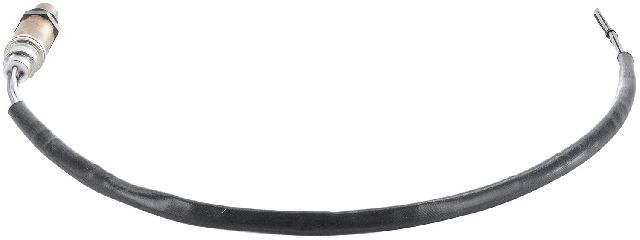
(OEM #L3K9-18-861A9U)— A faulty downstream sensor is the second most likely cause, as it is responsible for monitoring the converter's efficiency. Replacing it is a common diagnostic step before condemning the expensive converter.
Trusted brands: Denso (e.g., 234-4329), NGK/NTK (e.g., 24445), Bosch
OEM price range: $120-$200
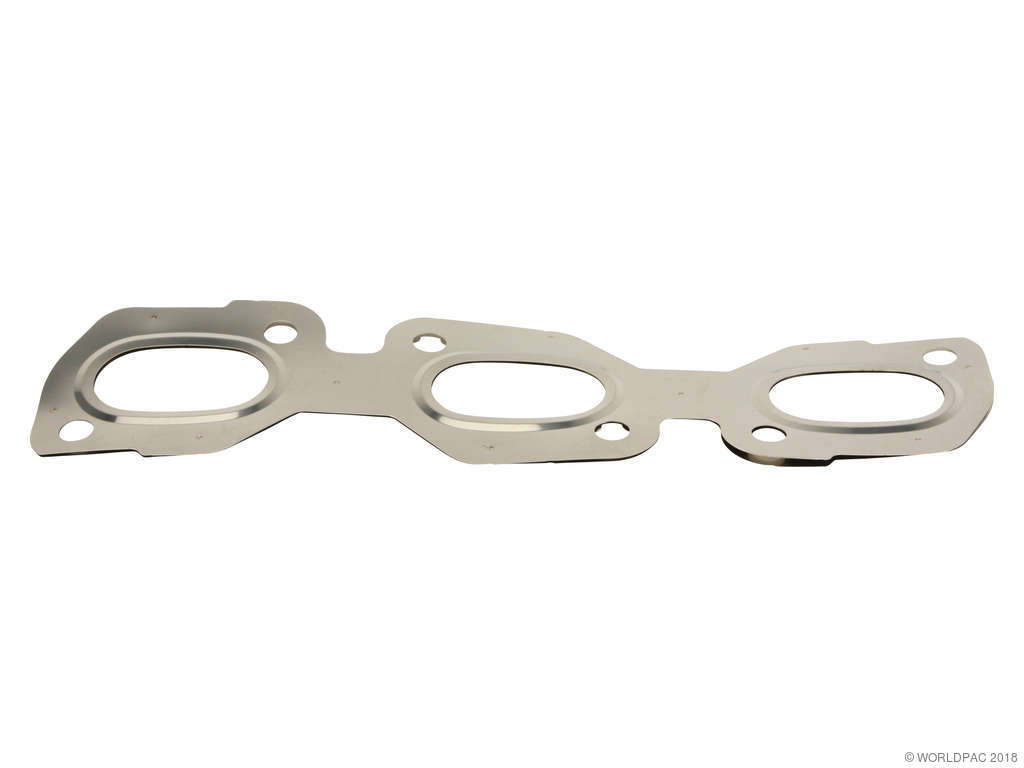
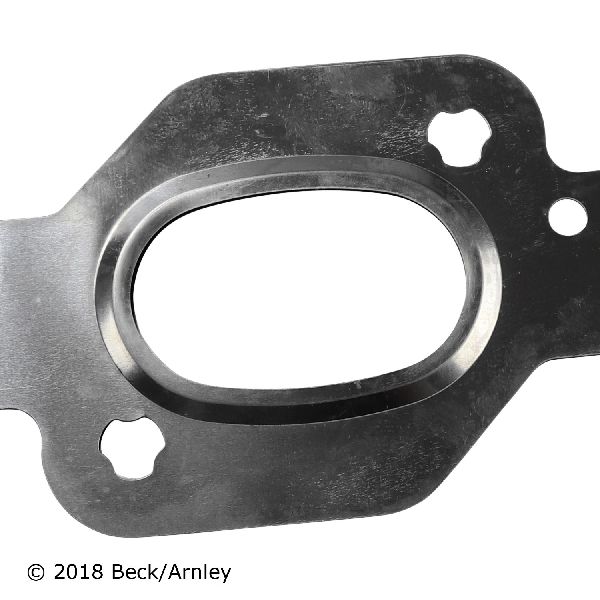
Aftermarket price range: $50-$150 - Exhaust Manifold Gasket — Required when replacing the manifold-style catalytic converter to ensure a proper seal against the cylinder head.
Trusted brands: Fel-Pro, Victor Reinz
Related Codes That Often Appear With This One
- P0171 — If seen with P0420, it could indicate a vacuum or exhaust leak is causing a lean condition, which can affect converter efficiency readings and O2 sensor behavior.
- P0300-P0304 — Cylinder misfire codes indicate that unburned fuel is entering the exhaust, which can quickly damage the catalytic converter by overheating it, leading to a P0420 code.
- P0421 — This code for "Warm Up Catalyst Efficiency Below Threshold" is closely related and points to the pre-catalyst, which is part of the manifold assembly on this engine. The diagnostic and repair steps are virtually identical.
Platform-Specific Known Issues
- The 2.3L L3-VE engine can be susceptible to oil consumption due to issues with piston rings or valve seals. This burning oil contaminates the catalytic converter, leading to premature failure and a P0420 code.
- The catalytic converter is integrated into the exhaust manifold, making replacement more labor-intensive and expensive than a simple underbody converter.
- The variable tumble control system (VTCS) flaps in the intake manifold can sometimes fail or stick, affecting the air-fuel mixture and potentially contributing to conditions that can harm the catalytic converter over time.
Mechanic-Grade Diagnostic Values
- Long-Term and Short-Term Fuel Trims (LTFT/STFT) — expected: Within +/- 5% of zero at idle and steady cruise. Up to +/- 10% under load is acceptable.. Failure: Consistently high positive trims (>+10%) suggest an unmetered air leak (vacuum leak). Consistently high negative trims (< -10%) suggest a rich condition (e.g., leaking injector). Both can lead to P0420.
- OBD-II Mode 6 Catalyst Monitor Test ($01) — expected: The test value should be below the maximum threshold set by the manufacturer. This is viewed on an advanced scan tool.. Failure: If the reported test value exceeds the maximum limit, it means the PCM has judged the catalyst as failed, confirming the P0420 code's reason. This is a definitive check.
- Downstream O2 Sensor (Sensor 2) Voltage — expected: A relatively steady voltage, typically between 0.5V and 0.8V, on a warm engine at a steady 2,500 RPM.. Failure: Voltage that rapidly fluctuates between 0.1V and 0.9V, mimicking the upstream sensor's pattern, indicates the catalyst is not storing oxygen.
Hidden / Shadow Codes Worth Checking
- Mode 6, TID $01, CID $01 (or similar): This is not a trouble code but a specific monitor ID within the OBD-II system for Catalyst Monitor Bank 1. It provides the raw test value the PCM uses to determine catalyst efficiency, along with the minimum and maximum allowable thresholds. (see via Requires a scan tool capable of displaying OBD-II Mode 6 data. This allows a technician to see how close the catalyst is to the failing threshold before the P0420 code is even set.)
Scan Tool Commands That Help
- Advanced OBD-II Scan Tool (e.g., Launch, Autel): Graphing Live Data for O2 Sensors B1S1 and B1S2 — This is the primary diagnostic step. By graphing both sensors simultaneously, a technician can visually confirm if the downstream sensor is mimicking the upstream sensor, which is the classic sign of a failed converter.
- Advanced OBD-II Scan Tool: View Mode 6 Test Results — Use this to confirm the PCM's own diagnosis. If the Mode 6 value for the catalyst monitor is outside the specified limits, it confirms the converter is the reason for the code, ruling out a sensor glitch. It's a powerful way to verify the failure before ordering an expensive part.
Wiring & Ground Locations
- G-02 — Behind the left side of the instrument panel (dashboard).. This is a major ground point for the engine control system. A poor connection here could potentially cause erratic sensor readings, including from the oxygen sensors, leading to false diagnostic codes.
- O2 Sensor Harness Connectors — The connectors for both upstream and downstream O2 sensors are located on the back side of the transmission. The upstream sensor has two connectors, while the downstream has one.. Knowing the physical location is critical for testing sensor circuits for voltage, ground, and signal integrity. Corrosion or damage at these connectors can cause sensor codes or false P0420 readings.
Real Owner Repair Stories
- EricTheCarGuy forum comment (User's car (model not specified, but principle applies)) — P0420 code returned even after replacing the catalytic converter and O2 sensors.
❌ Tried (didn't work) Replacing the catalytic converter, Replacing the O2 sensors
✅ What actually fixed it The root cause was bad spark plugs, which were causing unburned fuel to enter the exhaust and destroy the *new* catalytic converter. Replacing the spark plugs and the converter again resolved the issue permanently. - Mazda forum user (Mazda 6 2.3L) — P0420 code present.
❌ Tried (didn't work) Checking O2 sensors, Checking for exhaust leaks
✅ What actually fixed it The final fix was replacing the intake manifold and EGR valve gaskets. This suggests an unmetered air (vacuum) leak was altering the air/fuel mixture enough to cause a false catalyst efficiency reading. - BobIsTheOilGuy forum user (Generic vehicle, but common scenario) — P0420 code appeared immediately after fixing another issue (like a misfire).
❌ Tried (didn't work) Clearing the code
✅ What actually fixed it The catalytic converter needed replacement. The explanation is that the prior issue (misfire) had already damaged the converter, but the PCM does not run the catalyst monitor test while other primary faults are active. Once the misfire was fixed, the PCM ran the test, failed it, and set the P0420 code.
"I Checked Everything" — The Actual Cause
- A common scenario is passing an exhaust system smoke test, but the P0420 is actually being caused by an unmetered air leak on the intake side. A cracked PCV hose or a leaking intake manifold gasket will not be found with an exhaust smoke test but can alter fuel trims enough to trigger a false P0420. A separate smoke test of the intake system is required to find these leaks.
When the Usual Fixes Don't Work
- While a P0420 code points to the catalyst system, numerous owner accounts show that replacing the catalytic converter and/or O2 sensors does not always fix the problem. In many cases, the code returned because the root cause was an underlying engine issue that was never addressed. Verified fixes from owners include replacing leaking intake manifold gaskets, fixing cracked PCV hoses, and replacing faulty spark plugs that were dumping unburned fuel into the exhaust. These stories prove the importance of a full engine diagnosis, paying close attention to fuel trims and sources of unmetered air, before replacing the expensive catalytic converter.
Model Year Variations Within This Range
- 2003-2008: Vehicles manufactured for sale in California may have different catalytic converter and oxygen sensor part numbers to meet stricter PZEV emissions standards. When ordering replacement parts, it is critical to verify fitment for Federal vs. California emissions specifications.
- 2006-2008: The Mazda 6 received a facelift for the 2006 model year. While the core 2.3L L3-VE engine and manifold-converter design remained the same, there were minor horsepower rating changes and potentially different wiring or connector details. Always verify part numbers against the specific VIN.
Diagnostic Flowchart
Real Owner Stories
Aggregated from forums and TSBs cited above. Mileages and costs reflect what owners reported in those sources.
2005 Mazda 6 2.3L
Symptoms: Check engine light with P0421 code (related to P0420, for warm-up catalyst). Owner was trying to avoid a complete catalytic converter replacement.
What fixed it: Another user with a 2004 Mazda 3 2.3L reported fixing a similar code with an O2 sensor spacer.
Source hint: Reddit r/MechanicAdvice
First-generation Mazda 6
Symptoms: P0420 code triggered, suspected to be a catalytic converter failure.
What fixed it: Fixed the P0420 code by replacing a cracked exhaust manifold rather than the catalytic converter itself.
Source hint: mazdas247.com
2005 Mazda 6
Symptoms: P0420 code present on a vehicle that had a non-original, welded-in catalytic converter.
What fixed it: Resolved the code by replacing the non-original, welded-in converter with a used OEM unit.
Source hint: carnity.com
2005 Mazda 3 2.3L
Symptoms: P0420 code on a platform-mate vehicle sharing the same L3-VE engine.
What fixed it: Quoted for an O2 sensor replacement as a common first step before suspecting the converter.
Cost: $400-$400
Source hint: reddit.com/r/mazda3
Related OBD-II Codes
Frequently Asked Questions
Why is the catalytic converter replacement so expensive on my 2.3L Mazda 6?
Can burning oil cause the P0420 code on my 2003-2008 Mazda 6?
I have a P0420 code on my Mazda 6; should I replace the downstream O2 sensor first?
Could an exhaust leak cause a false P0420 code on this vehicle?
What are the VTCS flaps and do they relate to my P0420 code?
Helpful Videos
We Have This Part in Stock




The information in this article is provided for general reference and educational purposes only. Vehicle specifications, procedures, and part compatibility can vary by production date, trim level, and region. Always consult your vehicle's factory service manual and verify part numbers before purchasing or performing repairs. Safety-critical components such as airbags, seat belts, and braking systems should be installed by a qualified professional.
- Mazda 6:
- 🎬 Helpful Videos
- 🛍️ Shop This Part
- What's Unique About the 2003-2008 Mazda 6
- Symptoms You May Notice
- Most Likely Causes
- Rare But Worth Checking
- Diagnosis Steps
- Parts You'll Likely Need
- Related Codes That Often Appear With This One
- Platform-Specific Known Issues
- Mechanic-Grade Diagnostic Values
- Hidden / Shadow Codes Worth Checking
- Scan Tool Commands That Help
- Wiring & Ground Locations
- Real Owner Repair Stories
- "I Checked Everything" — The Actual Cause
- When the Usual Fixes Don't Work
- Model Year Variations Within This Range
- Diagnostic Flowchart
- Real Owner Stories
- 2005 Mazda 6 2.3L
- First-generation Mazda 6
- 2005 Mazda 6
- 2005 Mazda 3 2.3L
- Related OBD-II Codes
- Frequently Asked Questions
- 🎟️ Get 5% Off