

P0420 on 2007-2011 Jeep Wrangler 3.8L: Catalyst Efficiency Causes and Fixes
P0420 on a 2007-2011 Wrangler almost always points to a failed catalytic converter on Bank 1 (passenger side), frequently caused by the 3.8L engine's notorious oil consumption. Before replacing the converter, thoroughly investigate oil burning, check for cracked exhaust manifolds, and rule out faulty oxygen sensors.
- P0420 on the 2007-2011 Wrangler almost always indicates a failing passenger-side catalytic converter.
- The #1 root cause of converter failure on this Jeep is the 3.8L engine's tendency to burn excessive amounts of oil.
- Before replacing the expensive catalytic converter, you must investigate oil consumption and inspect for exhaust leaks, especially cracked exhaust manifolds.
- Use a scan tool to graph O2 sensor data to confirm the converter is bad. A downstream sensor that mimics the upstream sensor is the definitive sign of failure.
- If you replace the converter without addressing an underlying oil consumption issue, the new converter will likely fail prematurely.
What's Unique About the 2007-2011 Jeep Wrangler

The 2007-2011 Wrangler's 3.8L EGH V6, originally a minivan engine, is infamous for excessive oil consumption. This isn't just an annoyance; burning oil sends contaminants like phosphorus and zinc into the exhaust that quickly poison and clog the catalytic converters, leading to premature failure. As a result, P0420 is an extremely common and often expensive code for owners of these specific Jeeps, as the root cause is often the engine itself destroying the emissions components. Additionally, cracked exhaust manifolds are another very common issue on this engine, which can cause exhaust leaks that mimic a bad converter.
Symptoms You May Notice
- Check Engine Light is on
- Vehicle will not pass emissions testing
- Reduced engine performance or sluggish acceleration (if converter is clogged)
- Slightly rough idle
- A rotten egg or sulfur-like smell from the exhaust
- A ticking noise from the engine bay, especially when cold, may indicate a cracked exhaust manifold which can trigger the code.
- Immediately replacing the catalytic converter without checking for oil consumption or exhaust leaks. This often leads to the new converter failing within a year.
- Replacing only the oxygen sensors when the catalytic converter is truly bad. While O2 sensors are a possible cause, they are not the most common one for this code on this specific engine.
- Using non-OEM (NTK/NGK) oxygen sensors. Many forum users report that aftermarket sensors from brands other than NTK/NGK can lead to persistent or incorrect codes on the JK platform.
Most Likely Causes

- Failed Catalytic Converter (Bank 1) 🔴 High Probability The primary reason for failure on the 3.8L engine is contamination from excessive oil consumption, which clogs and poisons the catalyst materials. Simple aging over 100k miles is also a factor, but oil burning is the key accelerator of failure on this platform.
How to confirm: Use a scan tool to graph the upstream (B1S1) and downstream (B1S2) O2 sensor voltages. If the downstream sensor's voltage pattern mimics the rapid switching of the upstream sensor, the converter is not working. A temperature gun can also be used; a healthy, warm converter should be at least 100°F hotter at the outlet than the inlet. A rattling noise from the exhaust when tapped can indicate a physically broken internal substrate.
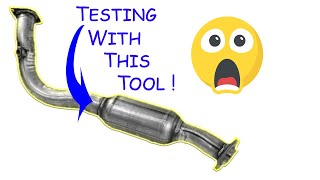
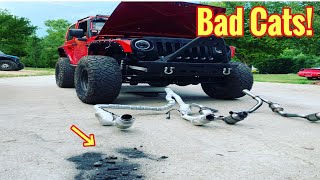
Typical fix: Replace the Bank 1 (passenger side) catalytic converter. 🎬 Watch: How to replace the Bank 1 catalytic converter yourself. On these models, both converters are typically part of a single Y-pipe assembly. It is critical to address the root cause (like oil consumption or exhaust leaks) to prevent repeat failure of the new part.
Est. part cost: $250-$700 - Excessive Engine Oil Consumption 🔴 High Probability The 3.8L EGH V6 is well-documented to have issues with piston rings and PCV systems, leading to oil being burned during combustion. Chrysler has historically considered 1 quart per 1000 miles 'acceptable', but this rate is more than enough to destroy a catalytic converter over time.
How to confirm: Monitor the oil level on the dipstick regularly. A loss of a quart or more between oil changes (e.g., every 1000-2000 miles) is a clear indicator. Blue smoke from the tailpipe is a definitive sign of oil burning.
Typical fix: This is a major engine issue. Fixes can range from replacing the PCV valve to a full engine rebuild with new piston rings. Some owners install an oil catch can to reduce the amount of oil vapor entering the intake, though this is a mitigating step, not a root cause fix.
Est. part cost: $20 (PCV Valve) to $2000+ (Engine work) - Exhaust Leak 🟡 Medium Probability Cracked exhaust manifolds and broken manifold bolts are very common on the 3.8L engine. A leak between the engine and the downstream O2 sensor allows extra oxygen into the exhaust, which can fool the sensors into thinking the converter is bad.
How to confirm: Visually inspect the exhaust manifolds (especially where pipes are welded) and the entire exhaust system for cracks, rust, or black soot marks indicating a leak. Listen for a ticking or 'pft' sound, especially when the engine is cold, which may quiet down as the metal expands and seals the crack.
Typical fix: Repair the leak. This may involve replacing a gasket, tightening bolts, or, most commonly, replacing a cracked exhaust manifold. 🎬 See this step-by-step guide for replacing a cracked exhaust manifold.
Est. part cost: $20 (gasket) to $300+ (manifold) - Failed Oxygen (O2) Sensor(s) 🟡 Medium Probability O2 sensors are wear items and can be fouled by the same oil burning that kills the catalytic converter. A lazy or failed sensor can send incorrect data, falsely triggering a P0420 code. It's noted that using a new downstream sensor with an old upstream sensor can sometimes trigger the code.
How to confirm: Use a scan tool to graph sensor voltage. A bad downstream sensor might show a flatline voltage or not respond as expected. Swapping the Bank 1 and Bank 2 downstream sensors and seeing if the code changes to P0430 (Bank 2) is a valid diagnostic step.
Typical fix: Replace the faulty oxygen sensor(s). It is critical to use NTK/NGK brand sensors, as many owners report that other brands (like Bosch) do not work correctly with the Jeep's computer and can cause persistent issues. The downstream sensor for Bank 1 (passenger side) is NTK part number 23519 for 2007 models.
Est. part cost: $40-$100 per sensor
Rare But Worth Checking
- Engine Misfires: An engine misfire (e.g., from a bad spark plug or ignition coil) dumps unburned fuel into the exhaust, which can rapidly overheat and destroy the catalytic converter. If you have misfire codes (P0300-P0306), you MUST fix them first.
- PCM Software: While less common for this specific model, some vehicles can have overly sensitive catalyst monitoring logic. No specific TSB for a P0420 reflash was found for the 2007-2011 Wrangler, but it remains a theoretical possibility. NHTSA ODI #10448839 notes a case where a dealership reprogrammed the PCM to clear P0420 and P0430 codes on a related Jeep model.
- Leaking Fuel Injector: A leaking fuel injector can create a rich condition, sending unburned fuel into the exhaust and overheating the catalytic converter, eventually causing it to fail and trigger P0420.
Diagnosis Steps

- Check for any other stored trouble codes. Address any misfire, fuel system, or O2 sensor circuit codes before diagnosing P0420.
- Assess engine oil consumption. Check the oil level and determine if the engine is burning oil, as this is the most likely root cause of converter failure on this platform.
- Thoroughly inspect the exhaust system for leaks from the cylinder head all the way to the downstream O2 sensor. Listen for a cold-start tick. Pay close attention to the exhaust manifolds, which are known to crack.
- If no leaks are found, use a scan tool with live data graphing capabilities. 🎬 Watch: A professional mechanic diagnoses a P0420 code on a Wrangler. Observe the voltage graphs for the Bank 1 Sensor 1 (upstream) and Bank 1 Sensor 2 (downstream) O2 sensors.
- A good catalytic converter will show the upstream sensor switching rapidly between ~0.1V and ~0.9V, while the downstream sensor holds a steady, stable voltage around 0.6V-0.8V.
- If the downstream sensor's voltage graph mirrors the rapid switching of the upstream sensor, the catalytic converter has failed and needs to be replaced.
- If the O2 sensor data is inconclusive or flat, test the sensors themselves before condemning the converter. Consider swapping sensors from Bank 1 to Bank 2 to see if the code follows.
Parts You'll Likely Need

- Catalytic Converter Assembly (Y-Pipe)
(OEM #68040901AB)— This is the most common failed component for P0420, often due to contamination from oil burning on the 3.8L engine. This part number fits 2010-2011 models and replaces 68040901AA.
Trusted brands: Mopar, Walker, MagnaFlow, Bosal
OEM price range: $700-$1200
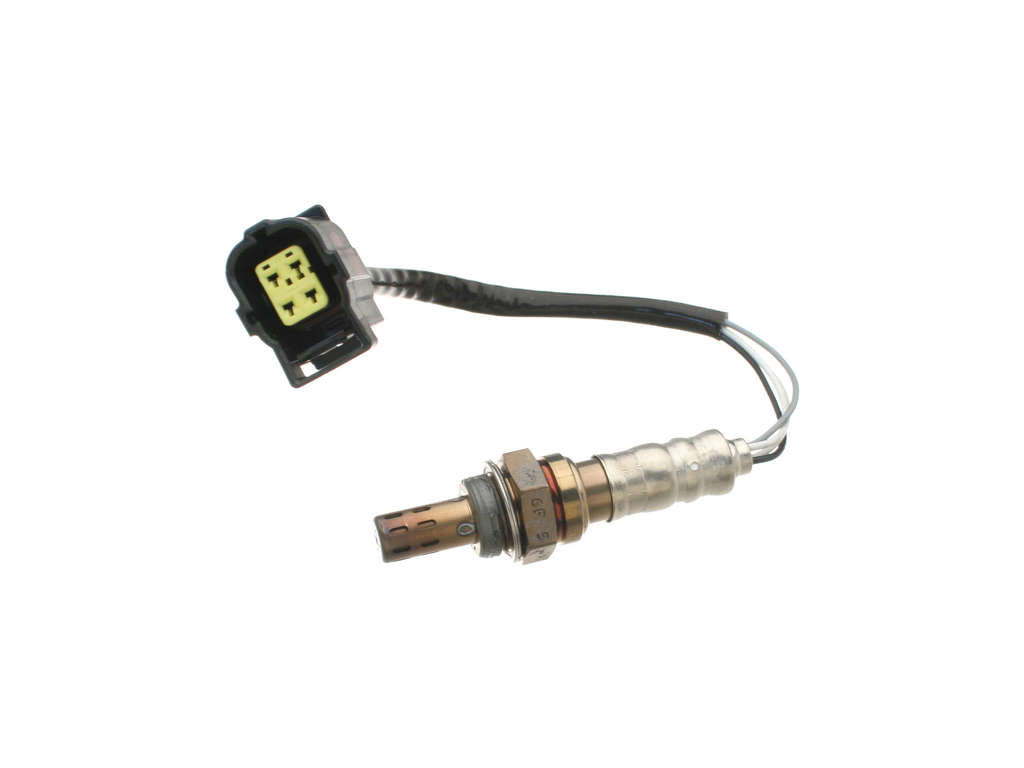
Aftermarket price range: $250-$600 - Downstream Oxygen Sensor (Bank 1, Sensor 2)
(OEM #NTK #23519 (for 2007 model year))— A faulty downstream O2 sensor can incorrectly report catalyst inefficiency. It's a common wear item and is often replaced as a diagnostic step or along with the converter. Using the correct NTK/NGK brand is critical for proper function.
Trusted brands: NTK, Mopar (rebranded NTK)
OEM price range: $50-$110
Aftermarket price range: $40-$80 - Upstream Oxygen Sensor (Bank 1, Sensor 1)
(OEM #56029049AA)— A slow or aging upstream sensor can cause the PCM to misinterpret the catalyst's efficiency, even if the downstream sensor is working correctly. Replacing both sensors at the same time is often recommended. This part number is for the 3.8L engine.
Trusted brands: NTK, Mopar, Denso
OEM price range: $100-$180
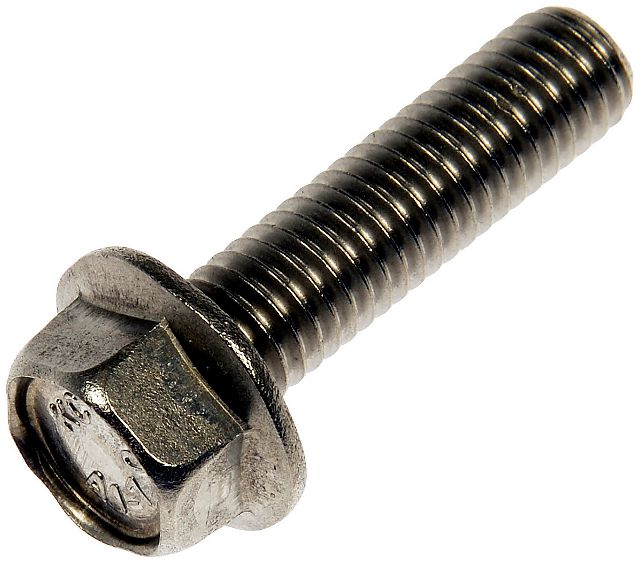
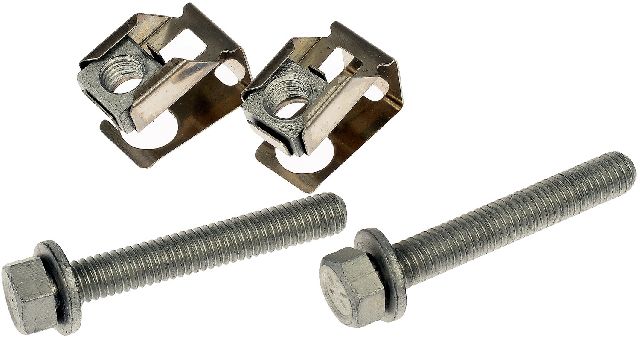
Aftermarket price range: $50-$120 - Exhaust Manifold (Bank 1) — The factory manifolds on the 3.8L are prone to cracking, causing exhaust leaks that trigger P0420. This is a very common point of failure that must be checked before replacing the converter.
Trusted brands: Dorman, AP Exhaust, Mopar
OEM price range: $250-$400
Aftermarket price range: $150-$300
Related Codes That Often Appear With This One
- P0430 — This is the same catalyst efficiency code but for Bank 2 (driver's side). If both appear, it strongly suggests a systemic issue like oil consumption or contaminated fuel is damaging both converters.
- P0300-P0306 — These are misfire codes for specific cylinders. A persistent misfire will destroy a catalytic converter with unburned fuel, causing P0420 to appear as a secondary, consequential code.
Platform-Specific Known Issues

- The 3.8L EGH V6 engine has a well-documented history of excessive oil consumption, often due to piston ring design, which is the primary killer of catalytic converters on this platform.
- Cracked exhaust manifolds or broken manifold bolts are a frequent problem, causing exhaust leaks that can trigger a false P0420 code.
Mechanic-Grade Diagnostic Values
- Upstream O2 Sensor (B1S1) Voltage at steady 2500 RPM — expected: Rapidly fluctuating between ~0.1V and ~0.9V.. Failure: Slow or lazy switching, or a voltage that is stuck high or low.
- Downstream O2 Sensor (B1S2) Voltage at steady 2500 RPM (Good Cat) — expected: Relatively steady voltage, typically between 0.6V and 0.8V.. Failure: Voltage pattern mimics the rapid switching of the upstream sensor.
- Catalytic Converter Temperature Differential (warmed up engine) — expected: Outlet temperature should be at least 100°F hotter than the inlet temperature.. Failure: Outlet temperature is the same or cooler than the inlet temperature, indicating the catalyst is not chemically active.
- Fuel Injector Coil Resistance — expected: 11.5 - 14.0 Ohms.. Failure: A reading of 'OL' (Open Loop/infinite resistance) or a value significantly outside the expected range indicates a faulty injector, which can cause a rich condition and damage the converter.
Hidden / Shadow Codes Worth Checking
- Mode $06, TID $01, CID $01: This refers to the Catalyst Monitor Bank 1 test results. Advanced scan tools can access this data to see the raw test values from the PCM's last catalyst efficiency test cycle. It provides a more granular view than just the pass/fail P0420 code. (see via An OBD-II scan tool with Mode $06 functionality. The tool will display a test value and compare it against minimum and maximum thresholds set by the manufacturer.)
Scan Tool Commands That Help
- wiTECH (Dealer Tool) or equivalent advanced scanner: O2 Sensor Heater Test — To verify that the heater circuits for both upstream and downstream O2 sensors are functioning. A failed heater can cause slow sensor response on startup, affecting the catalyst monitor's accuracy.
- wiTECH or equivalent: Reset All Adaptations — After replacing major components like catalytic converters or O2 sensors, this command forces the PCM to relearn fuel trims and catalyst efficiency parameters from a clean slate. This can sometimes resolve persistent codes after a repair.
Wiring & Ground Locations
- PCM Connector C2 — The Powertrain Control Module (PCM) is located on the passenger side of the engine bay, against the firewall.. This is where the O2 sensor signal and heater circuits terminate. Checking for voltage, ground, and signal integrity at the PCM connector pins can rule out wiring harness issues between the sensors and the computer.
- Bank 1 O2 Sensor Connectors — The upstream (B1S1) connector is near the passenger side exhaust manifold. The downstream (B1S2) connector is located further down the exhaust, after the catalytic converter, often near the transmission crossmember.. These connectors are exposed to heat and road debris. Inspecting them for corrosion, melted plastic, or damaged pins is a critical step, as a bad connection can mimic a failed sensor.
Real Owner Repair Stories
- JK-Forum.com user (2008 Jeep Wrangler X, 144k miles) — P0420 and P0430 codes, along with misfires and oil leaks.
❌ Tried (didn't work) Replaced both exhaust manifolds and gaskets., Replaced all four oxygen sensors., Replaced the catalytic converter assembly with an aftermarket unit from Amazon.
✅ What actually fixed it The user's codes kept returning even after replacing all logical components. Another user in the thread with a similar issue (P0430) reported that after replacing sensors and trying cat cleaner, the only thing that resolved the check engine light was installing O2 sensor spacers (defoulers) on the downstream sensors. This suggests the aftermarket converter was not efficient enough for the Jeep's monitoring system, or another underlying issue persisted. - Reddit r/AskAMechanic user (2011 Jeep Wrangler JKU) — P0420 code, needs to pass Texas emissions.
❌ Tried (didn't work) Swapped in new O2 sensors.
✅ What actually fixed it The user performed a temperature test and found the catalytic converter inlet was 375°F while the outlet was only 305°F. A properly functioning converter should be hotter at the outlet. This test confirmed the catalytic converter itself had failed and needed replacement, ruling out the new O2 sensors as the problem. - NHTSA ODI #11306387 — An owner reported a permanent P0420 code that could not be turned off despite installing four new O2 sensors, new spark plugs, and maintaining the vehicle well, making it impossible to pass smog testing.
- NHTSA ODI #11302941 — A Jeep owner reported the vehicle started throwing code P0420, indicating catalyst efficiency below threshold, and noted that there have been recalls for this issue on other models.
When the Usual Fixes Don't Work
- In some cases, owners have replaced the catalytic converter and all four oxygen sensors, yet the P0420/P0430 codes return. This points to two possibilities: 1) The replacement aftermarket catalytic converter is not efficient enough to satisfy the sensitivity of the Jeep's PCM, a common issue with non-OEM cats. 2) An underlying engine issue, such as minor oil consumption or a rich/lean condition from another sensor, is still present and preventing the system from passing its self-test. In these instances, some owners resort to using O2 sensor spacers (defoulers) to trick the downstream sensor, which is a workaround, not a true repair.
OEM Part Supersession History
56029050AA→Check with dealer, this part may have further updates.— This is the Mopar part number for the Bank 2 (driver's side) downstream O2 sensor on the 3.8L engine.
Heads up: This part is not compatible with the 3.6L Pentastar engine used from 2012 onwards.56029049AA→Check with dealer, this part may have further updates.— This is the Mopar part number for the upstream/downstream O2 sensor on the 3.8L V6 engine.
Heads up: This part is not compatible with the 3.6L Pentastar engine.
Model Year Variations Within This Range
- 2007-2011: The 3.8L EGH V6 engine and its associated exhaust components (Mopar P/N 56029049AA for O2 sensors) are specific to this range. The subsequent 2012+ models use the 3.6L Pentastar with different sensors and exhaust routing.
Diagnostic Flowchart
Other Known Issues on This Vehicle
Issues unrelated to this code that are worth knowing about as an owner of this generation:
- Death Wobble 🔴 High — Common on both stock and lifted JKs, often triggered by hitting a bump at speeds over 45 mph. Can occur at any mileage. (Ref: Multiple TSBs have been issued for steering components on related models (JL), but the root cause on the JK is typically worn track bar bushings, ball joints, or other steering components.)
- Cracked Exhaust Manifold 🟠 Medium — Very common on the 3.8L V6, often presenting as a ticking noise on cold starts. Can occur from 60k miles onward.
- Freedom Top / Hardtop Water Leaks 🟡 Low — Extremely common issue where water leaks into the cabin, typically around the A-pillars or center of the dash. (Ref: Several TSBs exist for seal replacement and adjustment. Fixes often involve replacing seals or ensuring proper panel alignment.)
- TIPM (Totally Integrated Power Module) Failure 🔴 High — A well-documented issue across many 2007+ Chrysler/Jeep/Dodge vehicles. Failure can cause random electrical problems, including no-start conditions, fuel pump issues, or erratic behavior of lights and wipers. (Ref: Subject of multiple recalls and a class-action lawsuit for various models, including the 2007 Wrangler.)
- Valve Cover Gasket Leaks 🟠 Medium — Common oil leak point on the 3.8L engine. Owners often first notice a burning oil smell as oil drips onto the hot exhaust manifolds.
Used vs. New Parts: Buying Guide for This Vehicle
When a used part is the smart pick: A used exhaust manifold could be a cost-effective option, provided it is thoroughly inspected for cracks, especially at the collector welds and flanges. Other exhaust piping (like a cat-back system) is also generally safe to buy used. Avoid used electronic components like O2 sensors.
Donor-vehicle mileage cap: roughly under 80000 miles for the part to have meaningful remaining life.
What to inspect on the donor part:
- For manifolds, check for hairline cracks, especially when cold. Tap it and listen for any rattles.
- Ensure all mounting studs and bolt holes are intact and not stripped.
- Look for a donor vehicle from a dry, salt-free climate to minimize rust and corrosion.
- Ask for the VIN of the donor vehicle to confirm it did not have its own P0420/P0430 codes.
OEM-only on this vehicle (don't cheap out):
- Catalytic Converter: Due to the 3.8L engine's tendency to burn oil, a used catalytic converter is extremely risky as it may already be contaminated and near failure. Aftermarket converters are also a gamble, with many reports of them not being efficient enough to prevent the P0420 code from returning. An OEM Mopar converter is the most reliable, albeit expensive, solution.
- Oxygen Sensors: Given the sensitivity of the Jeep's PCM, using OEM-supplier (NTK/NGK) sensors is highly recommended to avoid compatibility issues and persistent codes.
Aftermarket brands forum-validated for this vehicle:
- NTK / NGK (for Oxygen Sensors)
- MagnaFlow, Walker (for Catalytic Converters, but OEM is still preferred)
- BBK (for performance headers/Y-pipe replacements)
Brands owners have reported issues with on this vehicle:
- Unbranded or generic 'Amazon' catalytic converters have a high rate of failure or incompatibility.
- Bosch oxygen sensors are frequently reported by forum users to cause issues on the JK platform, despite being a reputable brand for other vehicles.
Documented NHTSA Reports
NHTSA ODI #11383601
An owner reported that the check engine light appeared on the dashboard and a code reader found code P0420. The report also mentioned the engine turning off when the brake is depressed.
NHTSA ODI #11547944
A report describes a vehicle that failed to accelerate immediately when the gas pedal was depressed. Diagnostic testing at an auto zone revealed codes P0420 and P0430 related to the catalytic converter.
Real Owner Stories
Aggregated from forums and TSBs cited above. Mileages and costs reflect what owners reported in those sources.
2010 Jeep Wrangler JK 3.8L
Symptoms: Check engine light with code P0420; owner was advised to check O2 sensors and other causes before replacing the converter.
What fixed it: Diagnostic steps included checking for exhaust leaks and monitoring O2 sensor switching patterns to confirm converter failure.
Source hint: JK-Forum.com thread titled 'CEL Error Code P0420 - JK-Forum.com'
2007-2011 Jeep Wrangler 3.8L — ~100000 miles
Symptoms: P0420 code triggered; owner noted a 'pft' sound from the engine bay.
What fixed it: The discussion identified that an exhaust leak was the likely culprit rather than the catalytic converter itself.
Source hint: JK-Forum.com thread titled 'P0420 code help - JK-Forum.com'
2007-2011 Jeep Wrangler 3.8L
Symptoms: Both P0420 (Bank 1) and P0430 (Bank 2) codes appeared simultaneously.
What fixed it: The factory service manual suggested checking for systemic issues including exhaust leaks, engine mechanical problems, or aging O2 sensors.
Source hint: JK-Forum.com thread titled 'P0420 Bank 1 and P0430 Bank 2 Codes - JK-Forum.com'
Related OBD-II Codes
Frequently Asked Questions
Why is my 3.8L Jeep Wrangler burning so much oil, and is it related to the P0420 code?
I hear a ticking noise from my engine bay when it's cold; could this cause a P0420?
Which brand of oxygen sensor should I use for my 2007-2011 Wrangler?
Can I just replace the Bank 1 catalytic converter by itself?
Will an oil catch can fix the P0420 code on my Jeep?
How can I tell if the catalytic converter is actually bad or if it's just a sensor?
Helpful Videos
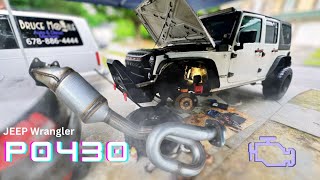
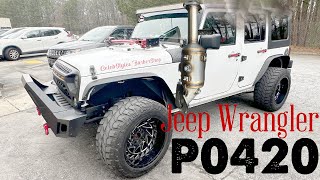
We Have This Part in Stock
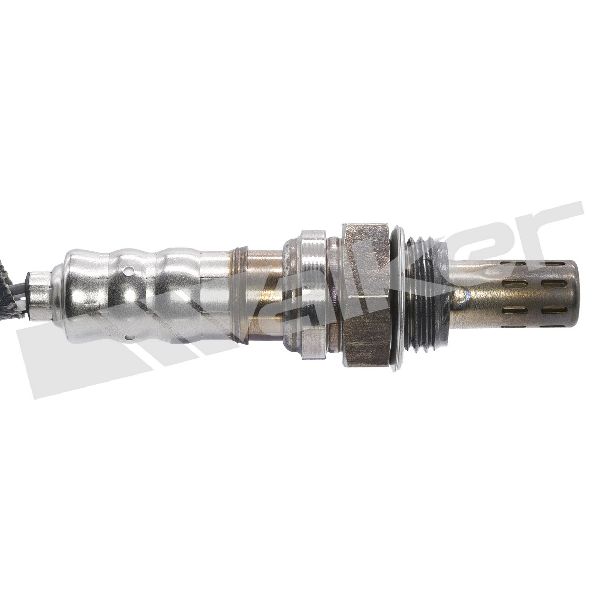
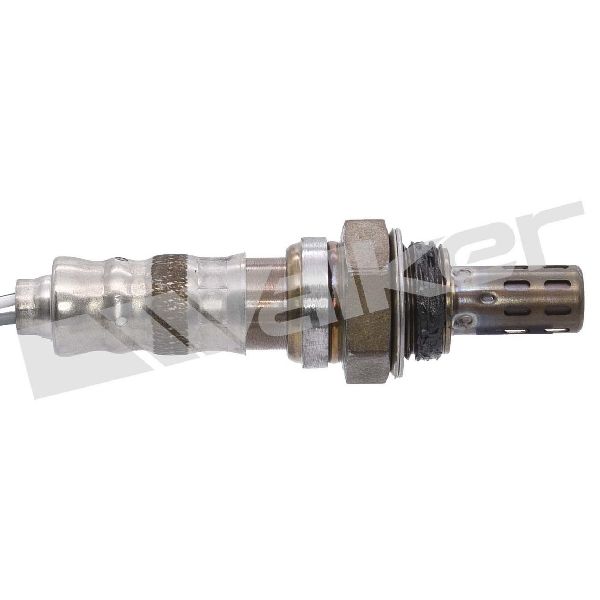

The information in this article is provided for general reference and educational purposes only. Vehicle specifications, procedures, and part compatibility can vary by production date, trim level, and region. Always consult your vehicle's factory service manual and verify part numbers before purchasing or performing repairs. Safety-critical components such as airbags, seat belts, and braking systems should be installed by a qualified professional.
- Jeep Wrangler:
- 🎬 Helpful Videos
- 🛍️ Shop This Part
- What's Unique About the 2007-2011 Jeep Wrangler
- Symptoms You May Notice
- Most Likely Causes
- Rare But Worth Checking
- Diagnosis Steps
- Parts You'll Likely Need
- Related Codes That Often Appear With This One
- Platform-Specific Known Issues
- Mechanic-Grade Diagnostic Values
- Hidden / Shadow Codes Worth Checking
- Scan Tool Commands That Help
- Wiring & Ground Locations
- Real Owner Repair Stories
- When the Usual Fixes Don't Work
- OEM Part Supersession History
- Model Year Variations Within This Range
- Diagnostic Flowchart
- Other Known Issues on This Vehicle
- Used vs. New Parts: Buying Guide for This Vehicle
- Documented NHTSA Reports
- NHTSA ODI #11383601
- NHTSA ODI #11547944
- Real Owner Stories
- 2010 Jeep Wrangler JK 3.8L
- 2007-2011 Jeep Wrangler 3.8L — ~100000 miles
- 2007-2011 Jeep Wrangler 3.8L
- Related OBD-II Codes
- Frequently Asked Questions
- 🎟️ Get 5% Off