

P0420 on 2019-2025 Honda Pilot: Causes for Catalyst Inefficiency
On 2019-2025 Honda Pilots, P0420 indicates low catalyst efficiency. While this often means a bad catalytic converter, a known fuel injector issue on 2017-2019 models (per TSB A21-010) is a very common cause. Honda extended the warranty for this specific issue to 10 years/150,000 miles. Always diagnose injectors and O2 sensors before replacing the expensive converter.
- For 2019 Honda Pilots, investigate faulty fuel injectors (TSB A21-010) as a primary cause of P0420 before considering any other repairs.
- Never replace a catalytic converter based on the code alone. Always diagnose the oxygen sensors, check for exhaust leaks, and analyze fuel system performance first.
- Bank 1 on the Honda Pilot 3.5L V6 is the rear bank, closer to the firewall.
- Using an OEM or high-quality aftermarket catalytic converter and sensors is recommended for a lasting repair.
- This code will cause an automatic failure of an emissions inspection, so it must be resolved to keep the vehicle legally on the road in most states.
What's Unique About the 2019-2025 Honda PILOT

For this generation of Honda Pilot, a P0420 code is not an automatic catalytic converter failure. Honda has issued specific Technical Service Bulletins (TSBs) pointing to other root causes. Most notably, TSB A21-010 identifies that debris from the high-pressure fuel pump or the fuel injector machining process can cause clogging in the injectors on 2017-2019 models, directly causing this code. This means a fuel system problem can masquerade as a catastrophic converter failure, making proper diagnosis essential to avoid a costly misrepair. Due to the prevalence of this issue, American Honda extended the warranty on the fuel injectors to 10 years or 150,000 miles for affected vehicles. The fact that Honda is also investigating this code on the latest 2025 models suggests it's a persistent challenge for this platform.
Diagnostic Flowchart

Tap your situation to follow the diagnostic path that matches what you're seeing on this vehicle.
Generation note: This range covers the end of the 3rd generation Pilot (2019-2022) and the beginning of the 4th generation (2023-2025). A critical TSB for faulty fuel injectors (A21-010) specifically applies to 2017-2019 models with the J35Y6 engine. The 4th generation (2023+) uses a new J35Y8 DOHC engine. Another TSB shows Honda is actively investigating the code on new 2025 models, indicating the issue can affect both generations, though likely for different root causes.
Symptoms You May Notice

- Check Engine Light is on
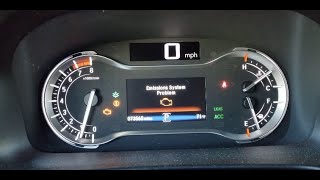
- "Check Emission System" message on the dashboard
- Failure to pass an emissions test
- Reduced engine performance or acceleration
- Possible decrease in fuel economy
- Rotten egg or sulfur smell from the exhaust (if the converter is severely damaged)
- Rough or stumbling idle
- Immediately replacing the catalytic converter without first diagnosing the fuel injectors (especially on 2017-2019 models) or oxygen sensors. This is an expensive mistake given the known TSBs and warranty extension for this vehicle.
- Replacing only the catalytic converter when it was damaged by a separate, unresolved issue like a leaking fuel injector, leading to repeat failure of the new converter.
Most Likely Causes

- Faulty Fuel Injector(s) 🔴 High Probability Honda TSB A21-010 explicitly states that debris from the high-pressure pump or a fuel injector machining process can cause internal wear or clogging on 2017-2019 models, leading directly to codes P0420/P0430 and others. Honda extended the emissions warranty to 10 years/150,000 miles for this specific failure on affected VINs.
How to confirm: A mechanic can perform a cylinder A/F test using the Honda Diagnostic System (HDS). Abnormal fuel trims (often highly negative as the PCM tries to compensate for a leaking injector) also point to an injector problem. If other misfire or air-fuel ratio codes are present (P030x, P219A/B), the TSB directs to replace the injectors without further testing.
Typical fix: Replace the faulty fuel injector(s). Honda recommends replacing them as a set using kit P/N 06160-RLV-305. The repair is covered under the extended warranty if the vehicle's VIN is eligible.
Est. part cost: $60-$150 per injector (aftermarket), $520-$600 for OEM kit - Failed Catalytic Converter (Bank 1) 🔴 High Probability Catalytic converters can fail from normal wear, but on this platform, failure is often a secondary result of another issue. Leaking fuel injectors can cause a rich condition, while misfires send unburned fuel into the exhaust, both of which can overheat and destroy the converter. It's critical to fix the root cause before replacing the converter.
How to confirm: After confirming sensors and fuel system are working, a mechanic can use a scan tool to graph O2 sensor data. If the downstream sensor reading fluctuates rapidly like the upstream sensor, the converter is not working. A physical inspection for rattling or damage can also be performed.
Typical fix: Replace the Bank 1 (rear) catalytic converter. This is an expensive repair, so ruling out all other causes first is essential.
Est. part cost: $1100-$1700 (OEM), $200-$550 (aftermarket) - Failing Rear Oxygen (O2) Sensor (Bank 1, Sensor 2) 🟡 Medium Probability The downstream O2 sensor is the primary tool the PCM uses to judge converter efficiency. If this sensor becomes lazy, contaminated, or fails, it can send incorrect data, falsely triggering the P0420 code.
How to confirm: Graph the sensor's voltage with a scan tool. A healthy downstream sensor should show a relatively steady, non-fluctuating voltage, typically above 0.5V-0.6V when the catalyst is hot. If it's erratic, stuck, or mirrors the upstream sensor's pattern, it's likely bad.
Typical fix: Replace the Bank 1, Sensor 2 oxygen sensor. The OEM part number is 36542-5G0-A01.
Est. part cost: $50-$150 - Exhaust System Leak ⚪ Low Probability A leak in the exhaust manifold or pipes located before or near the catalytic converter can allow extra oxygen to enter the system. This confuses the oxygen sensors and can lead to an incorrect P0420 code.
How to confirm: Perform a visual inspection for cracks, rust, or loose connections. A smoke test is the most effective method to precisely locate any leaks.
Typical fix: Repair the leak by replacing the gasket or damaged exhaust component.
Est. part cost: $20-$300
Rare But Worth Checking
- Failing Front Air/Fuel Ratio Sensor (Bank 1, Sensor 1): While less common, a faulty front A/F sensor can cause incorrect fuel mixture control, which can lead to conditions that trigger a P0420 code. This should be checked if fuel trims are abnormal but injectors are good.
- Engine Misfires: Unburned fuel from a misfiring cylinder can enter the exhaust and overheat the catalytic converter, causing damage and triggering the code. This is often accompanied by misfire codes (P0300-P0306).
- PCM Software Issue: Older TSBs for similar models (e.g., TSB 19-049 for Acura) note that the PGM-FI software can misinterpret sensor inputs and falsely set a P0420 code. The fix is a software update. TSB 20-100 for the 2016 Pilot also involves a software update as part of the repair. 🎬 See how to diagnose codes using Service Bulletin 20-100.
Diagnosis Steps
- Scan for all DTCs. Note if P0420 is accompanied by P0430 or any misfire (P030x) or fuel trim codes (P219A/B).
- Check for TSBs and Warranty Extensions. For a 2017-2019 Pilot, TSB A21-010 is the highest priority. Have a dealer check your VIN for eligibility under the 10-year/150,000-mile warranty extension for fuel injectors.
- Inspect the exhaust system for any leaks between the cylinder head and the rear catalytic converter. A smoke test is the most effective method.
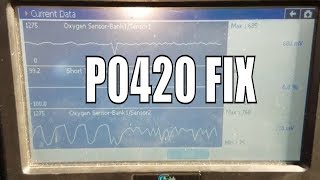
- Use a scan tool to observe live data. Graph the voltage of the upstream (Bank 1, Sensor 1) and downstream (Bank 1, Sensor 2) oxygen sensors. The upstream sensor should fluctuate rapidly, while the downstream should be relatively stable. If the downstream sensor mirrors the upstream, the converter is likely not working.
- Analyze fuel trims. Long-term fuel trims that are significantly negative (e.g., -10% or more) can indicate a leaking injector is causing a rich condition.
- If fuel trims are abnormal or the vehicle is a 2017-2019 model, perform the 'Cylinder AF Test' with a Honda-specific scan tool if possible. A failed test confirms the need for injector replacement per TSB A21-010.
- If all other components (injectors, sensors, exhaust integrity, software) test good, the catalytic converter is the most likely failed part.
Parts You'll Likely Need

- Fuel Injector Kit
(OEM #06160-RLV-305)— A known manufacturing defect makes this a primary cause for P0420 on 2017-2019 models, as per TSB A21-010. This kit includes all six injectors and required seals.
Trusted brands: Honda Genuine
OEM price range: $520-$600 (for a kit)
Aftermarket price range: $80-$150 (per injector) - Bank 1 Catalytic Converter (Rear)
(OEM #18280-5MJ-A00)— This is the part indicated by the code if it has truly failed due to age or contamination. Bank 1 is the rear converter, closer to the firewall.
Trusted brands: Honda Genuine, Walker, MagnaFlow
Related Codes That Often Appear With This One
- P0430 — This is the identical code for Bank 2 (the front bank). It's common to see both codes if the issue, like faulty injectors or a software problem, affects both cylinder banks.
- P0300-P0306 — These are misfire codes. A misfire can be caused by a bad fuel injector, and the resulting unburned fuel will damage the catalytic converter, linking the two problems. TSB A21-010 specifically lists these codes together.
- P219A / P219B — These codes indicate an air-fuel ratio imbalance for Bank 1 and Bank 2, respectively. They are frequently triggered alongside P0420/P0430 when faulty fuel injectors are the root cause, as noted in TSB A21-010.
Technical Service Bulletins (TSBs) & Recalls
- source — The key TSB for this issue. States that debris from the high-pressure pump or injector machining can cause clogs, leading to P0420, P0430, P030x, and P219A/B codes. It extends the warranty for fuel injectors to 10 years/150,000 miles for affected 2017-19 Pilot, 2017-19 Ridgeline, and 2018-19 Odyssey models.
- source — A recent bulletin from Jan 2026 showing that Honda is actively seeking 2025 Pilots with P0420/P0430 codes for internal investigation, indicating the problem may persist in the newest generation.
- source — A precursor to TSB 21-010, this bulletin applied to 2016 Pilots and also involved a PGM-FI software update in addition to potential fuel injector replacement for the same set of DTCs.
Platform-Specific Known Issues
- TSB A21-010: Some 2019 Pilot models may have faulty fuel injectors due to a machining issue, which can cause several DTCs including P0420 and P0430. This is a critical first check for any 2019 model with this code.
- TSB ATI&01302026904: American Honda is actively investigating the cause of P0420/P0430 on 2025 Pilot models, indicating this is an ongoing concern even on the newest generation.
Mechanic-Grade Diagnostic Values
- Downstream O2 Sensor (Bank 1, Sensor 2) Voltage — expected: Relatively stable voltage between 0.6V and 0.8V when the engine is at operating temperature and at a steady cruise.. Failure: Voltage fluctuates rapidly, mimicking the upstream sensor's switching pattern, or is stuck low (e.g., < 0.2V) or high.
- Long Term Fuel Trim (LTFT) for Bank 1 — expected: Within +/- 5% at idle and steady cruise.. Failure: Consistently negative values, such as -10% to -20% or more, strongly suggest a leaking fuel injector on that bank, causing the PCM to remove fuel.
- Mode $06, Test ID $21 (Catalyst Monitor Bank 1) — expected: The reported test value should be below the maximum threshold set by the manufacturer.. Failure: If the test value exceeds the specified maximum limit, it indicates the catalyst efficiency test has failed, which will set a pending or active P0420 code.
Scan Tool Commands That Help
- Honda Diagnostic System (HDS) or equivalent: Cylinder AF Test — This is the specific test Honda calls for in TSB A21-010 when only P0420 or P0430 are present. It directly tests the air-fuel contribution of each cylinder to pinpoint a faulty injector. A 'FAIL' result confirms the need for injector replacement.
- Honda Diagnostic System (HDS) or equivalent: Clear All DTCs — Used after a repair is completed to erase the trouble codes from the PCM's memory. This is the first step before performing a drive cycle to verify the fix.
- OBD-II Scan Tool with Live Data: Catalyst Monitor Drive Cycle — After a repair (like replacing a converter or O2 sensor), the catalyst monitor must be run to completion to verify the fix and turn off the check engine light. This is not a command, but a specific driving procedure involving a cold start, steady-speed cruising (around 55 mph), and deceleration without braking.
Wiring & Ground Locations
- G101 — Typically located on the transmission housing, serving as a primary ground point for the engine and PCM.. A poor connection at G101 can cause erratic voltage and signal issues for various engine sensors, including the oxygen sensors, potentially leading to false P0420 codes. Ensuring this ground is clean and tight is a crucial step in diagnosing electrical gremlins.
- Bank 1 Sensor 2 Connector — The connector for the rear (firewall side) downstream oxygen sensor. The sensor is threaded into the exhaust pipe after the rear catalytic converter, and its harness leads up to a connector mounted on the vehicle body or engine.. This is the direct electrical connection for the sensor that triggers the P0420 code. Checking for corrosion, damage, or backed-out pins at this connector is essential before replacing the sensor itself.
Real Owner Repair Stories
- Piloteers.org forum user (2019 Honda Pilot) — Check engine light with codes P0420 and P0430.
❌ Tried (didn't work) Initial suspicion was bad catalytic converters.
✅ What actually fixed it The dealer diagnosed faulty fuel injectors and replaced all six under the warranty extension related to TSB A21-010. This resolved both codes. - Reddit user r/hondapilot (2020 Honda Pilot EXL with 47,000 miles) — "Emission system problem" message with code P0430 (Bank 2, but same root cause). Vehicle drove normally.
✅ What actually fixed it Dealer diagnosis confirmed the cause was the fuel injectors. All injectors were replaced, fixing the problem. The repair was covered by a third-party warranty. - YouTube video by 'Auto Purlieu' (Honda Pilot (year not specified, but J-series engine)) — Codes P0420 and P0430, engine would not stay running, severe lack of power, suspected knocking sound.
❌ Tried (didn't work) The symptoms were so severe the owner initially thought the engine had a major internal failure like lifters or injectors.
✅ What actually fixed it The catalytic converters were found to be completely clogged. Replacing both the front and rear catalytic converters restored engine power and cleared the codes. This highlights a case of true converter failure.
OEM Part Supersession History
e.g., 16010-RLV-A01 (individual injector)→06160-RLV-305 (Full Kit)— The original fuel injectors were prone to clogging and internal wear due to a manufacturing defect. The 06160-RLV-305 kit contains the revised set of six injectors designed to resolve this issue.
Heads up: It is highly recommended to replace the injectors as a full set using the kit to ensure proper engine balance and prevent recurring issues. Mixing old and new style injectors is not advised.
Model Year Variations Within This Range
- 2019-2022: These models use the 3.5L SOHC V6 engine (J35Y6). They are directly implicated in TSB A21-010 regarding faulty fuel injectors being a primary cause for P0420. Diagnosis should heavily focus on the fuel system first.
- 2023-2025: These models use a new 3.5L DOHC V6 engine (J35Y8) without VTEC. While the fuel injector TSB does not apply, Honda is actively investigating P0420 on these models (per TSB ATI&01302026904), suggesting a different, yet-to-be-published root cause may exist for the newest generation.
Real Owner Stories
Aggregated from forums and TSBs cited above. Mileages and costs reflect what owners reported in those sources.
2019 Honda Pilot
Symptoms: Check engine light with codes P0420 and P0430.
What fixed it: The dealer diagnosed faulty fuel injectors and replaced all six under the warranty extension related to TSB A21-010.
Source hint: Piloteers.org forum user
2020 Honda Pilot EXL — 47000 miles
Symptoms: "Emission system problem" message with code P0430 (Bank 2, related to P0420). Vehicle drove normally.
What fixed it: Dealer diagnosis confirmed the cause was the fuel injectors. All injectors were replaced, fixing the problem. The repair was covered by a third-party warranty.
Source hint: Reddit user r/hondapilot
Related OBD-II Codes
Frequently Asked Questions
Is there a warranty extension that covers the P0420 code on my Honda Pilot?
Does TSB A21-010 apply to my Honda Pilot?
Should I replace my catalytic converter right away if I get a P0420 code?
What part number do I need if the fuel injectors are causing my P0420 code?
What is the OEM part number for the rear oxygen sensor on the Pilot?
Why does the dealer want to perform a 'Cylinder AF Test' for a P0420 code?
Helpful Videos

Used OEM Parts in Stock

New Aftermarket Parts Available


The information in this article is provided for general reference and educational purposes only. Vehicle specifications, procedures, and part compatibility can vary by production date, trim level, and region. Always consult your vehicle's factory service manual and verify part numbers before purchasing or performing repairs. Safety-critical components such as airbags, seat belts, and braking systems should be installed by a qualified professional.
- Honda PILOT:
- 🎬 Helpful Videos
- 🛍️ Shop This Part
- What's Unique About the 2019-2025 Honda PILOT
- Diagnostic Flowchart
- Symptoms You May Notice
- Most Likely Causes
- Rare But Worth Checking
- Diagnosis Steps
- Parts You'll Likely Need
- Related Codes That Often Appear With This One
- Technical Service Bulletins (TSBs) & Recalls
- Platform-Specific Known Issues
- Mechanic-Grade Diagnostic Values
- Scan Tool Commands That Help
- Wiring & Ground Locations
- Real Owner Repair Stories
- OEM Part Supersession History
- Model Year Variations Within This Range
- Real Owner Stories
- 2019 Honda Pilot
- 2020 Honda Pilot EXL — 47000 miles
- Related OBD-II Codes
- Frequently Asked Questions
- 🎟️ Get 5% Off