

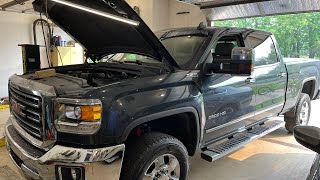
P0420 on 2014-2017 GMC Sierra: Catalyst Efficiency Causes and Fixes
On a 2014-2017 GMC Sierra, code P0420 often points to a failing catalytic converter, but a faulty downstream oxygen sensor or a leaking air filter housing are also common culprits. Always inspect the air filter seal for debris leaks (per a GM TSB) before replacing the expensive converter.
- Before any other diagnosis on a 2014-2017 Sierra, inspect the air filter housing for signs of dirt bypassing the seal, as this is a known issue (TSB #16NA111).
- Do not automatically replace the catalytic converter. A faulty downstream O2 sensor or an exhaust leak can trigger this code and are much cheaper to fix.
- If you must replace the converter, you must first identify and fix the root cause (e.g., engine misfire, oil consumption, air leak) or the new converter will be damaged as well.
- If the code appears on a very new or low-mileage truck, look into the converter break-in procedure described in TSB #PIP3119P before attempting repairs.
What's Unique About the 2014-2017 Gmc SIERRA

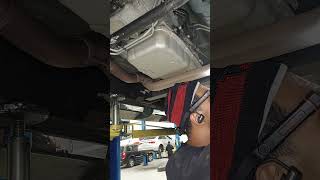
For this generation of GMC Sierra (K2XX platform), a unique and officially documented issue can cause a P0420 code. General Motors issued a Technical Service Bulletin (TSB #16-NA-111) highlighting that a poorly sealing air filter box can allow sand and dirt to enter the engine. This abrasive debris can damage the HO2S (oxygen sensor) element and clog the catalytic converter with particles, leading to a P0420 code. This makes inspecting the air intake system 🎬 Watch: How to properly access and replace the air filter. a critical first diagnostic step, unlike on many other vehicles.
Diagnostic Flowchart

Tap your situation to follow the diagnostic path that matches what you're seeing on this vehicle.
Symptoms You May Notice

- Check Engine Light is on
- Remote start feature is disabled
- Reduced engine power or sluggish acceleration, especially under load
- Rotten egg or sulfur smell from the exhaust
- Rattling noise from underneath the vehicle if the catalyst substrate breaks apart
- Vehicle will fail an emissions test
- Noticeable decrease in fuel economy
- Immediately replacing the catalytic converter without diagnosing other potential causes. A faulty O2 sensor, exhaust leak, or the specific air filter housing issue on these trucks can all trigger a P0420 code and are much cheaper to fix.
- Replacing the catalytic converter without fixing the root cause (misfire, oil consumption, airbox leak), leading to the new converter failing shortly after installation.
Most Likely Causes

- Failing Catalytic Converter 🔴 High Probability Converters can be contaminated by engine oil consumption (a known issue on some GM engines), damaged by unburned fuel from misfires, or physically clogged by debris from a leaking airbox.
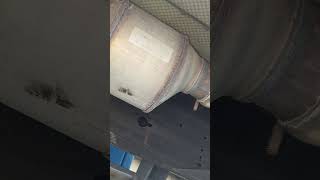
How to confirm: After ruling out all other possibilities, a technician can use a scan tool to analyze O2 sensor data. If the downstream sensor (Sensor 2) reading mimics the upstream sensor (Sensor 1), the converter has failed. Another test is to use an infrared thermometer to measure the temperature of the pipe before and after the converter; a working converter should be at least 100°F hotter at the outlet than the inlet.
Typical fix: Replace the Bank 1 catalytic converter. It is critical to fix the root cause (e.g., oil consumption, misfires, air leak) first, or the new converter will fail prematurely.
Est. part cost: $400-$2000+ - Leaking Air Filter Housing Seal 🟡 Medium Probability Per TSB #16-NA-111, the air box design may allow the filter to seal improperly, letting in abrasive sand and debris that damages emissions components. This is a well-documented issue for the K2XX platform.
How to confirm: Inspect the air filter housing cover for missing tabs or fasteners. Remove the cover and inspect the filter's rubber seal and the housing's sealing surface for any signs of dirt, sand, or debris bypassing the seal. Check the clean air duct leading to the throttle body for any accumulated debris.
Typical fix: Replace the engine air filter and, if the housing itself is warped or damaged, the entire air cleaner assembly to ensure a proper seal. Clear codes and re-evaluate before replacing any other parts.
Est. part cost: $25-$250 - Faulty Downstream Oxygen (O2) Sensor 🟡 Medium Probability The downstream sensor (Bank 1, Sensor 2) can fail, become contaminated by debris from the airbox leak, or simply wear out, sending inaccurate readings to the ECM that falsely indicate a bad converter. This is a very common misdiagnosis for P0420.
How to confirm: Use a scan tool to observe the voltage from the Bank 1 downstream O2 sensor (B1S2). It should be relatively stable (typically above 0.45V or 450mV) when the engine is warm and at a steady RPM. If it is stuck at a certain voltage, switching rapidly like the upstream sensor, or not responding, the sensor is likely bad.
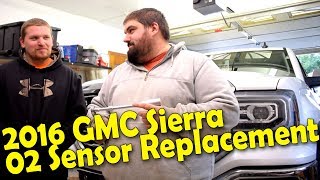
Typical fix: Replace the Bank 1 downstream 🎬 See this step-by-step guide for replacing the O2 sensor. (post-catalyst) oxygen sensor. Many technicians recommend replacing O2 sensors when replacing a converter as good practice.
Est. part cost: $50-$150 - Exhaust System Leak ⚪ Low Probability Cracks in the exhaust manifold or leaks in the exhaust pipe gaskets before the downstream O2 sensor can introduce extra oxygen, skewing sensor readings and tricking the computer into setting a P0420 code. Broken exhaust manifold bolts are a known issue on these trucks, leading to leaks.
How to confirm: Visually inspect the exhaust manifolds and piping for cracks or black soot trails indicating a leak. A smoke test can also be performed to pinpoint the leak's location. Listen for ticking or hissing noises from the engine bay, especially when cold.
Typical fix: Replace the leaking gasket or repair/replace the cracked exhaust component. For broken manifold bolts, specialized clamp kits exist as an alternative to bolt extraction.
Est. part cost: $20-$500
Rare But Worth Checking
- Incomplete Catalytic Converter Break-In: Per TSB #PIP3119P, if the code appears on a very low-mileage truck or immediately after a converter replacement, the converter may not have completed its break-in cycle. This can be caused by a power loss event (like battery disconnection) that resets the ECM's timer. Performing a specific drive cycle may resolve the code without replacing parts.
- Broken Exhaust Manifold Bolts: The rear-most bolts on the exhaust manifolds are prone to breaking due to heat cycles. This creates an exhaust leak right at the manifold, introducing oxygen that fools the upstream O2 sensor and can lead to a P0420 code. A ticking noise from the engine bay is a common symptom. Repair kits are available that clamp the manifold in place 🎬 Watch: How to use a clamp kit for broken manifold bolts. without needing to extract the broken bolt.
Diagnosis Steps
- Read the trouble codes with an OBD-II scanner and check for any other codes, especially misfire (P030x) or fuel trim (P017x) codes. Address these first.
- CRITICAL: Per TSB #16-NA-111, thoroughly inspect the air filter and air filter housing. Check for any dirt or sand bypassing the filter seal, and check for missing clips or a warped housing. If found, correct the sealing issue and replace the filter before proceeding.
- Visually inspect the exhaust system from the engine to the rear O2 sensor for any cracks, rust, or black soot that would indicate a leak. Pay close attention to the exhaust manifold bolts.
- Use a scan tool to monitor live data. Watch the voltage of the upstream (Bank 1 Sensor 1) and downstream (Bank 1 Sensor 2) O2 sensors. The upstream sensor should fluctuate rapidly between ~0.1V and ~0.9V. The downstream should be relatively steady and above 0.45V.
- If the downstream sensor is mirroring the upstream sensor's fluctuations, the converter is likely bad. If the downstream sensor's voltage is flat, unresponsive, or stuck low, the sensor itself is the likely problem.
- Perform a temperature check. Using an infrared thermometer, measure the exhaust pipe temperature immediately before and after the catalytic converter. The outlet should be at least 100°F hotter than the inlet on a fully warmed-up, working converter.
- Address any other codes for misfires, fuel system issues, or other sensor faults before condemning the catalytic converter.
- If the converter is determined to be bad, ensure the root cause (e.g., oil consumption, misfires, air leak) is repaired before installing a new one to prevent repeat failure.
Parts You'll Likely Need
- Catalytic Converter (Bank 1, Driver Side)
(OEM #19420276 (Replaces 20757674); 19420265 (Replaces 23111625, 84362281) - Note: Multiple Y-pipe assembly part numbers exist depending on cab/box configuration. Verify with VIN.)— This is the most common final point of failure for a P0420 code, after all other causes have been ruled out.
Trusted brands: ACDelco (OEM), Walker Exhaust, MagnaFlow
OEM price range: $800-$2000+
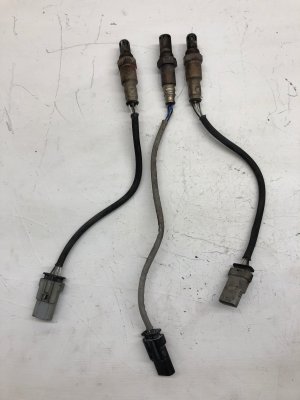
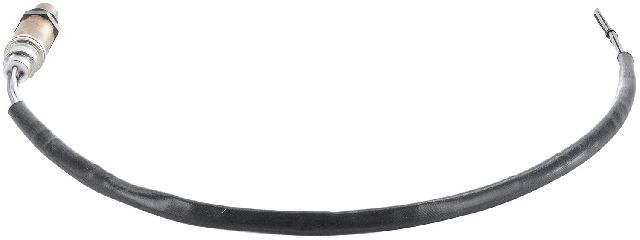
Aftermarket price range: $400-$900 - Downstream Oxygen Sensor (Bank 1, Sensor 2)
(OEM #ACDelco 12657188 or 213-1702 (Verify with VIN))
Related Codes That Often Appear With This One
- P0430 — P0430 is the identical code for Bank 2 (passenger side). The same underlying issues, such as a leaking air filter housing or contaminated fuel, can cause both converters to fail around the same time.
- P0300-P0308 — These are misfire codes (P0300 for random misfire, P0301-P0308 for specific cylinders). An engine misfire allows unburned fuel to enter the exhaust, which can quickly overheat and destroy the catalytic converter.
- P0171, P0174 — These codes indicate a lean fuel condition. A lean condition can increase combustion temperatures, creating excessive nitrogen oxides (NOx) that can overwhelm and damage the catalytic converter over time.
Technical Service Bulletins (TSBs) & Recalls
- 16NA111: Provides diagnostic information for a leaking air box/air filter seal that can cause DTCs P0420 and P0430.
- PIP3119P: Explains the catalytic converter break-in procedure and how its interruption can cause false P0420/P0430 codes on low-mileage vehicles.
- PIP5085C: Mentions P0420 in conjunction with other codes and advises following standard diagnostic procedures.
Platform-Specific Known Issues
- TSB #16-NA-111: Documents an issue where a poor seal on the air filter housing allows dirt and sand to be ingested by the engine. This debris can foul the O2 sensors and clog the catalytic converter, directly causing P0420 and P0430 codes. The fix involves inspecting the airbox for a poor seal or damage and replacing the filter or housing assembly.
- TSB #PIP3119P: Notes that P0420 can be set falsely on new or low-mileage vehicles if the ECM's catalyst monitoring timer is reset (e.g., by disconnecting the battery) before the converter is fully broken in. A specific drive cycle may be required to clear the code.
- Broken Exhaust Manifold Bolts: The rear bolts on the exhaust manifolds are known to snap, creating a pre-catalyst exhaust leak that can trigger a P0420 code. This is often accompanied by a ticking noise from the engine bay.
Mechanic-Grade Diagnostic Values
- Downstream O2 Sensor (B1S2) Voltage Graph — expected: A relatively steady voltage, typically above 0.45V (450mV), on a warm engine at steady RPM. The line on the graph should be much flatter than the upstream sensor's graph.. Failure: The voltage graph fluctuates rapidly in a pattern that mimics the upstream (B1S1) sensor. This indicates the catalytic converter is not storing oxygen and is inefficient.
- O2 Sensor Heater Circuit Fuse Voltage — expected: Full battery voltage (12V+ with key on, ~14V with engine running) at the O2 sensor fuse in the underhood fuse block.. Failure: No voltage or low voltage indicates a blown fuse or a wiring issue upstream of the sensor, which will prevent the sensor from heating up and providing an accurate reading.
Hidden / Shadow Codes Worth Checking
- Mode $06, Test ID $53 (varies by exact model/year): Mode $06 provides raw test data from the ECM for non-continuous monitors, like the catalyst efficiency test. Before a P0420 is set, the test values in Mode $06 will often approach the manufacturer's failure threshold. This allows a technician to see if the converter is borderline or degrading, even if the MIL isn't on yet. (see via A professional scan tool or an advanced consumer OBD-II app that can access Mode $06 data. The tool will display a test value, a minimum limit, and a maximum limit. A value close to the maximum limit, even if it passes, indicates a problem.)
Scan Tool Commands That Help
- GDS2 / Tech2: Engine Hour Meter / Data 1 List — Per TSB #PIP3119P, if a P0420/P0430 code appears on a very low-mileage truck, this function is used to verify the total engine run time. If it's less than one hour, a battery disconnect may have reset the catalyst break-in timer, and a drive cycle should be performed before replacing parts.
Wiring & Ground Locations
- G103 — Typically located on the front of the right (passenger side) cylinder head. Some diagrams may also show a G103 on the cowl, above the brake booster.. This is a primary ground for the engine control module (ECM/PCM). A poor or corroded ground at this location can cause erratic sensor readings, including from the oxygen sensors, potentially leading to a false P0420 code.
- Bank 1 Oxygen Sensor Connectors — Bank 1 is the driver's side. Sensor 1 is before the catalytic converter, with its connector often clipped to the transmission or a bracket nearby. Sensor 2 is after the catalytic converter, with its connector typically clipped to the frame rail above the exhaust.. Knowing the physical location is essential for testing sensor voltage/resistance at the connector and for replacing the correct sensor. A visual inspection of the harness for melting or chafing is a key diagnostic step.
Real Owner Repair Stories
- Reddit user in r/MechanicAdvice (GMC Sierra (year not specified, but relevant platform)) — P0420 code
❌ Tried (didn't work) Initial diagnosis pointed to catalytic converter.
✅ What actually fixed it The user found the airbox and air filter were full of leaves and debris. After cleaning it all out and replacing the filter, the code never returned. This aligns with TSB #16-NA-111. - GenVibe Forums (on a GM vehicle with P0420) (GM vehicle) — Persistent P0420 code.
❌ Tried (didn't work) Replacing the catalytic converter, Replacing both oxygen sensors, Replacing intake manifold gasket, Replacing spark plugs
✅ What actually fixed it Installing two spark plug non-foulers to create a spacer for the downstream oxygen sensor. This pulled the sensor out of the direct exhaust stream, tricking the ECM into seeing a larger oxygen differential and clearing the code. This often indicates the replacement converter was not as efficient as the OEM unit.
"I Checked Everything" — The Actual Cause
- A technician may perform an exhaust smoke test and find no leaks, yet the P0420 code persists. The root cause, as identified in GM TSB #16-NA-111, may not be an exhaust leak at all, but rather an *intake* leak at the air filter housing. Abrasive debris bypasses the filter seal, is ingested by the engine, and then damages the O2 sensors and clogs the catalytic converter from the inside out. A smoke test on the exhaust would never identify this issue.
OEM Part Supersession History
20757674→19420276— Standard part number update/revision by the manufacturer.
Heads up: The new part number (19420276) is the direct replacement for the original Y-pipe assembly for many V8 applications in this range. Always verify the correct assembly part number with the vehicle's VIN, as it depends on cab and bed configuration.
Model Year Variations Within This Range
- 2014-2018: The primary known issues related to P0420, such as the airbox seal (TSB 16-NA-111) and the catalyst break-in procedure (TSB PIP3119P), are documented to apply across the entire 2014-2017+ generation. TSB 16-NA-111 was explicitly updated in 2017 to include 2017 and 2018 models, indicating no design change was made to fix the underlying airbox issue within this generation.
Real Owner Stories
Aggregated from forums and TSBs cited above. Mileages and costs reflect what owners reported in those sources.
2014 Sierra 1500
Symptoms: Check engine light with P0420 code, loud clacking noise under heavy throttle after repair attempt.
What fixed it: The owner's report focuses on a failed repair attempt. An aftermarket 'OEM replacement' catalytic converter did not fit correctly, resulting in an exhaust leak and potentially a cracked exhaust manifold.
Source hint: Reddit r/MechanicAdvice
Related OBD-II Codes
Frequently Asked Questions
Does TSB #16-NA-111 apply to my 2014-2017 GMC Sierra with a P0420 code?
I just bought a low-mileage Sierra or disconnected the battery, and now I have a P0420 code. Is the catalytic converter bad?
I hear a ticking noise from the engine bay along with the P0420 code. What does this mean?
Why is my remote start disabled on my GMC Sierra?
Should I replace the O2 sensors when replacing the catalytic converter on my Sierra?
My Sierra is consuming oil and has a P0420 code. Are they related?
Helpful Videos
Used OEM Parts in Stock

New Aftermarket Parts Available





The information in this article is provided for general reference and educational purposes only. Vehicle specifications, procedures, and part compatibility can vary by production date, trim level, and region. Always consult your vehicle's factory service manual and verify part numbers before purchasing or performing repairs. Safety-critical components such as airbags, seat belts, and braking systems should be installed by a qualified professional.
- Gmc SIERRA:
- 🎬 Helpful Videos
- 🛍️ Shop This Part
- What's Unique About the 2014-2017 Gmc SIERRA
- Diagnostic Flowchart
- Symptoms You May Notice
- Most Likely Causes
- Rare But Worth Checking
- Diagnosis Steps
- Parts You'll Likely Need
- Related Codes That Often Appear With This One
- Technical Service Bulletins (TSBs) & Recalls
- Platform-Specific Known Issues
- Mechanic-Grade Diagnostic Values
- Hidden / Shadow Codes Worth Checking
- Scan Tool Commands That Help
- Wiring & Ground Locations
- Real Owner Repair Stories
- "I Checked Everything" — The Actual Cause
- OEM Part Supersession History
- Model Year Variations Within This Range
- Real Owner Stories
- 2014 Sierra 1500
- Related OBD-II Codes
- Frequently Asked Questions
- 🎟️ Get 5% Off