

P0420 on 2018-2019 Ford Mustang: Catalyst Efficiency Causes and Fixes
On a 2018-2019 Mustang, code P0420 almost always points to a failed catalytic converter on Bank 1 (passenger side). Ford issued TSBs (19-2201 for 5.0L, 18-2355 for 2.3L) for this exact issue, requiring a new converter and a PCM update. Check if your vehicle is covered under the 8-year/80,000-mile federal emissions warranty before paying for this repair, as many owners report getting it fixed for free under warranty.
- For a 2018-2019 Mustang, P0420 is not a generic code; it points to a known issue acknowledged by Ford via TSBs 19-2201 (5.0L) and 18-2355 (2.3L).
- The most likely cause is a failed catalytic converter, and the official fix requires replacing the converter AND reprogramming the car's computer (PCM).
- Before paying for any repairs, check if your vehicle's age and mileage (under 8 years/80,000 miles) make it eligible for a free repair under the federal emissions warranty.
- If you have any other codes stored, especially for engine misfires (P030x), they must be diagnosed and repaired first to avoid damaging the new catalytic converter.
What's Unique About the 2018-2019 Ford Mustang

What makes the 2018-2019 Mustang unique is that Ford officially acknowledged a problem causing this code. Technical Service Bulletins (TSBs) were released for both the 5.0L V8 (TSB 19-2201) and 2.3L EcoBoost (TSB 18-2355), stating that PCM software logic could cause premature catalytic converter failure. The official fix is not just to replace the part, but also to reprogram the PCM. This makes the catalytic converter itself the overwhelmingly likely culprit, unlike in many other vehicles where an O2 sensor or exhaust leak is a more common initial suspect.
Symptoms You May Notice
- Check Engine Light is on
- Reduced engine power or sluggish acceleration
- Worse than usual fuel economy
- A sulfur or "rotten egg" smell from the exhaust
- Replacing the oxygen sensors when the catalytic converter is the actual point of failure. Given the TSBs for this vehicle, if P0420 is the only code present, the converter is the most likely cause.
Most Likely Causes

- Failed Catalytic Converter (Bank 1) 🔴 High Probability Ford TSBs 19-2201 (5.0L) and 18-2355 (2.3L) identify a PCM software issue that causes premature catalyst failure on these specific models. The official fix requires replacing the converter and reprogramming the PCM. Forum members on Mustang6G.com frequently report this failure at low mileages (20,000-40,000 miles), with the repair being covered under the emissions warranty.
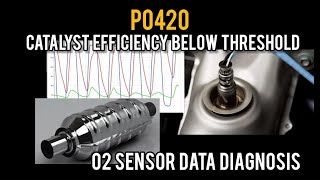
How to confirm: First, check if your vehicle's build date is covered by the TSB. The definitive test is to use a scan tool to graph the upstream (B1S1) and downstream (B1S2) O2 sensors. If the B1S2 voltage graph mimics the fluctuating B1S1 graph, the converter is not working. A good converter will have a relatively flat and steady B1S2 voltage. 🎬 Watch: How to analyze O2 sensor data for P0420 diagnosis
Typical fix: Replace the Bank 1 catalytic converter and have a Ford dealer or qualified shop reprogram the PCM to the latest calibration. This repair is very likely covered under the federal emissions warranty (8 years/80,000 miles). TSB 19-2201 lists labor time as 1.0 hour for the right-hand (Bank 1) converter replacement and PCM reprogram.
Est. part cost: $650-$1900 for OEM, $400-$900 for aftermarket. - Faulty Downstream Oxygen (O2) Sensor ⚪ Low Probability While less common on this platform due to the known TSBs, O2 sensors are wear items and can fail, sending incorrect data that falsely triggers a P0420 code.
How to confirm: Using a scan tool, observe the live data for the Bank 1 Sensor 2. If the voltage is stuck (e.g., at 0V or 1V) or responds very slowly to changes in engine speed, the sensor itself is likely bad. A 'wiggle test' on the sensor's wiring harness can also help identify intermittent connection issues.
Typical fix: Replace the Bank 1, Sensor 2 (downstream) oxygen sensor. Using a trusted brand like Motorcraft or Bosch is recommended.
Est. part cost: $50-$120 - Exhaust System Leak ⚪ Low Probability
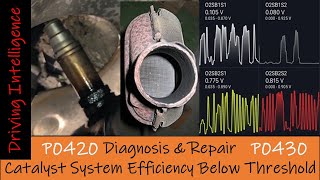
How to confirm: Perform a visual inspection of the exhaust system from the engine to the downstream O2 sensor. Look for black soot marks, cracks, or loose connections at gaskets and flanges. A smoke test is the most effective way to find small leaks 🎬 Watch: A guide to diagnosing and fixing P0420/P0430 codes that can introduce oxygen and fool the O2 sensors.
Typical fix: Repair the leak by replacing the faulty gasket or tightening the connection. A cracked exhaust manifold would require replacement.
Est. part cost: $10-$100 for gaskets, higher for manifold replacement.
Rare But Worth Checking
- Engine Misfires or Fuel System Issues: If you have other codes like P030x (misfire) or P0171/P0174 (lean condition), these must be fixed first. A misfire can dump unburned fuel into the exhaust, which will quickly destroy a new catalytic converter.
Diagnosis Steps

- Scan for Codes: Use an OBD-II scanner to confirm P0420 is present. Check for any other codes. If P0420 is the only code, proceed with high suspicion of converter failure.
- Check for TSBs: Determine your vehicle's build date and engine. Check if it falls under TSB 19-2201 (5.0L auto, built on or before 04/23/2019) or TSB 18-2355 (2.3L, built on or before 10/17/2018).
- Check Emissions Warranty: Check if your vehicle is still within the 8-year/80,000-mile federal emissions warranty. If so, contact a Ford dealer as the repair may be covered free of charge.
- Analyze O2 Sensor Data: Using a scan tool with live data graphing, monitor the voltage of the upstream (B1S1) and downstream (B1S2) oxygen sensors at a steady 2,500 RPM. A good converter will show a rapidly fluctuating B1S1 and a steady B1S2. If B1S2 mirrors B1S1, the converter has failed.
- Inspect for Exhaust Leaks: Visually and audibly inspect the exhaust system for any leaks between the cylinder head and the downstream O2 sensor. A smoke test is the most reliable method.
- Test Oxygen Sensors: If the scan tool data is ambiguous, test the O2 sensor directly. A sensor with stuck or lazy voltage readings should be replaced.
- Inspect Catalytic Converter: If all else fails, a physical inspection may be necessary. A clogged converter can be checked with a backpressure gauge or by using an infrared thermometer to see if the outlet is significantly hotter than the inlet (a clogged cat may be hotter at the inlet).
Parts You'll Likely Need

- Bank 1 Catalytic Converter
(OEM #JR3Z-5E212-A (5.0L Right/Bank 1), FR3Z-5E212-F (2.3L))— This is the most common failure for a P0420 code on this vehicle, as documented by Ford's own Technical Service Bulletins. Part number JR3Z-5E212-A is listed for the 2018-2023 5.0L right side (Bank 1). Part number FR3Z-5E212-F fits the 2.3L EcoBoost.
Trusted brands: Motorcraft (OEM), Walker Exhaust, MagnaFlow, AP Exhaust
OEM price range: $750-$1900
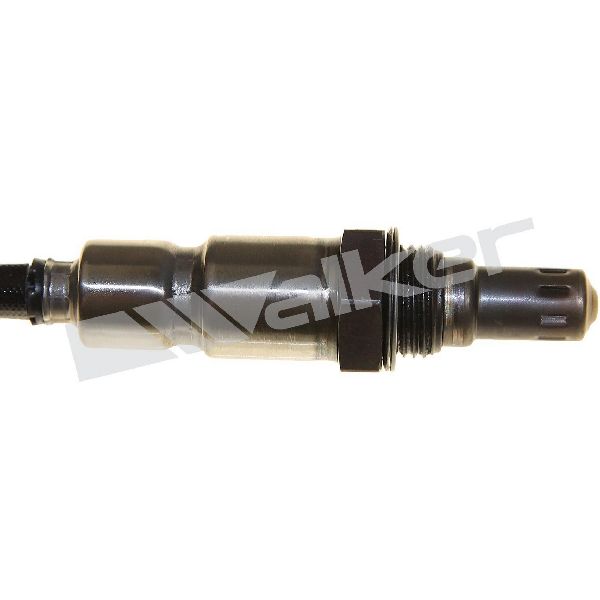
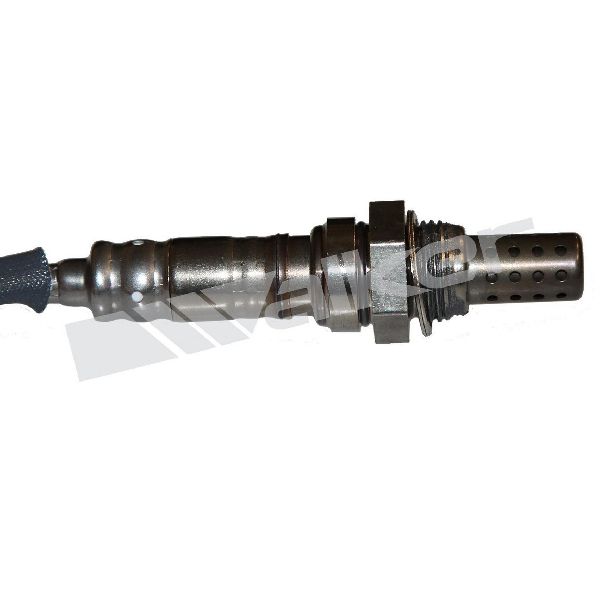
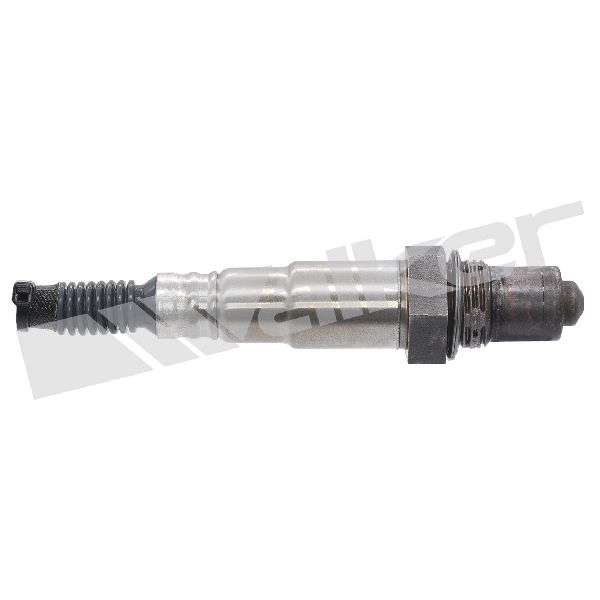
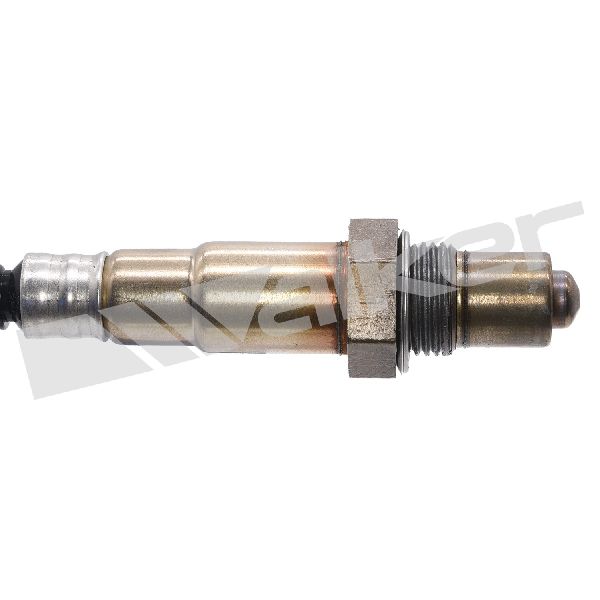
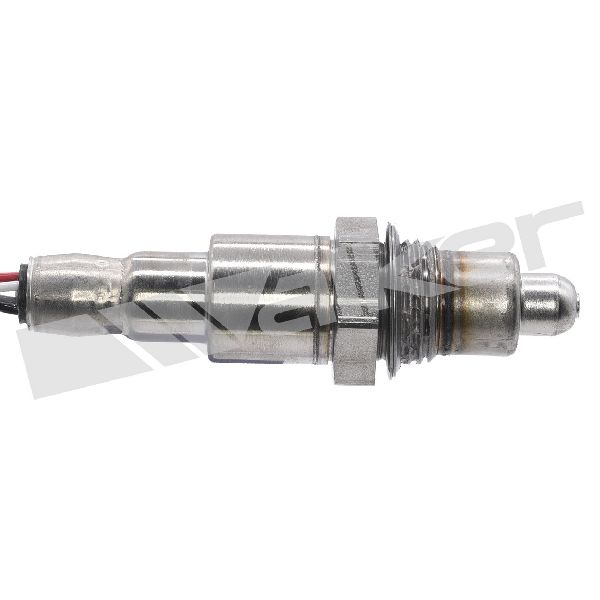
Aftermarket price range: $400-$900 - Downstream Oxygen Sensor (Bank 1, Sensor 2)
(OEM #Motorcraft DY-1438 (5.0L) or DY-1335 (2.3L))— While less likely to be the root cause than the converter on this platform, it's the second most probable component to fail and should be tested during diagnosis.
Trusted brands: Motorcraft (OEM), Bosch, Denso, NTK
OEM price range: $80-$150
Aftermarket price range: $50-$100
Related Codes That Often Appear With This One
- P0430 — This is the identical code for Bank 2 (driver's side). If both appear, it suggests a systemic issue or that both converters have failed, which is covered under TSB 19-2201 for the 5.0L V8.
- P0300-P0308 — These are misfire codes. An active misfire is a primary cause of catalytic converter damage, as it sends raw fuel into the exhaust, overheating the catalyst. Fix any misfires before replacing a converter.
Technical Service Bulletins (TSBs) & Recalls
- TSB 19-2201: 5.0L - Illuminated MIL With DTC P0420 And/Or P0430. A manufacturer service bulletin notes this may be due to the operation of the PCM and instructs technicians to replace the affected catalyst.
- TSB 18-2355: 2.3L - Illuminated Malfunction Indicator Lamp (MIL) With Diagnostic Trouble Code (DTC) P0420. This bulletin applies to vehicles built on or before 17-Oct-2018.
Platform-Specific Known Issues
- TSB 19-2201 for 5.0L V8: Affects 2018-2019 5.0L models with automatic transmissions built on or before April 23, 2019. Recommends replacing the catalytic converter(s) and reprogramming the PCM for P0420/P0430 if they are the only codes present.
- TSB 18-2355 for 2.3L EcoBoost: Affects 2018-2019 2.3L models built on or before October 17, 2018. Recommends replacing the catalytic converter and reprogramming the PCM if only P0420 is present.
- Real-World Owner Experience: A user on Mustang6G.com with a 2018 GT reported getting both P0420 and P0430 codes, and the dealer replaced both catalytic converters under warranty per the TSB. This highlights the importance of checking for warranty coverage.
Mechanic-Grade Diagnostic Values
- Upstream O2 Sensor (B1S1) Voltage — expected: Rapidly fluctuating sine wave between ~0.1V and ~0.9V at warm idle and steady RPM.. Failure: A flat-line or slow, lazy response.
- Downstream O2 Sensor (B1S2) Voltage (Good Cat) — expected: Relatively steady voltage, typically stable above 0.6V, at warm idle and steady RPM.. Failure: Voltage fluctuates in a similar pattern to the upstream sensor, indicating the catalyst is not storing oxygen.
- O2 Sensor Heater Element Resistance — expected: Approximately 5 to 6 ohms when measured across the two heater wires (often the same color, e.g., two white wires).. Failure: An open circuit (infinite resistance) or a short (zero resistance) indicates a failed heater element.
- Catalytic Converter Temperature Differential — expected: The outlet pipe should be at least 100°F (38°C) hotter than the inlet pipe when the engine is at operating temperature and held at ~2000 RPM.. Failure: Inlet and outlet temperatures are roughly the same, indicating the catalyst is not chemically reacting (is 'dead').
Hidden / Shadow Codes Worth Checking
- Mode $06, TID $81, CID $01: This refers to the onboard diagnostic system's self-test results for the Bank 1 catalyst system. TID $81 is the test for Catalyst Efficiency Monitor Bank 1. A scan tool capable of reading Mode $06 data can display the raw test value and the manufacturer's min/max thresholds. A value outside this range is what triggers the P0420 code. (see via A professional scan tool or advanced DIY software like FORScan that can access Mode $06 test data.)
Scan Tool Commands That Help
- Ford IDS (or J2534 Pass-Thru): PCM Reprogramming — This is a mandatory step after replacing the catalytic converter(s) per TSB 19-2201 and TSB 18-2355. The new software calibration is required to prevent the premature failure from reoccurring. Skipping this step will likely result in the P0420 code returning.
- Ford IDS / FORScan: Reset All Adaptations — After a PCM reprogram or major repair, it's good practice to reset all learned adaptations. The PCM will then begin a re-learning process for parameters like transmission shift points and fuel trims. Technicians should advise customers that the vehicle may shift differently for a few days as it re-adapts.
Wiring & Ground Locations

- PCM Connector — The Powertrain Control Module (PCM) on many Ford vehicles, including Mustangs, is located in the passenger-side footwell, behind the kick panel.. To definitively rule out a wiring issue, a technician can back-probe the O2 sensor signal and heater circuit wires directly at the PCM connector. This bypasses all vehicle wiring, confirming if the signal the PCM sees is the same as the signal at the sensor, ruling out harness damage or corrosion.
Real Owner Repair Stories
- (2018 Mustang GT with a Roush Phase 2 supercharger, 32,600 miles) — Check Engine Light with code P0420 came on.
❌ Tried (didn't work) The user first posted asking if it was the O2 sensor or the cat.
✅ What actually fixed it Another user replied confirming there is a TSB for 2018 and early 2019 Mustangs for this exact issue. That user had both P0420 and P0430 codes and the dealer replaced both catalytic converters under the emissions warranty, which solved the problem. The fix was performing the TSB. - (2015+ Mustang GT (concept applies to 2018-19)) — P0420 code appearing after installing aftermarket long tube headers with high-flow catalytic converters.
❌ Tried (didn't work) Clearing the code would work temporarily, but it would return.
✅ What actually fixed it The consensus solution for this scenario is to have the vehicle's tune modified to turn off the rear O2 sensors' monitoring function. This prevents the PCM from flagging the efficiency of the high-flow cats, which often don't perform identically to the OEM units. This is not legal for on-road vehicles in many regions. - NHTSA ODI #11654673 — An owner reported their engine light came on with code P0420, which they identified as the catalytic converter before bringing the vehicle to a dealership for inspection.
OEM Part Supersession History
JR3Z-5E212-B→JR3Z-5E212-A— The part for the 5.0L V8 (Bank 1/Right Side) is JR3Z-5E212-A, which multiple sources list as replacing JR3Z-5E212-B. This is an unusual sequence (A replacing B) and may reflect a change in part strategy or a correction. The 'A' part is the correct one to order for the TSB repair.FR3Z-5E212-F→FR3Z-5E212-T— The catalytic converter for the 2.3L EcoBoost has been superseded to part number FR3Z-5E212-T. This likely incorporates the design or material improvements needed to work with the updated PCM software and prevent premature failure.
Heads up: Using the older '-F' part, even if new-old-stock, is not advisable as it may be prone to the original failure mode.Stock Mustang Upstream O2 Sensor→F-150 5.0L Upstream O2 Sensor (e.g., NTK 27079/27080)— This is not an official supersession, but a common technician/modifier trick. When installing long-tube headers, the O2 sensor bungs are relocated further downstream. The stock F-150 5.0L sensors have longer wiring harnesses, which reach the new location without requiring wire extensions, providing a cleaner and more reliable installation.
Heads up: Must verify the connector plug matches before purchasing.
Model Year Variations Within This Range
- 2018-2019: The 2018 model year introduced the significantly updated 'Gen 3' Coyote 5.0L V8. Compared to the 2015-2017 'Gen 2', it featured increased displacement (4.95L to 5.04L), a dual-fuel system with both port and direct injection, higher compression (12.0:1), and a higher redline. These changes are relevant to the PCM software logic cited in TSB 19-2201.
- 2018-2019: TSB 19-2201 for the 5.0L applies to vehicles built on or before April 23, 2019. TSB 18-2355 for the 2.3L applies to vehicles built on or before October 17, 2018. Vehicles built after these dates presumably have the updated catalytic converters and/or PCM software from the factory, making them less susceptible to this specific cause of P0420.
Diagnostic Flowchart
Other Known Issues on This Vehicle
Issues unrelated to this code that are worth knowing about as an owner of this generation:
- Engine 'Typewriter Tick' / 'BBQ Tick' 🟡 Low — Very common on 2018+ 5.0L Coyote engines. It's a light, intermittent ticking noise at warm idle. Ford TSB 19-2144 and a broadcast message (7718) state this is a normal operating characteristic and no repairs should be attempted. (Ref: TSB 19-2144)
- MT82 Manual Transmission Problems 🟠 Medium — Complaints are common for 2018+ models, including difficulty shifting, high-RPM lockout, and internal failures like broken shift forks. A class-action lawsuit was filed regarding these issues. (Ref: TSB 19-2321, TSB 22-2372)
- 10R80 Automatic Transmission Harsh Shifting 🟠 Medium — Owners report issues with harsh or erratic shifting in the 10-speed automatic transmission. Software updates and sometimes valve body replacements are performed to address this. (Ref: Multiple TSBs exist for PCM/TCM reprogramming.)
- 2.3L EcoBoost Carbon Buildup 🟠 Medium — As a direct-injection engine, the intake valves are prone to carbon buildup over time, which can lead to rough idle, misfires, and reduced performance. This typically becomes noticeable after 50,000+ miles.
- 2.3L EcoBoost Head Gasket Failure 🔴 High — While not guaranteed, some 2.3L EcoBoost engines, particularly in performance applications, have experienced head gasket failures, sometimes due to overheating or coolant intrusion issues.
Used vs. New Parts: Buying Guide for This Vehicle
When a used part is the smart pick: For this specific P0420 issue on this vehicle, buying a used catalytic converter is NEVER recommended. The failure is due to a known design/software flaw, and a used part from a 2018-2019 donor is highly likely to have the same defect or a very short remaining life. Used O2 sensors are also not recommended as they are inexpensive wear items.
What to inspect on the donor part:
- Do not buy a used catalytic converter for this repair.
OEM-only on this vehicle (don't cheap out):
- Catalytic Converter: Due to the specific nature of TSBs 19-2201 and 18-2355, which require a specific updated part and a corresponding PCM software flash, using an OEM (Motorcraft) or an OEM-equivalent part that explicitly meets the superseding part number specification is critical. Many standard aftermarket converters lack the precise catalyst loading and oxygen storage capacity to satisfy the sensitive PCM monitoring, leading to the code returning.
Aftermarket brands forum-validated for this vehicle:
- O2 Sensors: NTK, Denso, and Bosch are widely regarded as reliable OEM-quality suppliers for oxygen sensors.
Brands owners have reported issues with on this vehicle:
- Generic/cheap catalytic converters: Avoid low-cost, universal, or non-CARB compliant catalytic converters. Forum discussions and general mechanic wisdom suggest these are a very common cause for the P0420 code to return shortly after repair because they cannot meet the efficiency thresholds required by the PCM.
Real Owner Stories
Aggregated from forums and TSBs cited above. Mileages and costs reflect what owners reported in those sources.
2018 Ford Mustang GT 5.0L — ~30000 miles
Symptoms: Check engine light showing both P0420 and P0430 codes.
What fixed it: The dealer replaced both catalytic converters under warranty per the TSB.
Source hint: Mustang6G.com: 'P0420 check engine light'
2018 Ford Mustang 2.3L EcoBoost — 200 miles
Symptoms: Illuminated Malfunction Indicator Lamp (MIL) with DTC P0420.
What fixed it: Replacement of the catalytic converter and PCM reprogramming as per TSB 18-2355.
Source hint: Mustang6G.com: 'Catalytic converter replacement at 200 miles'
2018 Ford Mustang GT 5.0L
Symptoms: P0420 and P0430 codes appeared after returning the vehicle to a stock tune from aftermarket long-tube headers.
What fixed it: Returning the exhaust system to factory specifications to resolve efficiency codes.
Source hint: Mustang6G.com: 'fixing p0420 p0430'
2018 Ford Mustang EcoBoost
Symptoms: The check engine light came on with code P0420, indicating a catalytic converter issue.
What fixed it: The owner confirmed the catalytic converter failure before taking it to a Ford dealership for service. (NHTSA ODI #11654673)
Related OBD-II Codes
Frequently Asked Questions
Does TSB 19-2201 apply to my 2018 Mustang GT with a manual transmission?
Will the federal emissions warranty cover a P0420 repair on my 2019 EcoBoost Mustang?
I have a 2018 Mustang 2.3L built in late 2018; am I covered by a TSB for P0420?
What is the official Ford fix for the P0420 code on these models?
Can I use aftermarket parts to fix the P0420 code on my Mustang?
Is the 'Typewriter Tick' on my 5.0L related to the P0420 catalytic converter code?
Helpful Videos

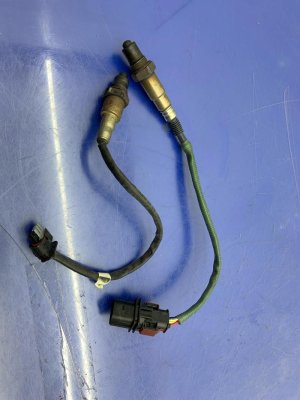
Used OEM Parts in Stock
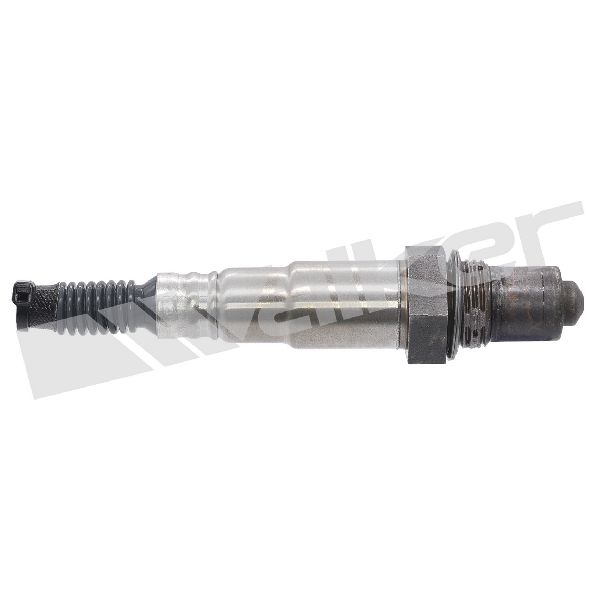
New Aftermarket Parts Available

The information in this article is provided for general reference and educational purposes only. Vehicle specifications, procedures, and part compatibility can vary by production date, trim level, and region. Always consult your vehicle's factory service manual and verify part numbers before purchasing or performing repairs. Safety-critical components such as airbags, seat belts, and braking systems should be installed by a qualified professional.
- Ford Mustang:
- 🎬 Helpful Videos
- 🛍️ Shop This Part
- What's Unique About the 2018-2019 Ford Mustang
- Symptoms You May Notice
- Most Likely Causes
- Rare But Worth Checking
- Diagnosis Steps
- Parts You'll Likely Need
- Related Codes That Often Appear With This One
- Technical Service Bulletins (TSBs) & Recalls
- Platform-Specific Known Issues
- Mechanic-Grade Diagnostic Values
- Hidden / Shadow Codes Worth Checking
- Scan Tool Commands That Help
- Wiring & Ground Locations
- Real Owner Repair Stories
- OEM Part Supersession History
- Model Year Variations Within This Range
- Diagnostic Flowchart
- Other Known Issues on This Vehicle
- Used vs. New Parts: Buying Guide for This Vehicle
- Real Owner Stories
- 2018 Ford Mustang GT 5.0L — ~30000 miles
- 2018 Ford Mustang 2.3L EcoBoost — 200 miles
- 2018 Ford Mustang GT 5.0L
- 2018 Ford Mustang EcoBoost
- Related OBD-II Codes
- Frequently Asked Questions
- 🎟️ Get 5% Off