

P0420 on 2013-2020 Ford Fusion Hybrid: Catalyst Efficiency Causes and Fixes
This code almost always means the catalytic converter, which is integrated with the exhaust manifold on this car, has failed. Before replacing this expensive part (around $1,800), first rule out a much cheaper downstream O2 sensor failure (under $100) or an exhaust leak.
- P0420 on a Fusion Hybrid points to low catalyst efficiency, but don't assume the converter is bad without proper diagnosis.
- Always check for exhaust leaks and test the downstream O2 sensor before condemning the expensive catalytic converter.
- The catalytic converter is integrated with the exhaust manifold, making the OEM part expensive (over $1600) and replacement more labor-intensive.
What's Unique About the 2013-2020 Ford Fusion Hybrid

On the 2013-2020 Ford Fusion Hybrid, the primary catalytic converter is not a simple bolt-in part; it is integrated directly into the exhaust manifold assembly. This design makes replacement more labor-intensive and significantly more expensive than on vehicles with a separate, more accessible converter. While the root causes are typical (age, contamination), some owners have anecdotally reported premature or repeated catalytic converter failures, suggesting a potential sensitivity for this component on the Fusion platform.
Symptoms You May Notice
- Check Engine Light is on.
- Reduced fuel economy.
- Decreased engine performance or acceleration, especially if the converter is clogged.
- A sulfur or "rotten egg" smell from the exhaust, indicating a clogged converter.
- Replacing the catalytic converter when the actual fault is a less expensive downstream oxygen sensor. Some sources claim this misdiagnosis occurs up to 30% of the time.
- Replacing oxygen sensors when the root cause is an exhaust leak ahead of the sensor.
Most Likely Causes

- Failed Catalytic Converter 🔴 High Probability The catalytic converter is a wear item that can fail from age (typically over 100,000 miles) or contamination. Some owners report premature or repeated failures. One owner on a forum reported replacing the manifold/cat assembly, only to have the P0420 code return in less than two weeks with a rattle, indicating the new converter had also failed.
How to confirm: The most reliable method is an infrared temperature test: a working converter should be significantly hotter at the outlet than the inlet. 🎬 Watch: How to test a catalytic converter like a professional. A professional shop can also use a scan tool to analyze oxygen sensor data graphs; a downstream sensor voltage that mimics the upstream sensor's fluctuations points to a bad converter.
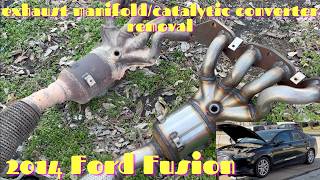
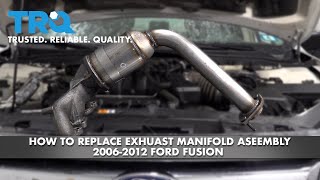
Typical fix: Replace the exhaust manifold and catalytic converter assembly. Due to the integrated design, this is a single, complex part. 🎬 See this walkthrough for removing the integrated exhaust manifold assembly.
Est. part cost: $1600-$2100 for OEM, $400-$1100 for aftermarket. - Faulty Downstream Oxygen Sensor 🟡 Medium Probability Oxygen sensors degrade over time and can send false readings to the computer, incorrectly triggering a P0420 code. It is a common misdiagnosis to replace the converter when only the sensor is bad, with some shops estimating this happens in up to 30% of P0420 cases.
How to confirm: Use a scan tool to observe the live data for the Bank 1 Sensor 2 (downstream). If the voltage is stuck high, low, or is erratic when it should be stable, the sensor is likely faulty. Swapping the upstream and downstream sensors (if they are the same part number) can also help diagnose; if the problem follows the sensor, the sensor is bad.
Typical fix: Replace the downstream (post-catalyst) oxygen sensor.
Est. part cost: $70-$100 for OEM, $45-$60 for aftermarket. - Exhaust System Leak ⚪ Low Probability Leaks from cracked manifolds, broken flange gaskets, or rusted pipes located between the upstream and downstream O2 sensors can allow outside air into the exhaust stream. This extra oxygen skews the downstream sensor's reading, making the PCM think the converter is inefficient.
How to confirm: Perform a thorough visual inspection of the exhaust system from the engine to the rear bumper, looking for black soot, cracks, or holes. A smoke test, where smoke is forced into the exhaust system, is the most effective way to pinpoint small leaks.
Typical fix: Repair the leak. This may involve replacing a gasket, welding a crack, or replacing a section of pipe.
Est. part cost: $10-$50 for gaskets, or variable depending on the required welding or pipe replacement.
Rare But Worth Checking
- Engine Misfires or Rich/Lean Fuel Condition: While these issues will typically set their own codes (e.g., P030x for misfires, P0171/P0174 for lean), an unresolved engine running problem can destroy a new catalytic converter. Unburned fuel can enter the exhaust and overheat the catalyst, causing it to melt internally. Always resolve any other engine codes before replacing the converter.
- PCM Software Faults: In some cases, the software in the Powertrain Control Module (PCM) may be faulty, leading to an incorrect diagnosis of catalytic converter efficiency. Manufacturer Bulletin #TSB 25-2348 notes that an incorrectly illuminated MIL with code P0420 may be due to PCM software issues. Similarly, NHTSA ODI #11642766 describes a situation where faulty software prompted a P0420 code, forcing an out-of-pocket converter replacement that may not have been necessary.
Diagnosis Steps

- Scan for other DTCs. If any other codes are present (misfire, fuel trim, O2 sensor circuit faults), diagnose and repair them first. A problem upstream can damage a new converter.
- Perform a thorough visual inspection of the exhaust system. Look for cracks in the manifold, broken gaskets, and rust holes between the front and rear O2 sensors.
- Analyze live sensor data with an OBD-II scanner. At a steady 2,500 RPM, observe the voltage for the upstream (Bank 1 Sensor 1) and downstream (Bank 1 Sensor 2) O2 sensors. The upstream sensor should fluctuate rapidly. The downstream sensor should remain relatively steady and stable. If the downstream sensor's voltage is fluctuating in a similar pattern to the astream sensor, the converter is likely failing.
- If sensor data is inconclusive, test the oxygen sensors directly. A lazy or biased sensor can be the root cause.
- If sensors are confirmed to be working, perform a catalytic converter temperature check. Using an infrared thermometer, measure the temperature of the exhaust pipe at the converter's inlet and outlet after the engine is fully warmed up. The outlet should be at least 100°F (38°C) hotter than the inlet. If it's the same temperature or cooler, the converter is not functioning.
Parts You'll Likely Need

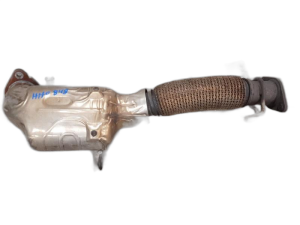
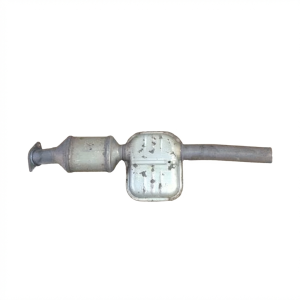
- Exhaust Manifold with Integrated Catalytic Converter
(OEM #HS7Z-5G232-E)— This is the most common cause of P0420. On this vehicle, the converter is welded to the exhaust manifold as one assembly. This part number supersedes DS7Z-5G232-B, DS7Z-5G232-D, and HS7Z-5G232-B.
Trusted brands: Motorcraft (OEM), Walker, MagnaFlow, Eastern Catalytic
OEM price range: $1600-$2100
Aftermarket price range: $400-$1100 - Downstream Oxygen Sensor (Bank 1, Sensor 2)
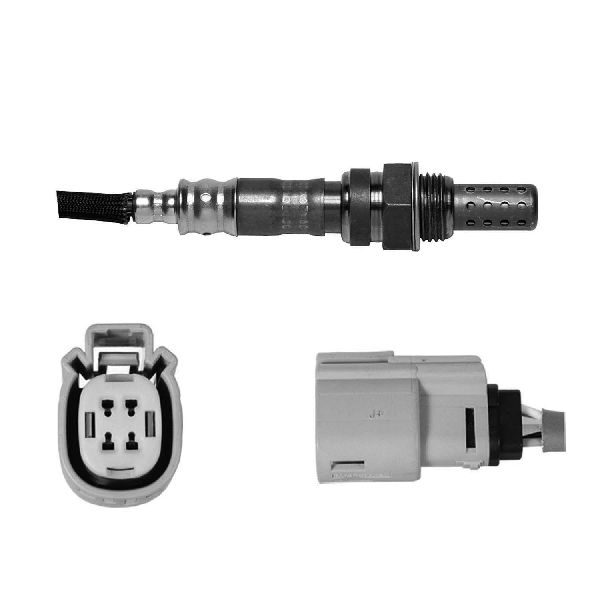
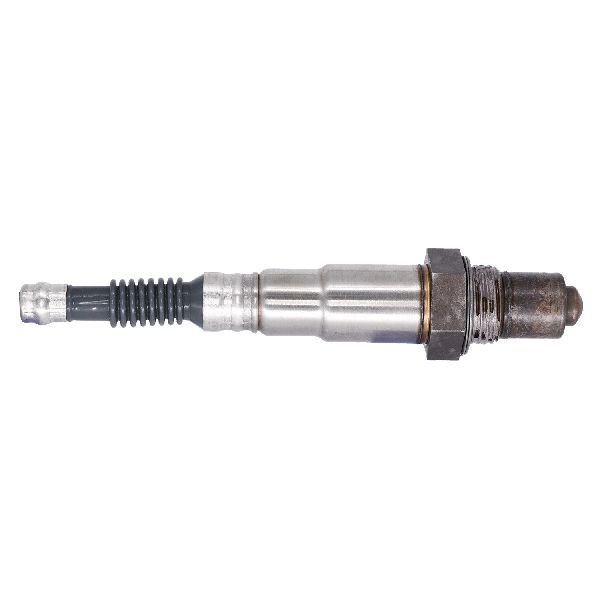
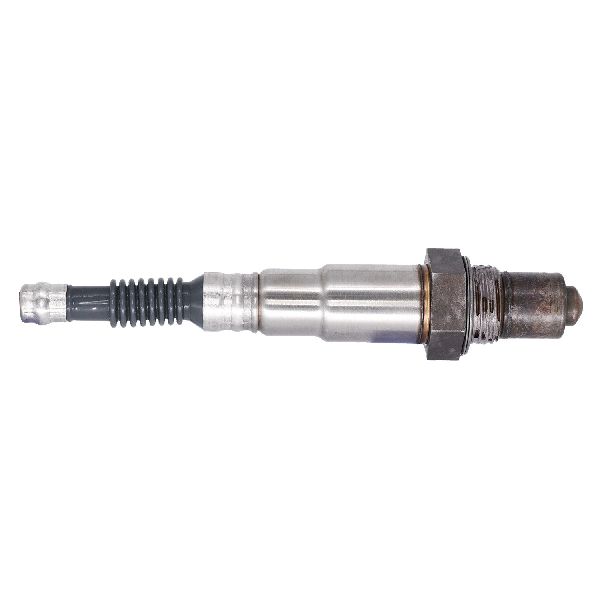
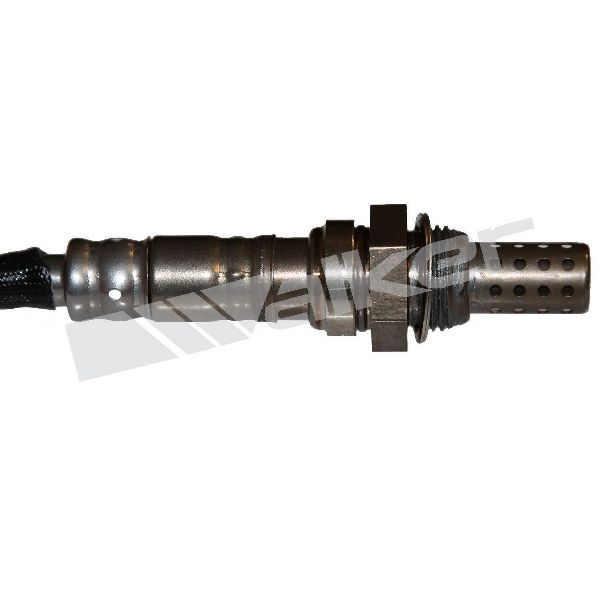
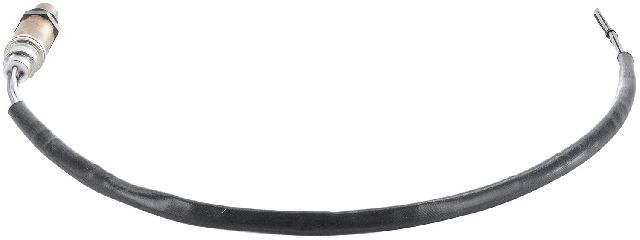
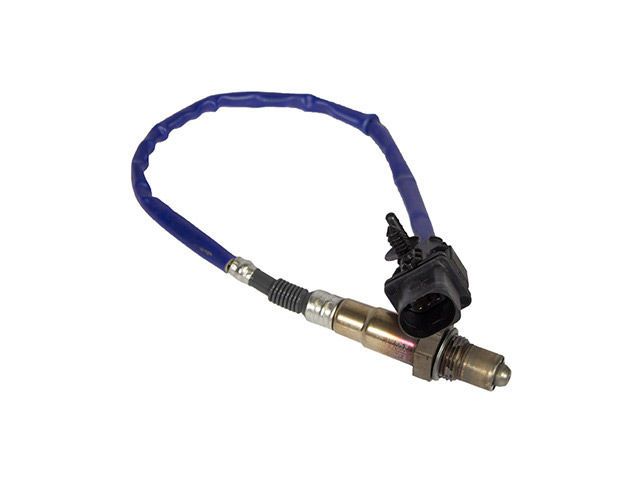
(OEM #CJ5Z-9G444-B)— This sensor measures the converter's efficiency. It can fail and send incorrect data, causing a false P0420 code. It's a common misdiagnosis and should be considered before replacing the converter.
Trusted brands: Motorcraft (OEM), Denso, Bosch, NGK
OEM price range: $70-$100
Aftermarket price range: $45-$60 - Upstream Oxygen Sensor (Bank 1, Sensor 1)
(OEM #HS7Z-9G444-B)— While less likely to cause P0420 directly, a failing upstream sensor can affect the air-fuel mixture, which can reduce the life of the catalytic converter. It's often replaced as preventative maintenance.
Trusted brands: Motorcraft (OEM), Denso, Bosch, NGK
OEM price range: $120-$190
Aftermarket price range: $60-$100
Technical Service Bulletins (TSBs) & Recalls
- No specific TSBs were found for P0420 or catalytic converter failure on the 2013-2020 Ford Fusion Hybrid 2.0L. However, other TSBs exist for significant platform issues like transmission bearing failure (TSB 17-0039) and power steering faults (Recalls 19S26, 15S18).
- Manufacturer Bulletin #TSB 25-2348 (issued for other Ford models like the E-450) highlights that a P0420 code may be stored in the PCM due to software issues rather than hardware failure.
Platform-Specific Known Issues
- The integrated exhaust manifold/catalytic converter design is the most significant vehicle-specific factor, dramatically increasing the cost and complexity of what is a common wear item on any car.
- This vehicle uses the HF35 eCVT transmission, which is known to have bearing failures (see TSB 17-0039). While not a direct cause of P0420, any significant drivetrain issue can affect engine operation and indirectly impact long-term exhaust component health.
- NHTSA ODI #11022308 notes that for some Ford vehicles, P0420 codes can be triggered by a defective catalytic converter, engine misfire, vacuum leak, or even engine oil leakage into the exhaust.
Mechanic-Grade Diagnostic Values
- Downstream O2 Sensor (B1S2) Voltage — expected: A steady, stable voltage reading, typically between 0.5V and 0.8V, when the engine is at operating temperature and at a steady cruise.. Failure: The voltage fluctuates rapidly, mimicking the pattern of the upstream O2 sensor. 🎬 Watch: How to diagnose and fix Ford P0420 efficiency codes. A voltage stuck low (near 0.1V) or high (near 0.9V) can indicate a sensor or wiring fault.
- Upstream O2 Sensor (B1S1) Voltage — expected: Rapidly and constantly fluctuating between a low value (approx. 0.1V - 0.2V) and a high value (approx. 0.8V - 0.9V).. Failure: A slow, lazy, or flat-lined voltage reading indicates a failing sensor that can't properly report the air-fuel mixture, which can lead to catalyst damage.
- Mode 6 Misfire Count — expected: Using a scan tool that can read Mode 6 data (like FORScan), check the test IDs for cylinder misfire counts (e.g., $A2 for Cyl 1, $A3 for Cyl 2, etc.). The value should be 0 or very low for each cylinder.. Failure: A consistently rising misfire count on any cylinder, even if it's not high enough to set a P030x code, indicates an underlying combustion issue that could be poisoning the catalytic converter with unburnt fuel.
Hidden / Shadow Codes Worth Checking
- Mode 6, Test IDs $A2-$A5: These are not traditional trouble codes but onboard test results for misfire monitoring on cylinders 1-4. A technician can view these raw counts to identify intermittent misfires that haven't yet triggered a P030x DTC but are significant enough to damage the catalytic converter over time by sending unburned fuel into the exhaust. (see via Requires an advanced scan tool with Mode 6 capability, such as Ford's IDS, FORScan, or other professional-grade scanners.)
- P1450: As noted in NHTSA ODI #11531982, this code for excessive vacuum in the fuel tank/EVAP system can sometimes appear alongside P0420, indicating broader emission system issues that may contribute to catalyst inefficiency.
Scan Tool Commands That Help
- N/A - Manual Procedure: PCM Keep Alive Memory (KAM) Reset — This procedure should be performed after replacing the catalytic converter or oxygen sensors. It clears the PCM's learned adaptive strategies, including fuel trims and transmission shift points, forcing it to relearn values with the new components. Failing to do this can cause the P0420 code to return erroneously. The procedure typically involves disconnecting the battery for at least 30 minutes or pulling the specific PCM/ECU fuses, then performing a specific drive cycle.
Wiring & Ground Locations
- G101 — Left front of the engine compartment, on the fender apron.. This is a primary engine bay ground. A poor connection here can cause erratic behavior in various sensors, including the oxygen sensors and their heater circuits, potentially leading to false codes.
- G106 — Right front of the engine compartment.. Similar to G101, this is another critical engine ground. The PCM and its related sensors rely on clean ground paths to function correctly.
- PCM Ground — The PCM itself is located at the right rear of the engine compartment. Its ground connections are integral to its mounting and harness.. A compromised ground at the PCM itself can cause a wide range of unpredictable issues, including incorrect processing of O2 sensor signals, leading directly to a false P0420 code.
- Fuse F7 / F8 (Engine Compartment Fuse Box) — In the main engine fuse box located on the driver's side under the hood.. One of these 20A fuses typically powers the heater circuits for the Bank 1 oxygen sensors. A blown fuse will set a heater circuit code but can also prevent the O2 sensor from reaching operating temperature, causing incorrect readings that could contribute to a P0420 diagnosis.
Real Owner Repair Stories
- Reddit user in r/fordfusion (Ford Fusion Hybrid, unknown year, under 88k miles) — Recurring P0420 code.
❌ Tried (didn't work) Dealer replaced the original catalytic converter under warranty around 60k miles., Dealer replaced the second catalytic converter less than 30k miles later.
✅ What actually fixed it The user replaced the third catalytic converter themselves along with the downstream O2 sensor. However, within two weeks, the P0420 code returned with a rattle, indicating the brand new (third) converter had also failed. This story highlights the potential for either poor quality replacement parts or an unaddressed underlying engine issue destroying the converters. - NHTSA ODI #11485071: An owner reported that a canister purge valve issue caused a P0420 code, and the catalytic converter failure resulted in a lot of white smoke from the exhaust.
- NHTSA ODI #11531982: One owner experienced the car stuttering and shaking during acceleration, with codes P1450 and P0420 indicating low catalyst system efficiency linked to EVAP problems.
OEM Part Supersession History
DS7Z-5G232-B, DS7Z-5G232-D, HS7Z-5G232-B→HS7Z-5G232-E— Standard part evolution for design improvements, material changes, or manufacturing updates.
Model Year Variations Within This Range
- 2017-2020: The Ford Fusion received a mid-cycle refresh for the 2017 model year, which included cosmetic updates and changes to infotainment systems. However, for the 2.0L Hybrid powertrain, the core engine design and the integrated exhaust manifold/catalytic converter assembly remained consistent, meaning the causes and fixes for P0420 are the same across the entire 2013-2020 generation.
Diagnostic Flowchart
Other Known Issues on This Vehicle
Issues unrelated to this code that are worth knowing about as an owner of this generation:
- HF35 eCVT Transmission Bearing Failure 🔴 High — Common enough to warrant a TSB. Can occur at various mileages, often preceded by a thumping, rubbing, or grinding noise while the vehicle is in motion. Failure is often due to lack of lubrication leading to bearing wear. (Ref: TSB 17-0039 (supersedes 16-0105) addresses this noise and provides a procedure for inspection and repair or replacement of the transmission.)
- Electronic Power Steering Failure 🔴 High — Widespread issue, especially in salt-belt states, leading to multiple recalls. Failure results in a sudden loss of power assist, making the vehicle very difficult to steer at low speeds. (Ref: Safety Recall 19S26 for 2013-2016 models due to steering gear motor bolts corroding and fracturing. Also related to recall 15S18 and warranty extension 15N01 for similar power steering faults.)
- Electronic Throttle Body (ETB) Failure 🟠 Medium — A very common problem across many Ford models of this era. Failure is often sudden, causing the vehicle to enter a 'limp mode' with severely reduced power, accompanied by a wrench light and codes like P2111 or P2112. (Ref: Ford had a Customer Satisfaction Program (13N03) for this issue on non-hybrid models, but hybrids with the same part and failure mode were often excluded.)
- Coolant Intrusion into Cylinders (EcoBoost Engines Only) 🔴 High — This is a major, well-documented issue for the 2.0L *EcoBoost* engine used in non-hybrid Fusions, NOT the 2.0L *Atkinson Cycle* engine in the Hybrid. It leads to misfires, white smoke, and eventual engine failure. (Ref: TSB 19-2346 details the issue and the fix, which is a complete long block engine replacement. This issue also led to a class-action lawsuit.)
Used vs. New Parts: Buying Guide for This Vehicle
When a used part is the smart pick: For this repair, a used OEM catalytic converter assembly from a low-mileage, rear-end collision donor vehicle can be a cost-effective alternative to a new OEM part. It is generally a better option than a new, cheap aftermarket converter. Used O2 sensors are generally not recommended due to their limited lifespan and sensitivity.
Donor-vehicle mileage cap: roughly under 60000 miles for the part to have meaningful remaining life.
What to inspect on the donor part:
- Verify the donor vehicle's mileage is under 60,000 miles.
- Inspect the converter for any signs of physical damage, heavy rust, or rattling, which indicates a broken internal substrate.
- Ensure the donor vehicle did not have a P0420 code or any engine misfire/coolant leak issues.
- Check that the O2 sensor bungs and exhaust flanges are not stripped or severely corroded.
OEM-only on this vehicle (don't cheap out):
- Catalytic Converter: While not strictly 'OEM-only', owners and mechanics strongly advise against low-cost, unbranded aftermarket converters. Forum discussions frequently report these parts failing to meet efficiency standards within months, causing the P0420 code to return. If not buying OEM, stick to top-tier, reputable aftermarket brands.
Aftermarket brands forum-validated for this vehicle:
- Catalytic Converters: MagnaFlow, Walker.
- Oxygen Sensors: Denso, Bosch, NGK/NTK.
Brands owners have reported issues with on this vehicle:
- Unbranded, low-cost catalytic converters sold on platforms like eBay or Amazon are frequently cited as failing quickly on this platform.
Real Owner Stories
Aggregated from forums and TSBs cited above. Mileages and costs reflect what owners reported in those sources.
2019 Ford Fusion Hybrid 2.0L — 30000 miles
Symptoms: Check engine light with code P0420.
What fixed it: The dealer replaced the catalytic converter under warranty.
Source hint: r/fordfusion - Thread: 'Got code P0420 Do i have to get new catalytic converters?'
2014 Ford Fusion Hybrid 2.0L — 210000 miles
Symptoms: P0420 code on a high-mileage vehicle.
What fixed it: Owner was quoted $1,800 for a replacement and questioned the value of the repair.
Cost: $1,800-$1,800
Source hint: r/fordfusion - Thread: 'Worth replacing catalytic converter at 210k'
2013-2020 Ford Fusion Hybrid 2.0L
Symptoms: P0420 code returned in less than two weeks after a replacement; a rattle was heard from the new part.
What fixed it: The owner had to replace the manifold/cat assembly three times, as the new converters kept failing.
Source hint: r/fordfusion - Thread: 'Got code P0420 Do i have to get new catalytic converters?'
Related OBD-II Codes
Frequently Asked Questions
Does TSB 17-0039 for the HF35 eCVT transmission cause the P0420 code on my Fusion Hybrid?
Is the P0420 code on my 2013-2020 Fusion Hybrid covered under a recall?
Can I just replace the catalytic converter alone to fix P0420?
Why is the OEM replacement for the Fusion Hybrid converter so expensive?
Could my P0420 code actually be a sensor issue instead of a bad converter?
Does the 'coolant intrusion' issue (TSB 19-2346) apply to my Fusion Hybrid's P0420 code?
Helpful Videos

Used OEM Parts in Stock

New Aftermarket Parts Available

The information in this article is provided for general reference and educational purposes only. Vehicle specifications, procedures, and part compatibility can vary by production date, trim level, and region. Always consult your vehicle's factory service manual and verify part numbers before purchasing or performing repairs. Safety-critical components such as airbags, seat belts, and braking systems should be installed by a qualified professional.
- Ford Fusion Hybrid:
- 🎬 Helpful Videos
- 🛍️ Shop This Part
- What's Unique About the 2013-2020 Ford Fusion Hybrid
- Symptoms You May Notice
- Most Likely Causes
- Rare But Worth Checking
- Diagnosis Steps
- Parts You'll Likely Need
- Technical Service Bulletins (TSBs) & Recalls
- Platform-Specific Known Issues
- Mechanic-Grade Diagnostic Values
- Hidden / Shadow Codes Worth Checking
- Scan Tool Commands That Help
- Wiring & Ground Locations
- Real Owner Repair Stories
- OEM Part Supersession History
- Model Year Variations Within This Range
- Diagnostic Flowchart
- Other Known Issues on This Vehicle
- Used vs. New Parts: Buying Guide for This Vehicle
- Real Owner Stories
- 2019 Ford Fusion Hybrid 2.0L — 30000 miles
- 2014 Ford Fusion Hybrid 2.0L — 210000 miles
- 2013-2020 Ford Fusion Hybrid 2.0L
- Related OBD-II Codes
- Frequently Asked Questions
- 🎟️ Get 5% Off