

P0420 on 2012-2018 Ford Focus 2.0L: Catalytic Converter, O2 Sensor, or Purge Valve?
On a 2012-2018 Ford Focus, P0420 often points to a failing catalytic converter, but a faulty oxygen sensor is also a common cause. Before replacing the expensive converter, it's wise to first inspect for exhaust leaks and test the oxygen sensors, which is a much cheaper potential fix. Crucially, a stuck-open canister purge (EVAP) valve is a very common issue on this platform that can trigger a false P0420 and should be checked first, especially if code P1450 is also present.
- P0420 on a 2012-2018 Focus means the catalytic converter is not working efficiently.
- The most likely cause is a failed catalytic converter, especially on cars with over 100,000 miles.
- Before replacing the converter, always test the downstream O2 sensor and check for exhaust leaks, as these are cheaper, common-sense first steps.
- Be aware that a faulty EVAP purge valve is a known quirk of this model that can also trigger a P0420 code.
- Ignoring the code will lead to a failed emissions test and can cause further engine performance issues.
What's Unique About the 2012-2018 Ford Focus

While P0420 is a generic code, the 2012-2018 Ford Focus (Mk3 generation) has a known tendency to set this code due to several specific issues. High mileage often leads to catalyst degradation, making converter failure a primary suspect. However, a faulty canister purge (EVAP) valve is a surprisingly common trigger on these cars, causing a rich fuel mixture that can mimic the symptoms of a bad converter. This issue is so prevalent that Ford issued Safety Recall 18S32 (NHTSA 18V735) for the PCM software not adequately detecting the stuck valve, which could lead to P0420, stalling, and even fuel tank deformation. This makes it crucial to diagnose beyond just the converter itself to avoid a costly misdiagnosis.
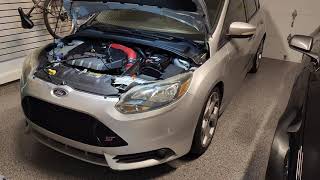
🎬 Watch: A complete diagnostic walk-through for the P0420 code.Symptoms You May Notice
- Check Engine Light is on
- Reduced engine power or sluggish acceleration, especially if the converter is clogged
- Decreased fuel economy
- A sulfur or "rotten egg" smell from the exhaust
- Jerking or jittering while accelerating from a stop.
- Immediately replacing the catalytic converter without first testing the canister purge valve, which is a frequent and much cheaper culprit on this vehicle.
- Replacing the catalytic converter without testing the oxygen sensors or checking for exhaust leaks. A faulty O2 sensor is a much cheaper fix and a common cause.
- Replacing the upstream O2 sensor to fix a P0420 code. While a bad upstream sensor can affect fuel trim and should be replaced if faulty, it's the downstream sensor that is directly responsible for monitoring catalyst efficiency.
Most Likely Causes

- Failing Catalytic Converter 🔴 High Probability Catalytic converters have a finite lifespan and naturally lose efficiency over time. On high-mileage Focus models (100k+ miles), the precious metals inside degrade, leading to this code. Underlying issues like a faulty purge valve can also cause rich conditions that shorten the converter's life.
How to confirm: Use a scan tool to graph the upstream and downstream O2 sensor voltages. If the downstream sensor's voltage fluctuates rapidly, mirroring the upstream sensor, the converter is likely bad. An infrared thermometer can also be used to check temperatures; the outlet should be significantly hotter than the inlet on a working converter.
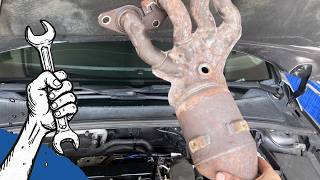
Typical fix: Replace the catalytic converter assembly. 🎬 See how to replace the catalytic converter yourself. OEM is recommended for longevity, as cheaper aftermarket units may fail and trigger the code again within a year or two. Some owners report success with catalytic converter cleaners like Cataclean as a temporary measure.
Est. part cost: $400-$1200 - Faulty Downstream Oxygen (O2) Sensor 🟡 Medium Probability Oxygen sensors degrade over time and can send inaccurate readings. A 'lazy' or biased downstream sensor can trick the PCM into thinking the catalytic converter has failed when it hasn't.
How to confirm: Graph the sensor's voltage with a scan tool. A healthy downstream sensor should show a relatively steady, slow-to-react voltage (typically around 0.6V-0.8V). If it's stuck, not responding, or fluctuating wildly like the upstream sensor, it needs replacement.
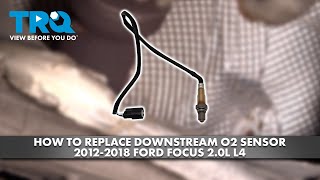
Typical fix: Replace the downstream (post-catalyst) oxygen sensor. The OEM part number is CV6Z-9G444-A.
Est. part cost: $50-$150 - Exhaust Leak ⚪ Low Probability Rust and vibration can cause leaks at manifold gaskets or flex pipes. A leak between the upstream and downstream O2 sensors can draw in outside air, skewing the downstream sensor's reading and triggering a false P0420 code. The flex pipe is a known potential leak point.
How to confirm: Perform a visual inspection of the exhaust system for cracks or black soot marks, especially around flanges and the flex pipe. A smoke test is the most effective way to pinpoint small leaks. A ticking noise on a cold start that goes away as the engine warms up is also a strong indicator.
Typical fix: Repair the leak by replacing the gasket or welding the cracked component.
Est. part cost: $20-$200
Rare But Worth Checking
- Faulty Canister Purge Valve: While more commonly associated with EVAP codes like P1450, a stuck-open purge valve on this specific Focus model is a very well-documented cause of P0420. It creates a rich condition that the PCM misinterprets as low catalyst efficiency. If you have both codes, address the purge valve first. The valve can be tested by unplugging it while the engine is running and checking for suction at the port; if suction is present, it's stuck open and must be replaced. The OEM part number is BV6Z-9D289-R (Motorcraft CX2349).
- Engine Misfire or Rich/Lean Running Condition: Any underlying engine issue (bad spark plugs, faulty fuel injector, vacuum leak) that causes an uncorrected rich or lean condition can overwhelm and eventually damage the catalytic converter. Always fix other engine codes before addressing P0420.
Diagnosis Steps

- Check for any other stored trouble codes. If codes like P1450 or P0456 are present, diagnose the EVAP system, specifically the canister purge valve, first.
- Test the Canister Purge Valve: With the engine running, disconnect the electrical connector and the EVAP line from the valve. If you feel vacuum suction at the valve's port, it is stuck open and must be replaced.
- Visually inspect the entire exhaust system from the engine to the tailpipe for any signs of leaks, cracks, or damage. Pay close attention to gaskets and the flex pipe.
- Using a capable OBD-II scanner, view the live data for the upstream (O2S11) and downstream (O2S12) oxygen sensors at a steady 2,500 RPM.
- Analyze the O2 sensor data: The upstream sensor should fluctuate rapidly between ~0.1 and ~0.9 volts. The downstream sensor should maintain a relatively stable voltage, typically above 0.5 volts (e.g., 0.6-0.8V).
- If the downstream sensor mirrors the rapid fluctuations of the upstream sensor, the catalytic converter has likely failed.
- If the downstream sensor's voltage is stuck low (e.g., below 0.2V) or high (e.g., above 0.8V) or responds very slowly, the sensor itself is likely faulty.
- If the code is intermittent, some owners have reported temporary success using a quality fuel system/catalytic converter cleaner additive and driving the car hard to get the system hot.
Parts You'll Likely Need

- Catalytic Converter
(OEM #BV6Z-5E212-A)— This is the most common high-probability failure for P0420 on a high-mileage Focus, as the catalyst material degrades over time. OEM part number BV6Z-5E212-A is for the non-turbo 2.0L engine.
Trusted brands: Motorcraft, Walker Exhaust, MagnaFlow
OEM price range: $800-$1200
Aftermarket price range: $300-$600 - Downstream Oxygen Sensor (Post-Catalyst)
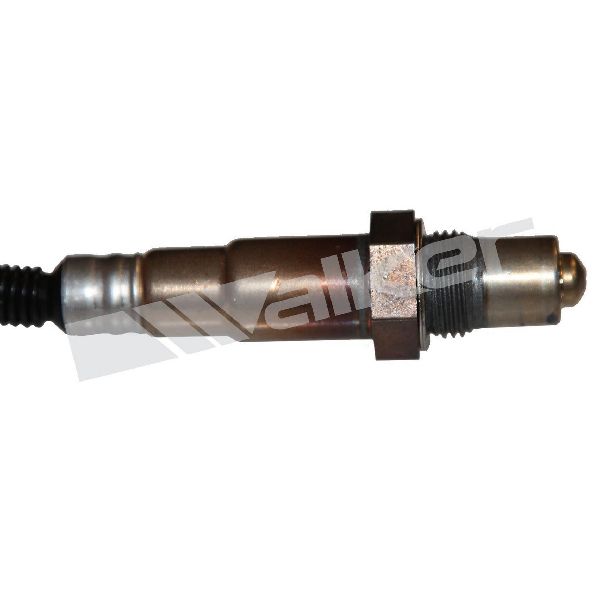
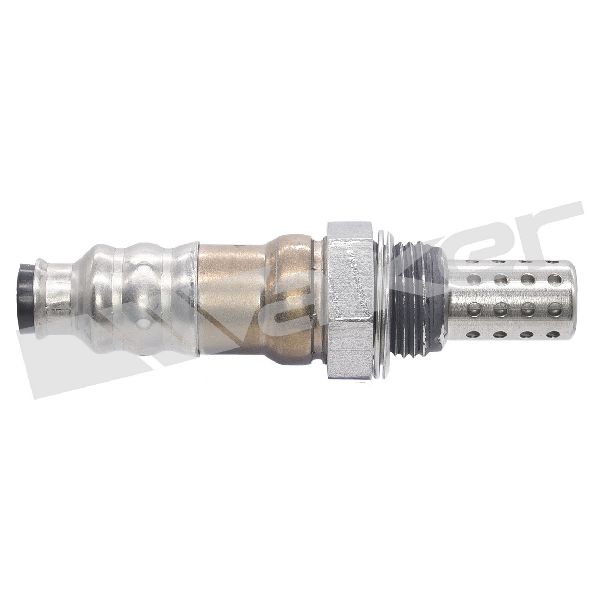
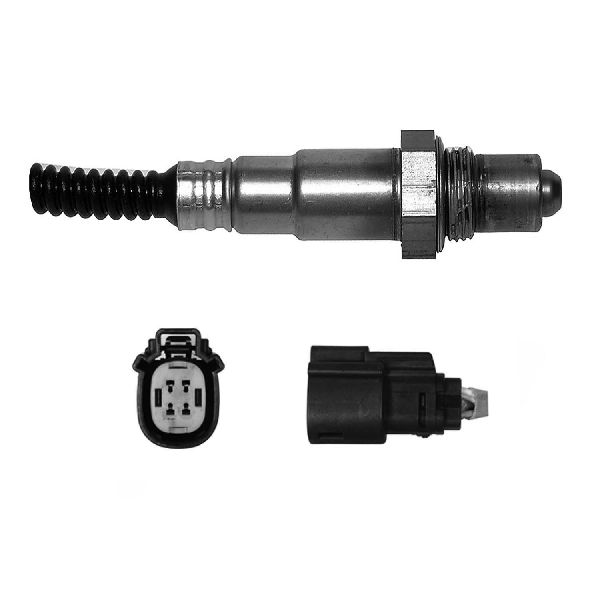
(OEM #CV6Z-9G444-A)— This sensor is responsible for monitoring the converter's efficiency. A faulty or 'lazy' sensor can provide incorrect data, triggering the P0420 code even if the converter is good. The OEM part number is CV6Z-9G444-A (Motorcraft DY-1179).
Trusted brands: Motorcraft, Bosch, Denso, NTK
OEM price range: $100-$180
Aftermarket price range: $50-$100 - Canister Purge Valve
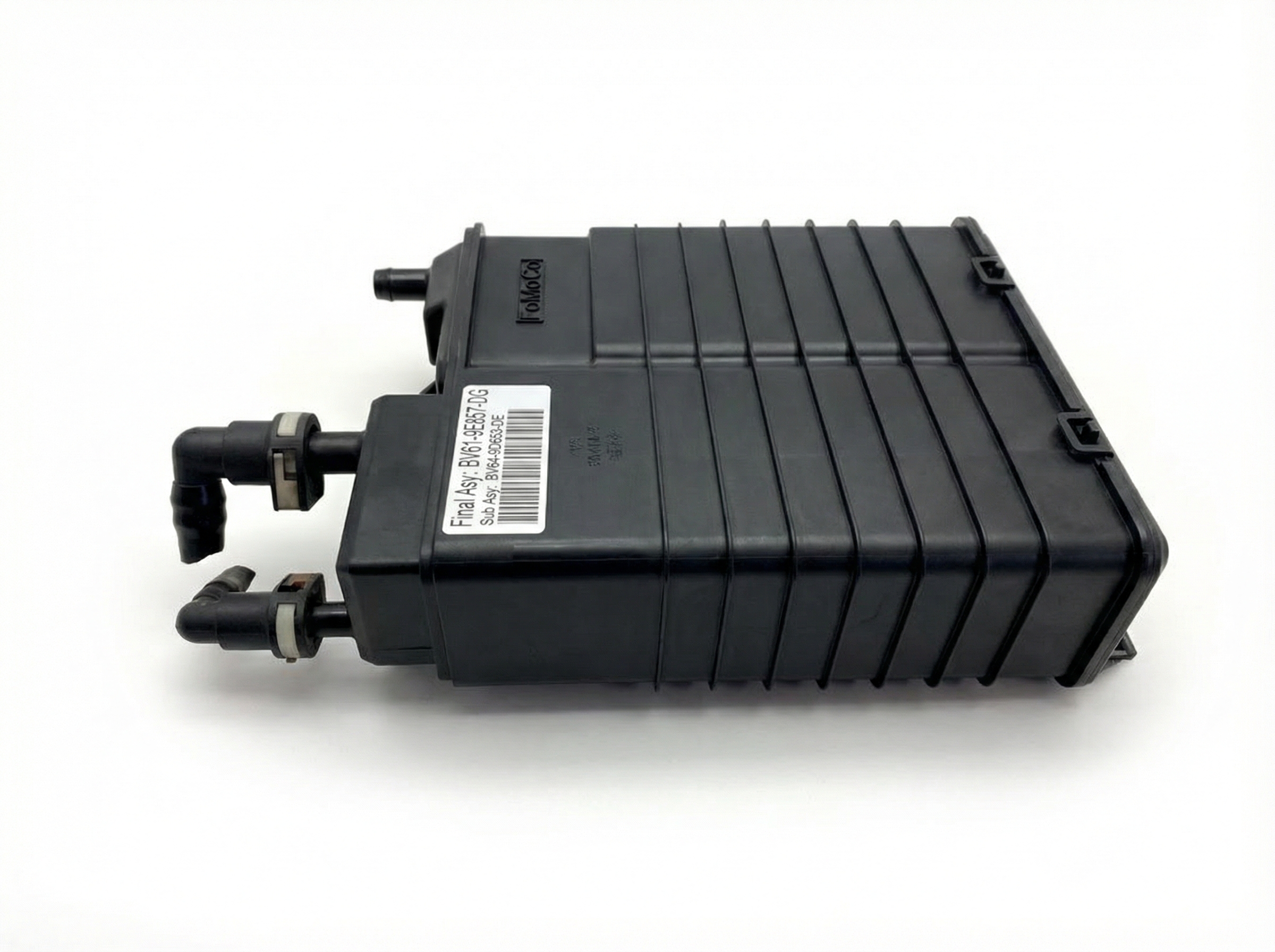
(OEM #BV6Z-9D289-R)— A stuck-open purge valve is a very common cause of a false P0420 on this platform by creating a rich fuel mixture. It is often replaced as a first step. The Motorcraft part number is CX2349. 🎬 Watch: How to replace the canister purge valve assembly.
Trusted brands: Motorcraft, Dorman
OEM price range: $40-$80
Aftermarket price range: $25-$50
Related Codes That Often Appear With This One
- P1450 — Stands for 'Unable to Bleed Up Fuel Tank Vacuum'. On this Focus, it often points to a faulty canister purge valve, which can also be the root cause of the P0420 code by creating a rich fuel mixture. This is addressed by Ford Safety Recall 18S32.
- P0456 — Stands for 'EVAP System Small Leak'. This can also be caused by the faulty canister purge valve, further highlighting the importance of checking the EVAP system.
Technical Service Bulletins (TSBs) & Recalls

- 16-0062: Relates to the canister purge valve issue and associated codes, including P0420 and P1450, on some Focus models.
- Safety Recall 18S32 / NHTSA 18V735: Not a TSB, but a critical recall. The PCM software may not detect a stuck canister purge valve, leading to excessive fuel tank vacuum, stalling, and codes like P1450 and P0420. The fix is a PCM reprogram and potential purge valve replacement.
Platform-Specific Known Issues
- Ford issued Safety Recall 18S32 (NHTSA 18V735) for a PCM software issue that fails to detect a stuck-open canister purge valve. This can cause P0420, P1450, stalling, and fuel tank deformation. The fix involves a PCM reprogram and, if necessary, replacement of the purge valve.
- A faulty canister purge valve (OEM Part No. BV6Z-9D289-R) is a well-documented issue on this platform that can cause a rich running condition, leading to a false P0420 code.
- Customer Satisfaction Program 19M01 for some 2013-2
Mechanic-Grade Diagnostic Values
- Upstream O2 Sensor (HO2S) Heater Circuit Resistance — expected: 10–15 Ω. Failure: A reading outside this range, especially an open circuit (OL), indicates a failed heater element within the sensor.
- Downstream O2 Sensor (O2S12) Voltage at steady cruise — expected: Relatively stable voltage between 0.6V and 0.8V.. Failure: Voltage fluctuating rapidly, mirroring the upstream sensor, indicates a failed catalytic converter.
- Long Term Fuel Trim (LTFT) at idle — expected: Close to 0%, ideally within +/- 5%.. Failure: A highly negative value (e.g., -15% or more) can indicate a rich condition caused by a leaking purge valve or faulty injector, which can trigger a false P0420.
Hidden / Shadow Codes Worth Checking
- Mode $06, Test ID $21: This is the onboard monitor for the Catalyst Efficiency for Bank 1. (see via Use a scan tool with Mode 6 capability, such as FORScan or a professional-grade scanner. Viewing this test data can show the raw performance values the PCM is using to determine if the catalyst passes or fails, sometimes before a code is set.)
Scan Tool Commands That Help
- FORScan: Live Data PID Monitoring (O2S11, O2S12) — This is the primary function used to diagnose P0420. Graphing the upstream (O2S11) and downstream (O2S12) sensors simultaneously allows you to compare their switching patterns to determine if the catalyst is functioning.
- FORScan: Clear DTCs — After a repair (like replacing an O2 sensor or purge valve), this function is used to clear the P0420 code from the PCM's memory.
- FORScan: Reset All Adaptations — After replacing a component that affects the air/fuel mixture, such as the canister purge valve or O2 sensors, resetting adaptations forces the PCM to relearn fuel trims and other parameters with the new parts, which can be crucial for a complete fix.
Wiring & Ground Locations
- G102 / G104 — Located on the left front of the engine compartment.. These are primary chassis grounds. A poor connection here can cause erratic voltage readings for various sensors, including the oxygen sensors, leading to false codes.
- G105 — Located on the left side of the engine compartment, under or near the air cleaner box.. This is a major ground point for the engine harness. Corrosion or looseness can affect PCM and sensor operation. Some owners perform a 'ground mod' by cleaning the paint under this ground connection to improve contact and solve various electrical issues.
- C175B — This is one of the main connectors for the Powertrain Control Module (PCM).. The signals from the upstream and downstream oxygen sensors route through this connector to the PCM. Any corrosion or pin-fitment issues at this connector could disrupt the O2 sensor signals, causing diagnostic trouble.
Real Owner Repair Stories
- Reddit user @MagicCrazything (2013 Ford Focus SE Hatch, 150,000 miles) — P0420 code present, but car runs great.
❌ Tried (didn't work) Initial diagnosis pointed towards a bad catalytic converter or a faulty downstream O2 sensor based on scan tool readings.
✅ What actually fixed it The canister purge valve was replaced. The user noted they had the recall for the valve performed previously (which was just a PCM reprogram), but the valve itself eventually failed, causing the P0420. After replacing the valve, the code did not return. - Ford Focus Club forum user @RayC333 (Ford Focus (year not specified, Mk3)) — Intermittent P0420 code over the course of a year.
❌ Tried (didn't work) The catalytic converter and downstream O2 sensor had been replaced by a dealer., An exhaust leak in the flexi-pipe was repaired., The upstream (pre-cat) O2 sensor was replaced.
✅ What actually fixed it After replacing the cat, both O2 sensors, and fixing an exhaust leak, the code still returned. The user concluded the dealer must have used a cheap aftermarket catalytic converter that was not efficient enough, and decided to live with the light rather than replace the converter again. This highlights the risk of low-quality aftermarket cats.
OEM Part Supersession History
BV6Z-9D289-A, BV6Z-9D289-B→BV6Z-9D289-R— Part revision and improvement by the manufacturer.
Heads up: BV6Z-9D289-R is the latest revision for the canister purge valve and should be used for replacement.
Model Year Variations Within This Range
- 2012-2014 vs 2015-2018: The fuse for the Heated Oxygen Sensor (HO2S) circuit is in a different location and has a different rating. For 2012-2014 models, it is fuse F32 (15A) in the engine bay fuse box. For the facelifted 2015-2018 models, it is fuse F35 (10A).
Diagnostic Flowchart
Other Known Issues on This Vehicle
Issues unrelated to this code that are worth knowing about as an owner of this generation:
- DPS6 PowerShift Dual-Clutch Transmission Failure 🔴 High — Extremely common across 2012-2016 models with automatic transmissions. Symptoms include shuddering, hesitation, delayed shifts, and complete failure. (Ref: Multiple class-action lawsuits and warranty extensions were issued, but many vehicles are now outside the coverage window.)
- Faulty Canister Purge Valve (EVAP) 🟠 Medium — Very common across the entire 2012-2018 generation. Leads to rough idle, stalling, difficulty starting after refueling, and check engine lights (P1450, P0456, and can cause P0420). (Ref: Safety Recall 18S32 (NHTSA 18V735) was issued to reprogram the PCM to better detect the fault and prevent fuel tank deformation.)
- Prematurely Worn/Broken Engine Mounts 🟠 Medium — Common issue, particularly the passenger-side mount. Causes excessive vibration in the cabin at idle and noise while driving. Can fail at relatively low mileage. (Ref: Ford issued TSBs for earlier Focus generations, but the problem persists in the Mk3.)
- Power Steering Assist Failure 🔴 High — Less common than transmission or EVAP issues, but a significant safety concern. Can cause a sudden loss of power steering, making the vehicle difficult to steer, often requiring replacement of the entire steering rack.
Used vs. New Parts: Buying Guide for This Vehicle
When a used part is the smart pick: A used part is generally not recommended for the key components related to a P0420 code on this vehicle. The canister purge valve is inexpensive new, and both catalytic converters and O2 sensors are wear items with a finite lifespan.
Donor-vehicle mileage cap: roughly under 75000 miles for the part to have meaningful remaining life.
What to inspect on the donor part:
- For a catalytic converter, inspect for any rattling (indicating broken substrate), dents, or heavy corrosion.
- Ensure the donor vehicle was not in a front-end collision that could have damaged the exhaust manifold/converter.
- Check the donor vehicle's history for overheating or coolant loss, which can contaminate and ruin a catalytic converter.
OEM-only on this vehicle (don't cheap out):
- Catalytic Converter: Many owners report that aftermarket catalytic converters, especially cheaper ones, lack sufficient precious metal loading and fail to meet the PCM's efficiency threshold, causing the P0420 code to return within a year. An OEM/Motorcraft converter is strongly advised for a lasting repair.
Aftermarket brands forum-validated for this vehicle:
- Oxygen Sensors: Bosch, Denso, and NTK are reputable brands often used as OEM suppliers for Ford and are considered reliable replacements.
Brands owners have reported issues with on this vehicle:
- Unbranded or 'economy' catalytic converters are frequently reported to fail prematurely or not perform well enough to keep the P0420 code from returning.
Real Owner Stories
Aggregated from forums and TSBs cited above. Mileages and costs reflect what owners reported in those sources.
2013 Ford Focus SE 2.0L GDI
Symptoms: Intermittent P0420 code; user also discussed using Cataclean and E85 fuel.
What fixed it: The discussion confirms the canister purge valve is a common problem worth replacing first, though one user reported success with Cataclean and E85 fuel as a temporary measure.
Source hint: Reddit r/FordFocus - P0420 Code 2013 Ford Focus SE
2012 Ford Focus 2.0L GDI
Symptoms: Check engine light disappeared after a week but returned.
What fixed it: The shop replaced the canister purge valve, but the light returned, leading to a recommendation for a catalytic converter replacement.
Source hint: Reddit r/FordFocus - 2012 Focus check engine light disappeared after a week. OBD Code P0420
2012-2018 Ford Focus 2.0L GDI — ~102526 miles
Symptoms: P0420 code and questions about whether the CAT or O2 sensor was at fault.
What fixed it: The discussion highlights that even if a purge valve failure causes the converter to fail, Ford typically only covers the valve and not the converter under warranty.
Source hint: Reddit r/FordFocus - P0420 Advice and Canister Purge Valve Replacement
Documented NHTSA Reports
NHTSA ODI #11531982
Symptoms: An owner reported that the entire car stutters and shakes when accelerating from a stop. The vehicle was running fault codes P1450 and P0420, indicating excessive vacuum in the fuel tank/EVAP system and low catalyst efficiency.
NHTSA ODI #11427851
Symptoms: A report describes an illuminated malfunction indicator lamp (MIL) with a cluster of diagnostic trouble codes including P0420, P1450, P0443, P0452, P0456, P0460, and P2196.
NHTSA ODI #11583587
Symptoms: An owner confirmed via an independent diagnostic exam that the car was throwing P0420 and P1450 codes. The report also noted issues with the "distance to empty" display fluctuating significantly.
NHTSA ODI #11658562
Symptoms: A report mentions a check engine light that never turned off, showing codes P0420, P2782, and P07A3. The owner noted the vehicle had multiple previous recalls regarding TCM malfunctioning.
NHTSA ODI #11485071
Symptoms: An owner reported the canister purge valve caused code P0420 and led to the vehicle stalling and shutting down while driving. The report also noted the catalytic converter was giving out, causing a lot of white smoke from the exhaust.
Related OBD-II Codes
Frequently Asked Questions
Is there a recall for the 2012-2018 Ford Focus that causes the P0420 code?
What is the specific Ford part number for the canister purge valve on this vehicle?
Can a faulty purge valve actually cause my catalytic converter to fail?
What is the OEM part number for the downstream oxygen sensor on the Focus 2.0L GDI?
Does TSB 16-0062 apply to my P0420 code?
Should I use an aftermarket catalytic converter to save money on my Focus?
Helpful Videos
Used OEM Parts in Stock

New Aftermarket Parts Available



The information in this article is provided for general reference and educational purposes only. Vehicle specifications, procedures, and part compatibility can vary by production date, trim level, and region. Always consult your vehicle's factory service manual and verify part numbers before purchasing or performing repairs. Safety-critical components such as airbags, seat belts, and braking systems should be installed by a qualified professional.
- Ford Focus:
- 🎬 Helpful Videos
- 🛍️ Shop This Part
- What's Unique About the 2012-2018 Ford Focus
- Symptoms You May Notice
- Most Likely Causes
- Rare But Worth Checking
- Diagnosis Steps
- Parts You'll Likely Need
- Related Codes That Often Appear With This One
- Technical Service Bulletins (TSBs) & Recalls
- Platform-Specific Known Issues
- Mechanic-Grade Diagnostic Values
- Hidden / Shadow Codes Worth Checking
- Scan Tool Commands That Help
- Wiring & Ground Locations
- Real Owner Repair Stories
- OEM Part Supersession History
- Model Year Variations Within This Range
- Diagnostic Flowchart
- Other Known Issues on This Vehicle
- Used vs. New Parts: Buying Guide for This Vehicle
- Real Owner Stories
- 2013 Ford Focus SE 2.0L GDI
- 2012 Ford Focus 2.0L GDI
- 2012-2018 Ford Focus 2.0L GDI — ~102526 miles
- Documented NHTSA Reports
- NHTSA ODI #11531982
- NHTSA ODI #11427851
- NHTSA ODI #11583587
- NHTSA ODI #11658562
- NHTSA ODI #11485071
- Related OBD-II Codes
- Frequently Asked Questions
- 🎟️ Get 5% Off