

P0420 on 2011-2019 Ford Explorer 3.5L: Catalytic Converter, O2 Sensor, or Software?
On the 2011-2019 Ford Explorer with the 3.5L V6, a P0420 code most often means the Bank 1 catalytic converter is failing. However, faulty oxygen sensors and exhaust leaks are also common culprits. Before replacing the expensive converter, it's critical to rule out the simpler fixes, as misdiagnosis is common. Many owners replace the converter only to have the code return because the root cause, like a fuel system issue or sensor fault, was not addressed.
- P0420 on your Explorer means the Bank 1 (rear) catalytic converter is not working efficiently.
- While the converter itself is the most likely cause, always diagnose for cheaper fixes like exhaust leaks and faulty oxygen sensors first.
- If you have any misfire codes (P030x), you must fix them immediately to avoid damaging a new catalytic converter.
- A ticking noise on a cold start is a strong clue that you may have an exhaust manifold leak, which can also cause this code.
- Given the TSBs, if other causes are ruled out, the catalytic converter itself is a known failure point on these vehicles.
What's Unique About the 2011-2019 Ford Explorer
The 3.5L Cyclone V6 in the fifth-generation Explorer is known for a few specific issues that can lead to a P0420 code. Bank 1 is located at the rear of the engine bay, against the firewall, making access more difficult than Bank 2. Some owners report a ticking noise on cold starts which can be a sign of a cracked exhaust manifold or exhaust leak, which can also trigger this code by allowing extra oxygen into the exhaust stream before the O2 sensors. Furthermore, a known and severe issue with this engine is the internal, timing-chain-driven water pump. A failure can contaminate the engine oil with coolant, which, when burned, can foul O2 sensors and permanently damage the catalytic converters, leading to a P0420 code.
Symptoms You May Notice
- Check Engine Light is on
- Reduced engine performance or acceleration
- Decreased fuel economy
- A sulfur or "rotten egg" smell from the exhaust
- A ticking noise from the engine bay, especially when cold, could indicate an exhaust leak
- Immediately replacing the catalytic converter without testing the oxygen sensors first. A faulty O2 sensor is a much cheaper fix and a common cause of a false P0420 code.
- Replacing the oxygen sensor when an exhaust leak is the true cause. The leak allows oxygen to enter the exhaust, fooling the sensor into providing a reading that suggests the converter is bad.
- Replacing the catalytic converter without addressing the root cause of its failure, such as a misfire or coolant leak. The new converter will quickly fail if the original problem persists.
Most Likely Causes
- Failing Catalytic Converter (Bank 1) 🔴 High Probability Catalytic converters have a finite lifespan, often failing after 100,000-150,000 miles. Their failure is frequently accelerated by underlying engine issues like misfires, oil consumption, or coolant contamination from the internal water pump. Forum discussions among Explorer owners confirm that converter replacement is a common high-mileage repair for P0420.
How to confirm: A definitive test involves using an infrared thermometer to check the inlet and outlet temperatures of the converter after the engine is fully warmed up; the outlet should be at least 100°F hotter. A professional may also use a 5-gas analyzer or graph O2 sensor data to confirm the converter's lack of oxygen storage capacity.
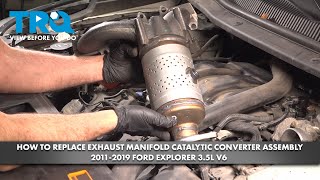
Typical fix: Replacement of the Bank 1 catalytic converter. This is the converter located against the firewall. Due to its location, replacement is more labor-intensive than Bank 2.
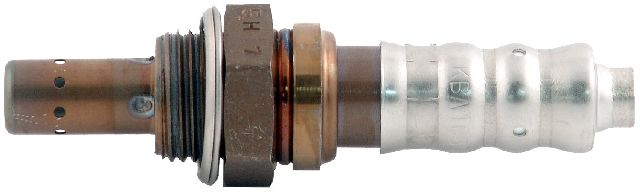
Est. part cost: $300-$800 - Aged or Faulty Oxygen (O2) Sensor 🟡 Medium Probability Oxygen sensors are wear items and typically have a lifespan of around 100,000 miles. A lazy or slow-to-respond downstream (Sensor 2) O2 sensor can send incorrect data to the PCM, mimicking the signal of a bad converter and falsely triggering the P0420 code.
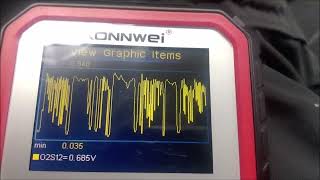
How to confirm: Use a capable OBD-II scanner to graph the voltage of the upstream (Bank 1, Sensor 1) and downstream (Bank 1, Sensor 2) O2 sensors. The upstream sensor should fluctuate rapidly between ~0.1V and ~0.9V. The downstream should be relatively steady (e.g., 0.6-0.8V). If the downstream sensor is mirroring the upstream, it points to a bad converter. If the downstream sensor is flatlined or slow, the sensor itself is likely faulty.
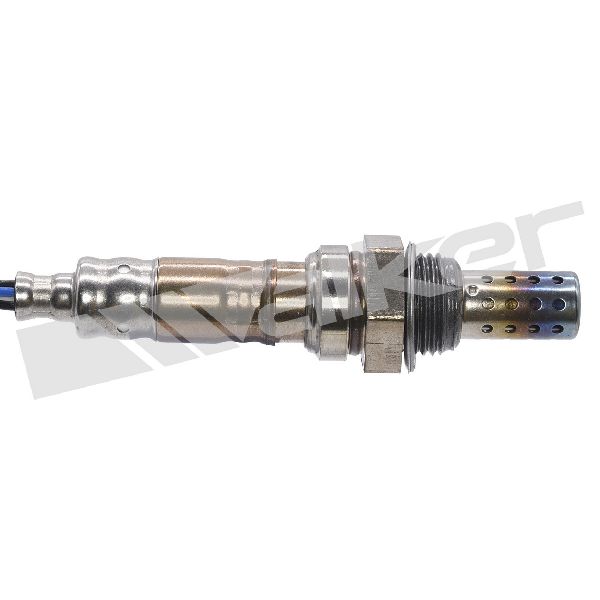
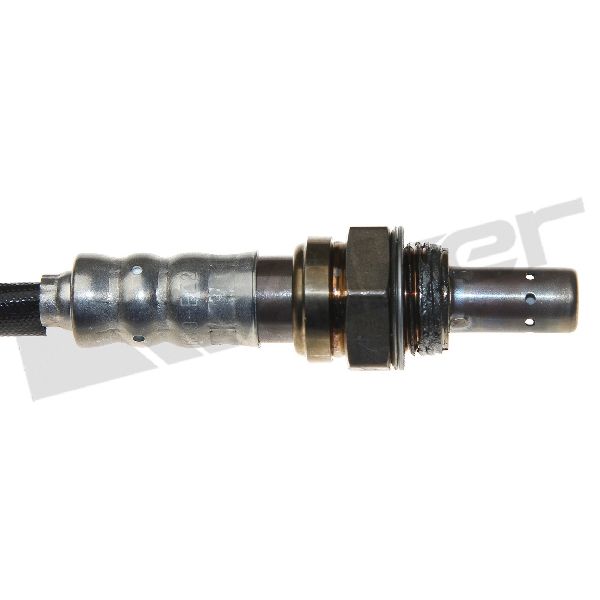
Typical fix: Replace the Bank 1, Sensor 2 (downstream) oxygen sensor. The Motorcraft part number is typically DY-1173.
Est. part cost: $50-$150 - Exhaust Leak 🟡 Medium Probability The 3.5L Cyclone engine family has been noted to develop cracks in the exhaust manifold, which is often integrated with the catalytic converter. Leaks at gaskets or flex pipes can also occur. These leaks allow un-metered oxygen to enter the exhaust, which can trick the downstream O2 sensor into producing a voltage reading that the PCM interprets as low catalyst efficiency.
How to confirm: Perform a visual inspection for soot trails or cracks around the exhaust manifold and flanges. Listen for a ticking or puffing sound, especially on a cold start, that may quiet down as the engine warms up. A smoke test is the most effective way to pinpoint the exact location of a small leak.
Typical fix: Replace the cracked exhaust manifold/converter assembly or replace the leaking gasket. This can be a costly repair if the integrated manifold/converter needs replacement.
Est. part cost: $20-$800 - PCM Software Issue ⚪ Low Probability Ford has issued TSBs for other models and years indicating that the PCM software could be too sensitive, incorrectly triggering a P0420 code. While no specific TSB for this exact year range and engine was found, it remains a possibility. The provided TSBs (e.g., TSB 25-2072, TSB 25-2188) apply to newer models but establish a precedent for this type of issue in the Ford ecosystem.
How to confirm: A Ford dealership or a qualified shop with access to Ford's service information (FMCDealer) would need to check for available PCM updates against your vehicle's specific VIN.
Typical fix: Reprogramming the PCM with the latest software calibration.
Est. part cost: $0-$200
Rare But Worth Checking
- Engine Misfires or Fuel System Issues: Unburned fuel from a misfiring cylinder (e.g., from a bad spark plug or ignition coil) or a leaking fuel injector can enter the exhaust, overheating and destroying the catalytic converter's internal structure. If you have other codes like P0301-P0306, you must fix the misfire first, or you will destroy the new converter.
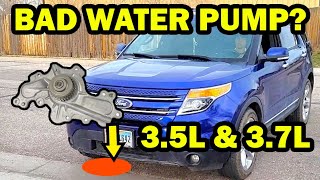
- Internal Water Pump Failure: The 3.5L Cyclone in the FWD/AWD Explorer has an internal, timing chain-driven water pump. When its seal fails, it can leak coolant directly into the engine oil. This contaminated oil burns in the combustion chamber, and the resulting exhaust deposits will foul the O2 sensors and permanently poison the catalytic converters. This is a major, labor-intensive repair often costing $2,000-$4,000.
Diagnosis Steps
- Check for other DTCs. Any misfire (P030x), fuel system (P2096), or O2 sensor circuit codes must be diagnosed and repaired first.
- Inspect the exhaust system visually from the engine to the tailpipe for any signs of leaks, cracks, or damage. Pay close attention to the exhaust manifold for the Bank 1 (rear bank) converter and any flex pipe sections.
- Use a scan tool with live data capability to monitor the Bank 1 Sensor 1 (Upstream) and Bank 1 Sensor 2 (Downstream) oxygen sensor voltages. The engine must be at full operating temperature.
- The Sensor 1 voltage should switch rapidly between approximately 0.1V and 0.9V. The Sensor 2 voltage should remain relatively stable and steady, typically above 0.5V (e.g., 0.6-0.8V) on a healthy, warm converter.
- If Sensor 2's voltage is fluctuating wildly and mirroring Sensor 1 (e.g., fluctuating between 0.2V and 0.8V), the catalytic converter has lost its ability to store oxygen and is likely inefficient.
- If Sensor 2's voltage is stuck low (e.g., <0.2V) or high (e.g., >0.9V), or is very slow to respond, the sensor itself may be faulty or there could be an exhaust leak.
- If an exhaust leak is suspected, perform a smoke test to pinpoint its exact location.
- Check engine oil for a milky appearance, which indicates coolant contamination from a failing internal water pump—a critical issue to resolve before replacing any exhaust components.
- If all other possibilities are ruled out, the catalytic converter is the most likely culprit.
Parts You'll Likely Need
- Catalytic Converter (Bank 1 - Rear) — This is the most common cause of a persistent P0420 code after high mileage, especially if underlying issues were not addressed.
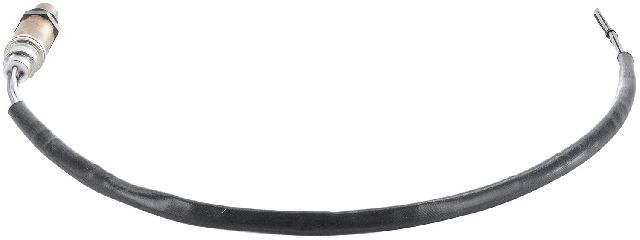
- Oxygen Sensor (Bank 1, Sensor 2 - Downstream)
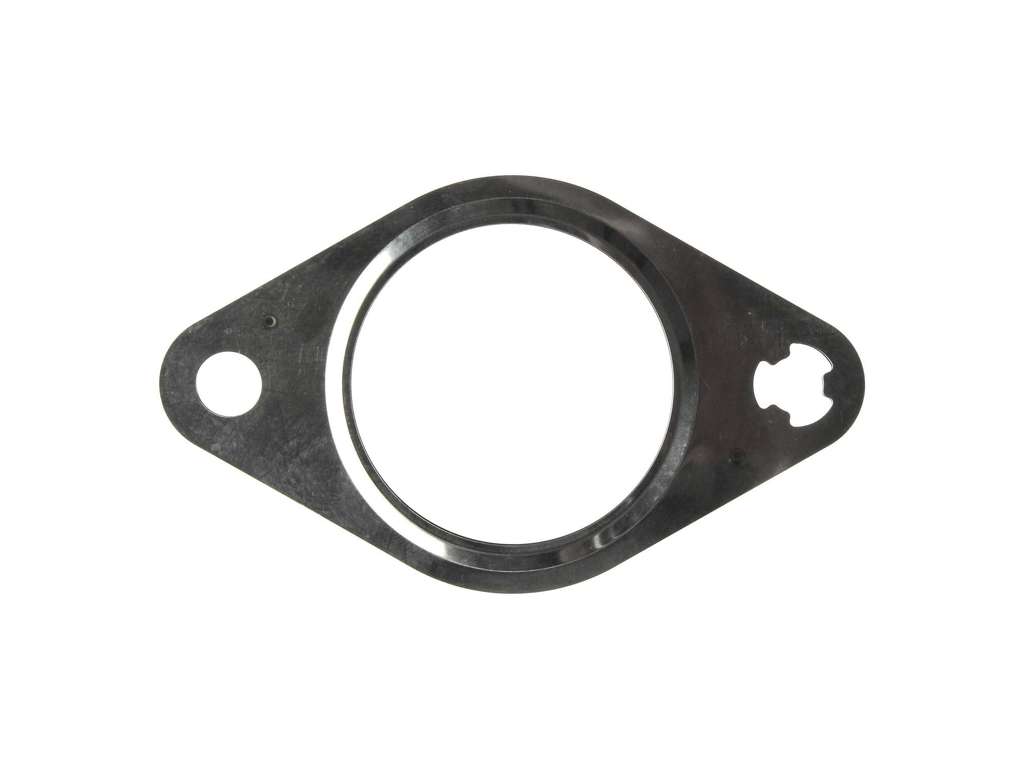
(OEM #DY-1173)— A faulty downstream O2 sensor is a common misdiagnosis for a bad catalytic converter and should be tested or replaced first, especially on high-mileage vehicles. - Exhaust Gaskets — Gaskets should always be replaced when removing and reinstalling exhaust components to prevent leaks.
Related Codes That Often Appear With This One
- P0430 — This is the identical code for Bank 2 (the front bank, closer to the radiator). It's common for both converters to age and fail at a similar rate, causing both codes to appear together, especially on higher mileage vehicles.
- P0300-P0306 — These are misfire codes. A persistent misfire allows unburned fuel to enter the exhaust, which will quickly overheat and destroy the catalytic converter. If you have a misfire code, it MUST be addressed before replacing the converter.
- P219A, P2096 — These codes relate to air-fuel ratio imbalances and post-catalyst fuel trim on Bank 1. They often appear alongside P0420 and can point towards issues like vacuum leaks, exhaust leaks, or faulty upstream O2 sensors that are contributing to the catalyst efficiency problem.
Technical Service Bulletins (TSBs) & Recalls
- TSB 24M01 S1 (Applies to 2020+ 3.3L, but shows pattern of converter issues)
- TSB 25-2072 / TSB 25-2188 (Applies to 2022-2025 models, but shows pattern of PCM software causing false P0420)
Platform-Specific Known Issues
- A Technical Service Bulletin (TSB 24M01 S1) was issued for some newer Explorer models (2020+) with the 3.3L engine to replace catalytic converters for DTC P0420 or P0430, indicating this is a known issue requiring converter replacement in the Explorer family, though not specific to the 2011-2019 3.5L.
- The internal water pump on the transverse 3.5L V6 is a significant point of failure. When it fails, it leaks coolant into the oil pan, contaminating the oil. This will destroy the catalytic converters.
- Some owners on forums like Reddit and ExplorerForum.com report chasing the P0420 code, replacing O2 sensors and even cats, only to have it return, suggesting an underlying issue like a subtle vacuum leak, fuel injector problem, or a bad aftermarket converter.
Mechanic-Grade Diagnostic Values
- Downstream O2 Sensor (Bank 1, Sensor 2) Voltage at 2,000 RPM — expected: Slowly fluctuating between 0.6 and 0.8 volts.. Failure: Voltage fluctuates widely between 0.2 and 0.8 volts, mirroring the upstream sensor.
- Long-Term Fuel Trim (LTFT) — expected: Within +/- 10% at idle, 1500, 2000, and 2500 RPM.. Failure: Values exceeding +/- 10% suggest underlying issues like vacuum leaks or fuel delivery problems that must be fixed before addressing the converter.
Scan Tool Commands That Help
- Professional Scan Tool (e.g., Ford IDS, Autel, Snap-on): Graphing Live O2 Sensor Data — This is the primary method to visually determine if the downstream O2 sensor is mimicking the upstream sensor, which strongly indicates a failed catalytic converter. It's used to differentiate between a bad sensor and a bad converter.
- Professional Scan Tool (e.g., Ford IDS, Autel, Snap-on): Mode $06, Test ID $81, Component ID $10 — To check the raw test results from the PCM's last catalyst efficiency monitor test cycle. This provides the measured value versus the acceptable threshold, confirming if the monitor is failing and by how much. This is more definitive than just reading the code.
Wiring & Ground Locations
- Bank 1 Sensor 1 (Upstream) — At the rear of the engine against the firewall, before the catalytic converter.. This sensor provides the primary reading of the air-fuel mixture leaving the engine. Its signal is the baseline for the catalyst efficiency test.
- Bank 1 Sensor 2 (Downstream) — Under the vehicle, after the Bank 1 catalytic converter, near the oil pan.. This sensor's reading is compared to the upstream sensor. A faulty sensor or damaged wiring here can directly cause a false P0420 code.
- Exhaust Flex Pipe — The flexible, braided section of the exhaust pipe, typically after the catalytic converters.. These are a known failure point and can develop leaks that are hard to see. A leak here can introduce oxygen and corrupt the downstream O2 sensor readings, causing a false P0420.
Real Owner Repair Stories
- Reddit user ddfw on r/FordExplorer (2013 Ford Taurus (shares 3.5L platform) with 205,000 miles) — P0420 and P0430 codes.
❌ Tried (didn't work) Cataclean, Replacing O2 sensors, Using 3rd party cheap catalytic converters
✅ What actually fixed it The user concluded that only OEM or high-quality aftermarket converters would solve the issue, as the cheaper alternatives were not effective. The user was quoted $2,200 for the pair. - YouTube video from '2016 Ford Explorer code P0420 fix' (2016 Ford Explorer Sport (3.5L Turbo)) — P0420 code, quoted $1700 for repair.
❌ Tried (didn't work) Attempting to clean the catalytic converter.
✅ What actually fixed it The owner inspected the honeycomb of the Bank 1 converter and found it was damaged. He replaced only the Bank 1 (firewall side) catalytic converter with a part ordered online for around $300, which resolved the code.
"I Checked Everything" — The Actual Cause
- In some cases, a very small crack or pinhole leak in the exhaust manifold or flex pipe may not show up on a smoke test, especially when the exhaust is cold. The leak may only open up when the metal expands at operating temperature. This can lead a technician to believe there are no leaks, when in fact a temperature-dependent leak is allowing oxygen to enter the exhaust stream and trigger the P0420 code.
OEM Part Supersession History
DB5Z-5E212-A→DB5Z-5E212-B— Part revision by manufacturer.
Heads up: DB5Z-5E212-B is the updated OEM part number for the Bank 1 (Right/Rear) catalytic converter for 3.5L Turbo models within this generation. Always verify fitment with VIN.
Model Year Variations Within This Range
- 2011-2012: The 3.5L EcoBoost (turbo) variant used smaller turbos and a Hitachi fuel system. The naturally aspirated 3.5L Cyclone is largely the same.
- 2013-2016: The 3.5L EcoBoost (turbo) variant was updated with larger turbos and a Bosch fuel system. A refresh in 2016 updated exterior styling and introduced the Sync 3 infotainment system, but the base 3.5L V6 powertrain remained consistent.
- 2016-2019: The 2.0L 4-cylinder was replaced with a more powerful 2.3L EcoBoost. The 3.5L V6 remained the standard engine.
Diagnostic Flowchart
Other Known Issues on This Vehicle
Issues unrelated to this code that are worth knowing about as an owner of this generation:
- Internal Water Pump Failure 🔴 High — Common after 100,000 miles. Failure can lead to catastrophic engine damage if coolant mixes with oil and is not caught quickly.
- Power Transfer Unit (PTU) Failure 🔴 High — Common on AWD models, often before 100,000 miles. The unit overheats, cooking the fluid and leading to gear/bearing failure. Ford claimed the fluid was 'lifetime,' but regular changes (every 30k miles) are recommended by owners.
- Electronic Throttle Body Malfunction 🟠 Medium — Widespread on 2011-2016 models. Can cause sudden power loss, stalling, and the vehicle entering 'limp mode'. Often triggers codes P2111 and P2112. (Ref: Ford had a Customer Satisfaction Program (13N03) and extended warranty for this part on some vehicles.)
- Cracked Rear Suspension Toe Links 🔴 High — Affected 2011-2017 models, leading to a major recall. A fracture can cause a sudden loss of steering control. (Ref: NHTSA Recall 19V435000)
- Exhaust Odor in Cabin 🟠 Medium — Reported across multiple model years, especially in Police Interceptor versions. Often traced to cracked exhaust manifolds or improperly sealed body seams, allowing exhaust fumes to enter the cabin. (Ref: Ford initiated service programs for police vehicles to address this.)
Used vs. New Parts: Buying Guide for This Vehicle
When a used part is the smart pick: A used OEM catalytic converter from a low-mileage, rear-end collision donor vehicle can be a cost-effective option. Used O2 sensors are generally not recommended as they are wear items.
Donor-vehicle mileage cap: roughly under 80000 miles for the part to have meaningful remaining life.
What to inspect on the donor part:
- Verify the donor vehicle's mileage.
- Inspect the converter's honeycomb structure through the O2 sensor port; it should be intact, with no signs of melting, clogging, or rattling.
- Check for excessive rust or damage to the flanges and heat shields.
OEM-only on this vehicle (don't cheap out):
- Catalytic Converter: Many owners report that cheap, third-party aftermarket converters do not have sufficient precious metal loading to satisfy the Ford PCM's monitoring sensitivity, leading to the P0420 code returning shortly after installation.
Aftermarket brands forum-validated for this vehicle:
- Walker: Often cited as a reliable and budget-friendly aftermarket option that meets EPA standards.
- MagnaFlow: Known for performance and durability, often at a higher price point than Walker, but considered a high-quality choice.
Brands owners have reported issues with on this vehicle:
- Unbranded or 'white box' converters from online marketplaces are frequently reported to fail within months.
Real Owner Stories
Aggregated from forums and TSBs cited above. Mileages and costs reflect what owners reported in those sources.
2013 Ford Explorer 3.5L V6
Symptoms: Owner reported receiving both P0420 and P0430 codes simultaneously.
What fixed it: The owner was investigating potential causes including O2 sensors and catalytic converters, noting the complexity of chasing the code on this platform.
Source hint: Reddit r/MechanicAdvice thread titled '2013 ford explorer 5th gen p0420 and p0430'
2011-2019 Ford Explorer 3.5L V6 — ~125000 miles
Symptoms: Owners on forums report the code returning even after replacing O2 sensors and catalytic converters.
What fixed it: In some cases, the issue was traced back to underlying problems like subtle vacuum leaks, fuel injector issues, or the use of low-quality aftermarket converters.
Source hint: ExplorerForum.com and Reddit r/FordExplorer
Related OBD-II Codes
Frequently Asked Questions
Does TSB 24M01 S1 apply to my 2011-2019 Ford Explorer 3.5L?
Can a failing internal water pump on my 3.5L Cyclone engine cause a P0420 code?
Which catalytic converter needs to be replaced for a P0420 code on the 3.5L V6?
Is there a specific Motorcraft part number for the O2 sensor I should check first?
Why is the Bank 1 converter more expensive to replace than Bank 2 on my Explorer?
Could a ticking sound when my engine is cold be related to the P0420 code?
Helpful Videos
We Have This Part in Stock


The information in this article is provided for general reference and educational purposes only. Vehicle specifications, procedures, and part compatibility can vary by production date, trim level, and region. Always consult your vehicle's factory service manual and verify part numbers before purchasing or performing repairs. Safety-critical components such as airbags, seat belts, and braking systems should be installed by a qualified professional.
- Ford Explorer:
- 🎬 Helpful Videos
- 🛍️ Shop This Part
- What's Unique About the 2011-2019 Ford Explorer
- Symptoms You May Notice
- Most Likely Causes
- Rare But Worth Checking
- Diagnosis Steps
- Parts You'll Likely Need
- Related Codes That Often Appear With This One
- Technical Service Bulletins (TSBs) & Recalls
- Platform-Specific Known Issues
- Mechanic-Grade Diagnostic Values
- Scan Tool Commands That Help
- Wiring & Ground Locations
- Real Owner Repair Stories
- "I Checked Everything" — The Actual Cause
- OEM Part Supersession History
- Model Year Variations Within This Range
- Diagnostic Flowchart
- Other Known Issues on This Vehicle
- Used vs. New Parts: Buying Guide for This Vehicle
- Real Owner Stories
- 2013 Ford Explorer 3.5L V6
- 2011-2019 Ford Explorer 3.5L V6 — ~125000 miles
- Related OBD-II Codes
- Frequently Asked Questions
- 🎟️ Get 5% Off