

P0420 on 2019-2023 Dodge Challenger: Catalyst Efficiency Causes and Fixes
On a 2019-2023 Dodge Challenger, code P0420 most often means the catalytic converter on Bank 1 has failed. While an oxygen sensor could be the cause, the converter itself is the most probable culprit. A software glitch can also trigger this code on 2023 models. Expect to pay $900-$2,000+ for a replacement.
- P0420 on a Dodge Challenger points to a failing catalytic converter on Bank 1.
- Before replacing the expensive converter, always check for other codes and rule out simpler issues like exhaust leaks or a faulty oxygen sensor.
- Address any engine misfires immediately, as they are a primary cause of catalytic converter failure.
- Due to potential compatibility issues, using an OEM Mopar or high-quality aftermarket catalytic converter is recommended for a lasting repair.
What's Unique About the 2019-2023 Dodge CHALLENGER
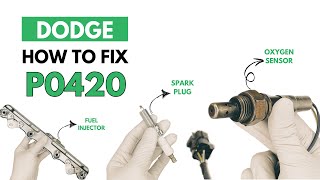
For the 2019-2023 Dodge Challenger, the P0420 code is a straightforward emissions issue that can affect both V6 and V8 models. Manufacturer service bulletins show this code can appear alongside others, such as misfire codes (P030x) or the equivalent code for the other engine bank (P0430), indicating that an underlying engine issue could be the root cause. Some owners have reported that these vehicles can be particularly sensitive to aftermarket catalytic converters, sometimes still setting codes even after replacement, suggesting that OEM parts or high-quality aftermarket units are the most reliable fix. 🎬 Watch: This complete guide to fixing Dodge P0420 errors. In some cases, owners have resorted to using O2 sensor spacers (a non-legal fix in many areas) to trick the computer when using aftermarket cats. Additionally, for 2023 models specifically, a PCM software error can create false P0420 codes, which is addressed by TSB 18-051-23.
Diagnostic Flowchart
Tap your situation to follow the diagnostic path that matches what you're seeing on this vehicle.
Symptoms You May Notice
- Check Engine Light is on
- Reduced engine power or acceleration
- Failing an emissions test
- A sulfur or "rotten egg" smell from the exhaust
- Rough or rhythmic idle
- Replacing the oxygen sensor when the catalytic converter is the real problem.
- Replacing the catalytic converter without addressing an underlying engine issue (like a misfire or rich fuel condition) that caused it to fail in the first place.
- On 2023 models, replacing hardware (catalytic converter, O2 sensors) when the actual root cause is a software glitch requiring a PCM update.
Most Likely Causes
- Failing Catalytic Converter 🔴 High Probability Catalytic converters can fail from age, but are often damaged by other engine problems. Unburned fuel from misfires (as noted in TSB #18-035-26) can overheat and destroy the catalyst materials.
How to confirm: Use a scan tool to monitor upstream and downstream O2 sensor data. If the downstream sensor voltage fluctuates similarly to the upstream sensor, the converter is not working. An exhaust backpressure test or an infrared thermometer test (checking for a significant temperature increase across the converter) can also identify a clogged or ineffective converter.
Typical fix: Replace the Bank 1 catalytic converter. Using OEM or high-quality, EPA-compliant aftermarket parts is highly recommended to avoid recurring codes.
Est. part cost: $800-$1,700+ - Faulty Downstream Oxygen (O2) Sensor 🟡 Medium Probability Oxygen sensors are exposed to extreme heat and exhaust gases, and have a finite lifespan. A lazy or biased sensor can send incorrect data to the PCM, falsely indicating a bad converter.
How to confirm: Test the O2 sensor's response time and voltage output with a scan tool or multimeter. If the sensor's readings are slow to change or stuck at a certain voltage, it is likely faulty.
Typical fix: Replace the Bank 1 downstream oxygen sensor (Sensor 2).
Est. part cost: $40-$120 - Exhaust Leak ⚪ Low Probability Exhaust components can rust or gaskets can fail over time, allowing leaks. A leak between the engine and the catalytic converter can introduce extra oxygen into the system, fooling the O2 sensors.
How to confirm: Visually inspect the exhaust system from the engine manifold to the catalytic converter for cracks, holes, or black soot marks. Listen for a ticking or hissing sound that is louder when the engine is cold.
Typical fix: Repair the leak by replacing the gasket or damaged section of pipe.
Est. part cost: $20-$200 - Engine Misfires or Rich/Lean Condition ⚪ Low Probability As indicated by TSB #18-035-26, misfires can accompany a P0420 code. Faulty spark plugs, ignition coils, or fuel injectors can cause unburned fuel to enter the exhaust, which quickly overheats and damages the converter.
How to confirm: Scan for other trouble codes, especially P0300-P0308 (misfire codes). Check fuel trim data on a scan tool to identify a rich or lean condition.
Typical fix: Address the root cause of the misfire or fuel mixture issue (e.g., replace spark plugs, ignition coils, or fuel injectors) BEFORE replacing the catalytic converter.
Est. part cost: $50-$500
Rare But Worth Checking
- Contaminated Fuel or Engine Oil: If the engine is burning oil due to worn piston rings or valve seals, or if leaded fuel was used, the contaminants can coat the catalyst and render it useless. This is less common but important to consider if the converter fails prematurely.
- PCM Software Glitch (2023 Models): For 2023 Dodge Challengers (and platform mates), TSB 18-051-23 was released to address a software error where the PCM is overly sensitive and can falsely trigger P0420/P0430 codes, often accompanied by a rough idle. The fix is a dealer-performed PCM software update.
Diagnosis Steps
- Read all trouble codes with an OBD-II scanner. Pay close attention to any other codes that may be present, such as misfire (P030x) or fuel trim codes.
- Inspect the exhaust system for any obvious leaks between the engine and the catalytic converter. Look for cracks, rust, or black soot.
- Use a scan tool with live data capabilities to monitor the voltage of the upstream (Sensor 1) and downstream (Sensor 2) oxygen sensors for Bank 1. At a steady RPM (around 2500), the upstream sensor should fluctuate rapidly between ~0.1V and ~0.9V. The downstream sensor should hold a relatively steady, high voltage (typically >0.6V). If the downstream sensor mirrors the upstream sensor's fluctuations, the catalytic converter is likely bad. 🎬 Watch: A pro walkthrough on troubleshooting catalyst efficiency codes.
- If the downstream O2 sensor's reading is flat, unresponsive, or stuck, test the sensor itself. It may have failed and should be replaced.
- If other codes are present (misfires, fuel system issues), diagnose and repair those problems first, as they are the likely cause of the P0420 code.
- For 2023 models, check for TSB 18-051-23. If symptoms match (rough idle, P0420/P0430), a PCM reflash at the dealer may be the required fix.
- If the catalytic converter is confirmed to be faulty, it must be replaced. Consider OEM or high-quality aftermarket parts to ensure compatibility.
Parts You'll Likely Need
- Bank 1 Catalytic Converter
(OEM #68276700AA (Example for 5.7L V8, Right Hand side, verify with VIN))— This is the most common cause of a P0420 code, indicating the part itself has failed and is no longer efficient.
Trusted brands: Mopar, MagnaFlow, Walker Exhaust
OEM price range: $1100-$1700
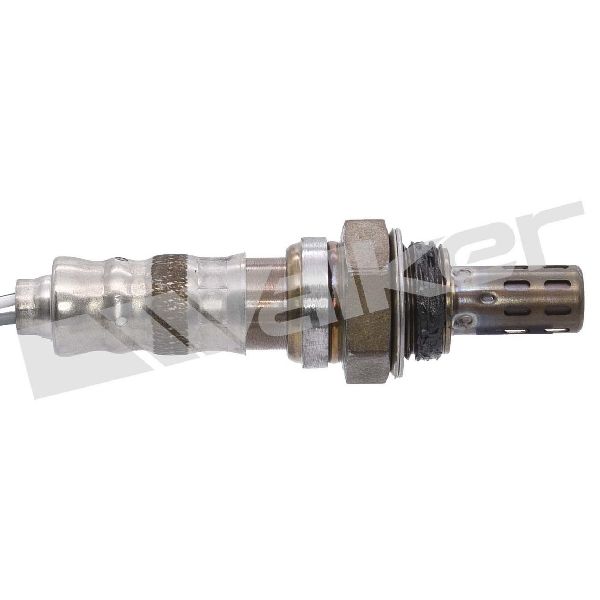
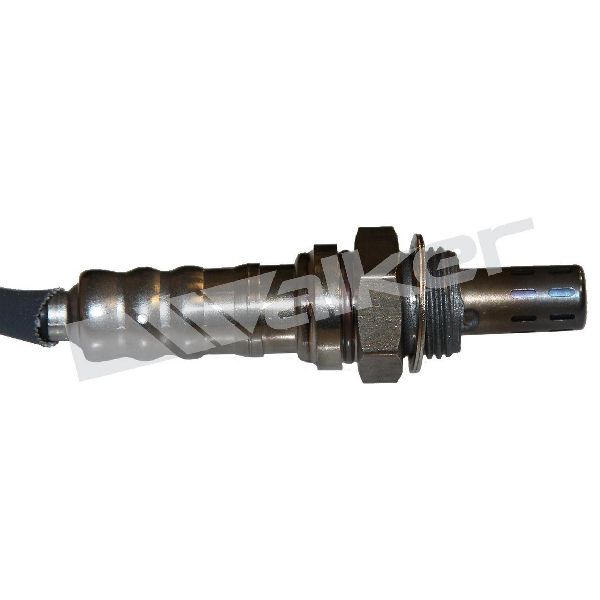
Aftermarket price range: $600-$1000 - Bank 1, Sensor 2 (Downstream) Oxygen Sensor
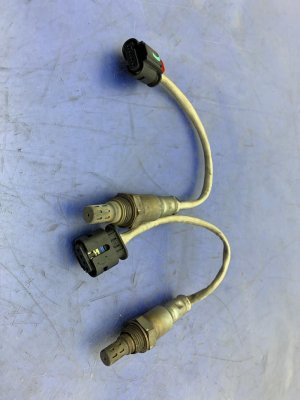
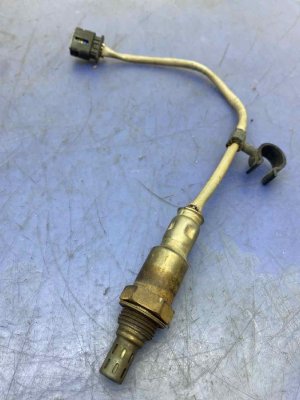
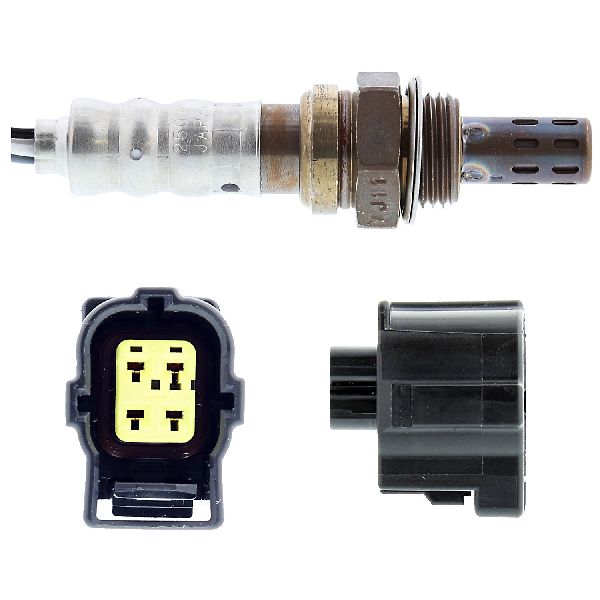
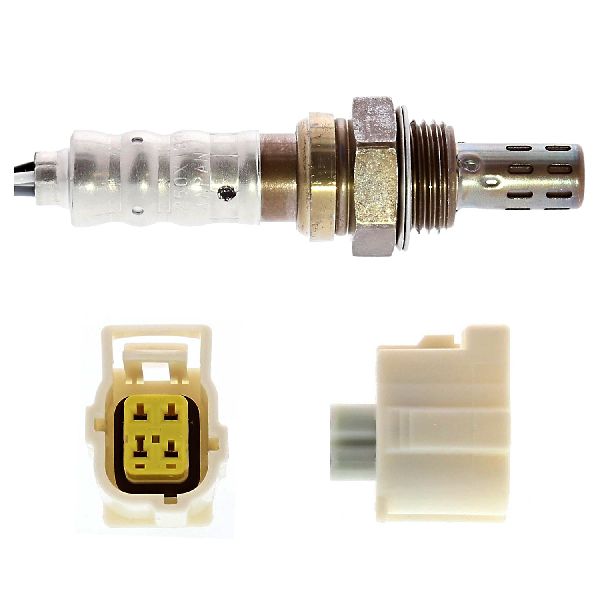
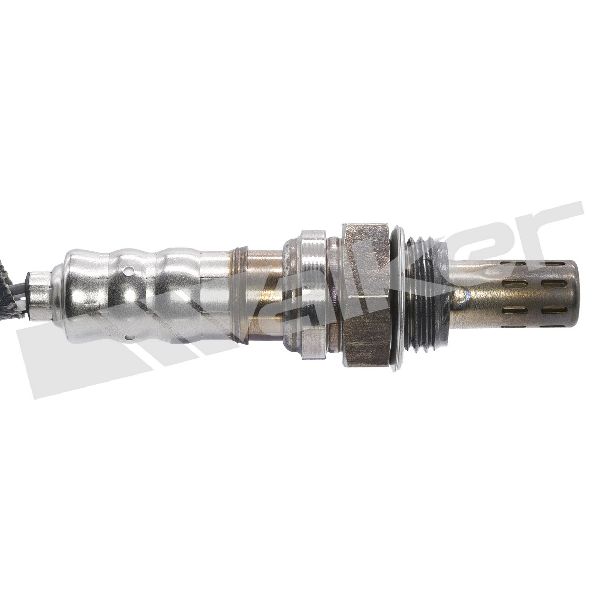
(OEM #68224424AA (Example, fits multiple engines/positions, verify with VIN))— This sensor provides the reading that determines catalyst efficiency. If it fails, it can mimic the symptoms of a bad converter and is a common misdiagnosis or secondary failure point.
Trusted brands: Mopar, Denso, Bosch, NGK/NTK
OEM price range: $80-$150
Aftermarket price range: $40-$100
Related Codes That Often Appear With This One
- P0430 — This is the identical code for Bank 2. It's common for both catalytic converters to degrade at a similar rate, causing both codes to appear together. This is mentioned in TSBs #18-035-26, #18-090-24, and #18-106-20.
- P0300-P0308 — These are cylinder misfire codes. As noted in TSB #18-035-26, misfires cause unburned fuel to enter the exhaust, which can quickly damage the catalytic converter.
- P0456 — This EVAP system small leak code was cited along with P0420 in TSB #18-090-24, suggesting a potential for multiple emissions-related faults to be flagged by the PCM at the same time.
Technical Service Bulletins (TSBs) & Recalls
- 18-035-26: Links P0420 with cylinder misfire codes.
- 18-090-24: Cites P0420 as a potential cause for MIL illumination, possibly alongside P0430 and P0456.
- 18-106-20: Cites P0420 and P0430 as potential causes for MIL illumination.
- 18-051-23: (2023 Models) Addresses a s
Platform-Specific Known Issues
- TSB #18-035-26 notes that P0420 may be set in conjunction with multiple cylinder misfire codes (P0304-P0308).
- TSB #18-090-24 and #18-106-20 both identify P0420 and P0430 as codes that may trigger the Malfunction Indicator Lamp (MIL).
- TSB #18-051-23 (for 2023 models) identifies a software issue causing false P0420/P0430 codes and rough idle, fixed by a PCM update.
- Owners report that the PCM's monitoring parameters are very strict, often causing check engine lights with aftermarket catalytic converters that would otherwise work on other vehicles.
Mechanic-Grade Diagnostic Values
- Downstream O2 Sensor (Bank 1, Sensor 2) Voltage — expected: A steady reading between 0.6V and 0.8V at idle/steady cruise when the catalytic converter is hot and working correctly.. Failure: Voltage fluctuates rapidly, mimicking the upstream O2 sensor's pattern (approx. 0.1V to 0.9V), or stays consistently low (<0.4V).
- Upstream O2 Sensor (Bank 1, Sensor 1) Voltage — expected: Rapid and constant fluctuation between approximately 0.1V (lean) and 0.9V (rich) on a warm, running engine.. Failure: A slow, lazy, or stuck voltage reading. This indicates a faulty upstream sensor, which prevents an accurate catalyst efficiency test.
- Long Term Fuel Trim (LTFT) + Short Term Fuel Trim (STFT) — expected: The combined total should be within +/- 10% at idle.. Failure: A high positive number (e.g., > +15%) indicates the PCM is adding significant fuel to compensate for a lean condition, such as a vacuum leak. This lean condition can damage the converter over time.
- O2 Sensor Heater Element Resistance — expected: 2.0 to 30.0 Ohms at room temperature (approx. 70°F / 21°C). This value is from a related Hemi platform and is a strong reference.. Failure: Infinite resistance (open circuit) or zero resistance (short circuit) indicates a failed heater, which will prevent the sensor from working correctly and can set other codes.
Hidden / Shadow Codes Worth Checking
- Mode $06, TID $82: This is the onboard diagnostic test ID for the Catalyst Monitor Efficiency on Bank 1 for many Chrysler/Dodge vehicles. The PCM runs this test in the background to verify catalyst efficiency. (see via An advanced OBD-II scan tool capable of displaying Mode $06 data. The tool will show a test value and a maximum allowable value. If the test value exceeds the maximum, it confirms the failure that triggered the P0420 code.)
Scan Tool Commands That Help
- wiTECH 2.0 (Dodge/Chrysler Dealer Tool): ECU View -> View/Graph Data — This is the primary function used to graph the upstream and downstream O2 sensor voltages simultaneously. It provides a clear visual confirmation of whether the downstream sensor is mimicking the upstream sensor, which is the definitive test for a failed catalytic converter.
Real Owner Repair Stories
- YouTube channel 'Dodge Challenger P0420 and P0430 Codes' (Dodge Challenger (year not specified, but modern) with 208,000 miles) — Persistent P0420 and P0430 codes after multiple other repairs.
❌ Tried (didn't work) New aftermarket catalytic converters were installed., New NGK spark plugs installed., New OEM ignition coils installed., Four new oxygen sensors installed., Corrected a false high ethanol fuel reading in the PCM.
✅ What actually fixed it Installing spark plug non-fouler spacers on the downstream (post-cat) O2 sensors. This pulled the sensors slightly out of the direct exhaust stream, desensitizing them enough to prevent the check engine light from triggering with the aftermarket converters, which were not efficient enough to meet the strict OEM parameters. - Medium article by user 'Sergey Strong' (2002 Volvo S60 (illustrates a common diagnostic path)) — P0420 code appeared.
❌ Tried (didn't work) Using a catalytic converter cleaner (OXICAT) provided a temporary fix for about 155 miles, but the code eventually returned.
✅ What actually fixed it Replacing the downstream (post-catalyst) oxygen sensor ultimately resolved the recurring P0420 code.
"I Checked Everything" — The Actual Cause
- A common scenario where an exhaust smoke test reveals no leaks is when the root cause is unmetered air entering the engine through a leaking intake manifold gasket. This creates a lean condition that the PCM tries to correct by adding fuel (high positive fuel trims). This condition can, over time, overheat and damage the catalytic converter, leading to a P0420 code that seems to have no obvious exhaust-related cause.
When the Usual Fixes Don't Work
- While P0420 often points to a failed catalytic converter, a significant percentage of cases are misdiagnosed. Before replacing the expensive converter on a Challenger, it is critical to rule out other causes. The most common counter-evidence points to the PCM's strictness with aftermarket parts; many owners report that even brand new, non-OEM catalytic converters are not efficient enough to prevent the P0420 code from returning. This suggests that underlying engine conditions (misfires, vacuum leaks, bad ECT sensor) must be repaired first, and if the converter is replaced, using an OEM Mopar part is the most reliable way to ensure the code stays off.
OEM Part Supersession History
68224424AA→68291423AA— Standard part revision or supplier change.
Heads up: The new part number (68291423AA) is the correct replacement for the original. Using the old part number may not be possible if stock is depleted. Part 68224424AA is still listed as correct for 2022-2023 Challengers, indicating the supersession may be specific to certain platforms or earlier years.
Model Year Variations Within This Range
- 2023: A specific PCM software glitch can cause false P0420/P0430 codes, addressed by TSB 18-051-23. Unlike other years, the primary fix may be a software update rather than hardware replacement.
Helpful Videos
Used OEM Parts in Stock
New Aftermarket Parts Available


The information in this article is provided for general reference and educational purposes only. Vehicle specifications, procedures, and part compatibility can vary by production date, trim level, and region. Always consult your vehicle's factory service manual and verify part numbers before purchasing or performing repairs. Safety-critical components such as airbags, seat belts, and braking systems should be installed by a qualified professional.
- Dodge CHALLENGER:
- 🎬 Helpful Videos
- 🛍️ Shop This Part
- What's Unique About the 2019-2023 Dodge CHALLENGER
- Diagnostic Flowchart
- Symptoms You May Notice
- Most Likely Causes
- Rare But Worth Checking
- Diagnosis Steps
- Parts You'll Likely Need
- Related Codes That Often Appear With This One
- Technical Service Bulletins (TSBs) & Recalls
- Platform-Specific Known Issues
- Mechanic-Grade Diagnostic Values
- Hidden / Shadow Codes Worth Checking
- Scan Tool Commands That Help
- Real Owner Repair Stories
- "I Checked Everything" — The Actual Cause
- When the Usual Fixes Don't Work
- OEM Part Supersession History
- Model Year Variations Within This Range
- 🎟️ Get 5% Off