

P0420 on 2008-2013 Cadillac CTS 3.6L: Catalyst Efficiency Causes and Fixes
On a 2008-2011 Cadillac CTS with the 3.6L LLT engine, code P0420 often points to a failed catalytic converter, but don't replace it without checking for cheaper causes first. A faulty downstream oxygen sensor or an exhaust leak from a cracked converter flange (a known issue documented in TSB 17-NA-321) are common culprits. Underlying engine problems like stretched timing chains, which are prevalent on the LLT engine, can also be the root cause and will destroy a new converter if not addressed.
- Do not automatically replace the catalytic converter for a P0420 code. It's an expensive part and often fails due to an underlying issue.
- Always diagnose in order: check for other codes, inspect for exhaust leaks (especially at converter flanges), then test the oxygen sensors.
- On this specific 3.6L LLT engine, be aware of known major issues like stretched timing chains and carbon buildup, which can be the true root cause of the P0420 code.
- A faulty downstream (Bank 1, Sensor 2) O2 sensor is a common, much cheaper part that can mimic the symptoms of a failed converter.
What's Unique About the 2008-2013 Cadillac CTS
The 3.6L LLT V6 engine in this generation of CTS has several known issues that can directly lead to a P0420 code. These engines are known for premature timing chain stretching, often due to lubrication issues or tensioner failure, which can throw off engine performance and damage the catalytic converter. Additionally, GM has issued service bulletins like TSB 17-NA-321 for problems like cracks forming on the catalytic converter's mounting flange, causing exhaust leaks that trick the sensors and trigger P0420. Unlike a simple sensor failure, P0420 on this specific vehicle requires a closer look at these underlying mechanical issues before condemning the expensive converter.
🎬 Watch: EricTheCarGuy explains how to diagnose P0420 efficiency codes.Generation note: The 2008-2013 Cadillac CTS is the second generation. However, the specified 3.6L LLT engine was used from 2008-2011. In 2012, it was replaced by the updated 3.6L LFX engine. While many causes are similar, the LLT engine is particularly noted for timing chain issues that were improved in the later LFX. The LFX also featured a composite intake manifold versus the LLT's aluminum one.
Symptoms You May Notice
- Check Engine Light is on
- Reduced engine power or sluggish acceleration, especially if the converter is clogged
- A sulfur or "rotten egg" smell from the exhaust.
- Vehicle may fail an emissions test
- Rattling noises from the exhaust if the internal converter material has broken apart.
- Replacing the catalytic converter immediately without checking for exhaust leaks, a bad downstream O2 sensor, or underlying engine performance issues that caused the converter to fail in the first place.
- Replacing an O2 sensor when the real problem is a cracked converter flange leaking exhaust.
Most Likely Causes
- Failed Catalytic Converter 🔴 High Probability Converters fail from age, but are often destroyed by underlying engine issues on the LLT V6, such as oil consumption, misfires, or stretched timing chains. The integrated manifold/converter design is also susceptible to cracking at the flange per TSB 17-NA-321.
How to confirm: After ruling out all other causes, use a scan tool to watch O2 sensor data. If the downstream sensor (Bank 1, Sensor 2) voltage graph mimics the upstream sensor (Bank 1, Sensor 1), the converter is not storing oxygen and has failed. An infrared thermometer can also be used to check for a temperature rise across the converter; a working converter should be at least 100°F hotter at the outlet than the inlet.
Typical fix: Replace the Bank 1 (passenger side) catalytic converter assembly. The OEM part is an integrated manifold and converter.
Est. part cost: $400-$900 - Faulty Downstream Oxygen (O2) Sensor 🟡 Medium Probability O2 sensors are a common failure item on all vehicles as they age. A lazy or failed sensor can send incorrect data to the PCM, falsely triggering a P0420 code. Oil consumption, a known issue on some 3.6L engines, can also contaminate and foul the sensors.
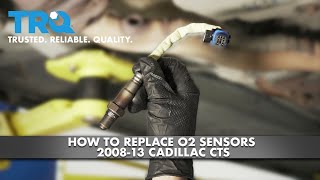
How to confirm: Graph the Bank 1, Sensor 2 voltage with a scan tool. The reading should be relatively stable (typically 0.6V - 0.8V) on a warm, running engine. If it's stuck, flatlined, or fluctuating wildly like the upstream sensor, the sensor is likely bad. A video from a CTS owner demonstrates replacing this exact sensor to fix the code. 🎬 See this walkthrough on replacing the CTS oxygen sensors.
Typical fix: Replace the Bank 1, Sensor 2 (downstream/post-cat) oxygen sensor. The ACDelco part number is a common replacement.
Est. part cost: $50-$120 - Exhaust Leak 🟡 Medium Probability GM issued TSB 17-NA-321 for cracks forming on the catalytic converter's mounting flange on the 3.6L V6. This leak, which occurs before the downstream O2 sensor, allows oxygen into the exhaust, which skews sensor readings and triggers the P0420 code.
How to confirm: Visually inspect the exhaust manifold and the flanges of the catalytic converter for black soot trails or audible hissing/ticking sounds, especially on a cold start. A smoke test is the most effective way to find small leaks.
Typical fix: If a crack is found on the converter flange, the entire converter assembly must be replaced as it is one piece. If the leak is from a gasket, replace the faulty gasket.
Est. part cost: $20-$50 (gasket), $400-$900 (converter) - Stretched Timing Chains ⚪ Low Probability The 3.6L LLT engine is well-known for premature timing chain wear, often caused by poor lubrication from extended oil change intervals or low oil levels. This causes incorrect valve and ignition timing, leading to poor combustion, misfires, and eventual catalytic converter failure.
How to confirm: This condition will almost always be accompanied by other codes, such as P0008, P0009, P0016, P0017, P0018, or P0019. A mechanic can check camshaft deviation with a high-end scan tool to confirm. A rattling noise on startup is also a common symptom. 🎬 Watch: Understanding the timing and camshaft issues on these engines.
Typical fix: This is a major and expensive repair requiring the replacement of all timing chains, tensioners, and guides.
Est. part cost: $400-$800
Rare But Worth Checking
- Intake Valve Carbon Buildup: As a direct-injection engine, the LLT is prone to carbon buildup on intake valves, which doesn't get washed off by fuel. GM TSB PIP5029 addresses this issue, which can cause misfires (P0300-P0306) that slowly degrade the catalytic converter over time. The fix involves a chemical cleaning procedure or media blasting.
- Leaking Fuel Injectors: A leaking injector can create a rich fuel condition, sending unburnt fuel into the exhaust that overheats and melts the internal structure of the catalytic converter. This is often accompanied by other fuel trim or misfire codes and is noted as a known issue on the LLT engine per TSB PIP4964F.
Diagnosis Steps
- Scan for all diagnostic trouble codes. If any misfire (P030x), timing (P00xx), or fuel trim (P017x) codes are present, diagnose and fix them first as they are likely the root cause.
- Perform a thorough visual and audible inspection of the exhaust system from the engine to the rear O2 sensor, specifically looking for cracks at the converter flanges and black soot indicating a leak. A ticking noise on a cold start is a strong indicator of a leak.
- With the engine warm and at a steady 2000-2500 RPM, use a scan tool to graph the voltage of the Bank 1 oxygen sensors.
- Observe the upstream sensor (B1S1). It should switch rapidly between approximately 0.1V and 0.9V.
- Observe the downstream sensor (B1S2). It should hold a relatively steady, high voltage (e.g., >0.6V). If it is switching rapidly and mirroring the upstream sensor, the converter is not working. If it is stuck low or not responding, the sensor itself may be faulty.
- If O2 sensors appear to be working and no leaks are found, perform a temperature check on the converter using an infrared thermometer. The outlet should be at least 100°F hotter than the inlet on a fully warmed-up engine.
- If all else fails, investigate underlying engine health. Check for known issues like timing chain stretch (especially if P00xx codes are present), intake valve carbon buildup (TSB PIP5029), or high oil consumption.
Parts You'll Likely Need
- Catalytic Converter (Bank 1)
(OEM #25939989)— This is the component directly identified by the code. It often fails due to age or contamination from engine problems, or cracks at the flange per TSB 17-NA-321.
Trusted brands: Walker Exhaust, MagnaFlow, ACDelco (GM Genuine)
OEM price range: $700-$1100
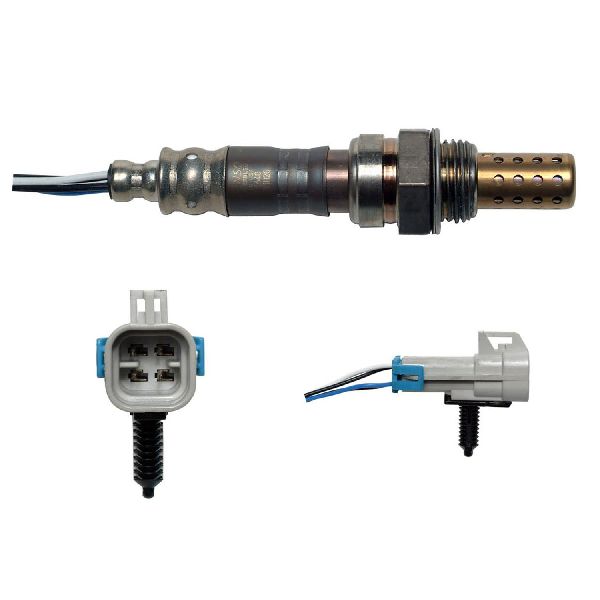
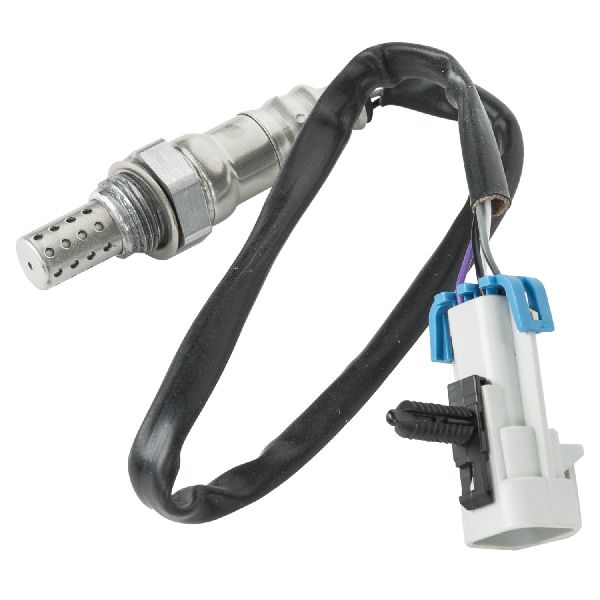
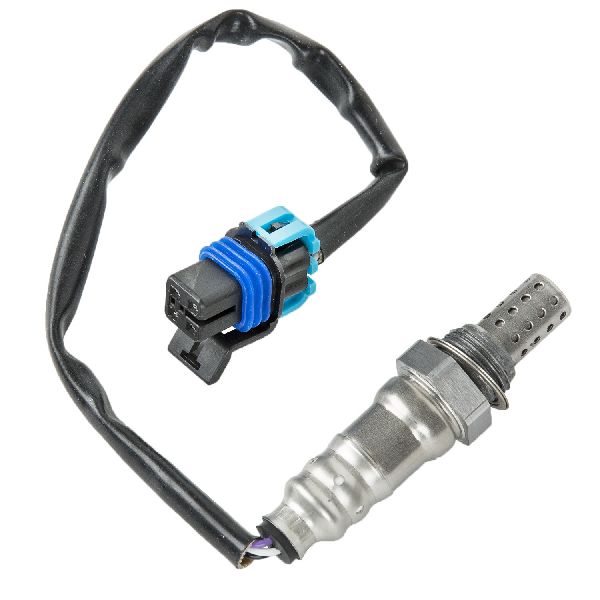
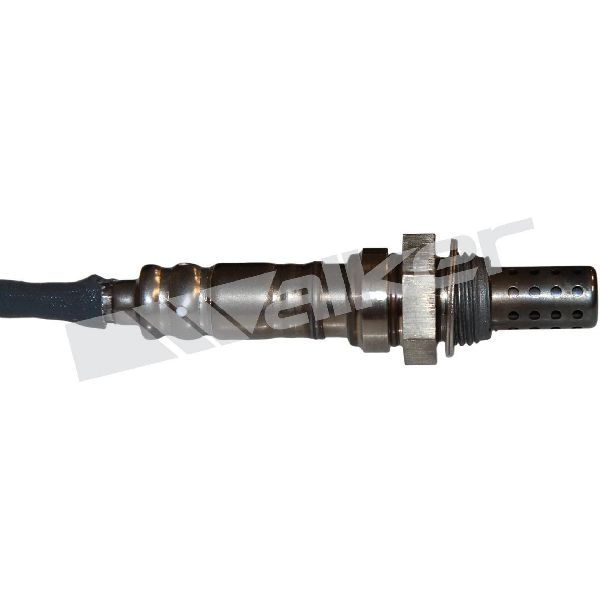
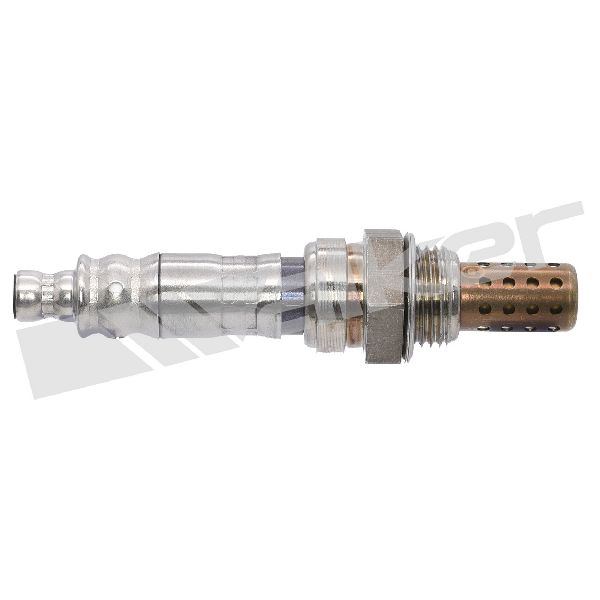
Aftermarket price range: $400-$900 - Downstream Oxygen Sensor (Bank 1, Sensor 2)
(OEM #213-3851 (ACDelco))— This sensor measures converter efficiency. It can fail and send incorrect readings, making it a common misdiagnosis for a bad converter.
Trusted brands: Denso, Bosch, ACDelco
OEM price range: $70-$130
Aftermarket price range: $50-$120
Related Codes That Often Appear With This One
- P0430 — This is the identical code for Bank 2 (driver's side). If both appear, it suggests a systemic issue like a bad batch of fuel, timing chain problems, or an engine running consistently rich or lean.
- P0300-P0306 — These are misfire codes. An engine misfire is a primary cause of catalytic converter failure, as it allows raw fuel to enter the exhaust and burn inside the converter. The root cause of the misfire, such as carbon buildup or a bad injector, must be fixed to prevent damage to the new converter.
- P0008, P0017 — These codes indicate a crankshaft/camshaft correlation issue, often pointing to the stretched timing chains known to affect the 3.6L LLT engine. This is a root cause that will destroy a new converter if not addressed.
Technical Service Bulletins (TSBs) & Recalls
- 17-NA-321: Addresses cracks forming on the catalytic converter mounting flange, causing an exhaust leak, noise, and triggering P0420/P0430 codes. The fix is to replace the entire converter assembly.
- PIP5029 (multiple revisions): Addresses engine misfires (P0300-P0306), rough idle, and other performance issues caused by heavy carbon buildup on the intake valves of direct-injection engines like the 3.6L LLT.
- PIP3423P: Provides information for technicians regarding DTCs P0008, P0009, P0016, P0017, P0018, or P0019, instructing them to inspect for loose timing chains or tensioners.
Platform-Specific Known Issues
- The 3.6L LLT engine is known for premature timing chain stretching, which can cause a variety of performance issues, including misfires that lead to catalytic converter failure.
- TSB 17-NA-321 notes that cracks can form on the catalytic converter's mounting flange, creating an exhaust leak that triggers P0420.
- As a direct-injection engine, the LLT is susceptible to carbon buildup on the intake valves, which can cause misfires and damage the converter over time (see TSB PIP5029B).
Mechanic-Grade Diagnostic Values
- High-Pressure Fuel Rail Pressure (at idle) — expected: 1.9-5.0 MPa (276-725 PSI). Failure: Pressure is significantly outside this range or has erratic readings, suggesting a failing High-Pressure Fuel Pump (HPFP) or sensor.
- Mass Airflow (MAF) Sensor (at idle) — expected: 3.6 to 4.5 g/s. Failure: Significantly higher or lower readings can indicate a vacuum leak or a faulty MAF sensor.
- Manifold Absolute Pressure (MAP) Sensor (engine at idle) — expected: 1.0V - 1.5V. Failure: Voltage that is too high at idle points to a vacuum leak or poor engine vacuum.
- Downstream O2 Sensor (B1S2) Response Test — expected: When a vacuum leak is induced, the sensor voltage should drop to near 0.1V. When the leak is fixed, it should swing rich before settling.. Failure: A sensor that is slow to respond or does not show a full range of voltage swing during a forced lean/rich test is likely faulty.
Hidden / Shadow Codes Worth Checking
- Mode $06, OBDMID $21, TID $A9: This is not a DTC, but a non-continuous monitor test result for the Bank 1 catalyst efficiency. A scan tool can access this data to see the raw test value measured by the PCM, comparing it against the manufacturer's min/max thresholds to see if it is passing or failing before a code is set. (see via A professional scan tool with Mode $06 data capability, such as a Launch Pros Elite or similar.)
Scan Tool Commands That Help
- GM SPS (Service Programming System): Engine Control Module Reprogramming — Used when a GM service bulletin indicates a calibration error is the cause of a false P0420 code. The ECM and TCM must be reprogrammed simultaneously.
- GDS2 / Tech2 / Professional Scan Tool: Catalyst Monitor Status / Live Data Graphing — This function is used to actively monitor the catalyst efficiency test to see if it runs and passes after a repair. It also allows for graphing O2 sensor data to visually confirm if the downstream sensor is mimicking the upstream sensor, which indicates a failed converter.
Wiring & Ground Locations
- G130 — Located on the rear of the right cylinder head (Bank 1 / passenger side).. This is a primary engine ground. A poor connection here can cause erratic signals for sensors on Bank 1, including the oxygen sensors, potentially leading to a false P0420 code.
- G131 — Located on the left rear of the engine (Bank 2 / driver's side).. While on Bank 2, this ground is part of the overall engine sensor ground scheme. A fault here could potentially affect the reference voltage shared by multiple sensors.
- ECM (Engine Control Module) — Located in the left front of the engine compartment.. All sensor data is processed here. Checking for corrosion or damage at the ECM connectors (often designated C1 and C2) is a critical step if wiring issues are suspected.
Real Owner Repair Stories
- Camaro5 Forums user (2010 Chevrolet Camaro 3.6L LLT (shared engine)) — Check Engine Light with codes P0008 and P0420.
❌ Tried (didn't work) Initial diagnosis focused on the P0420 catalyst code.
✅ What actually fixed it The root cause was the stretched timing chains, indicated by code P0008. The P0420 was a symptom of the poor engine timing caused by the chains. Replacing the timing chains resolved the issue. - YouTube video by 'Fix it Angel' (Cadillac CTS (year not specified, but 2nd gen)) — Check Engine Light with code P0420 would appear within 5 minutes of idling.
❌ Tried (didn't work) No other parts were replaced before the successful fix.
✅ What actually fixed it Replacing the Bank 1, Sensor 2 (downstream) oxygen sensor. The owner noted the Check Engine Light turned off on its own after the replacement and did not return on a test drive. - Reddit user commenting on a 2006 Cadillac STS 3.6L (2006 Cadillac STS 3.6L (shares LLT architecture and issues)) — Persistent P0420 code and known oil consumption.
❌ Tried (didn't work) The user implies the code was persistent and not fixed by simple measures.
✅ What actually fixed it The user concluded the root cause was bad piston rings on cylinder #2 causing oil consumption, which in turn was fouling and clogging the catalytic converter. This points to an internal engine mechanical failure as the true source of the P0420.
OEM Part Supersession History
15828676→25939989— Standard part update/revision by GM.
Heads up: The new part number (25939989) is the correct direct replacement for the original.ACDelco 213-3851 (Downstream O2 Sensor)→N/A— N/A
Heads up: According to GM documentation for this part, it may require 'programming and/or special setup procedures.' This is not a simple plug-and-play part in all cases and may require a scan tool to complete the installation.
Model Year Variations Within This Range
- 2008-2011: Some vehicles may have an older ECM/TCM software calibration that is more sensitive to setting a P0420 code. GM has issued software updates for similar issues on other vehicles, and a check for the latest calibration via the GM SPS is a valid diagnostic step.
Diagnostic Flowchart
Real Owner Stories
Aggregated from forums and TSBs cited above. Mileages and costs reflect what owners reported in those sources.
Cadillac CTS (3.6L V6)
Symptoms: The P0420 code would consistently appear within 5 minutes of the vehicle idling.
What fixed it: Replaced the Bank 1 Sensor 2 (downstream) oxygen sensor.
Source hint: YouTube - How to fix PO420 code (Cadillac)
Cadillac CTS 3.6L LLT
Symptoms: Experienced P0420 and P0430 codes appearing shortly after or in conjunction with timing chain correlation codes like P0008 and P0017.
What fixed it: Diagnosing and repairing the underlying timing chain stretch issue.
Source hint: Cadillac Forums - Discussion on P0420 and timing chain correlation
GM Vehicle 3.6L V6
Symptoms: Discovered a cracked catalytic converter flange causing an exhaust leak and triggering emissions codes.
What fixed it: Replaced the entire catalytic converter assembly, referencing TSB 17-NA-321 during a dealer emissions warranty discussion.
Source hint: Pelican Parts Forums - Discussion on TSB 17-NA-321 and warranty coverage
Related OBD-II Codes
Frequently Asked Questions
Does TSB 17-NA-321 apply to my 2008-2013 Cadillac CTS 3.6L V6?
Can stretched timing chains cause a P0420 code on the 3.6L LLT engine?
Why is my Cadillac CTS showing P0420 along with codes P0008 and P0017?
Could carbon buildup be the root cause of my P0420 code?
If my catalytic converter flange is cracked, can I just replace the flange or gasket?
Is it common for the downstream O2 sensor to fail on the 3.6L CTS?
Helpful Videos

Used OEM Parts in Stock
New Aftermarket Parts Available


The information in this article is provided for general reference and educational purposes only. Vehicle specifications, procedures, and part compatibility can vary by production date, trim level, and region. Always consult your vehicle's factory service manual and verify part numbers before purchasing or performing repairs. Safety-critical components such as airbags, seat belts, and braking systems should be installed by a qualified professional.
- Cadillac CTS:
- 🎬 Helpful Videos
- 🛍️ Shop This Part
- What's Unique About the 2008-2013 Cadillac CTS
- Symptoms You May Notice
- Most Likely Causes
- Rare But Worth Checking
- Diagnosis Steps
- Parts You'll Likely Need
- Related Codes That Often Appear With This One
- Technical Service Bulletins (TSBs) & Recalls
- Platform-Specific Known Issues
- Mechanic-Grade Diagnostic Values
- Hidden / Shadow Codes Worth Checking
- Scan Tool Commands That Help
- Wiring & Ground Locations
- Real Owner Repair Stories
- OEM Part Supersession History
- Model Year Variations Within This Range
- Diagnostic Flowchart
- Real Owner Stories
- Cadillac CTS (3.6L V6)
- Cadillac CTS 3.6L LLT
- GM Vehicle 3.6L V6
- Related OBD-II Codes
- Frequently Asked Questions
- 🎟️ Get 5% Off