

P0418 on 2000-2005 Volkswagen Passat: Secondary Air Injection Relay Circuit Malfunction Causes and Fixes
On a 2000-2005 VW Passat, code P0418 is most often caused by a blown 40A fuse or a failed '373' relay for the Secondary Air Injection (SAI) pump. These are located in the ECU box under the windshield cowl and are often the result of a failing or seized SAI pump which draws too much current.
- P0418 on a B5 Passat is an electrical circuit code. Start your diagnosis at the fuse and relay, not the pump itself.
- The SAI pump relay ('373') and its 40A fuse are inside the ECU box under the windshield cowl.
- A blown fuse or bad relay is often a symptom of a seized or failing SAI pump. You must test the pump to avoid a repeat failure.
- If you replace the SAI pump, it is strongly advised to also replace the combi (check) valve to prevent water from destroying the new pump.
What's Unique About the 2000-2005 Volkswagen Passat
On the B5/B5.5 generation Passat, the key components for this code—the SAI pump relay and its large 40-amp fuse—are located together inside the otherwise sealed ECU box in the plenum chamber (at the base of the windshield). This location, while protected, is adjacent to an area prone to blocked plenum drains, which can cause water issues, though the primary failure sequence involves the SAI pump itself. The pump is mounted low in the engine bay, ingests moisture from a faulty combi (check) valve, and seizes. The seized motor then overloads the circuit and blows the fuse or burns out the relay, triggering the P0418 code.
Symptoms You May Notice
- Check Engine Light is on.
- Vehicle will fail an emissions test.
- A loud noise, similar to a vacuum cleaner or jet engine, may be heard from the front passenger side of the engine bay for about 30-90 seconds after a cold start (if the pump is still running but failing).
- A complete lack of the typical SAI pump noise on a cold start, indicating the pump is not receiving power or has completely failed.
- In rare cases on some German models, a brief rough idle or hesitation immediately after a cold start.
- Replacing the SAI pump without checking the fuse and relay first. The code P0418 specifically points to the electrical circuit, so diagnosis should always start there. 🎬 Watch: Quick DIY methods to fix the P0418 engine code.
- Replacing the fuse and/or relay without testing the SAI pump. A new fuse or relay will likely fail immediately if the pump is seized and drawing too much current.
- Confusing the SAI pump with a belt-driven component. On this vehicle, it is a standalone electric air pump.
Most Likely Causes
- Blown 40A Maxi Fuse for SAI Pump 🔴 High Probability A seized or failing SAI pump draws excessive current, causing this fuse to blow as a protective measure. This is the most common immediate cause for the P0418 circuit code.
How to confirm: Open the ECU box in the plenum chamber at the base of the windshield (driver's side). Locate the large, 40-amp 'Maxi' fuse and visually inspect it or test for continuity. A burned leg on the fuse is a common sight.
Typical fix: Replace the fuse. However, you must diagnose the underlying cause (usually a bad pump) or the new fuse will blow again immediately.
Est. part cost: $1-$5 - Failed SAI Pump Relay (J299) 🔴 High Probability Constant high amperage from a hard-working pump, or a current spike from a seized pump, can burn out the relay's internal contacts or cause the control circuit to fail.
How to confirm: The relay is marked '373' and is located next to the 40A fuse in the ECU box. Swap it with a known-good relay to see if the problem resolves. You can also test the relay with a multimeter and a 12V source to check for the 'click' and verify continuity across the switched terminals.
Typical fix: Replace the relay. As with the fuse, it's critical to confirm the SAI pump itself is not drawing too much current before finalizing the repair.
Est. part cost: $15-$50 - Failed Secondary Air Injection (SAI) Pump 🟡 Medium Probability The pump is mounted low in the engine bay, making it susceptible to water intrusion, often from a failed combi valve that allows exhaust condensation to flow backward into the pump. The moisture causes internal corrosion and seizure, which then causes the P0418 electrical fault by blowing the fuse or relay.
How to confirm: After confirming the fuse and relay are good, use a scan tool to run an output test on the pump. If it doesn't run, apply 12V directly to the pump's power and ground terminals. If it still doesn't run (or runs with a loud grinding noise), the pump motor is dead. Water draining from the pump's hoses upon removal is a definitive sign of failure.
Typical fix: Replace the SAI pump. It is highly recommended to also replace the combi valve at the same time to prevent the new pump from failing prematurely.
Est. part cost: $150-$400 - Damaged Wiring or Connectors ⚪ Low Probability Wiring to the pump is low in the engine bay and can be damaged by road debris or corrosion. The connector itself can also melt from the high current draw of a seized pump.
How to confirm: Visually inspect the wiring harness and connector at the SAI pump for any signs of chafing, breaks, or melting. Test for 12V at the pump connector when the relay is commanded on (or manually jumped).
Typical fix: Repair the damaged section of wiring or replace the connector pigtail.
Est. part cost: $10-$30
Rare But Worth Checking
- Failed Combi (Check) Valve: While a bad combi valve itself doesn't directly cause P0418, it's the leading root cause of SAI pump failure. It gets stuck open, allowing hot, moist exhaust gas to flow back into the pump after it shuts off. This moisture destroys the pump's electric motor, which then seizes and creates the electrical fault (P0418). If you replace the pump without checking/replacing the valve, the new pump will likely fail soon after.
Diagnosis Steps
- Turn the ignition off.
- Locate the black plastic ECU box in the plenum chamber, at the base of the driver's side windshield. Remove the cover (typically held by several 8mm screws).
- Inside, locate the 40-amp Maxi fuse. Visually inspect it for a break. A common failure point is one of the fuse's legs burning off. If broken, replace it but continue diagnosing the root cause.
- Locate the relay marked '373' (this is the J299 SAI Pump Relay). Remove it from its socket.
- You can swap this relay with an identical known-good one (if available) to quickly test if the relay is the issue. Clear the codes and see if P0418 returns.
- If the fuse was blown or the relay swap doesn't work, the SAI pump is the next suspect. Raise and safely support the front of the vehicle.
- Locate the SAI pump, which is on the passenger side, low in the engine bay, sometimes under the turbocharger on 1.8T models.
- Disconnect the electrical connector from the pump. Inspect it for melting or corrosion.
- Using a long set of fused jumper wires, carefully apply 12V battery power and a ground directly to the terminals on the pump motor. If the pump does not spin up (it should be loud), the pump has failed and needs to be replaced.
- If the pump runs with direct power, the problem lies in the wiring between the relay socket and the pump. Inspect this harness for damage.
- While the pump is accessed, inspect the large hoses connected to it. If water drains out, it confirms that the combi valve has failed and must be replaced along with the pump.
Parts You'll Likely Need
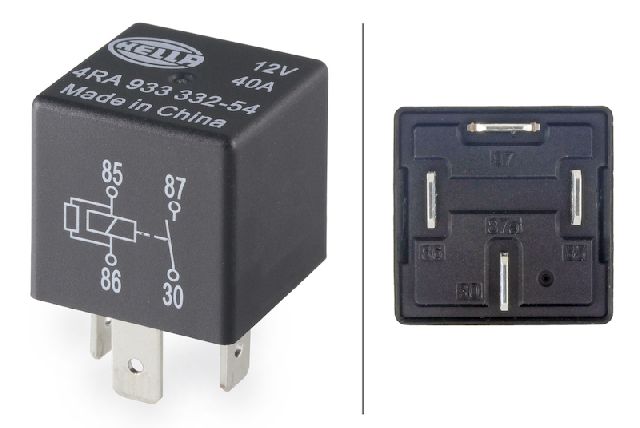
- Secondary Air Injection Pump Relay (J299)
(OEM #8D0951253A)— This relay, marked '373', controls the high current needed to run the SAI pump and can fail from electrical stress, especially if the pump is old or seizing.
Trusted brands: Bosch, Hella, Meyle, Genuine VW/Audi
OEM price range: $30-$50
Aftermarket price range: $15-$30 - 40 Amp Maxi Fuse
(OEM #N01713112)— This fuse is the primary protection for the SAI pump circuit and is designed to blow if the pump seizes and draws too much current.
Trusted brands: Littelfuse, Bussmann, Genuine VW
OEM price range: $3-$5
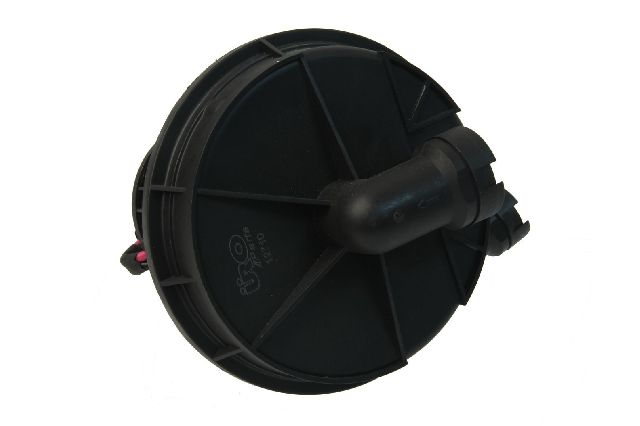
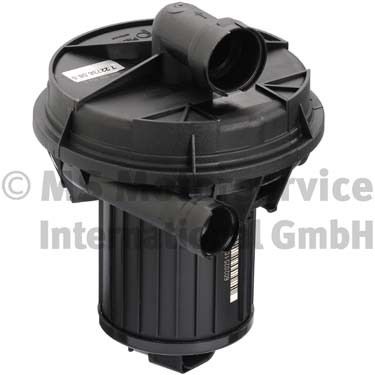
Aftermarket price range: $1-$3 - Secondary Air Injection (SAI) Pump
(OEM #06A959253B, 06A959253E)— This is the most common root cause. The pump motor fails due to age or water intrusion, leading to the electrical fault that sets P0418. The part number may have been superseded to 06A959253E.
Trusted brands: Pierburg (OEM supplier), Bosch, Dorman, URO Parts
OEM price range: $300-$400
Aftermarket price range: $90-$250
Related Codes That Often Appear With This One
- P0411 — P0411 means 'Secondary Air Injection System Incorrect Flow Detected'. If the pump isn't running at all due to the P0418 electrical fault, the system will also detect no airflow and set P0411. 🎬 See this walkthrough for diagnosing related P0411 and P0491 codes.
- P0491 — P0491 means 'Secondary Air Injection System Insufficient Flow (Bank 1)'. Similar to P0411, this code can be triggered if the pump fails to activate due to the relay circuit fault.
Platform-Specific Known Issues
- Owner Experience: Fuse and Relay are the First Check: Multiple owners on forums like PassatWorld and VWVortex confirm that for a P0418 code, the first and easiest check is always the 40A fuse and the '373' relay inside the ECU box. One user on PassatWorld noted, 'My pump seized, and it took out the 40A fuse. I replaced the fuse first, it blew instantly. Replaced the pump, then the fuse, and the code was gone.' This highlights the importance of diagnosing the root cause (the pump) before replacing circuit protectors.
Mechanic-Grade Diagnostic Values
- SAI Pump Relay (J299 / '373') Coil Resistance — expected: 50 - 200 Ohms. Failure: A reading of O.L. (Open Line) indicates a broken coil. A very low resistance reading may indicate a short within the coil.
- Voltage at SAI Pump Relay Socket (Pin 30) — expected: Battery Voltage (approx. 12V). Failure: No voltage indicates a problem with the 40A fuse or the wiring from the fuse.
Scan Tool Commands That Help
- VCDS (VAG-COM): Engine -> Output Tests -> Secondary Air Injection (AIR) pump relay — Use this bidirectional command to manually activate the SAI pump relay and pump. This allows you to listen for pump operation and verify the integrity of the control circuit from the ECU to the relay, and the power circuit to the pump.
- VCDS (VAG-COM): Engine -> Basic Settings -> Group 077 (Secondary Air System Check) — After repairs are complete, this function runs a full system test. The engine must be cold. The test will cycle the pump and valve and use the oxygen sensor to verify correct airflow. This confirms the entire system is working, not just the electrical circuit.
Wiring & Ground Locations
- J299 Relay Socket — Inside the ECU box in the plenum chamber, at the base of the driver's side windshield.. This is the central point for the P0418 code. Pin 30 is the main power feed from the 40A fuse. Pin 87 is the output to the SAI pump. Pins 85 and 86 are the control circuit from the ECU. Testing voltages here can quickly isolate the problem.
- Engine/Transmission Ground Strap — Main ground strap is typically located from the engine block or transmission housing to the vehicle's frame/chassis, often visible from underneath.. While not a direct cause of P0418, a corroded or loose main engine ground can cause a variety of electrical issues, including intermittent relay operation and unusual voltage readings across the system. It's a critical check for any widespread electrical gremlins.
- Ground Point on Cylinder Head — There is a primary ground connection point on the cylinder head.. The ECU and various sensors rely on clean ground connections. A poor ground at this location can affect the ECU's ability to properly control the SAI relay, although it would likely cause other codes and symptoms as well.
Real Owner Repair Stories
- PassatWorld Forums (2004 VW Passat 1.8T (B5.5)) — Check Engine Light with codes P0418 and P0411.
❌ Tried (didn't work) Initially thought it was just a flow issue (P0411) and checked hoses.
✅ What actually fixed it The user first checked the 40A fuse in the ECU box and found it was blown. After replacing the fuse, it blew again immediately upon starting the car. This confirmed the SAI pump was seized and drawing too much current. The final fix was replacing the seized SAI pump, then replacing the 40A fuse a final time. The P0418 and P0411 codes were cleared and did not return.
OEM Part Supersession History
06A959253B→06A959253E— Standard part evolution, likely for improved reliability or manufacturing process changes.
Heads up: The new part number 06A959253E is a direct replacement for the older 06A959253B and is fully compatible with all 2000-2005 Passat models.N/A→N/A— Note on associated parts
Heads up: When replacing the SAI pump, it is often necessary to also purchase three new rubber mounts, part number 06A133567A, as the old ones are often brittle or destroyed during removal.
Diagnostic Flowchart
Other Known Issues on This Vehicle
Issues unrelated to this code that are worth knowing about as an owner of this generation:
- 1.8T Engine Oil Sludge 🔴 High — Very common, especially on vehicles with infrequent oil changes or using non-synthetic oil. Can occur at any mileage. (Ref: VW issued an extended warranty (8 years/unlimited miles) for sludge-related repairs, but claims often required perfect service records.)
- Premature Front Control Arm Failure 🔴 High — Extremely common. Bushings and ball joints often fail starting around 40,000-60,000 miles, causing clunking noises, poor handling, and uneven tire wear. (Ref: No recall, but a well-documented chronic issue. The upper 'pinch bolt' is notoriously difficult to remove, complicating the repair.)
- Blocked Plenum Drains & Water Ingress 🟠 Medium — Common if drains under the battery and brake booster are not cleared of leaves/debris. Leads to water flooding the plenum chamber. (Ref: No TSB, but a widely known design flaw inherited from the Audi platform. Can cause wet carpets and damage to the Comfort Control Module or brake booster.)
- Failing Ignition Coils (1.8T) 🟡 Low — Common on early 1.8T models, causing misfires. Many have been replaced under service campaigns. (Ref: Yes, a service campaign (SA-28F3) was issued for potential ignition coil malfunction.)
- Faulty Central Control Module (CCM) 🟠 Medium — Commonly fails due to water damage from blocked plenum or A/C drains, causing erratic behavior of power windows, door locks, and interior lights.
Used vs. New Parts: Buying Guide for This Vehicle
When a used part is the smart pick: A used relay ('373') from a junkyard is a very cost-effective and low-risk choice for diagnosis or repair, as they are common and generally reliable. A used SAI pump can be considered if it's from a low-mileage donor and can be tested before purchase, but it carries a higher risk than a new part.
Donor-vehicle mileage cap: roughly under 80000 miles for the part to have meaningful remaining life.
What to inspect on the donor part:
- For a used SAI pump, ask the seller to briefly connect it to a 12V source. It should spin up immediately with a smooth, powerful 'whoosh' sound.
- Avoid any pump that makes grinding, rattling, or squealing noises.
- Shake the pump; if you hear water sloshing inside, the associated combi valve on the donor car was bad and the pump is likely damaged or has a very short remaining life.
- Inspect the electrical connector on the pump for any signs of melting or heat damage.
Aftermarket brands forum-validated for this vehicle:
- Pierburg: This is the original equipment manufacturer (OEM) for the SAI pump. A Pierburg-branded pump is identical to the dealer part without the VW/Audi logo and higher price.
- Bosch: A reliable Tier 1 supplier for the relay and often the pump itself.
Brands owners have reported issues with on this vehicle:
- Unbranded/White-Box Pumps: While significantly cheaper, generic, unbranded SAI pumps from online marketplaces have a high failure rate. The primary failure mode is often premature bearing failure or weak motor performance.
- Dorman: While Dorman makes a wide range of parts, some users report mixed quality on their electrical components and pumps compared to OEM or Pierburg.
Real Owner Stories
Aggregated from forums and TSBs cited above. Mileages and costs reflect what owners reported in those sources.
2003 Volkswagen Passat 1.8T
Symptoms: The Check Engine Light was on for code P0418. The 40A fuse for the SAI system was blown. The pump had seized.
What fixed it: Initially replaced just the fuse, but it blew instantly. The final repair was replacing the failed SAI pump and then replacing the 40A fuse again, which resolved the code.
Source hint: vehicle_specific_issues section, citing a user on PassatWorld
Related OBD-II Codes
Frequently Asked Questions
Where are the fuse and relay for the secondary air injection pump on my 2000-2005 Passat?
I replaced the 40A fuse for the P0418 code and it blew again instantly. What's wrong?
My car makes a loud noise like a vacuum cleaner for a minute after a cold start. Is this related to the P0418 code?
How does the SAI pump fail from water damage on this Passat?
Is this P0418 problem common on the Audi A4 from the same years?
What should I replace along with the SAI pump to prevent the new one from failing?
Helpful Videos
![How to Fix P0418 Engine Code in 3 Minutes [2 DIY Methods / Only $9.76]](https://img.youtube.com/vi/cesxIRYA6jE/mqdefault.jpg)
Used OEM Parts in Stock


New Aftermarket Parts Available



The information in this article is provided for general reference and educational purposes only. Vehicle specifications, procedures, and part compatibility can vary by production date, trim level, and region. Always consult your vehicle's factory service manual and verify part numbers before purchasing or performing repairs. Safety-critical components such as airbags, seat belts, and braking systems should be installed by a qualified professional.
- Volkswagen Passat:
- 🎬 Helpful Videos
- 🛍️ Shop This Part
- What's Unique About the 2000-2005 Volkswagen Passat
- Symptoms You May Notice
- Most Likely Causes
- Rare But Worth Checking
- Diagnosis Steps
- Parts You'll Likely Need
- Related Codes That Often Appear With This One
- Platform-Specific Known Issues
- Mechanic-Grade Diagnostic Values
- Scan Tool Commands That Help
- Wiring & Ground Locations
- Real Owner Repair Stories
- OEM Part Supersession History
- Diagnostic Flowchart
- Other Known Issues on This Vehicle
- Used vs. New Parts: Buying Guide for This Vehicle
- Real Owner Stories
- 2003 Volkswagen Passat 1.8T
- Related OBD-II Codes
- Frequently Asked Questions
- 🎟️ Get 5% Off