

OBD-II Code P0412: Secondary Air Injection Switching Valve 'A' Circuit
The Ultimate Guide to What P0412 Means, Why It Triggers, and How to Fix It for Good
- P0412 is strictly an electrical circuit code for the Secondary Air Injection switching valve, not a mechanical blockage.
- You can safely drive with this code, but the vehicle will automatically fail any state emissions test until repaired.
- Always check the SAI system's 40-50 amp fuse and control relay first, as these fail frequently and cost under $30 to replace.
- Test the switching valve connector with a multimeter for 12 volts during a cold start before spending $200+ on a replacement air pump.
- If P0412 appears alongside P0418, the fault is almost certainly a shared power source like a blown main relay, not two separate component failures.
What Does P0412 Mean?

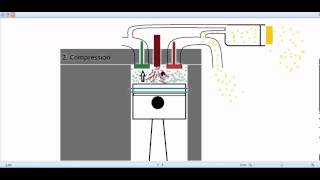
P0412 means the Powertrain Control Module (PCM) detected an electrical fault in the Secondary Air Injection (SAI) switching valve 'A' control circuit. The SAI system pumps fresh air into the exhaust manifold during cold starts to burn excess fuel and heat the catalytic converter faster. 🎬 Watch: See an animation of how the SAI system works. P0412 specifically flags an electrical problem—like an open circuit, short to ground, or short to voltage—not a mechanical blockage.
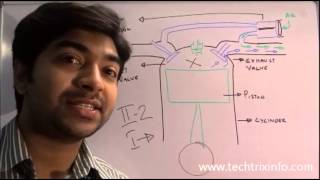
Technical definition: The official SAE/OBD-II definition is "Secondary Air Injection System Switching Valve 'A' Circuit Malfunction". This means the PCM detected that the voltage or resistance in the electrical circuit controlling the switching valve is outside the expected range. 🎬 Watch: A detailed breakdown of the secondary air induction system. On many modern vehicles, a dedicated Air Injection Control Driver (AID) module manages the high current required by the system and reports circuit faults directly to the PCM.
Can I Drive With P0412?
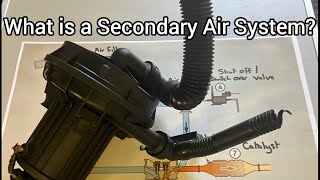
Yes, But With Caution. Yes, the vehicle is safe to drive. The Secondary Air Injection (SAI) system only operates for 30-90 seconds during a cold start and does not affect primary engine performance. 🎬 Watch: A quick overview of what the secondary air system does. However, ignoring the code causes an automatic emissions test failure. Prolonged driving (thousands of miles) delays catalytic converter warm-up, leading to carbon fouling and premature converter failure, a repair costing $800 to $2,500.
Common Causes

- Failed SAI System Relay or Blown Fuse (Very Common) — The SAI system relies on a high-amperage fuse and a relay to manage the electrical load. A failed relay or a blown fuse cuts power to the circuit, immediately triggering a P0412 code. This is the most critical first check.
- Faulty Secondary Air Injection (SAI) Switching Valve (Very Common) — The solenoid coil inside the switching valve is a frequent failure point. It develops an internal short or open circuit, preventing actuation when commanded by the PCM.
- Wiring Harness or Connector Issues (Including Rodent Damage) (Common) — The wiring harness leading to the valve is exposed to extreme heat and vibration, causing frayed wires, chafed insulation, or corroded connectors. Rodents also frequently chew through soy-based wiring insulation under the intake manifold.
- Clogged or Seized SAI Check Valve (Less Common) — A one-way check valve prevents hot exhaust gases from flowing backward. If it sticks open, moisture and exhaust soot enter the air pump, causing pump seizure, a blown fuse, and ultimately an electrical code like P0412.
- Vacuum Hose Leaks (Less Common) — On older systems using vacuum to actuate the switching valve, a cracked or disconnected vacuum hose prevents the valve from opening, indirectly leading to a fault code.
- Faulty SAI Pressure Sensor (Rare) — Some systems use a pressure sensor to confirm airflow. While a faulty sensor usually triggers a P0411 (Incorrect Flow) code, implausible readings sometimes contribute to setting a circuit code.
- Powertrain Control Module (PCM) Failure (Very Rare) — The internal driver circuit within the PCM that controls the switching valve rarely fails. Consider this only after exhaustively testing all wiring and components.
Symptoms

- Check Engine Light is On — This is the most common and often the only symptom. The light illuminates, and code P0412 is stored in the PCM.
- Failed Emissions Test — A vehicle with an active P0412 code automatically fails any state emissions or smog inspection.
- Noise from Engine Bay on Cold Start — You may hear the air pump running when it shouldn't, not running at all, or making a loud whining/grinding noise due to bearing failure.
- Rough Idle on Cold Starts — For the first minute after a cold start, the engine idles roughly or hesitates because the expected extra air is missing from the cold-start fuel mixture.
- Burning Smell from Engine Bay — A shorted circuit in the valve wiring or a seized air pump motor causes components to overheat, creating a distinct electrical or melting plastic smell.
Diagnostic Flowchart
Tap your situation to follow the diagnostic path that matches what you're seeing on this code.
Common Fixes & Costs
- Replace SAI System Fuse or Relay — Parts: $10-$30, Labor: $25-$50, ~0.2 hr book time (DIY)
- Replace Secondary Air Injection Switching Valve
— Parts: $50-$300, Labor: $100-$250, ~1.2 hr book time
(DIY)
Chevrolet Trailblazer (4.2L): OEM ACDelco 214-2151 (Alt: {"brand": "Dorman", "part_number": "911-150", "price_comparison": "Slightly less expensive than OEM."})
BMW 3-Series (E46): OEM BMW 11727553063 (Alt: {"brand": "Pierburg (OEM Supplier)", "part_number": "7.00415.04.0", "price_comparison": "Identical to OEM, often at a lo)
Volkswagen Jetta (2.0T/2.5L): OEM VW 06J131097D / 07K131351C (Alt: {"brand": "Pierburg (OEM Supplier)", "part_number": "7.22738.12.0", "price_comparison": "Often less expensive than deale) - Repair Wiring or Connector — Parts: $10-$50, Labor: $150-$250, ~1.5 hr book time (Intermediate)
- Replace Secondary Air Injection Pump
— Parts: $150-$500, Labor: $150-$250, ~1.5 hr book time
(Intermediate)
Chevrolet Trailblazer (4.2L): OEM ACDelco 215-629 (Alt: {"brand": "Dorman", "part_number": "306-012", "price_comparison": "Significantly less expensive than OEM."})
BMW 3-Series (E46): OEM BMW 11727553056 (Alt: {"brand": "Pierburg (OEM Supplier)", "part_number": "7.21852.24.0", "price_comparison": "Identical to OEM, often at a lo) - Replace Secondary Air Injection Check Valve — Parts: $40-$200, Labor: $150-$300, ~1.8 hr book time (Professional)
DIY vs Professional
- Replace SAI System Fuse or Relay — Beginner:
Tools: Fuse puller, owner's manual. - Replace Secondary Air Injection Switching Valve — Beginner:
Tools: Basic socket/wrench set, flashlight. May require intake manifold removal tools for some vehicles. - Repair Wiring or Connector — Beginner:
Tools: Digital multimeter, wire strippers, wire cutters, heat shrink tubing, soldering iron or quality crimp connectors. - Replace Secondary Air Injection Pump — Beginner:
Tools: Socket/wrench set, hose clamp pliers, jack and jack stands.
Used vs. New Parts: Buying Guide
When a used part is worth it: For expensive, hard-to-access components like the SAI pump or valve assembly on some models (e.g., Toyota V8s), a used part from a low-mileage vehicle offers significant savings. It is never sensible for relays or fuses.
Donor-vehicle mileage cap: roughly under 70000 miles for the part to have meaningful remaining life.
Donor quality checklist:
- Verify the donor vehicle was not scrapped for emissions-related failures.
- Check for signs of water intrusion or corrosion on the part itself.
- Match the OEM part number exactly; slight variations have different internal resistance.
Decision logic:
- If The part is a simple relay or fuse. → Always buy new; the cost is minimal and reliability is key.
- If The part is an electronic valve or pump and the new OEM part costs over $500. → A used OEM part from a reputable salvage yard with a warranty is a reasonable choice.
- If The part is known for high failure rates (e.g., VW/Audi pumps due to water ingestion). → Favor a new OEM or high-quality aftermarket part with design improvements over a used original.
Warranty tradeoff: Used parts typically offer a 30-90 day warranty covering only the part. New aftermarket parts offer 1-year to limited lifetime warranties. New OEM parts carry a 1-2 year warranty.
Worst-case if a used part fails: $200-$800 if a used electronic part fails after installation, requiring repeat labor costs.
What Happens If You Wait — Timeline
- 0-1 month: Check Engine Light is on with code P0412. The SAI system does not activate on cold starts. No other symptoms are noticeable. (MPG impact: 0%% · Added cost: $0)
- 1-6 months: The vehicle automatically fails any emissions test. Cold-start emissions are higher than normal. A slight drop in fuel economy (1-3%) occurs. The catalytic converter takes longer to reach operating temperature. (MPG impact: 1-3%% · Added cost: $30-$60 in wasted fuel and re-test fees)
- 6-18 months: Repeated slow warm-up cycles reduce the efficiency of the catalytic converter through carbon 'fouling'. Its ability to process emissions degrades. (MPG impact: 3-5%% · Added cost: $50-$150 in wasted fuel)
- 18+ months: Prolonged exposure to rich, un-catalyzed exhaust during warm-up leads to permanent damage to the catalytic converter's substrate, requiring replacement. (MPG impact: 5-15%% · Added cost: $800-$2500 for catalytic converter replacement.)
Cost of Not Fixing It
- Immediate: Automatic failure of any state emissions or smog test. (Added cost: Retest fees ($30-$60))
- 1-12 months: Increased cold-start emissions and a potential minor drop in fuel economy (under 5%). (Added cost: Negligible)
- 12+ months: Delayed catalytic converter warm-up leads to carbon fouling and premature failure of the converter. (Added cost: $800-$2500)
Diagnosis Steps

- Scan for Codes and Review Freeze Frame Data
Use an OBD-II scanner to confirm P0412 is present and check for related codes (e.g., P0410, P0411, P0418). Analyze freeze frame data to confirm the code set during a cold start (coolant temp below 104°F).
Tools: OBD-II Scanner (Beginner) - Inspect Fuses and Relays
Locate the fuse and relay for the Secondary Air Injection system in the owner's manual. Check for a blown fuse. Swap the SAI relay with an identical one (e.g., the horn relay) to quickly rule out a faulty relay.
Tools: Owner's Manual, Fuse Puller (Beginner) - Visual Inspection of System
Inspect the entire SAI system. Look for damaged wiring, corroded connectors at the switching valve, and cracked vacuum lines. Pay close attention to wiring near hot exhaust components.
Tools: Flashlight, Inspection Mirror (Beginner) - Test the Switching Valve Circuit for Power and Ground
Disconnect the valve. Use a multimeter to check the harness connector. One pin must have battery voltage (~12V) when the system is commanded on (during the first 30-90 seconds of a cold start). The other pin is the control wire, pulled to ground (~0V) by the PCM. No voltage indicates a fuse/relay issue; no ground indicates a wiring/PCM issue.
Tools: Digital Multimeter, Vehicle Wiring Diagram (Intermediate) - Test the Switching Valve Solenoid
With the valve disconnected, measure the resistance across its terminals using a multimeter set to Ohms. A typical range is 5-40 ohms (check service manual for exact specs). An infinite reading (OL) means an open circuit; near-zero ohms means a shorted coil. Both require valve replacement.
Tools: Digital Multimeter, Service Manual (Intermediate) - Command the System On with a Bi-Directional Scanner
Use a bi-directional scan tool to command the SAI pump and switching valve on and off. Listen for the valve to 'click'. If it clicks, the electrical circuit is good. If the pump runs but the valve doesn't click, the valve is the primary suspect.
Tools: Bi-directional Scan Tool (Advanced) - [PRO TIP] Perform a Voltage Drop Test
To find hidden high resistance, perform a voltage drop test. Connect the positive multimeter lead to the battery positive and the negative lead to the power wire at the valve connector. Command the system on. A reading over 0.5 volts indicates excessive resistance in the power-side wiring.
Tools: Digital Multimeter (Advanced) - [PRO TIP] Check Live Data PIDs
Monitor the O2 sensor voltage during a cold start with the SAI system activated. The O2 sensor voltage must drop lean (below 0.45V) as fresh air is injected. If the O2 sensor doesn't react, it confirms a system failure.
Tools: Advanced Bi-directional Scan Tool (Advanced) - [PRO TIP] Analyze the Circuit with a Lab Scope
For intermittent issues, connect a lab scope to the command wire of the switching valve. When activated, you should see a clean square wave pattern dropping from battery voltage to near zero. A noisy or absent waveform points to a PCM driver or AID module problem.
Tools: Automotive Oscilloscope (Lab Scope) (Advanced)
When This Code Triggers (Freeze-Frame Conditions)
- Engine Coolant Temp: 41-104°F (5-40°C) (Cold start; engine has been off for 7+ hours.)
- Time Since Engine Start: 0-90 seconds (Immediately after starting the engine.)
- Engine RPM: 800-1500 RPM (Engine at idle or high idle.)
- Vehicle Speed: 0 mph (Vehicle is stationary.)
Related Codes
- P0411 — Indicates 'Incorrect Flow Detected'. P0412 is an electrical code, while P0411 is a performance/flow code. An electrical fault (P0412) causes a flow problem (P0411). Fix P0412 first.
- P0418 — Points to a fault in the SAI pump relay circuit. When P0412 and P0418 appear together, it strongly suggests a problem with a shared power source or a main relay that controls both.
- P0410 — A general 'Secondary Air Injection System Malfunction' code. P0410 means the system isn't working, but doesn't specify why. P0412 gives a precise starting point: the valve's electrical circuit.
- P0491 / P0492 — Indicate 'Insufficient Flow' for Bank 1 and Bank 2. Unlike the electrical nature of P0412, these codes point to a mechanical blockage, such as carbon buildup in the cylinder head ports or a weak pump.
Climate & Environmental Factors
- High Humidity / Heavy Rain: On vehicles where the SAI pump's air intake is mounted low (common in VW/Audi models), driving through deep puddles causes the pump to ingest water directly, destroying the motor and causing electrical faults.
- Cold Climates: If the one-way check valve fails, hot, moist exhaust gas flows backward into the cold SAI pump. In cold climates, this condensed moisture freezes, seizing the pump motor and leading to failure on the next cold start.
- Short Trip Driving: Vehicles driven only for short trips do not get hot enough to evaporate condensation in the exhaust and SAI system. Accumulated moisture accelerates corrosion of the check valve and pump internals.
How to Talk to a Mechanic About This Code
Say this: "I have an OBD-II code P0412 for the Secondary Air Injection switching valve circuit. I'd like to schedule a diagnostic appointment. Please start by testing the fuse, relay, and wiring circuit for the valve before recommending any part replacements."
This signals that you understand P0412 is an electrical code, not a mechanical one. It directs the technician to perform a proper electrical diagnosis first, preventing unnecessary replacement of an expensive air pump when the actual problem is a cheap relay.
Avoid saying:
- 'Just fix whatever's wrong'
- 'My check engine light is on, can you look at it?' (too vague — invites upsell)
- 'I think I need a new air pump' (don't diagnose for the mechanic)
Questions to ask before authorizing the repair:
- Did you test for power and ground at the switching valve connector? What were the voltage readings?
- What was the resistance measurement (in ohms) across the valve's solenoid? Does it meet the manufacturer's specification?
- Did you confirm the fuse is good and the relay clicks when commanded on?
- What is your warranty on both the parts and the labor for this specific repair?
Where to Take It: Dealer vs Independent vs Chain
- Dealer:
Best for: Vehicles still under an emissions warranty., Vehicles with known, complex issues covered by Technical Service Bulletins (TSBs) or warranty extensions (e.g., Toyota Tundra, VW/Audi)., Complex electrical issues where manufacturer-specific diagnostic tools are essential.
Downsides: Significantly higher labor rates, often 1.5-2x that of an independent shop., May recommend replacing an entire assembly when only a smaller component has failed. (Typical cost: +50% vs. baseline) - Independent Shop:
Best fit for most situations. A reputable independent shop with good electrical diagnostic skills offers the best balance of expertise and value for a P0412 code.
Best for: Most out-of-warranty vehicles., Straightforward electrical diagnosis and repairs., Building a long-term relationship with a mechanic you trust.
Downsides: Quality and expertise vary widely; it's crucial to find a shop with ASE-certified technicians skilled in electrical diagnostics., May not have the latest manufacturer-specific tools for very new models. (Typical cost: +0% vs. baseline) - Chain Shop:
Avoid for this code. Diagnosing an electrical circuit fault is often beyond their core expertise, increasing the risk of a misdiagnosis.
Best for: Simple, high-volume jobs like oil changes, tires, and battery replacements.
Downsides: Technician skill varies dramatically, and they often lack the in-depth electrical diagnostic training needed for a circuit code like P0412., Business models create pressure for upselling, leading to recommendations for unnecessary part replacements. (Typical cost: -10% vs. baseline)
When to Walk Away From the Repair
If the estimated repair cost exceeds 40-50% of the car's private-party value, you should seriously consider not doing the repair. Stop DIYing and consult a professional if you cannot locate the electrical short after testing the relay and valve.
- Car worth $4000, fix is $350: Fix it. This repair is well below the threshold and is a good investment to keep the car running and pass emissions.
- Car worth $8000, fix is $2500: Borderline. This is a significant cost. Get a second opinion, especially if the repair involves extensive labor like on a Toyota Tundra.
- Car worth $3000, fix is $1800: Walk away. The repair cost is over 50% of the car's value. It is not a sound financial decision.
What Scan Tool You Need for This Code

Minimum: A scanner that can read and clear codes, and show live data streams. For P0412, a basic code reader is often insufficient.
A simple $20 code reader only tells you the code exists. It cannot help you test the circuit. To diagnose P0412 properly, you need to see live data (like O2 sensor voltage) and ideally command the system to turn on and off (bi-directional control) to verify where the electrical fault lies.
Budget: BlueDriver Pro (~$99) — Connects to your smartphone and provides code reading, freeze frame data, and live data graphing. It helps you observe the O2 sensor reaction during a cold start, but lacks bi-directional control.
Mid-range: Foxwell NT510 Elite (~$180) — Offers full bi-directional control, allowing you to command the SAI pump and switching valve to activate on demand. This is the most effective feature for diagnosing a P0412 circuit fault without just swapping parts.
Professional: Autel MaxiCOM MK808BT / MK906BT (~$500-1200) — Provides full professional-level diagnostics, including comprehensive bi-directional control, advanced ECU coding, and detailed live data graphing. These tools offer dealership-level capabilities.
Rent vs buy: For P0412, free rental scanners from auto parts stores are usually too basic. They read the code but won't help diagnose the circuit. If you plan to do more than one DIY repair per year, buying a mid-range scanner with bi-directional control is a worthwhile investment.
How to Clear the Code After You Fix It
- Use an OBD-II scan tool to clear the P0412 code.
- Perform the specific Secondary Air Injection drive cycle.
- Check readiness monitors with the scan tool to confirm the 'Secondary Air System' monitor is 'Ready' or 'Complete'.
Drive cycle (~20 minutes): Start the engine from cold (sit overnight) and let it idle for 2-5 minutes to run the SAI self-test. Then, drive for 15 minutes with a mix of city and highway speeds (including steady cruising between 45-65 mph) to allow other related monitors to run.
Readiness monitors affected: Secondary Air System, Catalyst, Oxygen Sensor
Before emissions retest: drive at least 50 miles to fully set monitors.
Watch out for:
- Disconnecting the battery clears the code but resets all readiness monitors, requiring a full drive cycle.
- Not starting with a truly cold engine prevents the SAI monitor from running.
- The code returns immediately if the underlying electrical fault was not repaired.
Will This Fail Emissions / State Inspection?
Yes — this code typically fails an OBD-II emissions inspection.
- California: An active P0412 code is an automatic test failure. CARB requires the Secondary Air System readiness monitor to be set to 'Ready' to pass the OBD-II portion of the smog check.
- New York: The NYS DMV inspection includes an OBD-II scan. An illuminated Check Engine Light and an active P0412 code result in an emissions test failure.
- Texas: In the 17 counties requiring emissions testing, a vehicle with code P0412 fails the OBD-II scan portion of the annual safety inspection.
Most Commonly Affected Vehicles
- Chevrolet / GMC Trailblazer, Silverado, Sierra (2004-2013) — Commonly caused by a failed SAI relay (#55 in the under-hood fuse box on Trailblazers) or a bad check valve allowing moisture into the pump, which seizes and blows the fuse. Often presents with P0418 simultaneously.
- BMW 3-Series (E46), 5-Series (E39), X3/X5 (1998-2006) — A brittle plastic vacuum hose or a failed relay are common culprits. The main pump relay, often a salmon-colored relay located in the E-box or behind the glove box, is a frequent failure point.
- Volkswagen / Audi Golf, Jetta, Passat, A4, A6, Q7 (1999-2012) — Notorious for air pumps failing due to water ingestion. The pump is mounted low in the fender. TSBs were issued to install an updated pump with a relocated intake hose to prevent repeat failures.
- Toyota Tundra, Sequoia (2005-2012) — A costly issue on V8 engines. Switching valves are located under the intake manifold, making replacement labor-intensive. Toyota issued Warranty Enhancement Program ZE7 extending coverage to 10 years/150,000 miles for this issue.
- Subaru Impreza, Forester, Legacy, Outback (2006-2012) — The air switching valves (solenoids) frequently fail by sticking. Subaru issued a warranty extension for these valves on many models (e.g., WQW-47). They are usually replaced as a pair.
- Honda Accord (V6) (2003-2012) — P0412 on V6 Accords frequently points to a faulty switching valve or corrosion in its electrical connector. Always check the fuse and wiring before condemning the valve.
- Mercedes-Benz C-Class (W203), E-Class (W211) (1999-2007) — Issues are often traced to a malfunctioning check valve allowing moisture into the system or require an ECM software update to correct overly sensitive fault triggers.
- Ford F-150 (5.4L), Focus (2004-2018) — On the 5.4L V8, the PCM's output driver for the relay is a known failure point. On Focus models, corrosion in the electrical connector is more common.
Manufacturer-Specific Notes
- General Motors (Chevrolet/GMC): On Trailblazer/Envoy platforms, always suspect Relay #55 in the under-hood fuse box when P0412 and/or P0418 are present. It is a frequent failure and an easy first check.
- Volkswagen/Audi: Water intrusion is the number one killer of SAI pumps. If replacing the pump, it is critical to also install the updated, relocated air intake snorkel (per TSB) to prevent a repeat failure.
- Toyota: Due to extreme labor costs for replacing valves under the intake manifold on V8s, 'bypass kits' are a popular but legally gray solution. Toyota also issued Warranty Enhancement Program ZE7 extending coverage for SAI pumps and valves to 10 years/150,000 miles.
- Subaru: The air switching valves are known to fail by sticking and are often sold as a complete assembly. Check with a dealer for open warranty extensions on your VIN (such as campaign WQW-47).
Real Owner Stories
2008 Chevrolet Tahoe at ~100K miles
Check Engine Light came on with P0412, accompanied by a rough idle on cold starts.
What they tried:
- Owner used a bi-directional scanner to test the system.
- The scan tool revealed erratic voltage at the switching valve connector.
Outcome: A visual inspection found a corroded wiring connector. The owner cleaned the connector and re-seated it, resolving the voltage issue. The fix cost under $10 and took 20 minutes, avoiding a $400 dealer bill.
Lesson: P0412 is a circuit code. Before replacing parts, always inspect the wiring and connectors for corrosion or damage, as this is a common and cheap-to-fix failure point.
2008 Chevrolet Trailblazer with P0412 & P0418
Check Engine Light illuminated, and a scanner pulled P0412 (valve circuit) and P0418 (pump relay circuit).
What they tried:
- Owner was unsure where to start due to two codes pointing to different components.
Outcome: A mechanic advised that having both codes appear simultaneously points to a single faulty component: the main SAI relay. Replacing Relay #55 in the under-hood fuse box cleared both codes.
Lesson: When P0412 appears with P0418, the problem is very likely a shared relay or fuse. Always start with the cheapest component that controls both circuits.
2005 GMC Envoy with recurring P0410/P0412 codes
Owner kept getting secondary air injection codes despite the pump seeming to work intermittently.
What they tried:
- The owner noted the pump wasn't as loud as it used to be.
- He replaced the SAI pump and the relay as a preventative measure.
Outcome: After replacing the pump and relay, the codes cleared. The owner also inspected the check valve to ensure it wasn't stuck. The new pump was audibly healthier.
Lesson: If a pump sounds weak, it may be drawing too much power, stressing the circuit and triggering electrical codes like P0412. Replacing a failing pump can be the correct fix for a circuit code.
Toyota Tundra with P0412
Check Engine Light on with P0412. The owner discovered the repair is notoriously expensive at the dealership, quoted between $2,000 - $3,000.
What they tried:
- The high cost is due to the switching valves being located under the intake manifold.
- The owner considered cheaper aftermarket parts but was warned they are failure-prone.
Outcome: The owner opted for a third-party 'Bypass Kit'. These kits trick the ECU into thinking the SAI system is functioning correctly, turning off the Check Engine Light.
Lesson: For vehicles with extremely expensive SAI repairs like the Toyota Tundra, bypass kits are a popular alternative. However, this is not a true repair and will not pass a visual emissions inspection.
How to Prevent This Code From Triggering
- Inspect and Clean the SAI Check Valve (Every 60,000 miles) — The one-way check valve prevents hot, moist exhaust from flowing back into the SAI pump. If it sticks open, condensation destroys the pump motor. A finger swipe inside the valve's inlet detects soot, indicating a leak.
- Periodically Inspect SAI System Hoses and Wiring (Every 30,000 miles or during oil changes) — Visually check for cracked vacuum lines, brittle plastic hoses, and wiring melted from proximity to exhaust components. This prevents circuit faults before they happen.
- Clean Electrical Connectors (When servicing the system) — Apply a small amount of dielectric grease to connector pins. This prevents moisture intrusion and corrosion, a primary cause of electrical circuit codes like P0412.
- For VW/Audi Owners: Avoid Deep Puddles (During rainy weather) — On many VW and Audi models, the SAI pump's air intake is located low in the front fender. Driving through deep water causes the pump to ingest water, leading to immediate seizure.
- Ensure Engine Reaches Operating Temperature (Weekly) — Frequent short trips lead to a build-up of condensation in the exhaust and SAI system. Drive the vehicle for at least 20-30 minutes weekly to burn off this moisture.
Frequently Asked Questions
What is the most common misdiagnosis for P0412?
The most common mistake is immediately replacing the expensive air pump. P0412 is a circuit code, meaning the fault is almost always electrical, not mechanical. Always test the fuses, relays, and wiring with a multimeter before condemning major components.
Will a P0412 code clear itself?
No, P0412 will not clear on its own. It indicates a hard electrical fault detected by the PCM. The Check Engine Light remains illuminated until the underlying problem is repaired and the code is cleared with a scan tool.
I replaced the switching valve, but the P0412 code came back. What now?
If the code returns, the valve was not the root cause. Re-inspect the wiring harness for intermittent shorts and verify the SAI relay functions correctly. Also, check the air pump; a failing pump draws excessive current, blowing the fuse or damaging the relay.
Can I use a 'bypass kit' to fix P0412 and will it pass emissions?
Bypass kits trick the ECU to turn off the Check Engine Light, but their legality and emissions compliance vary by state. If the test is only an OBD-II plug-in check, it might pass. If the test includes a visual inspection or functional test, it will fail.
Will a P0412 code cause my car to fail an emissions test?
Yes. An illuminated Check Engine Light and an active emissions-related trouble code like P0412 result in an automatic failure for any state emissions or smog inspection program.
What's the difference between P0412 and P0411?
P0412 is an electrical circuit code for the switching valve, while P0411 is a performance code indicating incorrect airflow. An electrical failure (P0412) prevents the valve from opening, causing the flow problem (P0411). Always fix the electrical code first.
Is it safe to drive my car with the P0412 code?
Yes, it is safe to drive. The SAI system strictly controls emissions during cold starts. It does not impact the engine's primary function, reliability, or safety once the engine reaches operating temperature.
Does the P0412 code affect diesel vehicles?
No, this code is exclusive to gasoline-powered vehicles. Diesel engines utilize different emissions systems, such as EGR, DPF, and SCR, and do not use Secondary Air Injection.
Key Takeaways
- P0412 is strictly an electrical circuit code for the Secondary Air Injection switching valve, not a mechanical blockage.
- You can safely drive with this code, but the vehicle will automatically fail any state emissions test until repaired.
- Always check the SAI system's 40-50 amp fuse and control relay first, as these fail frequently and cost under $30 to replace.
- Test the switching valve connector with a multimeter for 12 volts during a cold start before spending $200+ on a replacement air pump.
- If P0412 appears alongside P0418, the fault is almost certainly a shared power source like a blown main relay, not two separate component failures.
Helpful Videos

The information in this article is provided for general reference and educational purposes only. Vehicle specifications, procedures, and part compatibility can vary by production date, trim level, and region. Always consult your vehicle's factory service manual and verify part numbers before purchasing or performing repairs. Safety-critical components such as airbags, seat belts, and braking systems should be installed by a qualified professional.
- 🎬 Helpful Videos
- What Does P0412 Mean?
- Can I Drive With P0412?
- Common Causes
- Symptoms
- Diagnostic Flowchart
- Common Fixes & Costs
- DIY vs Professional
- Used vs. New Parts: Buying Guide
- What Happens If You Wait — Timeline
- Cost of Not Fixing It
- Diagnosis Steps
- When This Code Triggers (Freeze-Frame Conditions)
- Related Codes
- Climate & Environmental Factors
- How to Talk to a Mechanic About This Code
- Where to Take It: Dealer vs Independent vs Chain
- When to Walk Away From the Repair
- What Scan Tool You Need for This Code
- How to Clear the Code After You Fix It
- Will This Fail Emissions / State Inspection?
- Most Commonly Affected Vehicles
- Manufacturer-Specific Notes
- Real Owner Stories
- 2008 Chevrolet Tahoe at ~100K miles
- 2008 Chevrolet Trailblazer with P0412 & P0418
- 2005 GMC Envoy with recurring P0410/P0412 codes
- Toyota Tundra with P0412
- How to Prevent This Code From Triggering
- Frequently Asked Questions
- What is the most common misdiagnosis for P0412?
- Will a P0412 code clear itself?
- I replaced the switching valve, but the P0412 code came back. What now?
- Can I use a 'bypass kit' to fix P0412 and will it pass emissions?
- Will a P0412 code cause my car to fail an emissions test?
- What's the difference between P0412 and P0411?
- Is it safe to drive my car with the P0412 code?
- Does the P0412 code affect diesel vehicles?
- Key Takeaways
- 🎟️ Get 5% Off