

P0412 on 2000-2007 Subaru Impreza: Secondary Air Valve Circuit Malfunction Causes and Fixes
For a 2000-2007 Subaru Impreza, code P0412 almost always points to an electrical problem with the secondary air injection (SAI) system. The most likely culprits are a failed SAI switching valve solenoid or a faulty power relay. Start by checking the relay and fuses before replacing the more expensive valve. This is a very common issue on Subarus of this era, and many owners opt to delete the system entirely if local emissions laws permit.
- P0412 is an electrical circuit code for the secondary air switching valve; it is not a mechanical or air flow code.
- Do not confuse the Secondary Air Injection (SAI) valve with the Idle Air Control (IAC) valve; they serve completely different functions.
- Always check the simple, cheap parts first: start with the fuse and the relay before assuming the more expensive valve has failed.
- The vehicle is safe to drive with this code, but the Check Engine Light will remain on and you will not pass an emissions inspection.
- If you find moisture or rust in the air pump or hoses, the switching valve has likely failed mechanically and allowed exhaust to backflow, requiring valve replacement to prevent repeat failure of the pump.
What's Unique About the 2000-2007 Subaru Impreza
The specified 2000-2007 year range covers the second-generation (GD/GG) Impreza. However, the 2.2L EJ22 engine was only available in the 2000-2001 models. Later models (2002-2007) used the 2.5L EJ25 engine, which has a very similar and notoriously failure-prone secondary air injection system. The causes and diagnostic steps are nearly identical for both engines within this generation. On these Subarus, the system uses one or two switching valves (solenoids) that are susceptible to both electrical failure (causing P0412) and mechanical seizure from moisture. The entire system is often seen as problematic, leading many owners in areas without emissions testing to purchase 'delete kits' that block off the ports on the cylinder heads and reprogram the ECU to disable the system checks.
Symptoms You May Notice
- Check Engine Light is on
- Flashing cruise control light (a common Subaru feature when any CEL is present)
- Inability to use cruise control
- Audible noise from the air pump running continuously if the relay is stuck on
- Slightly rough idle during the first minute of a cold start
- Replacing the Idle Air Control (IAC) Valve. The IAC valve manages engine idle speed and is a completely different part from the Secondary Air Injection switching valve, which is an emissions component. Replacing the IAC valve will not fix a P0412 code.
- Replacing the Secondary Air Pump. P0412 is an electrical circuit code for the *valve*, not the pump. While a seized pump can blow a fuse, the pump itself does not cause a valve circuit code unless it creates a wiring issue. Codes like P0410 or P2444 are more directly related to pump or flow issues.
Most Likely Causes
- Failed Secondary Air Injection Switching Valve 🔴 High Probability The solenoid coil inside the valve can burn out, creating an open circuit. These valves are also exposed to moisture from the exhaust, which can lead to corrosion and electrical failure over time. They are a known high-failure item across many Subaru models from this era.
How to confirm: After confirming power and ground are present at the valve's electrical connector during a cold start, unplug it and measure the resistance across the two pins of the valve itself with a multimeter. An infinite resistance reading (OL) means the coil is open and the valve is bad. A healthy solenoid should have a resistance, typically in the range of 10-50 Ohms (consult a service manual for the exact spec, but any reading in this range suggests the coil is intact).
Typical fix: Replace the faulty secondary air switching valve. On some models, there are two valves; it's often recommended to replace them in pairs as the second is likely to fail soon after the first.
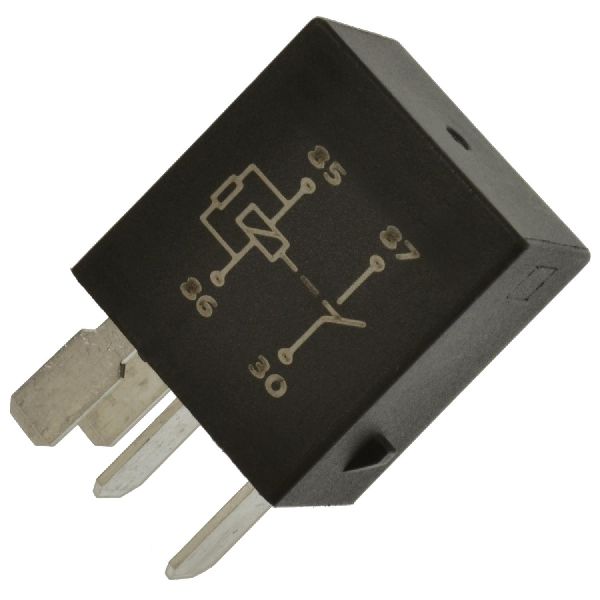
Est. part cost: $150-$250 - Failed Secondary Air Injection Relay 🟡 Medium Probability Relays are mechanical switches that wear out over time. The contacts can burn, or the internal coil can fail, preventing power from being sent to the switching valve circuit. It's a common failure point for high-current systems.
How to confirm: Locate the SAI relay in the engine bay fuse box. On a 2006 Impreza, for example, the relay is in the main fuse box by the battery. The easiest test is to swap it with an identical relay from a non-critical system (like the horn). If the horn works with the SAI relay but the problem persists, the relay is likely good. You can also test it with a multimeter and a 12V power source.
Typical fix: Replace the relay with a new one. This is an inexpensive and easy first step in diagnosis.
Est. part cost: $15-$40 - Damaged Wiring or Corroded Connector 🟡 Medium Probability
How to confirm: Visually inspect the wiring harness leading to the switching valve(s) for any signs of cracking, melting, or rodent damage. Unplug the connector and check the terminals for green or white corrosion, or bent/broken pins. Use a multimeter to check for continuity from the relay to the valve connector and check for a short to ground.
Typical fix: Repair the broken section of wire or clean the connector terminals with a contact cleaner. If the connector is severely damaged, it may need to be replaced with a new pigtail.
Est. part cost: $5-$30 - Blown SAI Fuse ⚪ Low Probability
How to confirm: Locate the main fuse and relay box in the engine compartment. Check the diagram on the cover to find the fuse for the Secondary Air Injection system (often labeled 'AIR PUMP' or similar, and is typically a high-amperage fuse of 40-60A). Visually inspect the fuse to see if the internal wire is broken. A blown fuse often indicates a larger problem, like a seized air pump drawing too much current, which can also damage the relay or wiring.
Typical fix: Replace the blown fuse. If it blows again immediately, you must diagnose the underlying short circuit or failed component (likely the air pump itself or a shorted valve solenoid).
Est. part cost: $1-$5
Rare But Worth Checking
- Faulty Powertrain Control Module (PCM/ECU): This is extremely rare. The PCM's internal driver for the valve circuit can fail, but all other potential causes should be exhaustively ruled out before considering PCM replacement.
Diagnosis Steps
- Check the Fuse: Locate the main fuse box in the engine bay. Find the fuse for the Secondary Air Injection system (may be a large 40-60A fuse labeled 'SBF No. 5' or 'AIR PUMP') and verify it is not blown.
- Inspect the Relay: In the same fuse box, locate the SAI relay. Swap it with an identical relay (e.g., horn relay) to quickly test if the relay is the issue. If the code clears and doesn't return, the relay was the fault.
- Visual Inspection: Thoroughly inspect the wiring harness and connector going to the SAI switching valve(s). Look for any obvious signs of damage, corrosion, or loose connections. The valves are typically located on the engine, near the intake manifold, often bolted to the back of the cylinder heads.
- Test for Power: Have a helper start the engine from cold. The SAI system only runs for about a minute. During this time, use a multimeter set to DC Volts to check for 12V at the valve's electrical connector. If you get 12V, the relay and wiring from the relay are likely good.
- Test the Valve Solenoid: If power is reaching the connector, the valve itself is the next suspect. Disconnect the battery. Unplug the connector from the valve and set your multimeter to measure resistance (Ohms). Touch the probes to the two pins on the valve. A healthy solenoid should have a specific resistance (typically between 10-50 Ohms). If you read infinite resistance (OL - Open Loop) or zero resistance (short circuit), the valve's internal circuit has failed and the valve must be replaced.
- Trace the Circuit: If you did not get 12V at the connector in step 4, you will need to trace the wiring from the relay to the valve to find the break or short in the circuit. Check for continuity on the power wire and check the ground wire for a good connection to the chassis.
Parts You'll Likely Need
- Secondary Air Injection Switching Valve
(OEM #14828AA060 (later models, check VIN), 14828AA030 (earlier models, check VIN))— This is the component directly monitored by the P0412 code. The internal solenoid coil is a common failure point, causing the circuit malfunction.
Trusted brands: Subaru (Genuine), Dorman
OEM price range: $200-$300
Aftermarket price range: $150-$220 - Secondary Air Injection Relay
(OEM #25232AA090)— This relay controls power to the entire valve circuit and is a frequent point of failure due to mechanical wear. It's an inexpensive and easy part to replace during diagnosis.
Trusted brands: Denso (OEM supplier), Standard Motor Products, Duralast
OEM price range: $25-$50
Aftermarket price range: $15-$30
Related Codes That Often Appear With This One
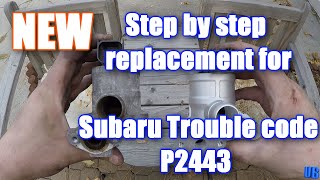
- P0410 — P0410 is a general SAI system flow malfunction. 🎬 Watch: Troubleshooting common Subaru secondary air system codes like P2443. An electrical issue with the valve (P0412) can prevent the system from operating, leading to the ECU detecting a flow problem.
- P0413 / P0414 — These codes also point to circuit faults in the SAI system (Open / Shorted). They can appear with P0412 if there are multiple wiring issues or if the ECU flags different aspects of the same electrical failure.
- P2441 / P2443 — These codes indicate a valve is stuck closed or open. While P0412 is electrical, the underlying cause (a failing valve assembly) can sometimes trigger both mechanical (stuck) and electrical (circuit) fault codes.
Platform-Specific Known Issues
- On many Subaru models, including the Impreza, the secondary air valves are prone to failure from moisture ingress, which corrodes the internal solenoid and can also cause the valve plate to seize. This is a well-documented issue across the lineup.
Scan Tool Commands That Help
- Subaru Select Monitor (SSM) or equivalent professional scanner: Active Test: Secondary Air Pump Relay — Use this command to manually turn the SAI pump relay on and off with the engine off. This allows you to verify the relay clicks, sends power, and that the pump runs, isolating the control side from the mechanical components.
- Subaru Select Monitor (SSM) or equivalent professional scanner: Active Test: Secondary Air Combination Valve Relay — This command forces the switching valve(s) to actuate. While listening for a click from the valve, you can simultaneously check for voltage at the valve's connector, confirming the integrity of the entire circuit from the ECU to the valve.
- Generic OBD-II Scanner with Test Mode: Connect Green 'Test Mode' Connectors — Under the driver's side dash, there are two green single-pin connectors. Connecting them puts the ECU into a diagnostic test mode. When you turn the key to 'ON', the ECU will cycle all relays and solenoids, including the SAI pump and valves. This is a quick, no-scanner-needed way to hear if the components are actuating.
Wiring & Ground Locations
- G115 — Center rear of the engine.. This is a primary engine ground. A loose or corroded connection at G115 can cause a variety of sensor and actuator issues, including erratic behavior or fault codes for emissions components like the SAI valves.
- G102 — Located on the left front shock tower in the engine bay.. This is a major chassis ground point in the engine bay. The SAI system components, including the relay and pump, rely on a solid ground path. A compromised G102 can lead to intermittent circuit faults.
- Engine Harness to Chassis Ground — Ensure the main braided ground strap from the engine to the chassis/frame is clean and tight.. All engine-mounted sensors and actuators, including the SAI valves, ultimately ground through the engine block to the chassis. A poor main ground connection can cause floating voltages and unpredictable electrical faults across multiple systems.
Real Owner Repair Stories
- Reddit user on r/SubaruForester (2006 Forester XT (shares SAI system with Impreza)) — Secondary air monitor would not complete for California smog test, but no Check Engine Light was on.
❌ Tried (didn't work) Driving for a month to complete the drive cycle., Shop attempted to complete drive cycle multiple times., Basic electrical checks.
✅ What actually fixed it The issue was a marginal Oxygen (O2) sensor. It wasn't bad enough to throw its own code, but it couldn't react quickly enough during the cold start test for the ECU to verify the SAI system was working correctly. Replacing the O2 sensor allowed the SAI monitor to finally set to 'Ready'.
OEM Part Supersession History
14828AA030→Not directly superseded, but is a specific part for certain model years.— Part variation by model year and engine.
Heads up: Part number 14828AA030 is listed for the 2006 Impreza (both turbo and non-turbo). Later models may use 14828AA060 or 14828AA050. Always verify the correct part number with a VIN, as the pump assembly and valve compatibility changed.
Model Year Variations Within This Range
- 2006-2007: The Secondary Air Injection system was introduced on many Subaru models, including the Impreza, around the 2006 model year to meet stricter emissions standards. Therefore, models from 2000-2005 with the EJ22 or EJ25 engine would not have this system and would not experience this code.
Diagnostic Flowchart
Other Known Issues on This Vehicle
Issues unrelated to this code that are worth knowing about as an owner of this generation:
- Head Gasket Failure 🔴 High — Very common, especially on the 2.5L SOHC engines (EJ251, EJ253) used from 2000-2011. Typically occurs between 100,000 and 150,000 miles. The EJ22 is less prone but not immune. (Ref: No recall, but a class-action lawsuit occurred. Subaru switched to a multi-layer steel (MLS) gasket in later years which is the recommended replacement part.)
- Rear Quarter Panel / Wheel Arch Rust 🟠 Medium — Extremely common on second-generation (GD/GG) Imprezas, especially in regions that use road salt. Foam insulation behind the panel traps moisture, causing rust from the inside out.
- External Oil Leaks 🟡 Low — Common as the cars age. Leaks often develop from the valve cover gaskets, oil separator plate (on the back of the engine), and camshaft seals. Often associated with early signs of head gasket weeping.
Used vs. New Parts: Buying Guide for This Vehicle
When a used part is the smart pick: A used part is generally not recommended for the secondary air valves or pump. The primary failure mode is internal corrosion from moisture, which is impossible to see from the outside. A used part from a junkyard carries a very high risk of failing for the same reason as the original part. A used relay is an acceptable diagnostic tool but should be replaced with a new part for the final repair.
Donor-vehicle mileage cap: roughly under 50000 miles for the part to have meaningful remaining life.
What to inspect on the donor part:
- If considering a used valve/pump, only source from a vehicle in a dry, non-salt-belt climate.
- Check electrical connectors for any signs of green or white corrosion.
- Avoid parts that show any external rust or water staining.
OEM-only on this vehicle (don't cheap out):
- Secondary Air Injection Valve
- Secondary Air Pump
Aftermarket brands forum-validated for this vehicle:
- Dorman (for valves, though OEM is preferred)
Brands owners have reported issues with on this vehicle:
- Unbranded, no-name parts from online marketplaces are a significant gamble due to the high failure rate of these components.
Related OBD-II Codes
Frequently Asked Questions
Why is my cruise control light flashing along with the Check Engine Light for code P0412?
I hear a humming or buzzing from the engine bay after I turn the car off. Is this related to the P0412 code?
My mechanic said the secondary air switching valve failed. Why is this part so unreliable on my Subaru?
How can I test the secondary air switching valve myself to confirm it's bad?
Is the P0412 problem common on other Subarus besides the Impreza?
I replaced the 40A 'AIR PUMP' fuse, but it blew again. What's the next step?
Helpful Videos
We Have This Part in Stock


The information in this article is provided for general reference and educational purposes only. Vehicle specifications, procedures, and part compatibility can vary by production date, trim level, and region. Always consult your vehicle's factory service manual and verify part numbers before purchasing or performing repairs. Safety-critical components such as airbags, seat belts, and braking systems should be installed by a qualified professional.
- Subaru Impreza:
- 🎬 Helpful Videos
- 🛍️ Shop This Part
- What's Unique About the 2000-2007 Subaru Impreza
- Symptoms You May Notice
- Most Likely Causes
- Rare But Worth Checking
- Diagnosis Steps
- Parts You'll Likely Need
- Related Codes That Often Appear With This One
- Platform-Specific Known Issues
- Scan Tool Commands That Help
- Wiring & Ground Locations
- Real Owner Repair Stories
- OEM Part Supersession History
- Model Year Variations Within This Range
- Diagnostic Flowchart
- Other Known Issues on This Vehicle
- Used vs. New Parts: Buying Guide for This Vehicle
- Related OBD-II Codes
- Frequently Asked Questions
- 🎟️ Get 5% Off