

P0402 on 2005-2012 Ford Escape Hybrid: EGR Excessive Flow Causes and Fixes
On a 2005-2012 Ford Escape Hybrid, code P0402 is most often caused by an EGR valve that is stuck open due to carbon buildup. The fix is usually to remove and thoroughly clean the EGR valve and its passages; if cleaning doesn't work, the valve needs to be replaced. Expect to pay $150-$250 for a new OEM valve.
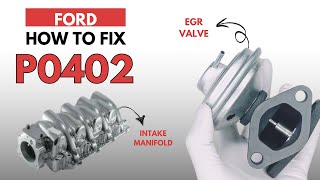
- P0402 means the EGR valve is letting too much exhaust into the engine, usually because it's stuck open.
- The most common fix is to remove and clean the EGR valve and its passages.
- Unlike other Fords, the DPFE sensor is a less common cause on the Escape Hybrid; focus on the mechanical valve first.
What's Unique About the 2005-2012 Ford Escape Hybrid

While on many Ford vehicles of this era a P0402 code points directly to a faulty Differential Pressure Feedback EGR (DPFE) sensor, this is less common on the 2005-2012 Escape Hybrid. Owner and mechanic experiences suggest that the root cause is more often a mechanical issue. Carbon and moisture buildup in the EGR valve itself or the connected passages is a frequent culprit, causing the valve to stick open. Therefore, diagnosis should focus on the physical condition of the valve and passages before suspecting a sensor failure.
Generation note: This range covers two generations of the Escape Hybrid. The first generation (2005-2007) and early second generation (2008) used a 2.3L hybrid engine. The updated second generation (2009-2012) used a 2.5L hybrid engine. The function of the EGR system is the same, but the EGR valve is a different part number for each engine, so ensure you buy the correct one for your year.
Symptoms You May Notice
- Rough or unstable idle
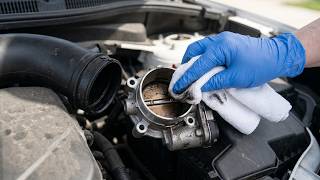
- Engine stalling, especially at stoplights or when at idle 🎬 Watch: How to clean the EGR valve and throttle body to stop stalling
- Engine surging
- Hesitation or poor acceleration
- Check Engine Light is on
- Engine knocking or pinging noises during driving
- Immediately replacing the DPFE sensor without first inspecting and cleaning the EGR valve. On this specific platform, the problem is more likely to be mechanical (carbon buildup) than a failed sensor.
Most Likely Causes

- EGR Valve Stuck Open or Sticking 🔴 High Probability Carbon and moisture from the exhaust can build up inside the EGR valve, preventing it from closing completely. This is a common failure mode for EGR systems on this platform.
How to confirm: With the engine idling roughly, unplug the vacuum line to the EGR valve. If the idle smooths out, it confirms the valve was being held open when it shouldn't be. You can also try gently tapping on the body of the EGR valve with a screwdriver handle; if the idle smooths out, it confirms a sticking valve. For a definitive test, remove the valve and visually inspect it for carbon chunks holding the pintle open or test its movement with a hand vacuum pump.
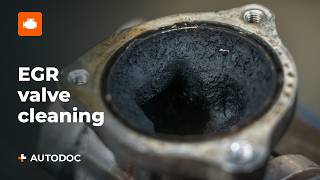
Typical fix: Remove the EGR valve and thoroughly clean it and the mounting passages with carburetor cleaner and a small wire brush. 🎬 Watch: Two different ways to clean your EGR valve Focus on cleaning the pintle and its seat. If cleaning does not restore proper movement, if the internal diaphragm is ruptured (fails to hold vacuum), or if the valve is electronically faulty, it must be replaced.
Est. part cost: $150-$250 - Clogged EGR Passages in Intake Manifold 🟡 Medium Probability Over time, the same carbon that affects the valve can clog the small passages inside the intake manifold where the exhaust gas enters the cylinders. This can create backpressure that affects sensor readings, leading the PCM to believe flow is excessive.
How to confirm: This is typically found while the EGR valve is removed for cleaning. Visually inspect the ports on the intake manifold. You can use a small pick or flexible brush to feel for heavy carbon buildup inside the ports.
Typical fix: While the EGR valve is off, carefully clean the intake manifold ports using brushes and carburetor cleaner. Be careful not to let large chunks of carbon fall into the intake manifold. Using a shop vacuum to extract debris while cleaning is recommended.
Est. part cost: $5-$15 (for cleaning supplies) - Faulty EGR Vacuum Solenoid/Modulator ⚪ Low Probability The solenoid controls the vacuum supply that opens the EGR valve. If it fails, it can apply vacuum at the wrong time (like at idle), causing the EGR valve to open and trigger the P0402 code.
How to confirm: With the engine at idle, check for vacuum on the hose going to the EGR valve. There should be no vacuum at idle. If vacuum is present, the solenoid is likely faulty. You can also test the solenoid's resistance with a multimeter; a typical resistance value for a Ford EVR solenoid is between 20 and 70 ohms.
Typical fix: Replace the EGR vacuum control solenoid.
Est. part cost: $40-$70
Rare But Worth Checking
- Faulty DPFE Sensor: While this is a very common cause for P0402 on other Ford models, it appears to be less frequent on the Escape Hybrid. The DPFE sensor can send incorrect voltage signals, tricking the computer into thinking flow is excessive. It should only be considered after confirming the EGR valve and passages are clean and functioning correctly. Some owners on Reddit have reported fixing P0402 on newer Ford hybrids by replacing the DPFE sensor. Manufacturer service bulletin TSB 23-2059 notes that on some 2.5L hybrid powertrains, P0402 may be triggered due to the fault detection ratio threshold of the DPFE sensor.
- PCM Software Strategy: In some Ford vehicles, as noted in TSB 19-2343, P0402 and related EGR codes can be triggered by various strategies within the powertrain control module (PCM) software, requiring a software update to correct the condition.
Diagnosis Steps

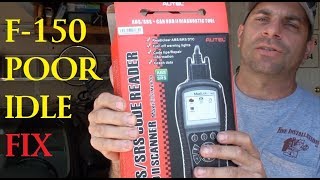
- Confirm the P0402 code is present using an OBD-II scanner. 🎬 See how to use a scan tool to diagnose a P0402 code
- With the engine running at idle, locate the EGR valve and disconnect the small vacuum hose attached to it.
- If the rough idle immediately improves, this confirms the valve was open when it should have been closed. The problem is either a sticking valve or a faulty vacuum solenoid.
- If the idle does not improve, try gently tapping the body of the EGR valve with a screwdriver handle. If the idle smooths out, this strongly indicates a mechanically sticking valve.
- Turn off the engine. Remove the EGR valve (typically two bolts). Inspect the valve's pintle and the intake manifold ports for heavy carbon buildup.
- Thoroughly clean the EGR valve and the intake ports using carburetor cleaner and wire brushes. Manually actuate the valve to ensure it moves freely and seats properly.
- Reinstall the cleaned EGR valve with a new gasket. Clear the code and perform a test drive.
- If the code returns, test the EGR vacuum solenoid. Check for vacuum at the EGR valve's supply hose during idle. If vacuum is present, replace the solenoid. Also test the solenoid's resistance, which should be 20-70 ohms.
- If the valve is clean and the solenoid is working correctly, you may then consider testing the DPFE sensor's voltage as a final, less likely possibility. With the key on and engine off, the signal wire should read approximately 1.0 volt. TSB 24-2014 suggests that for some newer models, specific service procedures are required to address P0402 when it persists.
Parts You'll Likely Need

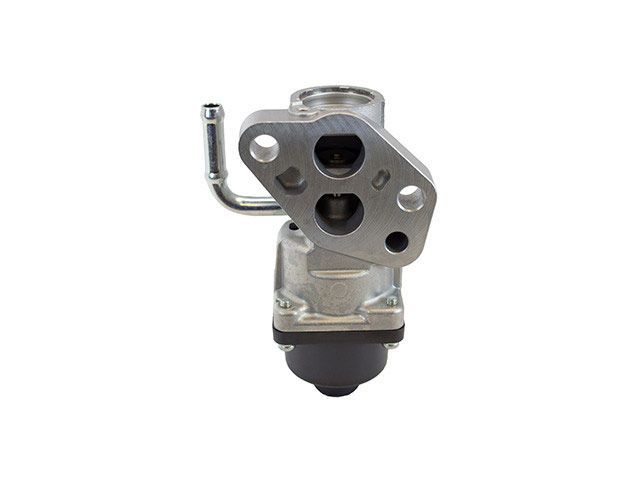
- EGR Valve
(OEM #9E5Z-9D475-A (Motorcraft CX-2468) for 2.5L (2009-2012) or 7L8Z-9D475-AA (Motorcraft CX-2078) for 2.3L (2007-2008))— This valve gets stuck open with carbon, which is the most common cause of P0402 on this vehicle. Cleaning often works, but if the valve is damaged or fails a vacuum test, it needs replacement.
Trusted brands: Motorcraft
OEM price range: $150-$250
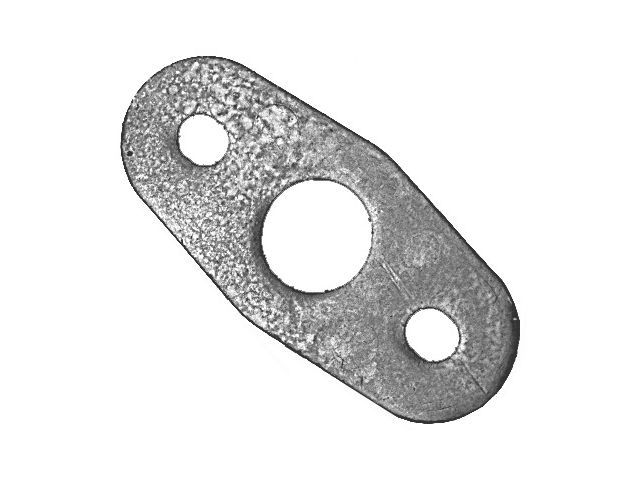
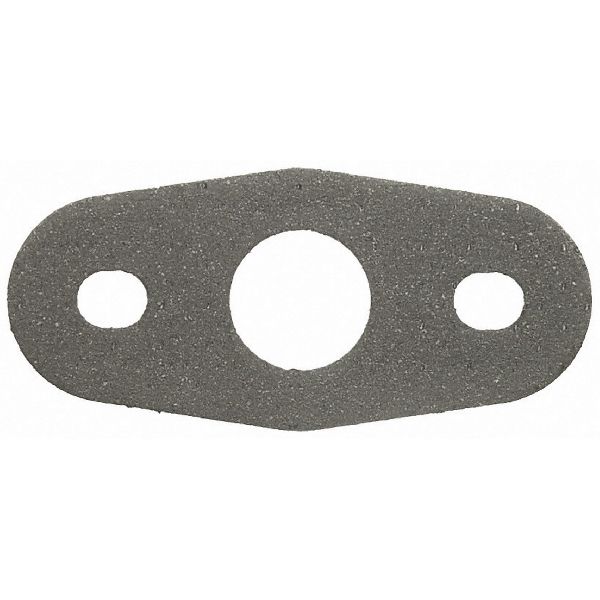
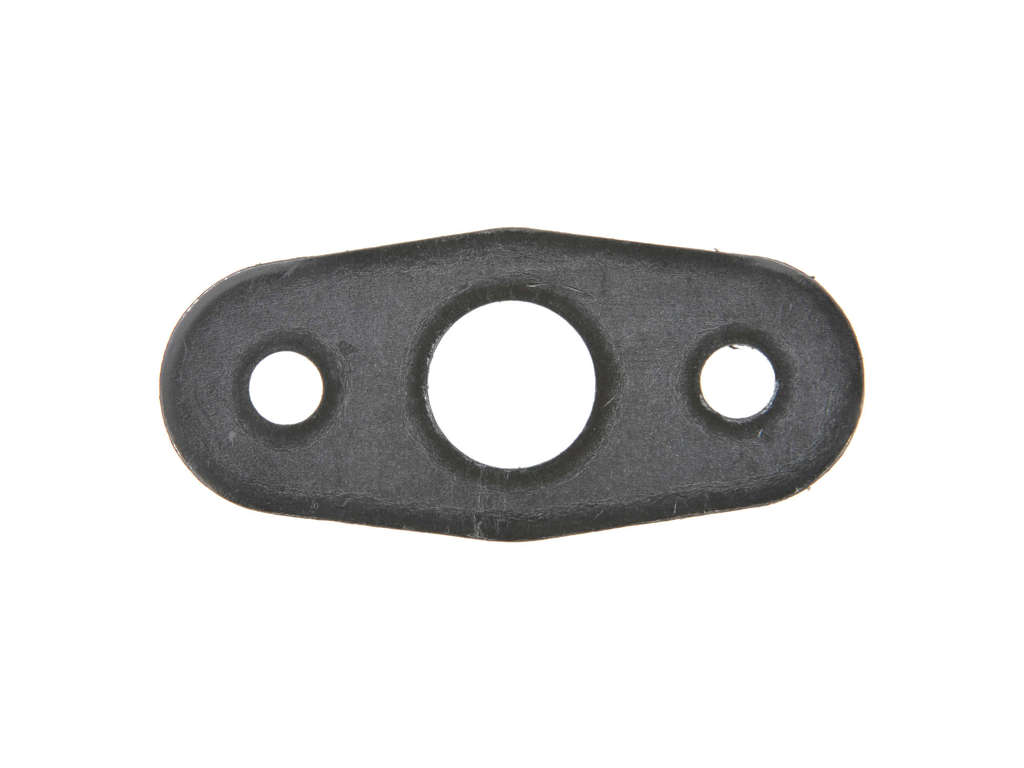
Aftermarket price range: $70-$150 - EGR Valve Gasket — A new gasket is required whenever the EGR valve is removed to prevent exhaust leaks. Many new valves include one.
Trusted brands: Motorcraft, Fel-Pro
OEM price range: $5-$15
Aftermarket price range: $2-$8
Mechanic-Grade Diagnostic Values
- DPFE Sensor Signal Voltage (Key On, Engine Off) — expected: ~1.0 V (for metal-bodied sensors common in this era).. Failure: A reading of 0.5V or less, or 3.0V or more, often indicates a failed sensor. A reading significantly higher than 1.2V at KOEO can also point to a bad sensor.
- DPFE Sensor Reference Voltage — expected: ~5.0 V.. Failure: A reading significantly lower than 5.0V indicates a problem in the wiring or PCM, not the sensor itself.
- DPFE Sensor Voltage (EGR valve forced open) — expected: Voltage should rise towards ~4.9V.. Failure: If the voltage does not rise significantly when the EGR valve is manually opened (e.g., with a vacuum pump), it indicates a faulty DPFE sensor or blocked passages.
- EGR Vacuum Regulator (EVR) Solenoid Resistance — expected: 20 to 70 ohms.. Failure: A reading outside this range, or an open circuit (infinite resistance), indicates a failed solenoid.
Hidden / Shadow Codes Worth Checking
- P1409: EGR Vacuum Regulator Solenoid Circuit Malfunction. This Ford-specific code points directly to an electrical fault in the solenoid that controls the EGR valve, such as an open or short in the coil. (see via Standard OBD-II scanner.)
- P0400: EGR Flow Malfunction. While P0402 is for excessive flow, the OBD-II system may sometimes set the more general P0400 code first if the DPFE signal is erratic or inconsistent with the commanded state at idle. (see via Standard OBD-II scanner.)
Scan Tool Commands That Help
- Ford IDS (Integrated Diagnostic System): EGR System Test — This is an automated test sequence that commands the EGR valve and monitors sensor responses. It can quickly verify the functionality of the entire system, including the valve, solenoid, and sensors, without requiring manual voltage and resistance checks. It can sometimes detect intermittent sticking that manual tests might miss.
- High-end generic scan tool (e.g., Solus Pro): EVR Solenoid Bidirectional Control — Allows the technician to command the EGR Vacuum Regulator (EVR) solenoid on and off at idle. Commanding it 'on' should cause the engine to stumble or stall, confirming the EGR valve opens and passages are clear. This is a quick way to verify mechanical function.
Wiring & Ground Locations
- G101 — Rear of engine (for 2.5L engine).. This is a primary engine ground. A poor connection here can cause erratic behavior in various engine sensors and actuators, including those in the EGR system. The PCM relies on a solid ground reference for accurate sensor readings.
- G108 — Front of engine.. Another critical engine ground point. A loose or corroded G108 can lead to floating ground issues, causing incorrect voltage readings from sensors like the DPFE, potentially triggering a false P0402 code.
- PCM Ground Wire — Often located near the PCM itself or bundled with a main engine ground. On some Escapes, a key ground is located below the air-box near the battery.. A loose PCM ground can cause a wide range of seemingly unrelated codes and intermittent stalling, as the PCM itself de-energizes. If you have P0402 along with other random codes and stalling, checking the main PCM ground connection is crucial.
Real Owner Repair Stories
- Reddit user on r/fordescape (2017 Ford Escape SE (newer model, but relevant ground issue)) — Car would randomly die when accelerating from a stop, multiple inconsistent trouble codes, with the only consistent one being for the PCM de-energizing too early.
❌ Tried (didn't work) Changing battery, Checking high pressure fuel pump, Checking basic connections and fuses.
✅ What actually fixed it The PCM ground wire, located below the air-box, was slightly loose and not making good contact. Tightening the ground wire resolved all issues. - NHTSA ODI #10573470 — An owner reported a loss of power and rough running condition accompanied by the malfunction indicator light and EGR related codes including P0401 and P0402.
- NHTSA ODI #11671585 — A report describes a vehicle that was pulled over and towed to a mechanic where DTCs P0402 and P1061 were retrieved, leading to a diagnosis that the engine required replacement.
OEM Part Supersession History
7L8Z-9D475-AA→1S7Z-9D475-A— Part revision and consolidation by Ford.
Heads up: While 1S7Z-9D475-A is listed as a replacement, it's crucial to verify fitment with a VIN as it covers a very wide range of Ford vehicles. The original 7L8Z-9D475-AA (Motorcraft CX-2078) is specific to the 2007-2008 2.3L Escape.
Model Year Variations Within This Range
- 2005-2008: These models use the 2.3L Hybrid engine. The correct EGR valve is part number 7L8Z-9D475-AA (Motorcraft CX-2078).
- 2009-2012: These models use the updated 2.5L Hybrid engine. The correct EGR valve is part number 9E5Z-9D475-A (Motorcraft CX-2468). The parts are not interchangeable.
Diagnostic Flowchart
Other Known Issues on This Vehicle
Issues unrelated to this code that are worth knowing about as an owner of this generation:
- Motor Electronics Cooling System (MECS) Pump Failure 🔴 High — Very common on 2005-2008 models. Failure can occur as early as 50,000 miles and leads to a 'Stop Safely Now' warning and powertrain shutdown. (Ref: Recall 14S19 / NHTSA 14V-526 was issued to replace the original pump with an improved brushless version.)
- Cracked ABS Tone Ring 🟠 Medium — Common across all years. Rust builds up under the ring on the CV axle, causing it to crack and send erratic signals to the ABS module. This triggers ABS and traction control lights.
- Blend Door Actuator Failure 🟡 Low — Common failure. Results in a clicking or percolating sound from the dashboard and an inability to control cabin temperature on one or both sides.
- Hybrid Battery Cooling Fan Failure 🟠 Medium — The fans located in the rear cargo area can fail, leading to overheating of the high-voltage battery and reduced performance or battery life.
- Transmission/eCVT Reliability Concerns 🟠 Medium — While generally more reliable than the standard automatic in non-hybrid Escapes, some owners report issues, particularly in the earlier 2005-2008 model years.
Used vs. New Parts: Buying Guide for This Vehicle
When a used part is the smart pick: A used EGR valve is generally NOT recommended for this repair. The primary failure mode is carbon buildup, and a used part from a junkyard is highly likely to have the same or worse buildup. It only makes sense if the part has been professionally cleaned, tested to hold vacuum, and comes with a warranty.
Donor-vehicle mileage cap: roughly under 60000 miles for the part to have meaningful remaining life.
What to inspect on the donor part:
- Ask for the mileage of the donor vehicle; lower is better.
- Visually inspect the pintle and passages for any signs of heavy, caked-on carbon. If it looks as dirty as your old one, it's not worth it.
- If possible, bring a hand vacuum pump to the junkyard. Connect it to the vacuum port and pump it up; the valve should hold vacuum without leaking down.
- Ensure the electrical connector is not cracked, corroded, or damaged.
OEM-only on this vehicle (don't cheap out):
- EGR Valve: While some aftermarket brands exist, Motorcraft (OEM) is strongly recommended for fitment and reliability. Forum discussions often highlight issues with cheaper aftermarket valves failing prematurely or not operating within the PCM's expected parameters, causing codes to return.
Brands owners have reported issues with on this vehicle:
- Unbranded, low-cost EGR valves from online marketplaces are a significant gamble and often lead to repeat repairs.
Real Owner Stories
Aggregated from forums and TSBs cited above. Mileages and costs reflect what owners reported in those sources.
2008 Ford Escape Hybrid
Symptoms: Check Engine Light with code P0402.
What fixed it: Replacing the EGR vacuum modulator.
Source hint: FordForums.com
2020 Ford Escape Hybrid
Symptoms: P0402 code present, though the vehicle ran normally otherwise.
What fixed it: Diagnosing a faulty EGR pressure sensor.
Source hint: Reddit r/MechanicAdvice (https://www.reddit.com/r/MechanicAdvice/comments/u8j5p2/ford_escape_hybrid_egr_question/)
Related OBD-II Codes
Frequently Asked Questions
Is there a recall for the 'Stop Safely Now' warning on my 2005-2008 Ford Escape Hybrid?
Why is my 2008 Escape Hybrid idling roughly and throwing a P0402 code?
Can I use a used EGR valve from a salvage yard to fix the P0402 code?
What should the resistance be for the EGR vacuum solenoid on my Ford Escape Hybrid?
My ABS and traction control lights are on along with the P0402; are they related?
How can I check if the DPFE sensor is causing my P0402 code?
Helpful Videos
We Have This Part in Stock


The information in this article is provided for general reference and educational purposes only. Vehicle specifications, procedures, and part compatibility can vary by production date, trim level, and region. Always consult your vehicle's factory service manual and verify part numbers before purchasing or performing repairs. Safety-critical components such as airbags, seat belts, and braking systems should be installed by a qualified professional.
- Ford Escape Hybrid:
- 🎬 Helpful Videos
- 🛍️ Shop This Part
- What's Unique About the 2005-2012 Ford Escape Hybrid
- Symptoms You May Notice
- Most Likely Causes
- Rare But Worth Checking
- Diagnosis Steps
- Parts You'll Likely Need
- Mechanic-Grade Diagnostic Values
- Hidden / Shadow Codes Worth Checking
- Scan Tool Commands That Help
- Wiring & Ground Locations
- Real Owner Repair Stories
- OEM Part Supersession History
- Model Year Variations Within This Range
- Diagnostic Flowchart
- Other Known Issues on This Vehicle
- Used vs. New Parts: Buying Guide for This Vehicle
- Real Owner Stories
- 2008 Ford Escape Hybrid
- 2020 Ford Escape Hybrid
- Related OBD-II Codes
- Frequently Asked Questions
- 🎟️ Get 5% Off