

P0401 on 2012-2018 Mazda Mazda6 2.2L Skyactiv-D: EGR Carbon Buildup Causes and Fixes
On the Mazda6 2.2L Skyactiv-D, code P0401 is almost always caused by severe carbon buildup clogging the entire EGR system and intake manifold. The fix is not a simple part replacement, but a labor-intensive deep cleaning of the EGR valve, cooler, and intake passages, which can cost over $800-$1500 at a shop. Short-trip driving habits significantly accelerate this issue.
- P0401 on a 2.2L Skyactiv-D Mazda6 is a clear indicator of severe carbon buildup, not just a faulty valve.
- The only effective, long-term fix is a complete, labor-intensive cleaning of the EGR valve, EGR cooler, intake manifold, and intake ports.
- Do not simply replace the EGR valve without performing the full cleaning, as the problem will quickly return.
- Due to the complexity and messiness of the job, professional service is strongly recommended.
- This is a serious issue that can lead to significant performance problems and limp mode if ignored.
What's Unique About the 2012-2018 Mazda Mazda6

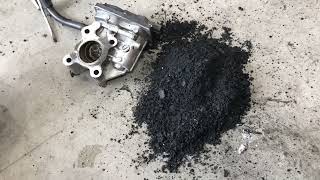
The 2.2L Skyactiv-D engine is notoriously prone to extreme carbon buildup throughout its entire intake and emissions system. Unlike many other vehicles where P0401 might be a simple faulty valve, on this specific engine it's a systemic issue. The problem is so severe that mechanics report removing kilograms of soot from the intake manifold and EGR passages on vehicles with as little as 70,000 miles. Simply replacing the EGR valve is a common misstep, as the code will return if the clogged intake manifold and EGR cooler are not also thoroughly cleaned. The unique low-compression design of the Skyactiv-D engine, while efficient, contributes to soot production, especially during short trips where the engine doesn't reach optimal temperature for complete combustion or DPF regeneration.
Symptoms You May Notice

- Check Engine Light illuminated
- i-Stop system disabled
- SCBS (Smart City Brake Support) warning light may appear simultaneously
- Reduced engine power or sluggish acceleration
- Engine juddering or rough idling
- Decreased fuel economy
- Engine may enter 'limp home' mode
- More frequent or failed Diesel Particulate Filter (DPF) regeneration cycles
- White steam or smoke from the exhaust if the EGR cooler has failed internally and is leaking coolant.
- Replacing only the EGR valve without cleaning the intake manifold and EGR cooler. The code will return because the primary restriction remains.
- Replacing the Mass Airflow (MAF) or MAP sensors. While these sensors can fail, they are rarely the root cause of P0401 on this engine; the problem is almost always the physical blockage.
- Cleaning only the intake manifold ports and not the EGR cooler. A restriction upstream in the cooler will still prevent sufficient flow and cause the code to return.
Most Likely Causes

- Severe Carbon Buildup in EGR and Intake System 🔴 High Probability The design of the 2.2L Skyactiv-D engine, particularly its low compression ratio and reliance on EGR, leads to excessive soot production. This is exacerbated by short-trip driving patterns that prevent the engine from reaching optimal temperatures to burn off deposits.
How to confirm: A technician can use a borescope to visually inspect the intake manifold and EGR passages after removing the MAP sensor or throttle body. A heavy, thick layer of black carbon soot confirms the issue. The MAP sensor itself will likely be coated in carbon. A key indicator is a completely clogged EGR transfer pipe that connects to the intake manifold.
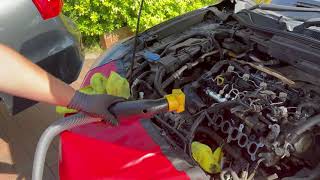
Typical fix: A complete and thorough cleaning of the entire system. This involves removing the intake manifold, EGR valve, and EGR cooler. The parts must be manually scraped and often soaked in chemical cleaners or put in an ultrasonic cleaner to remove all hardened carbon. The intake ports on the cylinder head require walnut blasting for effective cleaning.
Est. part cost: $50-$150 for gaskets and cleaning supplies. - Stuck or Failed EGR Valve 🟡 Medium Probability The EGR valve itself can fail, but it is far more likely to be so clogged with carbon that it cannot move. It is often replaced as part of a larger job, but the primary restriction is typically the entire intake tract, not just the valve.
How to confirm: After removal, the valve can be tested for mechanical operation. However, visual inspection will almost certainly show it is completely clogged. A scan tool can command the EGR valve to open and close, but if it's physically stuck with carbon, it will not respond. A resistance check between terminals A and E should read between 0.3—100 ohms at 20°C (68°F).
Typical fix: In most cases, a thorough cleaning will restore function. If the electronic motor has failed or the valve is physically damaged, it must be replaced. The OEM part number is SH01-20-300 🎬 See this walkthrough on removing and cleaning the EGR valve. or a later revision like SH01-20-300A.
Est. part cost: $450-$600 for an OEM valve.
Rare But Worth Checking
- Air (Vacuum) Leak in Intake System: The official Mazda diagnostic procedure lists checking for air leaks between the turbocharger and intake manifold. While possible, this is far less common than carbon buildup.
- Faulty Sensor (MAF, MAP, etc.): Incorrect readings from various engine sensors can cause the PCM to miscalculate EGR flow. However, on this engine, it's more likely that a sensor fault (like P0101 for the MAF) is a *symptom* of the airflow disruption caused by carbon, rather than the root cause itself.
- Cracked or Blocked EGR Cooler: The EGR cooler can become blocked internally with carbon, restricting flow even if the valve and intake manifold are clean. It can also crack internally from thermal stress, causing coolant to leak into the exhaust/intake system, which may produce white smoke from the tailpipe.
Diagnosis Steps

- Confirm the code P0401 is present 🎬 Watch: A quick overview of diagnosing the P0401 code. using an OBD-II scanner. Check for other related codes like P0101 or P06DE.
- As a preliminary check, remove the Manifold Absolute Pressure (MAP) sensor and inspect it and its port for heavy carbon deposits. A clogged sensor is a strong indicator of a clogged intake.
- Use a borescope to visually inspect the inside of the intake manifold for carbon buildup.
- If heavy carbon is confirmed, proceed with the disassembly and cleaning procedure. This is the most likely cause.
- If little to no carbon is seen (which is highly unlikely), follow the manufacturer's diagnostic tree to check for vacuum leaks, sensor functionality, and EGR valve electrical operation.
- Disassemble the intake system: remove the EGR valve, EGR cooler, and intake manifold.
- Thoroughly clean all components. Scrape out heavy deposits and use chemical cleaners or an ultrasonic bath. The EGR cooler may need to soak for a day to be cleaned effectively.
- Clean the intake ports on the cylinder head, preferably using a walnut shell blaster to avoid damaging 🎬 Watch: How to perform a DIY walnut blast and carbon clean. internal engine components.
- Reassemble the system using new gaskets (intake manifold, EGR, etc.).
- Perform an oil and filter change, as the underlying conditions that cause carbon buildup can also lead to oil dilution with diesel fuel.
- Clear the DTC and perform an extended test drive to confirm the fix and allow the ECU to relearn.
Parts You'll Likely Need

- EGR Valve
(OEM #SH01-20-300A)— This is the central component of the EGR system. It is often replaced, but in many cases, it is just severely clogged and can be cleaned.
Trusted brands: Mazda OE
OEM price range: $470-$600
Aftermarket price range: $150-$300 - Intake Manifold Gasket Set
(OEM #SHY1-13-111 (Kit part number), individual gaskets may vary.)— The intake manifold must be removed for cleaning, and the gaskets are single-use and must be replaced to prevent vacuum leaks. A full kit is often recommended.
Trusted brands: Mazda OE, Victor Reinz
OEM price range: $30-$50
Aftermarket price range: $20-$40 - EGR Valve Gasket
(OEM #SH01-20-3A6)— The EGR valve must be removed for cleaning or replacement, and its gasket must be replaced.
Trusted brands: Mazda OE
OEM price range: $5-$10
Aftermarket price range: $2-$5
Related Codes That Often Appear With This One
- P0101 (Mass or Volume Air Flow 'A' Circuit Range/Performance): Often triggered alongside P0401 because the severe carbon buildup disrupts airflow, causing the MAF sensor to report readings outside the expected range.
- P06DE (Engine Oil Pressure Control Circuit Stuck On): Can be seen in conjunction with carbon issues, as related problems like leaking injector seals can cause oil dilution and strainer clogging, affecting oil pressure.
Technical Service Bulletins (TSBs) & Recalls
- TSB R073/15: While not directly for P0401, this TSB addresses camshaft wear, a related and severe issue on these engines that can be exacerbated by the same conditions (oil dilution, etc.) that cause carbon buildup. Mechanics recommend checking for this when P0401 is present.
- Bulletin #SA-072-17: This bulletin provides specific repair procedures for technicians when a customer complains of a Check Engine Light with DTC P0401 stored in memory.
- Bulletin #01-017-18-3518: This manufacturer bulletin notes that some customers may experience a check engine light with DTC P0401:00 stored in memory even without any noticeable drivability issues, which may be caused by specific detection logic in the PCM.
- General TSBs: Mazda has issued multiple TSBs and recalls for the Skyactiv-D engine concerning carbon buildup, injector seals, and turbo wear, indicating a systemic problem.
Platform-Specific Known Issues
- The 2.2L Skyactiv-D engine is known for a cluster of related issues stemming from carbon buildup, including premature wear of exhaust camshafts and oil starvation from a clogged oil pickup strainer. While P0401 is an EGR code, it is a major symptom of this engine's core issue with carbon management. Leaking injector seals (which were updated from copper to steel) can accelerate oil dilution and sludge, worsening the problem. Technicians recommend checking for camshaft wear when performing the P0401 carbon cleaning service.
Mechanic-Grade Diagnostic Values
- EGR Valve Resistance — expected: 0.3—100 ohms [at 20 °C {68 °F}]. Failure: A reading outside this range indicates a faulty valve motor.
- EGR Valve Position Sensor Circuit Voltage (PCM Terminal 1AQ) — expected: Below 4.86 V. Failure: If voltage at PCM terminal 1AQ is more than 4.86 V for 2 seconds, the PCM determines the circuit is high and may set a P0406 code.
- Mass Air Flow (MAF) at Idle — expected: Approximately 12-14 g/s with EGR valve closed.. Failure: When the EGR valve is commanded open with a scan tool, the MAF reading should drop significantly (e.g., to 3 g/s). If it only drops slightly or not at all, it indicates a blockage in the EGR path. Some owners report readings as low as 5 g/s at idle even on a running car, indicating potential sensor or flow issues.
- Engine Oil Pressure (Warm Engine, Idle) — expected: At least 160 kPa.. Failure: A pressure of 130-140 kPa at idle when warm can indicate a blocked oil strainer, a common related issue.
- Engine Oil Pressure (Warm Engine, 3500 RPM) — expected: Around 400 kPa.. Failure: Significantly lower pressure indicates oil delivery problems, potentially linked to sludge from injector seal leaks.
Scan Tool Commands That Help
- M-MDS (Mazda Modular Diagnostic System) or FORScan: EGR Valve Active Test — This bidirectional control commands the EGR valve to open and close while monitoring MAF sensor data. It's used to verify if the valve motor is functional and to see if there is a physical flow restriction. If the valve is commanded open and MAF readings don't drop, a blockage is confirmed.
- M-MDS or FORScan: EGR Cooler Bypass Valve Active Test — Similar to the EGR valve test, this commands the EGR cooler bypass valve. A technician can observe if the valve actuates and if it affects airflow as expected. This helps isolate a fault to the cooler bypass circuit.
- M-MDS or FORScan: PID Monitoring: EGR_C_BP_ACT (Actual) vs. EGR_C_BP (Commanded) — Used to verify that the EGR Cooler Bypass Valve Position Sensor is reporting a position that matches the PCM's command. If the values do not match, it points to a faulty valve or sensor.
Wiring & Ground Locations
- EGR Valve Connector — On the EGR valve itself, located at the rear of the engine near the intake manifold.. This is the primary connection for power and control signals to the EGR valve. Technicians test for resistance and voltage at pins A and E of this connector.
- PCM Connector (Terminal 1AQ) — At the Powertrain Control Module (PCM). The exact location of the PCM varies but is typically in the engine bay or under the dashboard.. Terminal 1AQ is the specific pin for the EGR valve position sensor input. A high voltage reading here ( >4.86V) will trigger a fault code.
- Engine/Transmission Ground Points — Key grounds are located on the passenger side motor mount, on top of the transmission, and from the driver's side fender area to the negative battery terminal.. Poor grounding can cause erratic sensor readings and incorrect actuator operation. While not a primary cause for P0401, verifying clean and tight grounds is a standard step in diagnosing any electronic fault.
Real Owner Repair Stories
- Reddit user on r/mazda6 (Mazda 6 2.2L Skyactiv-D, mileage not specified) — P0401 code recurring every ~2000 km, and failed DPF regenerations.
❌ Tried (didn't work) A full carbon cleaning was performed 4,000 km prior., DPF was professionally cleaned 1,000 km prior.
✅ What actually fixed it The user's problem was ongoing, but their detailed post highlights a critical scenario: P0401 can return even after a cleaning if the root cause of carbon production (e.g., driving habits, other engine issues) is not addressed or if the cleaning was incomplete (e.g., missed the EGR cooler). The user observed via live data that the EGR valve was mechanically operating, but MAF readings were still low at idle, pointing to a persistent, complex issue beyond a simple clogged valve. - Technician video on YouTube (Deise Diagnostics) (2016 Mazda 6 2.2L Skyactiv-D) — P0401 'EGR a flow insufficient detected'.
❌ Tried (didn't work) Initial inspection showed the intake manifold was not as badly coked as other examples.
✅ What actually fixed it The actual blockage was found in the small EGR transfer pipe that feeds gases into the intake manifold. While the manifold itself had some carbon, this specific pipe was almost completely blocked, creating the flow restriction that triggered the code. Cleaning this pipe and the rest of the system resolved the issue. - NHTSA ODI #10490942 — An owner reported that their vehicle was diagnosed with code P0401, indicating an EGR valve failure. Despite having under 40,000 miles, the repair cost for diagnosis and parts was $718.
"I Checked Everything" — The Actual Cause
- In a case on a similar Skyactiv engine, a technician performed a full intake decarb and confirmed the EGR ports were clear, but the P0401 code returned. The actual cause was a restriction further upstream in the EGR cooler itself. This was missed during the initial cleaning because the cooler was not removed and inspected. The issue was finally diagnosed by observing that the MAF reading only dropped slightly during an EGR active test, confirming a partial but significant blockage remained in the system.
OEM Part Supersession History
SH01-20-300→SH01-20-300A— Revision to improve reliability or address known failure modes. The 'A' suffix typically denotes an updated version of the part.Copper Injector Seals→Steel Injector Seals— The original copper injector seals were prone to leaking, allowing combustion gases into the crankcase. This contaminates the oil, creates sludge, blocks the oil pickup strainer, and accelerates carbon buildup throughout the engine, contributing to P0401. The updated steel seals provide a more durable seal.
Model Year Variations Within This Range
- 2015+: A mid-generation interior facelift occurred at the end of 2015 (for the 2016 model year), which changed the dashboard layout to a top-mounted screen and introduced an electronic handbrake. This does not affect the P0401 fault directly but helps identify pre- and post-facelift models.
- 2018+: Engines produced from 2018 onwards are considered 'reworked' and may be more reliable, featuring updates like the addition of AdBlue (Selective Catalytic Reduction) to meet stricter emissions standards. While still susceptible to carbon buildup, they are reported to be less problematic than the earlier 2012-2017 engines.
Diagnostic Flowchart
Real Owner Stories
Aggregated from forums and TSBs cited above. Mileages and costs reflect what owners reported in those sources.
2015 Mazda 6 2.2 skyactiv D — 108000 miles
Symptoms: Check engine light with P0401 code, MAP sensor covered in soot. No other symptoms like rough idle or issues starting were observed.
What fixed it: A walnut blast carbon clean from a specialist.
Source hint: reddit.com - r/mazda6 - "Carbon Clean"
2014 Mazda 6 2.2d skyactive — 76000 miles
Symptoms: P0401 error code, stuttering, and bad misfiring.
What fixed it: EGR and manifold clean, DPF clean, replaced 2 faulty injectors, and installed updated copper washers.
Source hint: reddit.com - r/mazda6
Mazda6 2.2L Skyactiv-D
Symptoms: P0401 code causing limp mode, appearing intermittently every ~2000km even after a previous cleaning.
What fixed it: Repeated carbon cleaning of the intake and EGR system.
Source hint: r/mazda6 on Reddit (https://www.reddit.com/r/mazda6/comments/15lq6y4/p0401_and_dpf_issues/)
Related OBD-II Codes
Frequently Asked Questions
Why did my i-Stop and SCBS warning lights come on with the P0401 code on my Mazda6?
Does TSB R073/15 apply to my P0401 code?
Should I just replace the EGR valve (part SH01-20-300) to fix the P0401 code?
Why is my 2.2L Skyactiv-D engine so prone to carbon buildup?
Are my fuel injectors related to the P0401 code?
How can I quickly check if my intake is clogged before taking everything apart?
Helpful Videos


Used OEM Parts in Stock


New Aftermarket Parts Available


The information in this article is provided for general reference and educational purposes only. Vehicle specifications, procedures, and part compatibility can vary by production date, trim level, and region. Always consult your vehicle's factory service manual and verify part numbers before purchasing or performing repairs. Safety-critical components such as airbags, seat belts, and braking systems should be installed by a qualified professional.
- Mazda Mazda6:
- 🎬 Helpful Videos
- 🛍️ Shop This Part
- What's Unique About the 2012-2018 Mazda Mazda6
- Symptoms You May Notice
- Most Likely Causes
- Rare But Worth Checking
- Diagnosis Steps
- Parts You'll Likely Need
- Related Codes That Often Appear With This One
- Technical Service Bulletins (TSBs) & Recalls
- Platform-Specific Known Issues
- Mechanic-Grade Diagnostic Values
- Scan Tool Commands That Help
- Wiring & Ground Locations
- Real Owner Repair Stories
- "I Checked Everything" — The Actual Cause
- OEM Part Supersession History
- Model Year Variations Within This Range
- Diagnostic Flowchart
- Real Owner Stories
- 2015 Mazda 6 2.2 skyactiv D — 108000 miles
- 2014 Mazda 6 2.2d skyactive — 76000 miles
- Mazda6 2.2L Skyactiv-D
- Related OBD-II Codes
- Frequently Asked Questions
- 🎟️ Get 5% Off