

P0401 on 2004-2008 Ford F-150 5.4L: EGR Insufficient Flow Causes and Fixes
On a 2004-2008 F-150 with the 5.4L 3V engine, code P0401 is most often caused by a faulty integrated EGR valve/sensor assembly or clogged EGR passages in the intake manifold behind the throttle body. Before replacing parts, test for clogged passages by applying vacuum to the EGR valve at idle; if the engine doesn't stumble or stall, the passages are blocked. If the passages are clear, the integrated EGR valve/sensor assembly is the likely culprit.
- On this specific truck, do not look for a separate DPFE sensor; it is built into the EGR valve assembly.
- Before buying a new EGR valve (~$150+), perform the simple diagnostic test of applying vacuum to the valve at idle. If the engine doesn't stumble, your problem is clogged passages, a much cheaper fix.
- If you do replace the EGR valve, using a genuine Motorcraft part is highly recommended, as aftermarket electronic sensors are known for high failure rates.
- Check for simple fixes first, like cracked rubber vacuum elbows or disconnected hoses around the EGR system.
What's Unique About the 2004-2008 Ford F-150

The 2004-2008 F-150 marks a transition for the 5.4L engine's EGR system. Unlike the previous generation (1997-2003) which used a separate, failure-prone DPFE sensor to measure EGR flow, this 12th generation F-150 with the 5.4L 3V Triton engine uses an electronically controlled EGR valve with an integrated position sensor. This causes frequent confusion, as owners and even parts stores may mistakenly look for a separate DPFE sensor that does not exist on this truck. The PCM infers flow by monitoring the EGR valve's position sensor; if the valve is commanded open but the sensor's reported position doesn't match what's expected for the given conditions, or if other sensors (like MAP and O2) don't register the expected change in intake pressure and exhaust composition, the PCM concludes the flow is insufficient. Therefore, a P0401 code on this specific vehicle 🎬 Watch: A complete diagnosis and repair for the P0401 code. often points directly to either a blockage in the system or a failure of the electronic sensor within the EGR valve assembly itself.
Symptoms You May Notice
- Check Engine Light is on
- Engine pinging or knocking sound during acceleration
- Rough or unstable idle
- Hesitation or loss of power during acceleration
- Reduced fuel economy
- Failure to pass an emissions test
- In some cases where a vacuum leak is the root cause, the A/C may default to blowing out the defrost vents during acceleration.
- Replacing the EGR valve assembly when the actual problem is clogged intake passages. Always perform the vacuum test to check for blockages before buying expensive parts.
- Searching for or purchasing a separate DPFE sensor, which does not exist on the 5.4L 3V engine used in this generation of F-150. This part was used on the previous 1997-2003 generation.
Most Likely Causes

- Faulty Integrated EGR Valve / Position Sensor Assembly 🔴 High Probability The electronic position sensor is integrated directly into the EGR valve. This entire assembly is a common failure point; the sensor can fail internally, leading the PCM to believe there is no flow even when the valve is opening mechanically. The sensor itself is not available as a separate part.
How to confirm: After confirming EGR passages are clear (see next cause), test the electrical connector at the EGR valve for a 5-volt reference signal and a good ground with a multimeter. If power and ground are present but the code persists (especially if accompanied by P0405), the integrated sensor has likely failed.
Typical fix: Replace the entire EGR valve assembly. Using an OEM Motorcraft part is highly recommended as aftermarket units have a high failure rate.
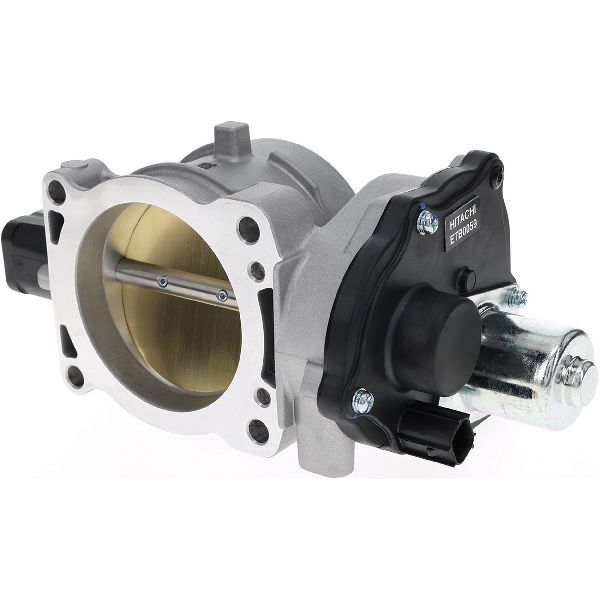
Est. part cost: $150-$250 - Clogged EGR Passages 🟡 Medium Probability Carbon from exhaust gases can build up over time and completely block the two small ports where the gas enters the intake manifold, directly behind the throttle body. This prevents any flow, even with a perfectly functioning EGR valve.
How to confirm: With the engine warm and idling, apply 5-10 inHg of vacuum to the EGR valve's vacuum port using a hand pump. If the engine stumbles, runs rough, or stalls, the passages are clear. If the engine's idle does not change, the passages are clogged. Visually confirming requires removing the throttle body to see the ports.
Typical fix: Remove the throttle body and/or EGR tube from the intake manifold and manually clean the carbon out 🎬 See how to properly clean carbon from the EGR ports. of the ports using picks, small brushes, and carburetor cleaner. Ensure all scraped carbon is removed and does not fall into the intake manifold. Replace gaskets upon reassembly.
Est. part cost: $10-$30 (for gaskets) - Cracked or Disconnected Vacuum Lines ⚪ Low Probability The rubber and plastic vacuum lines that control the EGR valve become brittle and crack due to age and engine heat, causing a loss of vacuum signal needed to open the valve. A common failure point is a rubber elbow connector behind the battery where multiple vacuum lines join.
How to confirm: Visually inspect all vacuum lines connected to the EGR valve and the EGR Vacuum Regulator (EVR) solenoid for cracks, splits, or loose connections. A small crack in a rubber elbow is a common culprit. A smoke test can also quickly identify hard-to-see leaks.
Typical fix: Replace the damaged vacuum line or rubber connector.
Est. part cost: $5-$20
Rare But Worth Checking
- Faulty EGR Vacuum Regulator (EVR) Solenoid: This solenoid, controlled by the PCM, modulates the vacuum supplied to the EGR valve. It can fail electrically or become clogged, preventing the EGR valve from opening when commanded. It should be tested if the valve, passages, and vacuum lines are all confirmed to be good. Testing involves checking for resistance across its terminals and ensuring it holds and releases vacuum when energized.
- PCM Software Strategies: While less common on the 5.4L, other Ford platforms have seen P0401 codes caused by software issues. For instance, TSB Bulletin #TSB 19-2343 notes that various strategies within the PCM software can trigger this code, requiring a software update to correct the condition.
Diagnosis Steps

- Retrieve the P0401 code using an OBD-II scanner.
- Perform a thorough visual inspection of all vacuum lines and electrical connectors at the EGR valve and the EVR solenoid (which controls vacuum to the valve). Look for obvious cracks, damage, or loose connections, paying close attention to rubber elbows, especially behind the battery.
- Test for clogged EGR passages: With the engine warm and at a stable idle, use a hand vacuum pump to apply 5-10 inHg of vacuum to the EGR valve's nipple. If the engine idle becomes rough, stumbles, or stalls, the passages are clear. If there is no change in idle, the passages are clogged.
- If passages are clogged, remove the throttle body. The two EGR ports will be visible on the intake manifold surface. Use picks, brushes, and carburetor cleaner to thoroughly remove all carbon buildup. Replace the throttle body and EGR gaskets.
- If passages are clear, test the EGR valve's electrical circuit. Disconnect the EGR connector. With the key on and engine off, use a multimeter to verify a 5-volt reference signal and a good ground are present at the appropriate pins in the harness-side connector.
- If the electrical supply is good and the passages are clear, the integrated position sensor within the EGR valve assembly is almost certainly faulty and the entire valve must be replaced. 🎬 Watch this walkthrough on how to replace the EGR valve.
- If you suspect the valve isn't receiving a vacuum signal, you can test the EVR solenoid. Check for resistance across its two pins (should be within spec, typically 20-70 ohms). You can also apply 12V to the solenoid to see if it clicks and allows vacuum to pass through.
Parts You'll Likely Need

- EGR Valve and Position Sensor Assembly
(OEM #5L3Z-9D475-A)— This is the most common fix for a P0401 code on this truck when the passages are not clogged. The integrated electronic sensor fails, requiring replacement of the entire unit.
Trusted brands: Motorcraft (CX-2064), Standard Motor Products (EGV1055), Dorman (911-123)
OEM price range: $150-$250
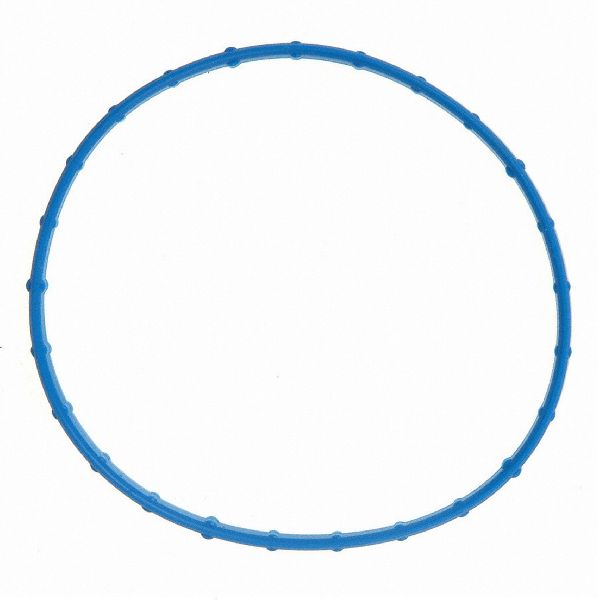
Aftermarket price range: $80-$150 - Throttle Body Gasket — Must be replaced if the throttle body is removed to clean the EGR passages to prevent vacuum leaks.
Trusted brands: Motorcraft, Fel-Pro (61048)
OEM price range: $8-$20
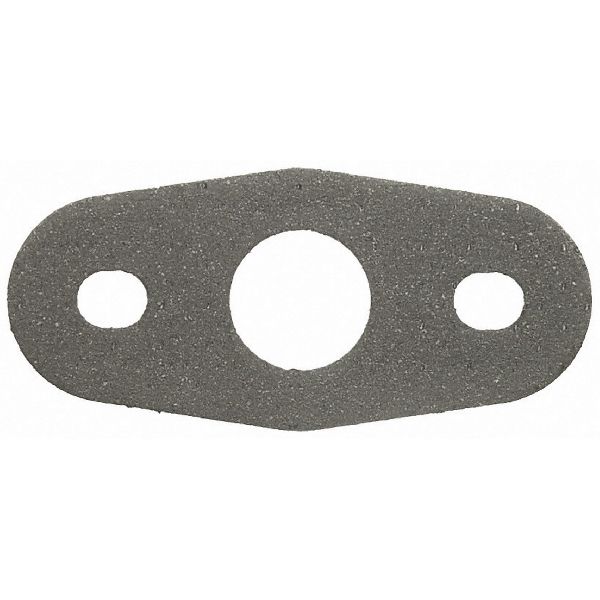
Aftermarket price range: $5-$15 - EGR Valve Gasket — Must be replaced whenever the EGR valve is removed for replacement or for cleaning the passages to prevent exhaust leaks.
Trusted brands: Motorcraft, Fel-Pro (70149)
OEM price range: $5-$15
Aftermarket price range: $3-$10
Related Codes That Often Appear With This One
- P0171 / P0174 — If the P0401 is caused by a significant vacuum leak in the EGR system hoses, the engine may also run lean as unmetered air enters the intake, triggering these codes.
- P0405 — This code indicates a fault in the EGR sensor circuit ('A' Circuit Low). Since the sensor is integrated into the EGR valve on this truck, a P0405 almost always confirms the EGR valve assembly needs to be replaced, and may appear alongside P0401 if the sensor fails intermittently or completely.
- P2457 — This code, which relates to EGR cooling performance, is sometimes seen alongside P0401 on Ford vehicles. Manufacturer TSB Bulletin #TSB 24-2263 notes that these codes can appear together when there are cooling system issues or internal leaks.
Technical Service Bulletins (TSBs) & Recalls
- TSB 05-16-5 (as mentioned in forums): Addresses lean codes (P0171/P0174) and EGR issues, recommending replacement of intake manifold isolator bolts with an updated part to fix leaks.
- TSB Bulletin #TSB 18-2326: Notes that certain Ford vehicles may exhibit an illuminated MIL with DTC P0401 stored in the powertrain control module, requiring specific service procedure steps to correct.
- TSB Bulletin #21M04: While for larger Super Duty models, this bulletin highlights that an EGR cooler can become plugged, leading to a P0401 code, a common theme across Ford's modular engine families.
- SSM Bulletin #SSM 48345: Describes how an EGR cooler leaking coolant into the intake can trigger P0401 along with symptoms like white smoke from the tailpipe or engine over-temperature.
Platform-Specific Known Issues
- A common point of confusion is the location of the flow sensor. On the 2004-2008 F-150 with the 5.4L 3V engine, the DPFE sensor is integrated into the EGR valve assembly and is not a separate, replaceable part like on older models.
- Owners frequently replace the EGR valve only to find the code returns because the EGR ports in the intake were clogged with carbon. Performing the manual vacuum test at the valve is a critical and often-skipped diagnostic step that can save hundreds of dollars.
- A video from YouTuber '6speeddakota' provides a detailed walkthrough of removing the throttle body and cleaning the clogged EGR passages, and lists relevant Fel-Pro gasket part numbers (61048 for spacer-to-manifold, 61050 for housing-to-spacer, 70149 for EGR valve).
Mechanic-Grade Diagnostic Values
- EGR Sensor (DPFEGR) PID Voltage, Key On, Engine Off (KOEO) — expected: ~0.6V to 1.2V. Failure: A reading below 0.2V indicates a hard fault (short to ground or internal sensor failure).
- EGR Connector - Reference Voltage (VREF) — expected: 5.0 Volts DC (KOEO). Failure: No voltage or significantly lower voltage indicates an open or short in the VREF circuit from the PCM.
- EGR Connector - Ground — expected: Near 0 Ohms resistance to chassis ground. Failure: High resistance indicates a poor ground connection at a point like G101-G104.
- EGR Vacuum Regulator (EVR) Solenoid Resistance — expected: 20 to 70 Ohms. Failure: Resistance outside this range, or an open/short reading, indicates a bad solenoid.
- EVR Solenoid Control Wire Voltage (KOEO, connector plugged in) — expected: ~12V (Battery Voltage). Failure: This wire rests at battery voltage, waiting for the PCM to provide a ground. A 0V reading could indicate a break in the wire or solenoid coil.
Hidden / Shadow Codes Worth Checking
- P1408: Indicates a hard fault in the EGR flow test during a Key On Engine Running (KOER) self-test. If this code is present alongside P0401, it points more strongly to a definite, non-intermittent failure in the EGR system. (see via Run a KOER self-test with a capable OBD-II scanner.)
Scan Tool Commands That Help
- Ford IDS (or equivalent like FORScan): EGR System Test (KOER) — This is an automated on-demand test that commands the EGR valve to operate while monitoring sensor feedback. It can quickly help distinguish between a mechanical (clogged) and electrical (sensor/valve) failure.
- Ford IDS (or equivalent like FORScan): EVR Solenoid Bidirectional Control — This allows you to manually command the EVR solenoid on and off to verify the PCM driver is functional. While commanding it on, you should see the voltage on the control wire drop from 12V to a lower value, confirming the PCM is attempting to ground the circuit.
Wiring & Ground Locations
- EGR Valve Connector — On the EGR valve assembly itself, located on the passenger side of the engine near the firewall.. This is the primary connection point for testing the integrated sensor's 5V reference, ground, and signal wires.
- EVR Solenoid Wires — Connector for the EGR Vacuum Regulator solenoid, near the EGR valve.. The power feed wire is typically Red/Yellow, and the PCM control wire (the one to test for the ground signal) is Brown/Pink. Knowing these colors is critical for testing the solenoid circuit.
- G101, G102, G103, G104 — Various points on the right (passenger) side of the engine compartment, near the rear of the engine and firewall.. These are primary engine and PCM ground points. A corroded or loose connection at one of these locations can cause a floating ground, leading to incorrect voltage readings from sensors like the one in the EGR valve, triggering flow or circuit codes.
Real Owner Repair Stories
- f150forum.com user experience (2006 F-150 5.4L V8) — Codes P0171, P0174, and P0401
❌ Tried (didn't work) Pulling and cleaning the EGR valve and its tubes, Cleaning the MAF sensor, Using fuel additives
✅ What actually fixed it The final fix was pulling the top of the intake plenum, cleaning all 6 orifices underneath, and replacing the DPFE sensor (though on a 2006, this would be the entire EGR valve assembly). The key was cleaning the passages under the plenum. - YouTube video by '6speeddakota' (2004-2008 F-150 with 5.4L engine) — P0401 Insufficient Flow code
❌ Tried (didn't work) The video focuses directly on the fix, assuming other diagnostics have failed.
✅ What actually fixed it Removing the throttle body and the spacer behind it to access and thoroughly clean the two small, clogged EGR ports using brake cleaner and brushes. The video provides specific Fel-Pro gasket part numbers needed for reassembly.
OEM Part Supersession History
3L3Z-9D475-DA→5L3Z-9D475-A— Part revision by Ford. The newer part is the standard replacement.
Heads up: One source lists 5L3Z-9D475-A as discontinued, but the Motorcraft equivalent CX-2064 is still widely available.
Diagnostic Flowchart
Other Known Issues on This Vehicle
Issues unrelated to this code that are worth knowing about as an owner of this generation:
- Cam Phaser Failure / VCT Solenoid Issues 🔴 High — Very common, often appearing after 80,000 miles. Causes a distinct ticking or diesel-like knocking sound at idle that may disappear at higher RPMs. (Ref: TSB 06-19-8)
- Two-Piece Spark Plug Breakage During Removal 🔴 High — Extremely common on engines built before late 2007. Carbon buildup seizes the plug's ground shield in the head, causing it to break off during removal, requiring a special extraction tool. (Ref: TSB 08-7-6)
- Fuel Pump Driver Module (FPDM) Corrosion and Failure 🔴 High — Extremely common. The module is mounted directly to the steel frame above the spare tire, causing galvanic corrosion that destroys the aluminum housing and internal electronics, leading to a no-start or stalling condition.
- Timing Chain Tensioner and Guide Failure 🔴 High — Common, often related to low oil pressure from failing tensioner seals. Plastic guides break apart, falling into the oil pan and potentially causing chain slap, jumping time, and catastrophic engine failure.
- Ignition Coil Failure 🟠 Medium — Common failure item. The coil-on-plug boots can deteriorate, allowing moisture intrusion or causing the spark to arc to the cylinder head, leading to misfires (e.g., P030X codes).
Used vs. New Parts: Buying Guide for This Vehicle
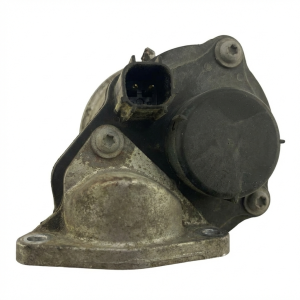
When a used part is the smart pick: For this specific repair, a used OEM Motorcraft EGR valve from a low-mileage donor vehicle is a viable option and often preferable to a new aftermarket part. Given the high failure rate of new aftermarket valves, a tested, working OEM part from a junkyard can be a more reliable and cost-effective choice.
Donor-vehicle mileage cap: roughly under 80000 miles for the part to have meaningful remaining life.
What to inspect on the donor part:
- Check the donor vehicle's mileage if possible. Aim for under 80,000 miles.
- Inspect the electrical connector pins for any signs of corrosion, melting, or damage.
- Look at the vacuum nipple; it should be intact with no cracks.
- If possible, press on the valve diaphragm manually (if accessible) to feel for smooth movement, not a seized or gritty feeling.
OEM-only on this vehicle (don't cheap out):
- EGR Valve and Position Sensor Assembly: Forum consensus strongly indicates that aftermarket EGR valves for this platform have an extremely high rate of out-of-box failure or premature failure. Sticking with a new Motorcraft (CX-2064) or a verified-working used OEM unit is critical for a lasting repair.
Aftermarket brands forum-validated for this vehicle:
- For gaskets: Fel-Pro is a widely trusted and available brand.
Brands owners have reported issues with on this vehicle:
- General, unbranded, or 'white-box' EGR valve assemblies sold on marketplaces like Amazon or eBay are frequently reported to fail immediately or within a short period.
Real Owner Stories
Aggregated from forums and TSBs cited above. Mileages and costs reflect what owners reported in those sources.
2007 Ford F-150 5.4L V8
Symptoms: P0401 code and the A/C defaulted to defrost vents whenever the truck was under acceleration.
What fixed it: Found and repaired a pinhole vacuum leak in a line located behind the battery.
Source hint: f150forum.com - Thread 'p0401 egr insufficent flow'
2007 Ford F-150 5.4L V8
Symptoms: Code P0401; confusion over whether to replace a DPFE sensor or check for clogs.
What fixed it: Cleaning the carbon-clogged EGR ports in the intake manifold after confirming the valve was functional.
Source hint: f150online.com - Thread 'Code P0401 EGR Flow Insufficient'
Related OBD-II Codes
Frequently Asked Questions
I have a 2007 F-150 and my A/C keeps switching to the defrost vents when I accelerate. Is this related to my P0401 code?
Can I just replace the DPFE sensor on my 2005 5.4L Triton like I did on my older Ford?
Does TSB 05-16-5 apply to my P0401 code?
I replaced the EGR valve but the P0401 code came back. What did I miss?
Which specific gaskets do I need if I have to remove the throttle body to clean the ports?
Is it worth buying an aftermarket EGR valve for my 5.4L F-150?
Helpful Videos
Used OEM Parts in Stock



New Aftermarket Parts Available


The information in this article is provided for general reference and educational purposes only. Vehicle specifications, procedures, and part compatibility can vary by production date, trim level, and region. Always consult your vehicle's factory service manual and verify part numbers before purchasing or performing repairs. Safety-critical components such as airbags, seat belts, and braking systems should be installed by a qualified professional.
- Ford F-150:
- 🎬 Helpful Videos
- 🛍️ Shop This Part
- What's Unique About the 2004-2008 Ford F-150
- Symptoms You May Notice
- Most Likely Causes
- Rare But Worth Checking
- Diagnosis Steps
- Parts You'll Likely Need
- Related Codes That Often Appear With This One
- Technical Service Bulletins (TSBs) & Recalls
- Platform-Specific Known Issues
- Mechanic-Grade Diagnostic Values
- Hidden / Shadow Codes Worth Checking
- Scan Tool Commands That Help
- Wiring & Ground Locations
- Real Owner Repair Stories
- OEM Part Supersession History
- Diagnostic Flowchart
- Other Known Issues on This Vehicle
- Used vs. New Parts: Buying Guide for This Vehicle
- Real Owner Stories
- 2007 Ford F-150 5.4L V8
- 2007 Ford F-150 5.4L V8
- Related OBD-II Codes
- Frequently Asked Questions
- 🎟️ Get 5% Off