

OBD-II Code P0405: Exhaust Gas Recirculation (EGR) Sensor "A" Circuit Low
What P0405 means, why it triggers, and how to fix it for good
- P0405 triggers when the EGR sensor's signal drops below 0.5 volts, indicating a short to ground, a dead sensor, or a physically stuck valve.
- Test the 5-volt reference and ground wires at the sensor connector with a multimeter before spending $150+ on a replacement EGR valve.
- Driving with a P0405 code is safe for about two weeks, but ignoring the resulting engine pinging causes catalytic converter damage costing upwards of $1,200.
- Ford vehicles from 2000-2010 almost always trigger this code due to a melted or cracked DPFE sensor hose, requiring a simple $20 fix.
- Scraping carbon buildup from the EGR valve pintle and replacing the $10 gasket resolves the code in 30% of cases without needing new electronic parts.
What Does P0405 Mean?

The Powertrain Control Module (PCM) detected an electrical problem with the Exhaust Gas Recirculation (EGR) system. Specifically, the voltage signal from the EGR position sensor (or DPFE sensor) is lower than the manufacturer's specified range. The computer cannot determine the position of the EGR valve, which is crucial for reducing harmful nitrogen oxide (NOx) emissions by lowering combustion temperatures.
Technical definition: The official OBD-II definition is "Exhaust Gas Recirculation (EGR) Sensor 'A' Circuit Low". The PCM detects the voltage from the EGR position sensor's signal circuit is below the expected threshold, typically under 0.5 volts. The sensor reports the EGR valve's pintle position to the PCM, which expects a specific voltage (e.g., 0.5V-1.0V closed, up to 4.5V open). A 'circuit low' fault points directly to an open circuit, a short to ground, or a failed sensor.
Can I Drive With P0405?
Yes, But With Caution. You can drive with a P0405 code, but address it within two weeks. Ignoring it causes a rough idle, poor acceleration, and bad fuel economy. Prolonged driving causes excessive carbon buildup in the intake manifold and damages the catalytic converter due to incorrect combustion temperatures, a repair costing $800 to $2,500. You will automatically fail any emissions test.
Common Causes

- Faulty Wiring or Corroded Connectors (Very Common) — Accounts for 45% of cases. The EGR sensor wiring harness sits in a high-heat, high-vibration area, causing frayed wires, shorts to ground, or broken conductors. Connectors corrode from moisture and road salt, disrupting the 5V reference or signal.
- Defective EGR Position Sensor (Very Common) — Accounts for 23% of cases. Internal components, like potentiometers or pressure-sensing diaphragms, wear out from constant heat cycles. This causes the sensor to send a persistently low-voltage signal to the computer.
- Clogged or Stuck-Closed EGR Valve (Common) — Carbon and soot from the exhaust build up heavily inside the EGR valve, seizing it in the closed position. If the valve cannot move when commanded, the sensor only reports its closed-position (low) voltage.
- Vacuum Leaks (Older Vehicles) (Less Common) — On older vehicles using a vacuum diaphragm to actuate the EGR valve, a cracked or disconnected vacuum line prevents the valve from opening. The sensor reports a constant low voltage.
- PCM Software Glitch (Rare) — The PCM's software contains a bug causing it to misinterpret a normal sensor reading. A manufacturer-issued software update is required. GM released an update for 2020+ Buick Enclaves to fix false P0405 codes.
- Faulty Powertrain Control Module (PCM) (Very Rare) — The PCM suffers a failed internal driver circuit or a fault in the 5-volt reference circuit powering the sensor. Consider this only after exhaustively ruling out all wiring and sensor issues.
Symptoms
- Engine Pinging or Knocking — Without EGR flow cooling the combustion chamber, cylinder temperatures rise excessively under load. The air-fuel mixture detonates prematurely, creating a 'pinging' sound that damages the engine over time.
- Rough Idle and Poor Acceleration — The PCM defaults to safe fuel maps, causing the vehicle to feel sluggish, hesitate during acceleration, or shake at idle.
- Reduced Fuel Economy — Inefficient combustion from the disabled EGR system forces the engine to use more fuel, lowering MPG by 8-12%.
- Check Engine Light On (also visible on scanner) — The light illuminates immediately when the PCM detects the fault.
- Failed Emissions Test (scan-tool only — no driver-felt sign) — The EGR system is disabled, leading to a massive spike in NOx emissions and an automatic failure of state smog tests.
Common Fixes & Costs
- Replacing the EGR Position Sensor (or DPFE) — Parts: $40-$120, Labor: $50-$100, ~0.6 hr book time (DIY)
- Repairing Damaged Wiring or Connectors — Parts: $15-$50 (pigtail connector, wire, terminals), Labor: $150-$300, ~2 hr book time (Intermediate)
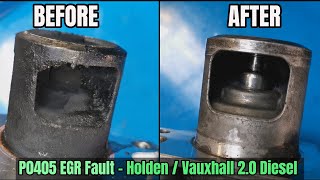
- Cleaning the EGR Valve and Passages 🎬 Watch: How to remove and clean your EGR valve — Parts: $10-$25 (cleaner and new gaskets), Labor: $100-$200, ~1.5 hr book time (Intermediate)
- Replacing the EGR Valve Assembly — Parts: $150-$400, Labor: $100-$250, ~1.5 hr book time (Intermediate)
DIY vs Professional
- Cleaning the EGR Valve — Beginner: Yes, with caution.
Tools: Socket set, wrenches, gasket scraper, wire brushes, EGR/Carb cleaner, new gasket, safety glasses, gloves. - Replacing the EGR Sensor/Valve — Beginner: Yes, if the valve is easily accessible.
Tools: Socket set, torque wrench, gasket scraper, new EGR valve/sensor, new gasket(s). - Repairing Damaged Wiring — Beginner: No. Recommended for intermediate to advanced DIYers.
Tools: Multimeter, vehicle-specific wiring diagram, wire strippers, crimpers, heat shrink tubing, soldering iron (optional).
Used vs. New Parts: Buying Guide
When a used part is worth it: For budget-conscious repairs on older, high-mileage vehicles, a used OEM EGR valve from a reputable recycler is a viable option.
Donor-vehicle mileage cap: roughly under 100000 miles for the part to have meaningful remaining life.
Donor quality checklist:
- Ensure the part is a genuine OEM valve, not an aftermarket part from a scrapped car.
- Verify the part number matches your original valve exactly.
- Ask the seller if the part has been cleaned and inspected. A dirty used valve fails quickly.
Decision logic:
- If The cost of a new aftermarket valve is less than $100. → Buy new; the small savings on a used part aren't worth the risk of unknown wear and tear.
- If Vehicle is over 150,000 miles and the budget is very tight. → A used OEM part is acceptable, but understand it has a limited remaining lifespan.
- If The part is for a diesel engine (e.g., Powerstroke, TDI) known for heavy carbon buildup. → Strongly favor a new part, as used valves are highly likely to be clogged or near failure.
Warranty tradeoff: Used parts typically come with a 30-90 day functional warranty. New aftermarket parts often have a 1-year to limited lifetime warranty. New OEM parts carry the manufacturer's warranty.
Worst-case if a used part fails: $200-$400 if a used part fails shortly after installation, requiring repeat labor costs plus the cost of another replacement part.
Cost of Not Fixing It
- 0-1 month: Failed emissions test, Check Engine Light on, and a drop in fuel economy of 5-10%. (Added cost: Negligible, other than the cost of a failed test.)
- 1-6 months: Increased engine knocking/pinging under load due to higher combustion temperatures. Causes premature wear on internal engine components. (Added cost: $200-$500 for potential sensor damage.)
- 6+ months: Sustained high combustion temperatures overheat and damage the catalytic converter, leading to failure. (Added cost: $1200-$2800)
Diagnosis Steps

- Read Code and Freeze Frame Data
Confirm P0405 and analyze freeze frame data. A fault at idle points to wiring, while a fault under load suggests a stuck valve.
Tools: OBD-II Scanner (Beginner) - Visual Inspection of the EGR Circuit
Inspect the EGR valve, sensor, and wiring harness. Look for burnt wires near hot exhaust components, loose connectors, and green corrosion on the pins.
Tools: Flashlight, Inspection Mirror (Beginner) - [PRO TIP] Back-Probe Connector and Check Live Data
With key on, engine off (KOEO), back-probe the EGR sensor connector. Verify the 5-volt reference wire has ~5V, ground has <0.1V, and signal has a baseline voltage (0.5V-1.0V). A missing 5V reference means a wiring/PCM issue. Voltage present but stuck low means a bad sensor. 🎬 See this step-by-step guide to diagnosing and fixing the P0405 code
Tools: Multimeter, OBD-II Scanner with Live Data (Intermediate) - Test Sensor Dynamic Response
Command the EGR valve open using a bi-directional scan tool or hand vacuum pump. The signal voltage must sweep smoothly towards ~4.5V and return smoothly. Dropouts or no change indicate a bad sensor.
Tools: Multimeter, Bi-directional scan tool or Hand-held vacuum pump (Advanced) - Check for Carbon Buildup
Remove the EGR valve. Inspect the pintle and mounting passages for heavy carbon buildup. A physically stuck valve cannot move, causing the sensor to report a constant low reading. Clean it if clogged.
Tools: Wrench/Socket Set, Gasket Scraper, EGR/Carburetor Cleaner, Wire Brush (Intermediate) - Verify Wiring Integrity
Disconnect the harness from the sensor and PCM. Use a multimeter to check for end-to-end continuity and shorts to ground on each wire. Continuity to ground indicates a short requiring repair.
Tools: Multimeter, Vehicle-specific wiring diagram (Advanced) - [ADVANCED] Analyze Ford DPFE Sensor Data
On Ford DPFE sensors, KOEO voltage is critical. Older metal sensors read ~0.45V; newer plastic sensors read ~1.0V. Significantly higher or lower idle voltages mean the sensor is faulty. Apply max 5 PSI when testing.
Tools: Multimeter, Hand-held vacuum/pressure pump with gauge (Advanced)
When This Code Triggers (Freeze-Frame Conditions)
- Engine Coolant Temp: 170-230°F (Fully warmed up)
- RPM: 1500-2500 (Cruise / steady throttle)
- Engine Load: 20-60% (Light to moderate acceleration or steady cruise)
- Vehicle Speed: 40-60 mph (Steady highway driving)
Related Codes
- P0406 — The direct opposite of P0405, indicating "EGR Sensor 'A' Circuit High." P0405 means the voltage is stuck low (short to ground), while P0406 means it's stuck high (short to power).
- P0401 — Indicates "EGR Flow Insufficient." A performance code, not an electrical one. The PCM trusts the sensor, but the sensor reports insufficient exhaust gas flow, usually due to clogged passages.
- P0403 — Indicates "EGR Control Circuit Malfunction." Points to the electrical circuit activating the EGR valve (solenoid/motor), not the sensor monitoring it.
- P0404 — Indicates "EGR Circuit Range/Performance." The sensor signal is not where the PCM expects it to be (stuck, slow, or erratic).
Climate & Environmental Factors
- High Humidity / Road Salt: Accelerates corrosion on the EGR sensor's electrical connector and wiring harness. This corrosion increases resistance or causes shorts to ground, triggering the P0405 code.
- Cold Weather: Freezes moisture collected inside the rubber hoses of a Ford DPFE sensor, creating a blockage. This prevents the sensor from reading pressure changes correctly.
- Short-Trip Driving: Prevents the engine from reaching full operating temperature, accelerating carbon buildup in the EGR valve and passages. The system fails to burn off deposits, leading to clogging.
How to Clear the Code After You Fix It
- Use an OBD-II scan tool to clear the P0405 code
- Perform the specific EGR monitor drive cycle
- Check readiness monitors to confirm the EGR monitor has run
Drive cycle (~20 minutes): From a cold start, warm up the engine for at least 5 minutes. Drive at a steady speed between 40-60 mph for 8-10 minutes. Some vehicles require several accelerations and decelerations between 45 and 55 mph. Finally, let the vehicle idle for 3-5 minutes.
Readiness monitors affected: EGR System, Catalyst monitor, O2 sensor monitor
Before emissions retest: drive at least 100 miles to fully set monitors.
Watch out for:
- Disconnecting the battery clears the code but resets all OBD-II readiness monitors, causing an immediate emissions test failure.
- The code returns if the root cause was not correctly repaired.
- Not meeting the specific drive cycle criteria prevents the EGR monitor from running.
Will This Fail Emissions / State Inspection?
Yes — this code typically fails an OBD-II emissions inspection.
- California: An active P0405 code causes an automatic smog check failure. After repair, the vehicle must be driven through a specific drive cycle to set the EGR readiness monitor before re-testing.
- New York: The NYVIP3 inspection includes an OBD-II scan. An illuminated Check Engine Light and an active P0405 code is an automatic failure. All readiness monitors must be in a 'Ready' state.
- Texas: In the 17 counties requiring emissions testing, a vehicle with code P0405 fails the OBD portion of the inspection. The Check Engine Light must be off and readiness monitors set.
Most Commonly Affected Vehicles
- Ford F-150, Expedition, Explorer (2000-2010) — Caused by a faulty DPFE sensor and its connecting rubber hoses, which become brittle and crack. The sensor itself is a very common failure item.
- Chevrolet/GMC Silverado, Sierra, Tahoe, Suburban (1999-2007) — Prone to carbon buildup in the EGR passages and failures of the 5-pin electronic EGR valve/sensor assembly. The connector pigtail fails frequently due to moisture intrusion.
- Ford Super Duty with 6.0L Powerstroke Diesel (2003-2007) — The EGR cooler design leads to leaks damaging the EGR valve, while heavy carbon and soot buildup seizes the valve, triggering P0405.
- Hyundai Tucson, Sonata, Elantra, Venue, Kona (2024) — Subject to Recall 260 (TSB 24-01-080H). Solder flux contaminated the sensor, causing an electrical short. The fix is a complete EGR valve assembly replacement performed by the dealer.
- Volkswagen Jetta, Golf, Passat (TDI Engines) (2009-2015) — The high-pressure EGR valve clogs with soot, causing sensor circuit codes. The EGR cooler also clogs frequently.
- Kia Optima, Forte, Sorento (2011-2018) — Prone to carbon buildup and electronic sensor failures. Some 2024 models are affected by the same solder flux recall as Hyundai.
- Honda Accord, Civic, Odyssey (1998-2005) — The primary cause of EGR codes is severely clogged EGR passages inside the intake manifold, requiring manual cleaning of the ports.
- Toyota Camry, Prius, Avalon (2002-2011) — Experiences significant, hard carbon buildup throughout the entire EGR system, leading to a stuck valve and sensor issues.
Manufacturer-Specific Notes

- Ford: Uses a DPFE (Differential Pressure Feedback EGR) sensor measuring exhaust pressure via two silicone hoses. These hoses melt, crack, or clog, directly causing EGR codes. The DPFE sensor itself fails frequently.
- Honda: On V6 and 4-cylinder engines from the late 90s and early 2000s, the EGR distribution passage in the intake manifold clogs with carbon. This requires removing a plate or the entire manifold for cleaning.
- General Motors (Chevrolet, GMC): The EGR valve is an electronic unit with an integrated 5-wire sensor. The pigtail connector suffers from severe corrosion. Check for TSBs related to software updates correcting false P0405 codes.
- Hyundai/Kia: Certain 2024 models are subject to Recall 260 for EGR valve assemblies where the internal sensor was contaminated with solder flux at the factory, causing an electrical short.
Frequently Asked Questions
Can I just clean the EGR valve instead of replacing it?
Absolutely. If the valve is mechanically sound and not electrically failed, cleaning the carbon buildup is a successful and cost-effective repair. If the code returns after cleaning, the problem is electrical.
What is the most common mistake when diagnosing P0405?
The biggest mistake is replacing the EGR valve without testing the circuit first. Always use a multimeter to confirm the 5V reference and ground at the sensor connector. P0405 is an electrical code, so a new mechanical valve won't fix a broken wire.
Will a P0405 code clear itself?
No, P0405 indicates a hard electrical fault and will not clear on its own. The underlying issue must be repaired, and the code must be cleared with an OBD-II scanner.
Can a bad battery cause a P0405 code?
While a failing battery causes widespread electrical issues, it is not a direct cause of P0405. If a bad battery were the cause, you would have other voltage-related codes and starting issues.
How much does it cost to fix a P0405 code?
Repair costs range from $20 for a DIY cleaning to $650 for a full EGR valve replacement at a shop. A standalone sensor replacement typically costs $90 to $220. Always diagnose the electrical circuit first to avoid unnecessary parts costs.
Can I pass an emissions test with a P0405 code?
No. An active P0405 code and the illuminated Check Engine Light cause an immediate failure of any emissions or smog inspection.
What's the difference between an EGR sensor and an EGR valve?
The EGR valve is a mechanical door that opens to allow exhaust gas into the intake. The EGR sensor is the electronic part telling the computer the position of that door. They are often integrated into a single assembly but perform different functions.
Key Takeaways
- P0405 triggers when the EGR sensor's signal drops below 0.5 volts, indicating a short to ground, a dead sensor, or a physically stuck valve.
- Test the 5-volt reference and ground wires at the sensor connector with a multimeter before spending $150+ on a replacement EGR valve.
- Driving with a P0405 code is safe for about two weeks, but ignoring the resulting engine pinging causes catalytic converter damage costing upwards of $1,200.
- Ford vehicles from 2000-2010 almost always trigger this code due to a melted or cracked DPFE sensor hose, requiring a simple $20 fix.
- Scraping carbon buildup from the EGR valve pintle and replacing the $10 gasket resolves the code in 30% of cases without needing new electronic parts.
Helpful Videos

The information in this article is provided for general reference and educational purposes only. Vehicle specifications, procedures, and part compatibility can vary by production date, trim level, and region. Always consult your vehicle's factory service manual and verify part numbers before purchasing or performing repairs. Safety-critical components such as airbags, seat belts, and braking systems should be installed by a qualified professional.
- 🎬 Helpful Videos
- What Does P0405 Mean?
- Can I Drive With P0405?
- Common Causes
- Symptoms
- Common Fixes & Costs
- DIY vs Professional
- Used vs. New Parts: Buying Guide
- Cost of Not Fixing It
- Diagnosis Steps
- When This Code Triggers (Freeze-Frame Conditions)
- Related Codes
- Climate & Environmental Factors
- How to Clear the Code After You Fix It
- Will This Fail Emissions / State Inspection?
- Most Commonly Affected Vehicles
- Manufacturer-Specific Notes
- Frequently Asked Questions
- Can I just clean the EGR valve instead of replacing it?
- What is the most common mistake when diagnosing P0405?
- Will a P0405 code clear itself?
- Can a bad battery cause a P0405 code?
- How much does it cost to fix a P0405 code?
- Can I pass an emissions test with a P0405 code?
- What's the difference between an EGR sensor and an EGR valve?
- Key Takeaways
- 🎟️ Get 5% Off