

P0401 on 2005-2010 Chrysler 300 3.0L CRD: EGR Insufficient Flow Causes and Fixes
On the Chrysler 300 with the 3.0L CRD Mercedes engine, P0401 almost always points to a carbon-clogged EGR valve. The most common fix is to remove the valve for a thorough cleaning or replace it if it's mechanically failed. Expect to pay between $120-$270 for an aftermarket valve and around $500+ for an OEM part. This issue is often a precursor to other common OM642 failures like a faulty swirl flap motor or leaking oil cooler seals, all located in the same engine valley.
- P0401 on your 3.0L CRD 300 is caused by insufficient EGR flow, almost always due to carbon buildup.
- The most direct fix is to remove, inspect, and clean the EGR valve. If it's mechanically worn, it must be replaced.
- This is a common problem for the Mercedes-built OM642 engine; don't be surprised if it happens.
- While the valve is off, inspect the connecting ports for further carbon blockage.
- After the repair, codes must be cleared with a scan tool for the Check Engine Light to go out.
What's Unique About the 2005-2010 Chrysler 300
The key thing to understand about a P0401 code on this specific Chrysler 300 is that the 3.0L CRD engine is a Mercedes-Benz OM642. This engine is notorious for carbon buildup, which is the primary cause of EGR issues. Unlike the gasoline-powered 300s, this diesel engine's EGR system, swirl flaps, and even the turbo are all susceptible to heavy soot accumulation. Therefore, P0401 is a very common and expected maintenance issue on this platform, often signaling the need to clean not just the valve but potentially the surrounding passages and EGR cooler as well. The problem is so intertwined with other systems that a P0401 code can be the first warning sign of oil leaks from the turbo inlet seal, which drips onto and destroys the swirl flap motor located below it.
Symptoms You May Notice
- Check Engine Light (CEL) illuminated
- Rough or shaky idle, especially when cold
- Engine hesitation or sluggish acceleration
- Noticeable loss of engine power, potentially triggering 'limp mode'
- Engine stalling at low speeds or when stopped
- Increased fuel consumption
- Engine knocking or pinging sounds under load.
- Grey or black smoke from the exhaust, particularly during acceleration.
- Replacing the Mass Airflow (MAF) sensor. A faulty MAF can cause similar issues, but P0401 is specifically a calculation based on expected MAF readings. The EGR system itself should be checked first.
- Assuming the new/cleaned EGR valve is faulty. Sometimes, the check engine light will not turn off immediately after the repair. The code must be cleared with a scan tool, or the vehicle may need to complete several drive cycles.
- Mistaking an oil cooler leak for a rear main seal leak. Oil leaking from the cooler seals in the engine valley often runs down the back of the engine and drips from the bellhousing, mimicking a rear main seal failure. This is a critical distinction as the oil cooler repair is very different and more common.
Most Likely Causes
- Clogged or Sticking EGR Valve 🔴 High Probability The OM642 diesel engine produces significant soot, which builds up as hard carbon deposits on the EGR valve's plunger and seat, preventing it from opening fully or moving freely. The valve is located at the rear of the engine in the valley, a hot area prone to buildup.
How to confirm: Remove the EGR valve and visually inspect for heavy carbon buildup. The valve can be so stuck that it requires gentle prying with a chisel to remove. After removal, check if the internal valve mechanism moves freely. Some owners remove the plastic end cap to manually actuate the lever and confirm smooth operation. A binding or slow-moving valve, even after cleaning, is a sign of failure.
Typical fix: Remove the EGR valve and thoroughly clean it with a dedicated EGR/carb cleaner, brushes, and sometimes a pressure washer or oven cleaner for severe cases. If cleaning doesn't restore smooth operation or if the valve is electrically faulty, it must be replaced. When reinstalling, be careful not to overtighten the bolts into the soft aluminum threads.
Est. part cost: $120-$270 for an aftermarket valve, $500+ for OEM. - Blocked EGR Passages or EGR Cooler 🟡 Medium Probability The same carbon that clogs the valve can also build up in the EGR cooler and the pipes leading to and from the valve, creating a bottleneck that restricts flow. Mercedes-Benz service information notes that whenever an EGR valve is cleaned or replaced, the cooler must also be cleaned to prevent a recurring P0401 code.
How to confirm: When the EGR valve is removed for inspection or replacement, use a small brush or wire to check if the connecting ports on the engine and EGR cooler are also heavily restricted with carbon. The cooler itself is a radiator-like device that can become internally clogged.
Typical fix: Clean the passages as much as possible while the valve is off. For the cooler, it may need to be removed and filled with a cleaning solution to dissolve internal soot deposits before being flushed out. In severe cases, the cooler may need replacement.
Est. part cost: $15-$30 for cleaning supplies; $70-$250 for an EGR cooler if replacement is needed. - Failed EGR Valve (Electrical) ⚪ Low Probability The electronic solenoid that actuates the valve can fail due to heat and age, though this is less common than mechanical sticking from carbon. The valve's location in the hot engine valley contributes to this possibility.
How to confirm: A diagnostic scan tool capable of performing an EGR valve actuation test can command the valve to open and close. If the valve doesn't respond despite being clean, and the wiring is intact, the electronic portion has likely failed. Some scanners require the engine to be running to perform this test.
Typical fix: The EGR valve assembly must be replaced.
Est. part cost: $120-$270 for an aftermarket valve, $500+ for OEM.
Rare But Worth Checking
- Cracked or Leaking EGR Cooler:
Diagnosis Steps
- Read the fault codes with an OBD-II scanner to confirm P0401 is the primary code. Note any other codes present, especially swirl flap (P20xx) codes.
- Visually inspect the engine bay for any obvious issues like disconnected vacuum lines or damaged wiring around the EGR valve (located in the engine valley, at the rear).
- To gain access, remove the engine cover, air filter housings, and the main turbo intake pipe ('batwing').
- Before removing the EGR valve, you may need to clamp off the small coolant hoses attached to it to prevent coolant spillage.
- Remove the two E10 Torx bolts holding the EGR valve. The valve may be seized by carbon; gentle prying or tapping with a chisel may be necessary to break it loose.
- Disconnect the electrical connector and remove the valve.
- Inspect the valve and its port for heavy carbon buildup. Heavy buildup is the most likely cause.
- Test the mechanical action of the valve. The plunger should move smoothly. If desired, carefully pry off the black plastic cover to access and test the internal lever.
- Thoroughly clean the valve and mounting surfaces with EGR cleaner and a wire brush. Also clean the port on the intake manifold.
- While the valve is off, inspect the EGR cooler port for blockages. Per Mercedes guidelines, the cooler should be cleaned whenever the EGR is serviced.
- Reinstall the cleaned or new EGR valve with new gaskets. Be cautious not to overtighten the bolts.
- Reconnect all hoses and electrical connectors.
- Clear the trouble codes with the OBD-II scanner and perform a test drive, including varied RPMs and idle periods, to ensure the code does not return.
Parts You'll Likely Need
- EGR Valve
(OEM #A6421401860 (Mercedes), 68064963AA (Chrysler))— This is the component that clogs with carbon and fails, directly causing the P0401 code.
Trusted brands: Wahler, Pierburg, Bosch, NTY, Dorman
OEM price range: $500-$650
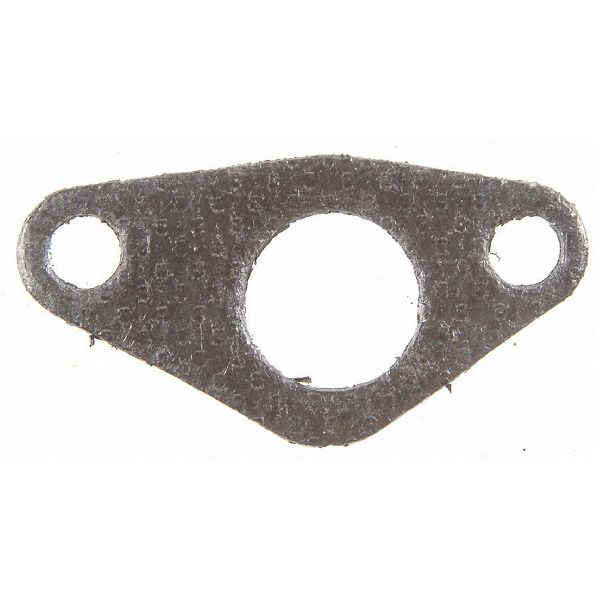
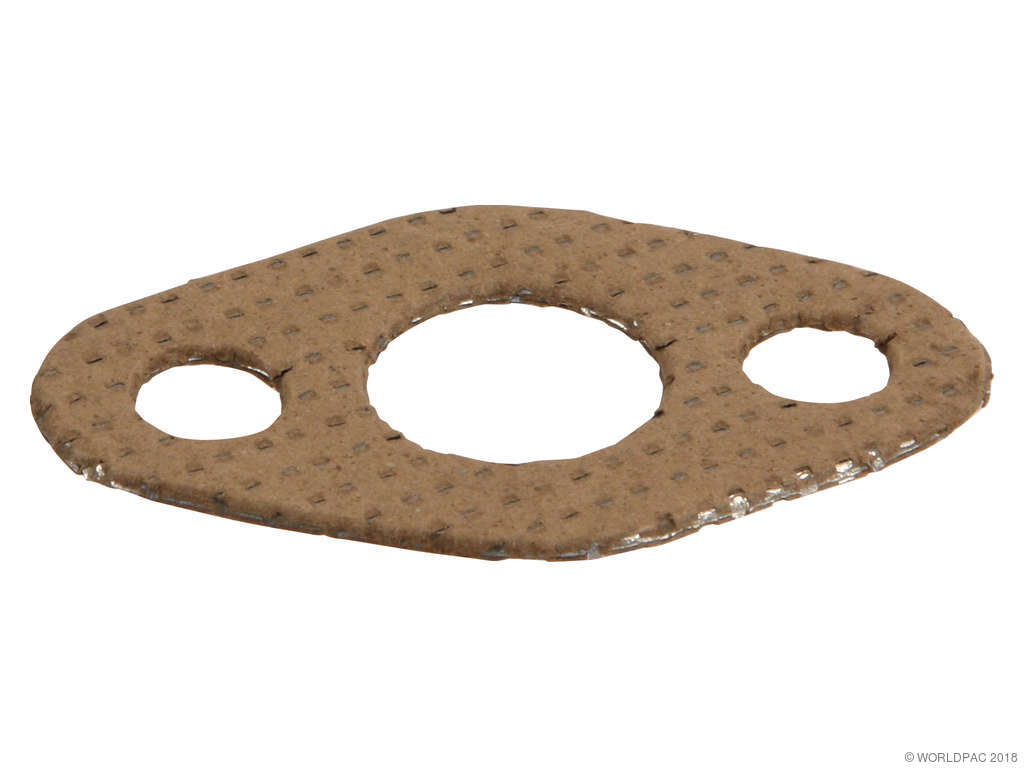
Aftermarket price range: $120-$270 - EGR Valve Gasket Kit — New gaskets are required to ensure a proper seal when reinstalling or replacing the EGR valve to prevent exhaust and coolant leaks.
Trusted brands: Victor Reinz, Elring, Mopar
OEM price range: $20-$40
Aftermarket price range: $10-$25
Related Codes That Often Appear With This One
- P0402 — Stands for 'EGR Flow Excessive'. A valve that is sticking due to carbon can get stuck in the open position just as easily as it can get stuck closed, leading to this related code.
- P2004, P2005, P2006, P2007, P2015 — These codes relate to the intake manifold swirl flaps, which are also highly prone to failure on the OM642 engine due to carbon buildup and oil contamination from the EGR system. An EGR problem is often a precursor to or a concurrent issue with swirl flap problems.
Platform-Specific Known Issues
- The OM642 engine is widely known for issues stemming from carbon and oil sludge buildup in the engine valley. The P0401 code is often one of the first signs of this. This same buildup also commonly leads to failure of the swirl flap motor and oil cooler seals, which are located in the same area. A leaking turbo inlet seal is a primary cause of oil contamination that destroys the swirl flap motor.
Mechanic-Grade Diagnostic Values
- EGR Valve Solenoid Resistance — expected: ~4.5 Ohms. Failure: A reading around 2 Ohms or an open circuit indicates an internal short or failure of the solenoid coil.
- MAF reading during EGR actuation test (Scan Tool) — expected: A significant drop in air mass reading (e.g., from ~550 mg/stroke to ~250 mg/stroke) when the EGR valve is commanded open.. Failure: Little to no change in the MAF reading indicates the valve is not opening or the passages are completely blocked.
- Exhaust Backpressure Sensor Reading (Scan Tool) — expected: Should read atmospheric pressure (approx. 1000-1015 mbar) with the engine off or at idle with the turbo actuator de-energized.. Failure: Readings that are stuck high or do not change with engine load can indicate a faulty sensor, which can affect EGR operation calculations.
Scan Tool Commands That Help
- Mercedes Star Diagnosis (Xentry/DAS): EGR Valve Actuation Test — Use this to command the EGR valve to open and close while the engine is off (ignition on). It allows you to visually confirm mechanical movement if the valve is removed but still connected, or to monitor live data (MAF, EGR position sensor) to confirm a response.
- Mercedes Star Diagnosis (Xentry/DAS): Reset Air Filter Adaptation / EGR Adaptation — This should be performed after replacing the EGR valve, especially with an aftermarket part. Some owners report drivability issues (shuddering, limp mode) after replacement that are resolved by performing this reset, which forces the ECU to relearn the flow characteristics of the new valve.
Wiring & Ground Locations
- EGR Valve Connector (Y27/17) — On the EGR valve itself, located at the rear of the engine valley, to the right of the turbocharger.. This is the primary electrical connection for the valve. Damage to the connector or wiring harness here from heat or oil contamination can cause electrical EGR faults.
- Engine Ground Straps — Key grounds are located on the engine block and connect to the chassis. One important ground connection point is on the transmission bellhousing.. A poor engine ground can cause erratic behavior in multiple sensors and actuators, including the EGR valve and the ECU itself, leading to false codes. Ensure these connections are clean and tight.
- PCM/ECM Ground — The Powertrain Control Module (PCM) has multiple ground pins that terminate at various points. Referencing a specific wiring diagram for the 2006 model shows grounds like G103 and splices like S115 are part of the PCM's ground circuit.. A compromised ground specifically for the PCM can cause incorrect sensor readings and faulty calculations, potentially leading to a P0401 code even if the EGR components are functional.
Real Owner Repair Stories
- MBClub UK forum member (Mercedes R-Class with OM642 engine) — Engine spluttering, limp mode, and eventually a Check Engine Light with an EGR code. Later, an 'EGR short circuit' code appeared.
❌ Tried (didn't work) Removing and cleaning the original EGR valve, which was found to be surprisingly clean., Lubricating the valve mechanism.
✅ What actually fixed it Replacing the EGR valve. The owner measured the resistance of the old valve's solenoid at 2 Ohms, while the new replacement valve measured 4.5 Ohms, confirming an electrical failure (internal short) of the original part. - MBWorld.org Forums member (2007 Mercedes R320 (OM642.950)) — After installing a new Pierburg EGR valve, the car would shudder above 1800 RPM with no fault codes present. Unplugging the MAF sensors made the car drive fine.
❌ Tried (didn't work) Double-checking all connections and ensuring the EGR valve was seated properly.
✅ What actually fixed it The owner disconnected the new EGR valve, and the car drove well. The final plan was to take it to a Mercedes specialist to perform an EGR adaptation reset using a Xentry diagnostic tool, as this was suspected to be the cause of the issue with the new, non-original part.
OEM Part Supersession History
A6421400160, A6421400360, A6421400860→A6421401860 (for the specified 2005-2010 Chrysler 300)— Revisions to improve reliability and address failure modes.
Heads up: There are different EGR valves for the OM642 engine depending on the model year and emissions system (e.g., pre- and post-2010). The valve for 2007-2009 models (like 6421401760) is different from the 2010+ version (6421401460) and they are not interchangeable. Always verify the part number with the vehicle's VIN.
Model Year Variations Within This Range
- 2007-2009 vs 2010+: The EGR valve part number and design changed around 2010 for many OM642 applications (notably in Sprinter vans, which is a good indicator for other platforms). The earlier valve (e.g., 6421401760) is not interchangeable with the later valve (e.g., 6421401460). While the Chrysler 300 CRD ended its run around this time, it's critical to verify the correct part number for the specific vehicle, as running production changes could mean an early 2010 model uses a different part than a 2009.
Diagnostic Flowchart
Other Known Issues on This Vehicle
Issues unrelated to this code that are worth knowing about as an owner of this generation:
- Oil Cooler Seal Leak 🔴 High — Extremely common, especially on pre-2010 models with original orange seals. Failure can occur from 60,000 miles onward. It is a very labor-intensive repair (9-12+ hours). (Ref: No official recall, but Mercedes updated the seal material from orange (Buna) to purple (Viton) to improve longevity. Part number for the updated seal is A6421880580.)
- Swirl Flap Motor Failure 🔴 High — Very common. The motor is located directly under the turbo intake pipe, and the original turbo inlet seal frequently leaks oil onto the motor's electronics, causing it to short out and fail, triggering limp mode and fault codes (P2015, etc.). (Ref: null)
- Injector Seal Leak ('Black Death') 🔴 High — Common at higher mileage (100k+ miles). The copper injector seal fails, allowing combustion gases to leak, forming a hard, tar-like substance around the injector. If not addressed, it can make injector removal extremely difficult and costly. (Ref: null)
- Intake Manifold Swirl Flap Linkage Failure 🟠 Medium — Common. The plastic linkages that connect the swirl flap motor to the flaps themselves can break or wear out due to carbon buildup and heat, causing the flaps to become inoperative. This often requires intake manifold replacement. (Ref: null)
- Timing Chain Stretch 🟡 Low — Less common than other issues but can occur at very high mileage (150k+ miles). Symptoms include a rattling noise on startup. Can lead to catastrophic engine failure if ignored. (Ref: null)
Used vs. New Parts: Buying Guide for This Vehicle
When a used part is the smart pick: A used EGR valve is generally not recommended for the OM642 engine. Because the primary failure mode is internal carbon clogging and mechanical wear from heat and soot, a used part from a donor vehicle likely has significant wear and could fail soon after installation. The labor to access the valve is significant enough that installing a new part is the smarter investment.
Donor-vehicle mileage cap: roughly under 40000 miles for the part to have meaningful remaining life.
What to inspect on the donor part:
- If considering used, demand to see the donor vehicle's mileage; anything over 40,000 miles is a high risk.
- Visually inspect the valve's port for heavy, caked-on carbon. If it's severely clogged, reject it.
- Attempt to move the valve plunger/lever (if accessible); it should move smoothly without binding. Any grittiness or sticking is a sign of imminent failure.
OEM-only on this vehicle (don't cheap out):
- While not strictly 'OEM-only', using a genuine Mercedes (or OEM supplier like Pierburg/Wahler) EGR valve is highly recommended. Some owners report drivability issues and the need for special ECU adaptations when using cheaper, unbranded aftermarket valves.
Aftermarket brands forum-validated for this vehicle:
- Pierburg
- Wahler
- Bosch
Brands owners have reported issues with on this vehicle:
- Unbranded, low-cost EGR valves from online marketplaces have a higher likelihood of causing post-installation issues that mimic other sensor failures, leading to a difficult diagnosis.
Real Owner Stories
Aggregated from forums and TSBs cited above. Mileages and costs reflect what owners reported in those sources.
2007 Chrysler 300C 3.0L CRD
Symptoms: Recurring P0401 error code that often triggered while the vehicle was at idle.
What fixed it: The owner investigated the electronic EGR valve, noting it is not vacuum-operated, and addressed the flow discrepancy detected by the ECU.
Source hint: 300cforums.com - 'EGR error Code P0401 300c 2007 3.0CRD'
2005-2010 Chrysler 300 3.0L CRD (OM642)
Symptoms: Cold idle problems and a P0401 EGR insufficient flow code.
What fixed it: Diagnosis focused on the discrepancy between the actual MAF sensor reading and the ECU's calculated expected value for EGR flow.
Source hint: MBClub.co.uk - 'Cold idle problems plus P0401 EGR insufficient flow'
2005-2010 Chrysler 300 3.0L CRD (OM642)
Symptoms: EGR valve seized in place by carbon buildup, requiring prying to remove.
What fixed it: Removed the EGR valve, popped off the back plastic cover to clean the internal mechanism, and cleaned the mounting surfaces.
Source hint: MBClub.co.uk - 'OM642 EGR clean'
Related OBD-II Codes
Frequently Asked Questions
Is the EGR valve on my 2007 Chrysler 300 3.0L CRD vacuum-operated or electronic?
Why does my Chrysler 300 CRD trigger P0401 even though the EGR valve seems to be moving?
Can I clean the EGR valve myself, or does it require replacement?
Are there any specific risks when reinstalling the EGR valve on the OM642 engine?
Does the P0401 code on my 300C relate to the common oil cooler seal issues?
What is the 'batwing' mentioned in the repair process for my 3.0L diesel?
Helpful Videos
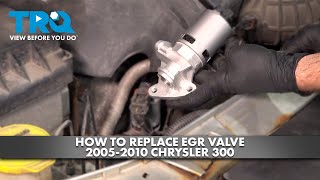
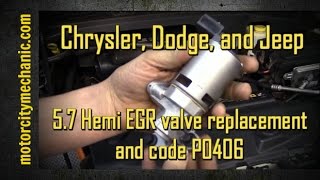

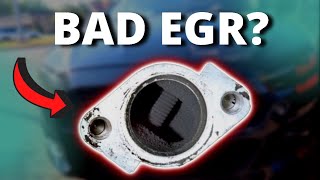
We Have This Part in Stock

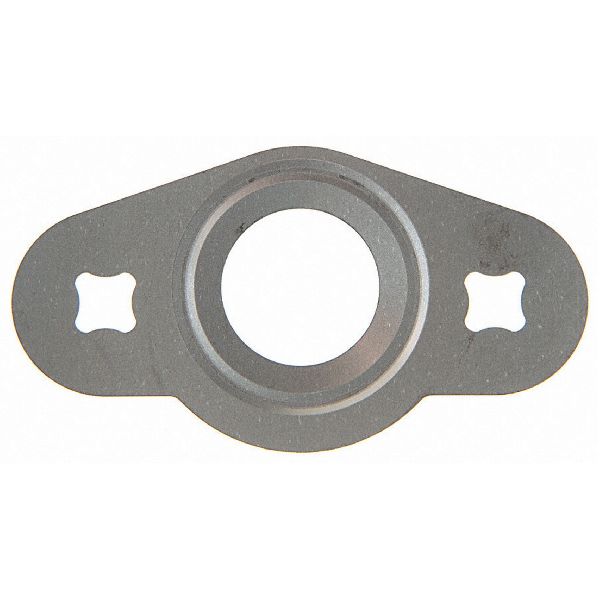

The information in this article is provided for general reference and educational purposes only. Vehicle specifications, procedures, and part compatibility can vary by production date, trim level, and region. Always consult your vehicle's factory service manual and verify part numbers before purchasing or performing repairs. Safety-critical components such as airbags, seat belts, and braking systems should be installed by a qualified professional.
- Chrysler 300:
- 🎬 Helpful Videos
- 🛍️ Shop This Part
- What's Unique About the 2005-2010 Chrysler 300
- Symptoms You May Notice
- Most Likely Causes
- Rare But Worth Checking
- Diagnosis Steps
- Parts You'll Likely Need
- Related Codes That Often Appear With This One
- Platform-Specific Known Issues
- Mechanic-Grade Diagnostic Values
- Scan Tool Commands That Help
- Wiring & Ground Locations
- Real Owner Repair Stories
- OEM Part Supersession History
- Model Year Variations Within This Range
- Diagnostic Flowchart
- Other Known Issues on This Vehicle
- Used vs. New Parts: Buying Guide for This Vehicle
- Real Owner Stories
- 2007 Chrysler 300C 3.0L CRD
- 2005-2010 Chrysler 300 3.0L CRD (OM642)
- 2005-2010 Chrysler 300 3.0L CRD (OM642)
- Related OBD-II Codes
- Frequently Asked Questions
- 🎟️ Get 5% Off