

P0369 on 2016-2017 Jeep Grand Cherokee: Camshaft Sensor Intermittent Fixes
This code indicates an intermittent signal from the exhaust camshaft position sensor on Bank 1 (passenger side). The most common fix is replacing the faulty sensor, which costs about $30-$80 for the part. Before replacing, inspect the wiring harness for damage, as this is also a frequent cause. In many cases, owners report that simply replacing the sensor does not fix the issue, pointing to underlying problems like wiring, oil pressure, or internal engine components.
- P0369 specifically points to the exhaust camshaft sensor on the passenger side (Bank 1).
- The most likely cause is a faulty sensor, which is a relatively inexpensive and accessible part to replace.
- Always inspect the wiring and connector for damage before buying a new sensor, as this is a common point of failure.
- If multiple camshaft sensor codes are present, or if a new sensor doesn't fix the issue, investigate a possible PCM software update as mentioned in Jeep's technical service bulletins.
What's Unique About the 2016-2017 Jeep GRAND CHEROKEE

The 3.6L Pentastar V6 engine, used in the Grand Cherokee, is a modern dual overhead cam (DOHC) design with four camshaft sensors. While generally reliable, these engines can be susceptible to issues that trigger camshaft sensor codes. Problems can range from simple sensor failure to more complex issues like oil pressure problems affecting the cam phasers or even loose oil galley plugs under the valve cover, which can mimic sensor faults by causing a loss of oil pressure to the phasers. Additionally, manufacturer TSBs #18-049-20 and #18-024-17 REV. C suggest that software updates can sometimes resolve overly sensitive sensor readings by changing the code from a one-trip to a two-trip fault, making a trip to the dealer for a reflash a potential fix.
Diagnostic Flowchart
Tap your situation to follow the diagnostic path that matches what you're seeing on this vehicle.
Symptoms You May Notice
- Check Engine Light is on
- Traction control light may illuminate simultaneously
- Engine hesitation or stumbling, especially under acceleration or going uphill
- Engine stalling unexpectedly
- Difficulty starting the engine
- Rough idle
- Reduced engine power or vehicle going into 'limp mode'
- Inability to accelerate past a certain RPM (e.g., 3500-4500 RPM)
- Replacing the wrong sensor (e.g., replacing the intake sensor instead of the exhaust, or replacing the sensor on Bank 2 instead of Bank 1).
- Repeatedly replacing the sensor when the actual problem is a damaged wire, poor connection, low oil pressure, or a loose oil galley plug.
- Replacing camshafts or timing components when the issue is a simple sensor or wiring fault.
Most Likely Causes

- Faulty Camshaft Position Sensor (Bank 1, Sensor B) 🔴 High Probability Sensors can fail over time due to heat cycles and potential oil contamination. However, many owners report that replacing the sensor is often not the final solution.
How to confirm: Swap the suspect sensor with the corresponding sensor from Bank 2 (driver's side exhaust). If the code changes to P0394 (Camshaft Position Sensor 'B' Circuit Intermittent - Bank 2), the sensor is bad. Always use a quality Mopar or OEM-equivalent part for replacement.
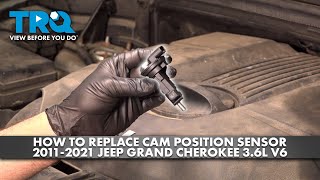
Typical fix: Replace the Bank 1 exhaust camshaft position sensor. The OEM Mopar part number is 5149141AF. 🎬 Watch this step-by-step guide to replacing the sensor yourself.
Est. part cost: $30-$80 - Wiring Harness or Connector Issue 🟡 Medium Probability Engine vibrations and heat can cause wires to chafe or break internally, or the connector can become loose or contaminated with oil. The harness has very little slack, making it prone to damage. A dealership fix may involve installing a wire overlay rather than finding the specific break.
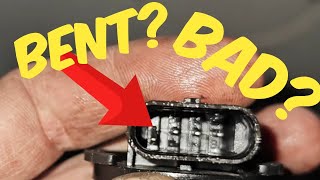
How to confirm: Visually inspect the wiring harness leading to the sensor for any signs of damage, chafing, or melting. Check the connector for a secure fit, corrosion, or oil inside the pins. Gently tug on the wires at the connector; if a wire stretches, it's broken internally. Use a multimeter to check for 5V power, ground, and signal continuity.
Typical fix: Repair the damaged section of the wiring harness or replace the connector pigtail.
Est. part cost: $15-$50 - PCM Software Update Needed ⚪ Low Probability Manufacturer TSBs #18-049-20 and #18-024-17 REV. C list this code among others that may be addressed by a PCM software update. The update changes the logic to make the fault a "two-trip" fault, making it less sensitive to brief, intermittent signal losses.
How to confirm: A Jeep dealership or a qualified shop with access to OEM software (wiTECH) can check if your vehicle's PCM has the latest calibration and if it's applicable to your vehicle's build date.
Typical fix: Update or 'reflash' the Powertrain Control Module with the latest software.
Est. part cost: $0-$200
Rare But Worth Checking
- Low Oil Pressure / Dirty Oil / Incorrect Oil Filter: The cam phasers are hydraulically operated by engine oil. If oil pressure is low due to incorrect oil viscosity (e.g., using 5W-20 instead of 5W-30 in some cases), a non-OEM filter, or sludgy oil, the camshaft may not be in the position the PCM expects, triggering a sensor code even if the sensor is good.
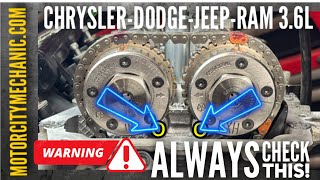
- Loose Oil Galley Plugs: A known issue on the 3.6L Pentastar is that the oil galley bolts/plugs located under the valve covers can back out. This causes a significant internal oil pressure leak, starving the cam phasers of the pressure needed to operate correctly, which in turn sets cam sensor codes. Checking and re-torquing these bolts with Loctite 🎬 See how loose oil galley plugs cause these sensor codes. is a common step for those who have already replaced sensors without success.
- Timing Chain or Cam Phaser Issue: A stretched timing chain or a failing cam phaser can cause the camshaft's actual position to be out of sync with the crankshaft, leading to intermittent codes. A damaged tone ring on the camshaft can also cause signal issues.
- Faulty Powertrain Control Module (PCM): In rare cases, the PCM itself can be the source of the problem, but all other possibilities should be exhausted before considering PCM replacement.
Diagnosis Steps
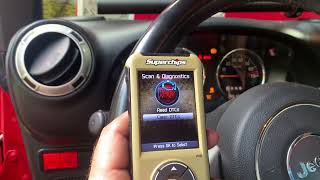
- Read the code with an OBD-II scanner to confirm P0369 is present.
- Identify the correct sensor: Bank 1 (passenger side), Sensor 'B' (exhaust camshaft). It is the rearmost sensor on the passenger side valve cover.
- Thoroughly inspect the sensor's electrical connector and wiring harness for any signs of damage, corrosion, or oil contamination. Pay close attention to the harness routing as it has little slack.
- If the wiring looks good, the easiest diagnostic step is to swap the suspect sensor with the identical sensor from Bank 2 (driver's side exhaust).
- Clear the codes and drive the vehicle, trying to replicate the conditions that set the code (e.g., high RPM, uphill acceleration). If the code returns as P0394 (the equivalent code for Bank 2), the sensor you moved is faulty and needs to be replaced.
- If the P0369 code returns, the problem is likely not the sensor. Check engine oil level and condition. Ensure the correct oil viscosity and an OEM-spec oil filter are being used.
- If the issue persists, the next step is to investigate the circuit more deeply with a multimeter or to check for the known issue of loose oil galley plugs under the passenger side valve cover. This is a more involved job.
- If wiring, sensor, and oil-related issues are ruled out, consult a dealer to check if a PCM software update is available per TSBs #18-049-20 and #18-024-17 REV. C.
Parts You'll Likely Need

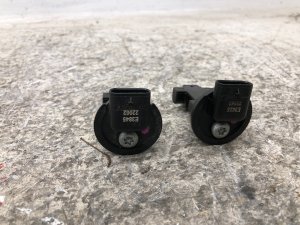
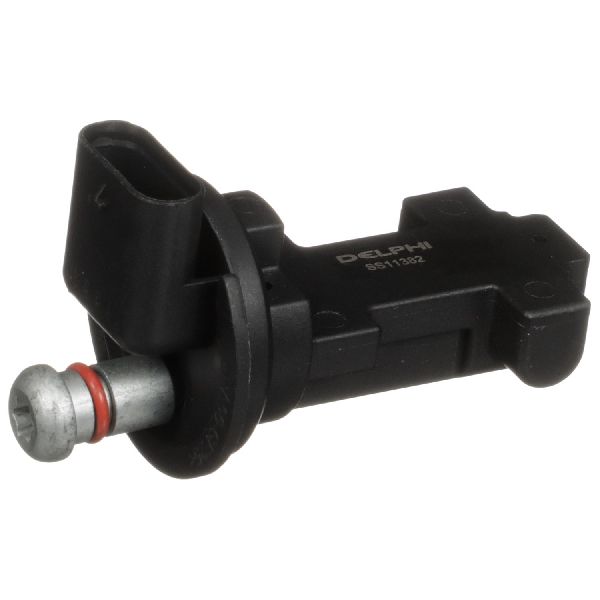
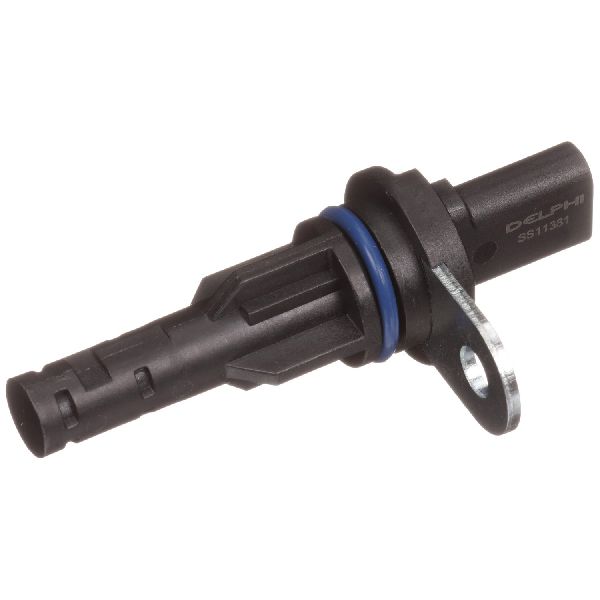
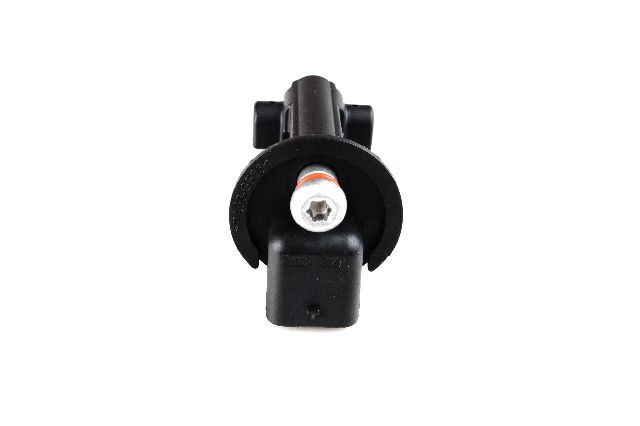
- Camshaft Position Sensor (Bank 1, Exhaust)
(OEM #5149141AF)— This is the most frequently replaced part for a P0369 code, though it may not always be the root cause. Using an OEM Mopar part is highly recommended by forum users.
Trusted brands: Mopar, NTK, Delphi
OEM price range: $60-$95
Aftermarket price range: $30-$50
Related Codes That Often Appear With This One
- P0365 — This is the code for a hard fault ('Circuit') in the same sensor. P0369 ('Intermittent') may eventually become a P0365 if the problem worsens or is present at startup.
- P0344, P0345, P0349, P0390, P0394 — These are codes for the other camshaft position sensors on the engine. Seeing multiple cam sensor codes at once, as noted in TSBs #18-049-20 and #18-024-17 REV. C, can point to a common problem like a wiring harness issue, a grounding problem, or the need for a PCM software update.
- P06DD — This code indicates an issue with the dual-stage oil pump. Since cam phaser operation is dependent on oil pressure, a P06DD code appearing with cam codes strongly suggests the root cause is related to the oiling system, not the sensors themselves.
Technical Service Bulletins (TSBs) & Recalls
- 18-049-20: Supersedes 18-024-17 REV. C. Involves a PCM reflash for 2016-2017 models to address several DTCs, including P0369.
- 18-024-17 REV. C: Involves a PCM software update for 2016-2017 models built on or before March 06, 2017. It changes P0369 from a one-trip to a two-trip fault to reduce sensitivity.
Platform-Specific Known Issues
- TSB #18-049-20 and TSB #18-024-17 REV. C both list P0369 as a code that may be resolved with a PCM software update, indicating the original logic could be overly sensitive. The update changes the condition from a one-trip to a two-trip fault.
- A widely discussed issue on forums for the 3.6L Pentastar is loose oil galley bolts under the valve covers, which leads to oil pressure loss at the cam phasers and can trigger P0369.
Mechanic-Grade Diagnostic Values
- Camshaft Position Sensor Signal Voltage — expected: A digital square wave switching between 0V and 5V as the engine rotates.. Failure: Signal shows dropouts, noise, voltage spikes, or is stuck high or low when viewed on an oscilloscope.
- Camshaft Position Sensor Supply Voltage — expected: Steady 5V reference at one of the connector pins with the key on.. Failure: Voltage is significantly lower than 5V or absent, indicating a wiring or PCM issue.
- Camshaft Position Sensor Ground Circuit Resistance — expected: Less than 3 ohms between the ground pin at the connector and a known good chassis ground.. Failure: High resistance (OL) indicates an open or corroded ground wire.
- Cylinder Head Oil Galley Plug Torque — expected: 13 ft-lbs (156 in-lbs).. Failure: Bolts are found to be loose or backed out upon inspection under the valve cover.
Scan Tool Commands That Help
- wiTECH (OEM Dealer Tool): Powertrain Control Module (PCM) Reprogramming/Flash — Used to apply the software update specified in TSB #18-049-20 or #18-024-17 REV. C. This update changes the P0369 fault logic from a sensitive 'one-trip' fault to a more robust 'two-trip' fault, which can resolve the code if it's being set by minor, transient signal interruptions.
- Professional OBD-II Scanner with Live Data/Graphing: Live Data Monitoring of Camshaft Sensor Signal — To visually inspect the sensor's signal waveform in real-time while the engine is running. Performing a 'wiggle test' on the harness while watching the graph can help pinpoint intermittent shorts or open circuits.
Wiring & Ground Locations
- Bank 1 Camshaft Position Sensor Connector — On the passenger side (Bank 1) valve cover. The connector serves both the intake and exhaust sensors for that bank and has four pins.. This is the primary connection point to test for 5V supply, ground, and the intermittent signal for the 'B' (exhaust) sensor. Corrosion or damage here is a common cause of P0369.
- Engine Ground Strap (Mopar PN 5064962AA) — One key engine ground point is located on the passenger side, under the alternator, attaching to the frame.. A corroded or broken main engine ground strap can cause a host of intermittent electrical issues and floating grounds, leading to erratic sensor readings. While not specific to P0369, checking main grounds is a crucial step when diagnosing any intermittent electronic fault.
Real Owner Repair Stories
- Jeep Wrangler JK Forum user 'walldo' (2016 Jeep Wrangler JKUR (with 3.6L Pentastar)) — P0369 code, vehicle stuck in 'limp mode'.
❌ Tried (didn't work) Replacing the engine wiring harness., Replacing all camshaft and crankshaft position sensors.
✅ What actually fixed it The root cause was found to be three out of four oil galley bolts under the valve covers had come loose. The final repair involved removing the bolts, applying Loctite, and re-torquing them. Due to related damage found (timing chain hopping), all timing chains, guides, tensioners, and the oil pump were also replaced. The codes did not return after 3,000 miles. - Jeep Wrangler JK Forum user 'Bberryhill' (2014 Jeep Wrangler JKU (with 3.6L Pentastar)) — P0365 and P0369 codes, vehicle entering 'limp mode'.
❌ Tried (didn't work) Initial diagnosis pointed to wiring.
✅ What actually fixed it A Chrysler dealership determined there was a short in the wiring and installed a 'wire overlay' as the fix, which is a common professional practice to bypass a hard-to-find break in the original harness.
"I Checked Everything" — The Actual Cause
- In cases where electrical diagnostics (sensor replacement, wiring checks) fail to resolve P0369, the root cause can be mechanical, mimicking an electrical fault. A widely reported issue is loose oil galley plugs under the valve covers. These plugs maintain oil pressure for the cam phasers. When they loosen, the phasers don't receive proper hydraulic pressure, causing camshaft position to deviate from what the PCM expects. This triggers a sensor code even though the sensor and its wiring are perfectly fine. This is missed by standard electrical tests and requires engine disassembly to inspect.
When the Usual Fixes Don't Work
- While replacing the camshaft position sensor is the most common initial repair attempt, multiple owner and mechanic reports indicate this often fails to fix the problem. The intermittent nature of P0369 frequently points to more complex underlying issues. A significant number of successful repairs involved either meticulous inspection and repair of the wiring harness (including dealer-installed overlays) or addressing the mechanical issue of loose oil galley plugs under the valve cover, which causes an oil pressure drop to the cam phasers.
OEM Part Supersession History
5149141AF→N/A— This appears to be the current and stable Mopar part number for the camshaft position sensor for this application.
Heads up: Aftermarket equivalents include Airtex/Ignition 5S12863, Standard Motor Products CSS1940, and Dorman 907-728. However, owner forums frequently recommend using the OEM Mopar part to avoid compatibility or longevity issues.
Model Year Variations Within This Range
- 2016-2017 (specifically models built on or before March 06, 2017): TSB #18-024-17 REV. C, which was superseded by #18-049-20, applies a PCM software update for vehicles built on or before March 06, 2017 (MDH 0306XX). For the 2017 model year, this update specifically changes the P0369 code from a one-trip fault to a two-trip fault, making it less likely to be triggered by a single, brief signal interruption.
Helpful Videos
Used OEM Parts in Stock
New Aftermarket Parts Available



The information in this article is provided for general reference and educational purposes only. Vehicle specifications, procedures, and part compatibility can vary by production date, trim level, and region. Always consult your vehicle's factory service manual and verify part numbers before purchasing or performing repairs. Safety-critical components such as airbags, seat belts, and braking systems should be installed by a qualified professional.
- Jeep GRAND CHEROKEE:
- 🎬 Helpful Videos
- 🛍️ Shop This Part
- What's Unique About the 2016-2017 Jeep GRAND CHEROKEE
- Diagnostic Flowchart
- Symptoms You May Notice
- Most Likely Causes
- Rare But Worth Checking
- Diagnosis Steps
- Parts You'll Likely Need
- Related Codes That Often Appear With This One
- Technical Service Bulletins (TSBs) & Recalls
- Platform-Specific Known Issues
- Mechanic-Grade Diagnostic Values
- Scan Tool Commands That Help
- Wiring & Ground Locations
- Real Owner Repair Stories
- "I Checked Everything" — The Actual Cause
- When the Usual Fixes Don't Work
- OEM Part Supersession History
- Model Year Variations Within This Range
- 🎟️ Get 5% Off