

P0366 on 2017-2022 Honda CR-V: Exhaust Cam Sensor Causes and Fixes
On a 2017-2022 Honda CR-V, code P0366 is most often caused by a faulty exhaust camshaft position sensor. Before replacing it, check the sensor for oil sludge, a common issue on the 1.5L Turbo engine due to oil dilution. A new OEM sensor costs around $60-$90, and replacement is a simple DIY task for many owners. If a new sensor doesn't fix it, the timing chain may be stretched.
- P0366 on your CR-V points to the exhaust camshaft position sensor.
- The most likely fix is replacing the sensor, but you MUST first check the sensor tip for oil sludge, especially on the 1.5T engine.
- An oil and filter change may be required if the sensor is fouled due to the platform's known oil dilution issue.
- If a new sensor and clean oil don't resolve the code, the timing chain may have stretched, which is a more serious mechanical repair.
What's Unique About the 2017-2022 Honda CR-V
For the 1.5L Turbo engine (L15B7) in this CR-V generation, it's critical to check for oil contamination on the sensor tip. These engines are known for a fuel/oil dilution issue, especially on short trips in cold weather, which can degrade oil and create sludge. This sludge can coat the magnetic sensor and disrupt its signal. Mechanics and DIYers have found that simply cleaning the sensor and performing an oil change can sometimes resolve the code. While a bad sensor is the most common cause, this platform can also suffer from stretched timing chains, which will set this code (often with P0341) and requires a much more involved and expensive repair.
Symptoms You May Notice
- Check Engine Light is on
- Multiple other warning lights may illuminate (VSA, Power Steering, Brake System, Emissions System, etc.)
- Rough or unstable idle
- Engine hesitation or lack of power during acceleration
- Difficulty starting the engine or extended cranking time
- Reduced fuel economy
- Engine may stall unexpectedly
- Replacing the camshaft position sensor without first inspecting it for oil contamination. An oil change might have fixed the issue for less cost.
- Replacing the crankshaft position sensor. P0366 specifically points to the exhaust camshaft 'B' sensor circuit.
- Immediately assuming the timing chain has failed. While possible, the sensor and its circuit should be thoroughly checked first as they are far more common and cheaper to fix.
Most Likely Causes
- Faulty Exhaust Camshaft Position Sensor 🔴 High Probability Sensors can fail over time due to heat cycles and internal electronic degradation. It is the most common failure point for this code.
How to confirm: After checking wiring and cleaning the sensor tip, replacing the sensor is the next logical step. It's relatively inexpensive and accessible.
Typical fix: Replace the exhaust camshaft position sensor and its O-ring.
Est. part cost: $25-$90 - Contaminated Sensor Tip (Oil Sludge) 🟡 Medium Probability The 1.5L Turbo engine is known for its oil dilution problem, where fuel contaminates the engine oil, reducing its viscosity and leading to sludge formation, especially with infrequent oil changes. This sludge can easily foul the sensor.
How to confirm: Remove the sensor and visually inspect the tip for a thick coating of dark, sludgy oil. A light film of clean oil is normal.
Typical fix: Clean the sensor tip thoroughly with brake cleaner. Perform an engine oil and filter change using the correct 0W-20 synthetic oil. If the code returns, replace the sensor.
Est. part cost: $0 (if cleaning works) or $40-$70 for oil and filter - Wiring or Connector Issue ⚪ Low Probability Vibration and heat can cause wires to break or connectors to become loose or corroded over time. The harness connector is a common point of failure.
How to confirm: Visually inspect the wiring harness and connector for damage, corrosion, or loose pins. Use a multimeter to check for proper voltage (typically 5V or 12V reference) and ground at the connector according to the service manual.
Typical fix: Repair the damaged section of the wiring harness or clean/replace the connector.
Est. part cost: $5-$50
Rare But Worth Checking
- Stretched Timing Chain: This is a known, though less common, issue on this platform. It causes the camshaft and crankshaft signals to be out of phase, triggering P0366. This is a significant mechanical repair and is often accompanied by other timing-related codes like P0341 (Intake Cam Sensor). A mechanic can check timing correlation with a scan tool.
- Faulty VTC (Variable Timing Control) Actuator: The oil control solenoid or the cam phaser itself can get stuck due to low oil pressure or debris, causing a discrepancy between the desired and actual cam timing, which can trigger P0366.
- Failed Engine Control Module (ECM): This is very rare. The ECM itself could be failing to interpret the sensor signal correctly. This should only be considered after all other possibilities, including wiring and mechanical issues, have been exhausted.
Diagnosis Steps
- Scan the ECM for any other stored trouble codes. Address other codes first if they are present, especially timing-related codes like P0341.
- Visually inspect the wiring harness and connector for the exhaust camshaft position sensor. Look for any signs of damage, melting, or corrosion.
- Remove the exhaust camshaft position sensor. On the 1.5T engine, it is located on the front of the valve cover (radiator side).
- Inspect the sensor's magnetic tip. If it is covered in thick, dark oil or sludge, clean the sensor thoroughly. Perform an engine oil and filter change before proceeding. Clear the code and test drive to see if it returns.
- If the sensor was clean or the code returns, test the circuit. Use a multimeter to verify reference voltage and ground at the connector with the key on. Check the signal wire for a changing voltage as the engine is cranked.
- If the circuit tests okay, the sensor itself is the most likely culprit. Replace the exhaust camshaft position sensor with a quality OEM or equivalent part.
- If the code persists after replacing the sensor, the issue may be mechanical. The timing chain should be inspected for stretch, and the VTC actuator should be tested. This step often requires professional assistance and specialized tools.
Parts You'll Likely Need
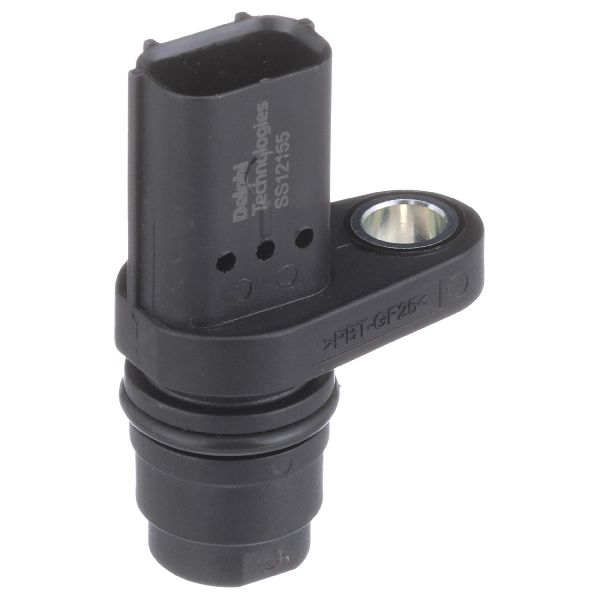
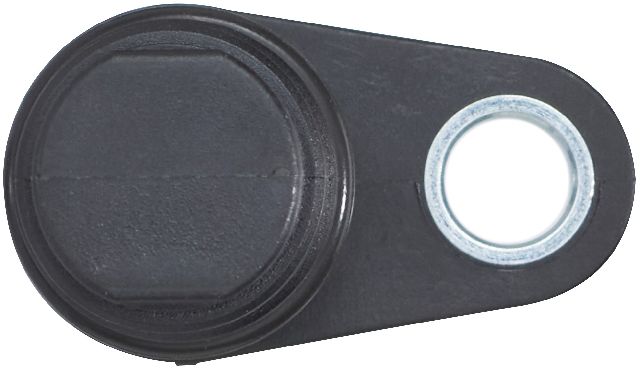
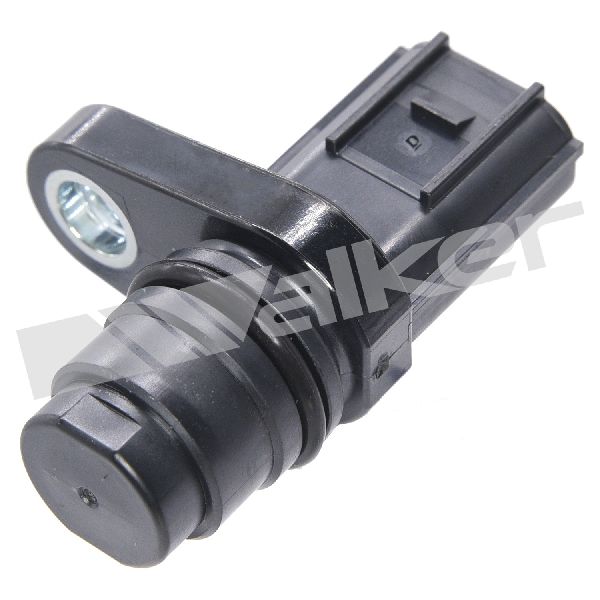
- Exhaust Camshaft Position Sensor
(OEM #37500-59B-J01)— This is the most common component to fail for this code. On the 1.5T engine, the intake and exhaust sensors are the same part. Note: This part is often mislabeled as a 'Crank Sensor' by online retailers but is correct for the cam sensors.
Trusted brands: Honda (Genuine OEM), Denso, NTK/NGK
OEM price range: $60-$90
Aftermarket price range: $25-$60
Related Codes That Often Appear With This One
- P0341 — This code refers to the Intake Camshaft Position Sensor ('A') Circuit Range/Performance. If timing has jumped or both sensors are failing, they may set codes together.
- P0011 — This code indicates 'A' Camshaft Position - Timing Over-Advanced. It often points to a problem with the VTC system (actuator, solenoid) which can be related to the P0366 fault.
- P0172 — This code means 'System Too Rich'. On the 1.5T engine, this is often caused by failing fuel injectors, a separate common issue that can sometimes occur concurrently.
Technical Service Bulletins (TSBs) & Recalls
- While no TSB is specific to P0366, Honda TSBs related to the oil dilution issue on 1.5T engines (like the one from Oct 2018) are relevant, as the resulting oil degradation can cause this code.
Platform-Specific Known Issues
- A video guide specifically for the 2017-2022 CR-V describes the full diagnostic trouble code as 'DTC P0366: CMP Sensor B and CKP Sensor Incorrect Phase Detected', highlighting that the ECM is seeing a conflict between the cam and crank sensors, which can point towards a stretched timing chain.
Mechanic-Grade Diagnostic Values
- CMP Sensor Power Supply Voltage — expected: Typically 5V reference with key on, engine off. Some systems may use 8V or 12V.. Failure: 0V indicates a blown fuse or open in the power supply wire.
- CMP Sensor Signal Voltage (Bench Test) — expected: When back-probing the signal and ground wires, the voltage should toggle between high (e.g., 5V) and low (e.g., 0V) as a piece of metal is passed in front of the sensor tip.. Failure: No change in voltage indicates a faulty sensor.
- Cam/Crank Correlation (Base Timing) — expected: The deviation between camshaft and crankshaft position should be less than 10 degrees when the VTC system is not active.. Failure: A deviation of 10 degrees or more for at least 4 seconds will set codes P0341 and/or P0366, strongly suggesting a stretched timing chain.
Hidden / Shadow Codes Worth Checking
- P0101A: While not a shadow code for P0366, service procedures note that if DTC P0101A is present alongside P0366, it must be diagnosed and resolved first. (see via Standard OBD-II scanner or Honda HDS.)
Scan Tool Commands That Help
- Honda Diagnostic System (HDS) or equivalent professional scan tool: CKP Pattern Clear / CKP Pattern Learn — This procedure must be performed after replacing the PCM, camshaft, or crankshaft to allow the computer to learn the new mechanical variations of the sensor reluctor wheels.
- Honda Diagnostic System (HDS) or equivalent professional scan tool: VTC System Test (Bidirectional Control) — A technician can command the intake and exhaust VTC actuators to advance or retard timing while monitoring the cam sensor signals on a scope. This confirms if the VTC phasers are mechanically responding to commands, helping to isolate a stuck actuator from a sensor or wiring issue.
Real Owner Repair Stories
- YouTube: DTech Engineering (Honda with 1.5L Turbo engine (similar to CR-V)) — Rattle noise at startup, Check Engine Light with codes P0341 and P0366.
❌ Tried (didn't work) Initial assumption was a simple sensor failure.
✅ What actually fixed it Diagnosis using a pico-scope revealed a cam/crank correlation deviation of more than 10 degrees at base timing. This confirmed a stretched timing chain was the root cause, requiring a full timing chain replacement. The startup rattle was also caused by the loose chain and faulty tensioner.
Model Year Variations Within This Range
- 2017-2019 (Primarily): Earlier models of the 1.5T engine were more susceptible to the oil dilution issue. Honda issued software updates (via TSBs) to adjust engine and transmission control logic to help the engine warm up faster, reducing the amount of unburnt fuel that seeps into the crankcase. This update is relevant as oil dilution leads to the sludge that can foul the CMP sensor.
Diagnostic Flowchart
Other Known Issues on This Vehicle
Issues unrelated to this code that are worth knowing about as an owner of this generation:
- Fuel/Oil Dilution (1.5T Engine) 🔴 High — Common, especially in 2017-2018 models and vehicles used for short trips in cold climates. Honda issued product updates and extended warranties to address this. (Ref: Honda Service Bulletin issued in October 2018 and warranty extension.)
- Failing Fuel Injectors (1.5T Engine) 🟠 Medium — A widely reported issue where injectors fail or leak, causing rich conditions (P0172), misfires, and rough running. Often requires replacement of all four injectors.
- Sticky Steering 🔴 High — Affects some 2022-2023 models. Owners report a momentary increase in steering effort or a 'sticky' feeling at highway speeds. (Ref: Honda TSB 23-037 instructs dealers to replace the electronic power steering gearbox.)
- CVT Shudder/Hesitation 🟡 Low — Some owners of 2017-2019 models report a shudder or hesitation during light acceleration. Honda has addressed this with software updates and CVT fluid flushes. (Ref: Service bulletins exist to address the issue.)
- Low-Pressure Fuel Pump Failure 🔴 High — Affects 2018-2020 models. The fuel pump impeller can fail, leading to engine stalling while driving. (Ref: NHTSA Recalls 23V-858 and 24V-763.)
Used vs. New Parts: Buying Guide for This Vehicle
When a used part is the smart pick: For this repair, buying a used part is generally not recommended. The primary failure component, the camshaft position sensor, is an inexpensive electronic part that wears over time. The potential cost savings of a used sensor are minimal compared to the risk of premature failure.
Donor-vehicle mileage cap: roughly under 40000 miles for the part to have meaningful remaining life.
What to inspect on the donor part:
- For a VTC actuator, ensure the donor vehicle had no timing-related codes.
- Inspect the part for any physical damage, cracks, or signs of heavy sludge.
- If possible, get the service history of the donor vehicle to check for regular oil changes.
OEM-only on this vehicle (don't cheap out):
- Camshaft Position Sensor: While good aftermarket options exist, Genuine Honda OEM parts are strongly recommended for perfect compatibility and to avoid issues with relearn procedures.
Aftermarket brands forum-validated for this vehicle:
- Denso
- NTK/NGK
Brands owners have reported issues with on this vehicle:
- Unnamed, no-brand 'white-box' parts from online marketplaces should be avoided due to inconsistent quality and high failure rates.
Real Owner Stories
Aggregated from forums and TSBs cited above. Mileages and costs reflect what owners reported in those sources.
2017-2022 Honda CR-V 1.5T
Symptoms: DTC P0366: CMP Sensor B and CKP Sensor Incorrect Phase Detected. The ECM sees a conflict between the cam and crank sensors.
What fixed it: The issue was identified as a mechanical timing problem, specifically a stretched timing chain requiring inspection of the chain and VTC actuator.
Source hint: Video guide for 2017-2022 CR-V describing DTC P0366: CMP Sensor B and CKP Sensor Incorrect Phase Detected
2017 Honda CR-V 1.5T
Symptoms: Multiple codes present, potentially including injector-related issues and rough running.
What fixed it: Discussion suggests that failing fuel injectors can cause rich conditions and multiple engine codes on this platform.
Source hint: bobistheoilguy.com forums thread '2017-honda-cr-v.382099/'
Related OBD-II Codes
Frequently Asked Questions
Does the October 2018 TSB for oil dilution apply to my 2017-2018 CR-V with code P0366?
Why are my VSA, Power Steering, and Brake System lights on along with the Check Engine light?
Can I use a used camshaft sensor from a donor vehicle to fix this?
Is there a specific brand of sensor I should buy for my 1.5T engine?
My CR-V is stalling and has a P0366; could this be related to the fuel pump recall?
Where is the exhaust camshaft position sensor located on the 1.5L Turbo engine?
Helpful Videos
![How to Fix HONDA P0366 Engine Code in 3 Minutes [2 DIY Methods / Only $9.57]](https://img.youtube.com/vi/x1CGhcg7SH8/mqdefault.jpg)
We Have This Part in Stock



The information in this article is provided for general reference and educational purposes only. Vehicle specifications, procedures, and part compatibility can vary by production date, trim level, and region. Always consult your vehicle's factory service manual and verify part numbers before purchasing or performing repairs. Safety-critical components such as airbags, seat belts, and braking systems should be installed by a qualified professional.
- Honda CR-V:
- 🎬 Helpful Videos
- 🛍️ Shop This Part
- What's Unique About the 2017-2022 Honda CR-V
- Symptoms You May Notice
- Most Likely Causes
- Rare But Worth Checking
- Diagnosis Steps
- Parts You'll Likely Need
- Related Codes That Often Appear With This One
- Technical Service Bulletins (TSBs) & Recalls
- Platform-Specific Known Issues
- Mechanic-Grade Diagnostic Values
- Hidden / Shadow Codes Worth Checking
- Scan Tool Commands That Help
- Real Owner Repair Stories
- Model Year Variations Within This Range
- Diagnostic Flowchart
- Other Known Issues on This Vehicle
- Used vs. New Parts: Buying Guide for This Vehicle
- Real Owner Stories
- 2017-2022 Honda CR-V 1.5T
- 2017 Honda CR-V 1.5T
- Related OBD-II Codes
- Frequently Asked Questions
- 🎟️ Get 5% Off