

P0356 on 2012-2018 Jeep Wrangler: Ignition Coil F (Cylinder 6) Failure Causes and Fixes
P0356 on a 3.6L Pentastar V6 Jeep Wrangler indicates a fault with the ignition coil circuit for cylinder #6. The most common cause is a failed ignition coil, which is a straightforward DIY fix once the intake manifold is removed. Swapping the coil with an adjacent one is the easiest way to confirm the diagnosis before buying parts.
- P0356 specifically points to an electrical fault in the ignition coil circuit for cylinder #6.
- The most likely culprit is a failed ignition coil, which is a common issue on the 3.6L Pentastar engine.
- A definitive diagnosis can be made by swapping the cylinder #6 coil with another one and seeing if the trouble code follows the coil.
- Accessing cylinder #6 requires removing the upper intake manifold, so it is strongly recommended to replace all three driver's side spark plugs and the intake gaskets at the same time to avoid duplicate labor in the future.
- Do not drive for an extended period with this code, as the resulting misfire can cause expensive damage to the catalytic converter.
What's Unique About the 2012-2018 Jeep Wrangler
The 3.6L Pentastar V6 is a very common engine across many Jeep, Dodge, and Chrysler vehicles. On the Jeep Wrangler JK, this code is a frequent issue, often due to a simple coil failure. The main platform-specific challenge is access. Cylinder #6 is located on the driver's side of the engine, towards the rear (closest to the firewall). Replacing this coil requires removing the upper intake manifold, making the job more time-consuming than for the passenger-side cylinders. This procedure is common across all vehicles with the 3.6L Pentastar in a longitudinal (RWD-based) layout.
Symptoms You May Notice
- Engine misfire (shaking, stumbling, or rough running)
- Flashing or solid Check Engine Light
- Reduced engine power and poor acceleration
- Rough idle
- Decreased fuel economy
- Hard start or no-start condition in some cases
- Replacing only the spark plug without testing the ignition coil.
- Replacing the PCM before thoroughly testing the coil and wiring.
- Assuming a P0306 (Cylinder 6 Misfire) is a fuel injector issue when P0356 is also present. The P0356 circuit code is the root cause and should be diagnosed first.
Most Likely Causes
- Failed Ignition Coil (Cylinder 6) 🔴 High Probability Ignition coils are wear items that operate in a high-heat, high-vibration environment. The coil for cylinder #6 on the Pentastar is a common failure point due to its location and the general failure rate of coils on this engine.
How to confirm: The easiest method is to swap the ignition coil from cylinder #6 with another cylinder (e.g., cylinder #4, which is also on the driver's side). Clear the codes and run the engine. If the code changes to P0354, the coil is confirmed to be faulty.
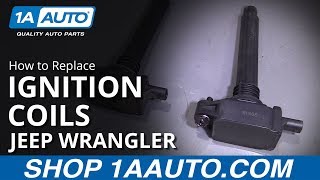
Typical fix: Replace the faulty ignition coil. 🎬 See this step-by-step ignition coil replacement guide It is often recommended to replace all three coils on the driver's side bank while the intake manifold is removed to save on future labor.
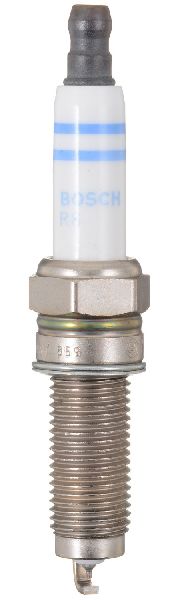
Est. part cost: $25-$75 - Worn or Fouled Spark Plug (Cylinder 6) 🟡 Medium Probability A worn spark plug with an excessive gap forces the ignition coil to work harder, which can lead to premature coil failure and trigger a circuit code. Since replacing the coil on cylinder #6 requires removing the intake manifold, it's highly recommended to replace the spark plugs at the same time, especially if they are near their service interval (typically 100,000 miles).
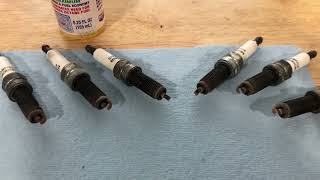
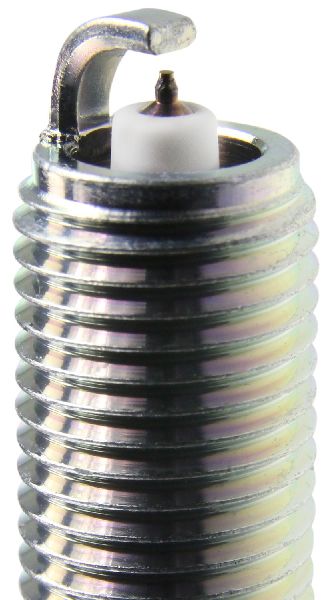
How to confirm: After removing the ignition coil, remove the spark plug and inspect it for wear, carbon buildup, oil fouling, or damage to the electrode or insulator. A cracked ceramic insulator is a known issue.
Typical fix: Replace the spark plug. It is best practice to replace all six spark plugs at the same time, or at minimum the three on the driver's side bank.
Est. part cost: $5-$15 per plug - Damaged Wiring or Loose Connector ⚪ Low Probability Engine vibrations and heat can cause wires to chafe or the plastic locking tab on the coil's electrical connector to become brittle and break. A broken tab can lead to a poor connection that vibrates loose. Some owners report successfully securing a loose connector with a zip tie as a temporary or permanent fix.
How to confirm: Visually inspect the wiring harness leading to the cylinder #6 ignition coil for any signs of abrasion, melting, or breaks. Check that the connector is fully seated and the locking tab is engaged. Wiggle the connector with the engine running (if accessible and safe) to see if it induces a misfire.
Typical fix: Repair the damaged section of wiring or replace the connector pigtail. If only the lock tab is broken, a zip tie can be used to secure the connection.
Est. part cost: $10-$30
Rare But Worth Checking
- Failed Powertrain Control Module (PCM): This is the least likely cause. The internal driver circuit in the PCM that controls the ignition coil can fail. This should only be considered after all other possibilities (coil, plug, wiring) have been definitively ruled out using a multimeter to test the circuit. Replacing a PCM requires programming it to the vehicle's VIN.
- Oil/Coolant Contamination in Wiring Harness: The 3.6L Pentastar is notorious for its plastic oil filter/cooler housing, which sits in the 'V' of the engine and is prone to cracking and leaking oil and/or coolant into the valley. This fluid can saturate wiring harnesses that run underneath, including ignition and sensor wiring, potentially causing shorts or open circuits that could trigger a P0356 code.
Diagnosis Steps
- Verify the presence of the P0356 code (and any others like P0306) using an OBD-II scanner.
- Identify cylinder #6. On the 3.6L Pentastar V6 in a RWD layout like the Wrangler, the cylinders on the driver's side (left bank) are 2, 4, and 6, from front to back. Cylinder #6 is the one closest to the driver's firewall.
- To access the driver's side coils, you must remove the upper intake manifold. 🎬 Watch: How to remove the Pentastar intake manifold This involves disconnecting the air intake tube, several sensors, vacuum hoses, and unbolting the manifold itself. Place shop towels in the open lower intake ports to prevent debris from falling into the engine.
- Once the intake is removed, swap the ignition coil from cylinder #6 with the coil from cylinder #4.
- While the intake is off, it is highly advisable to replace all three spark plugs on this bank (2, 4, 6) and the upper/lower intake manifold gaskets, as they are one-time use.
- Reassemble the intake manifold, clear the diagnostic codes, and start the engine. Let it run for a few minutes.
- Re-scan for codes. If the code has changed to P0354 ("Ignition Coil D Circuit Malfunction"), the ignition coil you moved is faulty and needs to be replaced.
- If the P0356 code returns, the problem is not the coil. The next step is to inspect the wiring connector for cylinder #6 for pushed-out pins, corrosion, or damage. Use a multimeter to verify 12V power and the pulsing ground signal from the PCM at the connector.
- If the coil, plug, and wiring all appear to be in good condition, the issue may be with the PCM, which requires professional diagnosis.
Parts You'll Likely Need
- Ignition Coil
(OEM #5149168AJ)— This is the most common cause of a P0356 code. The original part number 5149168AH has been superseded by 5149168AJ.
Trusted brands: Mopar, NGK, Denso
OEM price range: $45-$70
Aftermarket price range: $25-$50 - Spark Plug
(OEM #SP149125AD)— It is highly recommended to replace the spark plugs, especially on the difficult-to-access driver's side, whenever the intake manifold is removed for a coil replacement.
Trusted brands: Champion, NGK
OEM price range: $10-$20
Aftermarket price range: $5-$15 - Upper and Lower Intake Manifold Gaskets
(OEM #Upper: 5184331AC, Lower: 5184562AC. Often sold in kits.)— These gaskets are one-time use and must be replaced anytime the intake manifold is removed to prevent vacuum leaks. They are often sold as a set. Aftermarket kits like Fel-Pro MS97204 are also available.
Trusted brands: Mopar, Fel-Pro
OEM price range: $30-$50
Aftermarket price range: $15-$30
Related Codes That Often Appear With This One
- P0306 — P0306 means "Cylinder 6 Misfire Detected." Since a faulty ignition coil circuit (P0356) prevents a proper spark, it will almost always cause a misfire on that same cylinder. P0356 is the cause, P0306 is the effect.
Technical Service Bulletins (TSBs) & Recalls
- TSB 09-013-20 REV. A: While not directly for P0356, this TSB addresses misfire codes (P030x) on 2020-2021 models with the 3.6L engine due to internally cracked spark plugs, highlighting a known issue with ignition components on the Pentastar.
Platform-Specific Known Issues
- In early 2012 models, a P0306 misfire code was sometimes an early symptom of a larger cylinder head problem that was covered under an extended warranty by Chrysler. While P0356 is an electrical code, it's worth noting this historical context for early model year vehicles.
- The plastic locking tab on the ignition coil connector is known to become brittle and break, leading to a loose connection. This is a common point of failure for the circuit.
Mechanic-Grade Diagnostic Values
- Ignition Coil Primary Winding Resistance — expected: 0.62 Ohms ± 10% at 68°F (20°C). Failure: A reading significantly higher than the specification, or an open circuit (infinite resistance). Note: This low resistance is difficult to measure accurately with many standard multimeters.
- Ignition Coil Secondary Winding Resistance — expected: 7.0k Ohms ± 15% at 68°F (20°C). Failure: A reading outside of the 6,000 to 15,000 Ohm range often indicates a faulty coil. An open or shorted reading confirms failure.
- Coil Connector Pin 1 Voltage (Power Supply) — expected: Battery voltage (approx. 12V) with ignition on. This is the ASD (Auto Shutdown) relay output.. Failure: No voltage indicates an open circuit in the power supply from the ASD relay or a blown fuse.
- Coil Connector Pin 2 Signal (PCM Control) — expected: Pulsing ground signal when the engine is cranking or running. This is best observed with an oscilloscope or a test light connected to 12V.. Failure: A steady ground, steady voltage, or no signal indicates a problem with the wiring to the PCM or the PCM's internal driver circuit.
Scan Tool Commands That Help
- wiTECH or equivalent professional scanner: Actuate Main/ASD Relay — When testing the power supply circuit (Pin 1) at the ignition coil connector. This command forces the relay on, allowing you to check for battery voltage at the coil without needing the engine to run.
Wiring & Ground Locations
- Cylinder 6 Coil Connector — On the ignition coil for the rearmost cylinder on the driver's side of the engine, under the upper intake manifold.. This is the primary connection point for testing. Pin 1 is the power feed from the ASD relay, and Pin 2 is the ground control signal from the PCM. A poor connection here is a common cause of P0356.
- PCM (Powertrain Control Module) — In the engine bay, typically on the firewall or inner fender.. The PCM provides the switched ground signal to Pin 2 of the coil connector to fire the coil. A failure of the internal driver circuit for cylinder 6 within the PCM will cause P0356 and requires PCM replacement.
Real Owner Repair Stories
- Jeep Wrangler JK Forum User (2015 Jeep JKU Rubicon 3.6L) — Intermittent P0306 code for months, occasional pulsing sensation when letting off the gas in traffic.
❌ Tried (didn't work) Replacing all ignition coils and spark plugs., Replacing the PCV valve., Dealer performed a software update., Dealer replaced cylinder head(s) under warranty after a leak-down test showed poor exhaust valve sealing.
✅ What actually fixed it The user's issue persisted after multiple dealer visits and major part replacements. While the final post is unresolved, the extensive list of failed fixes points towards a more elusive cause like an intermittent wiring issue or a faulty PCM, which the user suspected but the dealer had not yet replaced. - YouTube Channel '3.6L oil in the wiring' (Jeep with 3.6L Pentastar) — Boggy power, stalling, multiple codes after an oil cooler leak.
❌ Tried (didn't work) Replacing the leaking oil cooler but attempting to clean and reuse the oil-saturated wiring harnesses.
✅ What actually fixed it The oil had wicked through the wiring insulation, causing persistent shorts and bad connections. The final fix required replacing all three affected engine wiring harnesses (main harness, injector sub-harness, and oil cooler sub-harness) because cleaning was not effective.
OEM Part Supersession History
5149168AH, 5149168AI→5149168AJ— Standard part revision and improvement by the manufacturer.
Model Year Variations Within This Range
- 2012-2013: Early 3.6L Pentastar engines had a higher incidence of left-side cylinder head failures, leading to an extended warranty (X69). While this typically sets a P030X misfire code, the underlying mechanical issue could potentially contribute to or be misdiagnosed alongside an electrical code like P0356.
- 2012: The 3.6L Pentastar V6 engine and five-speed automatic transmission were introduced, representing a major powertrain upgrade from the previous 3.8L V6 and four-speed automatic.
Diagnostic Flowchart
Other Known Issues on This Vehicle
Issues unrelated to this code that are worth knowing about as an owner of this generation:
- Oil Filter Housing / Oil Cooler Leak 🔴 High — Extremely common, especially on 2012-2014 models. The plastic housing cracks from heat cycles, leaking oil and/or coolant into the engine valley. (Ref: Chrysler Service Bulletin #09-008-15 for 2014 models; TSB S2307000002 for later models advises on proper diagnosis before replacement.)
- Rocker Arm / Cam Follower Failure 🔴 High — Common across all years. Needle bearings in the rocker arms fail, causing a ticking noise, misfires, and eventual camshaft damage if not addressed.
- Left Cylinder Head Failure (2012-2013) 🔴 High — A significant issue on early 3.6L Pentastars, particularly the 2012 model year. Overheating valve seats on the left head (cylinders 2, 4, 6) would lead to misfires (P0302, P0304, P0306) and require head replacement. (Ref: Chrysler extended the warranty on the left cylinder head for certain vehicles to 10 years/150,000 miles.)
- TIPM (Totally Integrated Power Module) Failure 🟠 Medium — Common on 2007-2016 models. The TIPM is the main electrical fuse and relay center. Failure leads to bizarre electrical issues like the fuel pump not running (crank-no-start), horn honking randomly, or wipers activating on their own. (Ref: No recall, but a class-action lawsuit was filed. Many owners opt for third-party repair services.)
Used vs. New Parts: Buying Guide for This Vehicle
When a used part is the smart pick: For this repair, using used parts is generally not recommended for the electronic components. A used intake manifold is acceptable if it is not cracked or damaged. However, given the high labor cost to access the parts, installing new, quality components is the wisest choice.
Donor-vehicle mileage cap: roughly under 50000 miles for the part to have meaningful remaining life.
What to inspect on the donor part:
- For an ignition coil, check that the plastic housing is free of cracks or burn marks.
- Ensure the electrical connector tab is intact and not brittle.
- Verify the coil boot is pliable and not torn or coated in oil.
OEM-only on this vehicle (don't cheap out):
- Powertrain Control Module (PCM) - While aftermarket options exist, OEM Mopar units are most reliable and ensure compatibility with vehicle security systems.
Aftermarket brands forum-validated for this vehicle:
- Ignition Coils: NGK, Denso
- Spark Plugs: NGK, Champion (OEM supplier)
- Intake Gaskets: Fel-Pro
Brands owners have reported issues with on this vehicle:
- Unbranded, low-cost ignition coils from online marketplaces are frequently reported by owners on forums to have very short service lives.
Real Owner Stories
Aggregated from forums and TSBs cited above. Mileages and costs reflect what owners reported in those sources.
2012 Jeep Wrangler Unlimited Rubicon 3.6L
Symptoms: Check engine light and misfire specifically on cylinder 6.
What fixed it: The dealer swapped the coil pack from cylinder #6 to cylinder #1 to determine if the failure would follow the part or if it was related to the known 2012 cylinder head issue.
Source hint: JK-Forum.com: 2012 JKU Rubi Check Engine Light Misfire Cylinder 6
2012-2018 Jeep Wrangler 3.6L
Symptoms: Intermittent P0356 code and engine misfire.
What fixed it: Inspection for oil contamination in the spark plug tube caused by a leaking valve cover gasket, which can destroy the ignition coil.
Source hint: Reddit r/MechanicAdvice: Advice for P0356 intermittent misfire
Related OBD-II Codes
Frequently Asked Questions
Where is cylinder #6 located on my 2012-2018 Jeep Wrangler 3.6L?
Do I need to remove the intake manifold to fix a P0356 code?
My 2012 Wrangler has a P0356 and a misfire; could this be the known cylinder head issue?
Can I use a zip tie to fix the P0356 wiring issue?
Should I replace all the spark plugs while fixing the cylinder 6 coil?
Does TSB 09-013-20 REV. A apply to my 2012-2018 Wrangler?
Helpful Videos
Used OEM Parts in Stock
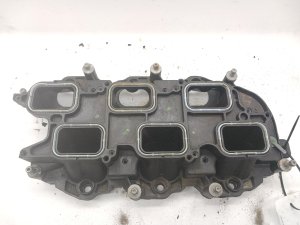


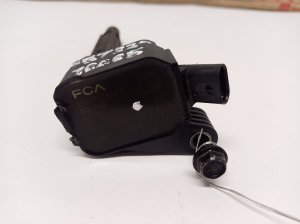
New Aftermarket Parts Available

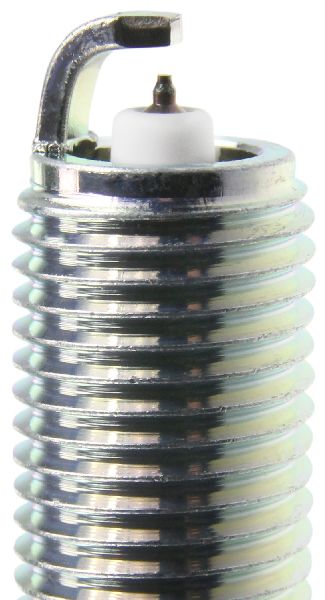
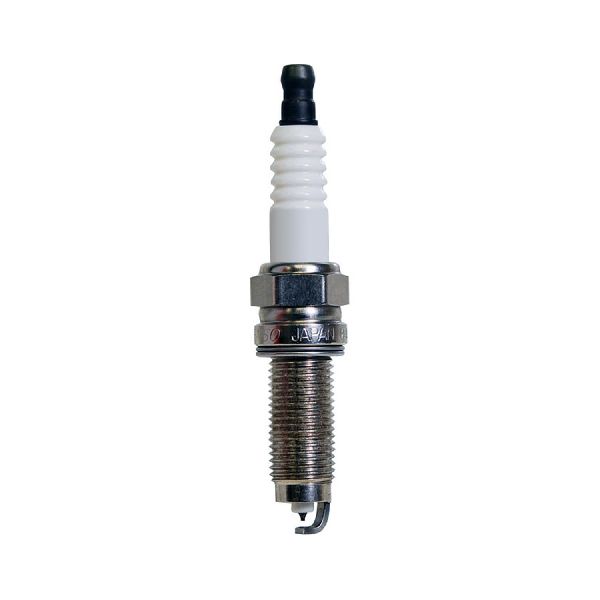

The information in this article is provided for general reference and educational purposes only. Vehicle specifications, procedures, and part compatibility can vary by production date, trim level, and region. Always consult your vehicle's factory service manual and verify part numbers before purchasing or performing repairs. Safety-critical components such as airbags, seat belts, and braking systems should be installed by a qualified professional.
- Jeep Wrangler:
- 🎬 Helpful Videos
- 🛍️ Shop This Part
- What's Unique About the 2012-2018 Jeep Wrangler
- Symptoms You May Notice
- Most Likely Causes
- Rare But Worth Checking
- Diagnosis Steps
- Parts You'll Likely Need
- Related Codes That Often Appear With This One
- Technical Service Bulletins (TSBs) & Recalls
- Platform-Specific Known Issues
- Mechanic-Grade Diagnostic Values
- Scan Tool Commands That Help
- Wiring & Ground Locations
- Real Owner Repair Stories
- OEM Part Supersession History
- Model Year Variations Within This Range
- Diagnostic Flowchart
- Other Known Issues on This Vehicle
- Used vs. New Parts: Buying Guide for This Vehicle
- Real Owner Stories
- 2012 Jeep Wrangler Unlimited Rubicon 3.6L
- 2012-2018 Jeep Wrangler 3.6L
- Related OBD-II Codes
- Frequently Asked Questions
- 🎟️ Get 5% Off