

Saab 9-3 P0351 (2003-2012): Ignition Coil 'A' (Cylinder 1) Circuit Malfunction Causes and Fixes
P0351 on a 2003-2012 Saab 9-3 almost always means the ignition coil for cylinder 1 has failed. This is a common issue and a straightforward DIY replacement, with a new coil costing between $40 and $100. It is critical to use OEM-spec coils (Mitsubishi) due to the integrated ion-sensing knock detection.
- P0351 on your Saab 9-3 means there's an electrical problem with the ignition coil in cylinder 1.
- The most likely cause by far is a failed ignition coil, a common wear item on this engine.
- A simple diagnostic test is to swap the coil from cylinder 1 with another cylinder and see if the fault code follows the coil.
- This is a very DIY-friendly repair that requires basic tools and can be completed in under an hour.
- Always use a high-quality replacement ignition coil (OEM Mitsubishi, Bosch, or NGK are recommended) to avoid further issues related to the engine's unique knock detection system.
What's Unique About the 2003-2012 Saab 9-3
While older Saabs are famous for their all-in-one Direct Ignition (DI) cassette, the 2003-2012 9-3 with the B207 engine uses a more conventional coil-on-plug system with four individual ignition coils. These specific coils, originally made by Mitsubishi, are a known common failure point as the vehicle ages. It's crucial to use high-quality OEM or equivalent replacements (Bosch, NGK, or genuine Mitsubishi), as these coils also incorporate ion-sensing circuitry for knock detection. Cheap aftermarket versions that lack this feature can cause persistent performance issues, rough running, or other fault codes, even if they temporarily clear the P0351.
Symptoms You May Notice
- Check Engine Light is on (may be solid or flashing)
- Rough or vibrating idle
- Engine misfiring, which may feel like a shudder or stumble, especially under load
- Hesitation or loss of power during acceleration
- Reduced fuel economy
- Difficulty starting the engine
- Replacing the ECU when the actual fault is a simple bad coil or wiring issue.
- Replacing only the ignition coil when a leaking valve cover gasket is the root cause of the failure, leading to the new coil failing soon after.
Most Likely Causes
- Failed Ignition Coil (Cylinder 1) 🔴 High Probability The original equipment Mitsubishi coils are a known wear item on the B207 engine, failing from age and repeated heat cycles. Oil leaking from a faulty valve cover gasket can also pool in the spark plug tubes and damage the coil boots and body, accelerating failure.
How to confirm: Swap the ignition coil from cylinder 1 with the coil from cylinder 2. Clear the codes and drive the car. If the code changes to P0352 (Ignition Coil 'B' Malfunction), the coil is confirmed bad. This is the most definitive DIY diagnostic step. 🎬 Watch: A professional walkthrough of diagnosing a Saab misfire.
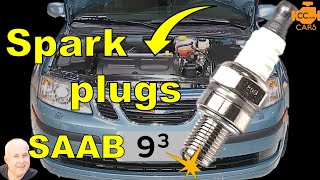
Typical fix: Replace the faulty ignition coil. It is often recommended to replace all four coils and spark plugs at the same time 🎬 See this guide on replacing your coils and spark plugs. for preventative maintenance, especially on higher mileage vehicles.
Est. part cost: $40-$110 - Worn or Fouled Spark Plug (Cylinder 1) 🟡 Medium Probability A worn spark plug with an excessive gap or heavy carbon/oil fouling can put extra strain on the ignition coil, causing it to overheat, fail, or trigger a fault code.
How to confirm: After swapping coils (and the fault remains on cylinder 1), remove the spark plug from cylinder 1. Inspect it for wear (worn electrode), damage (cracked porcelain), or fouling (black, oily, or white deposits). The correct plug is an NGK PFR6T-10G; ensure the correct type is installed.
Typical fix: Replace the spark plug. It is best practice to replace all four spark plugs as a set to ensure balanced performance.
Est. part cost: $5-$20 - Damaged Wiring or Connector ⚪ Low Probability The plastic locking tabs on the coil connectors can become brittle with age and break, leading to a poor or intermittent connection. The wiring itself can also chafe or break near the connector from engine vibration and heat.
How to confirm: Visually inspect the wiring harness and connector for cylinder 1's ignition coil. Check for frayed wires, corrosion in the pins, or a loose-fitting connector. Wiggle the connector with the engine running to see if it induces a misfire.
Typical fix: If the connector is broken, replace the connector pigtail. This requires cutting the old connector off and splicing the new one in, typically with butt connectors.
Est. part cost: $15-$35
Rare But Worth Checking
- Faulty Engine Control Module (ECU): This is very rare, but the Trionic 8 ECU is known to be sensitive to heat due to its location on the intake manifold. The internal driver for the ignition coil can fail, but all other possibilities (coil, plug, wiring) should be exhaustively ruled out before condemning the ECU. A failing ECU might also present with other seemingly unrelated codes.
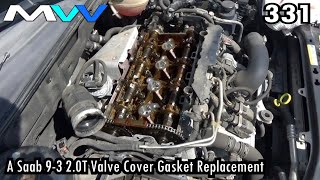
- Leaking Valve Cover Gasket: While not a direct electrical cause, a common issue on the B207 is a leaking valve cover gasket, which allows oil to fill the spark plug wells. This oil can damage the ignition coil boot and cause a misfire that may be logged as a P0351 circuit fault. If you find oil on the coil or plug when removing them, the valve cover gasket must be replaced to prevent repeat failures. 🎬 Watch: How to replace a leaking valve cover gasket.
Diagnosis Steps
- Read the fault codes with an OBD-II scanner to confirm P0351 and any other related codes like P0301.
- Locate cylinder 1. On the B207 engine, this is the cylinder on the far left when facing the engine from the front of the car (passenger side in the US).
- Remove the plastic engine cover (three T30 Torx screws) and the aluminum coil cover (four T30 Torx screws).
- Disconnect the electrical connector from the cylinder 1 coil. Be gentle, as the plastic clips are often brittle. A small flathead screwdriver can help release the tab.
- Remove the 10mm bolt holding the coil in place and pull the coil straight up and out.
- Swap the ignition coil from cylinder 1 with the coil from an adjacent cylinder (e.g., cylinder 2). Mark the coils with a pen or tape to keep track of them.
- Reinstall the coils and their 10mm bolts. Reconnect the electrical connectors.
- Clear the fault codes using the scanner.
- Start the engine and let it idle, or take a short drive. The Check Engine Light will likely reappear.
- Re-scan for codes. If the code is now P0352 ('Ignition Coil B'), the ignition coil you moved is faulty and needs replacement. This is the most common outcome.
- If code P0351 returns, the problem is not the coil. The next step is to inspect the spark plug in cylinder 1. Remove it and check for damage, wear, or fouling. If you find oil in the spark plug tube, the valve cover gasket is leaking and must be replaced.
- If the spark plug is fine, the final step is to carefully inspect the wiring and connector for cylinder 1 for any signs of damage, corrosion, or looseness.
Parts You'll Likely Need
- Ignition Coil
(OEM #12787707)— This is the most common cause of P0351 on the Saab 9-3 B207 engine.
Trusted brands: Saab/Mitsubishi (Genuine), Bosch, NGK
OEM price range: $70-$110
Aftermarket price range: $40-$80 - Spark Plug
(OEM #NGK PFR6T-10G)— A worn spark plug can cause this fault and should be replaced along with the coil, or as part of regular maintenance.
Trusted brands: NGK, Bosch
OEM price range: $10-$15
Aftermarket price range: $5-$12 - Ignition Coil Connector Pigtail — Needed if the original connector's locking tab is broken or if the wiring is corroded, causing a poor connection.
Trusted brands: Duralast 2028, Standard Motor Products S-2000
OEM price range: N/A
Aftermarket price range: $15-$35
Related Codes That Often Appear With This One
- P0301 — P0301 means 'Cylinder 1 Misfire Detected'. P0351 is the specific electrical cause for the misfire that P0301 reports. You will almost always see P0301 alongside P0351.
- P0300 — P0300 means 'Random/Multiple Cylinder Misfire'. You might see this if the issue is intermittent or if other cylinders are also beginning to have issues.
Platform-Specific Known Issues
- The B207 engine's ignition coils contain ion-sensing circuitry for knock detection, a feature unique to Saab's Trionic engine management. Using cheap, no-name aftermarket coils that lack this feature can lead to poor performance, hesitation, and other fault codes, even if they resolve the P0351 code initially.
- A leaking valve cover gasket is extremely common and often the underlying cause of coil failure. Oil pools in the spark plug wells, degrading the coil boot and causing misfires. Replacing the gasket is a critical preventative step.
Mechanic-Grade Diagnostic Values
- Ignition Coil Primary Resistance — expected: 0.3 Ω - 1.0 Ω. Failure: A reading outside this range suggests a faulty coil winding.
- Ignition Coil Secondary Resistance — expected: 8.0 kΩ - 15.0 kΩ. Failure: A reading outside this range suggests a faulty secondary winding.
- Ignition Coil Connector Pin 1 (Power Supply) — expected: Battery Voltage (approx. 12V) with key on, engine off.. Failure: No voltage indicates a problem with the main relay or wiring.
- Ignition Coil Connector Pin 2 (Ground) — expected: < 1.0 Ω resistance to chassis ground.. Failure: High resistance indicates a poor ground connection at G7.
- Ignition Coil Connector Pin 3 (Trigger Signal) — expected: A frequency of 5 Hz to 20 Hz at idle, measured with a multimeter in Hz mode.. Failure: No frequency signal points to a wiring or ECU driver issue.
Scan Tool Commands That Help
- Saab Tech 2: Activation: Ignition Coil Cyl 1 — This bidirectional command allows a technician to manually fire the ignition coil for cylinder 1. It helps to confirm if the coil itself, the wiring, and the ECU driver are capable of functioning, bypassing the normal engine operation triggers.
Wiring & Ground Locations
- Ignition Coil Connector Pinout — On the top of each ignition coil.. Knowing the pinout is essential for testing power, ground, and the trigger signal from the ECU. Pin 1: B+ (Power from main relay), Pin 2: B- (Ground to G7), Pin 3: Ignition trigger from ECU, Pin 4: Ionization signal to Combustion Detection Module (CDM).
- G7 — On the engine control module's top right attachment lug.. This is the primary grounding point for the ignition coils. A loose or corroded connection at G7 can cause intermittent and difficult-to-diagnose ignition faults, including P0351.
- Combustion Detection Module (CDM) — On a bracket on the left-hand side of the cylinder head (driver's side in US).. The CDM processes the raw ionization signal from Pin 4 of the ignition coil. While a CDM fault is not a direct cause of P0351 (which is an electrical circuit fault detected by the ECU), its wiring is intertwined with the ignition coil harness.
Real Owner Repair Stories
- Reddit user in r/saab (2006 Saab 9-3) — Car would intermittently not start, eventually becoming a permanent no-start condition.
❌ Tried (didn't work) The user did not specify, but the problem was diagnosed by a Saab specialist.
✅ What actually fixed it The specialist found a refurbished ECU to swap in, which resolved the problem. The cause was attributed to the ECU being in a location where it is not well-protected from heat.
OEM Part Supersession History
12787707→12787707 is the currently accepted number.— N/A
Heads up: The Mitsubishi part number H6T60271 is often seen on the original coil body and is interchangeable with Saab part number 12787707.
Model Year Variations Within This Range
- 2003-2004 vs 2005-2012: For the first two years of Trionic 8 (2003-2004), an analogue Combustion Detection Module (CDM) was used. From 2005 onwards, a digital CDM (Part No. 55352173) was used. While the ignition coils themselves remained the same, this change in the ionization signal processing could be relevant if diagnosing complex, intermittent misfire issues beyond a simple P0351 fault.
Diagnostic Flowchart
Other Known Issues on This Vehicle
Issues unrelated to this code that are worth knowing about as an owner of this generation:
- Intake Valve Carbon Buildup / Premature Wear 🔴 High — Particularly common on 2007-2009 models. Can cause cold start misfires (P0300, P0301, etc.), rough idle, and hard starting, often mistaken for ignition issues. (Ref: Saab issued TSB 240-2531 to address this, outlining a procedure for cleaning the valves.)
- Column Integrated Module (CIM) Failure 🔴 High — A common electronic failure across all years. Symptoms include non-working steering wheel buttons, intermittent horn, airbag light, and eventually 'Steering Lock Malfunction' messages leading to a no-start condition.
- Fuel Level Sender Failure 🟠 Medium — Widespread issue where the fuel gauge reads empty or inaccurately, even with a full tank. Caused by wear on the sender contacts inside the fuel tank.
- Valve Cover Gasket Oil Leak 🟠 Medium — Extremely common across all years. The gasket becomes brittle and leaks oil onto the hot exhaust manifold (causing a burning smell) and into the spark plug tubes, which can destroy ignition coils.
- Turbocharger Failure 🟠 Medium — While generally robust, the turbo can fail on higher-mileage cars or those with poor maintenance history (infrequent oil changes). Symptoms include reduced power, whistling noises, and blue exhaust smoke.
Used vs. New Parts: Buying Guide for This Vehicle
When a used part is the smart pick: A used wiring harness connector pigtail is a perfectly acceptable repair for a broken plastic clip. A used Engine Control Unit (ECU) from a junkyard can be a cost-effective solution, but it MUST be 'divorced' from the donor car using a Saab Tech 2 scanner and then 'married' to the recipient car.
Donor-vehicle mileage cap: roughly under 120000 miles for the part to have meaningful remaining life.
What to inspect on the donor part:
- For an ECU, check the donor car for signs of flood or fire damage. Ensure the part number matches exactly.
- For a connector pigtail, inspect for brittle plastic, corrosion on the pins, and ensure there is enough wire length for splicing.
OEM-only on this vehicle (don't cheap out):
- Ignition Coil: Due to the integrated ion-sensing circuitry for knock detection, only Genuine Saab/Mitsubishi, Bosch, or NGK coils should be used. Cheap, unbranded aftermarket coils are notorious for causing running issues, even if they temporarily clear the P0351 code.
Aftermarket brands forum-validated for this vehicle:
- Bosch (for ignition coils)
- NGK (for ignition coils and spark plugs)
Brands owners have reported issues with on this vehicle:
- Unbranded or 'white-box' ignition coils from online marketplaces. Forum consensus is strongly against using them on the B207 engine.
Real Owner Stories
Aggregated from forums and TSBs cited above. Mileages and costs reflect what owners reported in those sources.
2007 Saab 9-3 B207 2.0L Turbo
Symptoms: Experiencing misfires even after replacing the ignition coils and spark plugs, particularly on a cold start.
What fixed it: The owner was advised to confirm they used the correct NGK plugs and Mitsubishi coils, and to perform a cold compression test, as 2007+ B207 engines are known to have valve issues that can cause these symptoms.
Source hint: Reddit r/saab
2003-2012 Saab 9-3 B207 2.0L Turbo
Symptoms: Ignition coils failed after a very short time. The owner stated, 'I tried to get some Proparts cheapies, and they lasted almost a full month...'
What fixed it: The solution was to use correct, high-quality OEM-spec ignition coils instead of cheap aftermarket parts. The owner concluded, 'It's cheaper to just do it correctly.'
Source hint: Reddit r/saab
2003-2012 Saab 9-3 B207 2.0L Turbo
Symptoms: A P1312 code was triggered after installing incorrect coils. The user noted, 'You can't use cobalt coils because the Saab coils double as the knock sensors.'
What fixed it: The fix is to install genuine Mitsubishi or high-quality OEM replacement coils (like Bosch or NGK) that have the required integrated ion-sensing knock detection circuitry.
Source hint: SaabCentral.com: Multiple threads corroborate that genuine Mitsubishi or high-quality OEM replacement coils (Bosch, NGK) are necessary due to the integrated ion-sensing knock detection circuitry.
Related OBD-II Codes
Frequently Asked Questions
What kind of ignition coils should I use for my 2003-2012 Saab 9-3 B207?
I found oil in the spark plug tube for cylinder 1. Is this related to my P0351 code?
I swapped the coil from cylinder 1 to cylinder 2 and the code changed to P0352. What does this mean?
My 2008 Saab 9-3 is misfiring on cold starts, but I already replaced the coils and plugs. What else could it be?
Where is cylinder 1 located on the B207 engine?
The plastic clip on my ignition coil connector broke. Do I need to replace the whole wiring harness?
Helpful Videos

We Have This Part in Stock


The information in this article is provided for general reference and educational purposes only. Vehicle specifications, procedures, and part compatibility can vary by production date, trim level, and region. Always consult your vehicle's factory service manual and verify part numbers before purchasing or performing repairs. Safety-critical components such as airbags, seat belts, and braking systems should be installed by a qualified professional.
- Saab 9-3:
- 🎬 Helpful Videos
- 🛍️ Shop This Part
- What's Unique About the 2003-2012 Saab 9-3
- Symptoms You May Notice
- Most Likely Causes
- Rare But Worth Checking
- Diagnosis Steps
- Parts You'll Likely Need
- Related Codes That Often Appear With This One
- Platform-Specific Known Issues
- Mechanic-Grade Diagnostic Values
- Scan Tool Commands That Help
- Wiring & Ground Locations
- Real Owner Repair Stories
- OEM Part Supersession History
- Model Year Variations Within This Range
- Diagnostic Flowchart
- Other Known Issues on This Vehicle
- Used vs. New Parts: Buying Guide for This Vehicle
- Real Owner Stories
- 2007 Saab 9-3 B207 2.0L Turbo
- 2003-2012 Saab 9-3 B207 2.0L Turbo
- 2003-2012 Saab 9-3 B207 2.0L Turbo
- Related OBD-II Codes
- Frequently Asked Questions
- 🎟️ Get 5% Off