

P0345 on 2018-2023 Kia Stinger 3.3L: Causes and Fixes for Camshaft Sensor Fault
P0345 on a Kia Stinger 3.3T most often means the Bank 2 (driver's side) intake camshaft position sensor has failed. Replacing the sensor is a common DIY fix, with the part costing between $40 for an aftermarket version and $90 for an OEM part. The sensor swap diagnostic method is highly effective.
- P0345 on your Stinger almost always points to a bad intake camshaft position sensor on the driver's side. The 'swap test' is the best way to confirm.
- The sensor is located in a high-heat area near the turbo on the driver's side, making it prone to failure.
- This is a DIY-friendly repair that can be done in under an hour with basic tools.
- Ignoring the issue can lead to stalling, no-start conditions, and potential long-term engine issues.
What's Unique About the 2018-2023 Kia Stinger
The 3.3L Lambda II V6 in the Stinger is generally a robust engine, especially compared to the widespread issues seen in Hyundai/Kia's four-cylinder engines. However, the Bank 2 (driver's side) area is subject to significant heat from the turbocharger and exhaust manifold. Kia issued a safety campaign (SC300) to replace the left-hand turbo oil feed pipe and hose assembly on this side due to heat degradation, which could lead to oil leaks and fire risk. While not directly for the sensor, this high-heat environment can contribute to the failure of nearby components like the camshaft position sensor or its wiring harness over time. The repair procedure for SC300 explicitly requires the removal of the Bank 2 exhaust camshaft position sensor, placing it in the vicinity of the work being done.
Symptoms You May Notice
- Check Engine Light is on
- Engine is difficult to start or cranks but won't start
- Engine stalls, especially at idle or low speeds
- Rough idling
- Noticeable loss of engine power and acceleration
- Reduced fuel economy
- Hesitation or stumbling during acceleration.
- Engine misfire felt as a 'shudder'.
- Replacing the crankshaft position sensor. While related to engine timing, a crankshaft sensor fault would typically set different codes, such as P0335.
- Replacing spark plugs or ignition coils. While symptoms like misfiring can overlap, P0345 points specifically to the cam sensor circuit, which should be diagnosed first.
- Assuming the sensor is bad without testing. Swapping sensors between banks is a free and definitive diagnostic step that should be performed before purchasing new parts.
Most Likely Causes
- Failed Bank 2 Intake Camshaft Position Sensor 🔴 High Probability The sensor is located in a high-heat area on the driver's side of the engine, near the turbocharger, which can shorten its lifespan. Heat cycling and oil contamination are common failure modes for these sensors. These sensors are electronic and subject to wear and tear.
How to confirm: The most effective method is to swap the Bank 2 intake sensor with the Bank 1 (passenger side) intake sensor. If the trouble code changes to P0340 (Bank 1), the sensor is confirmed to be faulty. Alternatively, a multimeter can be used to test the sensor's resistance against the manufacturer's specifications.
Typical fix: Replace the Bank 2 (driver's side) intake camshaft position sensor. Ensure the o-ring from the old sensor is removed with it.
Est. part cost: $40-$90 - Wiring Harness or Connector Issue 🟡 Medium Probability The wiring harness near the sensor can become brittle or damaged from engine heat. The connector pins can also corrode or become loose, interrupting the signal. The high heat from the nearby turbocharger and exhaust manifold exacerbates this risk.
How to confirm: Visually inspect the wiring harness for any signs of melting, chafing, or cracking. Check the connector for a secure fit and look for any corroded or bent pins. Use a multimeter to test for continuity and proper voltage (power and ground) at the sensor connector according to the vehicle's wiring diagram.
Typical fix: Repair the damaged section of wiring or replace the connector pigtail.
Est. part cost: $15-$50
Rare But Worth Checking
- Stretched Timing Chain or Timing Issue: While less common on the Lambda II, a stretched timing chain can cause the camshaft and crankshaft signals to be out of sync, triggering this code. This is a more serious mechanical issue that usually presents with rattling noises from the front of the engine and would likely trigger other codes as well.
- Failing Engine Control Module (ECM): It is very rare for the ECM to be the cause of a single sensor circuit code. All other possibilities, including sensor and wiring, should be exhausted before considering ECM replacement. Sometimes, corrupted software can also be a cause, requiring a re-flash by the dealer.
- Oil Contamination: Engine oil or other fluids can sometimes leak onto the sensor or its connector, causing a poor signal or short circuit. This is particularly relevant given the SC300 recall for a potential oil leak on the same side of the engine.
Diagnosis Steps
- Read the trouble codes with an OBD-II scanner and note the freeze frame data.
- Clear the codes and test drive the vehicle to see if the P0345 code returns immediately.
- Locate the Bank 2 (driver's side) intake and exhaust camshaft position sensors. They are on the top of the valve cover, held in by a single 10mm bolt.
- Carefully inspect the wiring and connector for the intake sensor. Look for any signs of heat damage, corrosion, or loose connections.
- If the wiring looks good, swap the Bank 2 intake sensor with the Bank 1 (passenger side) intake sensor. They are the same part and this is a free, effective diagnostic test.
- Clear the codes again and drive the vehicle. If the code changes to P0340 (Camshaft Position Sensor 'A' Circuit Malfunction - Bank 1), the sensor you moved is faulty and needs to be replaced.
- If the P0345 code returns after the swap, the problem lies in the wiring or the ECM. Use a multimeter to check for the correct voltage, ground, and signal at the sensor connector based on the service manual's specifications.
- If wiring and sensor are confirmed good, the issue may be mechanical (timing) or a faulty ECM, at which point professional diagnosis is recommended.
Parts You'll Likely Need
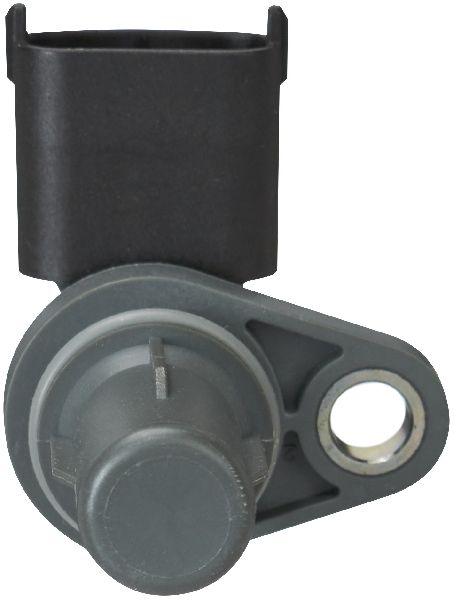
- Camshaft Position Sensor (Bank 2, Intake)
(OEM #39318-3L100)— This sensor is the most common failure point for code P0345 due to its electronic nature and exposure to engine heat.
Trusted brands: Kia (Genuine OEM), Delphi, NTK/NGK, Standard Motor Products
OEM price range: $70-$90
Aftermarket price range: $40-$65
Related Codes That Often Appear With This One
- P0340 — If you swap the suspected bad sensor from Bank 2 with the sensor from Bank 1 to diagnose the issue, a P0340 code will appear if the sensor is indeed faulty. This confirms the sensor as the point of failure.
- P0346, P0347, P0348, P0349 — These are related codes for the same sensor circuit, indicating performance issues, low input, high input, or intermittent signals, respectively. They all point to a problem with the Bank 2 intake cam sensor or its circuit.
- P0390 — This code relates to the Camshaft Position Sensor 'B' (exhaust) on Bank 2. It could appear alongside P0345 if there is a broader wiring or timing issue affecting the entire bank, though it's less common.
Technical Service Bulletins (TSBs) & Recalls
- SC300: While not a fix for P0345, this safety campaign involves the removal and reinstallation of the Bank 2 camshaft position sensor, making it a relevant service history item to be aware of. The recall addresses a potential oil leak from the LH turbo oil feed pipe due to heat degradation.
Platform-Specific Known Issues
- Kia issued a safety recall campaign (SC300) for 2018-2023 Stingers to replace the left-hand (Bank 2) turbocharger oil feed pipe, which could degrade from exhaust heat. The repair procedure involves removing the Bank 2 camshaft position sensor. An improperly performed repair or the underlying high-heat condition could potentially cause or contribute to a P0345 fault. Owners may experience a burning smell or see white smoke if the oil line is failing.
Mechanic-Grade Diagnostic Values
- Sensor Signal Waveform (using an oscilloscope) — expected: A clean, repeating square-wave pattern switching between approximately 0.5V and 4.5V as the engine is cranked.. Failure: A distorted, erratic, or missing waveform pattern indicates a faulty sensor or wiring issue.
- Sensor Power Supply Voltage (at sensor connector) — expected: A steady 5.0V reference signal from the ECM with the key on, engine off.. Failure: Voltage significantly below 5.0V (e.g., < 4.5V) suggests a wiring or ECM power supply issue.
- Sensor Circuit Resistance — expected: Resistance should be less than 1 kΩ.. Failure: A reading of 0 Ω (short) or a very high/infinite reading (open) points to a fault in the sensor or wiring.
Hidden / Shadow Codes Worth Checking
- Mode $06 Data: While not a specific shadow code, professional scan tools can access Mode $06 data. This allows a technician to view the results of the ECM's self-tests for components like the camshaft sensor. A component can be within the acceptable range but close to the failure threshold, which Mode $06 can reveal before a code is set. (see via A professional-grade scan tool with Mode $06 monitoring capabilities.)
Scan Tool Commands That Help
- High-end OBD-II Scanner / Kia GDS: Camshaft Position Sensor Relearn/Reset — After replacing the camshaft position sensor, some vehicles may require a relearn procedure for the ECM to recognize the new sensor's characteristics. If the engine runs poorly after replacement, this function may be necessary.
- Aftermarket Scan Tool: Sensor Test Mode — Some advanced scan tools can command the ECM to expect a simulated sensor signal. If the tool can send a signal and the ECM recognizes it, this helps isolate the fault to the sensor or its wiring, ruling out the ECM itself.
Wiring & Ground Locations
- Bank 2 Camshaft Position Sensor 'A' (Intake) Connector — On the top of the driver's side (Bank 2) valve cover, towards the front of the engine. The sensor is held in by a single 10mm bolt. The connector plugs directly into the top of the sensor.. This is the primary point of failure for wiring issues. The connector and nearby harness are exposed to high heat from the turbocharger, which can cause the plastic to become brittle and wires to fray or lose connection.
- Engine Ground Straps — Specific ground points (e.g., Gxxx) require a factory service manual for exact locations. However, key grounds are typically located on the cylinder heads, engine block, and from the block to the chassis.. A poor engine ground can cause a variety of sensor signal issues, including an erratic signal from the camshaft position sensor, leading to a P0345 code.
OEM Part Supersession History
39350-4A400→39318-3L100— Part number consolidation or design update by the manufacturer.
Heads up: While 39318-3L100 is listed as superseding the older number, always use the part number specified for the Stinger 3.3L (39318-3L100) to ensure correct fitment and electronic compatibility.
Model Year Variations Within This Range
- 2022-2023: The facelifted Stinger GT received a new variable exhaust system and minor ECU tuning, resulting in a 3hp increase. However, the core engine design, timing components, and the camshaft position sensor part number (39318-3L100) remained the same, so the diagnosis for P0345 is identical across all model years.
Diagnostic Flowchart
Other Known Issues on This Vehicle
Issues unrelated to this code that are worth knowing about as an owner of this generation:
- Left (Bank 2) Turbo Oil Feed Pipe Degradation 🔴 High — Widespread enough to trigger a safety recall for most of the production run. (Ref: SC300 / NHTSA 24V169000)
- Paint Chipping/Cracking (Sunset Yellow) 🟡 Low — Affects only the special edition 'Sunset Yellow' color from early model years (approx. 400 cars in the US). (Ref: Voluntary Service Campaign (Not a safety recall))
- High Pressure Fuel Pump Failure 🟠 Medium — Affects 2018-2021 models, leading to potential loss of power. A recall was issued. (Ref: NHTSA 23V634000)
- HECU Fire Risk 🔴 High — Affects certain 2018-2021 models. An electrical short in the Hydraulic Electronic Control Unit (HECU) could cause a fire. (Ref: SC196)
- Warped Brake Rotors / Vibration 🟡 Low — A common complaint among owners, often appearing after 20,000 miles. Attributed to OEM pad and rotor material.
- Blocked Fuel Pump Jet Nozzle 🟠 Medium — Affects a small number of 2020-2021 models due to a manufacturing defect, potentially causing loss of power. (Ref: SC198)
Used vs. New Parts: Buying Guide for This Vehicle
When a used part is the smart pick: For this specific repair, a used part is NOT recommended. The camshaft position sensor is an electronic component prone to failure from heat and vibration. A used sensor from a junkyard carries a high risk of being near the end of its service life or failing shortly after installation.
What to inspect on the donor part:
- Not applicable as used parts are not advised for this component.
OEM-only on this vehicle (don't cheap out):
- While not strictly OEM-only, using a Genuine Kia sensor (39318-3L100) or a reputable OEM-supplier brand is highly recommended for electronic sensors to avoid compatibility and longevity issues.
Aftermarket brands forum-validated for this vehicle:
- Delphi
- NTK/NGK
- Standard Motor Products (SMP)
Brands owners have reported issues with on this vehicle:
- Unnamed, no-brand sensors from online marketplaces should be avoided, as their quality control and electronic specifications are often poor and can cause persistent issues.
Real Owner Stories
Aggregated from forums and TSBs cited above. Mileages and costs reflect what owners reported in those sources.
2018-2023 Kia Stinger 3.3L V6
Symptoms: The owner experienced a burning smell and white smoke coming from the engine bay, which was linked to a degrading turbo oil feed pipe near the sensor.
What fixed it: Replacement of the left-hand (Bank 2) turbocharger oil feed pipe under safety recall SC300, which involves the removal and reinstallation of the camshaft position sensor.
Source hint: vehicle_specific_issues / SC300
2018-2023 Kia Stinger 3.3L V6
Symptoms: Engine misfire felt as a 'shudder' and hesitation during acceleration.
What fixed it: Swapping the Bank 2 intake sensor with the Bank 1 sensor to confirm the fault, followed by replacing the faulty sensor with a new unit.
Source hint: stingerforum.org
2018-2021 Kia Stinger 3.3L V6
Symptoms: Loss of power while driving.
What fixed it: Replacement of the High Pressure Fuel Pump (HPFP) under recall NHTSA 23V634000.
Source hint: known_issues
2017-2023 Genesis G70 3.3T
Symptoms: Check engine light with P0345 and P0340 codes appearing on the dashboard.
What fixed it: Replacement of the camshaft position sensors due to identical engine architecture and heat-related wear as the Stinger.
Source hint: Genesis G70 Forums
Related OBD-II Codes
Frequently Asked Questions
Does the SC300 safety recall for the turbo oil feed pipe affect my P0345 code?
Which sensor should I replace for a P0345 code on my 3.3L Stinger?
Is there a free way to confirm the sensor is bad before I buy a new one?
Why is the Bank 2 sensor specifically prone to failure on the Lambda II V6?
Could my Stinger's stalling and rough idle be related to the P0345 code?
Does the Genesis G70 share this camshaft sensor issue?
Helpful Videos


We Have This Part in Stock

The information in this article is provided for general reference and educational purposes only. Vehicle specifications, procedures, and part compatibility can vary by production date, trim level, and region. Always consult your vehicle's factory service manual and verify part numbers before purchasing or performing repairs. Safety-critical components such as airbags, seat belts, and braking systems should be installed by a qualified professional.
- Kia Stinger:
- 🎬 Helpful Videos
- 🛍️ Shop This Part
- What's Unique About the 2018-2023 Kia Stinger
- Symptoms You May Notice
- Most Likely Causes
- Rare But Worth Checking
- Diagnosis Steps
- Parts You'll Likely Need
- Related Codes That Often Appear With This One
- Technical Service Bulletins (TSBs) & Recalls
- Platform-Specific Known Issues
- Mechanic-Grade Diagnostic Values
- Hidden / Shadow Codes Worth Checking
- Scan Tool Commands That Help
- Wiring & Ground Locations
- OEM Part Supersession History
- Model Year Variations Within This Range
- Diagnostic Flowchart
- Other Known Issues on This Vehicle
- Used vs. New Parts: Buying Guide for This Vehicle
- Real Owner Stories
- 2018-2023 Kia Stinger 3.3L V6
- 2018-2023 Kia Stinger 3.3L V6
- 2018-2021 Kia Stinger 3.3L V6
- 2017-2023 Genesis G70 3.3T
- Related OBD-II Codes
- Frequently Asked Questions
- 🎟️ Get 5% Off