

P0345 on 2019-2025 Genesis G70 3.3T: Camshaft Position Sensor Bank 2 Causes and Fixes
This code indicates a fault with the Bank 2 (driver's side, near the radiator) intake camshaft position sensor. The most common fix is replacing the faulty sensor, which is a relatively simple DIY job. Expect to pay between $40 for an aftermarket part and $90 for an OEM sensor. Before replacing, always check oil levels and consider swapping sensors between banks to confirm the failure.
- P0345 on your G70 3.3T points to a problem with the driver's side intake camshaft position sensor.
- The easiest way to diagnose the issue is to swap the driver's side and passenger's side intake cam sensors and see if the code changes to P0340.
- The most likely fix is simply replacing the faulty sensor, which is an easy and affordable DIY job.
- Check for any signs of oil leaks around the driver's side of the engine, as a known recall for a turbo oil line exists for this area and could affect the sensor wiring.
What's Unique About the 2019-2025 Genesis G70
The Lambda II 3.3L twin-turbo V6 is a robust and generally reliable engine shared with the Kia Stinger GT. There are no widespread, documented design flaws that make the G70 uniquely prone to P0345. However, there is a significant recall (Campaign 019G / NHTSA 24V-204) for a potential oil leak from the left-hand (Bank 2) turbocharger oil feed pipe. The original pipe material could crack from heat exposure, allowing oil to leak onto hot exhaust components. While the primary concern is fire risk, an oil leak in this specific area could also saturate the nearby camshaft position sensor or its wiring harness, leading to oil contamination, degradation of the wiring insulation, and an eventual circuit fault triggering P0345.
Generation note: The 2019-2025 model years cover the first generation (IK) of the Genesis G70. A significant facelift occurred for the 2022 model year, but the 3.3L V6 Lambda II engine and its core components, including the camshaft position sensors, remained the same. The information in this guide applies to all 3.3T models in this year range.
Symptoms You May Notice
- Check Engine Light is on
- Engine is difficult to start or takes longer to crank
- Rough idle or engine stumbling
- Engine stalling, especially at low speeds
- Noticeable loss of power and acceleration
- Reduced fuel economy
- Engine may start one time but fail to fail to start the next
- Replacing the crankshaft position sensor. While the cam and crank sensors work together, P0345 specifically points to the Bank 2 cam sensor circuit.
- Replacing the ECM without proper diagnosis. This is an expensive and unlikely fix.
- Replacing the sensor without checking for oil contamination from the nearby turbo oil feed line, which could cause the new sensor to fail prematurely.
Most Likely Causes
- Failed Bank 2 Intake Camshaft Position Sensor 🔴 High Probability Sensors are electronic components that operate in a high-heat environment. Over time, internal electronics can fail due to thermal stress and vibration. This is the most common point of failure for this code on most vehicles.
How to confirm: Swap the Bank 2 (driver's side/front) intake cam sensor with the Bank 1 (passenger's side/rear) intake cam sensor. They are identical. Clear the codes and run the engine. If the code changes to P0340 (Camshaft Position Sensor 'A' Circuit - Bank 1), the sensor is definitively faulty.
Typical fix: Replace the faulty camshaft position sensor. The sensors are located on the front of the valve covers and are held by a single 10mm bolt, making for a quick replacement.
Est. part cost: $40-$90 - Wiring Harness or Connector Issue 🟡 Medium Probability The engine bay has high heat, and the recall for the Bank 2 turbo oil line leak (019G) highlights the potential for oil to contaminate and degrade wiring or connectors in that specific area, causing a short or open circuit.
How to confirm: Visually inspect the wiring harness and connector for the Bank 2 intake cam sensor. Look for signs of melting, chafing, brittle insulation, corrosion on the pins, or heavy oil saturation. Use a multimeter to check for continuity, proper ground, and reference voltage (typically 5V) at the connector with the key on.
Typical fix: Repair the damaged section of wiring or clean the connector terminals with a dedicated electronic cleaner. If the connector itself is damaged (cracked, broken lock tab), it may need to be replaced.
Est. part cost: $5-$50 - Dirty or Contaminated Sensor ⚪ Low Probability If engine oil is sludgy or maintenance has been neglected, fine metallic debris can accumulate on the magnetic tip of the sensor. This buildup can interfere with its ability to accurately read the reluctor wheel on the camshaft, generating an erratic signal.
How to confirm: Remove the sensor and inspect its tip. If it is covered in thick, dark oil, sludge, or visible metal particles, this is a likely contributor to the fault.
Typical fix: Clean the sensor tip with a clean rag and a suitable solvent like brake cleaner. Also, perform an engine oil and filter change using a quality OEM filter and the correct oil viscosity (SAE 5W-30 or 5W-40 full synthetic) to address the source of the contamination.
Est. part cost: $0 (if cleaning works), $50-$100 (for an oil change)
Rare But Worth Checking
- Timing Chain Issue: A stretched timing chain, a failing tensioner, or a skipped tooth on the timing gear can cause the camshaft timing to be out of sync with the crankshaft. This is a serious mechanical issue and is usually accompanied by rattling noises from the front of the engine on startup, or persistent misfire codes like P0017/P0019.
- Failing Engine Control Module (ECM): It is extremely rare for the ECM driver circuit to fail for a single sensor. This should only be considered after all other possibilities (sensor, wiring, timing) have been exhaustively ruled out by a professional using advanced diagnostic tools.
Diagnosis Steps
- Read the code with an OBD-II scanner and confirm P0345 is present. Note any other codes and freeze frame data.
- Check the engine oil level and condition. Low or severely dirty oil can affect the CVVT system which relies on oil pressure.
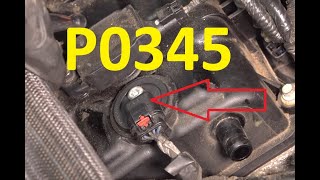
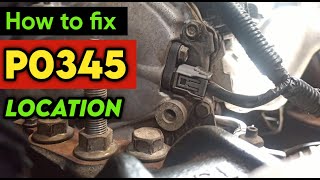
- Locate the intake camshaft position sensors on both cylinder banks. On the 3.3T V6, they are on the top front of the valve covers. Bank 2 is the driver's side, closer to the radiator.
- Carefully inspect the wiring and connector for the Bank 2 sensor. Look for any visible damage, corrosion, or oil contamination, paying close attention to the area near the turbocharger oil feed pipe.
- Diagnostic Swap: Disconnect both sensors. Unbolt and swap the Bank 1 (passenger/rear) and Bank 2 (driver/front) sensors. They are identical parts. Remember to lubricate the O-ring of the sensor with fresh engine oil before re-installing.
- Clear the trouble codes with the scanner. Start the engine and let it run for a minute, then take it for a short drive.
- Re-scan for codes. If code P0340 (Bank 1) now appears, the sensor you moved to Bank 1 is faulty. Purchase and install a new sensor in the original Bank 2 position.
- If code P0345 returns, the problem is in the wiring or the ECM circuit for Bank 2. Using a multimeter, check the connector for power, ground, and signal integrity.
- If wiring and sensor are confirmed good, the issue could be mechanical (timing chain) or, very rarely, the ECM itself. At this stage, professional diagnosis is recommended.
Parts You'll Likely Need
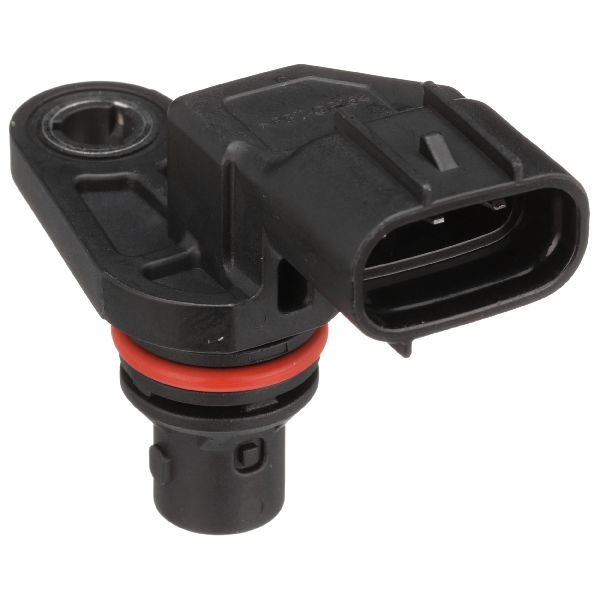
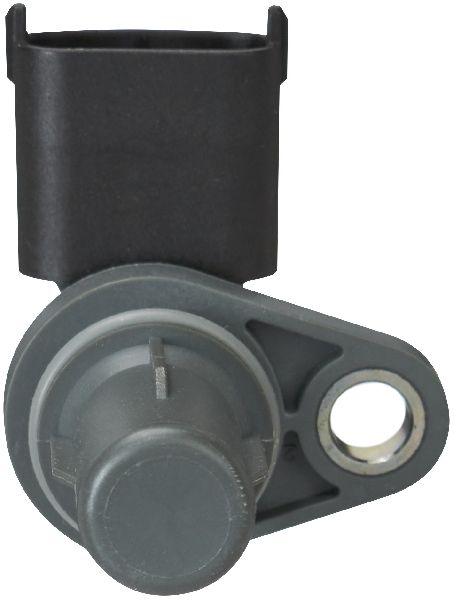
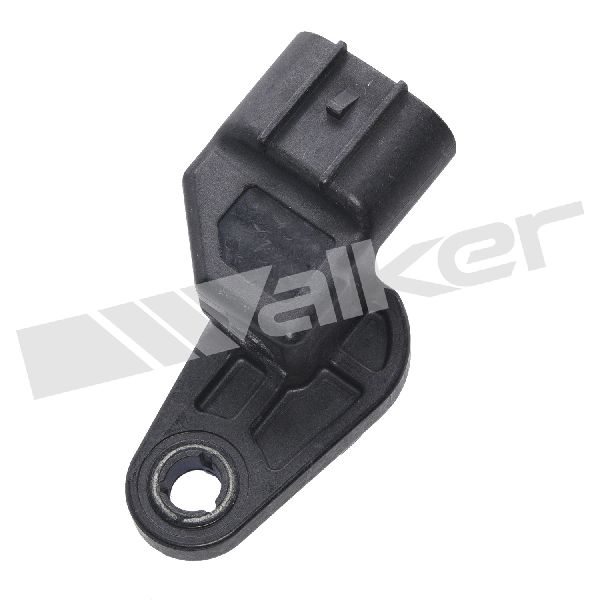
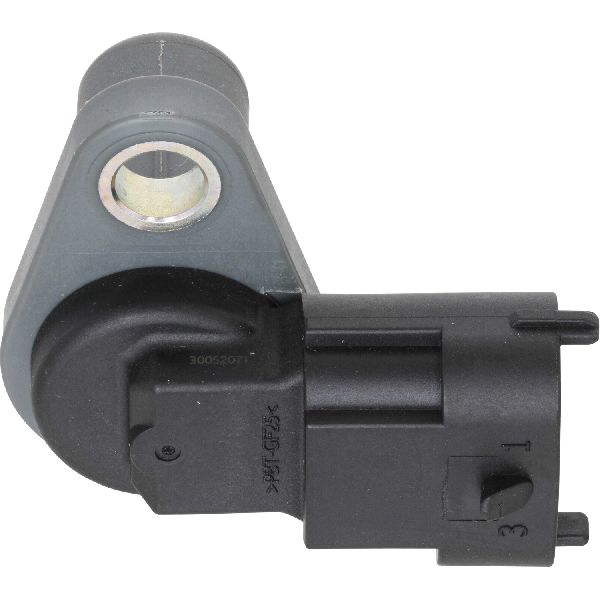
- Camshaft Position Sensor
(OEM #39350-3L100)— This is the most common failure point for code P0345. The sensor's internal electronics fail over time. Some databases may also cross-reference this to 39350-3F000, but 39350-3L100 is the primary part.
Trusted brands: Hyundai/Kia Genuine, Delphi, NTK/NGK, Standard Motor Products (SMP), Beck/Arnley
OEM price range: $70-$90
Aftermarket price range: $40-$65
Related Codes That Often Appear With This One
- P0340 — If you swap the Bank 1 and Bank 2 sensors for diagnosis and the fault moves, you will see P0340 (Camshaft Position Sensor 'A' Circuit - Bank 1), confirming the sensor is bad.
- P0019 — Crankshaft - Camshaft Position Correlation Bank 2 Sensor 'B' (Exhaust). If the timing chain has stretched or jumped, you may get correlation codes for both the intake and exhaust cams on Bank 2.
- P0302, P0304, P0306 — Misfire codes for the cylinders on Bank 2 (Cylinders 2, 4, and 6). Incorrect cam timing can lead to misfires on the affected bank.
Technical Service Bulletins (TSBs) & Recalls
- 24-01-032G / Recall 019G - Turbo Oil Feed Pipe Replacement: Addresses a potential oil leak on the LH (Bank 2) side of the engine, which is relevant due to proximity to the sensor and its wiring.
Platform-Specific Known Issues
- Recall Campaign 019G (NHTSA ID 24V-204 / TSB 24-01-032G) was issued for 2019-2022 G70 3.3T models. The left-hand (Bank 2) turbocharger oil feed pipe could crack due to heat fatigue, leaking oil onto the exhaust manifold. This creates a fire risk and can also saturate the nearby Bank 2 camshaft position sensor and its wiring, causing the P0345 code. The fix involves replacing the original pipe with an updated full stainless steel assembly.
Mechanic-Grade Diagnostic Values
- Sensor Reference Voltage at Connector — expected: ~5V DC. Failure: A reading significantly lower than 5V or 0V indicates a problem with the ECM or the wiring.
- Sensor Ground Circuit Check — expected: ~12V (Battery Voltage). Failure: A reading of 0V or low voltage indicates a bad ground connection in the harness.
- Sensor Signal Voltage (Hall Effect Test) — expected: Switches between ~0V and ~5V. Failure: Voltage that does not change, or is stuck high or low, indicates a failed sensor.
- Sensor Internal Resistance (Informational) — expected: 200 - 900 Ohms (generic range). Failure: A reading outside the specified range (e.g., open loop or short) suggests a faulty sensor, though voltage testing is more definitive for Hall effect sensors.
Scan Tool Commands That Help
- Hyundai/Kia GDS/KDS (or equivalent advanced scanner): Cam Sensor Relearn / Crank Angle Sensor Error (CASE) Relearn — After replacing the camshaft position sensor, some vehicles require this procedure to synchronize the new sensor with the ECM. Failure to perform a relearn when required can result in a persistent code, rough running, or a no-start condition even with a new part.
- Hyundai/Kia GDS/KDS (or equivalent advanced scanner): Resetting Adaptive Values — This function can be used to clear the ECM's learned fuel and timing adjustments. It can be beneficial after a repair to force the ECM to re-learn parameters with the new, correctly functioning sensor.
- Oscilloscope: Crank/Cam Waveform Correlation — This is an advanced diagnostic step to visually verify if the camshaft and crankshaft signals are correctly timed relative to each other. A deviation from the known-good pattern indicates a mechanical timing issue (e.g., stretched chain) rather than a sensor failure.
Wiring & Ground Locations
- Camshaft Position Sensor Connector (Bank 2) — On the front of the driver's side valve cover, near the radiator.. This is the primary point for visual inspection and electrical testing. The 3-pin connector contains the power, ground, and signal wires for the sensor. Its proximity to the turbo oil feed line makes it vulnerable to oil contamination.
- Engine Control Module (ECM) Connector — The specific location varies, but it is typically in the engine bay or behind the dashboard/kick panel. A service manual is needed for the exact location.. If a wiring fault is suspected, back-probing the corresponding pins at the ECM connector can confirm if the signal is reaching the computer, helping to isolate a break in the harness.
OEM Part Supersession History
39350-3L100→Interchangeable with 39350-3F000— Part consolidation and use across multiple Hyundai/Kia platforms.
Heads up: No incompatibility is noted in research. Part number 39350-3F000 is widely listed as a compatible replacement for various Hyundai/Genesis engines, including V6 and V8 models, suggesting it is a versatile and common sensor.
Model Year Variations Within This Range
- 2019-2025: The Genesis G70 received a major cosmetic and interior facelift for the 2022 model year. However, the 3.3L Lambda II V6 powertrain and its core components, including the camshaft position sensors, remained unchanged. Therefore, the diagnosis and repair procedures for P0345 are identical across the entire 2019-2025 range.
Diagnostic Flowchart
Other Known Issues on This Vehicle
Issues unrelated to this code that are worth knowing about as an owner of this generation:
- Turbocharger Wastegate Rattle 🟠 Medium — Moderately common. Owners report a metallic rattle or squeaking noise during acceleration or deceleration. In some cases, the actuator needs replacement, which can be a temporary fix.
- Premature Brake Rotor Warping 🟡 Low — Common on earlier models (2019-2021). Owners report steering wheel vibration under braking. The typical fix is replacing the OEM rotors and pads with aftermarket options.
- Minor Interior Rattles 🟡 Low — Frequently reported by owners, often originating from the sunroof assembly or headliner area. Fixes often involve dealership intervention to add insulating foam.
- Increased Oil Consumption (especially when modified) 🟠 Medium — The 3.3T engine can consume oil, a condition that can be exacerbated by modifications like catless downpipes which alter crankcase pressure dynamics. Owners are advised to check oil levels frequently, even between scheduled changes.
- Infotainment & Electronic Gremlins 🟡 Low — Sporadic reports of issues like Bluetooth connectivity dropping, Apple CarPlay freezing, or slow keyless entry response. These are often resolved with a software update from the dealer.
Used vs. New Parts: Buying Guide for This Vehicle
When a used part is the smart pick: For this repair, buying a used camshaft position sensor is not recommended due to its low cost and high importance for engine operation. However, sourcing a used wiring harness pigtail from a junkyard is a smart choice if only the connector is broken or corroded.
Donor-vehicle mileage cap: roughly under 60000 miles for the part to have meaningful remaining life.
What to inspect on the donor part:
- For a wiring pigtail: Ensure the locking tab is intact and clicks securely.
- Check that the wiring insulation is still flexible and not brittle or cracked.
- Inspect the connector pins for any signs of green or white corrosion or oil saturation.
OEM-only on this vehicle (don't cheap out):
- While not strictly 'OEM-only', using a genuine Hyundai/Kia sensor or one from a reputable OEM supplier (Delphi, NTK) is strongly advised for critical engine sensors like this to prevent premature failure or compatibility issues.
Aftermarket brands forum-validated for this vehicle:
- Hyundai/Kia Genuine
- Delphi
- NTK/NGK
- Standard Motor Products (SMP)
Brands owners have reported issues with on this vehicle:
- Unbranded, 'white-box' sensors from online marketplaces that offer no warranty or brand reputation.
Real Owner Stories
Aggregated from forums and TSBs cited above. Mileages and costs reflect what owners reported in those sources.
2019-2022 Genesis G70 3.3T
Symptoms: Oil leaking onto the exhaust manifold from the left-hand side of the engine, creating a fire risk and potentially saturating the nearby camshaft sensor and wiring.
What fixed it: Replacement of the original turbocharger oil feed pipe with an updated full stainless steel assembly under Recall 019G.
Source hint: Recall Campaign 019G (NHTSA ID 24V-204 / TSB 24-01-032G)
2018-2023 Kia Stinger GT 3.3L V6
Symptoms: Instances of P0345 caused by sensor failure; the engine shares the same architecture and components as the G70.
What fixed it: Replacement of the camshaft position sensor.
Source hint: r/kiastinger - "Common issues with used Stinger?"
Related OBD-II Codes
Frequently Asked Questions
Does Recall 019G apply to my 2019-2022 Genesis G70 3.3T, and can it cause a P0345 code?
How can I tell if the P0345 code on my G70 is a bad sensor or a wiring issue without buying parts?
What specific oil should I use for my 3.3L V6 to prevent sensor contamination issues?
Where is the Bank 2 sensor located on the Lambda II 3.3T engine?
Is the P0345 code a known platform defect for the Genesis G70?
Can I clean the sensor instead of replacing it?
Helpful Videos
![How to Fix P0345 Engine Code in 3 Minutes [2 DIY Methods / Only $9.45]](https://img.youtube.com/vi/n2SF4lGzH58/mqdefault.jpg)
We Have This Part in Stock


The information in this article is provided for general reference and educational purposes only. Vehicle specifications, procedures, and part compatibility can vary by production date, trim level, and region. Always consult your vehicle's factory service manual and verify part numbers before purchasing or performing repairs. Safety-critical components such as airbags, seat belts, and braking systems should be installed by a qualified professional.
- Genesis G70:
- 🎬 Helpful Videos
- 🛍️ Shop This Part
- What's Unique About the 2019-2025 Genesis G70
- Symptoms You May Notice
- Most Likely Causes
- Rare But Worth Checking
- Diagnosis Steps
- Parts You'll Likely Need
- Related Codes That Often Appear With This One
- Technical Service Bulletins (TSBs) & Recalls
- Platform-Specific Known Issues
- Mechanic-Grade Diagnostic Values
- Scan Tool Commands That Help
- Wiring & Ground Locations
- OEM Part Supersession History
- Model Year Variations Within This Range
- Diagnostic Flowchart
- Other Known Issues on This Vehicle
- Used vs. New Parts: Buying Guide for This Vehicle
- Real Owner Stories
- 2019-2022 Genesis G70 3.3T
- 2018-2023 Kia Stinger GT 3.3L V6
- Related OBD-II Codes
- Frequently Asked Questions
- 🎟️ Get 5% Off