

P0344 on 2013-2018 Ford C-MAX: Camshaft Sensor Intermittent Causes and Fixes
On a 2013-2018 Ford C-MAX Hybrid, code P0344 typically means an intermittent signal from the camshaft position sensor 'A' (Intake). A unique and highly probable cause for this vehicle, cited in Ford TSB #SSM 48598, is excessive moisture in the engine oil from frequent short trips where the gas engine doesn't run long enough to evaporate condensation. Before replacing the sensor (a common fix costing $30-$100 for the part), check the oil for a milky appearance. This issue also affects the Ford Fu
- For a 2013-2018 Ford C-MAX, P0344 has a unique and common cause: moisture in the engine oil from short trips. Check this first.
- Look for a milky residue on the oil cap or dipstick. If present, an oil change is the correct first step.
- If the oil is clean, the camshaft position sensor itself is the next most likely culprit, followed by its wiring.
- Replacing the sensor is a straightforward DIY job, typically requiring only basic tools and costing under $100.
- Do not confuse the camshaft position sensor with the crankshaft position sensor.
What's Unique About the 2013-2018 Ford C-MAX

For the Ford C-MAX Hybrid, this code has a very specific cause beyond the usual sensor failure. Ford issued Technical Service Bulletin (TSB) #SSM 48598 which states that frequent short-distance driving can lead to excessive moisture buildup in the engine oil. This is because the hybrid system prioritizes electric motor use, so the gasoline engine may not run long enough or get hot enough to burn off normal condensation. This moisture can interfere with the sensor's operation and trigger a P0344 code. This is a well-documented issue for this specific hybrid powertrain and should be the first thing you investigate.
Diagnostic Flowchart
Tap your situation to follow the diagnostic path that matches what you're seeing on this vehicle.
Symptoms You May Notice
- Check Engine Light is on
- Engine is difficult to start or takes longer to crank
- Engine stalling, especially when warm or at idle
- Hesitation or stumbling during acceleration
- Rough idling or misfiring
- Reduced engine performance and power
- Vehicle may fail to start at all
- Replacing the Crankshaft Position Sensor instead of the Camshaft Position Sensor. They are different sensors with different functions.
- Immediately replacing the Camshaft Position Sensor without first checking for the oil moisture issue specific to this hybrid vehicle, as per TSB #SSM 48598.
- Replacing the wrong camshaft sensor. P0344 refers to Sensor 'A' (Intake), not Sensor 'B' (Exhaust).
Most Likely Causes

- Excessive Moisture in Engine Oil 🔴 High Probability As a hybrid, the C-MAX's gasoline engine may not run long enough during short trips to burn off condensation, leading to moisture accumulation in the oil. This is officially documented in Ford TSB #SSM 48598, which specifically applies to the C-MAX, Fusion Hybrid, and MKZ Hybrid.
How to confirm: Check the underside of the oil filler cap and the oil dipstick for a milky, frothy, or creamy-brown residue. This indicates water is mixed with the oil.
Typical fix: Perform an oil and filter change. The TSB advises that to prevent recurrence, the customer should be counseled to perform more frequent oil changes and ensure the vehicle is driven long enough for the engine to reach full operating temperature regularly.
Est. part cost: $40-$80 - Faulty Camshaft Position Sensor 🔴 High Probability Sensors can fail over time due to heat cycles and internal electronic degradation. It's a very common failure point for this code on most vehicles. Sometimes the sensor begins to fail only when the engine gets hot.
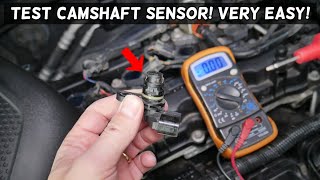
How to confirm: Use a multimeter to test the sensor's resistance or a scan tool with live data to monitor the sensor's signal for dropouts while the engine is running. 🎬 Watch: A helpful walkthrough on how to test the sensor. A YouTube video by 'Electrical Car Repair LIVE' shows the location on this specific engine and discusses the codes. P0344 refers to Sensor 'A', which is the intake camshaft sensor.
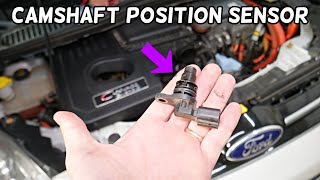
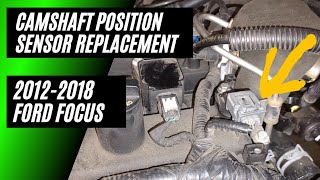
Typical fix: Replace the camshaft position sensor (Sensor 'A' - Intake). It is typically held in by a single 10mm bolt and is located on the top of the valve cover.
Est. part cost: $30-$100 - Wiring or Connector Issue 🟡 Medium Probability The wiring harness leading to the sensor can become damaged from engine heat, vibration, or oil contamination, leading to a poor connection. Some owners on forums have reported that simply unplugging and replugging the connector can temporarily resolve the issue, pointing to a poor connection at the pigtail.
How to confirm: Visually inspect the wiring harness and the connector for any signs of cracking, fraying, melting, or corrosion on the pins. Wiggle the connector with the engine running to see if it affects engine behavior or causes the signal to drop out on a scan tool.
Typical fix: Repair the damaged section of wire or clean/replace the connector pigtail. If oil has contaminated the connector, it may need to be replaced.
Est. part cost: $10-$30
Rare But Worth Checking
- Weak Battery or Faulty Starter: A low battery or a starter motor drawing excessive current can cause a voltage drop during cranking, which may disrupt the camshaft sensor's signal and intermittently set this code. This is a general possibility for this code on many vehicles.
- Timing Chain Issue: While less common for an intermittent code, a stretched timing chain or failing tensioner can cause the camshaft's position to be erratic relative to the crankshaft, potentially triggering a P0344 code. This would likely be accompanied by rattling noises from the engine.
- Failing Variable Camshaft Timing (VCT) Solenoid: A sticking or failing VCT solenoid can cause erratic camshaft timing that the PCM might misinterpret as a sensor signal issue. Symptoms of a bad VCT solenoid, like rough idle and loss of power, overlap with a bad CMP sensor.
- Failing Powertrain Control Module (PCM): This is extremely rare. The PCM itself could have an internal fault preventing it from correctly reading the sensor signal. This should only be considered after all other possibilities have been exhausted.
Diagnosis Steps
- Read all stored DTCs with an OBD-II scanner to check for other related codes.
- Inspect the engine oil filler cap and dipstick for a milky, white, or frothy residue, which indicates moisture contamination (per TSB SSM 48598).
- If moisture is found, perform an oil and filter change. Clear the codes and advise the driver on the need for longer trips to prevent recurrence before further diagnosis.
- Locate the Camshaft Position Sensor 'A' (Intake) on the 2.0L engine. It's typically on the top of the valve cover.
- Inspect the sensor's electrical connector and wiring harness for any signs of damage, corrosion, or loose connections. A poor connection is a known potential issue.
- If wiring looks good, use a scan tool to monitor the Camshaft Position Sensor signal in live data. Look for dropouts or erratic readings, especially while wiggling the harness or as the engine warms up.
- If the signal is intermittent and the wiring is confirmed to be good, replace the Camshaft Position Sensor ('A' / Intake).
- After replacement, some vehicles may require a camshaft position sensor relearn procedure, though this is not always necessary.
- If the code returns, investigate less common causes like battery health, starter draw, VCT solenoid function, and timing components.
Parts You'll Likely Need

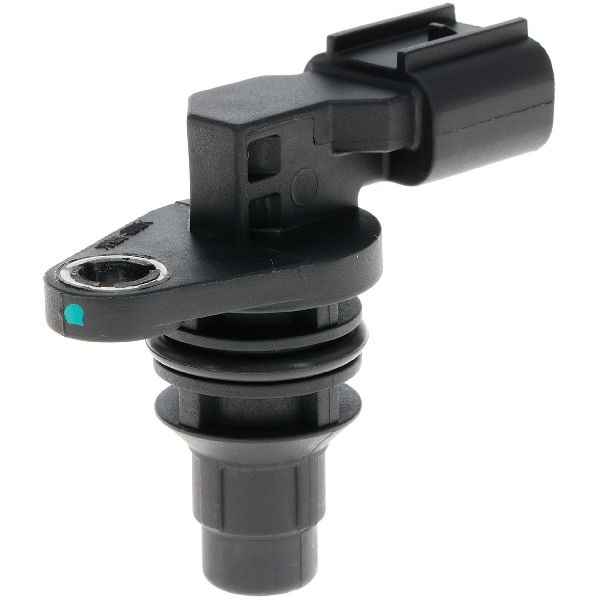
- Camshaft Position Sensor (Intake)
(OEM #DU-99)— This sensor is the most common part to fail when P0344 is present and oil moisture is not the cause. P0344 refers to the 'A' sensor, which is the intake sensor.
Trusted brands: Motorcraft, Bosch, Duralast, NTK
OEM price range: $60-$100
Aftermarket price range: $25-$70 - Engine Oil and Filter — Required to fix the common issue of oil contamination from moisture buildup, as cited in Ford's TSB #SSM 48598 for this vehicle.
Trusted brands: Motorcraft (Oil & Filter), Mobil 1, Castrol, MANN-FILTER
OEM price range: $50-$90
Aftermarket price range: $40-$70
Related Codes That Often Appear With This One
- P0340 — P0340 is the code for a constant failure of the same camshaft position sensor circuit ('A' Circuit Malfunction). P0344 indicates the problem is intermittent, and it can eventually become a hard fault, logging P0340. 🎬 See this guide on fixing P0340 and P0344 codes.
Technical Service Bulletins (TSBs) & Recalls
- SSM 48598: Attributes P0340/P0344 on C-Max Hybrids to excessive oil moisture from short-trip driving patterns. It also applies to the Ford Fusion Hybrid and Lincoln MKZ Hybrid.
Platform-Specific Known Issues
- TSB SSM 48598: Explicitly calls out that 2013-2018 C-Max Hybrid vehicles may show DTC P0340 and/or P0344 due to excessive moisture in the engine oil. This is caused by driving short distances where the engine doesn't run long enough to reach a temperature that evaporates condensation. The TSB recommends an oil change and advising the customer on driving habits.
- Owner Experience: A user on a Ford forum with a similar engine reported that unplugging and replugging the sensor connector would temporarily fix the rough running associated with the code, highlighting the potential for a poor connection at the pigtail.
Mechanic-Grade Diagnostic Values
- Camshaft Position Sensor Resistance — expected: 250 - 2000 Ohms. Failure: A reading outside this range indicates a faulty sensor.
- Camshaft Position Sensor Supply Voltage (KOEO) — expected: 4.5V - 5.5V. Failure: Voltage outside this range points to a wiring or PCM issue, not a sensor failure.
- Wiring Harness Resistance (CMP connector to PCM connector) — expected: Less than 5 Ohms. Failure: Resistance higher than 5 Ohms indicates excessive resistance in the wiring harness, which can cause an intermittent signal.
Scan Tool Commands That Help
- FORScan: VCT (Variable Camshaft Timing) Relearn Procedure — Recommended if the engine runs rough or is slow after replacing the camshaft position sensor, as this can recalibrate the timing system.
- Advanced OBD-II Scanner (e.g., Ford IDS): Crankshaft Position Variation Learn / Cam Sensor Relearn — This function may be required after replacing the camshaft position sensor, timing components, or the PCM to synchronize the cam and crank signals. The engine must typically be warmed up (coolant temp > 70°C / 158°F) to perform this function.
Wiring & Ground Locations
- G108 — Top of the transmission.. This ground point is listed in the engine performance wiring diagram and serves multiple engine components, including sensors. A poor connection here could potentially cause intermittent sensor signal issues.
- G104 / G105 — G104 is at the rear of the transmission; G105 is at the left front of the engine compartment behind cooling fan relays.. These are primary engine compartment ground points. While not directly tied to the CMP sensor in the diagrams found, a corroded or loose main ground can cause unpredictable electrical issues across multiple systems, including sensor circuits.
- CMP11 (Camshaft Position Sensor) — Located on the rear of the cylinder head.. This is the specific designator for the sensor in Ford wiring diagrams, confirming its location for testing purposes.
Real Owner Repair Stories
- Ford Owners Club Forum (2016 Ford 1.0 Ecoboost (different engine but same codes and sensor system principles)) — Car running very rough and slow with codes P0340 and P0344 present.
❌ Tried (didn't work) Replacing the entire engine due to a separate wetbelt issue., Swapping the Bank 1 and Bank 2 camshaft sensors; the codes for Bank 1 remained.
✅ What actually fixed it The suggested fix from a senior forum member was that oil had likely penetrated the electrical plugs through the old sensors, causing damage inside the connectors themselves. The final advice was to cut off the old plugs and replace them, followed by performing a VCT (variable camshaft timing) relearn procedure with FORScan. - YouTube channel 'Dobby's Repairs' (Ford C-Max with 1.6 Duratec engine (European model, similar diagnostic principles)) — P0344 code appeared only when the engine got hot, causing juddering and loss of power.
❌ Tried (didn't work) The owner first checked wiring to ensure there was no damage.
✅ What actually fixed it The owner diagnosed a faulty sensor by testing its resistance when cold versus hot and noticing a significant difference. The fix was replacing the camshaft position sensor. The problem was attributed to internal components of the sensor degrading when hot.
Helpful Videos
Used OEM Parts in Stock

New Aftermarket Parts Available


The information in this article is provided for general reference and educational purposes only. Vehicle specifications, procedures, and part compatibility can vary by production date, trim level, and region. Always consult your vehicle's factory service manual and verify part numbers before purchasing or performing repairs. Safety-critical components such as airbags, seat belts, and braking systems should be installed by a qualified professional.
- Ford C-MAX:
- 🎬 Helpful Videos
- 🛍️ Shop This Part
- What's Unique About the 2013-2018 Ford C-MAX
- Diagnostic Flowchart
- Symptoms You May Notice
- Most Likely Causes
- Rare But Worth Checking
- Diagnosis Steps
- Parts You'll Likely Need
- Related Codes That Often Appear With This One
- Technical Service Bulletins (TSBs) & Recalls
- Platform-Specific Known Issues
- Mechanic-Grade Diagnostic Values
- Scan Tool Commands That Help
- Wiring & Ground Locations
- Real Owner Repair Stories
- 🎟️ Get 5% Off